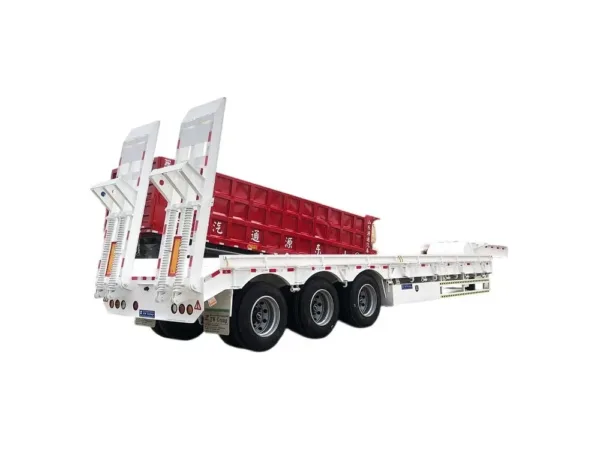
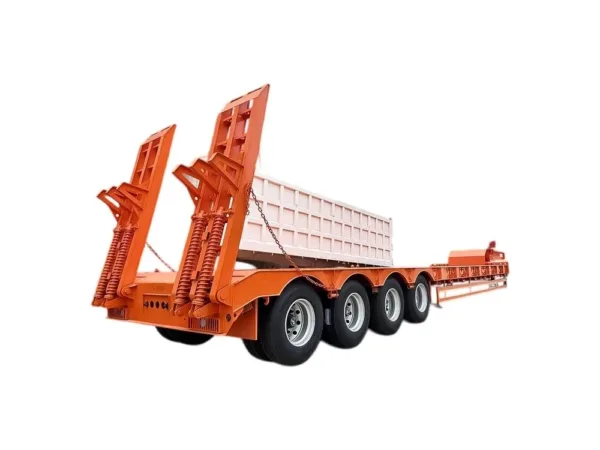
3 Axle Steel Lowbed Semi Trailer 50T Heavy Equipment Transport
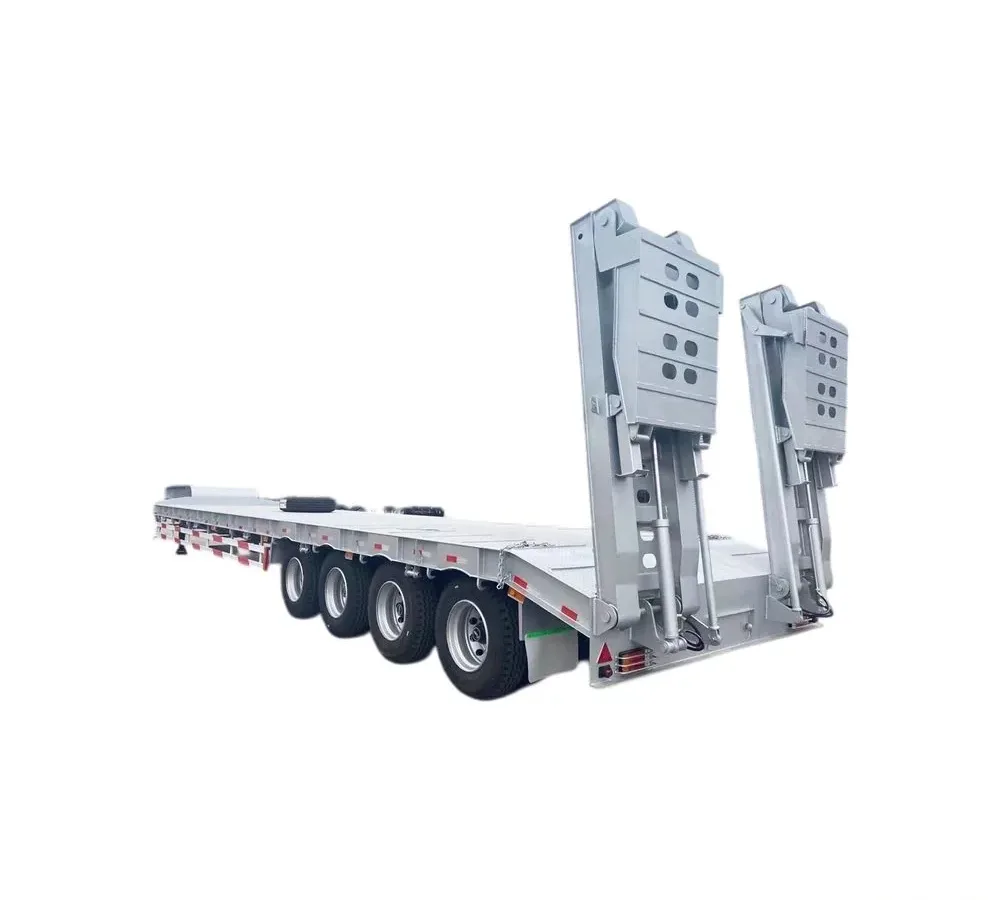
Lowboy semi trailer with 25001-30000 KG load capacity for heavy equipment transport. Steel lowbed design suits Group 2/3/4 axle setups on 40-100Ft builds.
25001-30000 KG 3
FOB Reference PriceUS$4,000-8,000Final price confirmed by inquiry
Certifications
ISO 9001
Key Features
50T capacity platform for excavators and heavy equipment
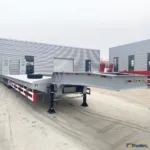
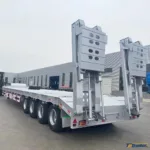
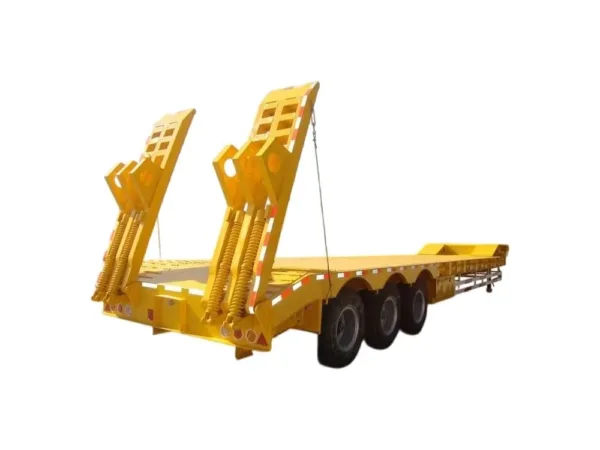
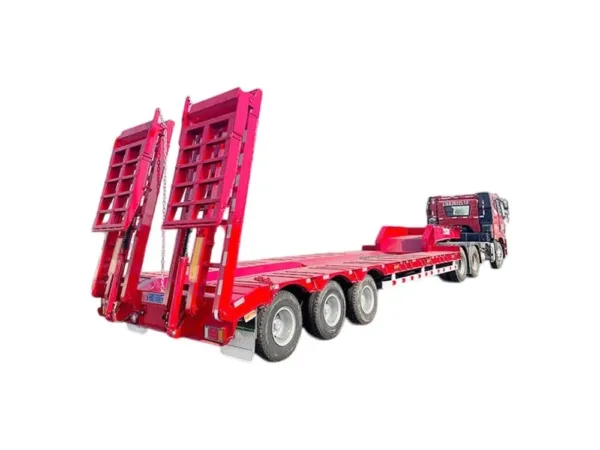
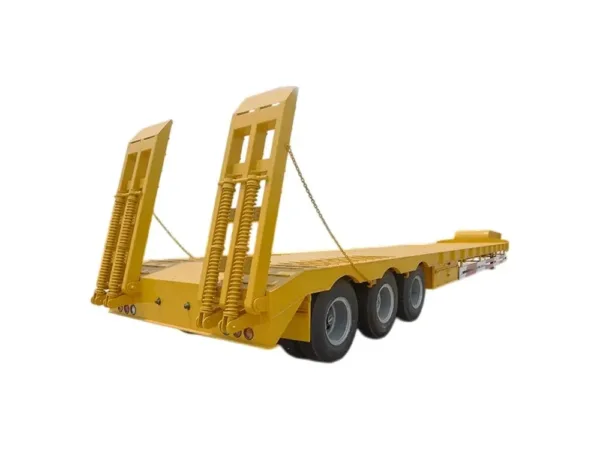
The low loader truck semi trailer lowbed lowboy flatbed semi trailer is a heavy equipment transport platform built for excavators, dozers and wheeled plant. It is aimed at fleet operators and contractors who move machinery between yards, pits and job sites. The single strongest reason to choose it is the 50T capacity paired with mechanical suspension, which keeps the deck stable under a concentrated load. Axle brand options, a manual or hydraulic ladder and a choice of king pin types let you match the trailer to the tractor you already run. Load capacity sits in the 25001-30000 KG band.
Table of Contents
Why It Works On Site
50T capacity on a mechanical suspension. The deck carries a fully rigged excavator without the wallow that air systems can show on rough access roads. Mechanical suspension (Germany or America type) keeps the axle group tracking straight, so the operator can pull onto a graded site and unload on uneven ground with predictable deck height.
Axle brand choice of 13T or 16T. You pick the axle rating that matches your heaviest regular load, which means the low loader truck semi trailer lowbed lowboy flatbed semi trailer is not over-specified for lighter work or under-specified for the big machine. That choice protects tyre life and keeps the trailer inside the load band you actually run.
King pin in 2.0 or 3.5 inch, bolt or weld type. The trailer mates to the fifth wheel you already own, so a mixed tractor fleet can share one low loader truck semi trailer lowbed lowboy flatbed semi trailer. Bolt type speeds replacement after wear; welding type suits a fixed tractor pairing. Either way, coupling is a known job, not a fabrication task.
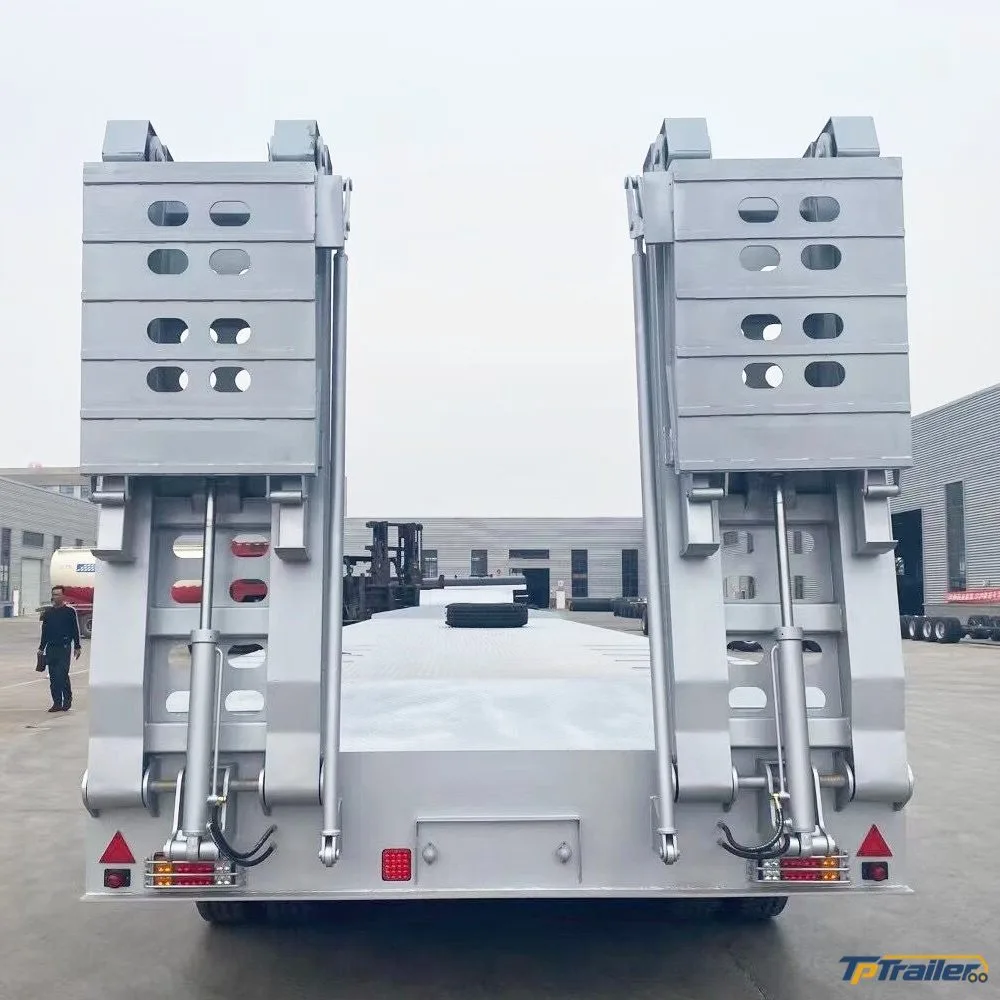
Manual or hydraulic ladder. The ladder is the loading interface, and the type decides how fast a machine gets on and off. Hydraulic keeps the ramp controlled for tracked plant that cannot be winched up a fixed incline. Manual suits crews that load the same way every time and want fewer hydraulic points to service.
Support leg rated D200T or 28 tons, double speed. Uncoupling on a site with no crane becomes a one-person job. The double-speed leg drops fast under an empty deck and takes the load when the tractor pulls away, so the low loader truck semi trailer lowbed lowboy flatbed semi trailer can be spotted and left ready for the next machine.
RE 6 relay valve brake chamber. Braking response stays consistent across the axle group when the trailer is loaded to the top of its band. On a descent with a heavy excavator aboard, the relay valve keeps the chambers charged evenly, so the low loader truck semi trailer lowbed lowboy flatbed semi trailer tracks straight instead of stepping out under braking.
Where It Is Used
The most common job is moving tracked excavators between a yard and a dig. A low loader truck semi trailer lowbed lowboy flatbed semi trailer with the deck dropped and the ladder down lets a machine walk on under its own power, then the deck lifts for the road. That pattern repeats across quarry work, where a dozer or loader shifts between benches and the public road in the same shift.
Contractors also use the trailer for wheeled plant that cannot legally travel on its own: backhoes, telehandlers and compact loaders. Because the load capacity covers the 25001-30000 KG band, the same trailer handles a mid-size excavator with a bucket and attachment still fitted, which removes a separate stripping trip. The low loader truck semi trailer lowbed lowboy flatbed semi trailer also suits site-to-site transfers where the machine is the load and the trailer is the only road-legal way to move it.
Road-building and utility crews use the trailer for plant that has to arrive ahead of the work. A grader, roller or paver moves from one section to the next while the crew stays on the job, and the low loader truck semi trailer lowbed lowboy flatbed semi trailer carries it without a second machine to load it. Recovery and rental fleets run the same pattern: collect a machine from a depot, deliver it, bring back the next one.
The manual or hydraulic ladder matters here, because rental plant varies and the crew loading it changes daily. Longer hauls between regional yards suit the trailer too, since the mechanical suspension and relay valve braking keep the deck settled at road speed. Operators also spot it as a static loading platform when a machine needs to be worked on at ground level, then return it to hauling duty.
Choosing The Right Spec
Match the axle rating to your heaviest routine load. A 13T axle set suits plant that sits in the lower half of the capacity band, while 16T axles give headroom for a fully rigged machine. Pick against the load you move weekly, not the one-off peak, and the low loader truck semi trailer lowbed lowboy flatbed semi trailer stays inside its working range.
Choose the ladder type by how the machine loads. Hydraulic suits tracked plant that cannot be winched and crews that load alone. Manual suits a fixed fleet loaded the same way each time, with fewer hydraulic components to maintain. The low loader truck semi trailer lowbed lowboy flatbed semi trailer is ordered either way, so decide before the build.
Pick the king pin to fit your tractor fleet. A 2.0 inch pin suits lighter fifth wheels, while 3.5 inch matches heavier tractors. Bolt type lets you swap the pin after wear without cutting; welding type fixes the pairing. If tractors rotate through the fleet, bolt type keeps the low loader truck semi trailer lowbed lowboy flatbed semi trailer flexible.
Set the support leg and suspension for your unloading ground. The double-speed leg rated D200T or 28 tons matters where uncoupling happens on soft or sloped ground. Germany or America type mechanical suspension both suit rough access, so choose the one your workshop already services. That keeps the low loader truck semi trailer lowbed lowboy flatbed semi trailer maintainable in-house.
Customisation Before Delivery
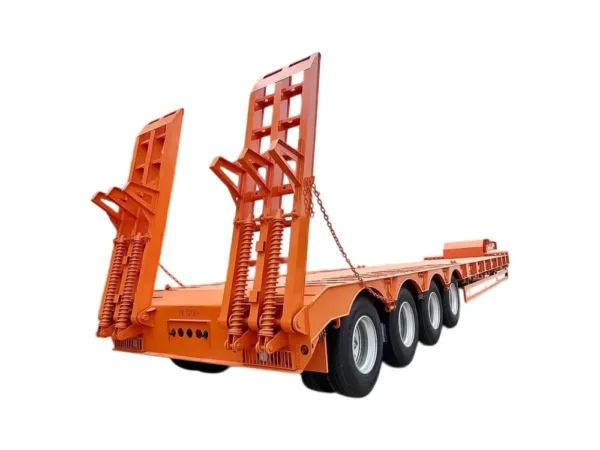
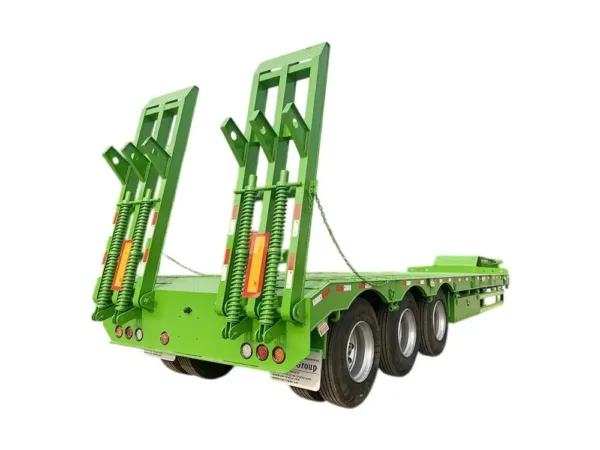
Axle count and capacity. The low loader truck semi trailer lowbed lowboy flatbed semi trailer is offered in several axle configurations, and the count you pick decides how the load is shared across the road. Every axle choice is written into the order confirmation, together with the capacity you need to move.
Deck length and ladder type. Deck length is matched to the equipment you haul, so the ramps sit at a workable angle during loading. The ladder can be manual or hydraulic, and that selection belongs on the same confirmation sheet as the deck length, because the two are built as one assembly.
Suspension style. Mechanical suspension is available in a Germany type or an America type, and the choice affects how the low loader truck semi trailer lowbed lowboy flatbed semi trailer rides when partly loaded. Buyers settle this at order confirmation so the mounting brackets are drilled for the right pattern.
King pin and support leg. The king pin can be a bolted type in a common size or a welding type, and the support leg is offered as a branded unit or a China brand double-speed leg. Both are fixed on the low loader truck semi trailer lowbed lowboy flatbed semi trailer before the build starts.
Finish and markings. Logo and lettering are applied according to your request, which suits operators who run a mixed fleet and want each low loader truck semi trailer lowbed lowboy flatbed semi trailer recognisable on site. Colour and marking decisions are confirmed with the order, not after the steel is painted.
Fitting And Installation
A low loader truck semi trailer lowbed lowboy flatbed semi trailer arrives as a finished unit, so most of the fitting work happens at the coupling point rather than on the deck. The tractor has to present a fifth wheel that matches the king pin you ordered, whether that is the bolted type or the welding type, and the plate height has to leave the trailer sitting level when loaded. Check the support leg mounting before the first unhitching, because a leg that fouls the landing area will not carry the front weight safely.
The brake chamber and relay valve arrangement has to be matched to the tractor air supply, and the coupling lines need enough slack for full articulation without rubbing on the frame. Confirm the ramp or ladder travel path with the machine you intend to load, since a low loader truck semi trailer lowbed lowboy flatbed semi trailer is only as useful as its loading angle. Where the input gives no fitment figures, a fitment drawing is confirmed at quotation instead.
A mismatch at this stage is expensive in a way that is easy to underestimate. A king pin of the wrong size stops the low loader truck semi trailer lowbed lowboy flatbed semi trailer from leaving the yard at all, and the tractor sits idle while the correct part is sourced. A fifth wheel plate at the wrong height loads the neck unevenly and shows up later as tyre scrub and cracked welds.
Air line routing that is too tight fails on the first tight turn, which turns a routine delivery into a roadside repair. Getting the coupling, leg position and hose routing agreed before dispatch is the cheapest hour in the whole purchase. Ask for the fitment drawing with the quotation for the low loader truck semi trailer lowbed lowboy flatbed semi trailer, and check it against your tractor before you sign.
Service Life And Maintenance
King pin and fifth wheel contact. The king pin wears first on any low loader truck semi trailer lowbed lowboy flatbed semi trailer, because it carries every steering input the tractor makes. Inspect the pin for step wear and the plate for looseness at each coupling check, and keep the surface greased. A bolted pin can be replaced without cutting, which is why many operators choose it over the welded version.
Suspension and axle mounts. Mechanical suspension in either the Germany type or the America type works through bushes and equaliser joints that take the road shock. Look for cracked hangers, loose U-bolts and worn bushes on the low loader truck semi trailer lowbed lowboy flatbed semi trailer. Catching a loose mount early protects the axle seat and avoids a weld repair on the frame.
Brake chamber and relay valve. The relay valve and brake chambers sit in the dirtiest part of the low loader truck semi trailer lowbed lowboy flatbed semi trailer, so they are where moisture and grit collect. Drain the air tanks and watch for a slow release on the chambers. A sticking relay valve makes the trailer brake late, which is a handling problem before it becomes a parts problem.
Ramps, ladder and deck surface. Manual or hydraulic ladders take repeated point loads at the hinge, and that is where cracks begin on a working low loader truck semi trailer lowbed lowboy flatbed semi trailer. Inspect hinge pins, welds and the deck plate for gouging after heavy jobs. Touching up worn coating on the deck slows corrosion and keeps the loading surface predictable under a track.
Tyres and structural coating. Tyre wear on a low loader truck semi trailer lowbed lowboy flatbed semi trailer tells you whether the load is balanced and the axles are tracking straight. Check pressures and look for uneven shoulder wear across the axle set. Keeping the frame coating intact, and washing off salt and slurry, is the simplest way to extend the working life of the steel.
Packing And Container Loading
Each low loader truck semi trailer lowbed lowboy flatbed semi trailer is prepared for sea freight as a complete unit. Loose items such as the king pin bolts, support leg pins and brake chamber fittings are boxed and tied to the frame. The ladder is secured against the deck. Ramps travel with the trailer. The mechanical suspension and axle assemblies stay fitted, so the unit ships assembled rather than knocked down. Buyers should confirm the packing list against the order before the container is sealed.
Stacking is limited by the tare weight and the deck height. A low loader truck semi trailer lowbed lowboy flatbed semi trailer can be nested only where the gooseneck and deck geometry allow, and the supplier should confirm this in writing. Most units load one per flat rack or break bulk, not several per box. Ask for the loading plan, verify the king pin and support leg are braced, and check the ladder and ramps on arrival.
Common Mistakes Buyers Make
Ordering the wrong axle count. A buyer picks a tandem when the load needs a tri or quad layout, then finds the deck cannot take the machine. Check the axle count against the transport task and confirm the number before the order is placed.
Ignoring the king pin type. The bolts type and the welding type are not interchangeable at the tractor. Measure the fifth wheel coupling and confirm the king pin style and size with the supplier before production starts.
Mismatching the suspension. Germany type and America type mechanical suspension differ in mounting and ride height. Confirm which suspension is quoted and that the axle brand suits it, rather than assuming the default.
Skipping the ladder decision. A manual ladder and a hydraulic ladder are different builds. Decide which one the job needs, state it on the order, and confirm the deck and ramp arrangement at the same time.
Overlooking the support leg rating. The support leg must carry the front load when uncoupled. Confirm the brand and the double speed option, and check the rating suits the tare weight of your low loader truck semi trailer lowbed lowboy flatbed semi trailer.
Buyer Questions
Can the trailer be shipped in a standard container?
No standard answer applies, because the low loader truck semi trailer lowbed lowboy flatbed semi trailer is a long, wide unit. Ask the supplier for the loading plan and the packed dimensions before booking freight. Confirm whether the unit ships on a flat rack, in break bulk, or in a container with the deck partly disassembled. Measure your route and the receiving yard, then match the plan to the vessel and the port equipment.
What should I check when the trailer arrives?
Check the packing list against the delivered items first. Inspect the king pin, support leg, brake chamber and ladder for transit damage. Confirm the axle brand and suspension type match the order. Photograph any damage before unloading. Keep the shipping documents and the loading plan together, because a claim needs the condition recorded at handover. Report shortages to the supplier within the agreed window and confirm the next step in writing.
Which options must I confirm before production?
Confirm the axle brand and count, the king pin style and size, the suspension type, the support leg brand and rating, the ladder type and the logo. Confirm the load capacity suits the machine you will carry. Ask for a written specification sheet and check each line against your order. Options such as a hydraulic ladder change the build, so they must be fixed before the low loader truck semi trailer lowbed lowboy flatbed semi trailer enters production.
Send the deck length you need, the axle count and the quantity for a quote. State the king pin, suspension and ladder type you want. The supplier will confirm the specification and the low loader truck semi trailer lowbed lowboy flatbed semi trailer options against your order.
We use cookies to enhance your browsing experience, serve personalized content, and analyze our traffic. By clicking "Accept All", you consent to our use of cookies. Privacy Policy
Cookie Preferences
Required for the website to function properly. Cannot be disabled.
Help us understand how visitors interact with the website (Google Analytics).
Used to deliver personalized ads and measure ad campaign effectiveness.


















Write a Review