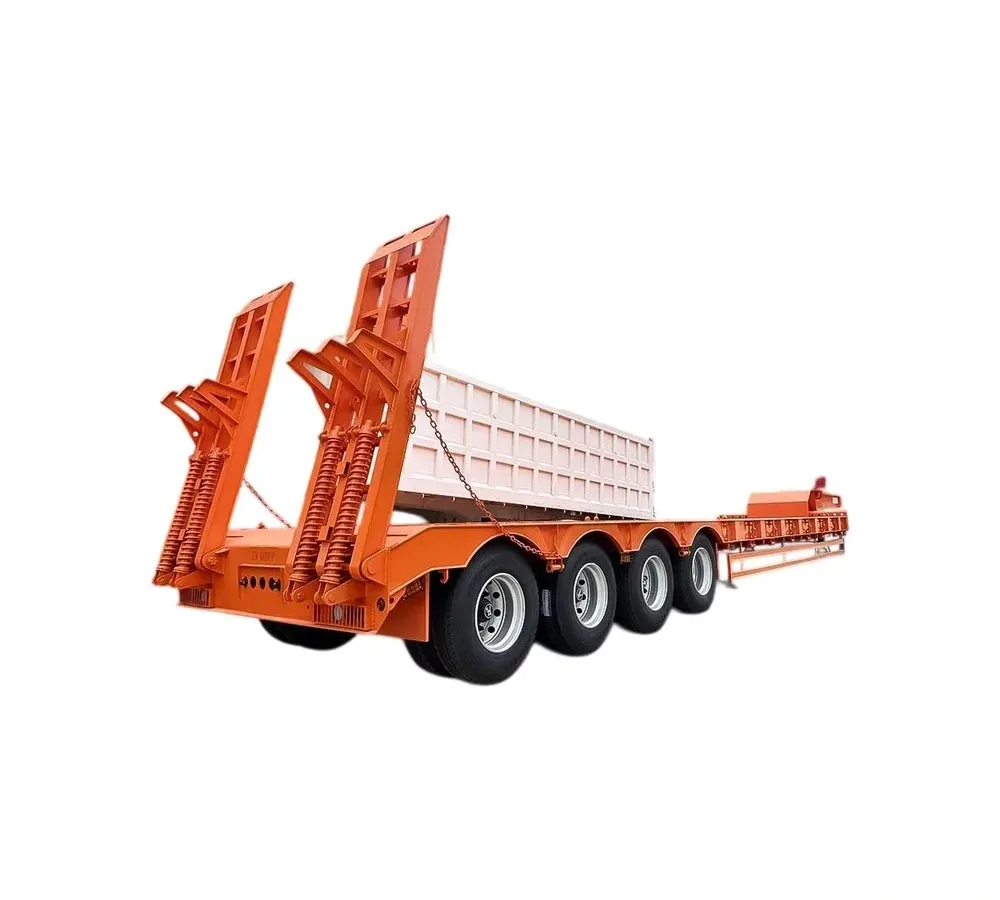
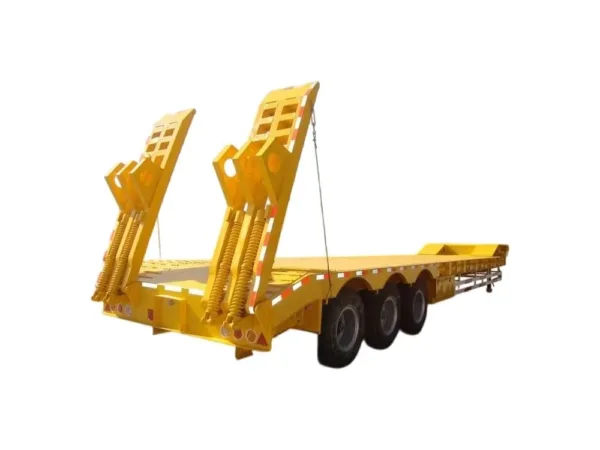
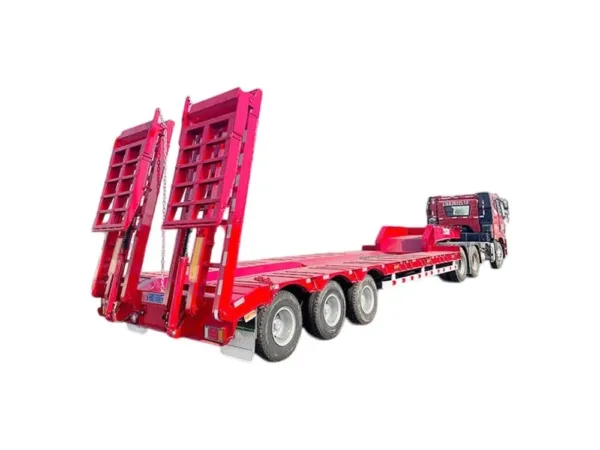
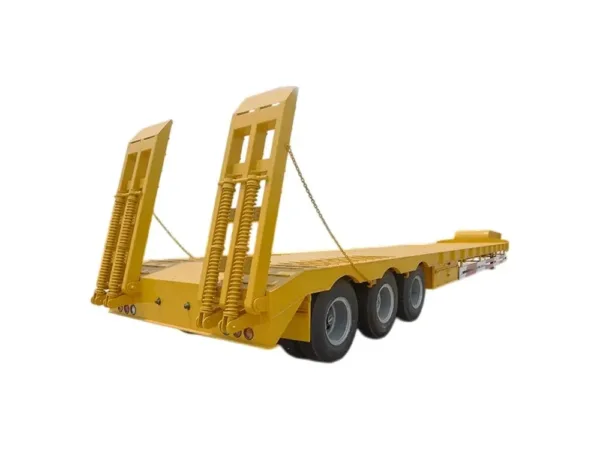
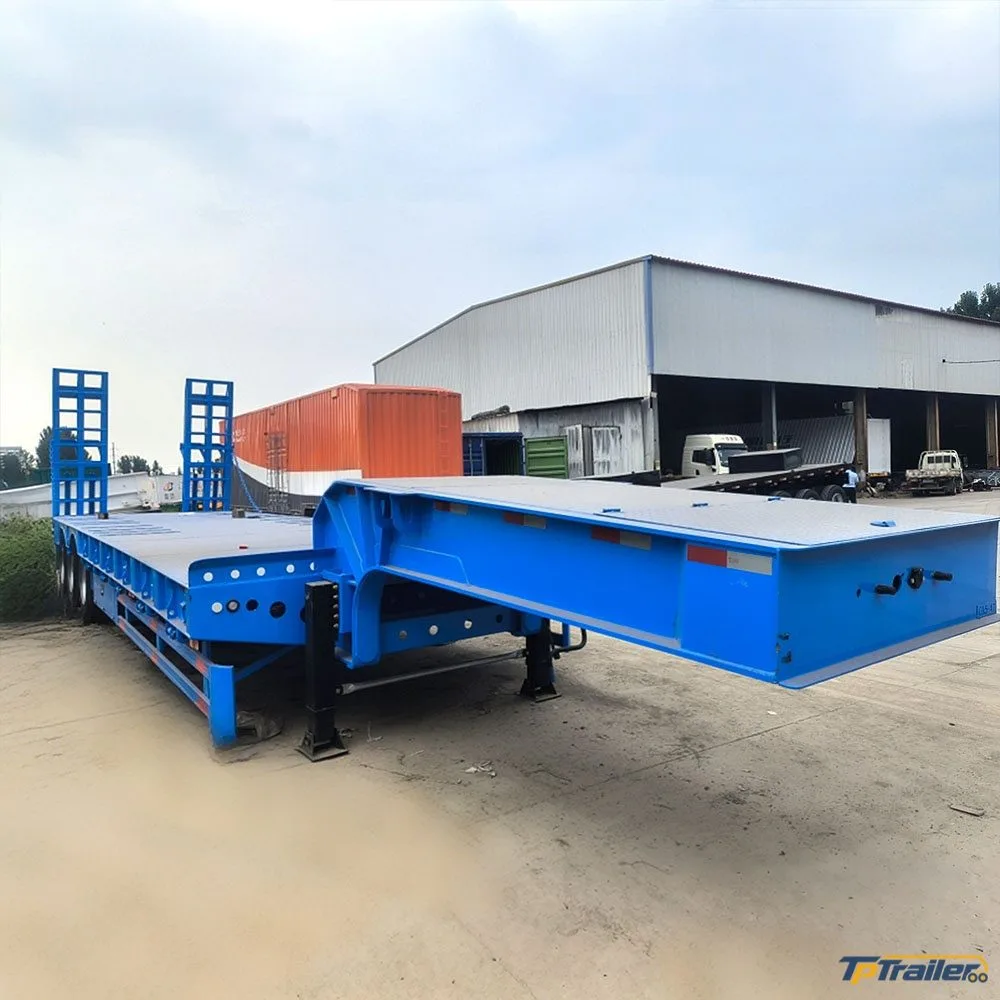
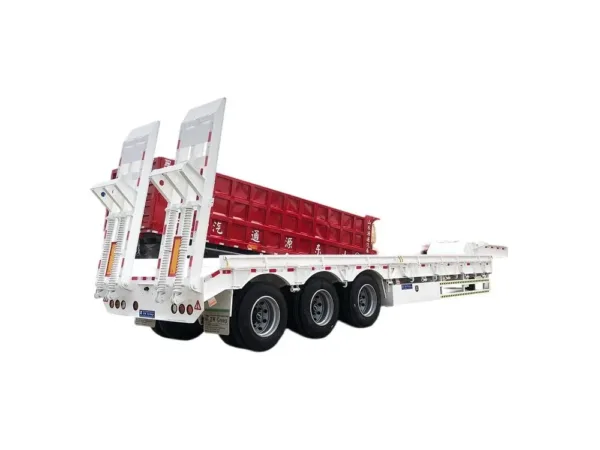
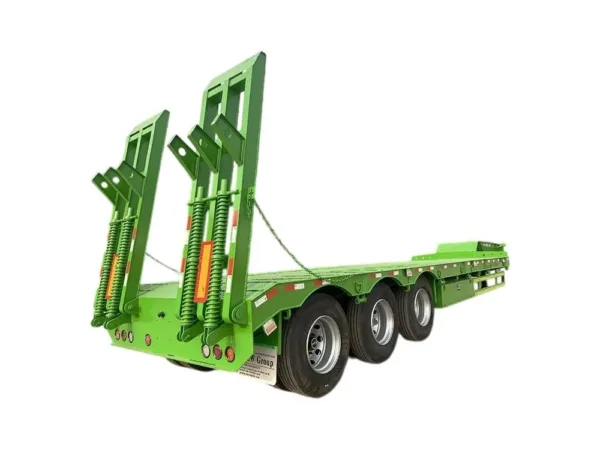
The 3 axle 60 ton lowbed semi trailer is a heavy-duty step-deck platform built to move excavators, loaders and oversize industrial equipment over long and mixed routes. It is made for fleet operators, plant hire firms and contractors who need one trailer to handle both machine transport and general heavy freight. Its strongest advantage is a low, stable deck over a three-axle running gear, which keeps tall cargo within workable height while spreading weight across the axle group. That combination suits buyers running regular equipment moves rather than one-off jobs. The trailer is a working asset, not a showpiece, and it is specified for the daily grind of loading, lashing and hauling across varied terrain.
Table of Contents
Why It Works On Site
Load capacity matched to plant weight. A rated load capacity of 30000 KG covers the common mid-size excavators and wheeled loaders that fill most rental fleets. The rating is the figure to check against your heaviest machine plus bucket and attachments, so the trailer is not run at its limit on every trip. That margin protects the deck structure and keeps the unit serviceable over years of loading cycles.
Three-axle running gear spreads the load. Distributing weight across three axles lowers the load on each tyre and hub, which matters on long runs and on surfaces that are less than perfect. For the operator, that means steadier tracking when loaded and less heat build-up in the running gear. It also gives the 3 axle 60 ton lowbed semi trailer a more forgiving behaviour when cargo is not perfectly centred.
Low deck height eases loading. The step-deck layout keeps the cargo platform close to the ground, so ramps are shorter and the climb angle for a tracked or wheeled machine is gentler. Drivers spend less time positioning and more time moving. For the 3 axle 60 ton lowbed semi trailer, that low deck is also what keeps tall equipment within practical travel height on ordinary routes.
Step-deck geometry carries tall cargo. The dropped section lets a machine sit lower than it would on a flat platform, which improves stability through corners and reduces the visual bulk of the load. The 3 axle 60 ton lowbed semi trailer therefore handles excavators and loaders that would otherwise need permits or a different trailer class, keeping more jobs inside your existing fleet.
Built for repeated loading cycles. Heavy equipment hauling is hard on a deck: tracks, buckets and steel edges all bear down in the same places trip after trip. The trailer is configured as a working platform for that duty, so the 3 axle 60 ton lowbed semi trailer stays in service instead of sitting in the workshop between jobs.
One asset across mixed freight. Beyond plant, the same trailer moves industrial equipment, structural fabrications and other oversize items. Fleet managers avoid buying a second trailer type for occasional non-machine loads. The 3 axle 60 ton lowbed semi trailer earns its place by covering the routine equipment runs and the irregular heavy jobs in one unit.
Where It Is Used
The most common duty for the 3 axle 60 ton lowbed semi trailer is moving earthmoving plant between sites. A contractor finishing one project and starting another needs to shift excavators, backhoe loaders and compact dozers without hiring a specialist carrier each time. The low deck and three-axle group make that a routine haul rather than a project in itself.
The same pattern repeats in quarry and aggregate work, where loaders move between pits and processing areas, and in road construction, where machines follow the works along a corridor. In each case the trailer is loaded at one yard, hauled on a mix of highway and site access roads, and unloaded where the next job begins. Operators value the predictability: the same trailer, the same ramps, the same lashing points, every time.
Industrial equipment transport is the second steady workload. The 3 axle 60 ton lowbed semi trailer carries generators, compressors, skid-mounted plant, steel fabrications and production machinery between factories, warehouses and installation sites. These loads are often awkward rather than simply heavy, and the step-deck platform gives a flat, low base for blocking and lashing.
Rental fleets also use the trailer to deliver and recover equipment from customer premises, where access may be tight and the low deck helps with ramp placement. Agriculture and forestry add seasonal work, moving tractors and harvest equipment between holdings. Across all of these, the 3 axle 60 ton lowbed semi trailer is chosen because it turns an irregular heavy move into a planned, repeatable task that a regular driver can handle.
Choosing The Right Spec
Match the rating to your heaviest routine load. The stated load capacity of 30000 KG is the anchor for every buying decision. List your machines with buckets, attachments and fuel, then compare the heaviest figure with the rating. A trailer sized close to your normal maximum leaves little room for attachments or for a heavier machine arriving later. Buyers who expect fleet growth should treat the rating as a floor, not a target, before committing to the 3 axle 60 ton lowbed semi trailer.
Check deck length against machine footprint. The platform must carry the full machine plus room for lashing and for weight distribution over the axles. Measure the longest machine you plan to move, including any attachment that stays fitted, and confirm it sits fully on the deck with the load balanced. A machine that overhangs forces compromises in securing and axle loading, so deck length is the second figure to settle before price.
Confirm ramp and approach needs. Tracked machines and wheeled loaders load differently, and the ramp arrangement must suit both if your fleet mixes them. Consider the climb angle the low deck creates and whether your operators will load from the rear or the side. Getting this right at order stage keeps the 3 axle 60 ton lowbed semi trailer usable across every machine type you run, rather than only the ones it was first bought for.
Weigh volume against unit price. Pricing steps down as order quantity rises, so a single unit suits a contractor replacing one trailer, while a multi-unit order suits a rental or plant fleet standardising its equipment transport. The 3 axle 60 ton lowbed semi trailer is therefore worth specifying once, carefully, and repeating across the fleet so drivers, ramps and lashing routines stay consistent as the business grows.
Customisation Before Delivery
The axle count on a 3 axle 60 ton lowbed semi trailer is fixed at order confirmation. Buyers moving very heavy excavators can discuss an alternative configuration with the sales team before the build starts. Every axle option is recorded on the signed order so the factory and the buyer work from the same document.
Deck length and width are settled at order confirmation. A longer deck suits long-tracked loaders, while a shorter deck keeps the 3 axle 60 ton lowbed semi trailer manoeuvrable on tight industrial sites. The chosen dimensions are written into the order so there is no ambiguity at handover.
Suspension type is chosen before production begins. Mechanical and other suspension arrangements change how the 3 axle 60 ton lowbed semi trailer rides over rough haul roads. The selection is confirmed at order stage, and the buyer should state the road conditions the trailer will face.
Tyre specification and quantity are agreed at order confirmation. Tyre choice affects ground pressure and rolling resistance on a loaded 3 axle 60 ton lowbed semi trailer. Buyers working on soft ground should raise this early so the correct tyre set is scheduled with the build.
Colour and finish are confirmed with the order. A bright finish helps operators spot the 3 axle 60 ton lowbed semi trailer during night moves on industrial sites. Paint selection is a buyer decision and is locked in before production, not after the frame is assembled.
Fitting And Installation
Fitting starts with matching the tractor unit to the trailer. The buyer should check the fifth wheel height, the kingpin position and the coupling height before the 3 axle 60 ton lowbed semi trailer arrives. Air and electrical connections must line up with the tractor’s couplings, and the hose routing should be planned so lines do not rub on the frame.
Because the input carries no fitment dimensions, a fitment drawing is confirmed at quotation instead of being assumed. That drawing shows mounting points and connection positions so the workshop can prepare in advance. Getting these details wrong means the trailer sits idle while adapters are sourced, and every idle day costs the operator haulage revenue on equipment that was bought to work.
Ramp and deck setup matter as much as the coupling. Operators should check that loading ramps align with the deck edge and that the approach angle suits the 3 axle 60 ton lowbed semi trailer when carrying tracked excavators. Mounting points for ramps and any attachments are confirmed against the fitment drawing at quotation.
Hose routing along the chassis should be checked again after the first loaded run, since vibration can shift clips and ties. A wrong size at this stage forces rework, and rework on a heavy trailer means lifting gear, extra labour and lost operating hours. Buyers who confirm the drawing early avoid that downtime and put the 3 axle 60 ton lowbed semi trailer into service without a second workshop visit.
Service Life And Maintenance
Tyres wear first on any 3 axle 60 ton lowbed semi trailer. Operators should inspect tread depth and sidewall condition before each loaded trip. Running correct inflation and matching tyre choice to ground conditions extends the interval between replacements, and rotating the set keeps wear even across the axles.
Brake linings and drums are the next wear item. A walk-around check after heavy braking on descents catches glazing and uneven wear early. Keeping the brake system adjusted protects the 3 axle 60 ton lowbed semi trailer on long gradients, and prompt replacement of worn linings prevents drum damage.
Suspension components take constant load. Operators should look at springs, bushes and hangers for cracks or looseness on the 3 axle 60 ton lowbed semi trailer. The suspension choice made at order confirmation affects how these parts wear, so matching it to site conditions pays back over the trailer’s working life.
The deck surface and ramps wear from tracked equipment. Inspect for bent edges, worn tread plate and loose fixings before loading. Touching up the coating on a 3 axle 60 ton lowbed semi trailer where paint has worn slows corrosion and keeps the deck safe for excavator tracks.
Frame, kingpin and coupling points deserve regular inspection. Check welds, bolts and the kingpin area for movement or cracking on the 3 axle 60 ton lowbed semi trailer. Cleaning and re-coating the frame after abrasive haul work extends the protective finish and helps the structure last through repeated heavy loads.
Packing And Container Loading
The 3 axle 60 ton lowbed semi trailer ships as a complete unit. The deck, ramps and running gear are protected against salt air and road spray during sea freight. Steel surfaces receive a protective coating before dispatch. Exposed hydraulic lines and air fittings are capped or wrapped. Loose items such as ramps and tools are secured to the deck so nothing shifts in heavy weather. The buyer should confirm the coating type and wrap standard at quotation, because the input does not state them. Ask the supplier to photograph the unit before loading and send the images with the shipping documents. Those photos give you a baseline for the arrival check.
Stacking is not possible for a 3 axle 60 ton lowbed semi trailer. The deck length and the axle group make each unit a single footprint on the vessel. Nested loading is also ruled out for the same reason. Container loading depends on the trailer configuration, so confirm the shipping method at quotation. Break bulk or flat rack may suit a full unit, while smaller sections may travel in a container. Ask the supplier which option applies to your order and get the loading plan in writing. That plan should show the tie-down points and the sequence for unloading at your site. Verify the plan against your port handling equipment before you book freight.
Common Mistakes Buyers Make
Ordering the wrong deck length. A deck that is too short will not carry the excavator bucket or the loader arms in the transport position. Measure the longest machine you plan to move, including any attachment overhang, and compare it with the deck length before you order a 3 axle 60 ton lowbed semi trailer. The single check is a tape measure on the machine, not the brochure.
Ignoring the load capacity against the machine weight. Buyers compare the machine weight with the load capacity but forget attachments, fuel and bucket. Weigh the machine fully fuelled with its working attachment, then confirm the load capacity covers that figure for the 3 axle 60 ton lowbed semi trailer. The single check is a weighbridge ticket, not the manufacturer plate.
Assuming the axle count fits local rules. Axle count and axle spacing affect road permits in many markets. A buyer can order a 3 axle 60 ton lowbed semi trailer that meets the supplier specification but fails a local bridge formula. The single check is a written confirmation from your transport authority on the permitted axle configuration before you place the order.
Skipping the ramp and loading angle review. Ramps that are too short or too steep make loading the excavator unsafe. Check the ramp length and the deck height against the machine’s ground clearance. Ask for the loading angle in writing for the 3 axle 60 ton lowbed semi trailer. The single check is a dry run with your own machine at the supplier yard or a video of the loading test.
Leaving the coupling and brake standard open. Fifth wheel size, brake system and electrical voltage differ by market. An order placed without confirming these details can arrive unusable. State your tractor’s coupling size and your brake and lighting standard when you request the 3 axle 60 ton lowbed semi trailer. The single check is a written specification sheet signed off by both sides before production.
Buyer Questions
How is the trailer protected during sea freight?
The unit is coated on steel surfaces and the exposed fittings are capped or wrapped before loading. Loose items are tied to the deck. The exact coating and wrap standard is confirmed at quotation, because the input does not state it. Ask for the packing list and pre-loading photos with the shipping documents. On arrival, check the coating for scratches, confirm the caps are still in place and inspect the deck for rust bloom. Photograph any damage before you sign the delivery receipt, and send those photos to the supplier the same day.
Can more than one unit share a container?
Stacking and nesting are not possible for a 3 axle 60 ton lowbed semi trailer, so each unit takes its own footprint. Whether a unit fits a container depends on the configuration, and the shipping method is confirmed at quotation. Ask the supplier for the loading plan in writing. That plan should name the vessel space, the tie-down points and the unloading sequence. Compare it with the lifting and handling equipment at your port before you book freight, and confirm who is responsible for lashing.
What should I check when the trailer arrives?
Check the deck, ramps, axle group and coupling against the signed specification sheet. Confirm the coating is intact and the caps and wraps are still fitted. Look for bent ramps or shifted components caused by transit. Verify the load capacity plate matches your order. If anything differs, photograph it and note it on the delivery receipt before signing. Send the photos and the receipt to the supplier within the claim window stated in your contract. Keep the shipping documents with the inspection record.
To receive a quote for a 3 axle 60 ton lowbed semi trailer, send the deck length you need, the axle count and the quantity. Add your machine weight and the coupling standard so the specification can be checked against your order. The supplier will confirm the configuration, packing and shipping method at quotation.
We use cookies to enhance your browsing experience, serve personalized content, and analyze our traffic. By clicking "Accept All", you consent to our use of cookies. Privacy Policy
Cookie Preferences
Required for the website to function properly. Cannot be disabled.
Help us understand how visitors interact with the website (Google Analytics).
Used to deliver personalized ads and measure ad campaign effectiveness.



















Write a Review