
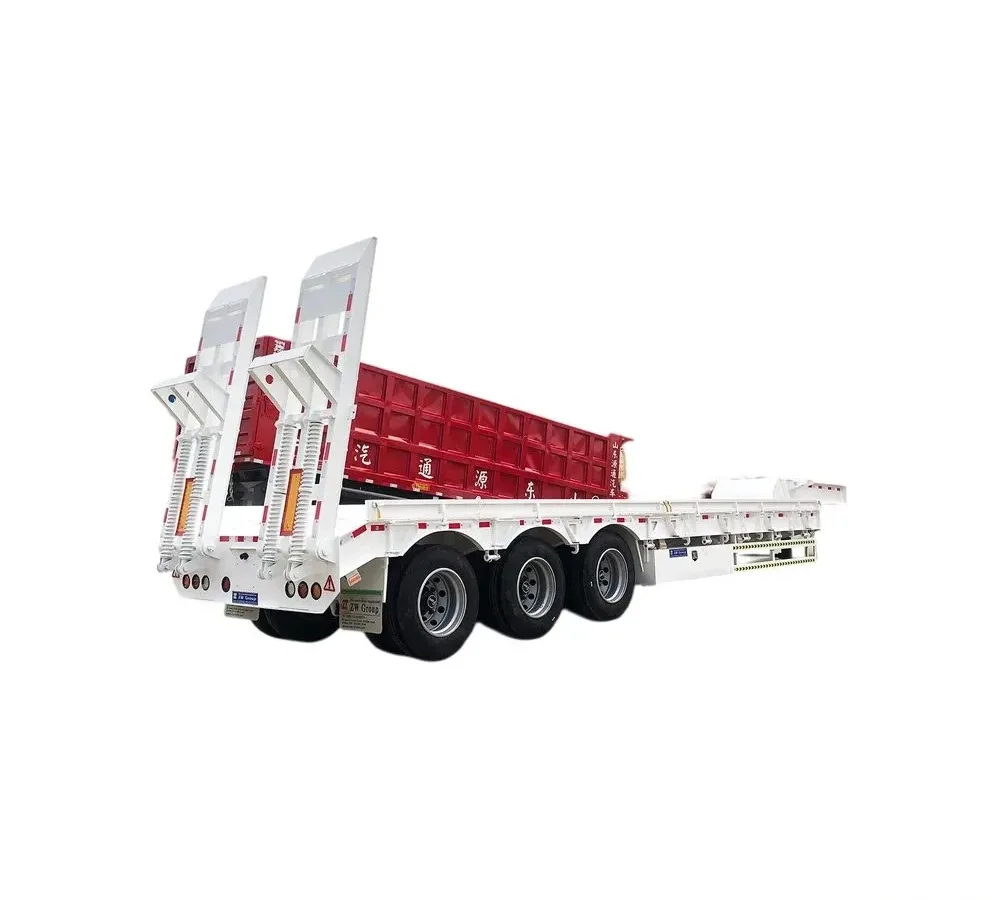
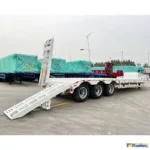

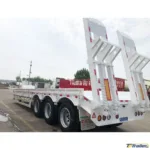
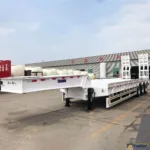
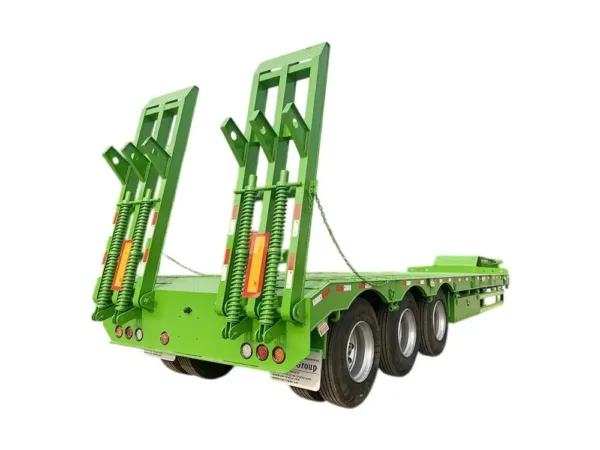
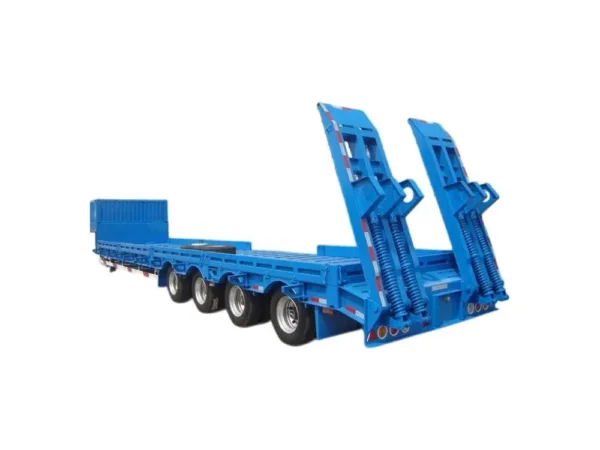
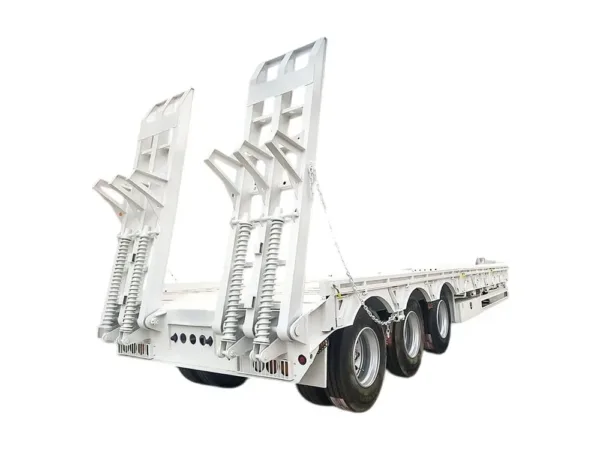
low loader truck semi trailer lowbed lowboy flatbed semi trailer with 25001-30000 KG load capacity and steel build. Quotes available for fleet buyers.


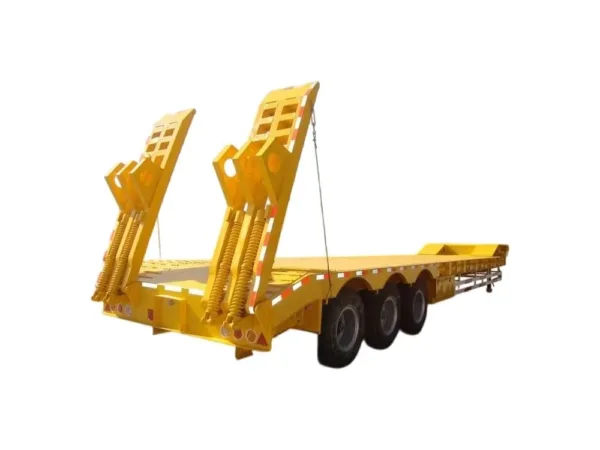

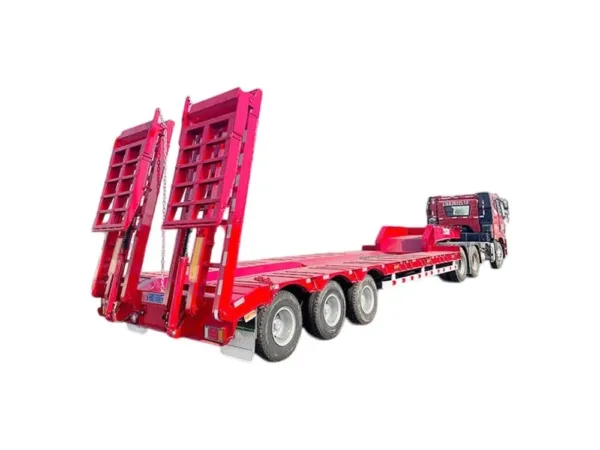
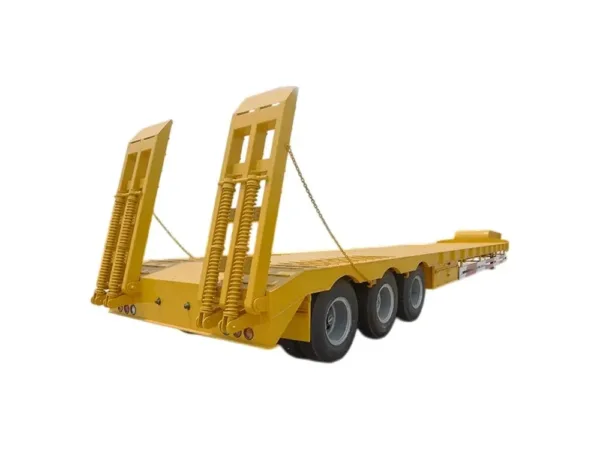

The low loader truck semi trailer lowbed lowboy flatbed semi trailer is a heavy-duty semi trailer built to move excavators, bulldozers and other machines that cannot travel on their own wheels. It suits fleet operators, plant hire companies and contractors who need one trailer that handles both site-to-site transfers and long highway runs. The strongest reason to choose it is the combination of a rated load capacity of 25001-30000 KG with a mechanical ladder and mechanical suspension — proven, serviceable hardware that keeps a working trailer working, without electronics or special tools to keep it on the road. Every specification below is stated as supplied, and anything not fixed here is settled at quotation.
The most common job is moving tracked and wheeled plant between sites. An excavator finishes a foundation dig, and the low loader truck semi trailer lowbed lowboy flatbed semi trailer takes it to the next plot, the next quarry bench or the next road section. The same trailer carries bulldozers, backhoes, compactors and skid steers.

Because the deck sits low, a machine with a high cab or a raised boom still clears overhead structures on the route. Operators also use it for one-off moves: a replacement engine, a generator set, a crushing unit or a bundle of steel that is too heavy or too awkward for a flatbed. The rated load capacity of 25001-30000 KG covers the bulk of these everyday plant moves, which is why one trailer type appears again and again in mixed plant fleets.
On longer runs, the unit earns its place on highway transfers between depots, ports and project sites. A machine loaded at a yard can travel behind a standard tractor unit to a site hundreds of kilometres away, then be unloaded with the same mechanical ladder and driven straight to work. Rental companies use it to deliver and collect equipment on schedule; contractors use it to reposition plant as a project moves through phases.
The low deck also helps at weighbridges and on routes with height restrictions, where a high-deck flatbed would force a detour. For a fleet that already runs tractor units, adding a low loader truck semi trailer lowbed lowboy flatbed semi trailer extends what those tractors can earn without buying new prime movers.
Customisation on this low loader truck semi trailer lowbed lowboy flatbed semi trailer is a build-sheet exercise: every choice below changes what is fabricated, so each one must be fixed before production starts and repeated on the order confirmation.
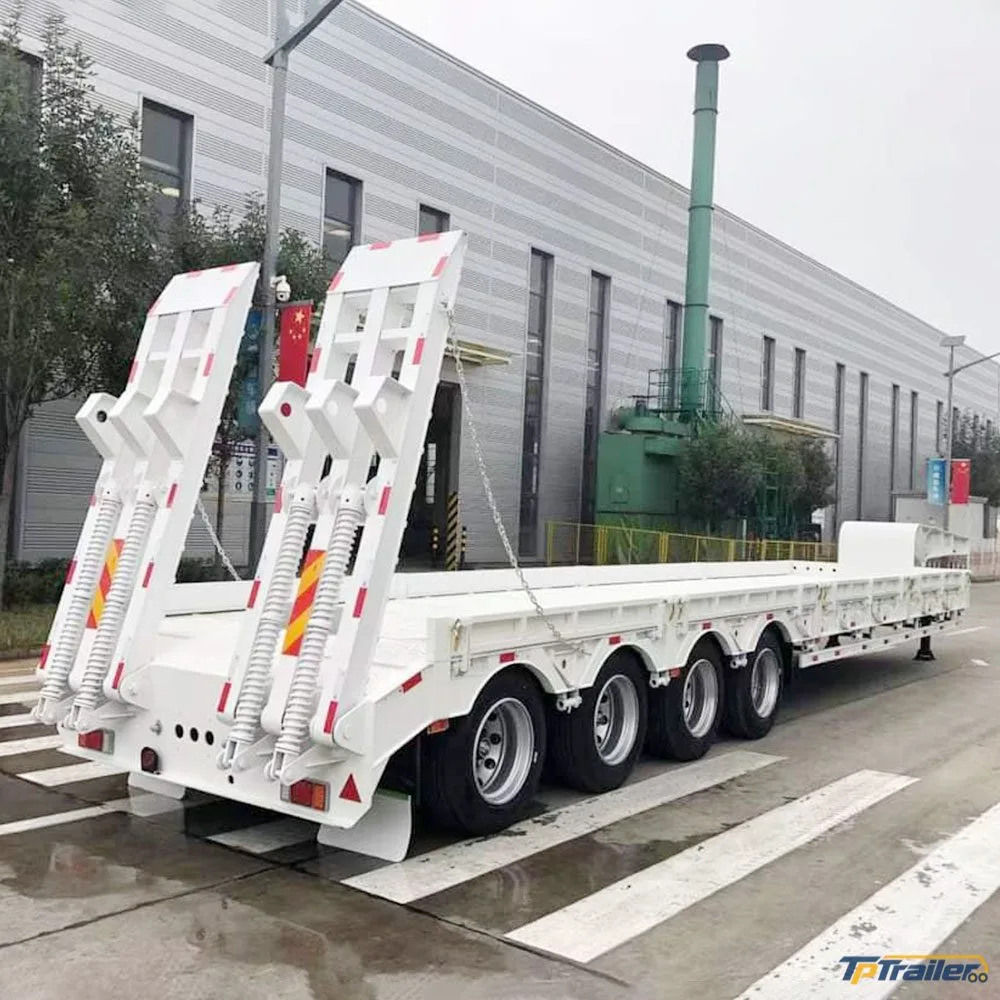
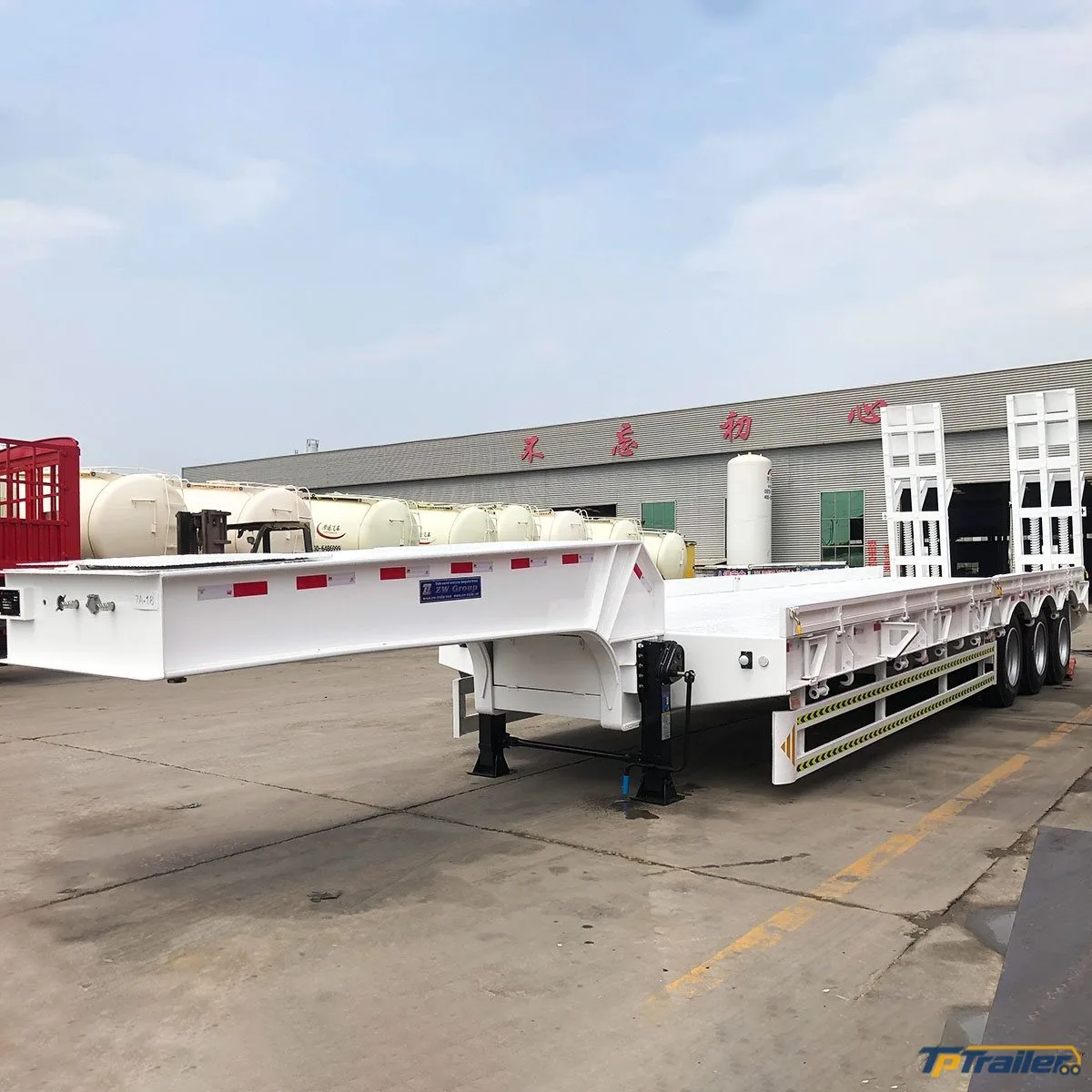
On arrival, your workshop must match the trailer to the tractor unit before the first loaded run. Check the king pin against the fifth wheel, the support leg mounting points against the ground clearance you need, and the brake chamber and relay valve layout against your air line routing. Confirm the axle spacing and suspension mounts sit square on the frame.
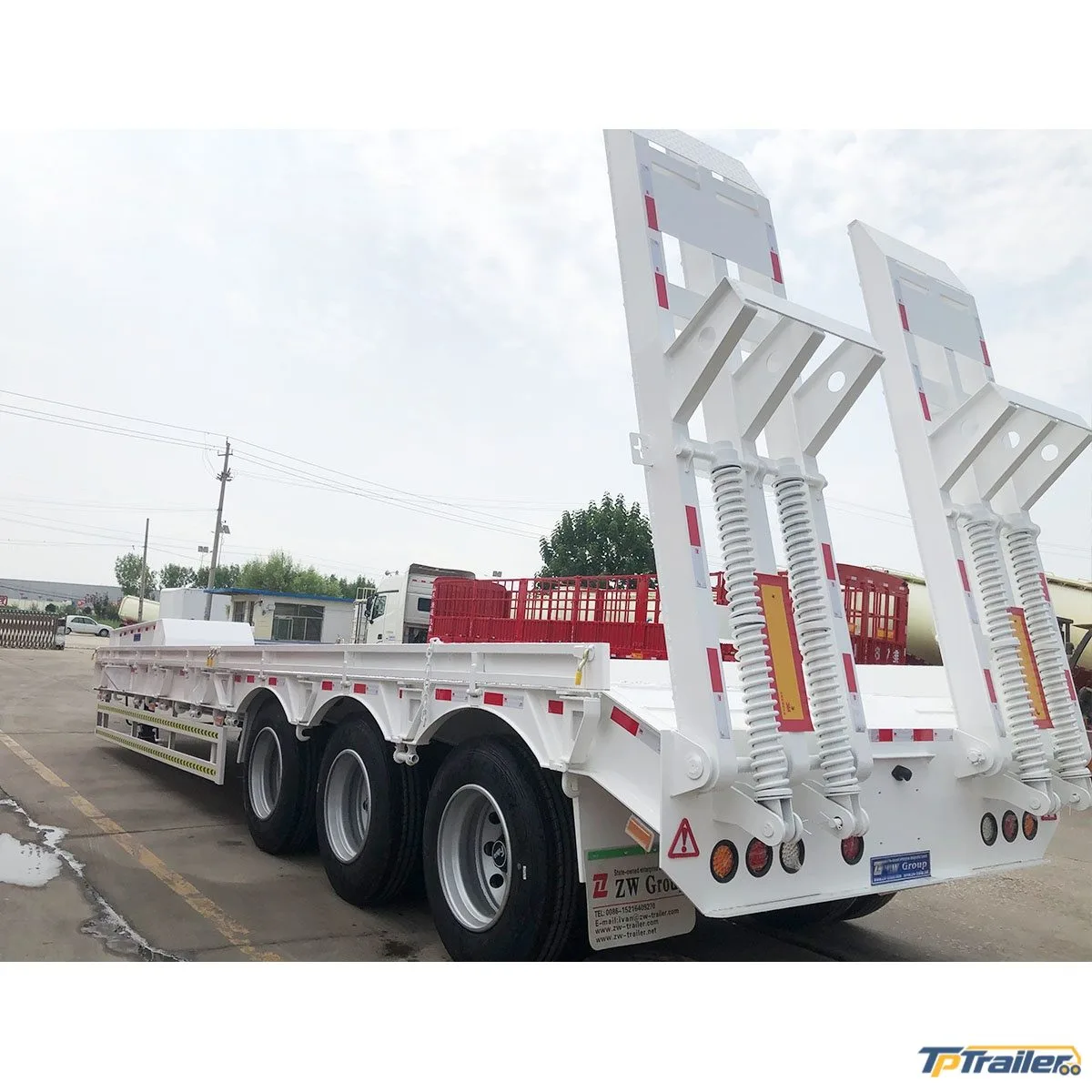
Because no fitment drawing is included in the product data, a fitment drawing is confirmed at quotation instead. That drawing should show mounting points, tube sizes and hose routing so your team can prepare tools and parts in advance. Do not assume the low loader truck semi trailer lowbed lowboy flatbed semi trailer will bolt straight onto any tractor without this check.
A wrong size at this stage costs downtime, not just parts. A mismatched king pin can keep the assembly parked while you source an adapter or a replacement. Incorrect hose routing can chafe under load and force a brake inspection before the trailer earns any revenue. Support legs that do not meet the ground properly make loading the machines slower and less stable. Walk through the fitment drawing with your mechanic before delivery, list every interface, and raise questions during quotation. Catching a mismatch then is far cheaper than finding it on the first job.
The tare weight range of about 8.5-13T is part of the same calculation. A lighter build leaves more of the legal combination weight for the machine; a heavier build usually reflects more axles or heavier hardware. Before the first run, weigh the coupled rig at a public weighbridge with a representative machine aboard and compare the result with the plated limits on the tractor and the low loader truck semi trailer lowbed lowboy flatbed semi trailer. That single measurement tells you whether your axle spread and tyre specification suit the routes you actually drive, and it is far easier to adjust a build sheet than to argue at a checkpoint.
A low loader truck semi trailer lowbed lowboy flatbed semi trailer ships as a partly disassembled unit. The manual ladder and loose components are removed and bundled separately. Steel surfaces are cleaned and coated for sea transit. The deck and frame are protected against rubbing with timber dunnage at contact points. Small parts such as the king pin fittings, support leg parts and brake chamber components are boxed and labelled. Each box carries the trailer serial so the receiving team can match parts to the right unit.
Loading depends on the deck length and the shipping method. The assembly is normally loaded as a single flat unit. Short decks may be nested or stacked in pairs where the frame design and the carrier allow it. The buyer should confirm the shipping plan before booking. Check the deck length against the container or vessel space. Verify the tie-down points and the loading plan. On arrival, inspect the frame, deck, ladder and axle assemblies before signing the delivery receipt.
That depends on the deck length and the shipping method. A low loader truck semi trailer lowbed lowboy flatbed semi trailer is usually too long for a standard container, so flat rack or break bulk is common. Send the deck length and the axle count to the supplier. Ask for the loading plan and the overall dimensions. Confirm the carrier accepts the plan before booking. Container loading is confirmed at quotation for the specific size.
Inspect the frame, deck and ladder for transit damage before signing the delivery receipt. Check the axle assemblies, suspension and brake chamber parts against the packing list. Confirm the king pin and support leg parts are present and match the order. Photograph any damage and note it on the receipt. Keep the packing list with the trailer documents. Report shortages to the supplier promptly, since claims depend on the signed receipt.
Yes. The logo is applied according to your request, and the axle brand is selected at order. State the axle brand you want and the logo artwork with the order. Confirm the king pin type, suspension type and ladder type at the same time. These choices affect production, so they must appear on the order confirmation. Any detail not stated in the input is confirmed at quotation before the order is placed.
Send the deck length, the axle count and the quantity you need for a quotation on this low loader truck semi trailer lowbed lowboy flatbed semi trailer. Include the machine weight you plan to move and the king pin and suspension types you prefer. With those details, the supplier can confirm the configuration and the shipping plan for your order.
Explore more low loader truck semi trailer lowbed lowboy flatbed semi trailer in this range.
| Load Capacity | 25001-30000 KG | Type | Semi-Trailer |
|---|---|---|---|
| Place of Origin | China (Mainland) | Use | Truck Trailer |
| Material | Steel | Size | 13000 x 3000 x 1650 |
| Dimensions | * * | ||

No reviews yet — click the Review button on the right to share your experience with this product.











Fill in the form below and our team will respond within 24 hours.
Write a Review