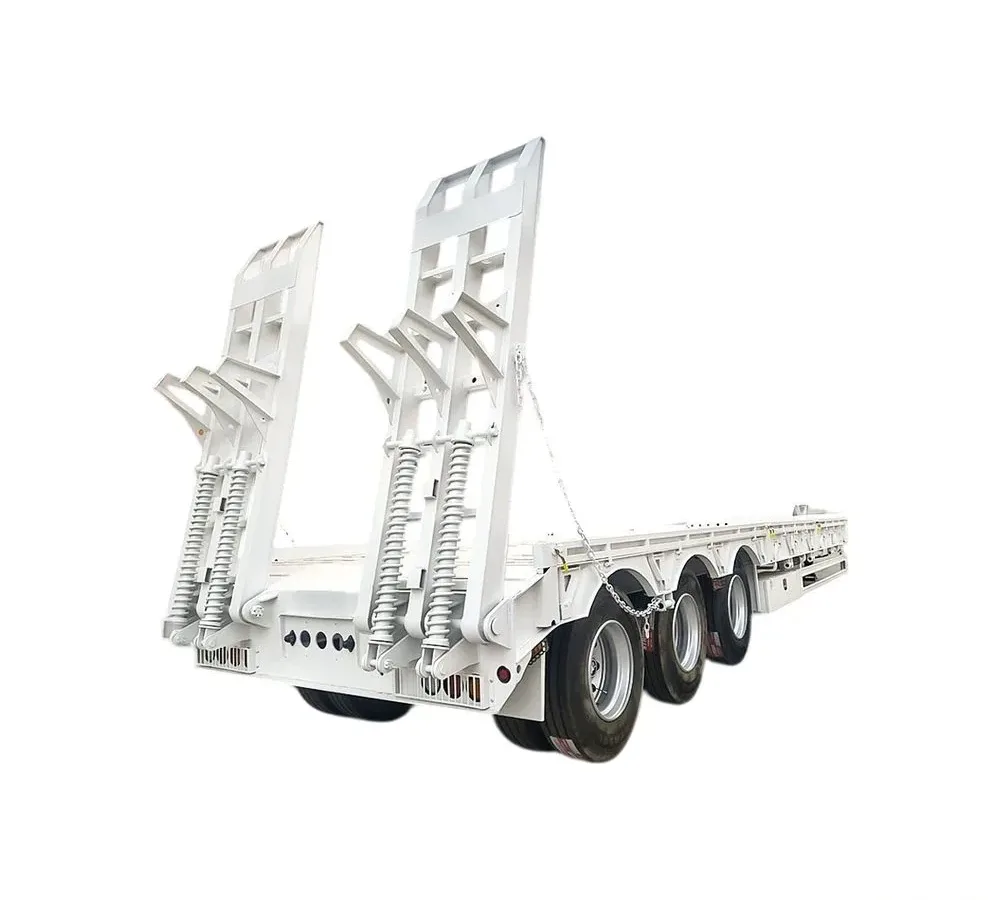
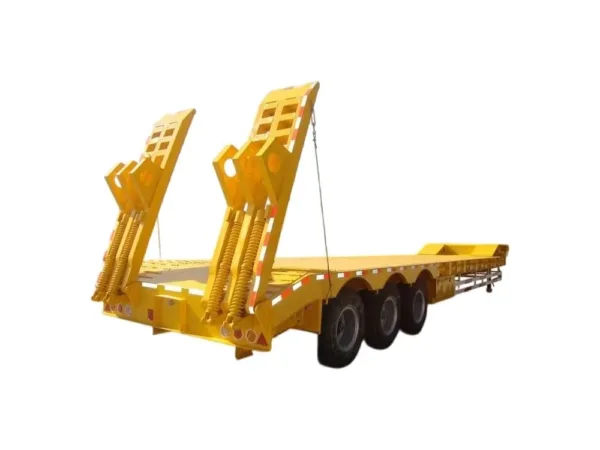
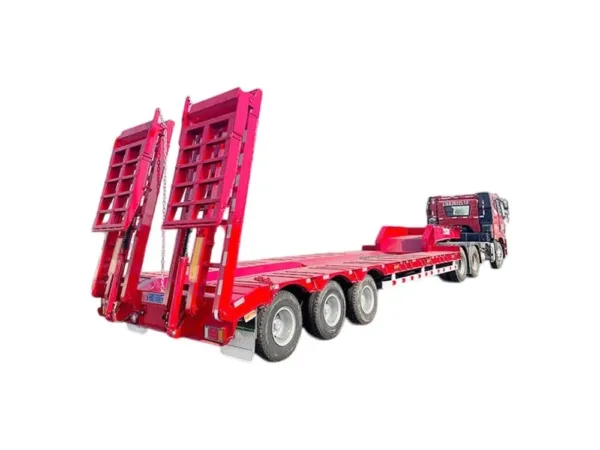
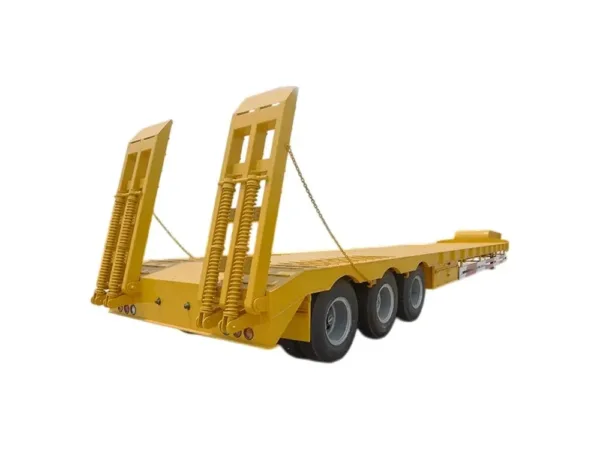
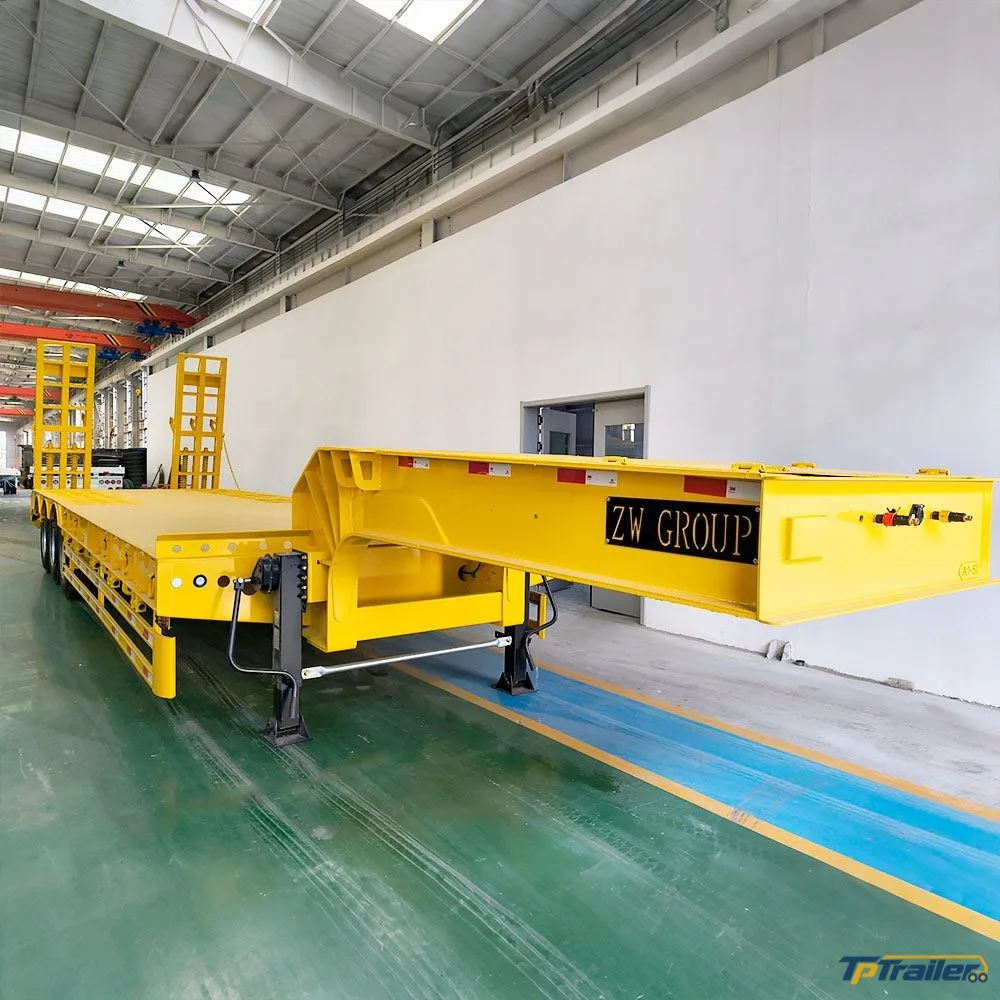
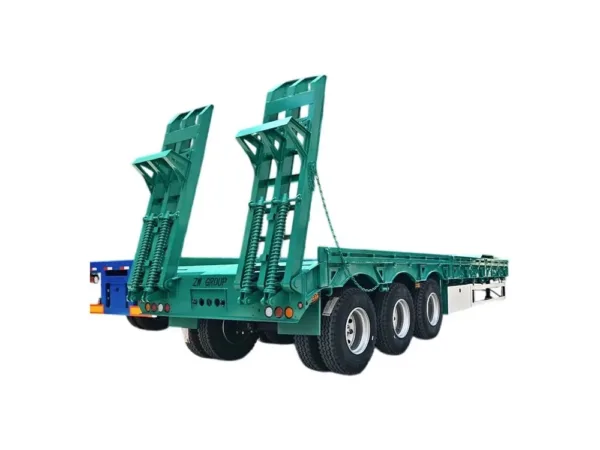
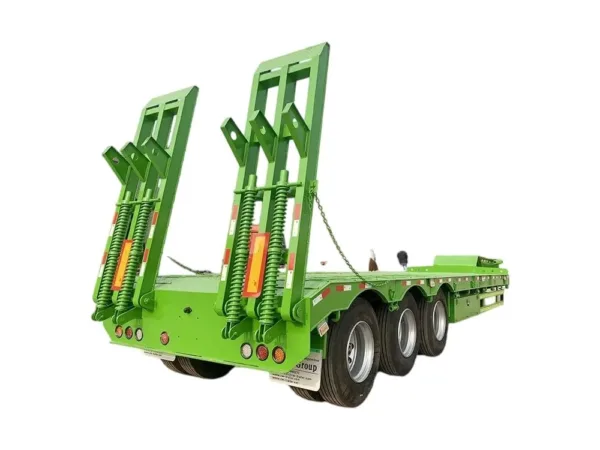
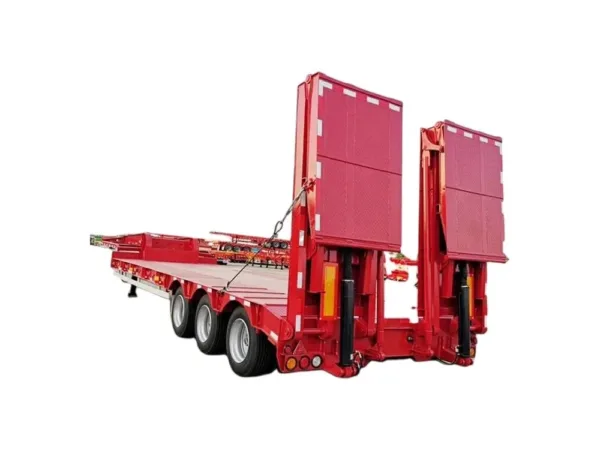
The 60 ton lowboy semi trailer is a heavy-duty lowbed platform built to move machinery that will not fit on a flatbed or fit under a bridge. It is aimed at fleet operators, equipment dealers and rental yards that haul excavators, dozers and oversize loads week after week. Its strongest selling point is simple: a reinforced deck rated to 30000 KG gives you one trailer for the heaviest jobs on your board, so you stop turning down oversized work or paying a subcontractor to cover it. The three-axle layout spreads that load across more tyres and more contact points, which keeps the platform stable when the cargo sits high.
Table of Contents
Why It Works On Site
Rated load capacity. The deck carries 30000 KG, which covers most tracked excavators and wheeled loaders in the mid-to-large class. That rating is what lets a 60 ton lowboy semi trailer replace two lighter units in a mixed fleet, so dispatch can send one trailer to a job instead of matching cargo to the nearest available bed and hoping the numbers work.
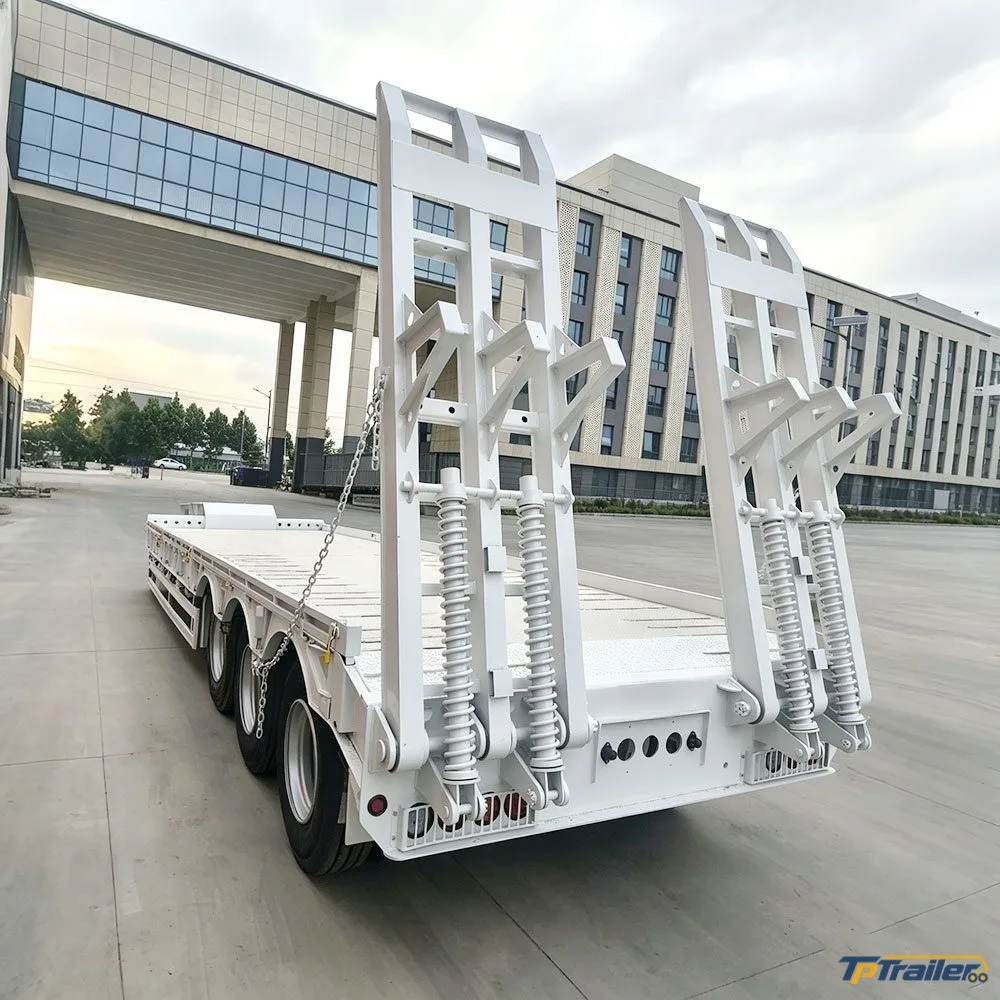
Three-axle running gear. Three axles share the cargo weight across more tyres and more ground contact. On soft yard surfaces and site roads this reduces point loading and keeps the 60 ton lowboy semi trailer sitting level while a machine climbs the ramps, which matters when the operator is loading without a spotter and cannot see the deck edges.
Low deck height. A lowbed platform drops the cargo closer to the ground than a standard flatbed. That lowers the overall travel height, so a 60 ton lowboy semi trailer clears overhead obstructions on yard routes and access roads and keeps tall equipment within legal envelope limits without a permit for height alone.
Rear loading ramp. Tracked and wheeled machines drive straight up the rear ramp onto the deck. This means no crane booking, no lift plan and no rigging crew on site. A 60 ton lowboy semi trailer turns a loading job that would take half a day with a crane into a drive-on procedure the machine operator can complete alone.
Heavy-duty deck structure. The deck is built to take concentrated point loads from tracks and steel wheels rather than only spread loads. That is the difference between a 60 ton lowboy semi trailer and a general flatbed: you can park a machine with a narrow track footprint on it and work around it without worrying about deck deflection under the load.
Oversize cargo envelope. The open deck and low platform accept equipment that is wider or taller than a standard trailer allows. For a 60 ton lowboy semi trailer this means the awkward loads, the machines with attachments still fitted, become routine hauls rather than special projects that need planning meetings and outside equipment.
Where It Is Used
Construction and earthmoving fleets are the heaviest users. A 60 ton lowboy semi trailer moves excavators between housing developments, road projects and quarry pits as the work moves from site to site. The rear ramp loading means a machine can be driven on at the end of a shift and moved overnight, so the equipment is on the next site at the start of the following day.
Dozers, backhoes, compactors and skid steers all fit within the deck’s working envelope, and the low platform keeps the loaded unit stable on highway runs between jobs. Rental yards use the same trailer to deliver and collect machines on short notice, because the drive-on procedure does not depend on a crane being available at the customer’s address. That flexibility is why a 60 ton lowboy semi trailer is often the first heavy unit a growing fleet buys.
Agriculture and forestry operations use the same platform for a different cargo mix. Tractors with implements fitted, combine headers, sprayers and log-handling equipment are all oversize in one dimension or another. A 60 ton lowboy semi trailer carries them without stripping attachments first, which saves a workshop visit at each end of the trip. Municipal and utility contractors use it for transformers, generators, pumps and prefabricated structures that arrive on skids and cannot be lifted onto a standard bed.
On these routes the low deck height is the deciding factor, because it keeps the load under overhead lines and bridge structures without a height permit. Wind farm and pipeline crews also rely on the platform for site-to-site moves of support equipment. In each case the 60 ton lowboy semi trailer earns its place by accepting the load as it arrives, rather than requiring the load to be broken down to fit the trailer.
Choosing The Right Spec
Match the rating to your heaviest routine load. The 30000 KG load capacity is the number to compare against the machines you move most often, not the heaviest machine you might ever move. If your regular work sits comfortably under that rating, a 60 ton lowboy semi trailer covers it with margin and you avoid paying for capacity you rarely use. Check the operating weight of your largest tracked machine including attachments before deciding.
Count axles against your routes. Three axles suit operators who run a mix of highway and site roads, because the extra contact points help on soft ground. If your work is mostly paved highway between depots, the same 60 ton lowboy semi trailer still performs, but the axle count is worth confirming against the bridge and road limits on your regular routes rather than against the cargo alone.
Deck length and width against cargo footprint. Measure the machines you haul, including any attachment that stays fitted in transit. A 60 ton lowboy semi trailer should accept the full footprint with the load balanced over the axles. If your cargo is consistently at the wide end, confirm the deck width before ordering, because an oversize load that overhangs the deck changes how you secure it and how you route the trip.
Volume pricing against fleet size. The price steps reward buying more than one unit at a time, so a fleet planning to add capacity across several depots should size the order to the number of trailers it actually needs. A single 60 ton lowboy semi trailer suits an owner-operator; a multi-unit order suits a fleet replacing several lighter beds with one standard platform.
Customisation Before Delivery
The axle count is agreed at order confirmation. A 60 ton lowboy semi trailer can be ordered with the axle configuration that suits your load profile, and the choice is locked into the build sheet before production starts. Buyers moving oversized machinery on a regular route often match the axle count to the bridge rules they run under.
Deck length is settled at order confirmation. Longer decks carry longer equipment, while shorter decks keep the manoeuvring envelope tight on site roads. State the longest item you plan to load, and the deck is set around that figure. This is the single most useful customisation on a 60 ton lowboy semi trailer.
Suspension type is chosen at order confirmation. Mechanical and air options behave differently on rough site access, and the choice affects how the deck sits under load. Tell us the road conditions the trailer will work in, and the suspension is matched to them on a 60 ton lowboy semi trailer.
Tyre specification is confirmed at order confirmation. Tyre size and pattern are matched to the axle count and the surfaces you run on, from sealed highways to unpaved site roads. The tyre set is part of the same build sheet, so it is fixed before the 60 ton lowboy semi trailer enters production.
Colour and finish are chosen at order confirmation. Paint colour is a practical decision for fleet identification, and the finish coats protect the steel structure. Confirm the colour code with the order so the 60 ton lowboy semi trailer leaves the line in the livery your fleet expects.
Fitting And Installation
On arrival, the buyer’s workshop has to match the trailer to the tractor unit and to the load it will carry. That means checking the mounting points on the fifth wheel coupling, the alignment of the kingpin, and the clearance between the deck and the tractor frame. The electrical connection has to be checked pin by pin against the tractor socket, and the air lines have to reach the coupling head without strain or kinking.
Hose routing deserves a slow, deliberate look: lines that rub against a frame edge will fail early, and lines that loop too low will catch on site obstacles. On a 60 ton lowboy semi trailer these checks take an afternoon and prevent most of the problems that appear in the first working week. Where the input gives no fitment data, a fitment drawing is confirmed at quotation instead of being assumed at delivery.
A wrong size costs downtime, and the cost is rarely limited to the part itself. A kingpin that does not seat correctly stops the trailer from entering service at all. A hose that is too short forces the workshop to source a replacement before the first load moves. A deck that sits too high against the tractor frame changes the approach angle and makes loading harder on every trip.
For a 60 ton lowboy semi trailer, the fitment drawing is the document that settles these questions before steel is cut. Buyers should send the tractor model and the coupling height with the enquiry, and confirm the drawing at quotation. That single step keeps the trailer and the tractor working as one unit from the first day.
Service Life And Maintenance
The tyres and brake linings wear first on any heavy trailer. Operators should inspect tread depth, sidewall condition and lining thickness at every pre-trip check, and watch for uneven wear that points to an alignment issue. On a 60 ton lowboy semi trailer, regular tyre rotation spreads the load and keeps the wear pattern even across the axle set.
The deck surface takes constant abrasion from tracks and steel edges. Inspect the deck for gouges, lifted welds and corrosion at the seams. A protective coating or a hardwood deck option, chosen at order confirmation, extends the interval between deck repairs on a 60 ton lowboy semi trailer and keeps the loading surface flat.
Suspension components are the next wear point. Check springs, bushings and shock absorbers for cracks, flattening and play. A suspension type matched to the route, settled at order confirmation, reduces the stress each component sees. Operators of a 60 ton lowboy semi trailer should inspect the suspension after every run over rough ground.
The kingpin, fifth wheel plate and landing gear carry the coupling loads. Inspect for play, elongation and cracked welds, and keep the plate greased. A greasing routine protects the coupling area and keeps steering response predictable. On a 60 ton lowboy semi trailer, this inspection is quick and catches wear before it becomes a roadside repair.
Paint and structural steel should be checked each season. Look for chips, rust blooms and stress marks around welded joints, and touch up the coating where it has failed. A finish chosen at order confirmation slows corrosion and keeps the structure sound. A 60 ton lowboy semi trailer that is washed and inspected regularly holds its value far longer.
Packing And Container Loading
A 60 ton lowboy semi trailer ships as a knock-down or part-assembled unit, so packing starts with steel protection. Frame sections, ramps and axle assemblies are usually coated and wrapped to limit salt spray damage on deck. Loose items such as pins, bolts and lights travel in labelled crates strapped inside the frame. Confirm with the supplier how the 60 ton lowboy semi trailer is braced against shifting in heavy weather. Lashing points and blocking should be visible in loading photos.
Space saving matters because a 60 ton lowboy semi trailer is long and wide. Ask whether the deck, ramps and side extensions can be nested or stacked for the voyage. Some builders remove wheels or fold ramps to shorten the footprint, but that changes what you must refit on arrival. A 60 ton lowboy semi trailer ordered in quantity may load more efficiently when parts are bundled. On arrival, check frame straightness, coating, welds and crate contents against the packing list.
Common Mistakes Buyers Make
Matching the load capacity to the wrong cargo. Buyers compare the headline rating with the machine weight and forget the trailer’s own mass and axle distribution. Check the static rating against your heaviest load plus the trailer’s tare before ordering. That single check prevents an overloaded 60 ton lowboy semi trailer and a rejected delivery.
Ignoring axle configuration. A three-axle layout suits some roads and not others. Confirm the axle count against local bridge and road rules, then compare it with the load you plan to move. The 60 ton lowboy semi trailer must match both the cargo and the routes it will travel.
Skipping the coupling check. Fifth wheel height, kingpin size and ramp approach angle decide whether the unit tows and loads correctly. Measure your tractor’s coupling height and your machine’s ramp clearance before ordering. A 60 ton lowboy semi trailer that cannot couple is a return waiting to happen.
Ordering without a packing list. Loose parts go missing when crates are not itemised. Ask for a labelled list of every pin, bolt, light and ramp component before shipment. Verify it against the 60 ton lowboy semi trailer on arrival, not weeks later when assembly stalls.
Assuming paint survives the sea. Buyers accept coating as delivered and find rust at the deck edges. Confirm the coating system and touch-up paint in the order. Inspect the 60 ton lowboy semi trailer for coating damage before signing the delivery receipt.
Buyer Questions
Can the trailer be shipped in one container?
That depends on the deck length, width and how far the unit is broken down. A 60 ton lowboy semi trailer is long, so many shipments need flat rack or break bulk rather than a standard box. Ask the supplier for the packed dimensions and weight before you book freight. Then compare those figures with your forwarder’s container limits. Loading method is confirmed at quotation.
What should I measure before ordering?
Measure your heaviest machine’s length, width, height and weight, plus the ramp approach angle it needs. Measure your tractor’s fifth wheel height and kingpin position too. Send those figures with your route restrictions, such as bridge limits and turning space. The supplier can then confirm whether the 60 ton lowboy semi trailer suits your cargo. Any mismatch is cheaper to fix before production than after delivery.
What is included in the quoted price?
The listed price covers the trailer as configured, but packing, crating, lashing and freight are usually separate. Ask for a written breakdown before you approve the 60 ton lowboy semi trailer order. Confirm which loose parts ship in the crate and which are fitted at the factory. Spare wheels, ramps and lighting packages may be options. Final scope, payment terms and shipping arrangements are confirmed at quotation.
Ready to price a 60 ton lowboy semi trailer? Send your required deck length, the number of axles you need and the quantity you plan to order. Add your heaviest machine’s weight and dimensions so the configuration can be checked against your cargo. We will reply with a written quotation covering the trailer, packing and loading options.
We use cookies to enhance your browsing experience, serve personalized content, and analyze our traffic. By clicking "Accept All", you consent to our use of cookies. Privacy Policy
Cookie Preferences
Required for the website to function properly. Cannot be disabled.
Help us understand how visitors interact with the website (Google Analytics).
Used to deliver personalized ads and measure ad campaign effectiveness.



















Write a Review