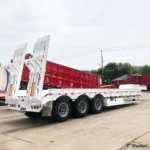
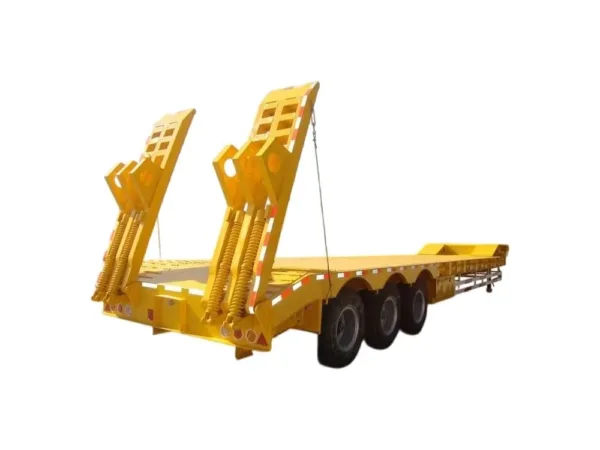
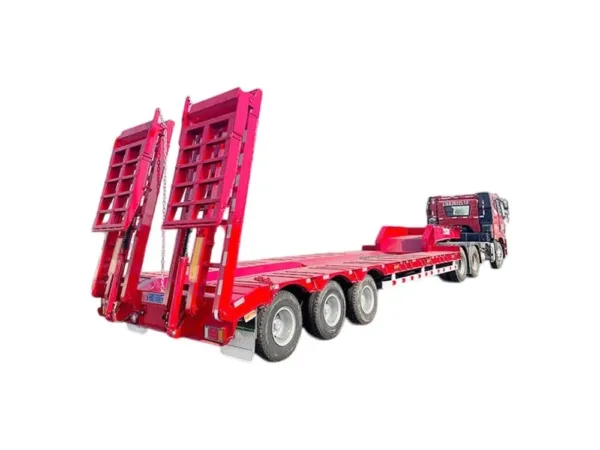
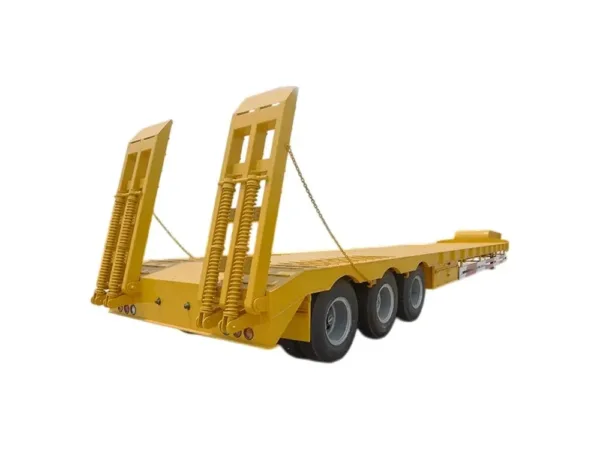
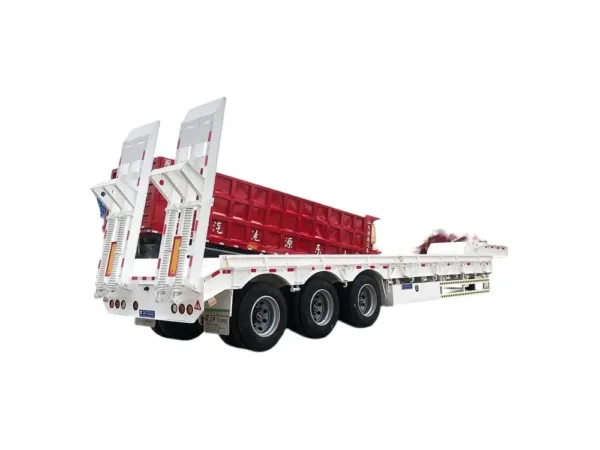
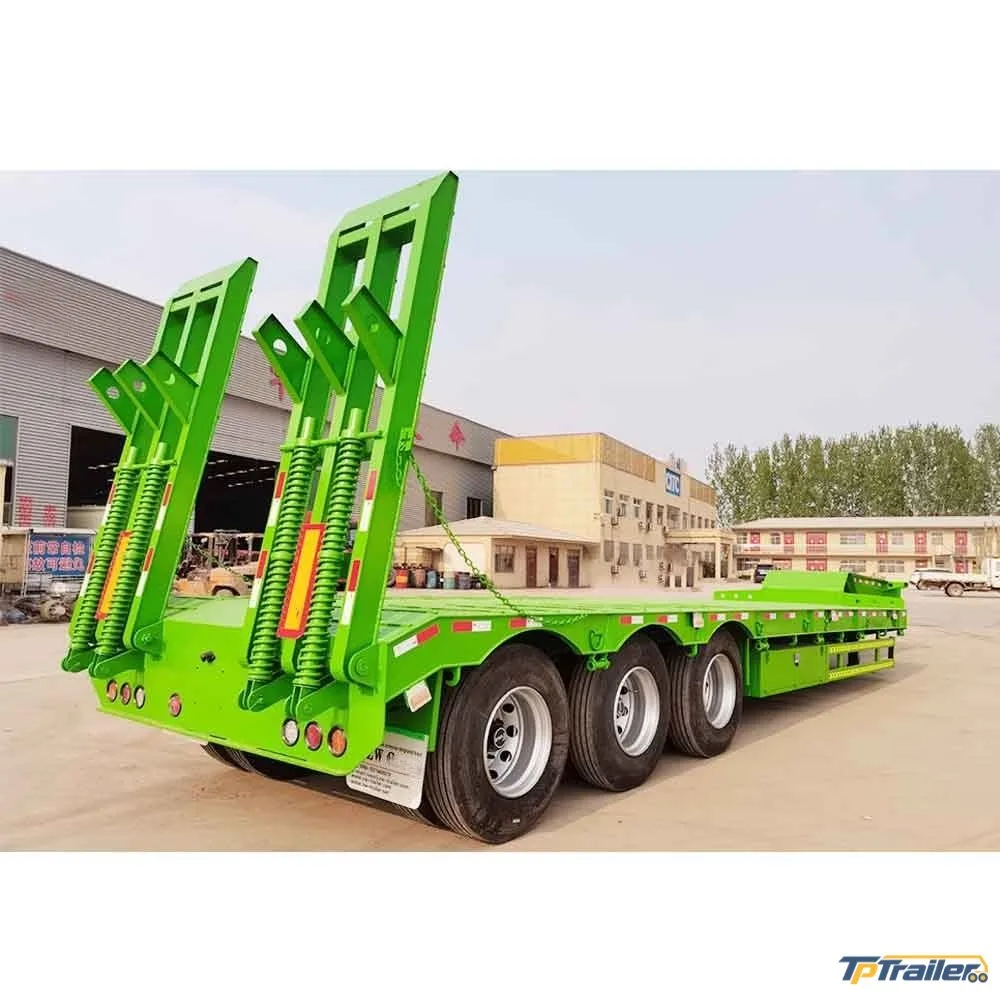
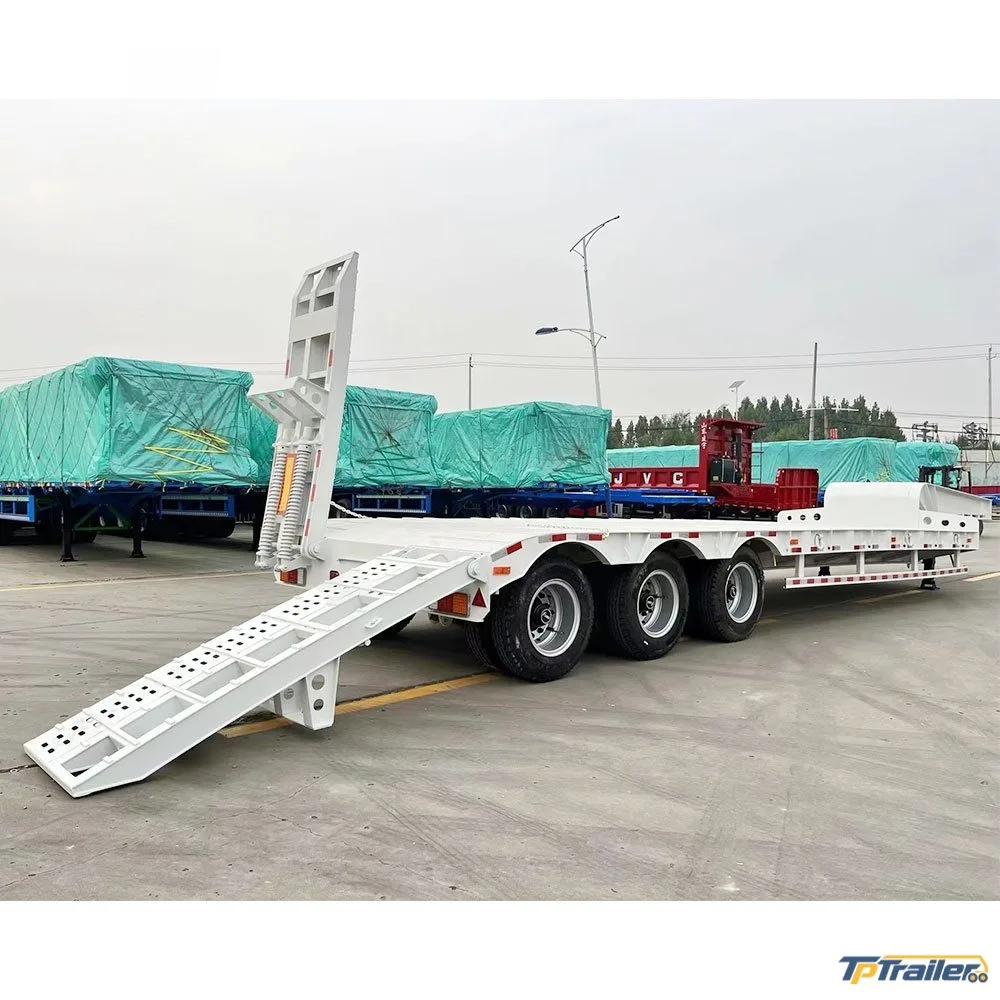
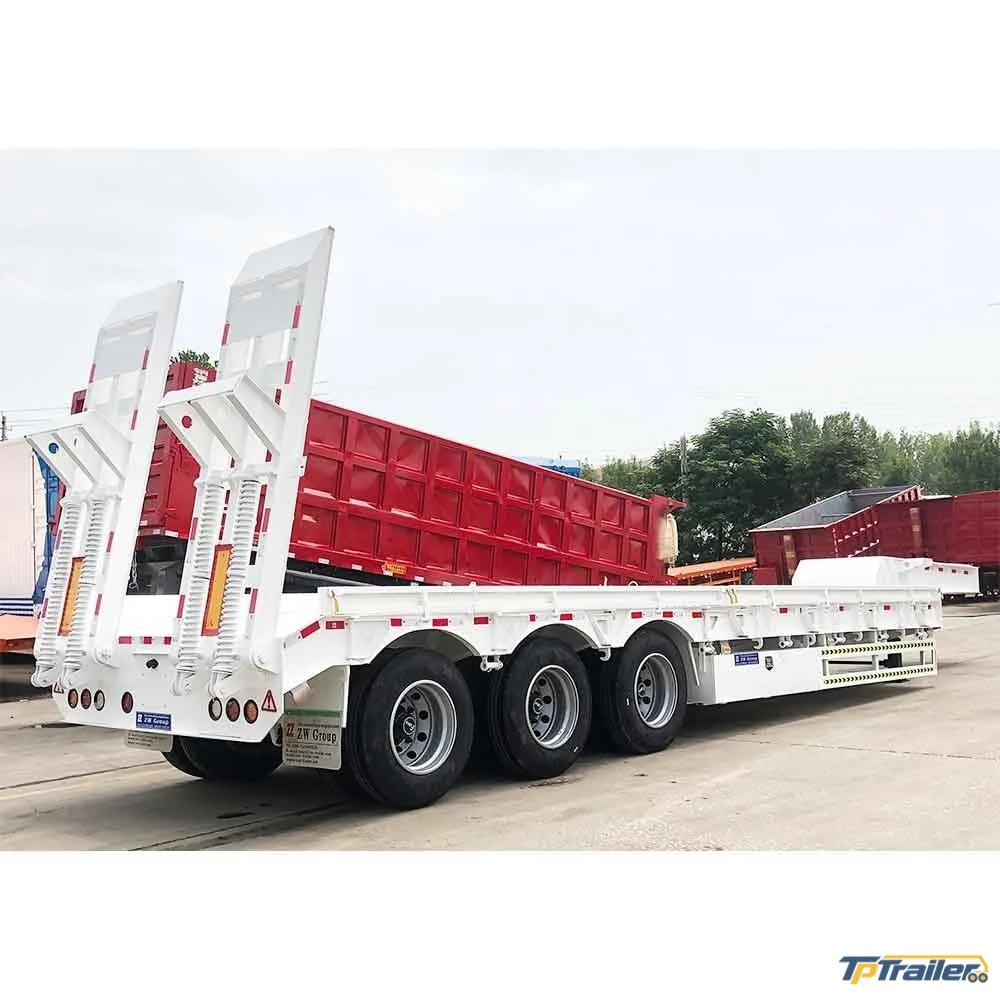
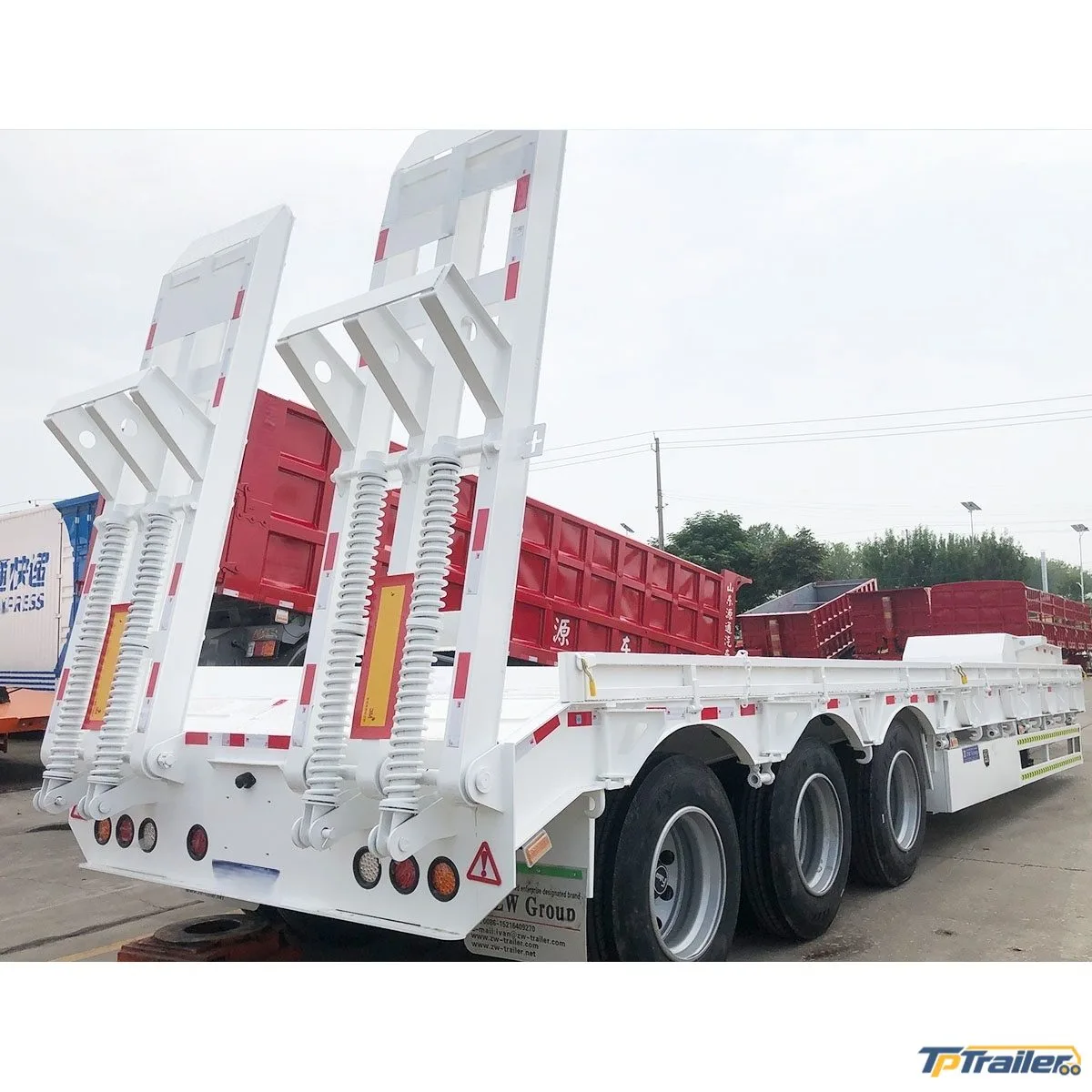
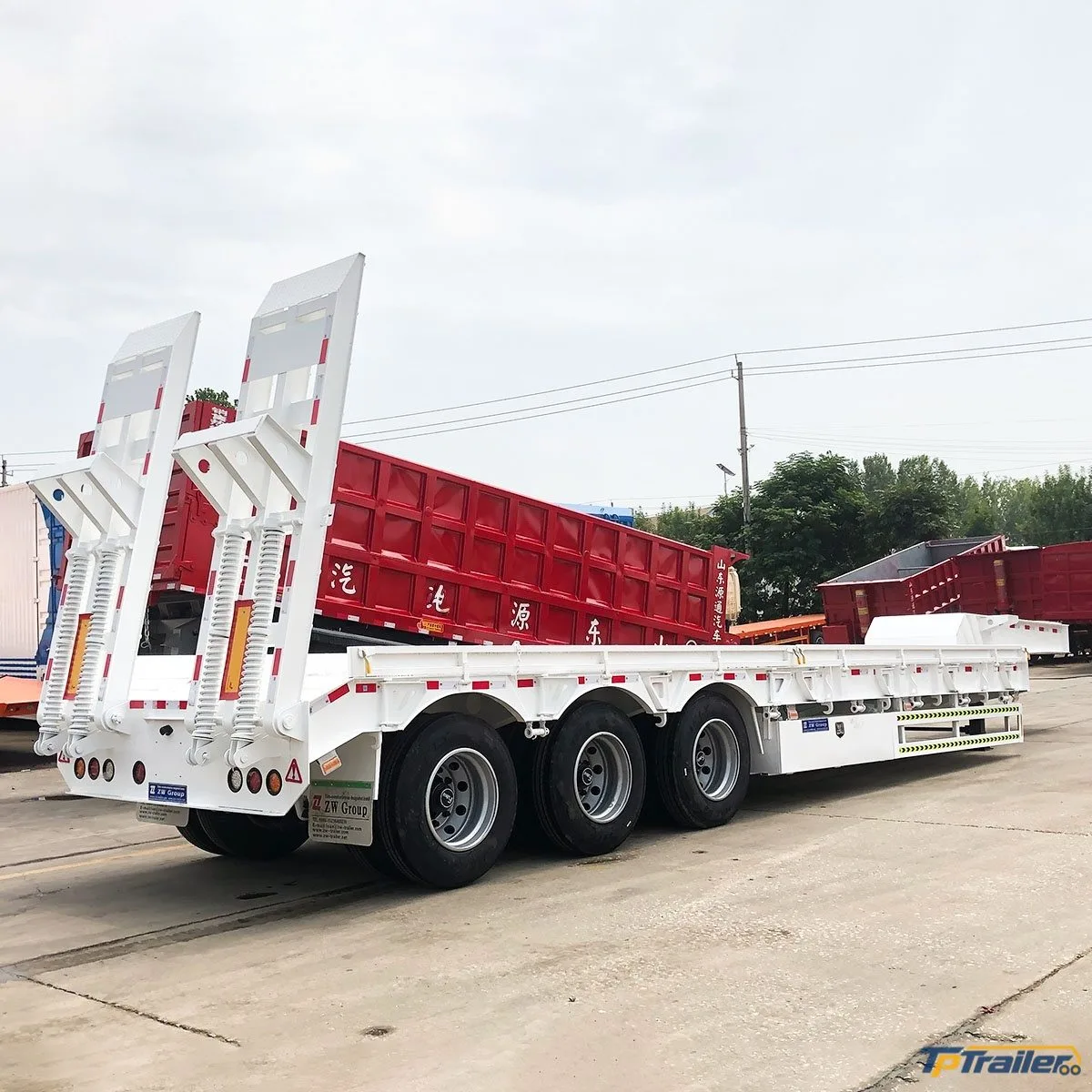
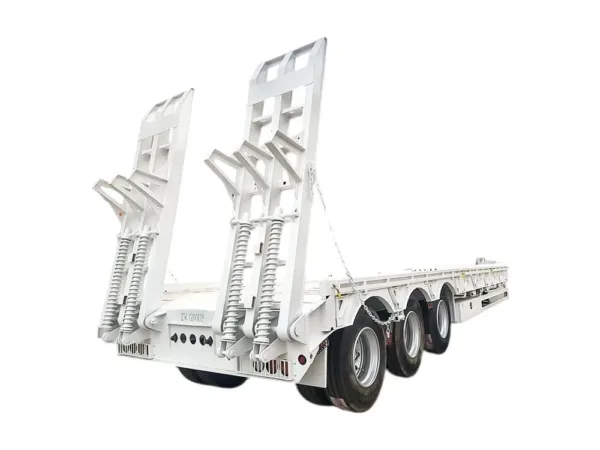
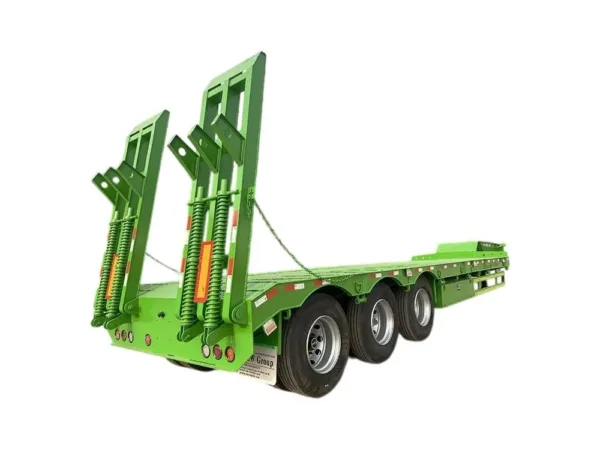
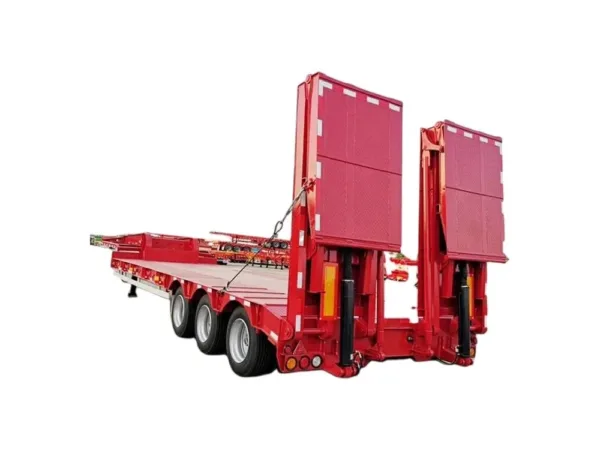
3 Axle 4 Axle Lowbed Semi Trailer 30T-90T Heavy Duty
lowboy loader semi trailer for construction machinery, 30T-90T capacity, 3 or 4 axle, 12R22.5 or 11.00R20 tires, 50# or 90# kingpin. Request a quote today.
3/4
FOB Reference PriceUS$6,000-10,000Final price confirmed by inquiry
Certifications
ISO 9001
Key Features
Hauls construction machinery on a lowbed deck rated 30T-90T
Available with 3 or 4 axles to match load and road rules
Common mechanical suspension for simple servicing
50# or 90# kingpin to fit your tractor unit
3-5 diamond steel plate floor for grip and wear life
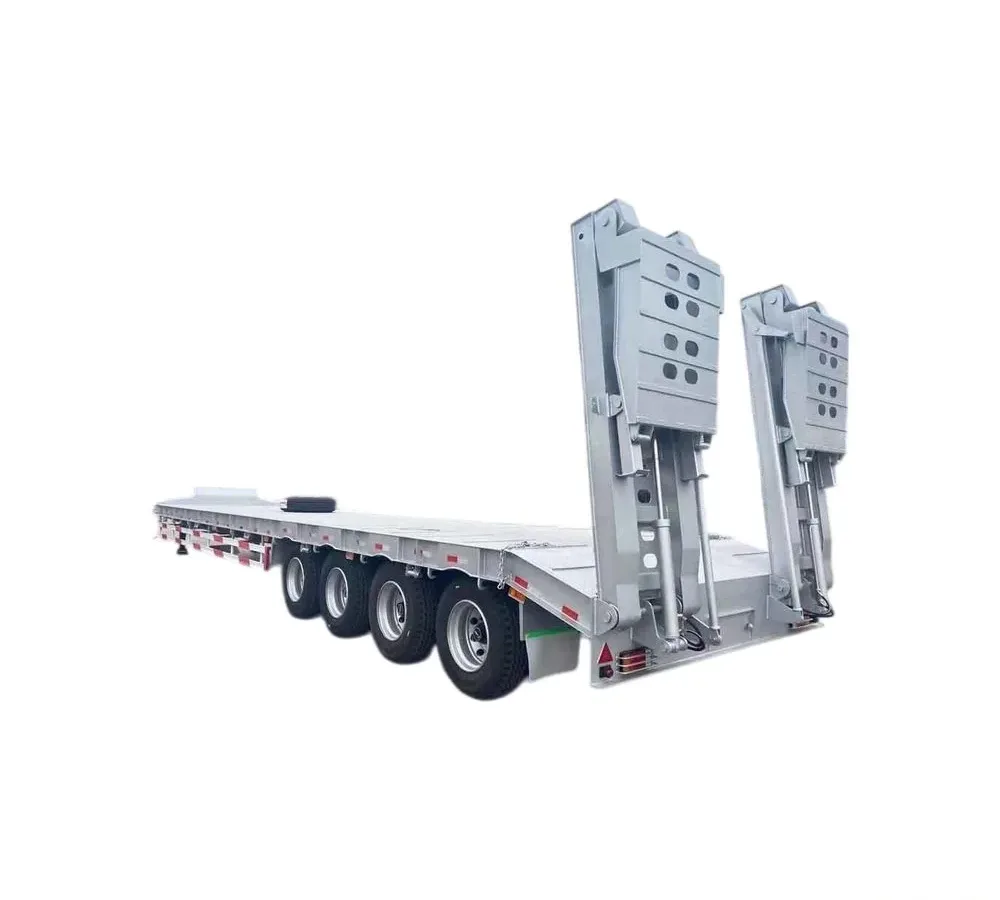
A lowboy loader semi trailer is the working platform fleets rely on when the cargo is too tall, too heavy or too awkward for a standard flatbed. It pairs a dropped deck with a multi-axle running gear, so excavators, dozers and compactors sit low and stable over the road. It suits contractors, plant hire yards and heavy haulage operators moving their own machinery between jobs. The strongest reason to choose this design is the load height it gives you: equipment rolls on at grade and travels under bridge and cable clearances that stop a deck-over trailer. Capacity, axle count and deck surface are all configurable to the machine you move most.
Table of Contents
Why It Works On Site
Stepped low deck for tall plant. The dropped main deck keeps the machine’s centre of gravity close to the ground. That is what lets a lowboy loader semi trailer clear overhead obstructions a flatbed cannot, and it makes a tracked excavator feel settled on bends and ramps rather than top-heavy. Loading angle at the ramp is gentler too, which matters when the machine has a long boom or a wide track gauge.
Multi-axle running gear spreads the weight. Three and four axle configurations divide the load across more tyres and more contact patches. For the buyer this converts a heavy machine into a legal, evenly distributed road load. It also reduces point loading on the deck, so the steel floor and crossmembers work less hard on every trip. That is the difference between a trailer that lasts a season and one that lasts a fleet cycle.
Heavy-duty rated capacity range. The capacity band covers everything from mid-size utility plant up to the largest tracked machines a contractor owns. You match the trailer to your heaviest regular load instead of hiring out for it. A lowboy loader semi trailer specified at the top of the range lets one asset cover the whole yard, which simplifies dispatch and removes the guesswork of which trailer can take which machine on a given morning.
Diamond plate deck surface. The chequered steel floor gives tracks and tyres something to bite on, wet or dry. Operators notice this most during loading in rain, when a smooth deck becomes a slip hazard and a winch has to do all the work. The pattern also shrugs off the scuffing that steel tracks inflict, so the deck keeps its profile through repeated loading cycles rather than polishing smooth.
Mechanical suspension, common pattern. A standard mechanical setup keeps the lowboy loader semi trailer simple to maintain and easy to service in a yard workshop. Consumable parts are familiar to any heavy vehicle mechanic, so a repair does not need a specialist call-out. For a fleet running several trailers, that commonality shortens downtime and keeps spare parts inventory small and predictable across the whole fleet.
Configurable king pin and electrical system. King pin options let the trailer couple to the tractor units you already run, whether that is a standard fifth wheel or a heavier duty coupling. The electrical system runs on the common heavy vehicle voltage, so lights and accessories connect without adapters. Colour and painting are optional, which lets a lowboy loader semi trailer carry your fleet livery from delivery rather than going to a paint shop first.
Where It Is Used
The most common job for a lowboy loader semi trailer is moving tracked construction plant between sites. An excavator, a bulldozer or a crawler loader is loaded over the ramp, sits on the dropped deck and travels without stripping the boom or the blade. Road builders use the same trailer to shift pavers, rollers and milling machines as a contract progresses from one section to the next. Plant hire companies run them to deliver and collect machines on short notice, where the ability to carry several different equipment types on one trailer is what keeps the hire desk flexible and the utilisation rate high.
Away from pure earthmoving, the lowboy loader semi trailer earns its place on infrastructure and industrial work. Bridge beams, precast sections, transformer housings and skid-mounted generators all travel well on the low deck because height is the constraint rather than length. Agricultural contractors use them for combines and large tractors during seasonal moves. Recovery and rental fleets also favour them, since one trailer can collect a broken machine and return it to a depot without a second trip. In each case the pattern is the same: heavy, tall or awkward cargo that a flatbed cannot take legally or safely.
Choosing The Right Spec
Match axle count to your heaviest regular load. Three axles suit fleets whose work is mostly mid-weight plant and occasional heavier moves. Four axles give more distribution and more margin for the largest machines. Pick the configuration around the machine you move weekly, not the one you move once a year. A lowboy loader semi trailer bought for the exception is usually over-specified for daily work and costs more to run.
Set capacity around the working fleet. The capacity band runs from light utility plant to the heaviest tracked equipment. Work out the operating weight of your biggest machine with bucket or blade attached, then choose a rating above it. Fleet managers who buy at the bottom of the band for a mixed yard often find themselves refusing jobs. A lowboy loader semi trailer rated for your top machine keeps every asset in the yard mobile.
Choose king pin and coupling to suit your tractors. King pin options cover the standard and heavy duty coupling sizes, so the trailer matches the fifth wheel on the units you already own. Decide this before ordering rather than adapting afterwards. Getting the coupling right on a lowboy loader semi trailer protects both the trailer and the tractor, and it keeps the combination legal and stable at highway speed with a full load behind it.
Select deck and finish for the cargo you carry. The diamond plate floor is the sensible default for tracked and wheeled plant, while painting and colour are optional and best decided with resale or fleet branding in mind. Tyre specification should follow your routes and the surfaces you cross. Together these choices decide how well a lowboy loader semi trailer holds up in your particular service, so specify for the ground you actually work on.
Customisation Before Delivery
Axle count and capacity band. The lowboy loader semi trailer is built in three-axle and four-axle layouts, and the capacity band you order sets the frame and running gear underneath. Pick the band that matches your heaviest regular load, not your occasional one, because the structure is fixed once built. Every option is settled at order confirmation, not after production starts.
King pin and deck length. The king pin is offered in two standard sizes, and the deck can be specified around the equipment you move. Tell the sales engineer the fifth-wheel size on your tractor and the length of your longest machine. A lowboy loader semi trailer ordered with the wrong pin size cannot be corrected at the ramp without rework.
Tyres and suspension. Tyre specification is chosen from the sizes listed for this model, and the suspension is the common mechanical type. The tyre choice affects ground pressure on soft site roads, while the mechanical suspension keeps the axle group simple to service. Both are locked in at order confirmation so the axles and hangers are matched to them.
Floor plate and finish. The deck floor is diamond steel plate in a thickness range suited to ramps and tracked machines, and the paint colour is optional. Choose a light colour if you want cracks and oil leaks to show early, or a dark one for a fleet look. Floor thickness and colour are confirmed with the order.
Electrical and coupling details. The electrical system runs on the stated low voltage, and the king pin is supplied in the standard coupling classes. Confirm the plug type on your tractor and the lighting layout you need before the build sheet is signed. These details are small on paper, but a lowboy loader semi trailer that arrives with the wrong plug loses days.
Fitting And Installation
Fitting starts at the tractor, not the trailer. The fifth wheel has to match the king pin class you ordered, and the coupling height has to suit the deck height so the ramps sit at a workable angle. Check the air line couplings, the electrical socket and the landing gear position before the lowboy loader semi trailer is moved. The suspension is the common mechanical type, so the axle group needs no separate control wiring.
Because this model carries no published fitment drawing in the specification, a fitment drawing is confirmed at quotation for your tractor and load. That drawing shows the mounting points, the tube sizes and the hose routing the build will follow. Settle it before production, and the trailer arrives ready to couple rather than ready to modify.
A wrong size costs downtime in the yard, not on the road. If the king pin class does not match the fifth wheel, the lowboy loader semi trailer cannot be coupled safely and the haul is cancelled. If the air line and electrical connections do not match the tractor, the brakes and lights stay inactive until adapters are sourced. If the ramps and deck height do not suit the machine, loading becomes a slow, risky job every trip.
None of these faults show up until the trailer is on site. That is why the fitment drawing is agreed at quotation, with the tractor model, the fifth wheel size and the machine dimensions on the table. Confirm the drawing, then confirm the order, and the first coupling is a routine one.
Service Life And Maintenance
Tyres and wheel ends first. Tyres and wheel bearings take the earliest wear on any lowboy loader semi trailer, especially on site roads with sharp turns. Inspect tread depth, sidewall cuts and wheel nut torque at each pre-trip check. Feel hub temperature after a loaded run. The tyre specification you chose at order sets the replacement baseline, so keep the size consistent across the axle group.
Brake and air system checks. The air lines, couplings and brake chambers are the next items to watch. Look for chafed hose routing and loose fittings before every long haul. A slow leak on a lowboy loader semi trailer shows as weak braking and a compressor that runs too often. Keep spare couplings and a pressure check in the maintenance routine, and route hoses clear of moving parts.
Deck plate and ramp wear. The diamond steel plate floor wears fastest at the ramp toes and where tracks spin. Inspect for cracked welds, bent ramp edges and worn anti-slip pattern. Touch up bare steel before rust spreads under the paint. A thicker floor plate ordered at build extends the interval before replacement, and the optional paint colour makes fresh damage easier to spot.
King pin and fifth wheel. The king pin and the fifth wheel jaws wear together, so inspect both. Look for play at the coupling, grease the pin regularly and check the mounting bolts. A worn pin on a lowboy loader semi trailer allows slack that hammers the whole upper structure. Replace the pin before the play becomes visible at the tractor, and keep the coupling area clean of grit.
Frame, suspension and paint. The main frame and the mechanical suspension carry every load cycle, so check for cracked welds at crossmember joints and worn bushings. Wash road salt off the frame and re-coat chips. The paint you specified at order is the first defence against corrosion, and a lowboy loader semi trailer kept painted and greased reaches a longer service life.
Packing And Container Loading
A lowboy loader semi trailer ships as a rolling unit or in knocked-down form. Deck sections, ramps and axles are braced against movement. Exposed hydraulic lines and electrical runs are wrapped. The kingpin area and landing gear are protected from impact. Paint is the buyer’s choice, so touch-up expectations should be agreed before dispatch. Ask the supplier to photograph the braced unit before the doors close, because a lowboy loader semi trailer is long and heavy, and shifting in transit is the main risk.
Stacking is limited. A lowboy loader semi trailer has a stepped deck and a low ground clearance, so units are not nested like flat containers. Ramps may be removed and stowed to reduce height. Buyers should confirm the loaded height against the chosen container or vessel method. On arrival, check the deck floor for distortion, the ramps for straightness and the axle alignment. Verify the kingpin and suspension bolts are still torqued. Photograph any damage before unloading the lowboy loader semi trailer.
Common Mistakes Buyers Make
Mismatched kingpin size. The tractor’s fifth wheel must match the kingpin option ordered. A buyer who assumes a standard size can receive a trailer that will not couple. Check the tractor’s fifth wheel opening and state the kingpin option on the order before production starts. This is the most common reason a lowboy loader semi trailer is rejected at handover.
Wrong axle count for the load. Capacity range is wide, and the axle count must suit the machine being moved. Ordering too few axles leaves no margin. Confirm the gross weight of the machine and the axle configuration together, then match the suspension type. A lowboy loader semi trailer ordered on price alone often comes back for rework.
Ignoring deck floor thickness. The diamond steel plate floor is offered in a range. Buyers who skip this choice get a deck that may not suit repeated loading of tracked machinery. State the floor thickness at enquiry and confirm it on the drawing. This single check avoids deck wear disputes on a heavy duty lowboy trailer.
Tire and voltage assumptions. Tire specification and electrical voltage are both selectable. A buyer who does not state them may receive a configuration that does not match the towing fleet. Confirm the tire size and the voltage against the tractor before signing. This check keeps a lowboy loader semi trailer road-legal on delivery.
No paint and colour sign-off. Painting and colour are optional, so the finish is only as good as the instruction given. Buyers who leave it open cannot claim a mismatch later. Approve a colour sample or reference code in writing. Record it on the order so the lowboy loader semi trailer arrives as expected.
Buyer Questions
Can the trailer be shipped in a standard container?
Not as a complete unit. A lowboy loader semi trailer is long and has a stepped deck, so it normally ships as a rolling unit on a vessel or in knocked-down sections. Ask the supplier which method applies to your order and get the loaded dimensions in writing. Then confirm the port handling equipment can lift the braced unit. Loading method and any dismantling scope are confirmed at quotation.
What should I confirm before production starts?
Confirm the kingpin option, the axle count and the suspension type in writing. State the deck floor thickness, the tire specification and the electrical voltage. Give a colour reference if paint matters to you. Ask for a drawing that shows these choices together, and sign it before production. Every one of these is a selectable property, and each one affects how the lowboy loader semi trailer couples and performs.
How do I check the trailer on arrival?
Compare the delivered unit against the signed drawing and the packing photos. Check the deck floor for distortion, the ramps for straightness and the paint for damage. Confirm the kingpin size and the tire specification match the order. Verify the suspension bolts and axle fixings are tight. Photograph anything that differs before unloading. Report discrepancies to the supplier with the photos attached.
Send the deck length you need, the axle count and the quantity you plan to order. State the kingpin option, tire specification and colour you want. With those details, a lowboy loader semi trailer quotation can be prepared against your fleet and your cargo.
We use cookies to enhance your browsing experience, serve personalized content, and analyze our traffic. By clicking "Accept All", you consent to our use of cookies. Privacy Policy
Cookie Preferences
Required for the website to function properly. Cannot be disabled.
Help us understand how visitors interact with the website (Google Analytics).
Used to deliver personalized ads and measure ad campaign effectiveness.

















Write a Review