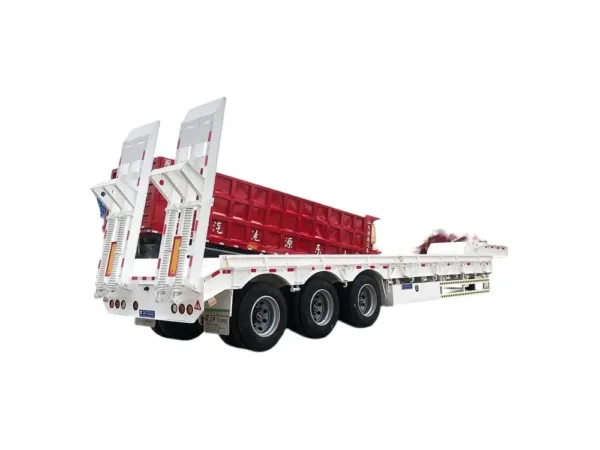
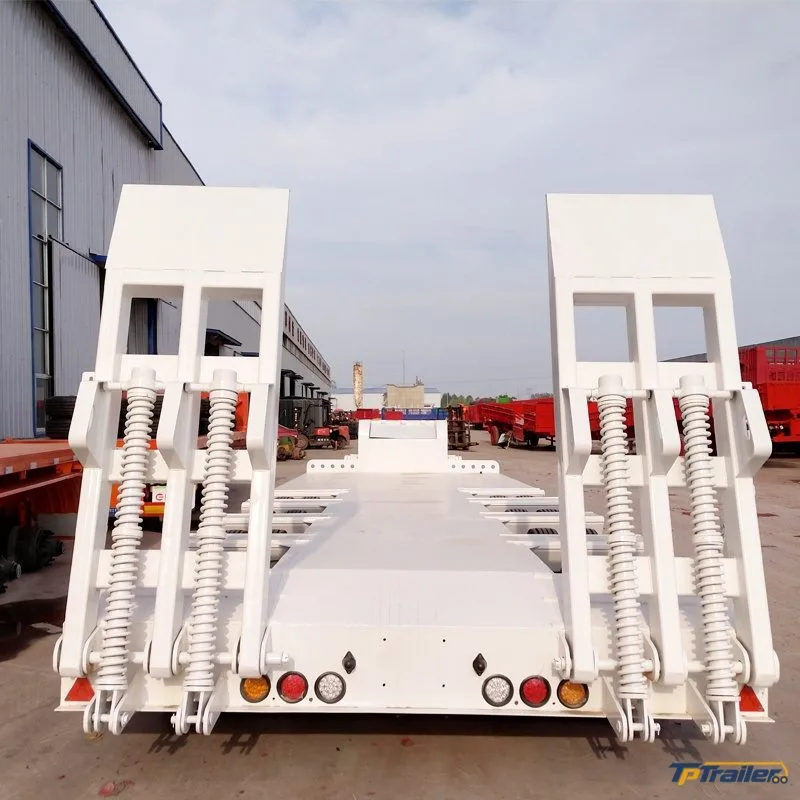
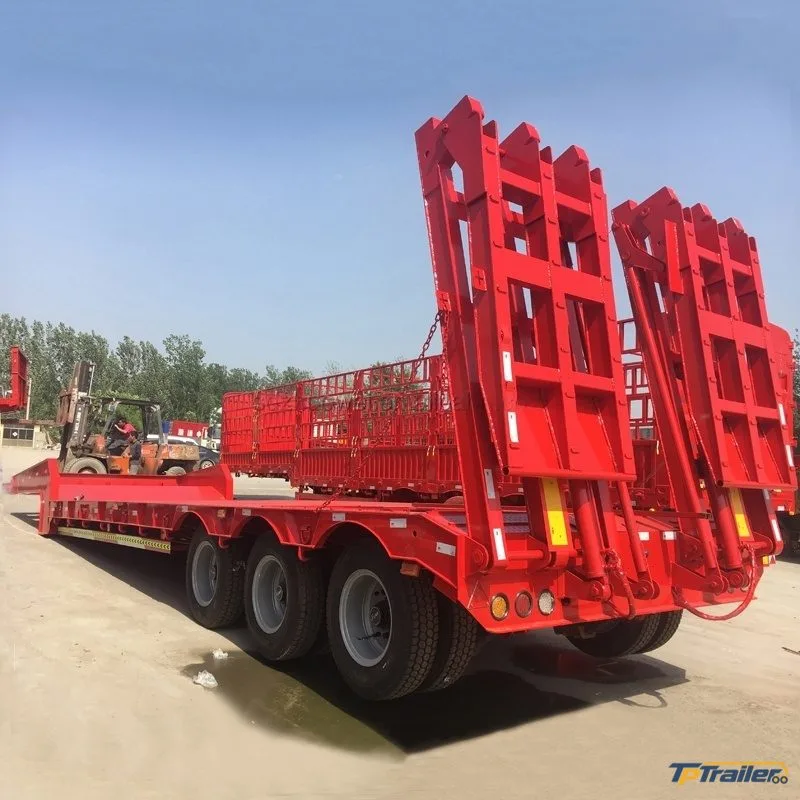
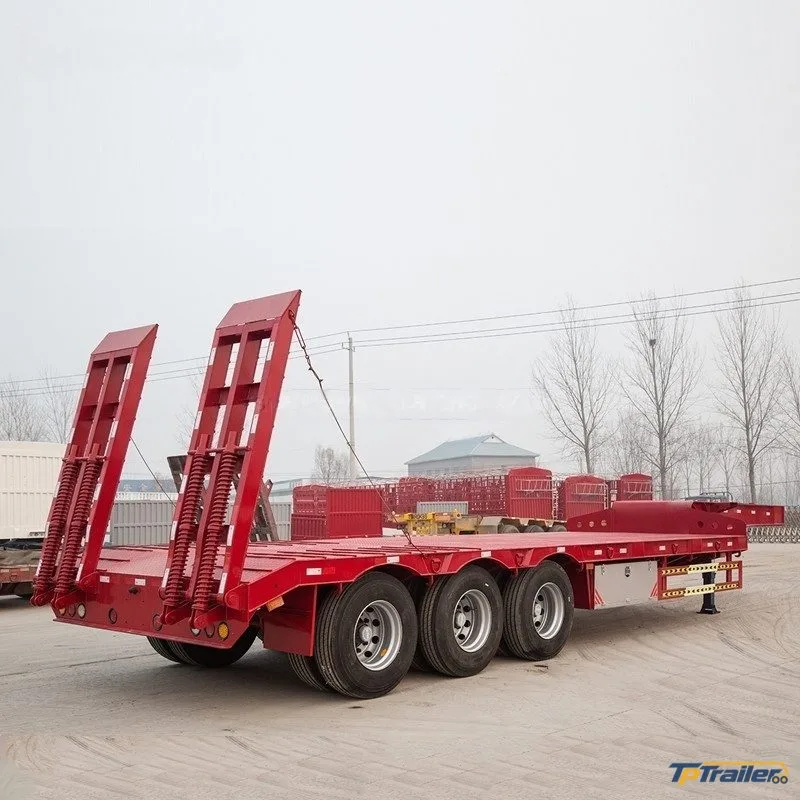
lowbed trailer dimension: 3 axle lowboy semi trailer with 60Ton load capacity, Q345 steel, 12R22.5 tires. Get a quote for your machinery transport needs.
30-80T 3
FOB Reference PriceUS$3,500-7,500Final price confirmed by inquiry
Certifications
ISO 9001
Key Features
Q345 steel construction for durable heavy-duty performance
Dual line braking system for reliable stopping power
12R22.5 tires on 9.0-22.5 steel wheel rims
2'' or 3.5'' tractin pin for flexible tractor compatibility
Common mechanical suspension with 10-piece steel spring
Two standard tool boxes included for on-road maintenance
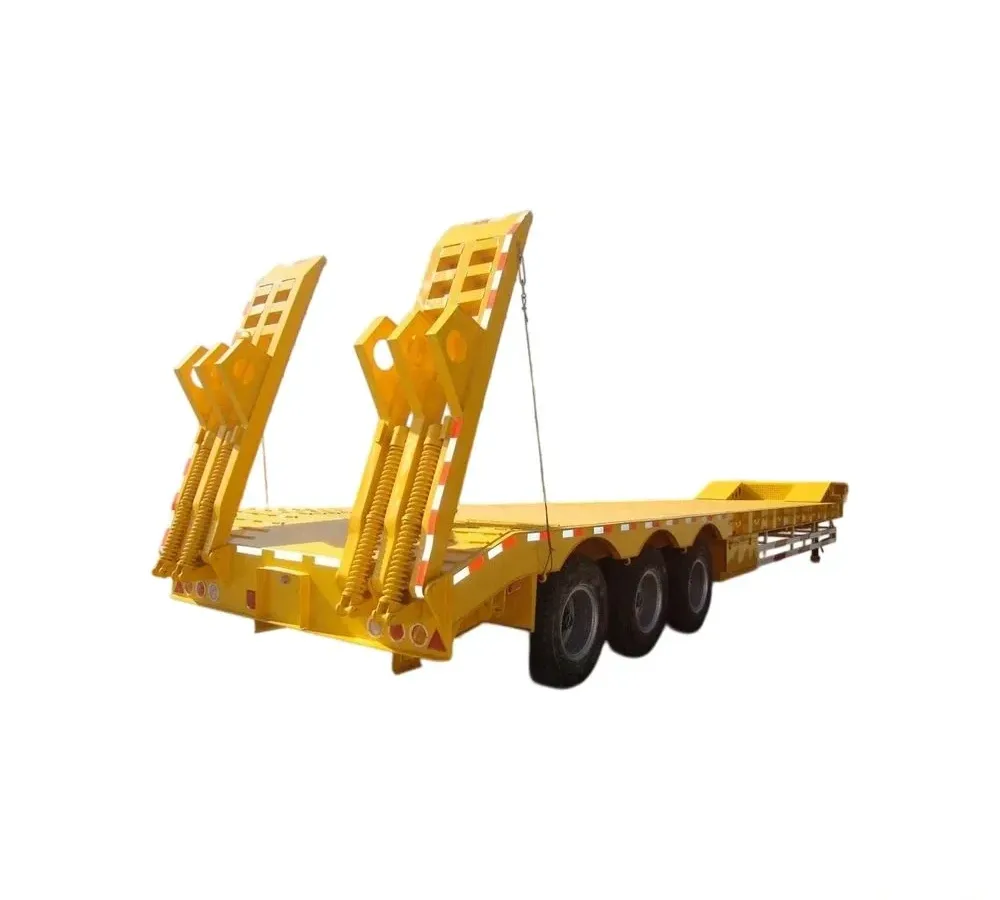
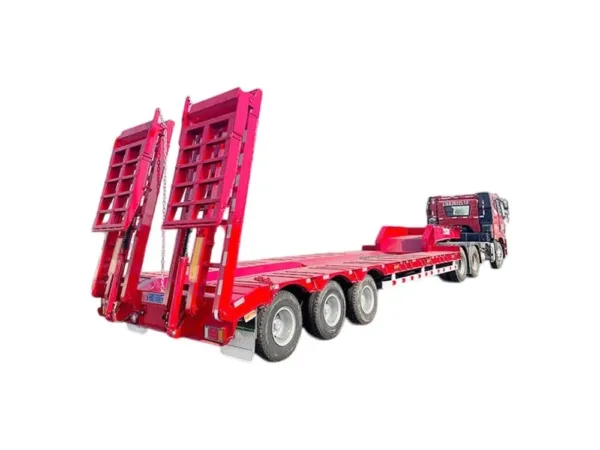
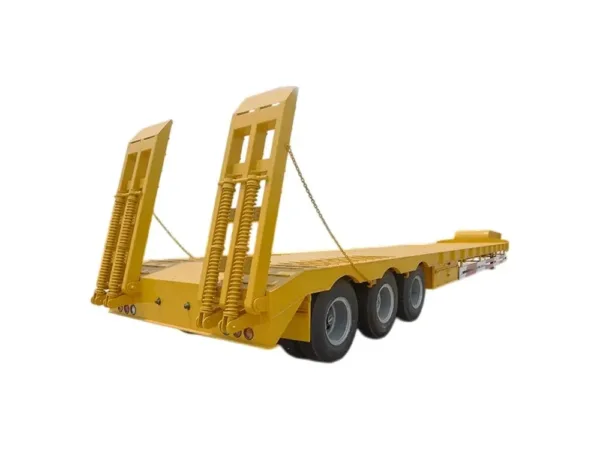
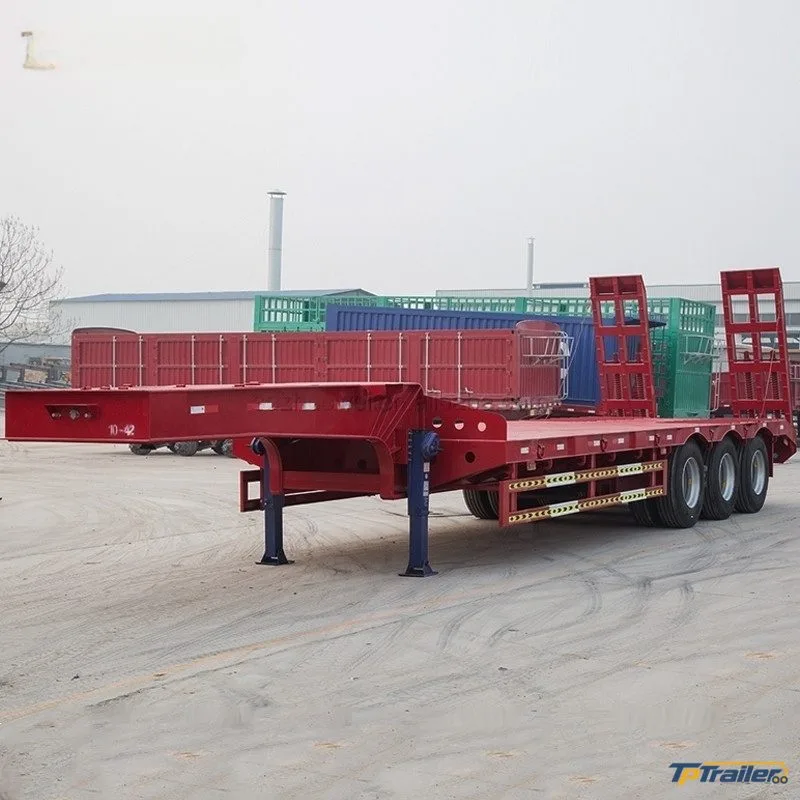
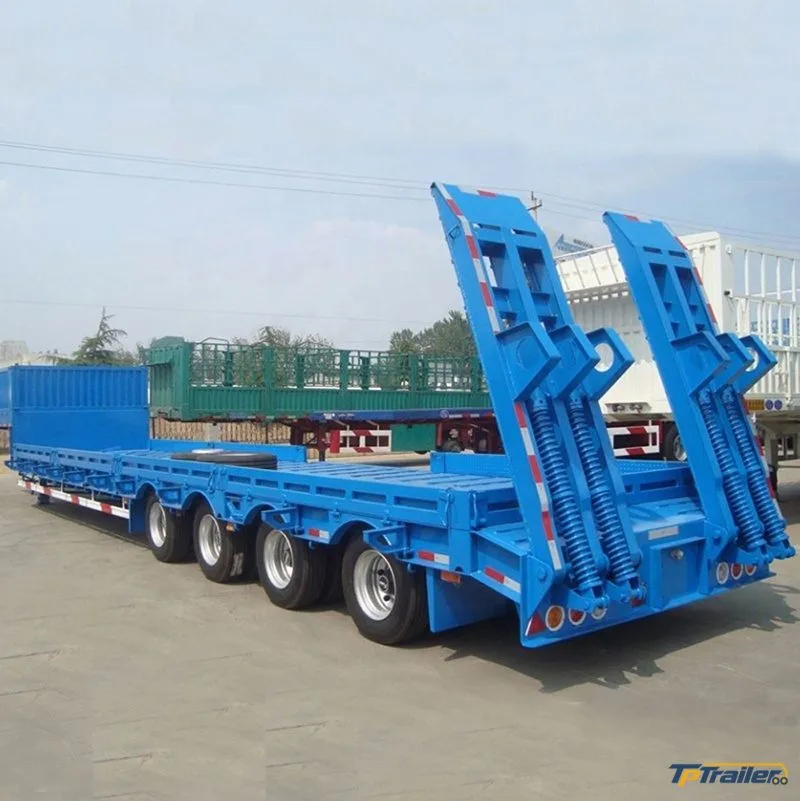
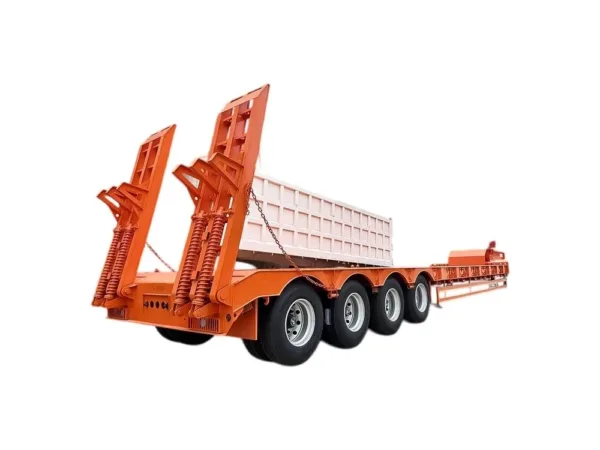
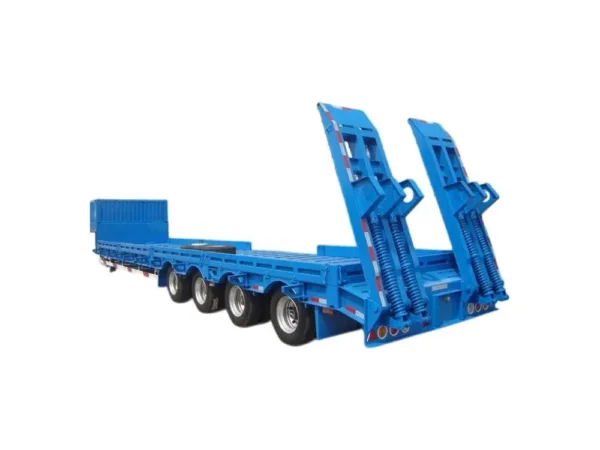
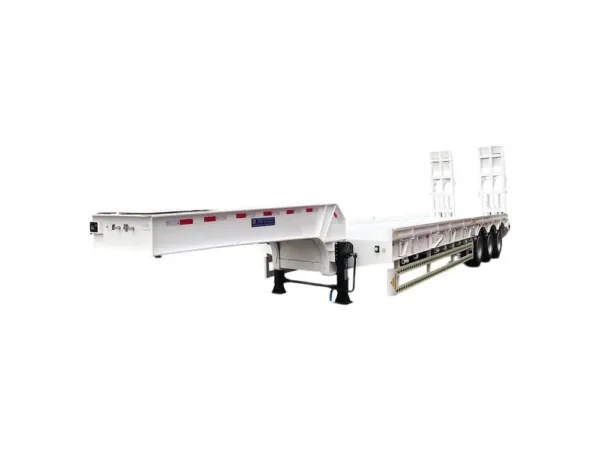
For any fleet planner, the lowbed trailer dimension is the first number that decides whether a machine can be hauled legally and safely. This three-axle lowbed semi trailer is a heavy-duty platform built for excavators, dozers, cranes and other over-height or over-weight machinery. It suits contractors, rental yards and transport operators who move equipment between sites rather than run long-haul general freight. Its strongest case is simple: a Q345 steel main frame with a 30-80T load capacity range, so one trailer family covers light plant and genuinely heavy iron without stepping up to a specialised heavy-haul unit.
Table of Contents
Why It Works On Site
Q345 steel main frame: the high-strength structural steel resists bending and fatigue under repeated point loads. That matters when a tracked excavator sits on the deck with its weight concentrated over a short footprint. The frame keeps the lowbed trailer dimension stable over years of loading, so the deck does not sag or crown between the cross members.
30-80T load capacity range: one trailer family spans light plant and heavy iron. A small fleet can quote both a mini excavator move and a full-size dozer without buying two trailers. The rated band also lets you match the trailer to your heaviest regular machine instead of over-specifying every unit.
Dual line braking system: two independent air circuits give a backup if one line loses pressure. On a descent with a loaded machine, that redundancy is what keeps stopping distance predictable. It also supports the lowbed trailer dimension you need when the combined unit is long and heavy.
Common mechanical suspension with 10-piece steel springs: a simple, serviceable setup that absorbs road shock before it reaches the deck. Fewer electronic parts means a fitter can repair it on site. The spring pack carries the rated load without the maintenance overhead of more complex suspension types.
12R22.5 tyres on 9.0-22.5 steel rims: a common size that most tyre shops stock, so a blowout does not sideline the trailer for days. Steel rims take impact and field repair better than alloy. The combination keeps the lowbed trailer dimension within normal road width while spreading load across three axles.
2” or 3.5” kingpin and two standard tool boxes: the kingpin choice matches the tractor you already run. The tool boxes keep chains, binders and ramps on the trailer, so the crew is not hunting for gear at the loading point. Both details cut turnaround time on a busy lowbed trailer dimension plan.
Where It Is Used
This trailer earns its keep on construction and earthmoving work. A three-axle lowbed moves excavators, wheel loaders, bulldozers and rollers between job sites, yards and quarries. The deck sits low, so a tracked machine can be driven or winched on without a tall ramp. Operators also use it for compact plant when the lowbed trailer dimension still fits the route.
Typical runs are short to medium: depot to site, site to site, or a rental yard delivering to a customer. The 30-80T band covers most mid-size earthmoving equipment, and the Q345 frame handles the concentrated weight of a steel-tracked machine. Where a route includes tight site entrances, the three-axle layout keeps the unit manoeuvrable enough to position at the loading bank.
The second home for this trailer is heavy machinery and oversize freight that will not fit a flatbed. That includes cranes, drilling rigs, generators, industrial tanks and packaged plant. Here the lowbed trailer dimension becomes a planning tool: the deck length and width decide what can be carried, and the low deck height keeps overall vehicle height within route limits.
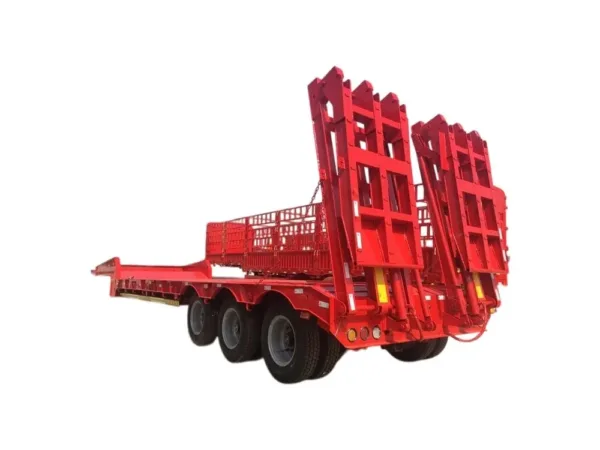
Transport operators also use it for recovery and relocation work, moving broken-down equipment back to a workshop. The dual line braking system and common mechanical suspension suit mixed road conditions, from sealed highways to unsealed site access tracks. For a fleet that needs one versatile machinery carrier rather than a dedicated heavy-haul rig, this configuration covers the common jobs without special permits for every move.
Choosing The Right Spec
Match the load band to your heaviest regular machine: the 30-80T range is wide, so pick the point that covers your typical cargo plus a margin. A fleet moving mostly compact plant can sit at the lower end. Operators with dozers and large excavators should plan around the upper end. Confirm the lowbed trailer dimension against the machine footprint before ordering.
Choose the kingpin for your tractor: the 2” or 3.5” tractin pin option must match the fifth wheel you already run. A mismatch means an adapter or a different tractor, both of which cost time. Decide this before production, because it affects how the lowbed trailer dimension works with your existing prime movers.
Plan around the tyre and rim package: 12R22.5 tyres on 9.0-22.5 steel rims are a widely available combination. If your routes are remote, that availability matters more than any premium option. The three-axle arrangement spreads load and keeps the lowbed trailer dimension within normal operating width for most site access roads.
Use colour and accessories to fit your fleet: optional colour lets you match existing units for identification and resale. The two standard tool boxes keep chains and binders on board. Neither changes the lowbed trailer dimension, so specify them early and keep the build simple and consistent across your order.
Customisation Before Delivery
Axle count and load rating. The running gear is matched to the load capacity band you order, and the axle count is agreed at order confirmation. Buyers who haul mixed machinery often step up one axle for margin on the rear ramps. Every lowbed trailer dimension on the drawing follows that decision, so settle it before the build starts.
Deck length and width. Deck length sets how much track length you can carry without overhang. Width is chosen against your widest machine and the permits you run under. Both are fixed on the approved drawing at order confirmation, and the lowbed trailer dimension on that drawing is the one the factory builds to.
Suspension type. Common mechanical suspension with the steel spring pack is the standard fitment. It suits site work and mixed road conditions where the load is steady. Confirm the spring pack and suspension layout at order confirmation if your routes include rough access roads.
Tyres and wheel rims. The tyre size and the steel wheel rim are listed on the specification sheet. Tell us the tyre and rim combination you want when the order is confirmed so the hubs and rims are matched as one set. Mismatched rim offsets change the lowbed trailer dimension across the axles.
Colour and accessories. Colour is optional and chosen from the range offered at order confirmation. The trailer ships with the standard tool box set. Paint choice does not affect the lowbed trailer dimension, but it does affect how easily the frame is inspected for coating damage later.
Fitting And Installation
On arrival, the first job is to match the tractor to the trailer. The kingpin is offered in the two common tractin pin sizes, and the one you ordered must match the fifth wheel on the tractor. Check the fifth wheel jaw, the coupling height and the approach angle before you back under.
The lowbed trailer dimension that matters here is the kingpin position relative to the deck, because it sets the turning clearance between cab and gooseneck. Confirm the brake line couplings on the tractor match the dual line braking system on the trailer, and check that the hose routing clears the landing legs through a full turn. If any of this is unclear, a fitment drawing is confirmed at quotation rather than assumed on site.
A wrong size at this stage costs real downtime. A kingpin that does not match the fifth wheel stops the first load, and a replacement is not a roadside job. Brake lines that foul the landing legs or the gooseneck chafe through and take the trailer out of service until they are rerouted. Wheel rim and tyre fitment errors show up as uneven wear across the axle set, and correcting them means swapping parts, not adjusting them.
Because the lowbed trailer dimension is fixed at the factory, every mismatch is corrected on the tractor side or with new parts. That is why the coupling and routing checks belong in the first hour after delivery, before the trailer carries any load. Walk the full turn with the lines connected and the lowbed trailer dimension checked against the tractor.
Service Life And Maintenance
Brake system first. The dual line braking system is the highest-wear system on the trailer. Inspect lines, couplings and chambers for chafe and leaks at each pre-trip check. Keep the routing clear of the gooseneck through the full turn. Brake faults are the most common reason a lowbed trailer is pulled from service.
Suspension and spring pack. The common mechanical suspension and steel spring pack carry the load, so inspect spring leaves for cracks and check the shackle pins for play. Loose or worn pins change the axle alignment and the lowbed trailer dimension across the axle set, which then shows up as tyre scrub.
Tyres and steel wheel rims. Check tyre pressure and look for shoulder wear at every stop. Inspect the steel wheel rims for cracks and rim nuts for torque loss. Uneven wear across an axle usually points to alignment or a suspension fault, not to the tyre itself. Catch it early and the tyre set lasts longer.
Q345 steel frame and coating. The frame is built in Q345 steel. Walk the deck, ramps and gooseneck for coating damage and touch up bare steel before corrosion starts. Rust at a weld or a ramp hinge is cheaper to stop than to repair. The coating choice made at order confirmation sets how often that touch-up is needed.
Kingpin, tool box and deck fittings. Inspect the kingpin and its mounting area for wear and cracking. Check the standard tool box mounts and the ramp locks for looseness. Record the lowbed trailer dimension at the deck and ramp hinge points and compare it at each major inspection, so frame distortion is caught before it becomes a repair.
Packing And Container Loading
A lowbed trailer ships as a partly disassembled unit. The frame, ramps and axle assemblies are braced and strapped inside the container or loaded as break bulk. Steel contact points are wrapped to limit rubbing during the voyage. Small parts such as the standard tool boxes and the kingpin assembly travel in crates. Every package is labelled with the trailer model and the lowbed trailer dimension noted on the packing list, so the receiving team can match cartons to the frame before unloading begins.
The trailer does not nest like a flat rack, but the ramps and detached axle groups can be stacked against the main beam to save floor space. Loading method depends on the lowbed trailer dimension and the container size chosen, so confirm both before booking freight. On arrival, check the frame for transit marks, count the crates against the packing list, and verify the kingpin and braking system parts are present. Record any damage with photos before signing the delivery note, and confirm the lowbed trailer dimension on the unit matches the order.
Common Mistakes Buyers Make
Ordering without checking the deck length against the cargo. A trailer that cannot carry the longest machine is useless. Measure the cargo footprint and the deck space you need, then compare it with the lowbed trailer dimension on the quotation before you approve the drawing. The single check is a tape measure against the deck drawing.
Ignoring the ramp angle and approach clearance. Machinery with low ground clearance can scrape the ramps during loading. Confirm the ramp length and the deck height against the machine’s clearance, and ask how the lowbed trailer dimension affects the approach angle. The single check is a trial drawing of the loading sequence.
Mismatching the kingpin to the tractor. The kingpin is offered in two sizes, and the wrong one will not couple safely. Confirm the size your tractor fifth wheel accepts and state it on the order. The single check is the fifth wheel plate marking on the tractor that will pull the trailer.
Underrating the load capacity. Buyers often order to the machine weight alone and forget attachments. Add the weight of the heaviest load plus any tooling, then compare it with the load capacity on the offer. The single check is a weighbridge ticket for the machine you intend to move.
Overlooking the tire and rim combination. Tire size and wheel rim must match the axle and the road rules where the trailer will run. Confirm both on the specification sheet and keep spares of the same size. The single check is the tire sidewall marking against the order confirmation.
Buyer Questions
Can the trailer be shipped in one container?
That depends on the lowbed trailer dimension and the container size you book. A lowbed trailer is long, so it is often shipped as break bulk or partly disassembled rather than fully assembled inside a box. Send the deck length, the axle count and the quantity to the supplier, and ask for a loading plan with the offer. The plan should show how the ramps and axle groups are braced, which parts travel in crates, and what the buyer must fix on arrival.
What should I confirm before the order is released?
Confirm the load capacity against the weight of your heaviest machine, including attachments. Confirm the kingpin size matches your tractor, and check the tire and wheel rim combination against local road rules. Ask for the lowbed trailer dimension on the drawing and compare it with your route and yard. Also confirm the braking system type and the number of steel spring leaves. Put all of these on the order confirmation, not in a chat message.
How do I check the trailer when it arrives?
Unload in a clear area and compare the unit with the packing list and the order confirmation. Check the frame for transit damage, confirm the kingpin and braking system parts are in the crates, and count the tool boxes. Measure the deck and overall lowbed trailer dimension against the drawing. Photograph anything that differs before signing the delivery note, and report it to the supplier the same day so a remedy can be agreed.
To get a quote, send the deck length you need, the axle count, and the quantity you plan to order. Add the weight of your heaviest load and the kingpin size your tractor accepts. With those details the supplier can confirm the lowbed trailer dimension, the load capacity and the packing plan for your shipment.
We use cookies to enhance your browsing experience, serve personalized content, and analyze our traffic. By clicking "Accept All", you consent to our use of cookies. Privacy Policy
Cookie Preferences
Required for the website to function properly. Cannot be disabled.
Help us understand how visitors interact with the website (Google Analytics).
Used to deliver personalized ads and measure ad campaign effectiveness.
















Write a Review