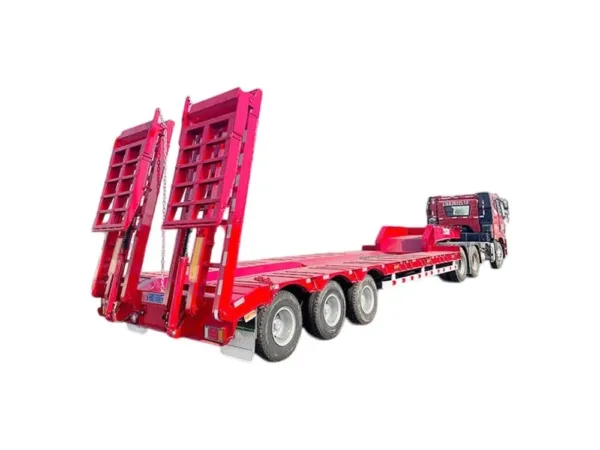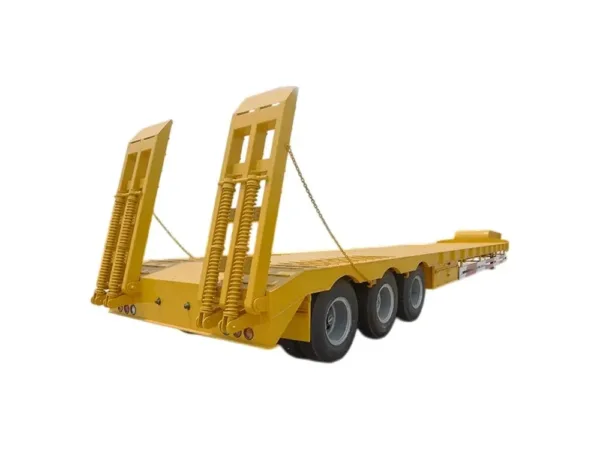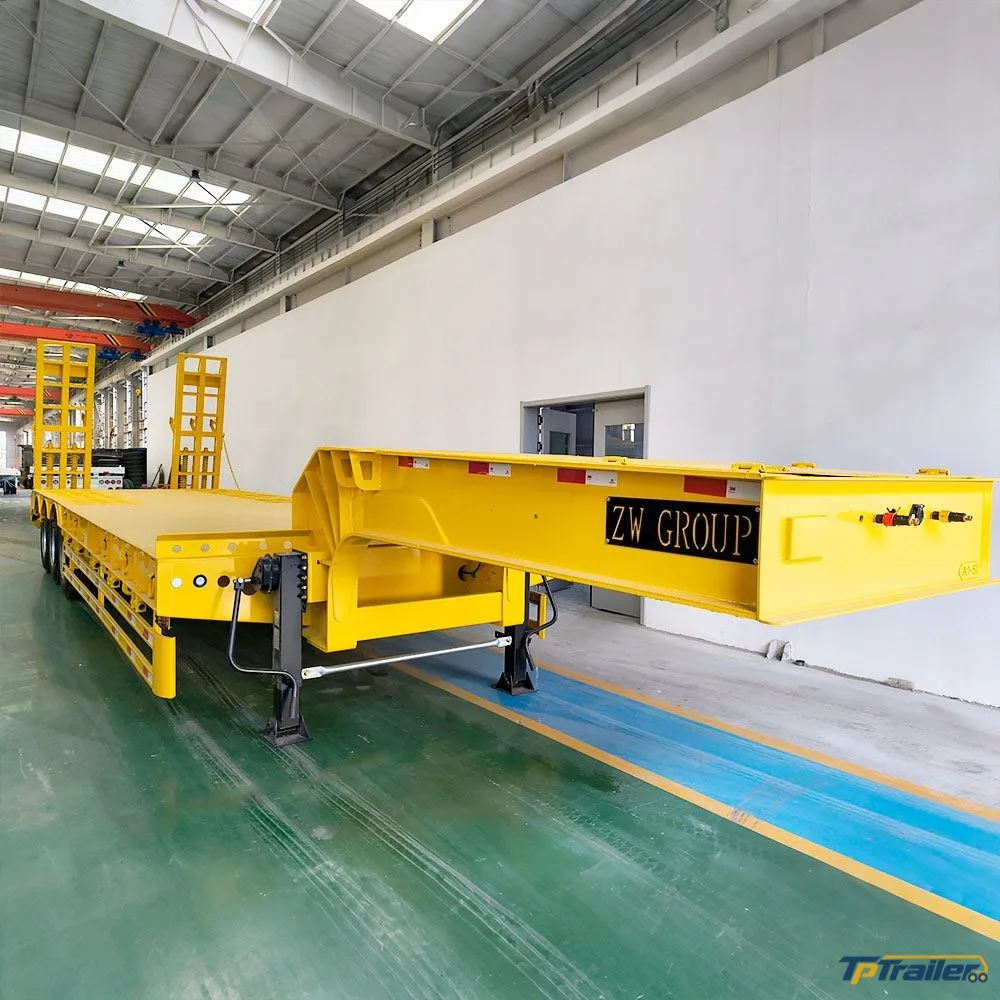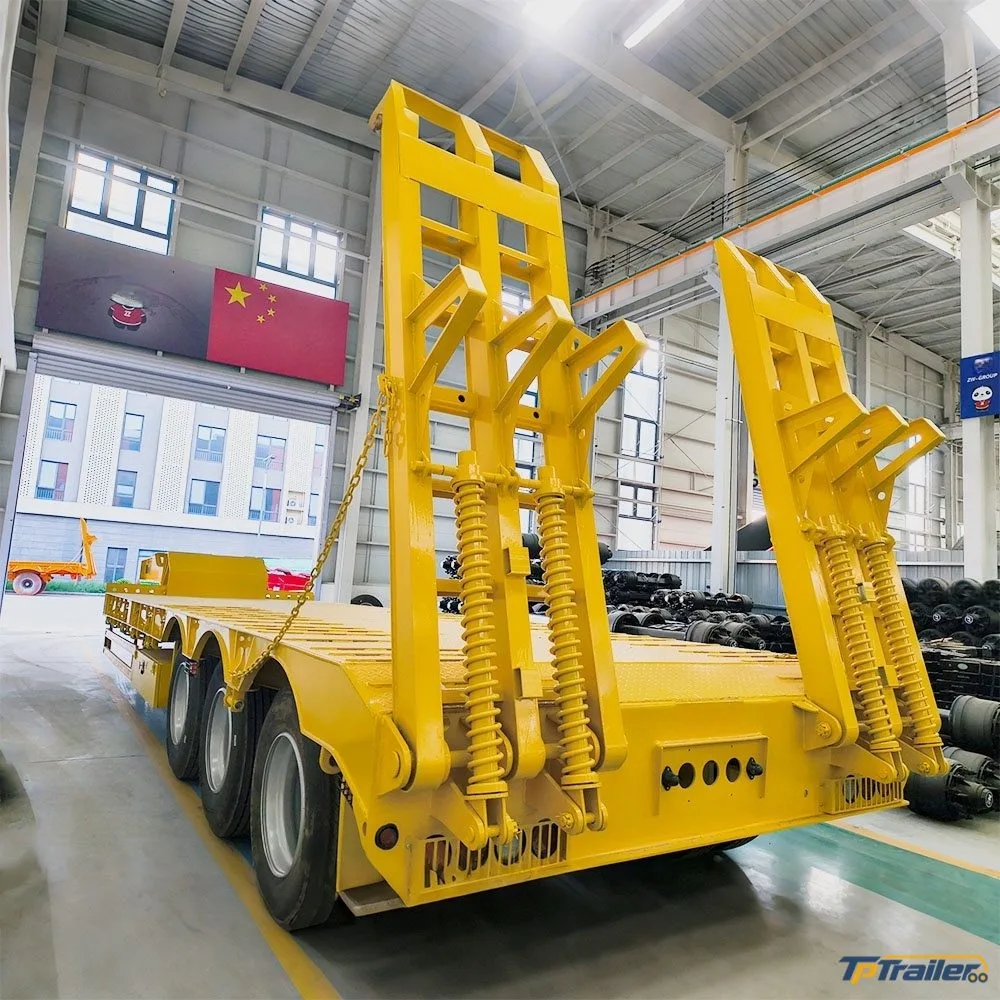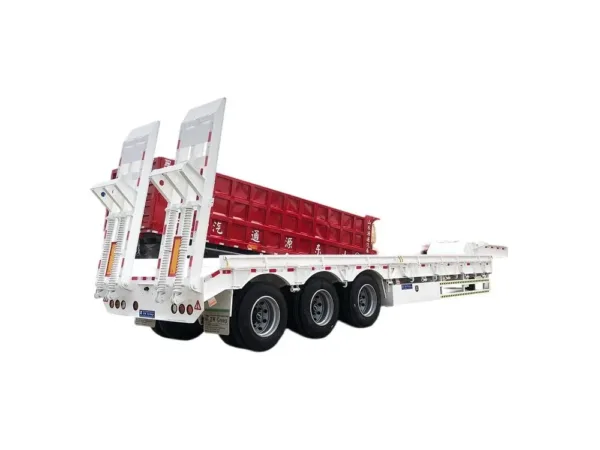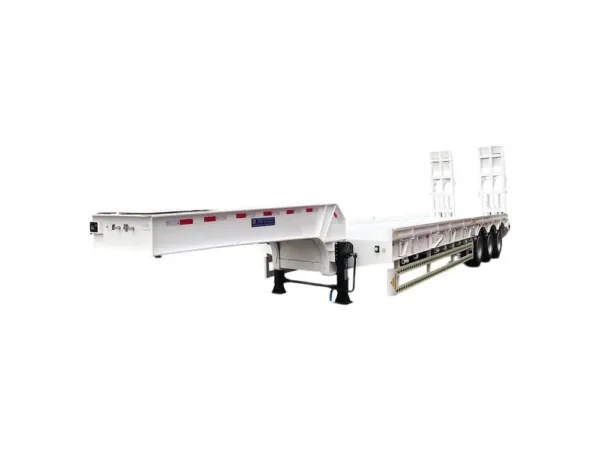
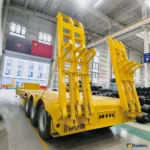
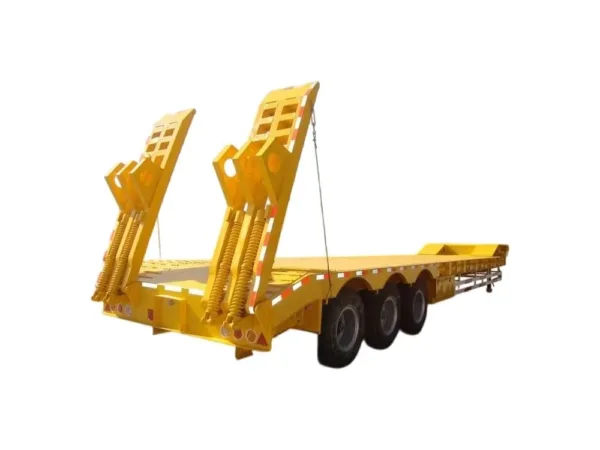
3 Axle 60 Ton Steel Lowbed Semi Trailer for Excavator Transport

Buy a 3 axle 60 ton lowbed semi trailer in steel for excavator, bulldozer and mining equipment transport. Load capacity 30000 KG; quotes are available.

>30000 KG 3
FOB Reference Price US$4,000-5,000 Final price confirmed by inquiry

Certifications

  • ISO 9001

Key Features

  • Steel lowbed semi trailer built for excavator, bulldozer, loader and mining equipment transport
  • 3 axle lowbed configuration for heavy duty haulage
  • 30000 KG load capacity for demanding jobsite loads
  • Steel construction for durability on mining and construction routes
  • Suitable for heavy equipment transport across long hauls
Load Capacity >30000 KG
Type Semi-Trailer
Max Payload >30000 kg

This 60 ton lowbed semi trailer is a three-axle step-deck platform built to move excavators, bulldozers, loaders and mining equipment over road and site access routes. It suits fleet operators, plant hire yards and contractors who haul heavy machinery between jobs rather than running a single dedicated route. Its strongest argument is the combination of a low, stable deck and a rated load capacity of 30000 KG, which lets a standard tractor unit carry tracked and wheeled plant without a specialist heavy-haul setup. The trailer is aimed at buyers who want predictable loading, simple maintenance and a platform that keeps working across mixed cargo, not one that only fits a single machine class.

Why It Works On Site

  • Rated load capacity of 30000 KG covers the working weight of mid-size excavators, bulldozers and wheeled loaders, so a single 60 ton lowbed semi trailer can serve several machines in one fleet. That rating is the figure to match against your heaviest unit plus bucket, attachment and counterweight, and it lets you plan loads without weighing every trip twice.
  • A three-axle running gear spreads the cargo mass across more tyre contact points than a shorter two-axle frame. On site roads, haul tracks and yard surfaces this keeps ground pressure lower and the platform steadier, which matters when a tracked machine is driven on and off under its own power.
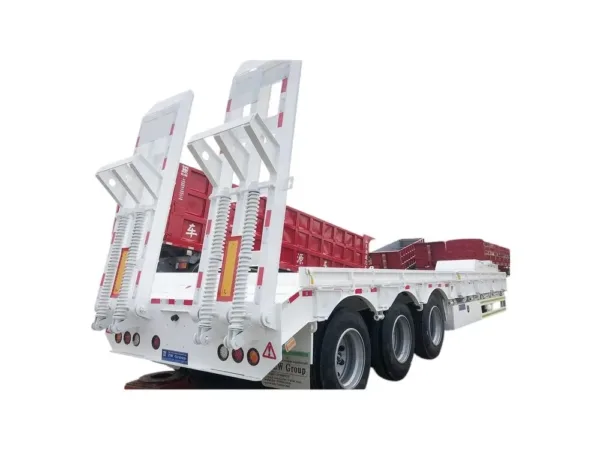
  • The low deck height is what makes the 60 ton lowbed semi trailer practical for plant with a high centre of gravity. Loading ramps stay short and shallow, so a dozer or loader climbs on with less approach angle and less risk of the blade or bucket catching the deck edge during the climb.
  • A long, open platform gives the operator room to position a machine for correct weight distribution over the axles. That flexibility means the same 60 ton lowbed semi trailer can carry a compact excavator forward or a longer tracked loader centred, without re-rigging the deck between jobs.
  • Heavy-duty steel construction with a reinforced deck and side rails stands up to the abrasion of steel tracks, bucket edges and attachment points. The structure is built for repeated loading cycles rather than occasional use, which is the difference between a trailer that lasts a season and one that lasts a fleet cycle.
  • Simple mechanical layout keeps the 60 ton lowbed semi trailer serviceable in a working yard. Fewer complex systems mean faster inspection of axles, brakes, ramps and deck fixings between trips, so the trailer spends more days loaded and fewer days waiting for attention.

Where It Is Used

The most common job for a 60 ton lowbed semi trailer is moving tracked plant between construction sites, quarries and rental yards. A contractor finishing one earthworks package loads an excavator or bulldozer at the end of the shift and moves it to the next site rather than tracking it down public roads. The same trailer then returns with a wheeled loader or a compaction unit, so the fleet operator gets a full week of use from one platform.
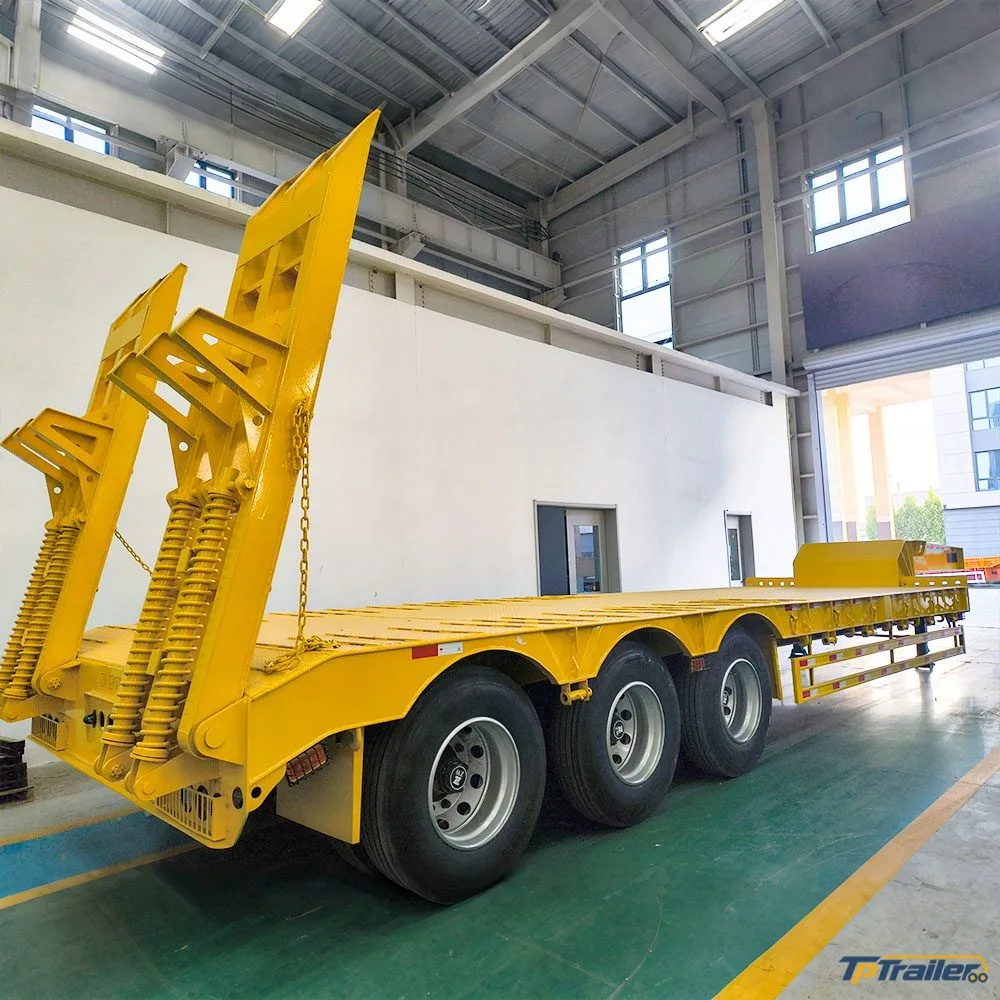
60 ton lowbed semi trailer - detail 1

Mining and aggregate operations use it to shift support equipment around the pit and between satellite workings, where the low deck and stable axles make loading safer on uneven ground. Plant hire businesses rely on the 60 ton lowbed semi trailer to deliver and recover machines on hire, because the open deck accepts different attachment configurations without modification.

Beyond construction, the 60 ton lowbed semi trailer covers agricultural and municipal equipment haulage. Large farms and contracting outfits move tractors, harvesters and heavy implements between fields and depots, where the rated load capacity and three-axle layout handle the weight and keep the platform settled on rural roads. Municipal and utility fleets use the same trailer for dozers, trenchers and emergency plant, loading from a yard ramp and delivering to worksites inside towns.

Long-haul operators also use it for mixed heavy cargo that does not fit a standard flatbed, because the low deck and open platform accept awkward shapes. In each case the 60 ton lowbed semi trailer earns its place by handling several equipment types across a working season instead of one dedicated machine.

Choosing The Right Spec

  • Match load capacity to your heaviest machine. Compare the rated load capacity of 30000 KG against the operating weight of the plant you move most often, including bucket, blade or attachment. If your typical load sits well under the rating, the 60 ton lowbed semi trailer gives you margin for attachments and future equipment purchases without changing platforms.
  • Check axle count against route and surface. The three-axle layout on this 60 ton lowbed semi trailer suits operators working across site roads, haul tracks and mixed surfaces where weight spread matters. If your work is mostly firm yard-to-yard movement with lighter plant, the same configuration still fits, because the extra axles add stability rather than restrict the load.
  • Size the deck to the machines you carry. A longer open platform suits tracked loaders and dozers that need room to sit centred over the axles, while compact excavators can be positioned forward for better weight balance. Choose the 60 ton lowbed semi trailer layout that lets your most common machine sit correctly without overhanging the deck ends.
  • Plan for loading method and access. Machines that climb on under their own power need a low deck and a workable ramp angle, which is where the 60 ton lowbed semi trailer design helps most. If you load with a crane or from a fixed dock, confirm the deck and side rail arrangement suits your rigging before you commit to the specification.

Customisation Before Delivery

  • The axle count on your 60 ton lowbed semi trailer is confirmed at order, so the running gear matches the load you actually move. Fewer axles suit shorter haul cycles, while more axles spread the weight across the road surface. State the duty cycle and the trailer is configured to it, not to a stock layout.
  • Deck length and deck width are set at order confirmation for your 60 ton lowbed semi trailer. A longer deck carries excavator booms and dozer blades without overhang, while a shorter deck keeps the turning envelope tight on mine roads. Give the machine footprint and the deck is cut to suit.
  • Suspension type is chosen when the order is placed. Mechanical suspension is simple and rugged for pit hauling, while air suspension softens the ride for finished equipment. The choice is fixed before build, so decide it early and the 60 ton lowbed semi trailer arrives set up for your ground.
  • Tyre size and tyre count are agreed at order confirmation. Larger tyres raise ground clearance on unsealed mining roads, and matched sets keep wear even across the axle group. Tell us the surface and the 60 ton lowbed semi trailer is supplied with the right footprint.
  • Colour and finish are settled when you confirm the order. A high-visibility finish helps on busy sites, and a darker finish hides road grime on long runs. Marking layout is agreed at the same point, so the 60 ton lowbed semi trailer leaves the line as specified.

Every option above is locked at order confirmation and written into the build sheet. Nothing is assumed from a stock photo, because a 60 ton lowbed semi trailer that arrives with the wrong deck or axle set costs more to correct than to specify correctly.
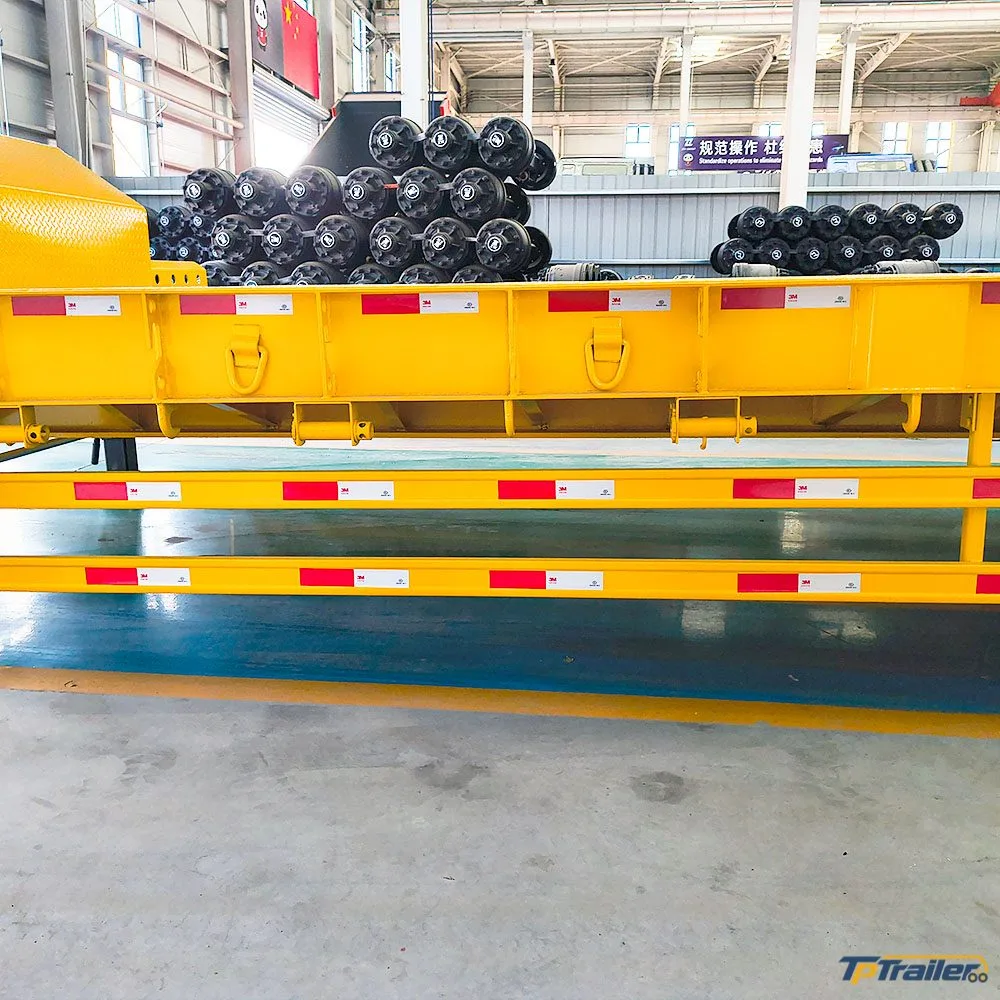
60 ton lowbed semi trailer - detail 2

Fitting And Installation

On arrival, the buyer has to match the trailer to the towing tractor and to the machine it will carry. Check the fifth wheel height against the kingpin, confirm the coupling plate sits flat, and verify the electrical socket and air line couplers match the tractor. Inspect the mounting points on the gooseneck and the ramps before loading. Confirm the deck height clears the excavator or dozer tracks on the approach angle.
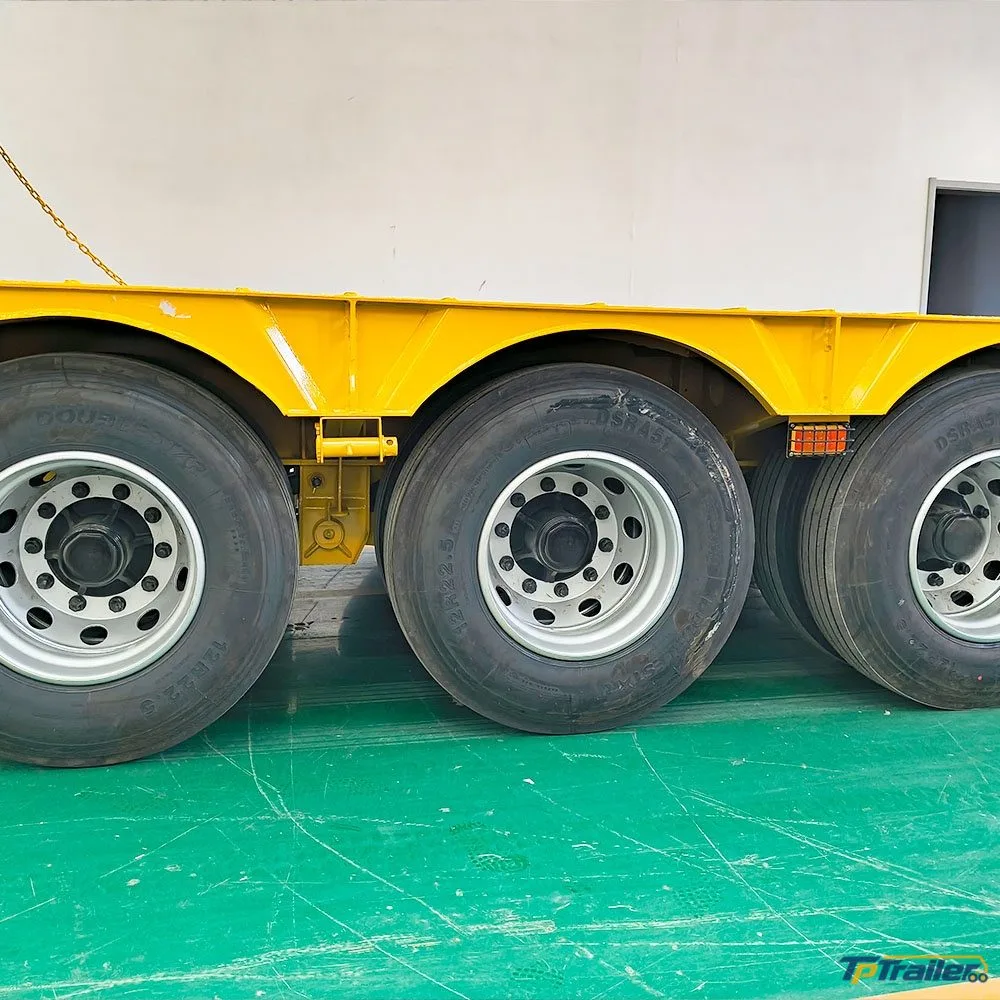
60 ton lowbed semi trailer - detail 3

Where the input gives no fitment data, a fitment drawing is confirmed at quotation, so the interface is agreed before the 60 ton lowbed semi trailer is built. Do not assume a stock hitch will line up. Measure the tractor, record the figures, and send them with the order. That single step removes most of the risk from the delivery day.

A wrong size at the coupling or the ramp is expensive in downtime. A mismatched kingpin height loads the tractor frame and the trailer neck unevenly, and correcting it means workshop time while the machine sits idle. A ramp angle that is too steep for the tracks can damage the deck edge and slow every load. Hose routing that fouls the deck or the suspension gets chafed in service.

These are not faults in the 60 ton lowbed semi trailer itself; they are interface errors that a fitment drawing catches early. Confirm the drawing, check the delivered unit against it, and keep the signed sheet with the trailer records. Torque values are applied only where they are stated in the supplied documentation, never guessed on site.

Service Life And Maintenance

  • The tyres wear first on any 60 ton lowbed semi trailer, especially on unsealed mine roads. The operator should check tread depth, sidewall cuts and pressure across the axle group before each shift. Uneven wear points to alignment or load balance, so rotate and match sets to keep the wear even and extend the interval between replacements.
  • Brake linings and drums take heavy duty on a loaded 60 ton lowbed semi trailer. Inspect lining thickness and drum condition at each service, and check for air leaks at the chambers. Keeping the slack adjusters set correctly protects the linings and keeps stopping distance predictable on descents from the pit.
  • Suspension bushes and shackle pins are the next wear point. Look for play, cracked rubber and loose U-bolts on every inspection. A worn bush lets the axle shift and scrubs the tyres, so replacing it early protects both the 60 ton lowbed semi trailer and its tyre set. Grease the pins at the points named in the manual.
  • The deck surface and ramp hinges need attention. Check for cracks at the weld seams, worn hinge pins and bent side rails after every heavy load. A cracked seam spreads under a tracked machine, so repair it before the next job. Keeping the deck clean of grit slows corrosion and keeps the 60 ton lowbed semi trailer working longer.
  • Structure and coating decide the long-term life. Inspect the main beams, cross members and outriggers for corrosion and paint damage, and touch up bare steel promptly. A specified finish and a regular wash-down extend the interval between recoats, and a dry, covered park keeps the 60 ton lowbed semi trailer out of standing water.

Packing And Container Loading

A 60 ton lowbed semi trailer ships as a steel structure, so protection targets coating damage and water ingress rather than crush. The chassis and ramps are cleaned and primed before dispatch. Exposed machined faces and hydraulic lines are wrapped. Steel surfaces travel with a protective film where the finish is painted. The trailer is secured to the container floor or flat rack with chocks and lashings so the frame cannot shift in heavy weather. Buyers should ask for the loading plan before dispatch and confirm which surfaces are wrapped. A 60 ton lowbed semi trailer is long and low, so the plan matters more than the wrapping.

Nesting and stacking are limited on this product. The deck is a welded platform, so units do not nest the way small fabricated parts do. Ramps and detachable components may be removed and packed flat where the design allows, which frees floor space. Stacking is not possible on a welded frame without risking paint and deck damage. Confirm with the supplier whether ramps ship loose or fitted, and how many 60 ton lowbed semi trailer units fit per container or per flat rack. Ask for photos at loading and again before the doors close.

On arrival, inspect the deck surface, side rails, ramps and paint edges for scuffs and rust bloom. Check that lashings held and that nothing rubbed through the protective film. Verify the axle count, suspension type and deck length against the order before signing. Confirm that any loose ramps or fittings listed on the packing list are present. A 60 ton lowbed semi trailer is a large purchase, so photograph the unit as unloaded and record any damage before moving it. Report discrepancies to the supplier while the container is still open.

Common Mistakes Buyers Make

  • Ordering the wrong deck length. The deck must cover the machine plus overhang and tie-down room. A short deck forces the load over the rear axles. Measure the longest machine you will move, add the overhang, and send that figure with your enquiry. Confirm the deck length on the drawing before you approve the 60 ton lowbed semi trailer order.
  • Understating the load. Buyers quote the machine weight but forget attachments, buckets and ballast. The load capacity is a rated property, not a suggestion. Weigh the machine fully equipped and state that figure. Ask the supplier to confirm the rating against your figure, and put it in writing on the 60 ton lowbed semi trailer quotation.
  • Ignoring ramp geometry. Ramp length and angle decide whether a tracked machine climbs safely. Too steep a ramp causes track slip and deck impact. Measure your loading bank height and the machine’s ground clearance. Ask for the ramp length and angle in writing, then check they suit your machine and your 60 ton lowbed semi trailer.
  • Skipping the suspension and axle check. The axle count and suspension type must match your routes and local rules. Buyers approve a drawing without reading it. Check the axle count, suspension type and tyre size on the drawing, and confirm the 60 ton lowbed semi trailer configuration matches the quotation before production starts.
  • No arrival inspection plan. Damage found after the container is emptied is hard to claim. Buyers sign off without photos. Agree a photo set at loading, photograph the unit as unloaded, and record any scuff or missing fitting on the delivery note. Keep the 60 ton lowbed semi trailer paperwork together for any claim.

Buyer Questions

How is the trailer protected for sea freight?

The frame is primed and painted before dispatch, and exposed faces are wrapped. The unit is chocked and lashed to the container floor or flat rack so it cannot shift. Ask the supplier for the loading plan and confirm which surfaces carry protective film. Before the doors close, request photos of the lashings and the wrapped areas. On arrival, check the deck, ramps and paint edges for rub marks before you sign the delivery note.

Can several units ship together to save freight?

Nesting is limited on a welded lowbed frame, and stacking risks paint and deck damage. Where the design allows, ramps and detachable parts ship loose or flat to free floor space. Ask how many 60 ton lowbed semi trailer units fit per container or flat rack, and whether loose ramps are included in that count. Confirm the loading arrangement and the packing list before you book freight.

What should I confirm before approving the order?

Confirm the deck length against your longest machine plus overhang, and the load capacity against the fully equipped machine weight. Check the axle count, suspension type and tyre size on the drawing. Ask for the ramp length and angle in writing. Then confirm the packing plan and the spare parts list. Get all of it on the 60 ton lowbed semi trailer quotation, and keep the approved drawing with your order records.

To receive a quote, send the deck length you need, the axle count you require and the quantity you plan to order. Add the weight and dimensions of the machine you will transport. We will confirm the 60 ton lowbed semi trailer configuration and pricing against those figures.

Explore more 60 ton lowbed semi trailer in this range.

Load Capacity >30000 KG Type Semi-Trailer
Max Payload >30000 kg Place of Origin China
Use Truck Trailer Material Steel
Size Custom

Reviews (0)

No reviews yet — click the Review button on the right to share your experience with this product.
Frequently Bought Together

Inquiry about: 3 Axle 60 Ton Steel Lowbed Semi Trailer for Excavator Transport

Fill in the form below and our team will respond within 24 hours.