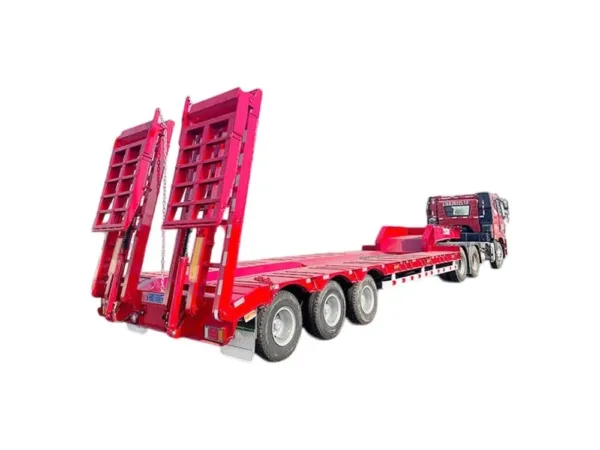
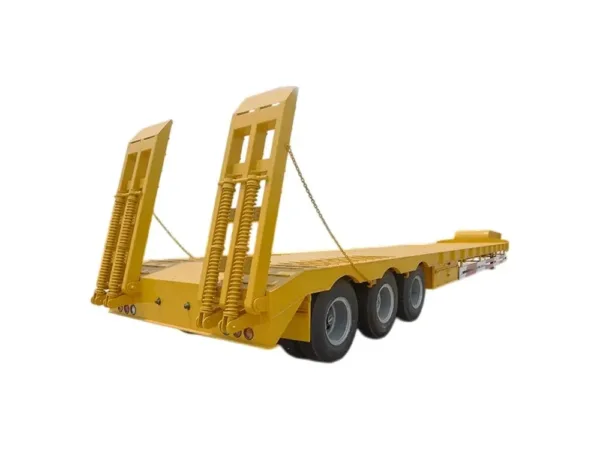
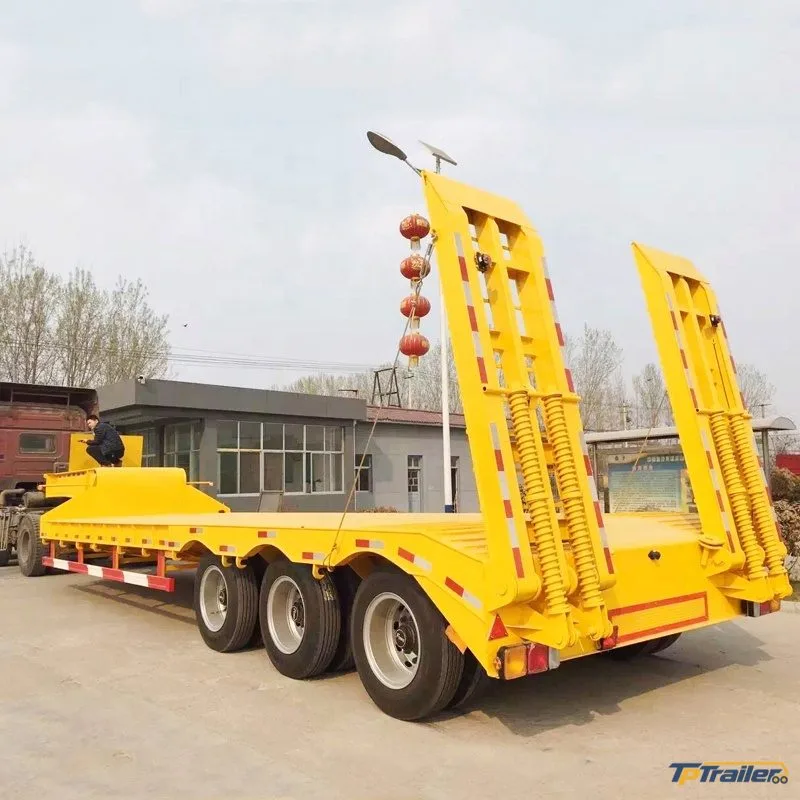
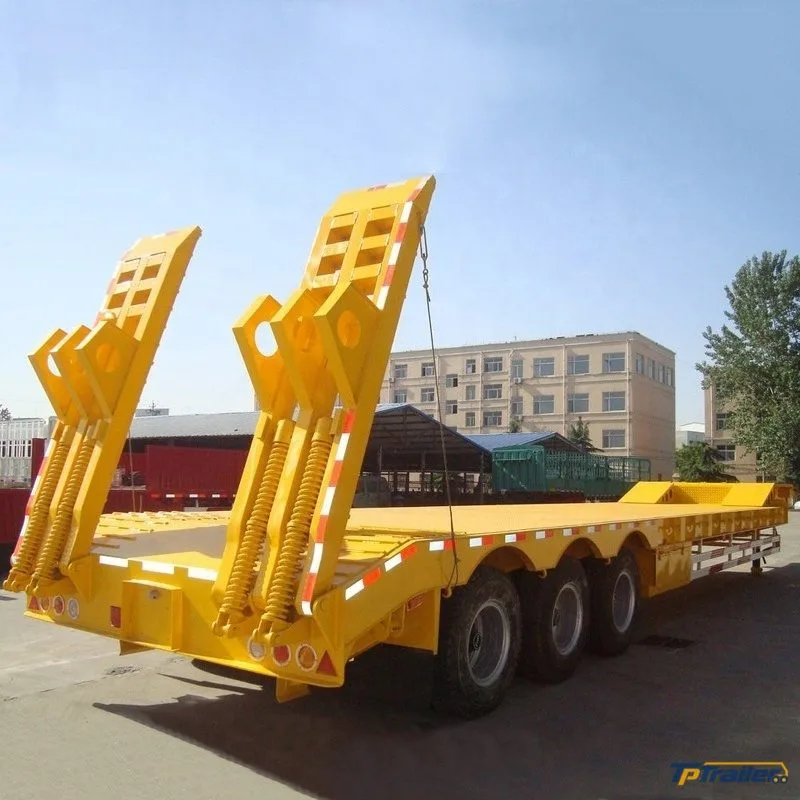
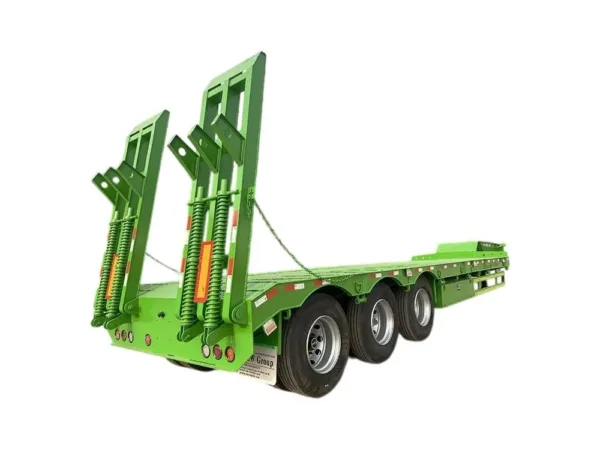
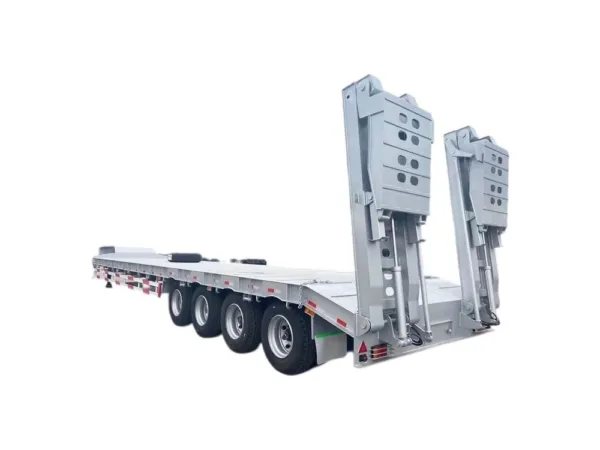
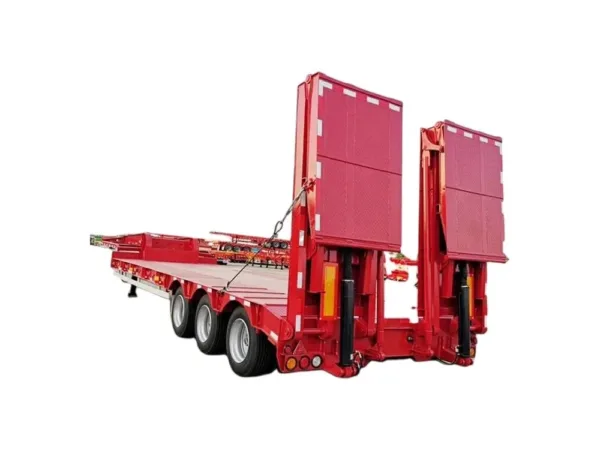
3 Axle 60 Ton Lowbed Semi Trailer Heavy Duty Lowboy Trailer
Low Bed Semi Trailer with 3 axles and 60T load capacity for heavy duty haulage. Gooseneck lowbed design, 28T landing gear. Contact us for a quote today.
60T 3
FOB Reference PriceUS$4,500-8,000Final price confirmed by inquiry
Certifications
ISO 9001
Key Features
3 axle configuration rated for a 60T load capacity
Gooseneck lowbed deck for heavy duty haulage
12 twist locks for securing 20ft and 40ft containers
Common suspension for stable loaded travel
28T manual landing gear for safe parking and coupling
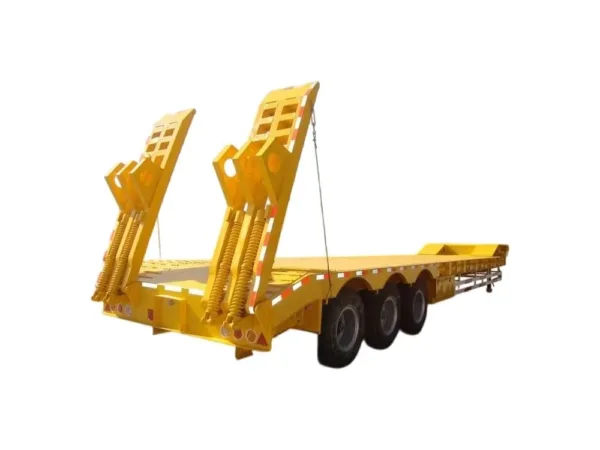
Low Bed Semi Trailer is a three-axle heavy-duty lowboy built to move 60T loads on a low, stable platform. It is aimed at fleet operators, haulage contractors and equipment dealers who need one trailer for containers, machinery and oversized cargo. The strongest reason to choose it is the combination of a 60T load capacity and a gooseneck deck that keeps tall freight within height limits. Twelve twist locks and a 90# kingpin let the same unit switch between container work and plant haulage without a second trailer. The platform sits low for easy ramp loading, and the common suspension keeps maintenance simple for workshops that already service standard trailers. It is a working asset, not a showpiece.
Table of Contents
Why It Works On Site
60T load capacity: The rated 60T load capacity lets one Low Bed Semi Trailer carry excavators, wheel loaders and loaded containers without splitting a job across two trips. On site that means fewer movements per shift, less loading and unloading time, and one tractor doing the work of a small fleet. Operators plan around a single heavy unit instead of juggling permits and slots for several lighter runs.
Three-axle layout: Three axles spread the freight weight across more tyres and more road contact, which suits long hauls and rough site access roads. The extra axle set also gives the Low Bed Semi Trailer better stability when a tall machine is loaded high on the deck. Drivers report less flex on uneven ground, and tyre wear is shared across six positions.
Twelve twist locks: Twelve twist locks let the deck lock 20ft and 40ft containers at the standard corner points. Crews can load a container in the yard and drive straight to a plant job without a second trailer or a swap. The Low Bed Semi Trailer becomes a container carrier and a machinery carrier in one unit, which cuts idle days between contracts.
90# kingpin: The brand 90# kingpin matches common fifth-wheel couplings on heavy tractors, so the Low Bed Semi Trailer slots into an existing fleet without adapter plates. Coupling and uncoupling stay familiar to drivers who already run standard semi-trailers. That shortens handover time when a unit moves between drivers or depots, and it keeps spare coupling parts easy to source.
Common suspension: Common suspension keeps the running gear simple and serviceable. Workshops that already handle standard trailers can inspect, adjust and repair the Low Bed Semi Trailer without special tooling or training. Fewer unique parts means faster turnaround after a breakdown, and a fleet can hold one shared spares stock across mixed trailer types instead of a dedicated line for one unit.
28T landing gear: The 28T manual separating landing gear holds the trailer steady when it is uncoupled and being loaded or parked. Drivers can drop the Low Bed Semi Trailer in a yard, load a machine with a ramp, and pick it up later without blocking the tractor. Manual operation keeps the system simple, with no hydraulic circuit to bleed or leak on a remote site.
Where It Is Used
Container movement is the most common daily job for a Low Bed Semi Trailer with twelve twist locks. Hauliers run 20ft and 40ft boxes between yards, depots and inland terminals, often on mixed routes where the return leg carries something else. Because the deck locks standard corner castings, a crew can drop a loaded container at a site, collect an empty, and keep the tractor productive through the day.
The low platform also helps when a container has to be loaded or unloaded by forklift at a site without a proper dock. Operators use the same unit for port shuttles, warehouse transfers and one-way repositioning runs, so the trailer earns on lanes where a dedicated skeletal trailer would sit idle between box jobs.
Heavy plant and machinery haulage is the second core duty. The 60T load capacity and the low deck suit excavators, wheel loaders, bulldozers, rollers and drilling rigs that would sit too high on a flatbed. Lowbed low platform truck work also covers agricultural and industrial equipment, generator sets, steel fabrications and long structural sections.
On construction and quarry sites, crews load machines over the rear ramp and secure them to the deck, then move between pits and job sites on public roads. The Low Bed Semi Trailer is also used for oversized cargo where height is the limiting factor rather than weight, such as tall tanks or plant with raised cabs. That makes it a practical second trailer for fleets that already run standard flatbeds.
Choosing The Right Spec
Match the load to the 60T rating: The stated 60T load capacity is the ceiling to plan around. If your regular work is excavators, loaded containers or steel sections near that figure, this Low Bed Semi Trailer is the right tier. For lighter daily runs, the same trailer still works but carries more capacity than the job needs. Buyers should compare their heaviest routine load, not their occasional peak, before choosing this rating.
Container work versus plant work: If most trips carry 20ft or 40ft boxes, the twelve twist locks and the low deck make this Low Bed Semi Trailer a direct fit. If most trips carry wheeled or tracked machines, the same deck works with ramps and securing points. Fleets that split work between the two get the most from one unit, because the trailer does not need a swap between container and machinery jobs.
Suspension and running gear: The common suspension and 9.00-22.5 rims suit operators who want standard, easy-to-service running gear. Fleets with mixed trailer types can share spares and workshop routines across the Low Bed Semi Trailer and their existing units. Buyers who already stock common suspension parts and standard rim sizes avoid setting up a separate spares line, which matters most for fleets running several trailers on remote routes.
Colour and fleet fit: Colour is customer optional, so a Low Bed Semi Trailer can match an existing fleet livery or a buyer’s preferred finish. That is a practical point for contractors who move between client sites and want units that read as one fleet. Combined with the 24v electrical system, the trailer fits standard tractor wiring, so lighting checks and repairs follow the same routine as the rest of the fleet.
Customisation Before Delivery
The axle count is one of the first choices on a Low Bed Semi Trailer. Three axles suit the rated load in the title, but the buyer confirms the final arrangement at order confirmation. More axles spread the load over a longer footprint. Fewer axles shorten the deck and cut tare weight. State the intended cargo and route, and the axle set is fixed in the signed order.
Deck length and deck width are settled at order confirmation, not after production starts. The Low Bed Semi Trailer carries containers, so the deck must line up with the load points the buyer actually uses. A longer deck changes the wheelbase and the turning envelope. Confirm the deck dimensions against the cargo list before the order is locked.
Suspension type is a buyer choice on this Low Bed Semi Trailer. The common suspension listed in the specification is the standard fit. Buyers who run mixed terrain should raise the question at quotation so the suspension is matched to the duty cycle. The choice is recorded at order confirmation and does not change afterwards.
Colour and finish are customer optional, as the feature list states. The Low Bed Semi Trailer can be painted to a fleet colour or a standard shop finish. Paint choice is confirmed with the order so the coating matches the buyer’s fleet records. Colour does not change the structure, the ratings or the deck layout.
Rim size, kingpin brand and landing gear are named in the specification and confirmed at order confirmation. The Low Bed Semi Trailer is built around the listed rim and the listed kingpin. The 28T manual landing gear is the standard support set. Any change to these items is agreed in writing before the build is released to the line.
Fitting And Installation
A Low Bed Semi Trailer arrives as a complete unit, so fitting means matching it to the tractor that will pull it. The kingpin must engage the fifth wheel at the right height, and the landing gear must clear the ground when the tractor is coupled. The electrical system runs at the stated voltage, so the tractor socket and the trailer plug must agree on pin layout. Air lines, if the buyer adds them, must follow a route that clears the deck and the suspension travel.
The buyer checks the coupling height before the first loaded run. A mismatch here shows up as poor weight transfer and uneven tyre wear, not as an obvious fault. Confirm the tractor model and fifth wheel height at quotation.
No fitment drawing is assumed in this copy. Where the buyer needs one, a fitment drawing is confirmed at quotation, before the order is placed. That drawing fixes the mounting points, the coupling height and the clearance around the landing gear. A wrong size costs downtime that no price saving covers. A Low Bed Semi Trailer that will not couple cleanly sits idle while the tractor waits. Rework on a heavy unit means lifting gear, a workshop slot and a second inspection. The cheaper path is to settle the fitment data first. Send the tractor specification with the enquiry, and the Low Bed Semi Trailer is built to that interface rather than adjusted afterwards.
Service Life And Maintenance
Tyres wear first on any Low Bed Semi Trailer, and uneven wear points to alignment or load balance. The operator should check tread depth and sidewall condition before each long trip. Matching tyre sets across the axle group keeps wear even. The listed rim size must be kept when a tyre is replaced, because a different rim changes the contact pattern and the load path.
The kingpin and the fifth wheel contact area carry the heaviest wear on a Low Bed Semi Trailer. Grease the kingpin and inspect it for step wear at every service. A worn kingpin lets the trailer move under the tractor and loads the coupling. The listed kingpin brand is the reference for replacement, so keep the part number with the trailer records.
Suspension components take the road shock on a loaded Low Bed Semi Trailer. Check the common suspension for loose U-bolts, cracked leaves and worn bushings. Loose hardware shows as a clunk on braking. The operator should look at the hanger pins as well, because play there spreads to the axle seats. Keep the suspension type on file so replacement parts match the build.
The landing gear is a manual set and works only when the trailer is uncoupled and empty. The operator should keep the screw threads clean and check that both legs extend evenly. A Low Bed Semi Trailer left on soft ground can bend a leg under load. Use load-bearing pads under the feet, and never lower the gear while the deck carries a container.
The electrical system at the stated voltage needs a simple routine. Check lamp function, plug pins and cable routing before each trip. Water in a connector is the usual cause of a dead lamp on a Low Bed Semi Trailer. Keep the colour finish intact over the frame, because a broken coating lets moisture reach the steel. Touch up chips early and the structure lasts longer between inspections.
Packing And Container Loading
A Low Bed Semi Trailer is not a small parcel. It ships as a long, heavy deck structure, so protection for sea freight centres on the exposed steel and the moving parts. The deck surface, ramps and painted panels are the first to suffer from rubbing and salt air. Suppliers normally treat these areas with protective coating or wrap before loading. The landing gear, kingpin and electrical system need their own attention. Loose fittings are packed separately and listed. Ask the supplier to photograph the Low Bed Semi Trailer after packing, so you can compare the load against the packing list before the container is sealed.
Container loading for a Low Bed Semi Trailer is a space question, not a stacking question. The trailer is a rigid welded frame, so it cannot be nested inside another unit the way small parts can. Loading usually means placing one unit along the container floor with the deck and ramps secured against movement. Buyers shipping several units should ask how the supplier arranges them and whether any components are removed to reduce height. Confirm the loading plan in writing before dispatch. On arrival, check the Low Bed Semi Trailer for coating damage, bent ramps, loose fittings and missing items against the packing list.
Common Mistakes Buyers Make
Ignoring the load capacity requirement. A buyer orders a Low Bed Semi Trailer sized for lighter work, then loads it beyond its rating. The single check: confirm the load capacity figure against your heaviest planned cargo before signing the order, and state that cargo weight in the enquiry.
Assuming the suspension suits every road. The suspension type is fixed at build, and changing it later is costly. The single check: confirm the suspension type in the quotation and match it to the roads the Low Bed Semi Trailer will actually travel.
Overlooking the electrical system voltage. A Low Bed Semi Trailer wired for one voltage will not match a tractor unit wired for another. The single check: confirm the electrical system voltage against your tractor unit before the build starts.
Ordering the wrong kingpin. The kingpin must match the fifth wheel on the towing tractor. The single check: confirm the kingpin brand and size in the quotation, and compare it with the fifth wheel on the truck that will pull the Low Bed Semi Trailer.
Skipping the container loading plan. Buyers assume the Low Bed Semi Trailer will fit a container without discussion, then face rework at the port. The single check: request the loading plan and dimensions in writing before dispatch.
Buyer Questions
Can the Low Bed Semi Trailer be shipped in a standard container?
That depends on the unit and the container type, so confirm it at quotation. Ask the supplier for the overall length, width and height of the Low Bed Semi Trailer as packed, then compare those figures with your chosen container’s internal dimensions. Request the loading plan in writing, including whether ramps or other parts are removed to reduce height. Do not assume a standard container fits until the supplier confirms it for your order.
What should I check on arrival before accepting the Low Bed Semi Trailer?
Inspect the deck surface, ramps and painted panels for coating damage or rubbing. Check the landing gear, kingpin and electrical system for loose or missing parts. Compare everything against the packing list and the photos taken before sealing. Photograph any damage before unloading further. If something is missing or damaged, record it and notify the supplier promptly, because the Low Bed Semi Trailer is a heavy unit and later claims are harder to support.
Can I specify the colour and configuration of my Low Bed Semi Trailer?
Colour is customer optional, so state your preference in the enquiry. Other properties, including the axle count, suspension, kingpin and electrical system voltage, should be written into the quotation so both sides work from the same list. Ask the supplier to confirm each item in writing before the build starts. Where the input is silent on a detail, treat it as confirmed at quotation rather than assumed.
To receive a quotation for a Low Bed Semi Trailer, send the deck length you need, the number of axles, and the quantity you plan to order. Add your cargo weight, the roads you will travel and your preferred colour. With those details, the supplier can confirm the configuration, packing and loading plan in writing.
We use cookies to enhance your browsing experience, serve personalized content, and analyze our traffic. By clicking "Accept All", you consent to our use of cookies. Privacy Policy
Cookie Preferences
Required for the website to function properly. Cannot be disabled.
Help us understand how visitors interact with the website (Google Analytics).
Used to deliver personalized ads and measure ad campaign effectiveness.





















Write a Review