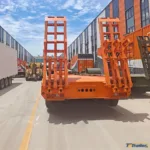
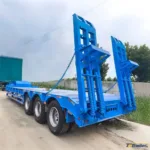
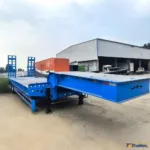
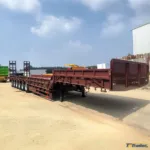
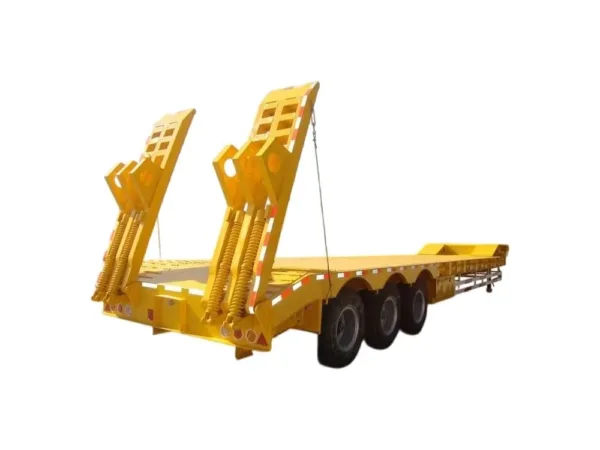
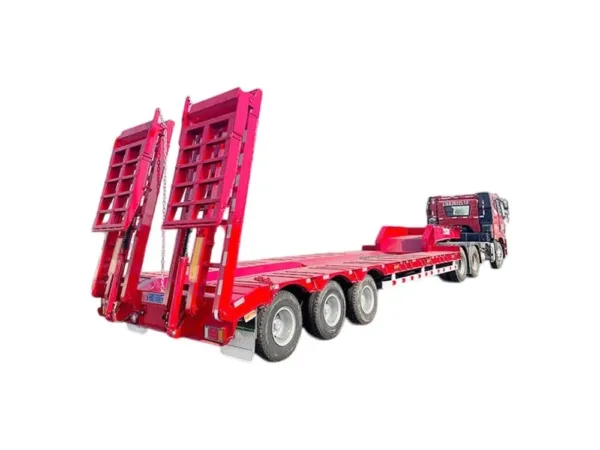
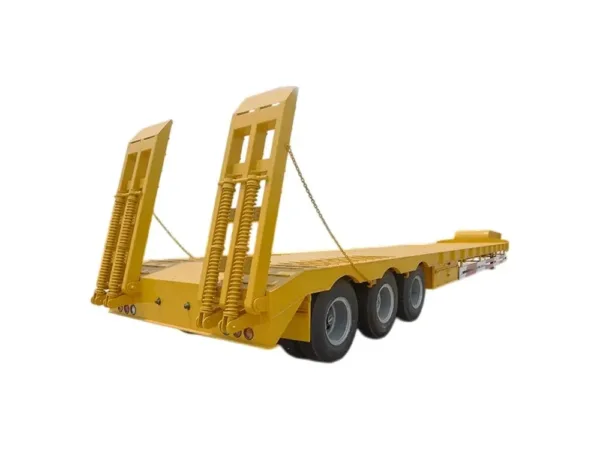
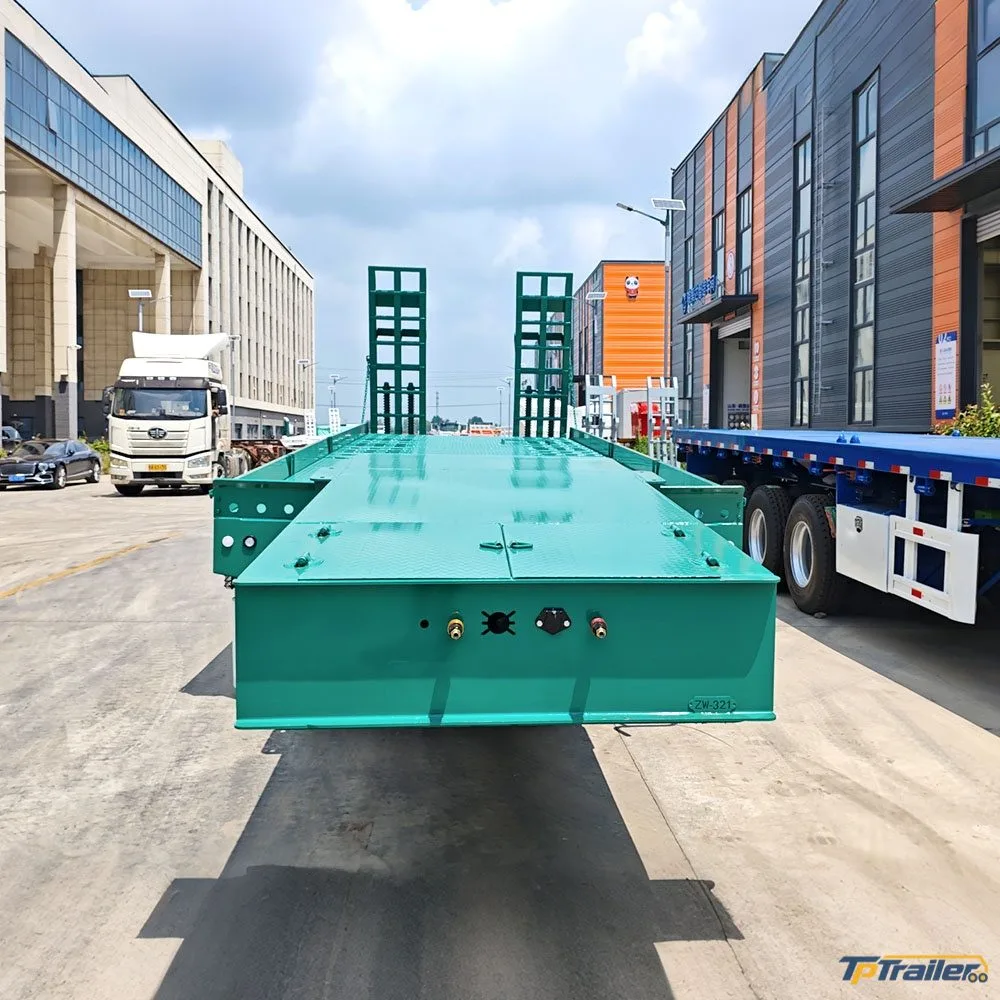
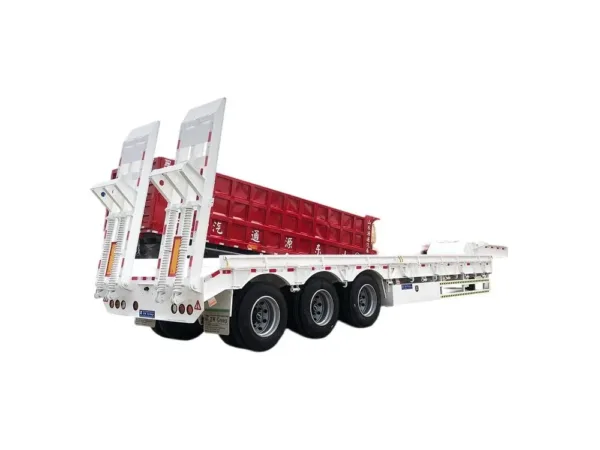
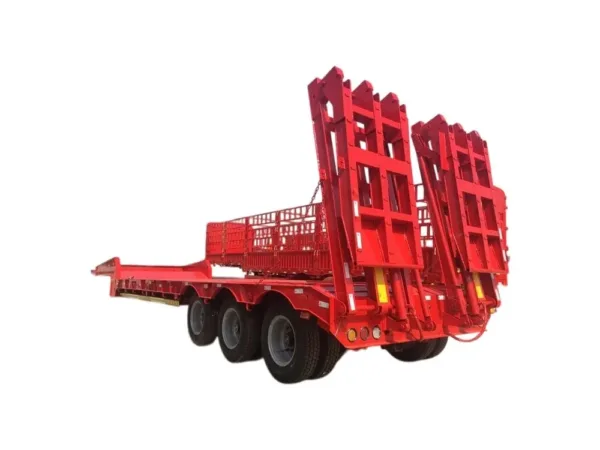
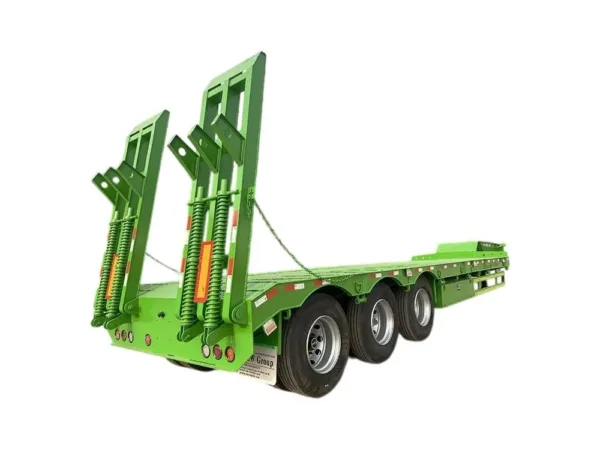
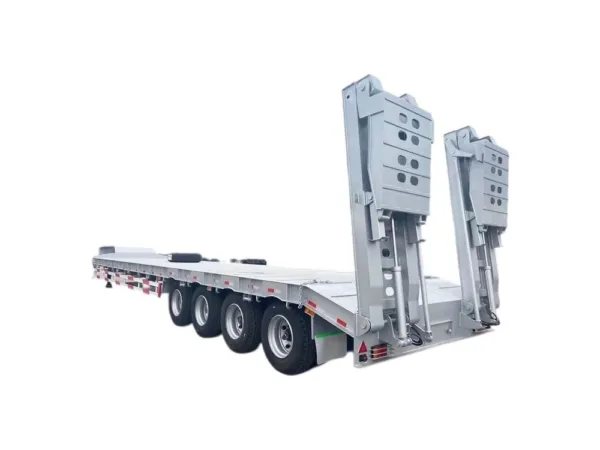
The 60 ton lowboy semi trailer is a three-axle steel lowbed built for moving construction machinery, mining equipment and heavy cargo. It is aimed at fleet operators, equipment dealers and project logistics teams who need one dependable deck for oversized loads. Its strongest argument is the rated load capacity of 30000 KG carried on a steel frame with a low, ramp-loaded deck. That combination lets a single unit handle excavators, dozers and wheeled plant without a second specialist trailer. The 60 ton lowboy semi trailer keeps the cargo low, keeps the axles loaded evenly and keeps your equipment moving between sites instead of waiting on transport.
Table of Contents
Why It Works On Site
Rated load capacity: the 30000 KG rating is the figure that decides what you can book. It covers compact excavators, skid steers, small dozers and mixed machinery loads on one deck. Dispatch can quote jobs against a known limit instead of guessing, and the 60 ton lowboy semi trailer stays inside its working envelope on repeated site runs.
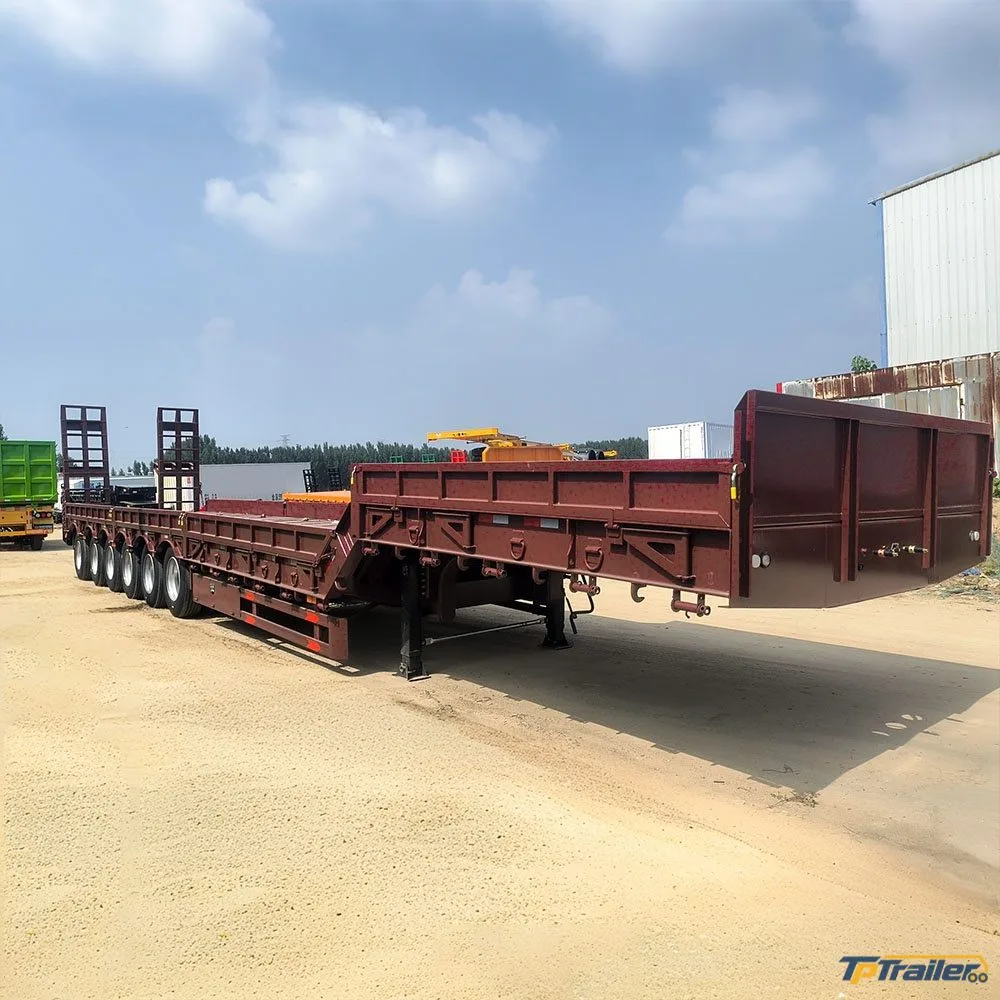
Three-axle steel frame: three axles spread the load along the trailer and keep the deck stable when a machine is driven on. The steel construction resists the twisting that comes from ramp loading and uneven ground. For the buyer this means fewer inspection surprises and a 60 ton lowboy semi trailer that tolerates daily yard and site handling.
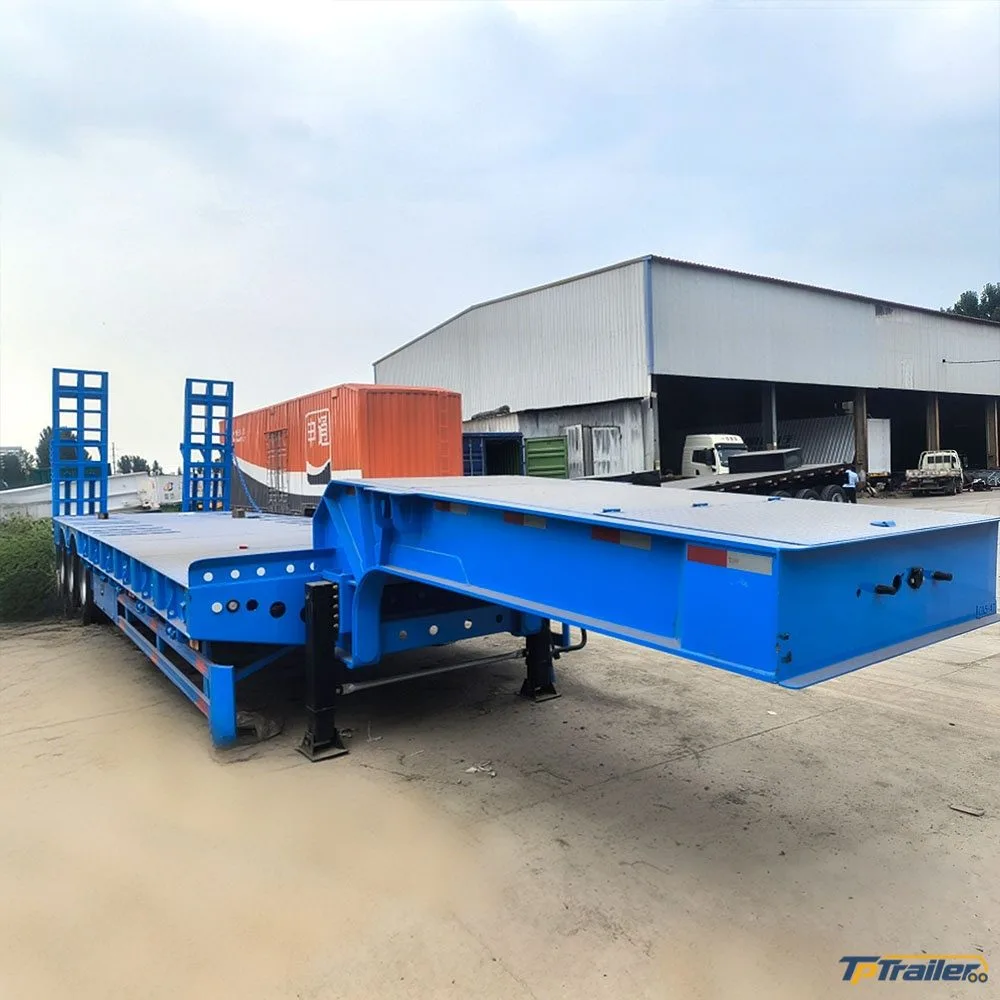
Low deck height: a lowbed deck drops the cargo close to the road, which lowers the overall travel height. Tall plant such as excavators with booms folded still clears obstacles on the route. That is what makes the 60 ton lowboy semi trailer practical for machinery that would otherwise need permits or a different trailer class.
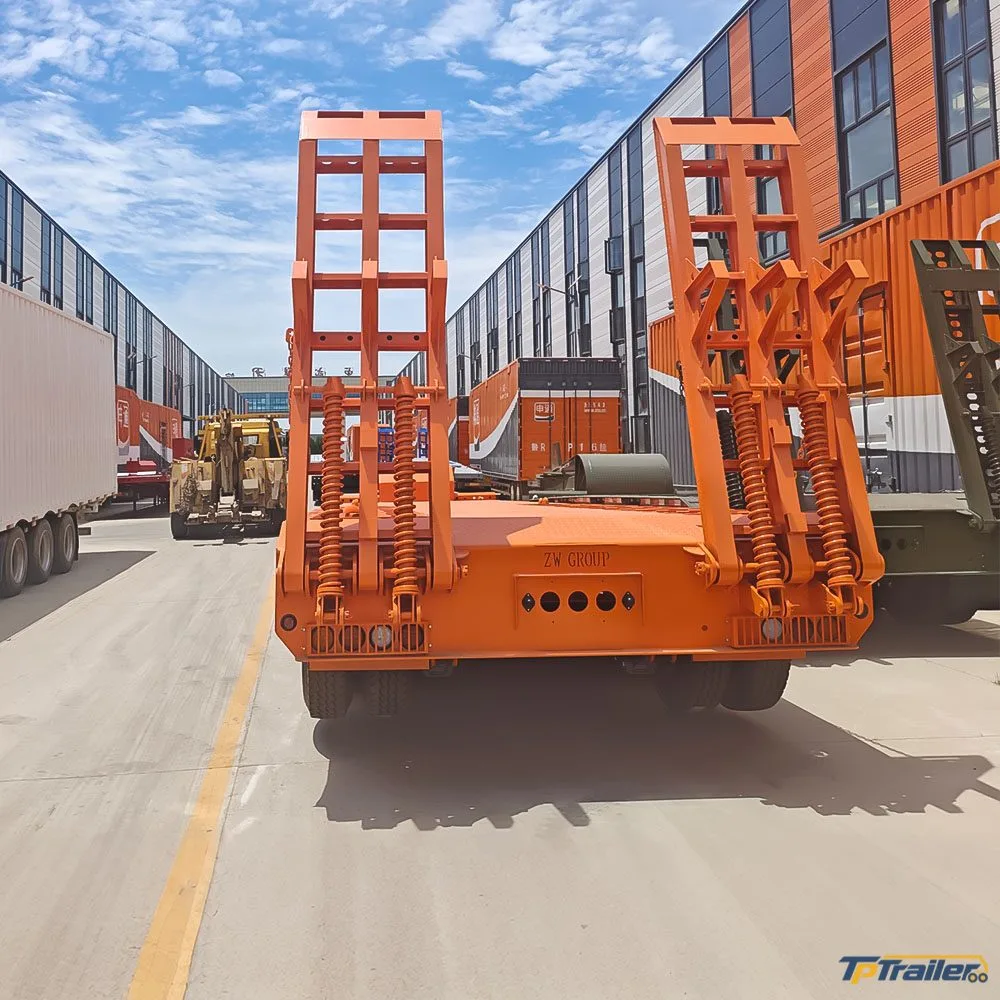
Ramp loading: rear ramps let a machine drive on under its own power, so no crane is needed at the loading point. Loading becomes a one-operator job at a yard, a quarry or a roadside site. The 60 ton lowboy semi trailer therefore turns up, loads and leaves without extra lifting equipment on standby.
Fifth-wheel coupling: the semi-trailer design couples to a standard tractor unit, so it slots into an existing fleet. You are not buying a dedicated rigid truck to move plant. A 60 ton lowboy semi trailer can be pulled by the prime movers already on your books, which keeps the capital layout focused on the trailer itself.
Steel deck surface: the steel deck takes chains, binders and tracks without the wear that softer surfaces show. Operators can lash machinery at multiple points and re-use the same tie-down positions job after job. That durability is why the 60 ton lowboy semi trailer suits rental fleets and contractors with high loading cycles.
Where It Is Used
Construction and earthmoving work is the core duty. A 60 ton lowboy semi trailer moves excavators, backhoes, dozers, loaders and compaction rollers between yards, housing plots and road projects. The rear ramps mean a machine can be driven on at the end of a shift and driven off at the next site, so the crew travels with the equipment rather than waiting for a crane.
Fleet operators also use the same deck for skid steers, mini plant and attachments that would be awkward on a flatbed. Because the deck sits low, tall machines travel with less height to worry about, and the three-axle layout keeps the load settled on longer road moves. For a contractor running several small sites, one 60 ton lowboy semi trailer replaces a patchwork of hired transport and keeps the schedule under direct control.
Mining and heavy equipment hauling is the second familiar duty. The 60 ton lowboy semi trailer carries drills, crushers, screens, conveyors and workshop plant around a mine site or between a depot and a remote pit. These are dense, awkward loads that reward a steel deck and a rated load capacity you can plan against.
Maintenance teams use the trailer to bring failed components back to the workshop and return rebuilt units, which keeps the site running instead of waiting on a specialist carrier. General cargo hauling is the third use: steel sections, precast units, timber packs, generators and containers of machinery all sit on the same deck. Operators value the 60 ton lowboy semi trailer because it covers plant moves and freight runs with one asset, and the fifth-wheel coupling lets any suitable tractor in the fleet take the job.
Choosing The Right Spec
Match the load capacity to your heaviest routine machine: the 30000 KG rating is the number to check against the equipment you move most often, not the one-off peak load. Weigh the machine plus attachments and fuel, then confirm it sits inside the rating with margin. Buyers who routinely move lighter plant should still size against the 60 ton lowboy semi trailer rating so the deck is not the bottleneck on a bigger job.
Three axles versus the load you spread: the three-axle arrangement on the 60 ton lowboy semi trailer is what carries the rated load and keeps the deck stable during ramp loading. If your routes involve long road sections, the axle count and tyre condition are the first things to inspect before each trip. Choose this configuration when you want a single trailer that handles both site shuffles and longer transfers.
Deck length and ramp needs: confirm the deck suits the machines you plan to drive on, including track length and attachment overhang. The 60 ton lowboy semi trailer is loaded by ramp, so check that approach angles work for your lowest-clearance equipment. If you move mostly wheeled plant, ramp loading is quick; if you move tracked machines, plan for track protection on the steel deck.
Coupling and fleet fit: the semi-trailer format requires a suitable tractor unit with a fifth wheel. Before ordering, confirm the prime movers in your fleet can pull the 60 ton lowboy semi trailer on your regular routes. Operators adding a first lowbed should size the tractor and the trailer together; fleets replacing an older unit can compare the rated load capacity and deck layout against what they already run.
Customisation Before Delivery
The axle count on a 60 ton lowboy semi trailer is confirmed at order. Buyers running heavier mining loads can ask for the configuration that matches their hauling plan. Every axle choice is settled on the order confirmation, together with the deck layout and the load rating you need. Nothing is built until that sheet is signed.
Deck length and width are options on this 60 ton lowboy semi trailer. A longer deck suits long construction machinery, while a shorter one keeps the turning circle tight on mine sites. You state the deck size you want at order confirmation. The workshop then cuts and welds to that figure, not to a stock size.
Suspension type is chosen when the order is placed. Mechanical and other suspension arrangements behave differently on rough haul roads, so the choice should follow the ground you actually drive on. For a 60 ton lowboy semi trailer used in mining, the suspension is agreed before production starts. It is not changed after the frame is assembled.
Tyre size and brand are confirmed at order confirmation. The tyre option affects ground clearance, load spread and how the trailer sits behind the tractor. Buyers of a 60 ton lowboy semi trailer often match tyres to the tractor fleet for simpler spares. State your preference early, because the axle hubs are built around it.
Colour and finish are agreed at order confirmation. A 60 ton lowboy semi trailer can be painted to a fleet colour, and the steel can be finished to suit the climate it works in. Paint choice is recorded on the order sheet. It is applied before dispatch, so the decision has to be made before the build closes.
Fitting And Installation
When the 60 ton lowboy semi trailer arrives, the first task is matching it to the tractor. Check the fifth wheel height, the kingpin position and the clearance to the cab before you couple up. Confirm the air line couplings and the electrical socket match the tractor. Route the brake hoses so they cannot rub on the frame or catch on the landing legs.
If the input gives no fitment drawing, ask for one to be confirmed at quotation, so the coupling points, hose routing and ramp positions are agreed in writing before the build. Measure the ramp approach angle against the machinery you plan to load. A mismatch found at the port is far cheaper than one found on site.
A wrong size on a 60 ton lowboy semi trailer costs downtime, not just money. If the kingpin height does not match the tractor, the deck sits nose-high or nose-low, and the ramps no longer meet the ground at a safe angle. If the hose routing is wrong, lines chafe and the brakes drop out under load. If the ramp width is short of the track width of your excavator, the machine cannot be loaded at all.
Each of these faults stops the trailer until parts or welding arrive. That is why the fitment drawing is confirmed at quotation and checked again on arrival. Keep the tractor and the first load machine on hand during commissioning. A short coupling trial then proves the whole set before the trailer enters service.
Service Life And Maintenance
The tyres and brake linings wear first on any 60 ton lowboy semi trailer. Walk the wheels before each shift and look for uneven tread wear, cuts and exposed cord. Check the brake adjustment and listen for dragging. Tyre choice made at order confirmation sets how the trailer behaves on gravel and on sealed road, so a tyre matched to the haul road protects the rest of the running gear.
The deck surface takes the load and the abrasion. Inspect the deck plate for cracks, deep gouges and worn spots where tracks and bucket edges drag. On a 60 ton lowboy semi trailer, the deck is the part that shows abuse soonest. Keep the surface clean of grit, because trapped stone grinds the plate. A floor finish selected for the working climate slows this wear between inspections.
The suspension and its bushes are next in line. Check the springs, hangers and bushings for cracks, looseness and flattened leaves. Look at the axle alignment after any hard impact on site. The suspension option agreed at order confirmation determines which points you grease and how often you look. A 60 ton lowboy semi trailer that works on rough ground needs this check more often than one on sealed haul roads.
The kingpin, fifth wheel plate and landing gear carry the coupling load. Grease the kingpin and inspect it for step wear. Check the landing gear for bent legs and worn cranks. On a 60 ton lowboy semi trailer, a dry kingpin wears fast and then the trailer rocks under load. The steel and coating chosen for the frame and fittings decide how quickly rust starts at these joints, so touch up bare metal when you find it.
The ramps and their hinges are a common failure point. Inspect the hinge pins, the ramp locks and the welds at the ramp root for cracks. Load and unload slowly and keep the ramp feet clear of mud. The paint and steel finish agreed at order confirmation protect these areas, but impact damage still needs repair. A 60 ton lowboy semi trailer used daily in mining should have its ramps checked every week, not only when a fault appears.
Packing And Container Loading
Each 60 ton lowboy semi trailer leaves the works in a protected, partly disassembled state for sea freight. Steel surfaces are cleaned and coated with a protective primer or shipping grease to limit corrosion during the voyage. Small parts such as pins, bolts, lamps and valves are boxed and labelled by position on the trailer. Loose items are tied to the frame so nothing shifts inside the container. The buyer should ask for the packing list before dispatch and check that every carton number matches a position on the drawings. A 60 ton lowboy semi trailer is a large, heavy unit, so packing is planned around safe lifting points and clear marking, not around speed of loading.
Container loading depends on the deck length and the axle configuration ordered. Long lowbed units are usually shipped knocked down or with the gooseneck separated, which shortens the package and lets more than one unit travel per container where dimensions allow. Stacking of complete trailers is not normal practice, because deck height and axle groups make nesting impractical and risky for the frame. Whether a 60 ton lowboy semi trailer can be nested or shipped as a partial load is confirmed at quotation, once the buyer states the deck length and axle count. On arrival, verify frame straightness, coating condition, and that all boxed parts are present against the packing list.
Common Mistakes Buyers Make
Ordering the wrong deck length. A deck that is too short for the machine leaves overhang past the rear, while an oversize deck wastes container space and raises freight. Measure the longest item you will haul, including any attachment, then confirm the deck length against that figure. The single check: compare your machine footprint with the deck drawing before signing. A 60 ton lowboy semi trailer is built to the ordered length, so this is the most common return cause.
Mismatching the axle count to the load. Buyers often assume more axles always suit their route, or fewer axles save weight. The axle count must match the load capacity you actually need and the road rules where the trailer will run. The single check: write down the payload and the local axle limits, then confirm both with the supplier. A 60 ton lowboy semi trailer ordered with the wrong axle group cannot be reworked cheaply.
Ignoring the kingpin and fifth wheel interface. The tractor’s fifth wheel height and kingpin size must suit the gooseneck. A mismatch causes poor coupling, uneven deck height or unsafe towing. The single check: measure the fifth wheel height and confirm the kingpin standard on the order. For a 60 ton lowboy semi trailer, this interface is fixed at build, so correcting it later means replacement parts.
Overlooking ramp and loading angle. Machinery that cannot climb the ramps safely is a frequent complaint. Ground clearance, ramp length and the machine’s approach angle all matter. The single check: test the machine’s ramp angle against the ramp drawing. On a 60 ton lowboy semi trailer, ramp style and length are order options, so state the equipment type and weight before production starts.
Assuming coating and finish are standard. Paint colour and protective coating are often left unstated, and buyers are surprised on arrival. The single check: confirm the finish in writing on the order. For a 60 ton lowboy semi trailer, specify the coating and any touch-up paint you need, and ask for photos before packing so the finish is agreed before the container is sealed.
Buyer Questions
Can the trailer be shipped in a standard container?
That depends on the deck length and axle configuration you order. Long lowbed units are commonly shipped knocked down or with the gooseneck separated to shorten the package. Before ordering, measure the longest machine you will haul and confirm the resulting deck length with the supplier, then ask how that length is packed. Whether a 60 ton lowboy semi trailer fits one container or needs a different arrangement is confirmed at quotation, once the dimensions are fixed.
What should I check when the trailer arrives?
Unload with proper lifting gear at the marked points, then inspect the frame for straightness and the coating for transit damage. Compare every carton and loose part against the packing list, and confirm pins, bolts and lamps are all present. Photograph any damage before signing the delivery receipt. For a 60 ton lowboy semi trailer, also check the gooseneck and axle group for movement during the voyage, and report any issue to the supplier with photos immediately.
How do I confirm the load capacity suits my equipment?
Start with the weight of the machine you will carry, including attachments and fuel. Compare that figure with the load capacity stated for the trailer, and keep a margin for uneven loading. Confirm the axle count and deck length together with the supplier, because capacity is tied to the whole configuration. For a 60 ton lowboy semi trailer, state the payload and route limits on the enquiry so the specification is matched before production begins.
To receive a quotation, send the deck length you need, the axle count you require, and the quantity you plan to order. Include the machine type and weight you will haul, plus your destination port. With those details, the supplier can confirm the configuration, packing arrangement and price tier for your 60 ton lowboy semi trailer order.
We use cookies to enhance your browsing experience, serve personalized content, and analyze our traffic. By clicking "Accept All", you consent to our use of cookies. Privacy Policy
Cookie Preferences
Required for the website to function properly. Cannot be disabled.
Help us understand how visitors interact with the website (Google Analytics).
Used to deliver personalized ads and measure ad campaign effectiveness.


















Write a Review