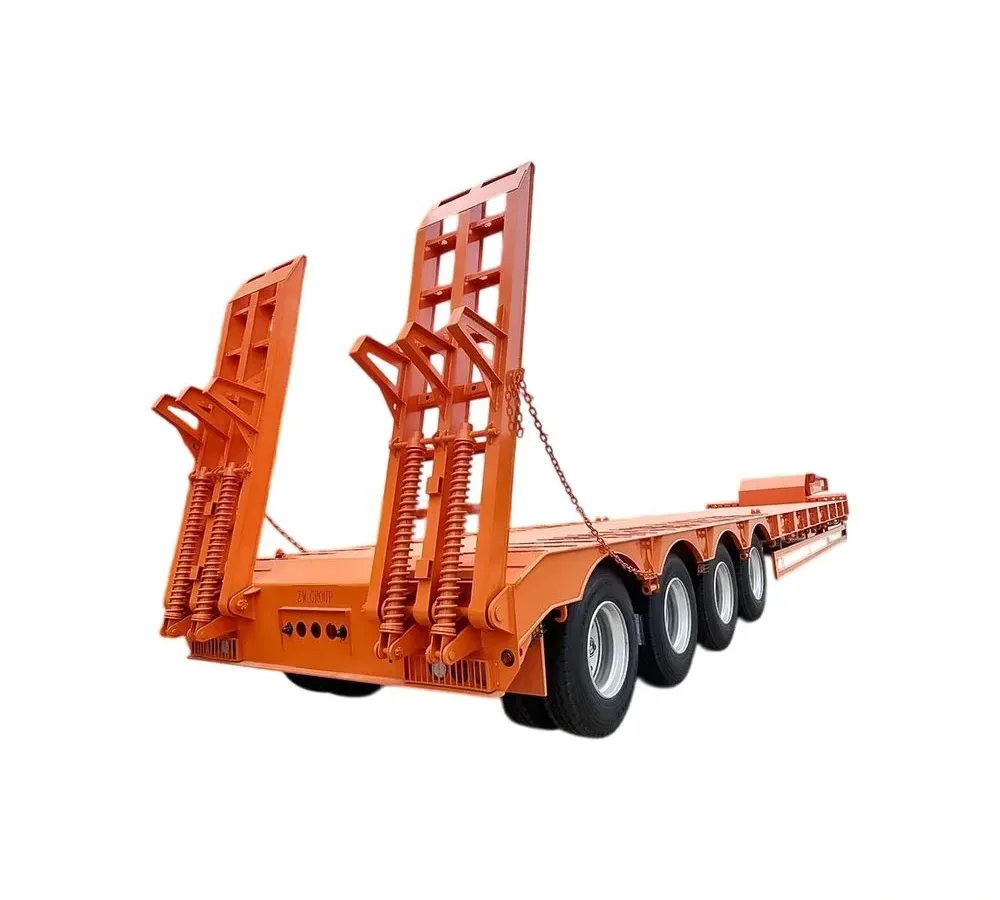
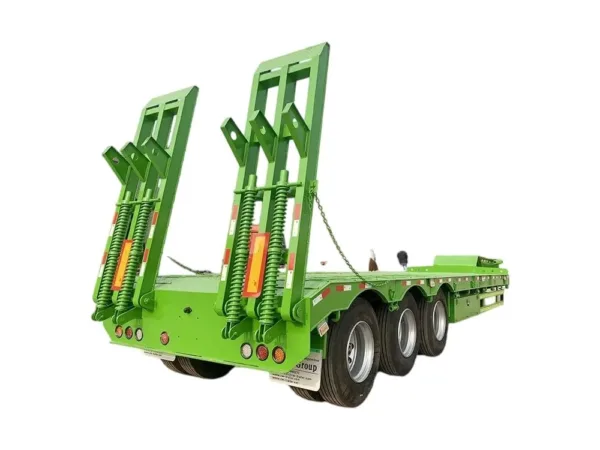
The lowbed semi trailer 3 axle 60 ton is a heavy-equipment carrier built for fleets that move excavators, dozers and rigs between yards and job sites. It pairs a low deck height with a three-axle running gear so tall machines load without ramps and ride stable on the highway. It suits contractors, rental yards and transport operators who need one trailer to handle both daily machine shuttles and occasional long hauls. The strongest reason to choose it is the load capacity of 30000 KG: enough deck strength for tracked and wheeled equipment, with a deck layout that keeps the centre of gravity low on every trip.
Table of Contents
Why It Works On Site
Load capacity of 30000 KG. The deck and frame are rated for this figure, which covers most mid-size excavators and wheel loaders a fleet runs. That means one lowbed semi trailer 3 axle 60 ton can replace a lighter trailer plus a second run, so the same machine reaches the site in a single trip instead of two.
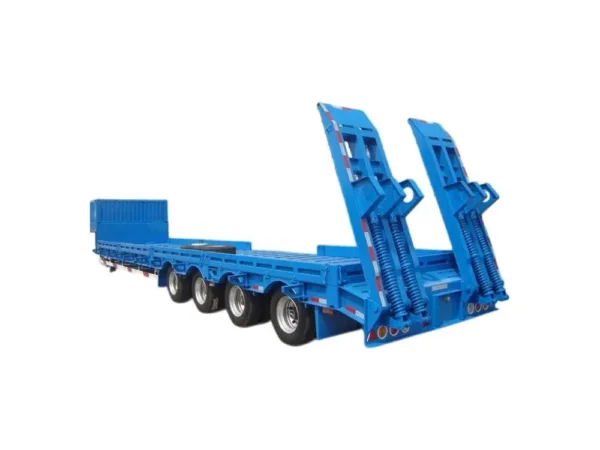
Three-axle running gear. Spreading the load over three axles keeps axle weights inside highway limits on the drive to site. For the buyer this means fewer permits and fewer route detours, and a lowbed semi trailer 3 axle 60 ton that can travel the direct road instead of a longer legal route.
Low deck height. A low deck lets a tracked excavator or dozer drive on under its own power. The job it makes possible is loading without a crane or a long ramp, which cuts setup time at the yard and lets a single operator handle the load.
Heavy-duty frame and deck. The structure is built for repeated loading of steel tracks and heavy tyres. That matters for rental yards and contractors who load and unload several times a week, because the deck holds its shape under tracked machines instead of denting.
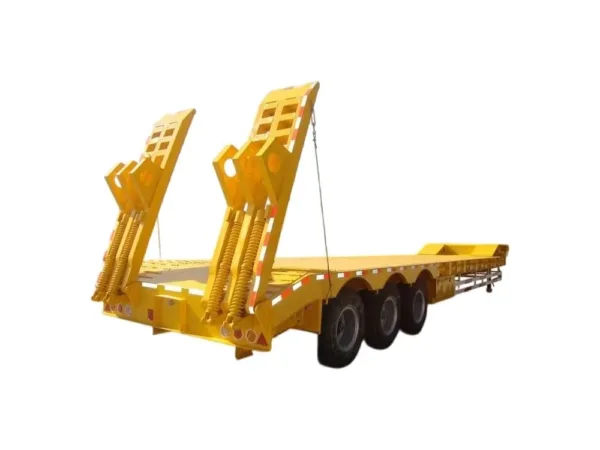
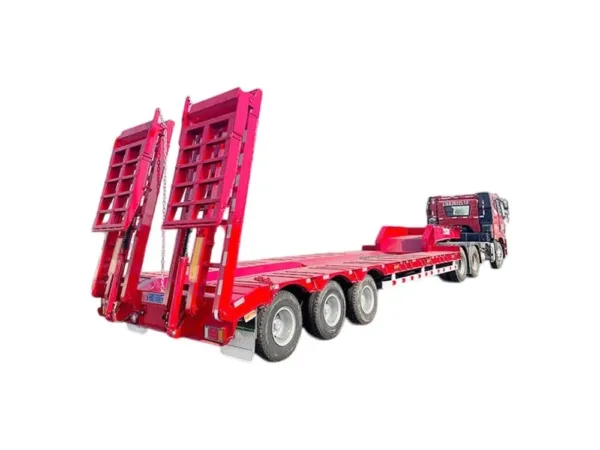
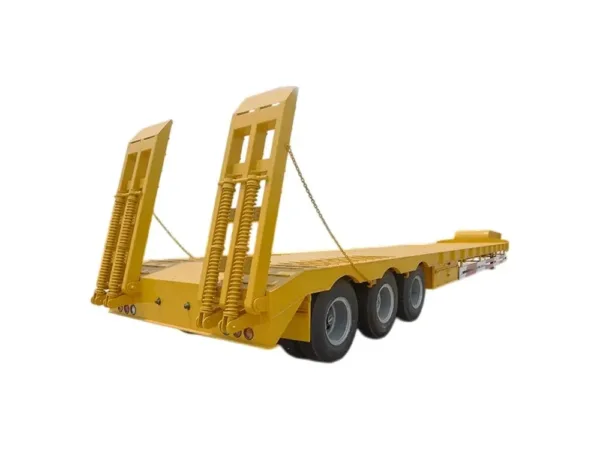
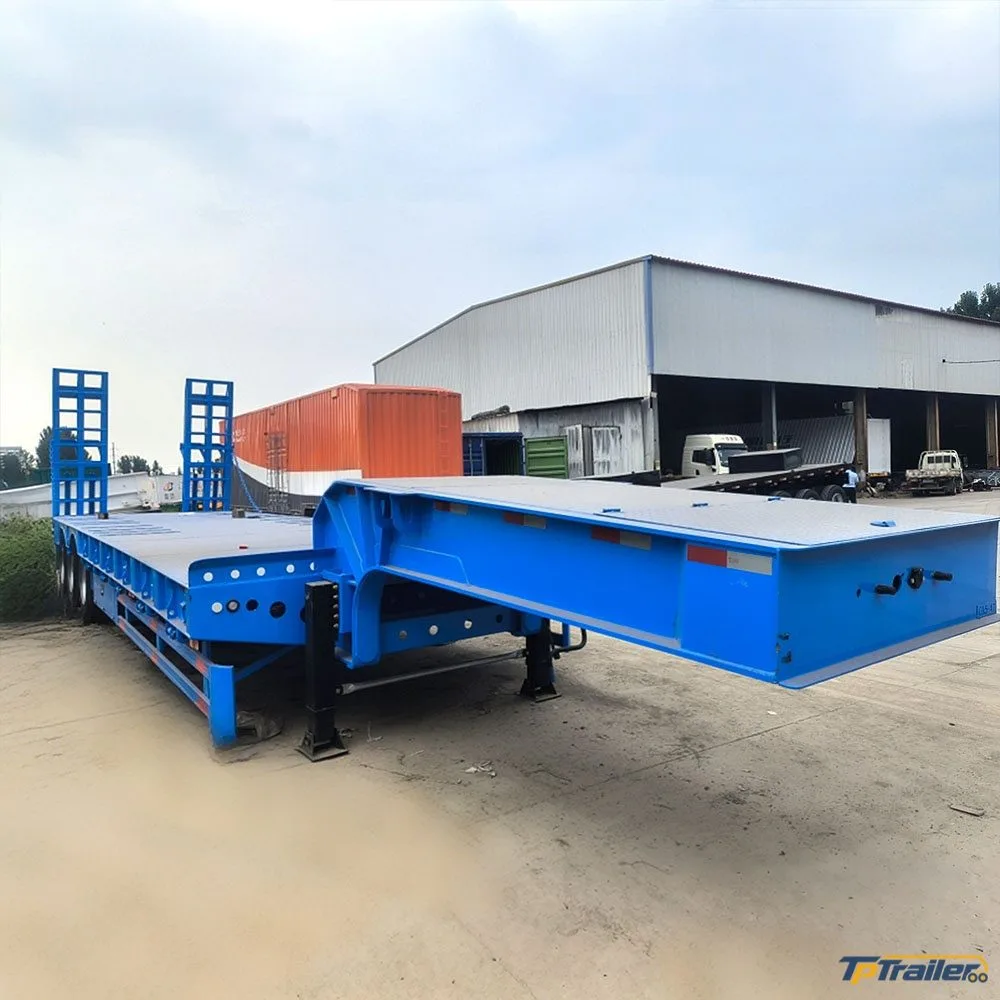
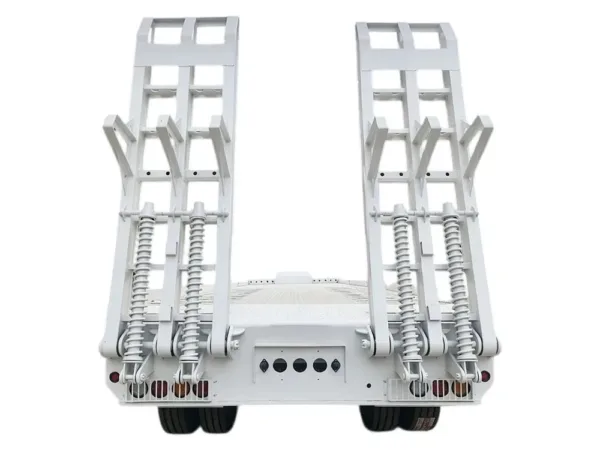
Loading ramps and rear approach. The rear of the trailer is set up for machine access. This lets a lowbed semi trailer 3 axle 60 ton take a wheel loader or backhoe straight from the ground onto the deck, so the buyer needs no separate loading dock or forklift on site.
Simple, serviceable design. The trailer uses common axle, brake and suspension parts. For a fleet operator this means routine maintenance can be done in-house, and a lowbed semi trailer 3 axle 60 ton stays in service instead of waiting on special-order components.
Where It Is Used
The most common job for a lowbed semi trailer 3 axle 60 ton is moving construction equipment between a yard and an active site. A contractor loads an excavator or a dozer in the morning and has it working the same day. Because the deck sits low, tracked machines climb on under their own power, and the three-axle layout keeps the load legal on public roads. Fleets use it for daily shuttles on short routes, for relocating machines between projects, and for picking up new equipment from a dealer. The load capacity of 30000 KG covers the mid-size machines that make up most of a contractor’s fleet, so the trailer is not limited to a single machine type.
Beyond construction, the lowbed semi trailer 3 axle 60 ton handles agricultural and industrial moves. Farms use it to shift tractors and harvesters between fields and storage. Rental yards use it to deliver and collect equipment from customer sites, often several loads a day. Industrial operators move generators, compressors and small plant between facilities. On longer routes, the trailer’s low deck and stable axle spread make highway transport practical for machines that would otherwise need a specialist carrier. For an operator running mixed cargo, one trailer covers equipment delivery, machine relocation and general heavy haulage without a second unit in the yard.
Choosing The Right Spec
Match the load to the capacity. The stated load capacity of 30000 KG is the ceiling for the deck. Buyers moving excavators, dozers or wheel loaders should compare the machine’s operating weight against this figure and leave a margin for attachments and fuel. A lowbed semi trailer 3 axle 60 ton sized this way handles the machine plus bucket or blade without overloading the frame.
Check the axle count against your routes. Three axles spread weight and suit operators who travel public highways between yard and site. Buyers whose routes include tight weight limits should confirm the axle configuration against local rules before ordering. The lowbed semi trailer 3 axle 60 ton is built around this layout, so the choice is about route legality rather than deck strength.
Confirm deck length against machine footprint. Track length and wheelbase decide how much deck the machine needs. Buyers should measure the machine’s ground contact length and compare it with the deck so the load sits fully supported. A lowbed semi trailer 3 axle 60 ton with the right deck length keeps the machine centred and the weight balanced over the axles.
Plan for loading method. Tracked machines drive on under power; wheeled machines may need ramps or a winch. Buyers should decide which method their operators will use most and confirm the rear approach suits it. This keeps the lowbed semi trailer 3 axle 60 ton practical for the fleet’s actual mix of cargo rather than a single machine type.
Customisation Before Delivery
The axle count is the first decision on any lowbed semi trailer 3 axle 60 ton build. Buyers moving very dense loads sometimes ask for a different axle arrangement to spread weight over more contact points. Every option is settled at order confirmation, together with the deck and suspension choices, so the workshop builds to one agreed specification sheet rather than a verbal request.
Deck length and deck height are agreed at the same time. A longer deck suits long tracked machines, while a shorter deck keeps the turning envelope tighter on narrow sites. For a lowbed semi trailer 3 axle 60 ton order, the deck is matched to the tallest and longest item in the buyer’s fleet, not to a single job.
Suspension type is a buyer choice on the lowbed semi trailer 3 axle 60 ton configuration. Mechanical suspension is simple and easy to service in remote workshops, while air suspension softens the ride for delicate loads. The selection is fixed at order confirmation so the mounting brackets and air line routing are correct from the start.
Tyres, wheels and finish are chosen before the build begins. Tyre size and ply rating affect ground pressure and replacement cost, and the paint colour can carry the buyer’s own livery. On a lowbed semi trailer 3 axle 60 ton order, these choices are recorded on the confirmation sheet so nothing is decided by default.
Ramps, side extensions and outriggers can be discussed where the buyer’s cargo needs them. Each addition changes the tare weight and the loading routine, so it should be raised early rather than after build. The final lowbed semi trailer 3 axle 60 ton specification is locked at order confirmation and used as the build reference.
Fitting And Installation
On arrival, the buyer’s workshop has to match the trailer to the tractor unit that will pull it. The fifth wheel height, the kingpin position and the landing leg footprint all need checking against the tractor before the first loaded run. Coupling height decides whether the deck sits level or nose-up, and a deck that is not level changes how a machine climbs the ramps.
The hydraulic and electrical connections also need matching: the coil cable, the air lines and any ramp controls must reach the tractor sockets without strain. If the input gives no fitment data for a lowbed semi trailer 3 axle 60 ton unit, a fitment drawing is confirmed at quotation instead of being assumed, and the buyer should send tractor dimensions with the order.
A mismatch found on the day of delivery costs real downtime. A kingpin that sits wrong for the tractor means the trailer cannot legally or safely couple, and the machine it was bought to move stays parked. Hose routing that fouls the deck edge wears through on the first tight turn, turning a simple job into a workshop repair.
When a lowbed semi trailer 3 axle 60 ton trailer is specified without tractor details, the risk lands on the buyer at the busiest moment. Sending the tractor model, fifth wheel height and intended cargo list at quotation removes most of that risk. A lowbed semi trailer 3 axle 60 ton order confirmed against real tractor data needs only a routine pre-service check, not rework.
Service Life And Maintenance
The tyres and brake linings wear first on any lowbed semi trailer 3 axle 60 ton trailer. Operators should check tread depth, sidewall condition and brake adjustment at each pre-trip inspection. Uneven tyre wear points to axle alignment or suspension problems, so it is worth recording. Catching a worn lining early is far cheaper than replacing a drum scored by metal contact.
Ramp hinges and the ramp locking points take heavy load every time a machine climbs. Grease the hinge pins and inspect the welds around the ramp roots for cracks. On a lowbed semi trailer 3 axle 60 ton unit, a cracked ramp hinge is a loading hazard, so any crack should be repaired before the next job. Keep the ramp surface free of mud so tracks grip.
The deck surface is the working face of the lowbed semi trailer 3 axle 60 ton trailer. Check for bent cross members, worn deck plate and loose fasteners after each heavy move. A deck coating chosen at order confirmation slows corrosion where road salt and water sit. Touching up worn coating early keeps the steel underneath sound for longer.
Suspension bushes, U-bolts and air springs need periodic inspection. Loose U-bolts allow axle movement, which quickly damages tyres and springs. On a lowbed semi trailer 3 axle 60 ton build, the suspension type chosen at order confirmation sets the inspection routine. Mechanical suspension calls for greasing of shackle pins; air suspension calls for a leak check on bags and lines.
The kingpin, landing legs and structural welds deserve a regular look. Check the kingpin for wear, the legs for smooth operation and the main frame for cracks at stress points. A galvanised or painted finish chosen at order confirmation extends the interval before corrosion work is needed. Keep the trailer clean and the coating intact.
Packing And Container Loading
A lowbed semi trailer 3 axle 60 ton is a long, heavy structure, so packing starts with how it is split for the voyage. Expect the trailer to travel with removable parts taken off where the build allows it, such as ramps, side extensions or the gooseneck section, so each piece can be handled and braced on its own. Exposed steel surfaces and machined coupling points need protection against salt air and rubbing during the crossing.
Ask the supplier to confirm which components ship loose and how they are marked, because a trailer that arrives as a bundle of unlabelled parts slows down assembly at your yard. Confirm at quotation how the unit is broken down and what protection is applied to painted and bare steel surfaces.
Space saving matters on a lowbed semi trailer 3 axle 60 ton, but stacking is limited by weight and by the deck structure. Nested loading of two units is sometimes possible where the design allows it, and flat-packed ramps free up length. The buyer should verify the loading plan before shipment: which parts sit on the deck, what is braced against movement, and whether the container or flat rack is loaded within its weight limit. On arrival, check the frame for twist, the paint for rubbing damage, and count every loose item against the packing list. A lowbed semi trailer 3 axle 60 ton should be inspected before the container is emptied.
Common Mistakes Buyers Make
Ordering without checking the load capacity against the real machine. The rated load capacity is a limit, not a target, and an excavator plus bucket can exceed the machine weight the buyer had in mind. The single check: weigh the heaviest combination you will carry, including attachments and ballast, and compare it with the rated capacity before you confirm the order.
Ignoring the deck length and width against the equipment footprint. A machine that overhangs the deck changes the load distribution and can breach transport rules. The single check: measure the length, width and track of the largest item, then confirm the deck dimensions and ramp spacing with the supplier in writing.
Assuming the axle count suits every route. Axle count affects how the load is spread and what local rules allow. The single check: confirm the permitted axle load and overall length for the routes you will run, then match the axle configuration to those limits rather than to habit.
Overlooking the coupling and kingpin match. A trailer that does not couple to your tractor is unusable on day one. The single check: confirm the kingpin size and the fifth wheel height on your tractor, and ask the supplier to state the coupling height of the trailer before the order is released.
Skipping the brake and suspension specification. Brake type and suspension style decide how the trailer behaves when loaded. The single check: state your operating terrain and the brake standard your market requires, and have the supplier confirm the fitted brake and suspension type at quotation.
Buyer Questions
How do I confirm a lowbed semi trailer 3 axle 60 ton will carry my machine?
Start with the weight of the machine as it will actually travel, with attachments, fuel and any ballast. Compare that figure with the rated load capacity of the trailer, leaving a margin rather than running at the limit. Then measure the machine footprint and check it against the deck length, deck width and ramp spacing. Send those figures to the supplier and ask for written confirmation that the configuration suits the load. Confirm at quotation how the capacity is defined, so you compare like with like.
Can the trailer be shipped in a container, and what should I check on arrival?
Whether a lowbed semi trailer 3 axle 60 ton fits a container depends on how it is broken down and on the container type offered. Ask the supplier for the loading plan and the packed dimensions before you book freight. On arrival, inspect the frame for twist and impact damage, check painted and bare steel surfaces for rubbing, and count every loose component against the packing list. Photograph anything damaged before you move the unit, and confirm the loading plan at quotation.
What paperwork and configuration details should be fixed before production?
Fix the axle configuration, the deck dimensions, the coupling height and the brake specification in writing before production starts. State the load you will carry and the routes you will run, so the supplier can confirm the configuration suits them. Ask which documents are supplied with the unit and which are your responsibility in your market. Confirm at quotation what is included in the price and what is optional, so nothing is assumed on either side.
To receive a quotation for a lowbed semi trailer 3 axle 60 ton, send three details: the deck length you need, the axle count you want, and the quantity you plan to order. Add the weight and footprint of your heaviest machine if you can. With those figures we can confirm the configuration and the price tier that applies to your order.
We use cookies to enhance your browsing experience, serve personalized content, and analyze our traffic. By clicking "Accept All", you consent to our use of cookies. Privacy Policy
Cookie Preferences
Required for the website to function properly. Cannot be disabled.
Help us understand how visitors interact with the website (Google Analytics).
Used to deliver personalized ads and measure ad campaign effectiveness.


















Write a Review