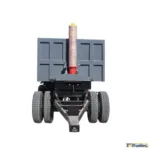
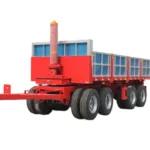
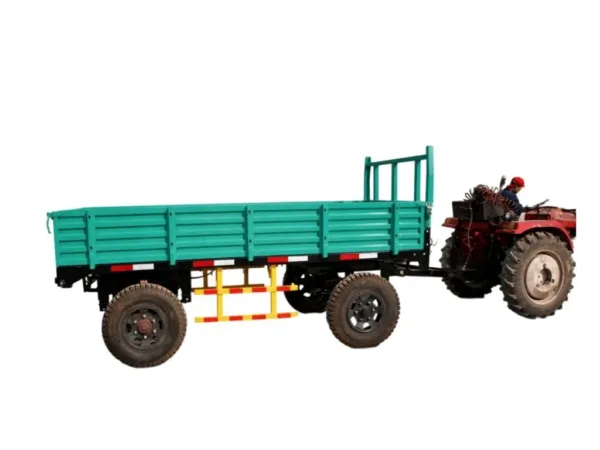
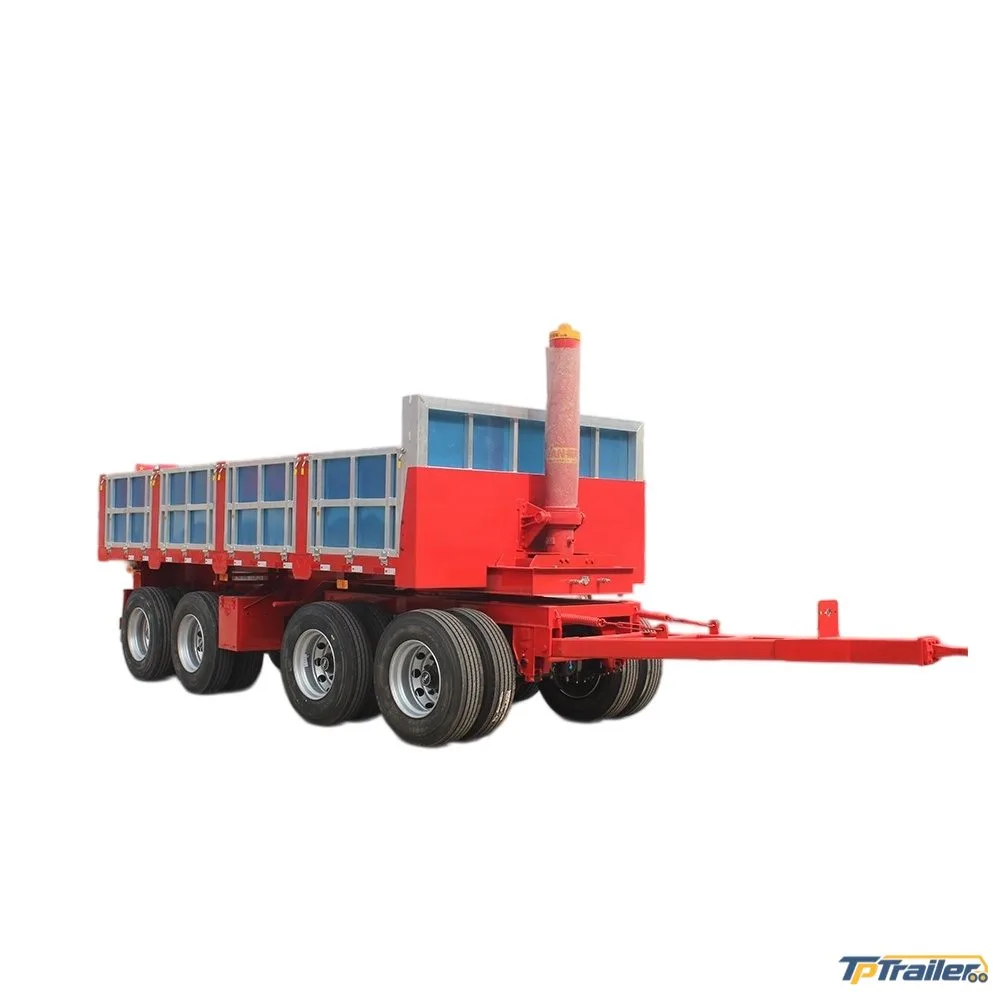
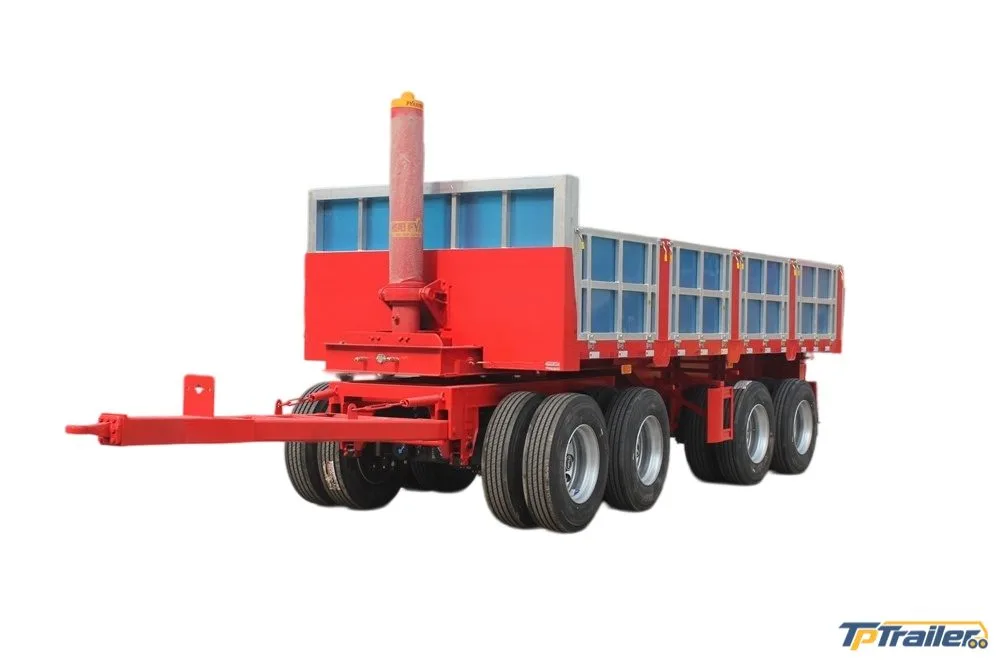
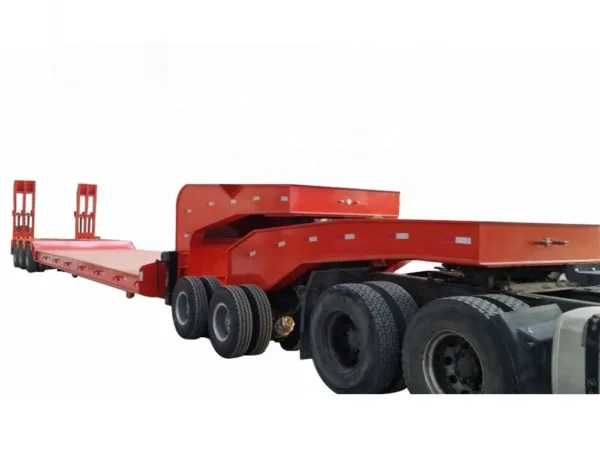
This side dump full trailer is a four-axle drawbar unit built for hauling bulk loads and tipping to either side on site. It suits fleet operators, contractors and agricultural hauliers who need one trailer to move soil, grain, gravel and scrap without a raised tipping body overhead. The strongest reason to choose it is the drawbar towing dolly: the trailer tracks behind the tractor unit on a rigid coupling, so the load tips sideways rather than rearward, and the whole rig stays stable on level ground during discharge.
Table of Contents
Why It Works On Site
Side tipping keeps the rig level. The body discharges to the left or right instead of lifting, so the side dump full trailer never needs the rear clearance a conventional tipper demands. That lets a driver tip along a wall, a bunker edge or a narrow stockpile lane where a rear-tip body would have to reverse and raise. Fewer repositioning moves per load means faster turnaround on tight yards.
Four axles spread the load. Spreading weight across four axles lowers the load on each axle group, which matters on yard roads, farm tracks and site access routes that are not built for concentrated point loads. For the buyer this means a side dump full trailer can be worked on surfaces where a shorter, heavier-axle trailer would rut or bog down, keeping the haul moving in wet or soft ground conditions.
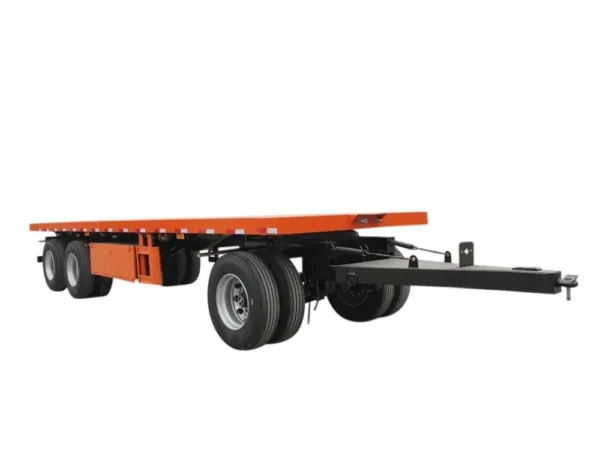
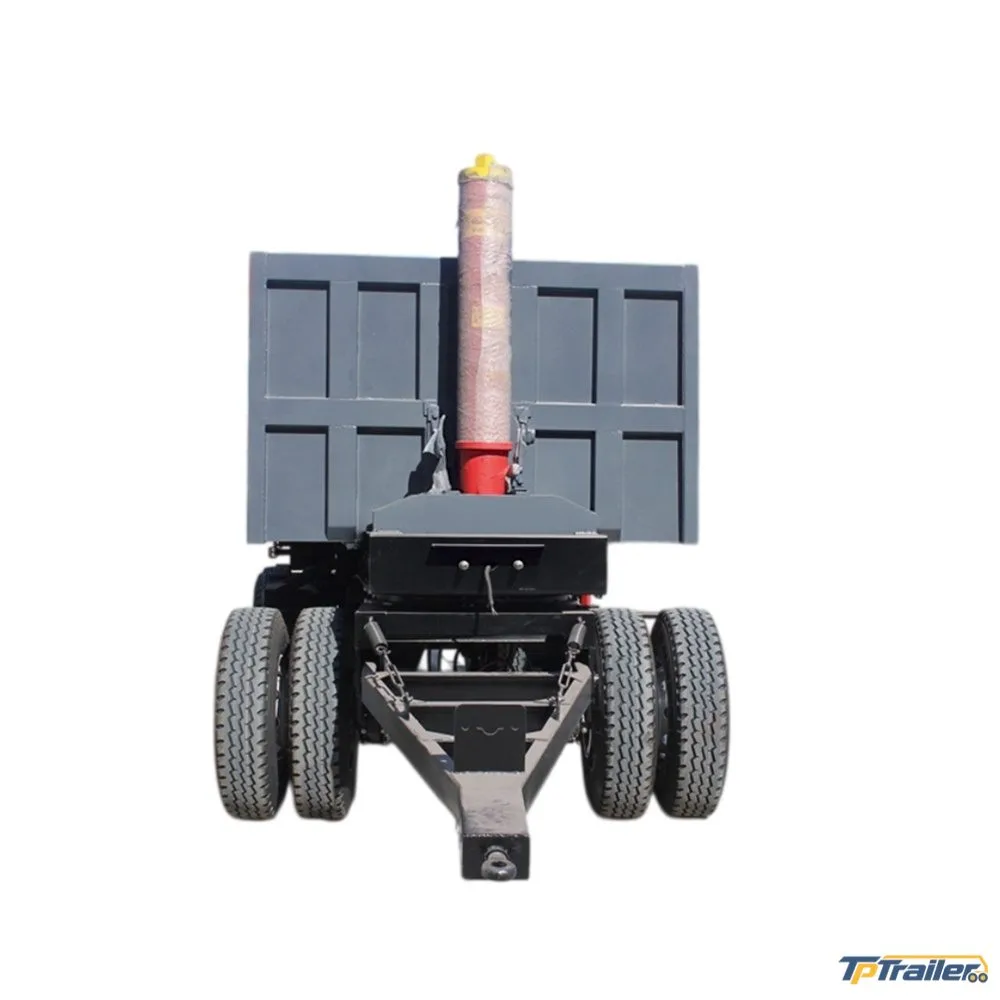
The drawbar towing dolly carries the coupling. The dolly takes the towing forces and steers the trailer behind the tractor, so the side dump full trailer follows the unit’s line instead of cutting corners. On farm lanes and site roads with bends, that tracking behaviour reduces the space a driver needs to swing the rig, and it keeps the trailer aligned when reversing to a tip point.
Rated load capacity of 30000 KG. The stated load capacity sets the working ceiling for each trip, so a haulier can plan payloads of bulk material against a known figure rather than guessing. That single rating lets the side dump full trailer serve as the heavy hauler in a mixed fleet, covering the dense loads that lighter trailers cannot take in one pass.
Full trailer configuration for volume. A full trailer body carries its own running gear, so the cargo bed runs the length of the unit rather than sharing space with a tractor-mounted body. For bulk cargo this means more usable volume per trip and a side dump full trailer that can be loaded from either side by standard handling equipment, cutting the time spent at the loading face.
Built for repeated tipping cycles. The side dump full trailer is a dedicated discharge machine, so its body and frame are arranged around the tip action rather than around general freight. Operators who tip several times a day get a rig whose layout suits that duty, and the side-discharge pattern keeps the working area clear for the next load.
Where It Is Used
The side dump full trailer earns its place on hauling jobs where material has to be dropped along a line rather than in a heap. Road construction crews use it to place aggregate and sub-base along a shoulder or a trench edge, tipping to the side so the material lands where the spreader or excavator needs it. Earthworks and site preparation crews run it for spoil, topsoil and crushed stone, discharging into a windrow the dozer can push. In each case the side dump full trailer lets the driver place the load in a strip, so the receiving machine works a straight line instead of chasing a pile.
Agricultural and bulk-handling fleets use the side dump full trailer for grain, silage, fertiliser and feed, tipping into a bunker, a pit or along a feed passage. Scrap and recycling yards use it for mixed metal and demolition debris, where side discharge keeps the drop zone clear and lets a grab work from one side. Quarry and gravel operations run it for screened stone and sand. On every one of these routes the side dump full trailer does the same job: it arrives loaded, tips to the side on level ground, and leaves the lane open for the next unit.
Choosing The Right Spec
Match the load rating to your densest cargo. The stated load capacity is the ceiling for each trip, so compare it with the heaviest bulk material in your schedule. A haulier moving dense spoil or wet aggregate needs the full rating, while a fleet running lighter grain or silage may not use the ceiling on every run. Choose the side dump full trailer against your heaviest regular load, not an average one.
Decide by tip direction and site layout. The side dump full trailer discharges left or right, so check which side of your tip points, bunkers and stockpile lanes the material should land on. Sites that tip along a wall or into a raised bunker suit side discharge, while yards set up only for rear tipping need the layout checked before ordering.
Weigh axle count against your routes. Four axles spread weight across more contact points, which suits yard roads, farm tracks and soft ground. If your side dump full trailer will mostly run on prepared haul roads, the axle arrangement still matters for surface loading, so confirm the ground conditions on the full route before you commit to the configuration.
Plan around the drawbar and dolly. The drawbar towing dolly sets how the side dump full trailer tracks and reverses, so match it to the tractor unit and the tightest bend on your route. Operators working narrow farm lanes or congested yards should confirm the turning space the rig needs, while long open hauls put less demand on that geometry.
Customisation Before Delivery
The axle count is the first choice to settle. A side dump full trailer can be ordered with the axle configuration that matches your hauling route and legal load limits. Confirm the count at order confirmation, together with the drawbar arrangement, so the build sheet and the towing dolly match from the start.
Deck length and side wall height are set at order confirmation. Tell us the material you carry and the volume per trip, and the deck is sized to suit. A longer deck on a side dump full trailer changes the tipping geometry, so the length and the tipping side are agreed together rather than separately.
Suspension type is selected against your ground. Mechanical suspension suits firm yard and field surfaces, while other options are discussed for softer going. The choice is recorded on the order, and it decides the mounting points that the running gear uses on the side dump full trailer frame.
Tyre size and tread pattern are chosen for the surface the trailer works on. Road-biased tyres suit tarmac hauls, while lug patterns suit field and site work. The selection is fixed at order confirmation so the spare set and the wheel fittings on the side dump full trailer are consistent.
Paint colour and finish are agreed before the build starts. A standard industrial finish is available, and the colour is matched to your fleet if you supply a reference. The finish choice is confirmed at order confirmation, and it is applied to the side dump full trailer before dispatch.
Fitting And Installation
On arrival, the buyer has to match the trailer to the towing vehicle. Check the drawbar eye and the coupling height against the tractor or dolly you plan to use. Confirm the mounting points on the towing dolly line up with the frame of the side dump full trailer. Inspect the hydraulic hose routing from the tractor to the trailer before the first tip. Look at the tube size and the coupler type on both sides, because a mismatch here stops the tipper from working.
This side dump full trailer is shipped as a full trailer, so the dolly and the trailer are matched as a pair. Where the input gives no fitment drawing, a fitment drawing is confirmed at quotation instead. Walk the frame, the ram mounts and the hinge line before signing off. Record the condition of the paint and the tyres at handover.
A wrong size costs downtime, not just a part. If the drawbar eye does not match the tractor, the side dump full trailer cannot leave the yard. If the hose couplers differ, the tipper will not raise, and a loaded trailer has to be emptied by other means. If the mounting points on the dolly do not align, the frame has to be re-drilled or adapted on site.
Each of these faults stops the machine during the harvest or hauling window, when the trailer is needed most. A short check against the fitment drawing before dispatch avoids all of it. Confirm the coupling, the hose routing and the mounting pattern at quotation, and the side dump full trailer arrives ready to hitch.
Service Life And Maintenance
The tipping hinge and the ram mounts wear first on any side dump full trailer. Grease the hinge line and inspect the pivot pins for play. Look for cracks at the ram mounting plates, because a tipped load puts high stress there. Check the frame rails around the hinge for distortion. Any wear found at these points is cheaper to correct early than after a failure under load.
Tyres and wheel fittings need a regular walk-round. Check pressures when the trailer is cold, and look for uneven wear that points to alignment or suspension faults. Inspect the wheel nuts for looseness after the first trips. On a side dump full trailer that works on rough ground, sidewall damage is common, so check for cuts and bulges each week.
The hydraulic system deserves a scheduled check. Inspect hoses for chafing where they route past the frame, and check the couplers for leaks. Look at the ram seals for weeping oil. Keep the hose routing clear of the hinge line so the side dump full trailer does not pinch a line during tipping. Replace a damaged hose before it bursts under load.
The drawbar, the dolly and the coupling take the towing load. Inspect the drawbar eye for oval wear, and check the dolly frame for cracks at the joints. Look at the coupling latch for a positive lock. On a side dump full trailer used with a dolly, the dolly tyres and bearings need the same attention as the trailer axles, so add them to the walk-round.
The paint and coating choice extends the service interval. A well-applied finish on the side dump full trailer slows corrosion on the frame and the side walls. Touch up chips on the deck and the hinge area before rust starts. Wash off fertiliser, salt and wet spoil after use. The material and coating chosen at order confirmation decide how long the body lasts.
Packing And Container Loading
Sea freight protection for a side dump full trailer starts with the surfaces that rust first. Exposed steel on the chassis, drawbar and tipping rams is coated before dispatch, and hydraulic hoses are capped so grit cannot enter the couplings. Loose items such as pins, ramps and spare hose sets are bundled and strapped to the frame rather than packed in a separate crate that can shift in heavy weather. Ask your supplier how the coating is applied and whether machined faces are greased separately. A side dump full trailer that arrives with the tipping cylinders unsealed invites moisture into the bore, and that shows up months later as a scored ram rather than a visible shipping fault.
Container loading depends on how the trailer is broken down. A side dump full trailer with a drawbar towing dolly can be split into dolly, trailer body and axle assemblies, and the axle sets are the parts that stack most efficiently. Confirm whether the supplier ships the trailer fully assembled or knocked down, because that decision changes the container type and the number of units per load. Buyers should request loading photos before the doors close, and on arrival check the tipping body for panel distortion, the drawbar for bending, and the axle alignment marks. Measure the hub faces and confirm the axle count matches the order before signing off the delivery note.
Common Mistakes Buyers Make
Ordering without confirming the drawbar configuration. A side dump full trailer can be built for a fixed drawbar or for a towing dolly, and the two do not interchange on the same tractor hitch. Buyers who assume the dolly is included discover the mismatch only at the port. The single check: confirm in writing whether the towing dolly is part of the quoted configuration and what coupling height it needs.
Matching the load capacity to the tractor rather than the load. The rated load capacity is a property of the trailer, not of the towing vehicle, and buyers routinely size the trailer to the tractor instead of to the heaviest material they haul. The single check: write down the maximum payload per trip and confirm the load capacity figure covers it with margin before you sign the order.
Ignoring the axle count on the quotation. The number of axles drives both the load capacity and the container footprint, and a four-axle side dump full trailer will not load where a two-axle unit was budgeted. The single check: confirm the axle count in the specification line, not in the product title, and match it against your weight requirement.
Skipping the hydraulic circuit review. Tipping performance depends on the cylinder stroke and the pump flow available on the tractor, and buyers often order the trailer without checking the tractor’s hydraulic output. The single check: confirm the required hydraulic flow and pressure with the supplier and compare them to the tractor’s specification before shipping.
Assuming the price tier applies to any quantity. The unit price moves with order volume, and buyers who budget at the larger-quantity rate for a single side dump full trailer find the quoted figure higher than expected. The single check: request a written quotation at your actual quantity and confirm which tier applies before you commit.
Buyer Questions
Can the trailer be shipped knocked down to fit more units per container?
That depends on the configuration the supplier builds and the container type you book. A side dump full trailer with a separate towing dolly is easier to break down than a fully welded unit, so ask whether the dolly, axle assemblies and body can ship as separate pieces. Request the loading plan in writing, including the number of units per container and the dimensions of each piece. Confirm at quotation whether partial disassembly affects the assembly instructions supplied with the delivery.
What should I check on arrival before accepting the delivery?
Inspect the tipping body panels for distortion, the drawbar and dolly for bending, and the hydraulic rams for exposed or scored rods. Confirm the axle count and the load capacity stated on the plate match your order, and check that the coating on the chassis is intact where straps were tied. Photograph anything that looks disturbed before you sign. Report damage to the supplier within the window stated in the contract, since claims after that point are difficult to support.
How do I confirm the load capacity suits my operation?
Start from the heaviest material you haul and the volume you move per trip, then compare that figure to the load capacity on the quotation rather than to the trailer’s title. Ask the supplier to state the load capacity on the invoice and on the identification plate so the figure is contractual. If your payload sits close to the limit, confirm the axle count and tyre specification support it. Any margin question beyond the stated figure is confirmed at quotation.
To receive a quotation for a side dump full trailer, send the overall length you need, the axle count and the quantity you intend to order. State whether a towing dolly is required and the load capacity your operation demands. With those four details the supplier can confirm the configuration, the applicable price tier and the loading plan for your container.
We use cookies to enhance your browsing experience, serve personalized content, and analyze our traffic. By clicking "Accept All", you consent to our use of cookies. Privacy Policy
Cookie Preferences
Required for the website to function properly. Cannot be disabled.
Help us understand how visitors interact with the website (Google Analytics).
Used to deliver personalized ads and measure ad campaign effectiveness.

















Write a Review