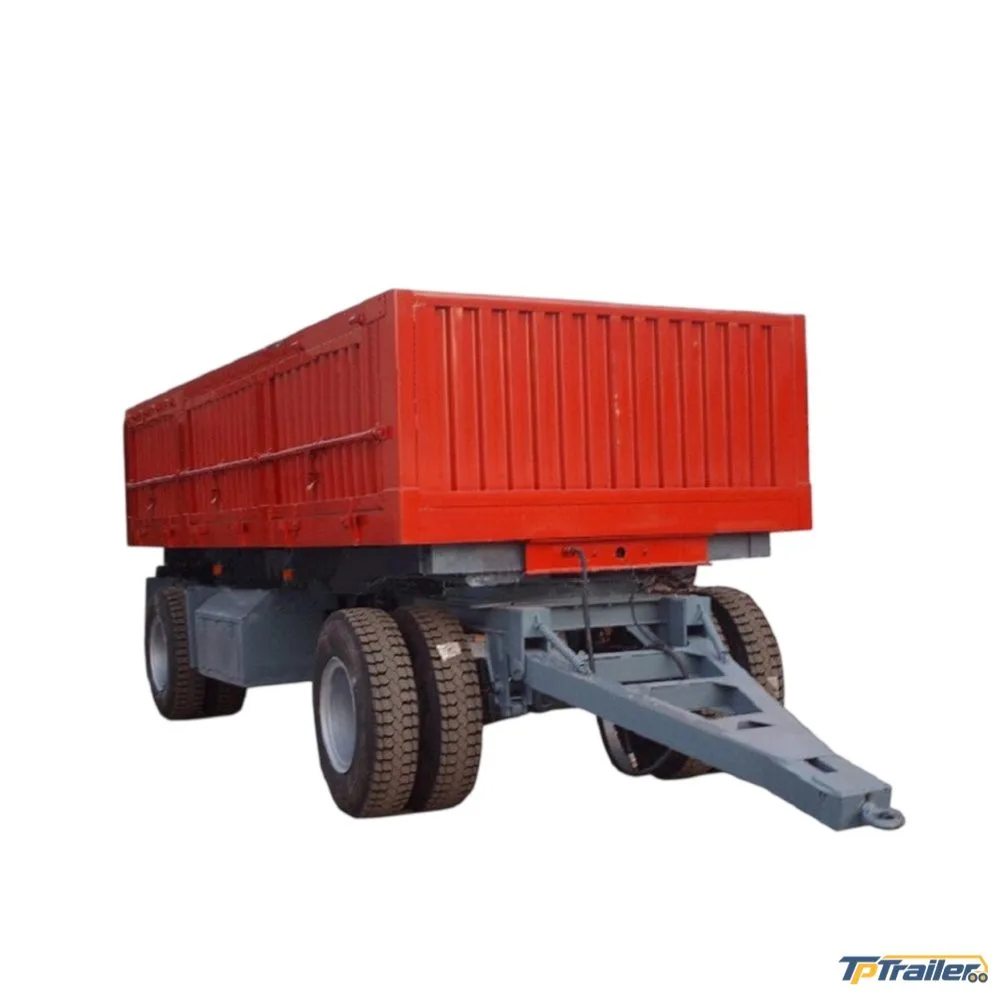
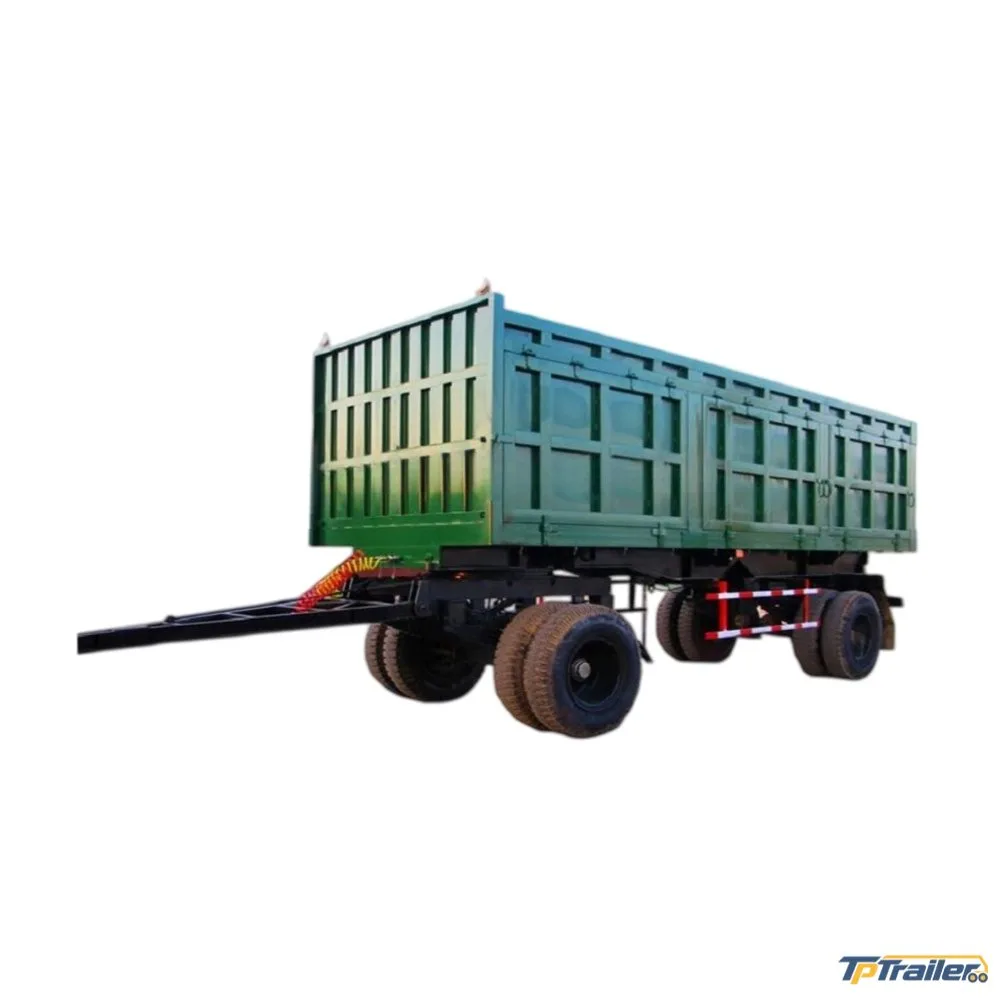
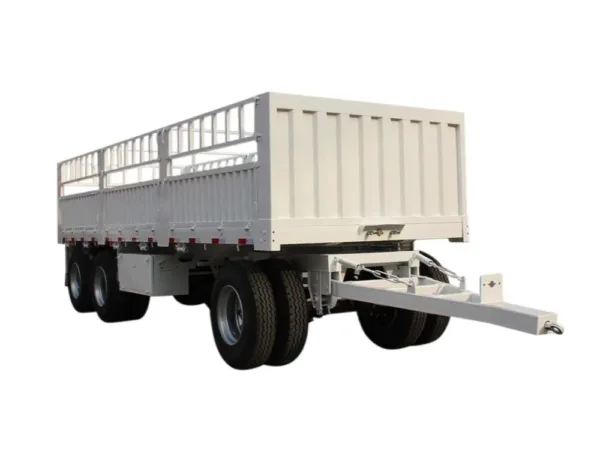
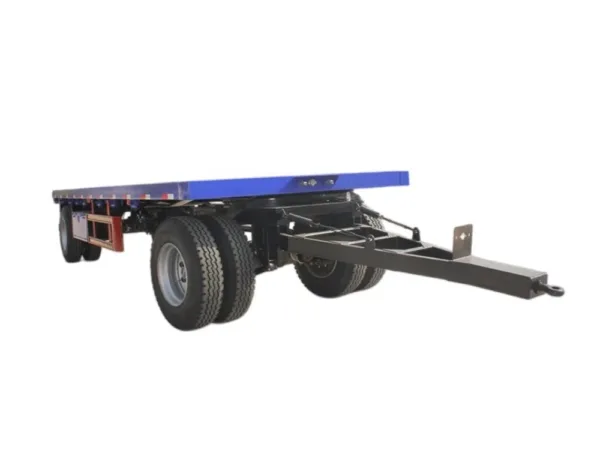
A 4 wheel farm trailer is a two-axle, four-wheel hauling unit built for moving feed, grain, livestock equipment and field produce between the yard, the field and the store. It is aimed at mixed farms, small haulage contractors and agricultural co-operatives that need one platform to handle several cargo types across a season.
Table of Contents
The strongest reason to choose this unit is its customisable size and colour: the deck and body are built to the measurements you specify, so the trailer fits your existing tractor hitch, gate widths and loading bay rather than forcing you to adapt the farm to a fixed catalogue size. With two axles sharing the load and a rated capacity that reaches 8 T, it covers the middle ground between a light utility tipping trailer and a full heavy goods unit.
Why It Works On Site
Two axles sharing the load. A 4 wheel farm trailer spreads weight across four contact points instead of two, so the drawbar sees less vertical load and the unit tracks more steadily on soft ground. That makes it easier to pull a loaded trailer through gateways and along headlands without the rear of the tractor lifting or the hitch straining.
Capacity that scales with the job. The rated load capacity is under 5000 kg, with a working range that reaches 8 T across the build options. That spread lets one operator match the trailer to lighter daily runs or heavier harvest movements, instead of buying a second unit for the few weeks a year when loads peak.
Customised dimensions. Because the dimension is customised, the deck length, width and side height can be set to the cargo you actually carry. Bale handlers get a longer bed, root-crop growers get a wider one, and anyone working narrow lanes can keep the overall width inside the farm’s tightest gateway.
Colour as the customer needs. Colour is specified by the buyer, which matters on mixed fleets where trailers are shared between crews or hired out. A consistent colour scheme makes the 4 wheel farm trailer easy to identify at a distance, simplifies allocation between teams and keeps the unit looking maintained between seasons.
Overseas engineering support. After-sales service includes engineers available to service machinery overseas. For a buyer running the trailer far from the manufacturing base, that turns a breakdown into a scheduled service visit rather than a stalled season, and it keeps the hydraulic axle trailers in the fleet working through peak windows.
Purpose-built as a farm unit. The OEM reference identifies the unit as special vehicle manufacturing output rather than a general-purpose chassis. Every part of the 2 axle trailer layout is chosen around agricultural duty: low loading height, simple coupling and a body that takes the knocks of field work.
Where It Is Used
The most common duty for a 4 wheel farm trailer is moving bulk feed and forage between the store and the livestock housing. A two-axle unit handles pallets of bagged feed, wrapped bales and loose silage without the pitching that a single-axle trailer shows on uneven concrete. Because the body dimensions are customised, the deck can be sized to the bale length or pallet footprint the farm already uses, so loading is a straight lift rather than a re-stacking job. On mixed units, the same 4 wheel farm trailer then switches to muck and bedding removal in the morning and feed delivery in the afternoon, which is exactly the kind of shared duty a two-axle layout is built for.
Field-to-store hauling is the second core route. Grain, root crops, squash and fruit all move short distances at harvest, and a 4 wheel farm trailer with a rated capacity under 5000 kg fits the gap between hand carts and full-size tippers. The four-wheel configuration keeps the unit stable when part-loaded on headlands, and the 2 axle trailer geometry tracks well behind a tractor on narrow farm tracks. Operators also use the same platform for fencing materials, seed bags, tools and water tanks, so a single hydraulic axle trailers unit covers maintenance runs as well as harvest weeks. Colour choice helps where several crews load from the same yard and need to identify their own trailer quickly.
Choosing The Right Spec
Match capacity to your heaviest regular load. The stated load capacity is under 5000 kg, with a working range up to 8 T across build options. Choose against the weight you move most weeks, not the single heaviest day of the year, so the 4 wheel farm trailer stays within its rating on routine runs and you avoid over-speccing for occasional peaks.
Set dimensions from the cargo, not the catalogue. Because dimension is customised, start from the longest and widest item you carry, then add the clearance you need for loading. A bale or pallet operation needs a different footprint from a loose-grain body, and the 4 wheel farm trailer should be ordered to the deck size that removes double handling.
Decide the axle count against your routes. The 2 axle trailer layout suits farm tracks, gateways and short road sections where stability under load matters. If most of your work is on soft or sloping ground, the four-wheel arrangement of a 4 wheel farm trailer gives better weight distribution than a single-axle unit of similar capacity.
Plan colour and support together. Colour is as the customer needs, so settle it alongside your service plan. With engineers available to service machinery overseas, buyers running the hydraulic axle trailers far from base should confirm colour and configuration at order stage, so identification and maintenance records stay consistent across the fleet.
Customisation Before Delivery
The axle count on a 4 wheel farm trailer is fixed by the load you plan to carry. A two-axle layout spreads weight across four wheels and suits the capacity band this model is built for. Confirm the axle configuration at order confirmation so the running gear matches your tractor and your field conditions.
Deck length and width are open items on this 4 wheel farm trailer. The build sheet lists the dimension as customised, so you tell us the bed size your loads need. Measure your longest implement and your narrowest gate before you order. The chosen size is written into the order confirmation.
Suspension and tyre choice are settled together. The 4 wheel farm trailer can be specified with the suspension type you prefer, and tyre size follows the axle and deck decision. Tell us the ground you work on, from packed yard to soft field. The combination is agreed at order confirmation, not after the build starts.
Colour is a customer choice on this 4 wheel farm trailer. Paint and finish are matched to your fleet or your own preference, and the shade is recorded on the order. Colour does not change the structure, so it can be decided late in the conversation. It is still confirmed in writing before production begins.
Because the 4 wheel farm trailer is built to order, the specification list is your control document. Axle count, deck size, suspension, tyres and colour all sit on one sheet. Read it back before you sign. Any change after confirmation is a new discussion, so settle every option while the order is still open.
Fitting And Installation
A 4 wheel farm trailer arrives as a complete unit, so fitting means matching it to your tractor and your yard rather than assembling it from parts. Check the drawbar and hitch against the tractor you will use. Confirm the coupling height, the pin size and the safety chain arrangement before the trailer is moved. Look at the wheel track against your gateways and shed doors.
A 4 wheel farm trailer that is wider than the entrance is a problem you cannot fix with a spanner. Have the loading area clear and level on arrival, and keep the manual with the machine. If your order includes a specific hitch or lighting arrangement, compare it with the order confirmation line by line. Where the input gives no fitment data, a fitment drawing is confirmed at quotation instead.
Hydraulic and electrical connections deserve the same attention on a 4 wheel farm trailer. Match the hose couplings to the tractor’s outlets and check that the hose route clears the drawbar through a full turn. Confirm the lighting plug matches your socket and test the lamps before loading. Torque values are not stated here, so use the figures supplied with the machine and check them again after the first working day.
A wrong size or a mismatched coupling costs downtime at the worst moment. A 4 wheel farm trailer parked because a hose will not seat is a harvest delay. Walk the whole unit before first use, and raise any mismatch with the supplier before the season starts rather than during it.
Service Life And Maintenance
Tyres and wheel bearings wear first on a 4 wheel farm trailer. Inspect tread depth, sidewall condition and bearing play before each season. Check wheel nut tightness after the first trips and again at routine intervals. Keep tyres at the pressure marked on the sidewall. A soft tyre on a loaded 4 wheel farm trailer puts extra load on the axle and shortens bearing life.
Brake and hydraulic components are the next wear point. Look for leaks at the couplings and along the hose run, and check that the actuator moves freely. Keep the reservoir at the marked level. On a 4 wheel farm trailer used on slopes, test the brakes unloaded before you trust them loaded. Replace a cracked hose rather than taping it.
The deck and chassis frame take daily punishment. Inspect welds, cross members and the floor for cracks or rot, especially where the ramps hinge. Clean off wet manure and soil, which hold moisture against steel. A painted finish slows corrosion, so touch up chips when you find them. Colour choice is cosmetic, but a sound coating on a 4 wheel farm trailer is what keeps the frame in service.
Running gear and suspension joints need a routine look. Check spring leaves, shackles and U-bolts for looseness or cracks, and grease the points provided. Confirm the axle mounting bolts stay tight. A 4 wheel farm trailer that wanders or sits unevenly is telling you a suspension part has moved. Fix it before the next load rather than after.
Store and inspect the 4 wheel farm trailer between seasons. Park it under cover where possible, on firm ground, with the load off the deck. Check lights, reflectors and the hitch for damage before the first trip of the year. Keep a simple log of what you find. A short inspection list, followed every season, is what turns a maintenance habit into a longer service life.
Packing And Container Loading
Each 4 wheel farm trailer leaves the workshop partly knocked down for sea freight. The chassis, axle assemblies and drawbar are braced against timber cradles inside the container. Hydraulic lines are capped and coiled, and the ram is strapped in its retracted position. Painted surfaces are wrapped in protective film, and loose fasteners travel in a labelled crate strapped to the frame. Ask the supplier to photograph the loaded container before the doors close. That photo set is your reference when the shipment arrives at the port.
Space is saved by nesting the trailers and stacking the loose components. Wheels, axles and side panels are removed and packed flat, so several 4 wheel farm trailer units can share one container. Confirm with the supplier how many units fit per container and whether nesting changes the bracing. On arrival, check the container seal number against the bill of lading. Inspect the film for scuffs, count the crates, and verify every axle and wheel against the packing list before you sign the delivery receipt.
Common Mistakes Buyers Make
Ignoring the load capacity margin. Buyers order a 4 wheel farm trailer sized to the average load, then overload it on the heaviest day. The check: write down the maximum load you will ever carry, add a margin, and confirm the rated load capacity with the supplier in writing before you pay the deposit.
Ordering a standard size for a custom job. The dimension is customised, so a guessed length or track width may not fit your gate, tractor or loading ramp. The check: measure the access route and the towing vehicle hitch height, then send those figures as a drawing before production starts.
Forgetting the axle count. A single-axle unit and a 2 axle trailer behave differently under load and on rough ground. The check: confirm the number of axles and the wheel configuration on the proforma invoice, and match it to the ground and load you actually run.
Leaving colour and markings vague. The colour is as the customer needs, so a verbal request invites a mismatch. The check: send a colour code or a physical sample, and approve a painted panel photo before the batch is packed for the 4 wheel farm trailer order.
Skipping the pre-shipment inspection. Buyers accept the container without checking the packed 4 wheel farm trailer against the order. The check: request loading photos, compare the packing list line by line, and confirm the after-sales service terms in writing before the vessel sails.
Buyer Questions
Can the trailer be built to my own dimensions?
Yes. The dimension is customised, so the length, width and height are set by your order rather than a fixed catalogue size. Send a simple drawing with the measurements you need, including the track width and the drawbar length. Confirm the towing hitch height of your tractor as well. The supplier should return a dimensioned drawing for your signature before cutting steel. Treat that signed drawing as the reference for the 4 wheel farm trailer you receive.
How many units fit in one container?
That depends on the final size and how far the trailers are knocked down. Because the dimension is customised, the packed footprint changes with every order, so the count is confirmed at quotation. Tell the supplier your length, axle count and quantity, and ask for the loading plan. A nesting layout usually carries more units than a fully assembled load. Review the plan before you book freight, since it affects your shipping cost.
What after-sales support comes with the trailer?
Engineers are available to service machinery overseas, which covers commissioning help and fault diagnosis after delivery. The exact scope, response time and any travel cost are confirmed at quotation, so ask for those terms in writing with your order. Keep the packing list and loading photos, because they help the engineer trace a fault to a shipping or assembly issue. A 4 wheel farm trailer used daily deserves a planned service interval agreed up front.
Send the trailer length you need, the axle count and the quantity for your quote. Add your colour preference and the load you plan to carry. With those details, the supplier can confirm the dimensioned drawing, the container loading plan and the price for your 4 wheel farm trailer order.
We use cookies to enhance your browsing experience, serve personalized content, and analyze our traffic. By clicking "Accept All", you consent to our use of cookies. Privacy Policy
Cookie Preferences
Required for the website to function properly. Cannot be disabled.
Help us understand how visitors interact with the website (Google Analytics).
Used to deliver personalized ads and measure ad campaign effectiveness.

























Write a Review