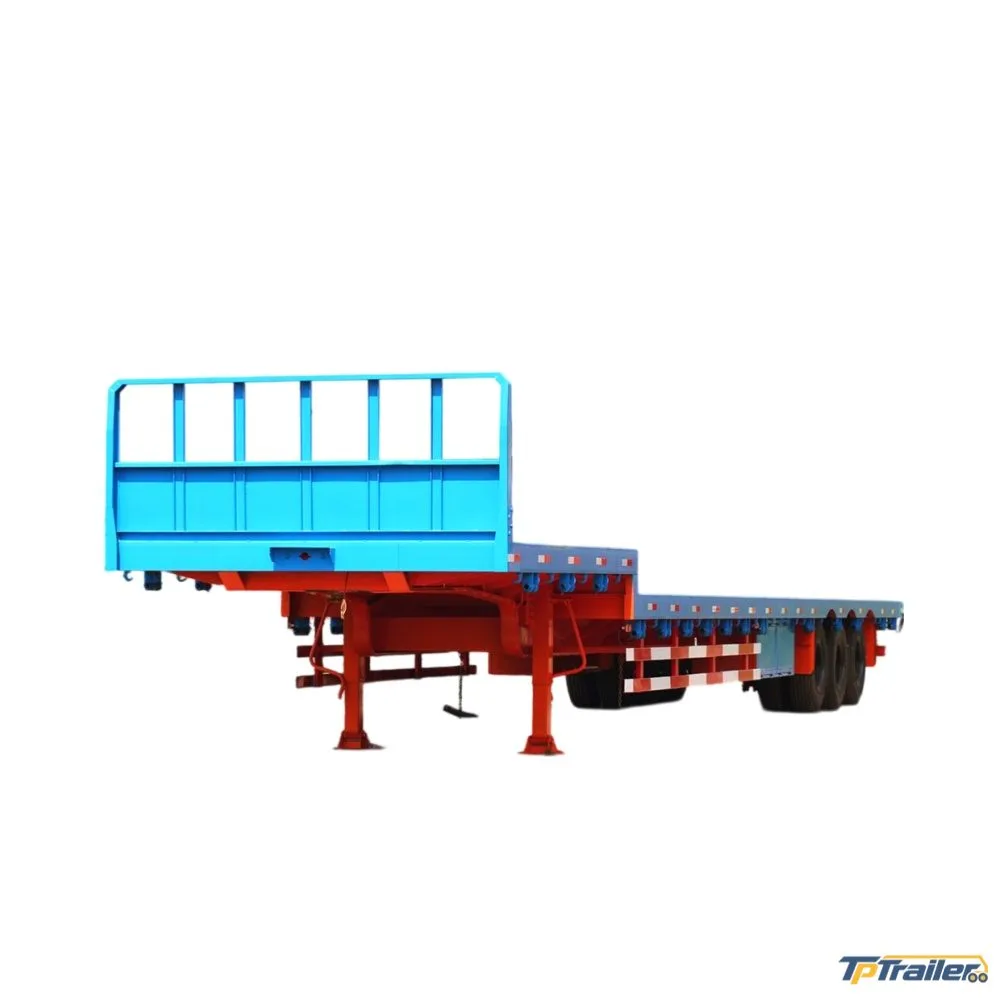
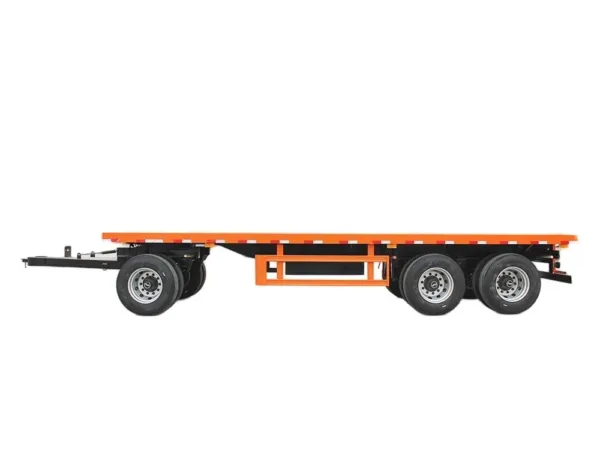
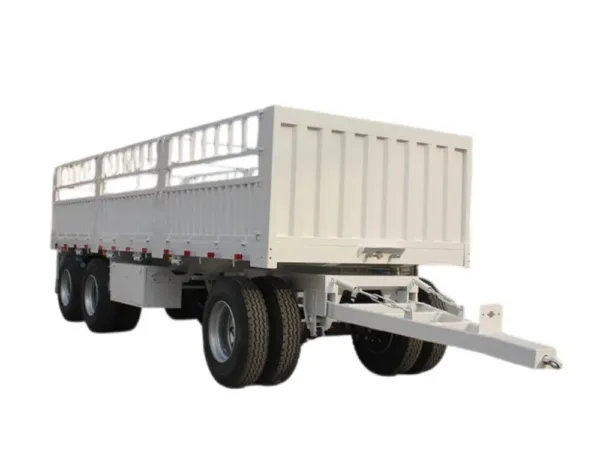
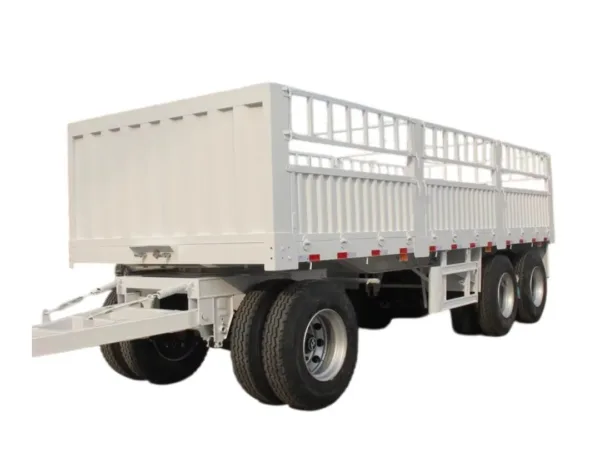
The flatbed semi trailer is a light steel cargo platform built for short factory logistics, and it is aimed at fleet operators who move loads between buildings, yards and nearby warehouses. It carries up to 30000 KG on four double wheels, so a single unit handles the repetitive runs that keep a production site fed. The strongest reason to choose it is the balance it strikes: a robust hauling deck on a light steel frame, priced for fleets that add units rather than replace them. It is not a long-haul highway trailer, and it does not pretend to be. It is the workhorse you keep on site, loading and unloading all day.
Table of Contents
Why It Works On Site
30000 KG load capacity. The rated capacity matches the weight of palletised raw material, steel billets and crated components that move between factory buildings. A single flatbed semi trailer absorbs a full shift of transfers without splitting the load across two vehicles, which keeps the yard schedule simple and reduces the number of trips per day.
Four double wheels. Eight tyres in a twin arrangement spread the load across the contact patch and keep the deck stable when cargo shifts. On a flatbed semi trailer working short factory routes, that stability matters at every corner and ramp, and it gives the driver a predictable platform when reversing into tight loading bays.
Light steel construction. A light steel frame keeps the flatbed semi trailer easy to manoeuvre in congested yards and reduces the fuel burned on stop-start runs. Lower moving mass also means less brake and tyre wear, so the cost per transfer stays flat even when the schedule runs to dozens of trips a day.
Flat cargo deck. The open platform lets a forklift load from either side and from the rear, which suits mixed cargo that cannot be stacked in a closed box. For factory logistics, a flatbed semi trailer turns loading into a straight lift-and-set operation instead of a sequence of tight internal manoeuvres.
Robust hauling structure. The deck and frame are built for repeated loading cycles rather than occasional use. That is the difference between a flatbed semi trailer that survives a three-shift operation and one that needs deck repairs mid-season, and it is what fleet managers compare when they price a unit against its working life.
Short-run geometry. The platform is sized for the distances inside and around a plant, where turning circles, gate widths and yard aisles set the real limits. A flatbed semi trailer built for this duty keeps the driver productive on routes measured in minutes, not hours, and fits the traffic pattern of an industrial estate.
Where It Is Used
The most common job is the internal factory shuttle: moving palletised raw material from a receiving yard to a production hall, then taking finished goods to a dispatch area. On these routes the flatbed semi trailer rarely leaves the site perimeter, so the priority is fast loading and a deck that a forklift can reach from all sides. Cargo is typically crated machinery, bagged inputs, steel sections and stacked pallets, all of which sit flat and need no enclosure.
A second pattern is the short public-road link between two buildings of the same operation, where the flatbed semi trailer covers a few kilometres of industrial estate road several times per shift. Here the open deck keeps turnaround quick at both ends, and the load capacity means one unit can clear a full staging lane in a single run instead of two.
A third pattern is the nearby-warehouse transfer, where goods move between a plant and a storage site within the same logistics cluster. Drivers on this duty load in the morning, run a fixed loop and unload before the afternoon shift, so the flatbed semi trailer spends its day in motion with short stops. Cargo types here include packaged components, drums on pallets and oversized items that will not fit a van.
A fourth pattern is yard and depot work: repositioning stock, moving spare parts between storage rows and clearing overflow. In all of these jobs the flatbed semi trailer is chosen because the deck is open, the load is secured quickly and the unit returns to service without a long docking procedure.
Choosing The Right Spec
Match the load capacity to your heaviest routine run. The 30000 KG rating is the ceiling for a single trip, so compare it with the weight of your densest regular cargo rather than an average. If most transfers sit well below it, the flatbed semi trailer gives you headroom for the occasional heavy item without adding a second vehicle to the schedule.
Consider the four double wheels against your route surface. Twin wheels suit yards with rough concrete, ramps and mixed surfaces where a single tyre would carry too much load. If your flatbed semi trailer works mostly smooth internal roads, the same arrangement still pays off through even weight distribution and predictable handling when the deck is fully loaded.
Weigh light steel against your duty cycle. A light steel flatbed semi trailer rewards high-frequency, short-distance work because it is easier to manoeuvre and cheaper to run per trip. If your operation mixes short shuttles with occasional longer links, judge how often the unit leaves the estate before you settle on the frame choice.
Use the order quantity to plan the fleet. Pricing is structured around volume, with a lower unit price at five units than at one. Fleets that run several loading lanes can map one flatbed semi trailer to each lane and keep the schedule independent, while a single unit suits a plant with one main transfer route.
Customisation Before Delivery
Axle count. The flatbed semi trailer is offered with a single-axle or tandem-axle layout, and the choice changes how the load is shared across the running gear. Buyers confirm the axle count at order confirmation, so the deck and suspension are built to match from the start rather than adapted later.
Deck length. Deck length is set against the cargo the trailer will carry, not against a catalogue default. A shorter deck suits tight factory yards, while a longer one takes bulky loads. The flatbed semi trailer deck length is fixed at order confirmation so the frame rails and cross members are cut once.
Suspension type. Leaf-spring and other suspension arrangements are selected to suit the road surface and the load profile. The suspension choice on the flatbed semi trailer is agreed at order confirmation, because the mounting brackets and hanger positions differ between types and cannot be swapped after the frame is welded.
Tyres and wheels. Tyre size and the number of wheels per side are confirmed with the order. The four double-wheel arrangement shown in the product name is one option, and buyers who run mixed fleets can ask for a match to their existing wheel stock. Tyre selection is settled at order confirmation.
Colour and finish. Paint colour and the finish system are chosen at order confirmation, so the flatbed semi trailer leaves the line in the buyer’s fleet colours. Finish choice also affects how the steel is protected in service, which is why it is agreed before the frame enters the paint shop.
Fitting And Installation
On arrival, the buyer has to match the flatbed semi trailer to the towing unit and to the yard it will work in. Check the coupling height and the kingpin or drawbar arrangement against the tractor, because a mismatch here stops the trailer from sitting level. Confirm the mounting points on the deck, the tube size of any ramps or side rails, and the hose routing for the braking system. Hose runs should follow the frame without rubbing on edges or hanging low enough to catch.
Where the input gives no fitment data, a fitment drawing is confirmed at quotation rather than assumed. Torque values are not stated here, so use the figures supplied with the delivered unit and record them in the maintenance file. Walk the flatbed semi trailer around before the first load and check that lights, markers and the coupling all sit where the drawing places them.
A wrong size costs downtime that no price advantage recovers. If the coupling height is off, the flatbed semi trailer runs nose-up or nose-down, and the load shifts forward under braking. If the tube size of ramps or rails does not match the accessories the buyer already owns, those accessories sit idle while new ones are ordered. If the hose routing is wrong, lines chafe against the frame and the trailer is pulled from service for repair.
Each of these faults appears on the first working day, when the factory needs the trailer most. Confirming the fitment drawing at quotation removes the guesswork, because the flatbed semi trailer is then built to the tractor and the yard it will actually serve. Keep the drawing with the unit so later repairs use the same reference.
Service Life And Maintenance
Tyres wear first. Tyres and wheel bearings take the most wear on any flatbed semi trailer, especially on short factory runs with frequent turning. The operator should check tread depth, sidewall condition and bearing play at each scheduled inspection, and watch for uneven wear that points to alignment or load-balance problems before they spread.
Brake and air lines. Brake chambers, hoses and fittings age faster than steel. Inspect the flatbed semi trailer lines for cracks, chafing and loose connections, and check that the routing still clears the frame. A hose that rubs through on a short run is a common cause of unscheduled stops, so keep the clips and guards in place.
Deck and frame. The deck surface and frame welds carry the load, so the operator should look for cracks, corrosion and loose cross members. The light steel construction keeps weight down, and the coating choice made at order confirmation is what protects that steel. Touch up any coating damage early, before rust reaches the frame.
Coupling and mounting points. The coupling, kingpin area and mounting points take repeated stress on every trip. Check for wear, elongation and loose fasteners on the flatbed semi trailer, and confirm the hose routing has not shifted. These checks are quick, but they catch the faults that would otherwise take the trailer out of service mid-shift.
Suspension and hangers. Springs, shackles and hanger brackets wear with load and road surface. Inspect the flatbed semi trailer suspension for cracked leaves, worn bushes and loose U-bolts, and confirm the axle count and suspension type chosen at order confirmation still suit the duty cycle. A worn hanger is cheap to fix early and costly to ignore.
Packing And Container Loading
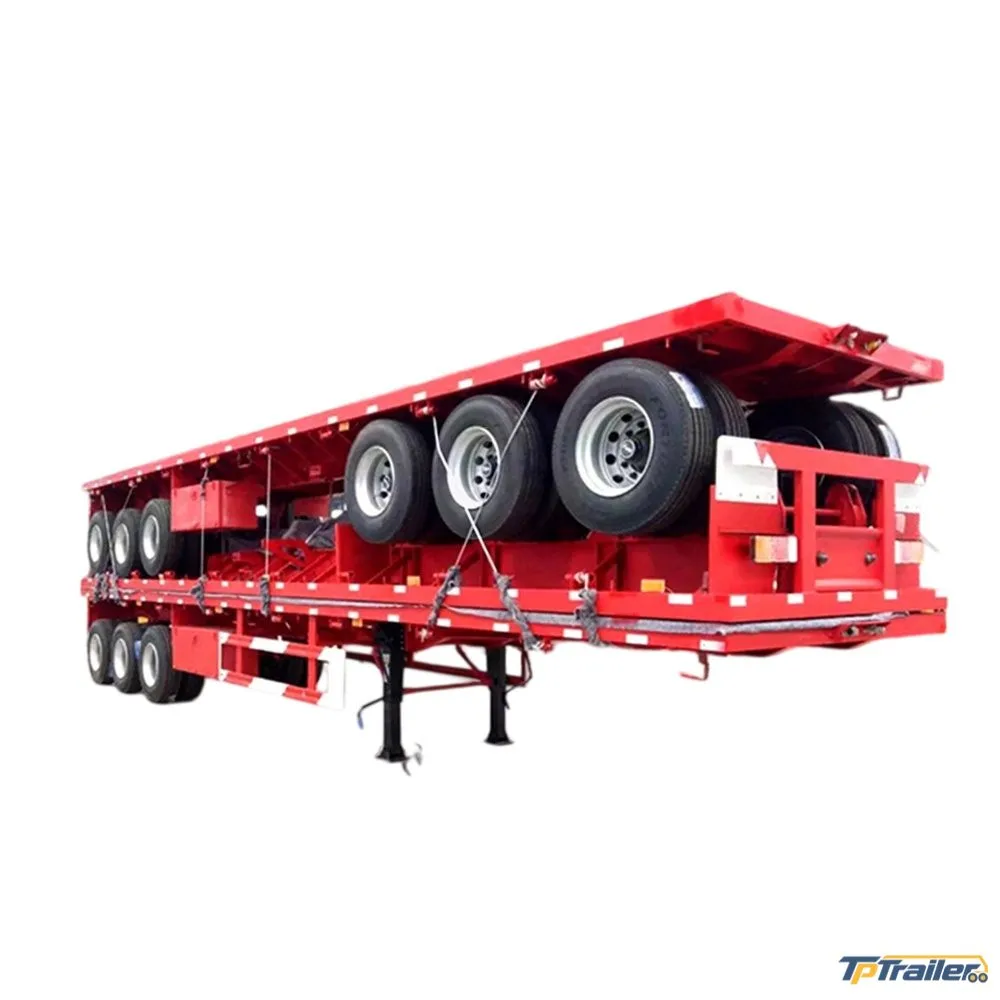
A flatbed semi trailer ships as a deck-and-frame unit, so protection starts with the surfaces that arrive exposed. Steel decks and frame rails are cleaned and coated before dispatch, and contact points are wrapped so chains and binders do not rub through the finish in transit. Loose items such as ramps, spare wheel carriers and lighting units are boxed and strapped to the deck rather than left loose inside the container. Buyers should ask how the flatbed semi trailer is braced against fore-and-aft movement, because a unit that shifts during a sea crossing can bend landing legs and twist the frame before it ever reaches the yard.
Nesting is limited on a flatbed semi trailer. The deck and running gear do not collapse, so stacking two units is only practical where the supplier confirms frame clearance and load distribution. Most orders ship one unit per container or on a flat rack, and the axle set and deck length decide which option applies. Ask for the loading plan before booking freight. On arrival, verify frame straightness, deck coating, axle alignment and that every boxed component on the packing list is present. Photograph the flatbed semi trailer before unloading so any transit damage is documented against the carrier.
Common Mistakes Buyers Make
Ordering without confirming deck length. A flatbed semi trailer is built around its deck, and a length that does not match the cargo leaves overhang or wasted capacity. Measure the longest load you plan to haul, including any rear projection, and confirm the deck figure in writing before the order is placed.
Ignoring the load capacity figure. Buyers compare price first and capacity second. The rated load capacity must cover your heaviest combined cargo plus margin, so state the working load to the supplier and let them confirm the flatbed semi trailer configuration suits it rather than assuming.
Mismatching the tow coupling. A flatbed semi trailer only works if the coupling, kingpin or drawbar matches the tractor or dolly in your fleet. Send the supplier the coupling type and height you run, and ask for a dimensional drawing to check against your equipment before production starts.
Skipping the axle and wheel check. The wheel arrangement affects both capacity and spares stock. Confirm axle count, track width and rim type on the flatbed semi trailer, then check that your existing tyres and bearings fit. A mismatch here means new spares before the unit earns anything.
Not agreeing the inspection points. Buyers accept a unit without a pre-shipment checklist and discover coating or lighting faults after arrival. Agree which points are inspected, ask for photos of the flatbed semi trailer before loading, and confirm who bears rectification costs once the unit leaves the factory.
Buyer Questions
Can the trailer be supplied to match my existing fleet dimensions?
Send the deck length, width and coupling height you need, plus the axle count, and ask the supplier to confirm the build against those figures. The flatbed semi trailer is offered in a fixed catalogue configuration, so any change to dimensions or running gear should be confirmed at quotation. Ask for a dimensional drawing before you approve production. Check the drawing against your tractor, your dock height and your yard turning circle, because those three constraints decide whether the unit works on site.
What should I confirm about the wheels and axles before ordering?
Confirm the axle count, the wheel arrangement and the rim and tyre size fitted to the flatbed semi trailer. Ask whether spare wheels and bearings are available in the same specification, since mixed spares across a fleet create stocking problems. Check the track width against your workshop ramps and weighbridge. If your operation runs on soft ground or tight factory roads, say so, because the axle set and tyre choice affect ground pressure. Final wheel and axle specification is confirmed at quotation.
How do I compare quotes for this trailer fairly?
Compare on configuration, not headline price. Ask each supplier to list deck length, load capacity, axle count, wheel arrangement, coupling type and the coating schedule on the flatbed semi trailer. Then check that packing, bracing and the loading plan are included. A quote that omits the loading plan or the inspection points is not comparable. Confirm what documentation ships with the unit and which spare parts are included. Volume pricing applies from the stated minimum order quantity, confirmed at quotation.
To receive a quote, send the deck length you need, the axle count and wheel arrangement, your coupling type, and the quantity you plan to order. Include your destination port and any fleet dimension constraints. The supplier will confirm the flatbed semi trailer configuration, packing plan and pricing against those details.
We use cookies to enhance your browsing experience, serve personalized content, and analyze our traffic. By clicking "Accept All", you consent to our use of cookies. Privacy Policy
Cookie Preferences
Required for the website to function properly. Cannot be disabled.
Help us understand how visitors interact with the website (Google Analytics).
Used to deliver personalized ads and measure ad campaign effectiveness.



















Write a Review