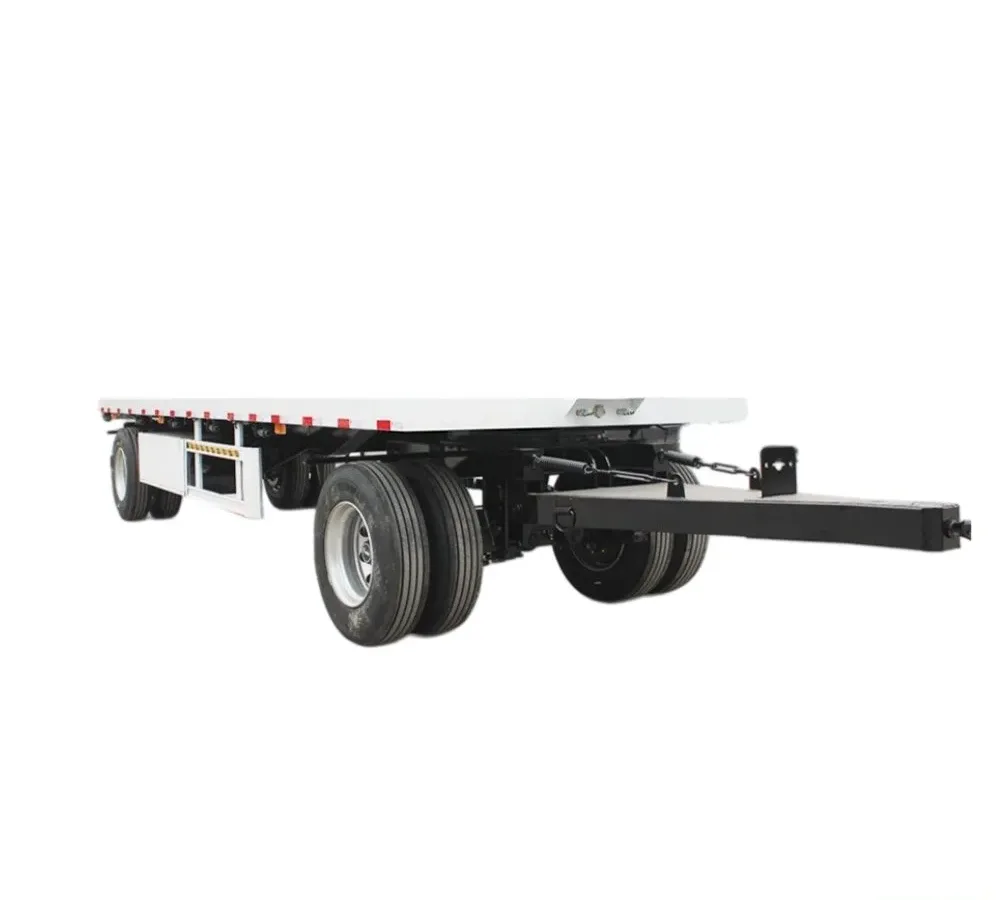
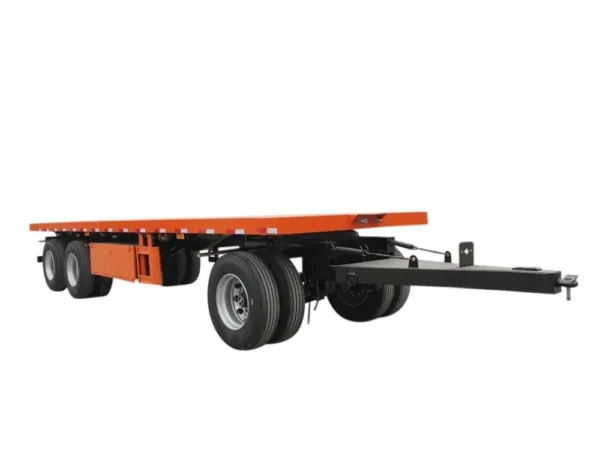
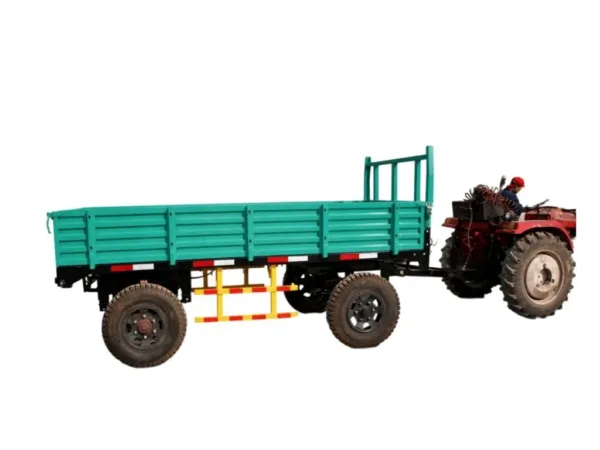
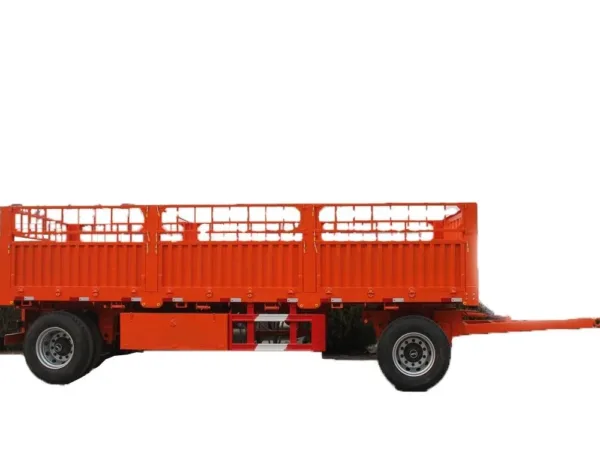
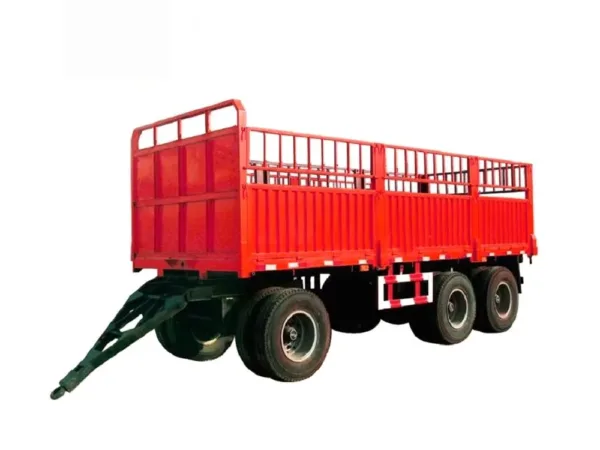
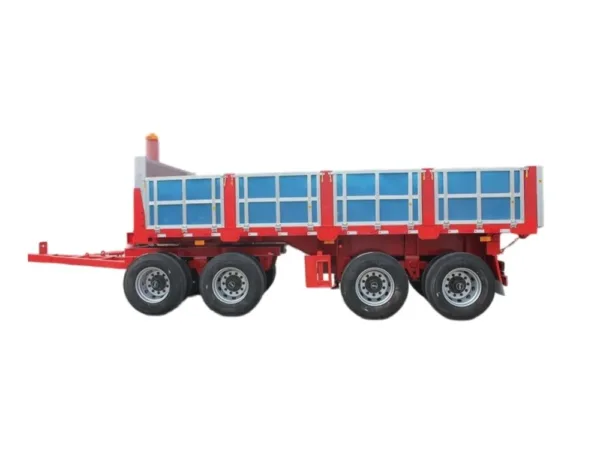
This Full Trailer is a heavy duty steel semi-trailer built as a 3 axle flatbed cargo trailer with a drawbar, rated for a load capacity of 30000 KG. It suits fleet operators, farm contractors and haulage businesses that move bulky, dense or awkward loads and need a platform that loads from any side. The single strongest reason to choose it is the flat, open deck: no side walls to work around, no ramp to fold, and no cargo bay that limits what goes on top. Forklifts, cranes and telehandlers all reach the load directly. If your work is defined by what you carry rather than how you carry it, this platform format removes the handling bottleneck.
Table of Contents
Why It Works On Site
Load capacity of 30000 KG. The rating is the reason this Full Trailer can take dense cargo such as bagged feed, palletised bricks or steel sections without the operator splitting the load across two runs. On a busy site, one trip per consignment means fewer movements, less queueing at the loading bay and a shorter working day for the driver.
Three-axle running gear. Spreading the cargo across three axles keeps the load steady on uneven ground and shares the weight between more tyres. That matters on farm tracks, yard entrances and site access roads where a two-axle unit would dig in or pitch, and it gives the driver a more settled tow at working speeds.
Flatbed deck layout. A clear, level platform lets a forklift set down a pallet, a telehandler place a bale, or a crane lower a bundle of timber from above. Because nothing is boxed in, the same Full Trailer handles long stock, wide machinery and irregular shapes without a change of equipment.
Drawbar coupling. The drawbar lets the trailer follow the towing vehicle through gateways, yard corners and field entrances. Operators who move between farm buildings and roadside collection points get a unit that tracks behind the tractor or truck instead of cutting the corner, which reduces damage to fences and gateposts.
Steel construction. A steel chassis and deck take impact from dropped loads, dragged pallets and chained-down machinery. That durability keeps the Full Trailer in service across seasons of loading and unloading, rather than needing deck repairs after every heavy consignment.
Open loading from all sides. Loads can be placed from the rear, the sides or above, so the handling method follows the cargo rather than the trailer. This shortens loading cycles and lets a single operator work with whatever lifting equipment is already on site.
Where It Is Used
Farm and agricultural work is the natural home for this Full Trailer. Operators use it to move bagged fertiliser and seed from the store to the field headland, to shift hay and straw bales between barns, and to carry palletised feed to outlying buildings. The open deck means a telehandler can place bales directly without a side gate to open, and the drawbar lets the unit follow a tractor along farm tracks and through narrow field entrances.
Livestock farms use the same platform for fencing materials, water troughs and bagged minerals, while arable units load it with seed bags, spare parts and fuel drums during the working season. Because the deck is level and clear, loads can be strapped down at the corners and checked from any side, which keeps pre-journey checks quick when the vehicle is moving several times a day.
Construction and civil work suppliers recognise the same benefits. This Full Trailer carries palletised bricks and blocks, timber bundles, steel reinforcement, drainage pipes and site machinery between a merchant yard and a project entrance. A forklift loads from the side, a crane lifts from above, and the flat deck accepts long stock that would not fit a sided body.
Roadside and utility crews use the platform for cable drums, ducting, barriers and equipment crates, since the open deck allows a quick visual check of the load before each leg. In each case the job is the same: collect a mixed consignment, secure it on a clear platform, and deliver it without needing a second vehicle or a dedicated handling system at either end of the route.
Choosing The Right Spec
Match the load rating to your heaviest consignment. The stated load capacity of 30000 KG sets the ceiling for what this Full Trailer is designed to carry. Work out the weight of your densest regular load, not the average, and compare it against that figure. If your cargo sits well below it, the trailer leaves headroom for occasional heavier jobs without forcing a second unit into the fleet.
Consider how often you run at the limit. Frequent near-capacity work suits a buyer who wants the three-axle layout and steel deck working hard every week. Lighter, mixed loads still fit the same platform, but the value comes from the handling flexibility rather than the rating. Decide which of the two describes your operation before you commit.
Check the towing vehicle and route. The drawbar format means the trailer follows the towing unit, so confirm your tractor or truck is suited to the coupled load and that your regular routes allow for the combined length. Gateways, yard turns and field entrances are where a Full Trailer proves its tracking, so plan around the tightest point on your usual run.
Plan for the handling equipment on site. The flat deck accepts forklift, telehandler and crane loading, but only if that equipment is available where you load and unload. If one end of the route has no lifting gear, choose your cargo and strapping method around manual handling. The open platform gives the most flexibility when both ends are equipped.
Customisation Before Delivery
The axle count is a build option on this Full Trailer, and the configuration you select is settled at order confirmation. Buyers running lighter loads on firm ground may prefer fewer axles, while heavy haulage across soft fields favours the full set. State your intended duty cycle so the build sheet matches the work.
Deck length can be specified to suit the cargo you carry, whether that is bales, machinery or general freight. A longer deck on a Full Trailer changes the turning envelope, so confirm the length against your gateways and yard access. The final deck size is locked in at order confirmation, not after production starts.
Suspension choice is agreed before build, and the selection should follow the ground you actually cross rather than the road you wish you had. Soft pasture, rutted tracks and yard surfaces all load the running gear differently. Discuss the intended surface with the supplier so the Full Trailer leaves the works with a suspension matched to it.
Tyre specification is an option on this Full Trailer, and the right set depends on whether the trailer spends its life on tarmac, gravel or cultivated ground. Tread pattern and load rating both matter for a trailer rated for heavy payloads. Confirm your tyre preference at order confirmation so the wheels arrive ready to work.
Colour and finish are chosen at order confirmation, which helps fleets keep unit identification consistent across a yard. Paint and coating selection also affects how the steel weathers over the seasons. Tell the supplier your colour requirement early so the Full Trailer is finished as specified before dispatch.
Fitting And Installation
On arrival, the buyer has to match the trailer to the towing vehicle before any load is carried. The critical points are the drawbar coupling, the mounting points on the tractor end, and the routing of any hydraulic or electrical lines along the chassis. Check that the coupling height suits the hitch on your machine, that the drawbar length leaves clearance on full lock, and that the tube sizes on the trailer match the connections you already run.
Where the input gives no fitment data, a fitment drawing is confirmed at quotation, so the interface is agreed on paper before the Full Trailer is built. Measure your existing hitch, your line sizes and your turning circle, then send those figures with the order. A Full Trailer that arrives with a coupling or line size that does not match your tractor is a trailer that sits idle while parts are sourced.
The cost of a wrong size is downtime, and downtime on a working farm or haulage operation is measured in missed loads and idle labour. A drawbar that fouls the tractor on tight turns, a hose that cannot reach its port, or mounting points that do not line up with the chassis all turn a delivery day into a workshop day. Because the Full Trailer is built to a confirmed specification, the cheapest protection is a careful check of the interface before the build sheet is signed.
Walk the tractor, photograph the hitch and the line ends, and note any non-standard fittings. Confirm torque values with the supplier if they are not supplied in writing, and have the tools ready before the trailer lands. A short conversation at quotation prevents a long wait at installation.
Service Life And Maintenance
The running gear wears first on any Full Trailer, so tyres, bearings and brake components deserve the closest attention. Inspect tread depth, sidewall condition and bearing play at regular walk-rounds, and listen for unusual noise on the move. Choosing the correct tyre specification at order time, matched to your ground, is the single easiest way to extend the interval between replacements.
The deck surface takes constant abrasion from cargo, chains and loading equipment. Check for worn flooring, loose fixings and bent cross-members, and keep the deck clear of corrosive spillage. A protective coating chosen at order confirmation slows surface degradation and keeps the Full Trailer deck sound for longer, which matters when heavy loads are dropped onto it daily.
The drawbar and coupling are the highest-stress points on a Full Trailer, carrying every load transfer between trailer and tractor. Inspect the eye or ball area for elongation, cracking and looseness, and check the mounting bolts for movement. Keep the coupling greased as directed and report any play immediately, because a worn coupling affects steering response as well as safety.
Paint and coating condition is the early warning system for the steel beneath. Walk the chassis, looking for chips, scuffs and any rust bloom at welds and edges. Touch up bare patches promptly and wash off mud and manure that trap moisture against the frame. Specifying a durable finish at order confirmation gives the Full Trailer a longer window before corrosion control becomes a repair job.
Suspension and axle mountings should be checked for cracked welds, worn bushes and loose U-bolts at every service. Uneven tyre wear often points to a suspension fault rather than a tyre fault, so read the wear pattern before replacing rubber. The suspension option you select at order confirmation determines how much maintenance the Full Trailer demands on your particular ground.
Packing And Container Loading
Each Full Trailer is prepared for sea freight as a complete unit. Steel surfaces are cleaned and given a protective coating before dispatch. Exposed hydraulic lines, brake chambers and electrical connectors are capped or wrapped so salt air and road spray cannot reach them during the voyage. Loose items such as ramps and spare wheel carriers are strapped to the deck rather than shipped in a separate crate. The drawbar is braced against the frame so it cannot swing during lifting. Buyers should confirm the coating system and wrapping method at quotation, because the input does not state a packing standard.
A three axle flatbed cargo trailer is a long, wide unit, so loading is planned around deck length and overall width rather than weight alone. The chassis is a fixed steel frame and does not nest or fold, so two units cannot share one footprint. Stacking is not advisable for a finished trailer. Where several units ship together, each is lashed to the container floor or flat rack through the chassis, with timber dunnage under the frame rails. Ask the supplier for the loaded dimensions and lifting points before booking freight, and confirm the Full Trailer is secured at every axle.
Common Mistakes Buyers Make
Ordering the wrong drawbar type. A buyer specifies a ring or ball coupling when the towing vehicle needs a drawbar eye, and the Full Trailer cannot be hitched on arrival. The single check is to measure the towing tractor coupling and confirm the drawbar type in writing before the order is placed.
Ignoring the load capacity rating. Buyers compare deck size and axle count but never match the rated load capacity to the heaviest load they plan to carry. The check is to list the maximum payload per trip, including implements and ballast, and confirm it sits within the stated load capacity.
Assuming a standard deck height. Deck height affects ramp angle and loading of equipment, yet it is rarely confirmed. The check is to ask for the deck height and the distance between axles, then compare both against the ramps and the machinery the Full Trailer will carry.
Overlooking brake and light compatibility. A trailer wired for one lighting standard or brake system may not match the towing vehicle. The check is to confirm the electrical connector type and brake actuation method with the supplier, and to state the towing vehicle model on the enquiry.
Skipping the arrival inspection. Buyers sign off before checking that the Full Trailer arrived complete, with all loose parts and undamaged coating. The check is to photograph the unit and the packing on arrival, compare against the packing list, and report shortages before the container is unpacked.
Buyer Questions
Can the trailer be shipped in a standard container?
That depends on the loaded dimensions of the finished unit, which are not stated in the input. A three axle flatbed cargo trailer is long and wide, so a standard container may not accept it without disassembly. Before booking freight, ask the supplier for the overall length, width and height of the Full Trailer as packed, plus the lifting points. Then compare those figures with your container or flat rack internal dimensions. Confirm the shipping method and any disassembly at quotation.
What should I confirm about the drawbar before ordering?
Confirm the drawbar type and its attachment to the towing vehicle. The input states the unit is supplied with a drawbar but does not give a coupling size, so the exact interface is confirmed at quotation. Measure the towing tractor coupling, note whether it uses a ring, eye or ball, and send that detail with your enquiry. Also ask how the drawbar is braced for transport, since a long drawbar needs support during lifting and sea freight.
How do I verify the load capacity suits my operation?
Start with the rated load capacity on the specification and compare it with your heaviest planned load. Add the weight of implements, ballast and any attachments you intend to carry, because these reduce the payload available. The input gives the load capacity only, so axle ratings, tyre size and deck dimensions are confirmed at quotation. Ask the supplier to state these in writing alongside the Full Trailer specification, and keep the confirmed figures with your purchase order.
To receive a quotation, send the required deck length, the number of axles you need, and the quantity you intend to order. State the towing vehicle and drawbar type as well, so the Full Trailer is configured correctly. Volume pricing applies from five units, and the exact figure is confirmed at quotation.
We use cookies to enhance your browsing experience, serve personalized content, and analyze our traffic. By clicking "Accept All", you consent to our use of cookies. Privacy Policy
Cookie Preferences
Required for the website to function properly. Cannot be disabled.
Help us understand how visitors interact with the website (Google Analytics).
Used to deliver personalized ads and measure ad campaign effectiveness.

















Write a Review