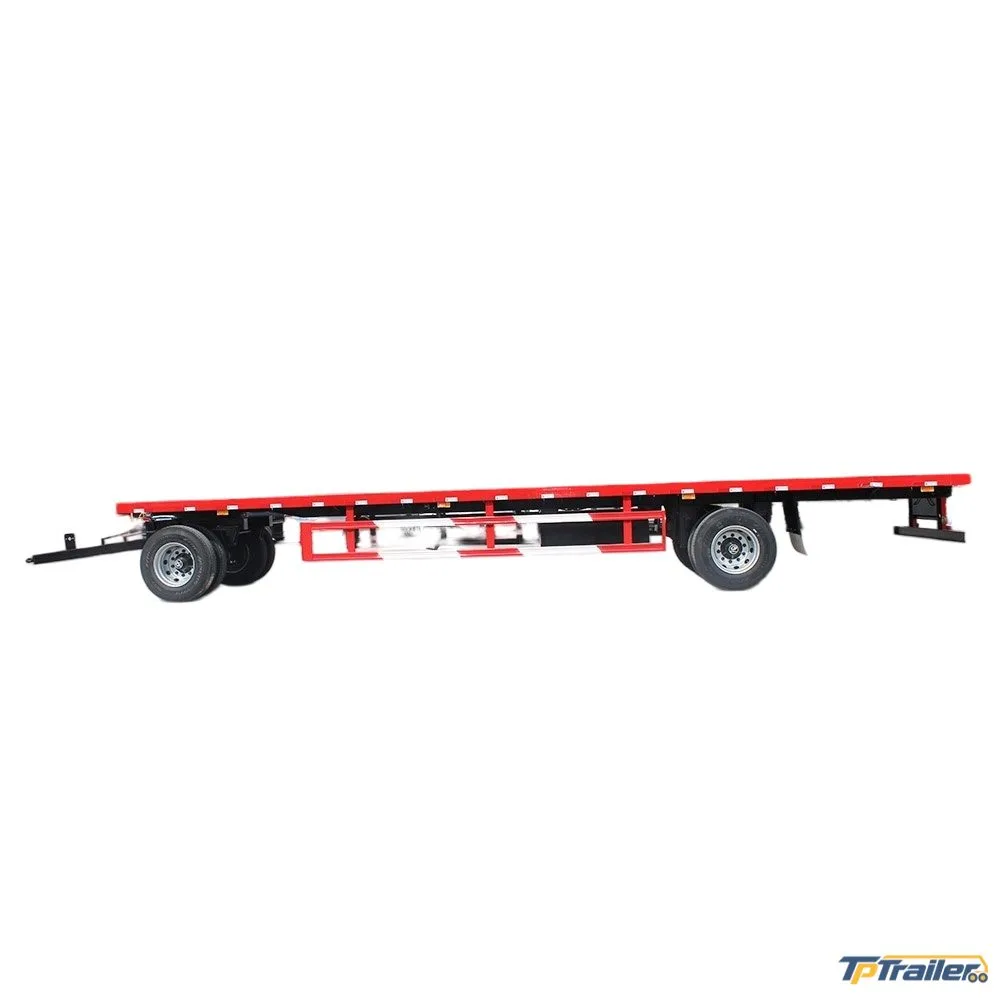
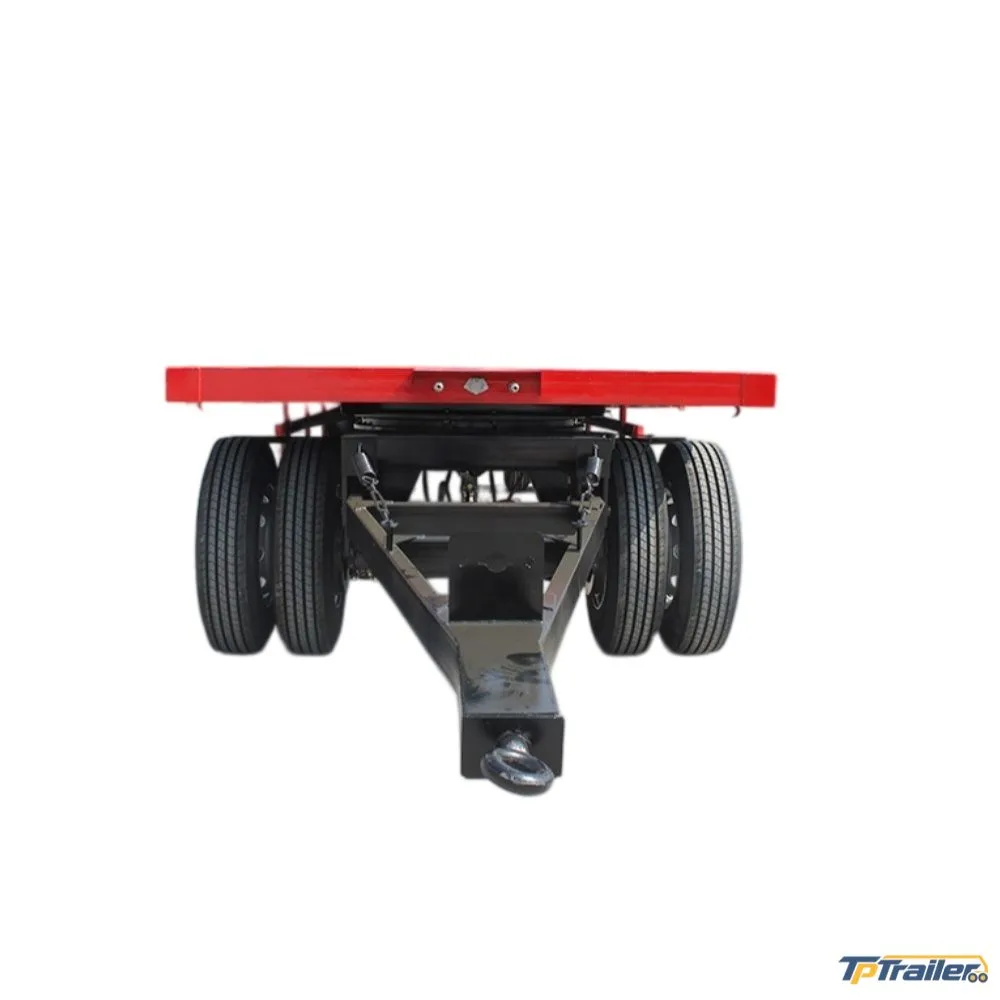
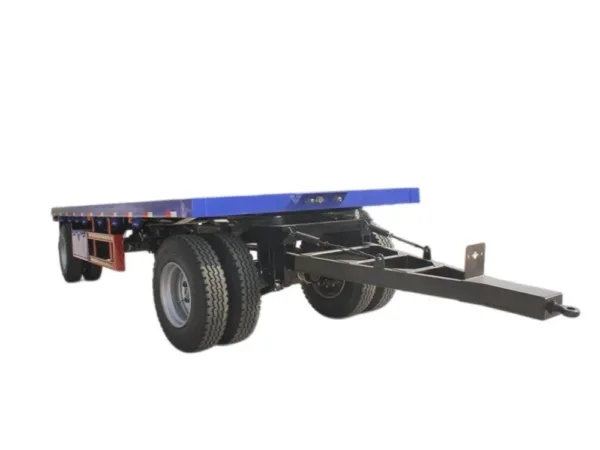
20 Ton Agricultural Tractor Hydraulic Tipping Trailer 3 Axle
tons tractor trailer with 20 ton capacity and 3 axles at 13 ton each. Hydraulic tipping farm dump trailer with dual line braking system. Quotes available.
3
FOB Reference PriceUS$9,600-10,000Final price confirmed by inquiry
Certifications
ISO 9001
Key Features
20 ton load capacity for farm and field haulage
Hydraulic tipping body for fast unloading
3 axles at 13 ton capacity each for stable towing
Dual line braking system with ABS
Mild Alloy Q235B cross beams and 16# channel steel side beam
For haulage teams moving bulk loads behind a working tractor, the tons tractor trailer is a tipping farm dump unit built to empty itself under hydraulic power. It suits mixed farms, contractors and rural yards that need one trailer to carry grain, silage, soil or spoil and shed the load without manual shovelling. The strongest reason to choose it is the combination of a triple-axle running gear and a dual line braking system, which keeps a heavy load stable on the road while the hydraulic tip does the unloading. It is a working tool, not a showpiece, and it is aimed at buyers who value repeatable daily duty over trim.
Table of Contents
Why It Works On Site
Triple-axle running gear. Three load-bearing axles spread the cargo weight across more contact points, so the trailer tracks steadily when it is full and keeps rolling resistance manageable on soft field entrances. That matters when the same unit has to cross a headland and then hold a lane at road speed without the tail stepping out.
Dual line braking with ABS option. A dual line braking system gives the tractor a separate service and emergency circuit, so a loaded tons tractor trailer can be brought down predictably on a slope. Where ABS is specified, wheel lock under hard braking is reduced, which protects the load and the tyres on wet tarmac.
Hydraulic tipping body. The tip function turns unloading into a one-person job. The operator raises the body from the tractor seat and the load runs out under gravity, so a tons tractor trailer clears a full grain or soil load in minutes instead of an hour of manual work at the heap.
Mild alloy Q235B cross beams. The cross beams carry the floor and tie the side walls together. Q235B mild alloy is a weldable structural grade, so the deck resists the repeated flex of tipping and accepts repair work in a local workshop rather than needing a specialist fabricator.
16# channel steel side beams. The side beam is the main longitudinal spine of a tons tractor trailer. A deeper channel section resists bending when the load sits toward the rear during tipping, which keeps the body aligned and the tailgate closing cleanly over many cycles.
24V electrical and brand tyres. The electrical system matches the tractor supply for lights and the tipping control circuit, and branded tyres give a known wear and grip baseline. Together they cut the small stoppages that keep a tons tractor trailer parked when the weather window is short.
Where It Is Used
The most common duty for a tons tractor trailer is the grain and forage cycle. In the harvest season the trailer runs from the combine to the store or the drier, taking a full body of wheat, barley or maize and tipping it into a pit or a heap. Because the body empties itself, the same unit can return to the field without waiting for a separate handler. Outside harvest the same trailer carries silage bales, straw or bagged feed around the yard. Fleet operators like this because one chassis covers several seasonal jobs, and the tipping action means the driver does not need a second machine and a second operator standing by at the drop point.
Earthmoving and construction support is the second regular route. A tons tractor trailer hauls soil, gravel, sand, road planings and demolition spoil on farm tracks, yard roads and short public stretches. The tipping body is what makes this practical: the load is dropped where it is needed rather than dragged off the back by hand.
The triple-axle layout and the braking circuit come into their own when the trailer is full and the route includes a gradient or a loose surface. Operators also use the same unit for muck and compost spreading cycles, moving material from the heap to the field edge and tipping it into a spreader or a windrow. That flexibility is why the trailer earns its place across the working year rather than only at harvest.
Choosing The Right Spec
Axle count and capacity. The three-axle arrangement with rated load capacity per axle is the base configuration. Buyers moving dense cargo such as wet soil or gravel should confirm the gross weight suits their tractor and their usual routes, while lighter forage work may leave headroom. The axle brand is optional, so the choice is between a known running gear brand and the standard fit.
Braking specification. The dual line braking system is the standard safety fit for a tons tractor trailer. Where the unit will spend time on public roads or on wet, hilly ground, specifying the ABS option adds another layer of control under braking. Buyers who stay on private tracks may find the standard dual line arrangement sufficient for their duty.
Body colour and finish. Colour is a free option across a range that includes white, yellow and blue. A bright body is easier to spot at a busy yard or on a shared track, while a neutral finish suits fleets that want a uniform look. Colour does not change the working capacity of a tons tractor trailer, so treat it as a visibility and branding choice.
Delivery format and tyres. The trailer ships in nude condition or packed to the customer’s requirement, which affects how it arrives and how quickly it can be put to work. Tyre brand is selectable, so match the rubber to the ground: field work and road work place different demands on tread and wear life. Confirm both points before ordering a tons tractor trailer.
Customisation Before Delivery
The axle arrangement is a buyer decision on this tons tractor trailer. The build listed here carries three axles, and the axle brand stays optional, so a buyer can ask for a different make at order confirmation. Axle count and brand are settled together, because the frame, brake plumbing and suspension mounts are laid out around them. State the duty cycle when you choose, and the factory confirms what fits.
Tyre brand is open on the tons tractor trailer, and the tyre choice is agreed at order confirmation. Brand affects grip on wet ground, wear on hard roads and how the trailer behaves when loaded. Buyers running long road sections and buyers working only in fields will not pick the same tyre. Name the surface mix and the expected load, and the brand is fixed in the order.
Colour is a free choice on this tons tractor trailer, with white, yellow, blue and other shades offered. Paint is applied to the mild alloy Q235B cross beams and the channel steel side beams, so the colour is a finish decision rather than a structural one. Confirm the shade at order confirmation and match it to the tractor if the fleet is branded. Colour does not change the build schedule.
Packaging is agreed with the order on the tons tractor trailer. The standard is nude shipping, and crating or another arrangement can be set to the customer’s requirement. Nude shipment suits a complete unit that rolls or is lifted onto transport. Buyers moving several units may want a different packing plan. Confirm the packing method at order confirmation so the loading plan matches the transport.
The braking arrangement is part of the order conversation on this tons tractor trailer. A dual line braking system is the listed fitment, and an ABS option is named in the specification. The choice depends on the towing tractor and the rules where the trailer works. Confirm the brake configuration at order confirmation, together with the electrical voltage match for the 24V circuit.
Fitting And Installation
Fitting starts with the tractor, not the trailer. Before the tons tractor trailer arrives, the buyer should confirm the drawbar and hitch height, the mounting points on the tractor, and the size of the hydraulic lines that will feed the tipping ram. The trailer is delivered in nude packing, so the first job is a check of the coupling, the brake lines and the electrical plug against the tractor. The dual line braking system and the 24V circuit must match the towing unit.
Where the input gives no fitment data, a fitment drawing is confirmed at quotation, and that drawing is the document the workshop should work from. Hose routing deserves attention on the day of fitting: lines should run clear of moving parts and sharp edges, and be long enough for full articulation of the combination. Torque values are not listed here, so the buyer should follow the values supplied with the unit rather than guessing. A slow, checked first coupling is cheaper than a roadside repair.
A wrong size costs downtime in a way that is easy to predict. If the hydraulic couplers do not match the tractor, the tons tractor trailer cannot tip, and a loaded trailer that will not tip blocks the whole harvest gang. If the brake lines do not mate with the tractor’s system, the combination cannot be worked legally or safely, and the unit sits until adapters arrive. If the electrical plug does not suit the 24V socket, lights and the tipping circuit stay dead. Each of these is a small mismatch that stops a large machine.
The answer is to settle the interface before the order is placed. Give the tractor model, the hitch type and the hose sizes at quotation, and the fitment drawing comes back matched to that tractor. Then the first coupling on arrival is a confirmation, not a discovery. Buyers running a mixed fleet should list every tractor the tons tractor trailer will work behind, so one drawing covers the fleet and no unit is tied to a single machine.
Service Life And Maintenance
The tyres wear first on any tons tractor trailer, and wear rate depends on surface and load. Inspect tread depth, sidewall condition and pressure before each working week, and check for cuts after field work. The tyre brand chosen at order confirmation sets the baseline for wear, so a brand matched to the surface mix will hold its tread longer than a general-purpose fitment.
The tipping ram and its hydraulic lines are the next wear point on a tons tractor trailer. Look for weeping seals, chafed hoses and loose fittings, and keep the hose route clear of the load area. Clean couplings before connecting, because field dust carried into the oil is what shortens ram seal life. A routine visual check after every tipping cycle catches most problems early.
The brake system on the tons tractor trailer needs a scheduled walk-round. Check line condition, look for air or fluid leaks at the joints, and confirm the lights work through the 24V circuit. The dual line braking system depends on both lines being sound, so a damaged line is a stop-work item, not a job for the end of the season. Record what you find.
The steel structure is built to last, and the mild alloy Q235B cross beams and the channel steel side beams are the parts to watch. Inspect welds at the cross beam junctions and the side beam runs for cracks after heavy loads. Wash off corrosive material such as fertiliser or slurry, because the paint finish protects the steel and a chipped patch invites rust. Touch up chips when found.
The chassis and axle mounts carry the load on this tons tractor trailer, so check the mounting points and the axle fixings for looseness at each service. A re-torque to the values supplied with the unit keeps the assembly tight. Online support is available for questions on wear parts and inspection. Keeping a simple log of checks turns maintenance from a guess into a schedule the operator can follow.
Packing And Container Loading
Each tons tractor trailer leaves the yard in nude packing by default, as the specification states. That means the unit is not crated in timber or boxed in carton. The frame, side panels and tipping body travel exposed, which keeps handling simple at both ends and avoids timber treatment paperwork on arrival. Buyers who need protection against salt spray or long storage should ask for the custom packing option at quotation, since the input lists packing as either nude or to the customer’s requirement. Confirm with the supplier which of the two applies to your order before the unit is loaded, and state it in writing on the purchase order so the loading team works to the same instruction.
A tons tractor trailer is a long, heavy, wheeled unit, so container loading depends on dismantling rather than nesting. The input does not describe a knock-down configuration, so do not assume the body collapses into a flat pack. Loading is normally arranged with the trailer rolled or lifted into the container and braced against movement, and the axle and tyre specification affects the space the unit takes. Ask how many units fit per container before you commit to a quantity break. Verify on arrival that the paint finish is intact, that the dual line braking system and the electrical connection at the stated voltage are present, and that the channel steel side beam and cross beam material match the order.
Common Mistakes Buyers Make
Ordering the wrong axle capacity. A tons tractor trailer is only as strong as its running gear, and buyers often match the trailer to the load they carry today rather than the load they plan to carry. Check the axle capacity figure against your heaviest planned load, then confirm the number of axles and the brand option in writing before the order is placed.
Ignoring the tyre brand. The tyre brand is listed as an option, so two quotes can look identical while carrying different rubber. Ask which brand is fitted at the quoted price and have it written into the order. A cheap tyre on a working farm trailer costs more in replacements than the saving at purchase.
Leaving the braking system unspecified. The dual line braking system and ABS are part of the specification, but the buyer must confirm what is actually fitted to the unit being built. Check that the braking arrangement suits the towing tractor and the local road rules. Confirm the electrical voltage matches the tractor socket as well.
Assuming a paint colour is standard. Many colours are offered, but the colour is a production instruction, not a default. Buyers who say nothing receive whatever is on the line. Name the colour on the order and ask for a photo of the finished unit before loading, so a mismatch is caught at the factory rather than at the port.
Overlooking the beam specification. The side beam is channel steel and the cross beam is mild alloy, and these are the parts that carry the load. Buyers rarely check them until something bends. Confirm both materials on the order sheet and compare them with the quotation line by line before you sign.
Buyer Questions
How is the tons tractor trailer protected during sea freight?
The input describes packing as nude, or according to the customer’s requirement. Nude means the unit ships exposed, so the paint and the exposed steel are the surfaces to think about. If your route involves long sea transit or humid conditions, ask the supplier at quotation whether a custom packing arrangement can be applied to your order. Put the agreed packing method on the purchase order, and photograph the unit before loading so you have a record of its condition when it left the factory.
Can I combine several units in one container to reach a better price tier?
Price tiers exist for larger quantities, so combining units is worth asking about. The input does not state how many units fit in a container, and that figure depends on the trailer length and the loading method. Ask the supplier for the loading plan for your length and axle configuration before you fix a quantity. Then confirm the tier that applies to that quantity in the quotation, because the tier and the loading plan must agree before you commit.
What should I check on the trailer when it arrives?
Check the unit against the order line by line. Confirm the axle count and capacity, the tyre brand, the braking system and the electrical voltage. Inspect the paint colour against what you specified, and look at the channel steel side beam and the cross beam material for transit damage. Because packing is nude, walk the whole unit before signing. Report any discrepancy to the supplier with photographs, and raise it while the delivery paperwork is still open.
To receive a quotation for a tons tractor trailer, send the trailer length you need, the number of axles you want, and the quantity you plan to order. Add your preferred tyre brand, paint colour and packing method. With those details the supplier can confirm the configuration, the applicable price tier and the loading plan for your shipment.
We use cookies to enhance your browsing experience, serve personalized content, and analyze our traffic. By clicking "Accept All", you consent to our use of cookies. Privacy Policy
Cookie Preferences
Required for the website to function properly. Cannot be disabled.
Help us understand how visitors interact with the website (Google Analytics).
Used to deliver personalized ads and measure ad campaign effectiveness.






















Write a Review