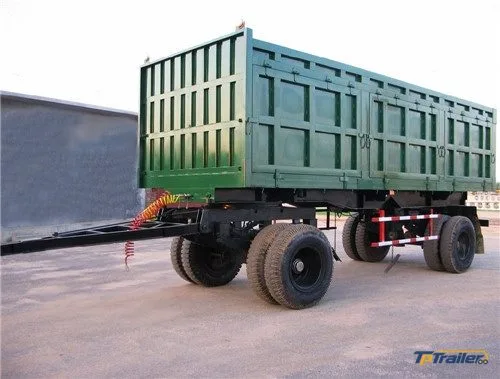
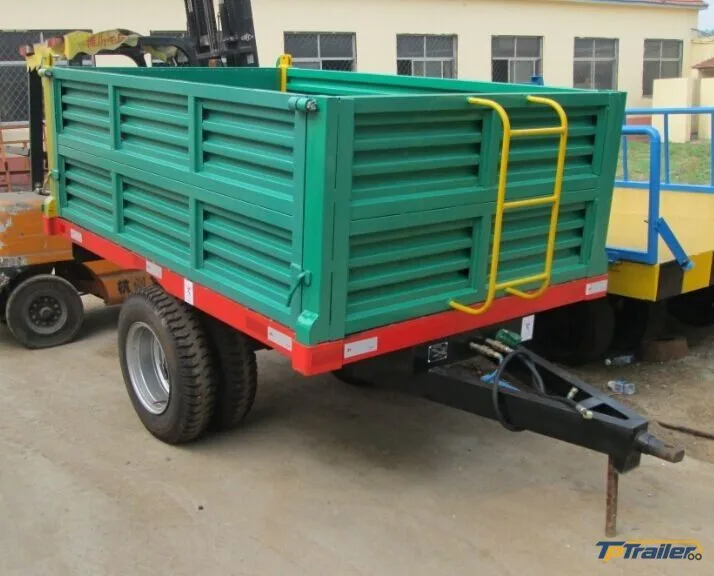
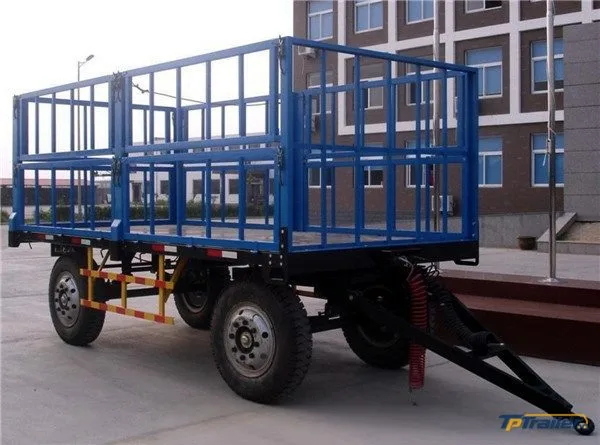
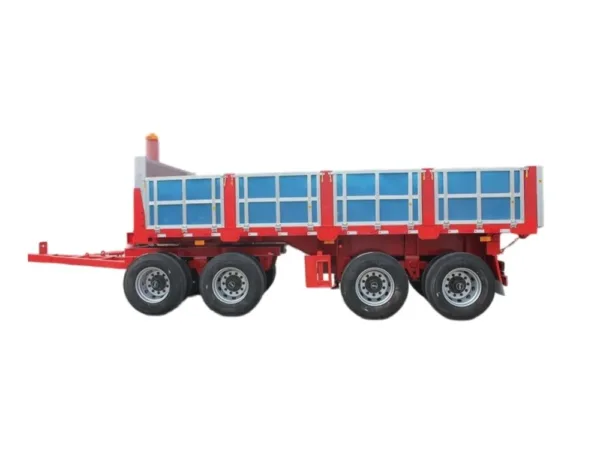
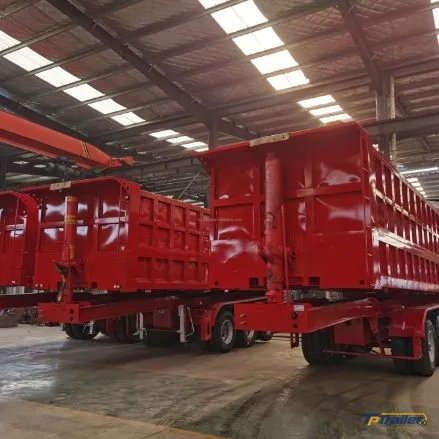
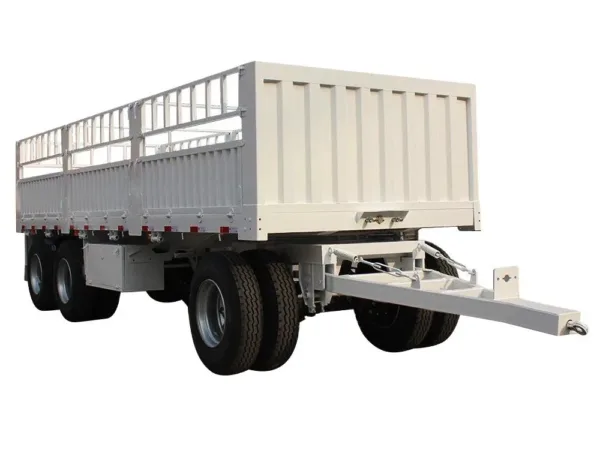
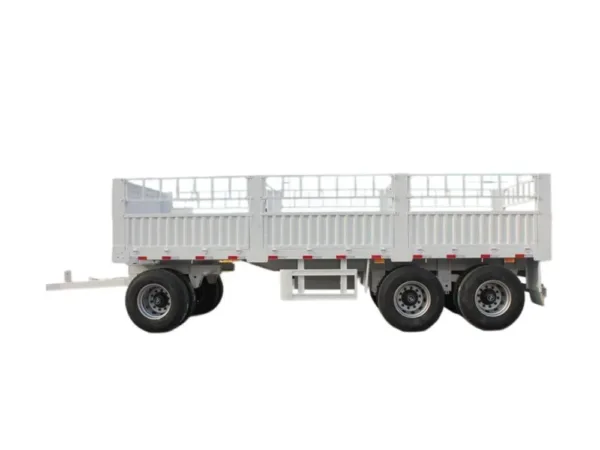
A mini tractor trailer is a compact, steel-bodied flatbed built to move loads that a pickup cannot and a full-size truck should not. It suits smallholders, contractors and rental fleets that need one implement for hay, feed, fencing and machinery. The strongest reason to choose it is the load range: a single platform covers 3 T—30 T, so the same trailer design scales from light farm runs to heavy site work. You get a hot dipped galvanised finish, mechanical suspension and road tyres as standard. Axle count, colour and logo printing are all specified to your order, so the trailer arrives matched to your tractor and your routes rather than adapted afterwards.
Table of Contents
Why It Works On Site
Load capacity from 3 T to 30 T. The platform is rated across a wide band, so a mini tractor trailer can be ordered for light hay runs or heavy machinery moves. That spread lets one buyer standardise on a single trailer family instead of buying two sizes. It also means the trailer grows with the workload rather than becoming redundant when the farm or contract expands.
Hot dipped galvanised finish. The steel body is galvanised after fabrication, so the coating covers the welds and cut edges rather than sitting on top of them. For a mini tractor trailer working outdoors, that matters on manure, fertiliser and wet road salt. It reduces repainting and keeps the deck serviceable through repeated loading cycles in exposed yards.
Mechanical suspension. A mechanical system is simple, repairable and predictable under a loaded flatbed. It suits the speeds and surfaces a mini tractor trailer actually meets: farm tracks, yard concrete and short road links. Fewer components mean fewer failure points, and a local workshop can service it without specialist diagnostics or proprietary tooling.
Customised axle count. The number of axles is set to your order, so the trailer is configured around the load you carry rather than a fixed factory layout. A mini tractor trailer ordered for dense cargo can be specified differently from one carrying bulky, low-mass goods. That flexibility keeps weight distribution sensible and avoids over-specifying running gear you never use.
Road tyres. Road-rated tyres let a mini tractor trailer leave the field and join public roads without a tyre change. That turns a farm-only implement into a link between yard, field and depot. It also means one driver can complete a collection and a delivery on the same trip, cutting the number of vehicles and movements needed per job.
Colour and logo options. Finish colour is set to the customer’s need and logo printing is available, so a mini tractor trailer can carry fleet livery from delivery. For rental operators and contractors, that supports identification on shared sites and in storage yards. Branded units are easier to track, allocate and return to the correct depot after a hire period.
Where It Is Used
Farm and smallholding work is the core duty of a mini tractor trailer. The flatbed takes hay and straw bales, bagged feed, seed pallets, fencing posts and water tanks, loaded by hand or with a small loader. Because the deck is open, awkward loads such as gates, troughs and rolls of netting sit flat and strap down at the corners. A mini tractor trailer also handles the routine loop between field, yard and store, which is where most hours are actually spent.
Livestock farms use it for bedding and feed deliveries to outlying pens. Arable operations use it to move seed and fertiliser to the headland and to clear stones and debris after cultivation. The mechanical suspension and road tyres mean the same unit can run a short public-road leg to a neighbouring yard without switching vehicles, so the tractor stays the only prime mover needed for the day.
Construction, landscaping and grounds maintenance teams use a mini tractor trailer for materials that arrive on pallets and leave as waste. Bricks, blocks, sand bags, paving, turf and timber all load onto the flatbed, and the same deck carries the packaging and spoil away. On estate and municipal work, a mini tractor trailer moves tools, signage, barriers and green waste between sites that a rigid lorry cannot reach. The galvanised finish is the reason it survives this mix: wet sand, soil and road salt are the normal working environment, not an exception.
Hire fleets value the format because one unit covers garden, farm and light site demand. Colour and logo printing help depots identify their own units on shared jobs. Where a load is dense, the higher end of the load range keeps the trailer within its rating instead of overloading a lighter platform.
Choosing The Right Spec
Match the load rating to the densest cargo. Start with the heaviest single load you expect, not the average. A mini tractor trailer rated near the bottom of the 3 T—30 T band suits bulky, low-mass goods such as hay and empty containers. Dense materials like sand, gravel or blocks push you up the band, because volume fills long before weight does.
Set axle count around weight distribution. Axle count is customised, so decide it together with the load rating. A mini tractor trailer carrying dense cargo benefits from spreading that mass over more running gear. Lighter, bulkier work needs fewer axles and less to maintain. Bring your typical load length and centre of gravity to the specification conversation.
Choose finish and livery for the working environment. Colour is set to the customer’s need and logo printing is available, so treat both as operational choices. A mini tractor trailer used on hire or across multiple sites gains from clear identification. Units exposed to wet manure, fertiliser or road salt gain most from the galvanised finish, which is standard rather than an extra.
Confirm tyre and suspension against your routes. Road tyres and mechanical suspension define where a mini tractor trailer can go and how fast it gets there. If most work is on farm tracks and yards, that combination is straightforward to live with. If public-road links are routine, confirm the tyre specification and the suspension setup at order, so the trailer matches the surfaces it will actually meet.
Customisation Before Delivery
The axle count is the first choice to settle. A mini tractor trailer can be built with the number of axles your load pattern calls for, and the count is fixed at order confirmation. Fewer axles suit light farm runs, while more axles spread weight on heavier work. Confirm the figure against your expected loads before the build starts.
Deck length and width are set per order. The flatbed format lets you choose a deck that matches the implements, pallets or bales you move most often. State the longest item you plan to carry, because overhang and loading position change with deck size. This choice is locked at order confirmation so the steel frame is cut once.
Suspension is offered as mechanical suspension on this model. The spring setup is matched to the axle count and the load band you select. Buyers who move mixed loads should describe the heaviest and lightest jobs so the spring rate is sensible. The suspension choice is agreed at order confirmation, not after the frame is welded.
Tyres are road tyres as standard. Tell us the surface the mini tractor trailer will work on most, because road use and yard use put different demands on the tyre. The tyre set is confirmed with the order so the wheels and hubs match the axle specification. Mixing tyre types later can change the ride height and clearance.
Colour and logo printing are available. The finish is hot dipped galvanised steel, and the paint colour follows your requirement. Logo printing can be applied so the trailer carries your farm or fleet identity. Both the colour and the logo artwork are approved at order confirmation, which keeps the finishing stage clean and avoids rework.
Every option above is a build decision, so it is settled at order confirmation. That single step keeps the mini tractor trailer consistent from frame to finish. Buyers who list their loads, surfaces and axle needs early get a clearer picture of what will be built. Nothing is changed silently after that point.
Fitting And Installation
On arrival, the buyer has to match the trailer to the towing tractor. Check the hitch height and the drawbar mounting points first, because a mismatch there stops the unit from sitting level. Confirm the hydraulic or electrical connections against the tractor’s own outlets, and check that hose and cable routing clears the deck and the wheels through a full turn. Wheel nut torque and tyre pressures should be checked against the figures supplied with the unit before the first loaded run. If any fitment data is missing, ask for it rather than guessing, because a mini tractor trailer that is coupled wrongly puts stress on the frame and the tractor link.
A wrong size costs downtime in a way that is easy to underestimate. A drawbar that does not match the tractor means the trailer cannot be used at all until an adapter is found, and adapters change the load path. Wrong hose routing can chafe through a line in a few working days, turning a delivery into a repair.
A mismatched wheel or hub pattern on the mini tractor trailer can mean the spare set does not fit when it is needed most. Where the input gives no fitment drawing, a fitment drawing is confirmed at quotation instead. That step lets the buyer compare the tractor and trailer dimensions before the build, which is cheaper than correcting a coupling after delivery.
Installation itself is straightforward once the coupling matches. Level the trailer, connect the lines, check the lights and the brakes if fitted, and run the unit empty before loading it. Note the tyre pressures and the wheel nut torque from the supplied data and recheck them after the first working day. Keep the fitment drawing with the machine records, because it makes later service and parts ordering faster for any mini tractor trailer in the fleet.
Service Life And Maintenance
The tyres wear first on a working trailer. Road tyres on a mini tractor trailer lose tread with distance and with hard cornering under load. Inspect tread depth, sidewall condition and pressure before each season, and check for cuts after rough yard work. Correct pressure and sensible loading spread the wear and keep the tyre set in service longer.
The suspension is the next item to watch. Mechanical suspension springs and their mounts take the repeated shock of loaded runs. Look for cracked leaves, worn bushes and loose clamps. A trailer that is consistently overloaded will show spring wear early, so keep loads inside the stated capacity and inspect the spring packs at each service.
The hot dipped galvanised finish is the main defence against rust. The coating protects the steel frame, but it can be damaged by impact or by trapped wet material. Wash off mud and manure, and touch in any coating damage where bare steel shows. Keeping the galvanised layer intact is what extends the interval between frame repairs on a mini tractor trailer.
Hitch, drawbar and mounting points carry the towing load. Inspect welds, pins and bolts for cracks, elongation or looseness. Check the coupling for wear that lets the trailer move on the tractor. A worn coupling adds shock to the whole frame, so replacing it early protects the structure and keeps the trailer tracking correctly.
Wheel bearings, hubs and fasteners deserve a routine look. Raise the trailer and check for play, listen for noise on the road, and confirm wheel nut torque at the stated figure. Keep the deck clear of standing water and debris. A dry, clean, correctly torqued mini tractor trailer lasts longer between workshop visits than one left loaded and wet.
Maintenance planning should follow the work the trailer does. A unit on light farm duty needs fewer checks than one on constant road runs. Record what wears and when, and use that record to set the next inspection. The steel build and galvanised finish reward that discipline with a longer working life.
Packing And Container Loading
Each mini tractor trailer is prepared for sea freight as a steel structure with exposed surfaces protected. Hot dipped galvanised finish resists handling marks during transit. Road tires are secured and kept clear of steel edges. Loose items such as ramps, pins and lights are boxed and tied to the frame. The buyer should confirm the packing method at quotation, because protection details depend on the trailer size and the shipping route. Ask the supplier to photograph the unit before loading.
The flatbed frame allows units to be loaded with decks facing each other where dimensions permit. This nesting saves container space but depends on the deck height and the axle configuration. A mini tractor trailer with a low deck nests more easily than a high-deck unit. Confirm stacking rules with the supplier before booking freight. On arrival, check the galvanised finish for scratches, verify the tire condition and count all loose parts against the packing list.
Common Mistakes Buyers Make
Ordering the wrong load capacity. A buyer matches the trailer to the tractor instead of the heaviest load it will carry. The result is an overloaded frame and a rejected delivery. Check the load capacity against your planned cargo weight before ordering, and confirm the figure in writing on the quotation for the mini tractor trailer.
Ignoring the axle count. The number of axles is customized, so a buyer who leaves it unstated receives a unit that does not suit local road rules or towing weight. Check the axle count you need against your tractor and permit conditions, then state it clearly on the purchase order.
Assuming a standard colour. Colour is supplied to the customer’s need, so an order without a stated colour may arrive in a default finish. Check a colour reference against the quotation and confirm it in writing before production starts on the mini tractor trailer.
Skipping the suspension check. The mechanical suspension suits many farm uses but a buyer may assume another type. Check the suspension system named on the specification sheet against your field conditions, and confirm it on the order before the frame is built.
Forgetting logo printing. Logo printing is available on the container chassis, yet buyers often request branding after production. Check the logo artwork and placement with the supplier before the build, and confirm that the mini tractor trailer order includes the printing step.
Buyer Questions
Can the trailer be nested or stacked to reduce container cost?
Nesting depends on the deck height and axle layout of the unit you order. A mini tractor trailer with a flat deck can often be loaded deck-to-deck, which uses container space more efficiently. Ask the supplier to confirm the loading plan for your exact size and quantity. Measure your container internal height and width, then compare them with the trailer dimensions on the quotation before you book freight.
What should I check when the trailer arrives?
Check the galvanised finish for transit scratches, inspect the road tires for damage, and confirm the colour and logo printing match your order. Count every loose part against the packing list before signing the delivery receipt. Photograph any damage before unloading. Keep the shipping documents with the inspection notes, and report discrepancies to the supplier promptly so the mini tractor trailer can be put into service without delay.
Is the load capacity fixed or can I choose it?
Load capacity is offered across a broad range, so you can select a size that matches your tractor and cargo. The right figure depends on your heaviest planned load and your local road limits. Tell the supplier the cargo weight and the towing tractor model, then confirm the capacity on the quotation. Do not rely on a verbal figure for the mini tractor trailer; get it in writing before ordering.
To receive a quote, send the required deck length, the axle count you need, and your order quantity. State your colour and logo requirements, and confirm the load capacity against your heaviest cargo. The supplier can then price the mini tractor trailer and confirm the packing and loading plan for your shipment.
We use cookies to enhance your browsing experience, serve personalized content, and analyze our traffic. By clicking "Accept All", you consent to our use of cookies. Privacy Policy
Cookie Preferences
Required for the website to function properly. Cannot be disabled.
Help us understand how visitors interact with the website (Google Analytics).
Used to deliver personalized ads and measure ad campaign effectiveness.



















Write a Review