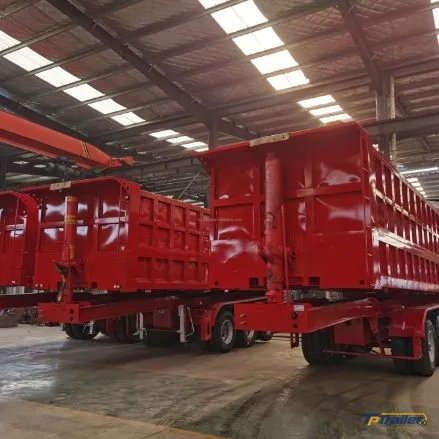
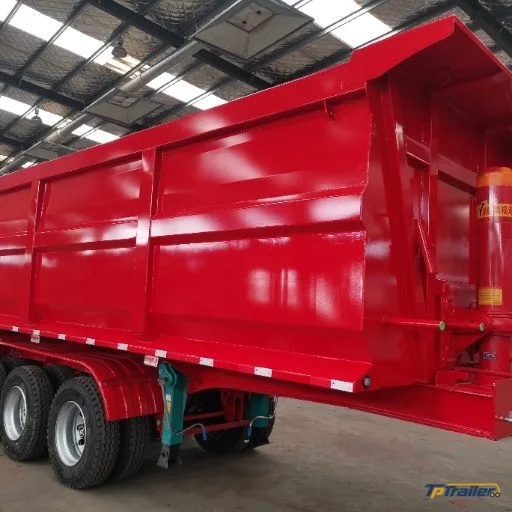
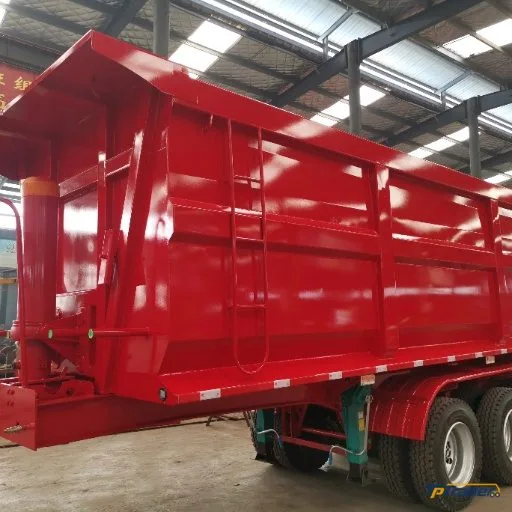
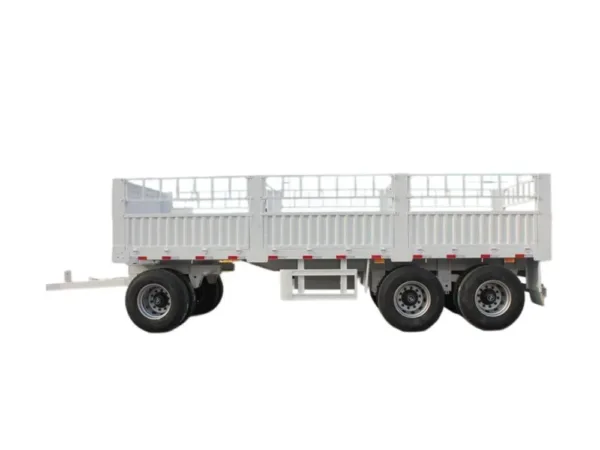
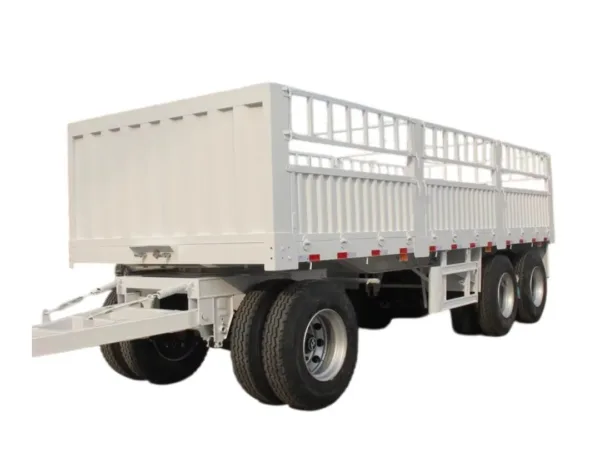
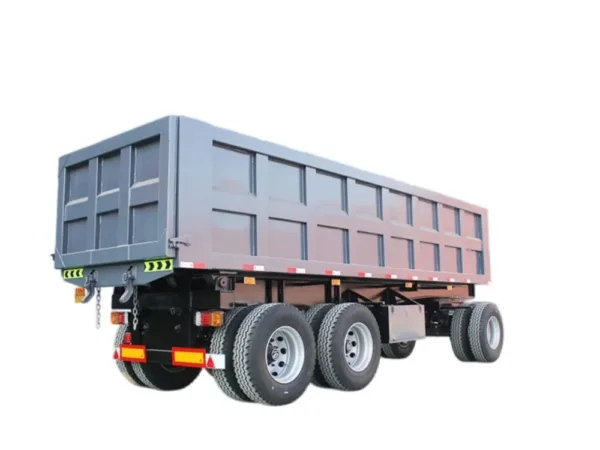
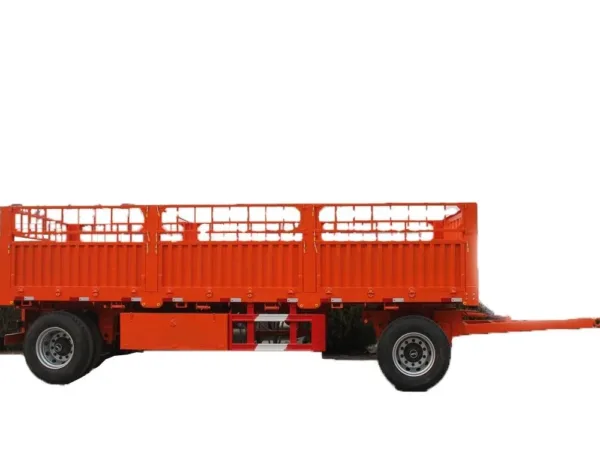
30 ton hydraulic tipper dump trailer with 3 axles of 13 ton capacity, 5000 kg tare weight and dual line braking. Request a quote for fleet orders today.
3
FOB Reference PriceUS$9,000-9,800Final price confirmed by inquiry
Certifications
ISO 9001
Key Features
30 ton payload rating for heavy bulk haulage duty
Three axles rated at 13 ton capacity each
Dual line braking system with ABS for controlled stops
16# channel steel side beam and Q235B mild alloy cross beams
The hydraulic tipper dump trailer is a heavy duty steel full trailer built for operators who move bulk loads every working day. It pairs a three-axle running gear with a tipping body, so one unit both hauls and discharges without a separate conveyor or manual shovel work. It suits farm operations, aggregate yards, construction fleets and rental yards that need a dependable tipper rather than a light utility unit. The strongest reason to choose it is the combination of a reinforced steel frame and a dual line braking system, which keeps a loaded trailer stable and controllable on the road. Buyers who compare running costs against uptime will find the specification set aimed squarely at daily commercial hauling.
Table of Contents
Why It Works On Site
Three-axle running gear. The axle set is rated for heavy capacity and can be supplied under an optional brand, so a fleet can standardise on the running gear it already services. That matters on a hydraulic tipper dump trailer that spends its life loaded: matched axles spread the load, reduce tyre scrub on tight yard turns and keep maintenance schedules predictable across a mixed fleet.
Dual line braking with ABS. The braking system uses two independent lines with ABS support, which gives the driver a controlled stop even when the body is full. On a hydraulic tipper dump trailer working mixed road and site routes, that control is what lets operators keep the unit on public roads and inside site safety rules without derating the payload.
Mild alloy Q235B cross beams. The cross beam material is a mild alloy chosen for weldability and toughness, so the deck resists the shock of dropped loads. For a hydraulic tipper dump trailer handling rock, grain or scrap, that resilience at the floor is what keeps the body square and the tailgate sealing after repeated tipping cycles.
Channel steel side beams. The side beam is formed channel steel, which gives the body its longitudinal stiffness. This is the member that carries the load between the axles on a hydraulic tipper dump trailer, so a stiffer side beam means less flex on uneven ground and a tipping action that stays true when one wheel drops into a rut.
Manageable tare weight. The tare weight is kept low for a trailer of this class, which leaves more of the gross combination available for payload. Operators moving dense cargo on a hydraulic tipper dump trailer gain on every trip, because the unit is not spending its legal allowance on its own structure.
Custom colour and packing. Colour is customer-selected and packing can be nude or built to the buyer’s requirement. That lets a fleet match existing livery and lets an importer choose a shipping format that suits the receiving port, so a hydraulic tipper dump trailer arrives ready to register and put to work.
Where It Is Used
The most common duty for this unit is agricultural bulk haulage. Farms use a hydraulic tipper dump trailer to move grain, silage, fertiliser and feed between fields, stores and the yard, where the ability to tip cleanly into a pit or hopper saves a handling step. Because the body discharges by tipping, one driver can deliver a full load and return empty without waiting for a loader.
Livestock and mixed farms also use it for bedding, manure and soil, cargo that is heavy, damp and awkward to shovel out by hand. On these routes the trailer runs partly on farm tracks and partly on public roads, which is where the dual line braking and the stable three-axle layout earn their place. The steel body takes the knocks of gateposts and tip edges without losing shape.
Construction and aggregate work is the second major use. A hydraulic tipper dump trailer in this class suits sand, gravel, crushed stone, recycled asphalt and demolition spoil on short to medium hauls between a quarry, a plant and a site. Contractors value a full trailer because it can be loaded by an excavator or conveyor and tipped directly into a trench, a spreader or a stockpile.
Earthworks crews use it to move excavated material off tight sites where a larger rigid truck cannot turn. Rental yards also place it with customers who need a self-discharging unit for a weekend or a season. In each case the tipping body removes the need for a second machine to unload, and the reinforced frame copes with the abrasive loads these routes produce.
Choosing The Right Spec
Match the axle brand to your workshop. The running gear can be supplied under an optional brand, so pick the one your fitters already stock parts for. A hydraulic tipper dump trailer that shares bearings, seals and brake components with the rest of the fleet spends less time waiting for spares and more time earning, which matters more than a small difference in purchase cost.
Decide on braking by route, not by habit. The dual line system with ABS suits operators who run loaded on public roads and need predictable stopping. If the unit will stay inside a yard or on private tracks, the same specification still gives a safer, more controllable descent on ramps and tip faces, so the choice is really about how much road work the hydraulic tipper dump trailer will see.
Weigh tare against your cargo. The tare weight is modest for this class, which favours dense loads such as gravel and wet soil. If your cargo is bulky but light, you gain little from the low tare and should focus on body volume and tipping angle instead. Buyers running a hydraulic tipper dump trailer on weight-limited routes should check the tare against their allowed payload before ordering.
Plan colour and packing early. Colour is customer-selected and packing can be nude or built to your requirement, so settle both before production. Livery matching keeps a hydraulic tipper dump trailer consistent with the rest of the fleet, while the packing choice affects how the unit is handled at the destination port and how quickly it can be commissioned.
Customisation Before Delivery
The axle count and axle configuration are confirmed at order confirmation. Buyers running heavy farm loads can match the axle setup to their usual routes, and the brand of axle components stays optional. Because the hydraulic tipper dump trailer shares one frame across builds, the chosen axle layout is locked into the build sheet before production begins.
Deck length and body style are settled at order confirmation. Tell us how you load grain, silage or spoil, and the deck proportions are agreed in writing. The side beam and cross beam material stay as specified, so a longer deck does not silently change the structural grade of the hydraulic tipper dump trailer you receive.
Colour is customer optional. The paint finish on the hydraulic tipper dump trailer is chosen from the options offered at quotation, and the choice is recorded on the order so every unit in a batch matches. Fleet buyers often want one colour across mixed deliveries, so state it early rather than after the steel is cut.
Tyre brand is selectable. Because the tyres are a wear item on any hydraulic tipper dump trailer, the brand fitted is agreed at order confirmation together with the axle and braking choices. This lets a buyer standardise on a brand already stocked locally, which keeps roadside replacement simple.
Packing is agreed per order: nude packing or packing to the customer’s requirement. For a hydraulic tipper dump trailer moving by container or flat rack, the packing method affects handling at both ends, so it is confirmed at order confirmation alongside the colour and axle choices. No packing change is made after dispatch.
Fitting And Installation
On arrival, the buyer matches the trailer to the towing vehicle before any load is carried. Check the coupling height against the drawbar, confirm the mounting points on the tractor or truck hitch line up, and verify the hydraulic hose routing clears the tipping arc through the full stroke. The dual line braking system and ABS need the supply lines connected in the correct order, and the electrical socket must match the tractor harness.
Where the input gives no fitment drawing, a fitment drawing is confirmed at quotation instead of being assumed. Walk the hydraulic tipper dump trailer through a dry tip cycle with no load before it enters service, and check that the body returns fully and the tailgate swings clear. Record the coupling and hose layout so a second operator can repeat the hook-up without guesswork.
A wrong size at hook-up costs real downtime. A drawbar that sits at the wrong height loads the coupling unevenly and wears the hitch. A hose routed too tight can pull free at full tip, and a brake line connected in the wrong sequence leaves the hydraulic tipper dump trailer without the braking the dual line system is built to give.
Because the trailer is a heavy unit with a substantial tare, a mismatch is not corrected by driving gently. Confirm every interface at quotation: coupling type, hose length, brake line order and electrical plug. Once those are agreed, the fitment drawing is issued so the workshop can prepare the tractor before the trailer lands, and the first tip cycle becomes a check rather than a repair job.
Service Life And Maintenance
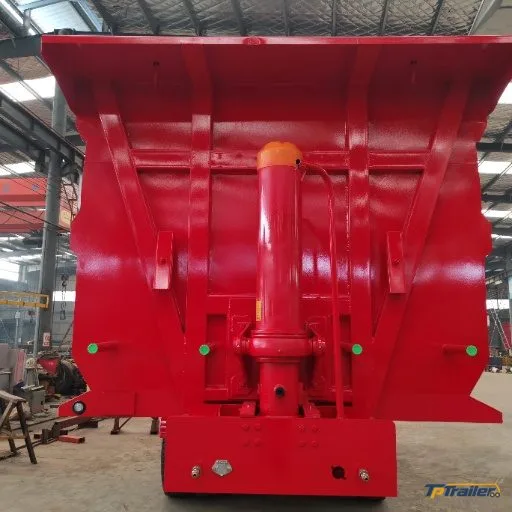
The tipping cylinder and its seals wear first on any hydraulic tipper dump trailer. Operators should watch for slow raise, drift under load or oil weeping at the gland. Keeping the hydraulic oil clean and the breather clear protects the seals, and a cylinder that is inspected before each season lasts longer than one checked only after a fault appears.
The deck and cross beams take the abrasion. On this hydraulic tipper dump trailer the cross beam material is mild alloy Q235B, which resists ordinary farm loads but still benefits from prompt repair of deep gouges. Operators should inspect the floor after tipping abrasive spoil, and repainting bare spots extends the interval before corrosion sets in.
The side beam carries the body load, so check it for straightness and for cracks at the welded joints. A 16# channel steel side beam is stiff, but repeated overloading still shows at the corners. Keep loads within the rated capacity of the hydraulic tipper dump trailer and inspect the side beam joints whenever the body has taken a heavy impact.
Tyres and axle bearings are the rolling wear items. Check tyre brand condition, tread and pressure before long hauls, and listen for bearing noise on the hydraulic tipper dump trailer after wet work. Because the axle brand is optional, keep the chosen brand’s bearing part number on file so replacement stays consistent across the fleet.
The dual line braking system and ABS deserve a routine check. Test the brake response on a dry surface, look for chafed lines and confirm the ABS warning behaves as expected. A braking fault on a loaded hydraulic tipper dump trailer is the most serious maintenance finding, so log every check and fix faults before the next load leaves the yard.
Packing And Container Loading
The hydraulic tipper dump trailer ships in nude form by default, with no timber crate or carton around the chassis. Each unit is braced so the frame cannot shift against its neighbour during the voyage. The dual line braking system and ABS components are the parts that suffer most from movement, so they are checked and secured before loading rather than after. Paintwork is the other exposure on a long sea route.
Buyers who want extra protection should say so early, because the packing note allows alternatives to nude shipment when the order calls for them. Ask for the loading plan before the container is sealed, and match it against the units you expect. That single document tells you whether the hydraulic tipper dump trailer was loaded as agreed or repacked at the last minute.
Nesting and stacking are limited on a full trailer of this size, because the chassis, side beam and cross beams form a rigid box that does not collapse. The realistic saving comes from how the units are arranged inside the container, not from folding them down. Some space can be recovered by loading the hydraulic tipper dump trailer with its axles facing a consistent direction and keeping the drawbar area clear. On arrival, verify the unit count against the packing list, photograph every panel and brake line before unloading, and check the axle assemblies for movement marks. Confirm the colour you ordered is the colour delivered, since the finish is customer optional and easy to misread on a loading photo.
Common Mistakes Buyers Make
Assuming the trailer can be broken down for shipping. A full trailer with a rigid chassis and fixed side beams does not fold, so a buyer who budgets container space for a knocked-down unit will be short. The check: request the loading plan before payment and confirm how many complete units fit in the container you intend to book.
Ordering the axle capacity without confirming the brand. The axle brand is optional, and a buyer who leaves it open may receive a set that differs from the sample quoted. The check: name the axle brand you want in the purchase order and have the supplier confirm it in writing against the axle capacity you specified.
Ignoring the tare weight when planning transport. The trailer’s own weight plus a full load can push a road train past local limits, and the buyer discovers this after delivery. The check: compare the stated tare weight with your prime mover and permitted payload before you confirm the order.
Treating the braking system as a single option. Dual line braking and ABS are not the same fitment, and a mismatch with the towing vehicle delays registration. The check: confirm which braking arrangement your market requires and match it to the specification on the quotation.
Leaving the colour and finish to chance. Colour is customer optional, and a verbal instruction is easily lost between quotation and production. The check: put the colour reference in the order documents and ask for a photo of the finished unit before it is loaded.
Buyer Questions
How is the hydraulic tipper dump trailer protected during sea freight?
It travels in nude form unless your order specifies otherwise, so there is no crate to remove at destination. Protection therefore comes from bracing and from securing the brake and hydraulic components rather than from packaging. Before shipment, ask for photos of the braced units inside the container. On arrival, inspect the paintwork, the dual line braking system and the axle assemblies first, and note any movement damage on the delivery documents before you sign. Packing to your own requirement is possible when the order states it.
Can I mix axle brands or colours across one order of this hydraulic tipper dump trailer?
The axle brand is optional and the colour is customer optional, so both can be set per order. What you should do is write each choice into the purchase order line by line, because a mixed order is where mistakes start. Confirm the axle capacity alongside the brand, and give a colour reference rather than a name. Ask the supplier to repeat your selections back on the proforma invoice. If you need more than one configuration, state the split by quantity so the loading plan matches.
What should I confirm before the hydraulic tipper dump trailer is loaded?
Confirm the loading plan, the unit count and the specification sheet against your order. Check the axle brand and capacity, the braking arrangement, the colour reference and the certification you require. Ask for the tare weight to be restated so your transport planning uses the right figure. Then request photos of the loaded container before it is sealed. Anything the supplier cannot confirm in writing at that stage should be resolved before departure, not after the vessel sails.
To receive a quotation, send the trailer length you need, the axle count and the quantity you intend to order. Include your preferred axle brand, colour reference and braking arrangement so the specification is priced correctly. State any packing requirement beyond nude shipment. With those details, the supplier can confirm the configuration, the certification documents and the loading plan for your hydraulic tipper dump trailer order.
We use cookies to enhance your browsing experience, serve personalized content, and analyze our traffic. By clicking "Accept All", you consent to our use of cookies. Privacy Policy
Cookie Preferences
Required for the website to function properly. Cannot be disabled.
Help us understand how visitors interact with the website (Google Analytics).
Used to deliver personalized ads and measure ad campaign effectiveness.


















Write a Review