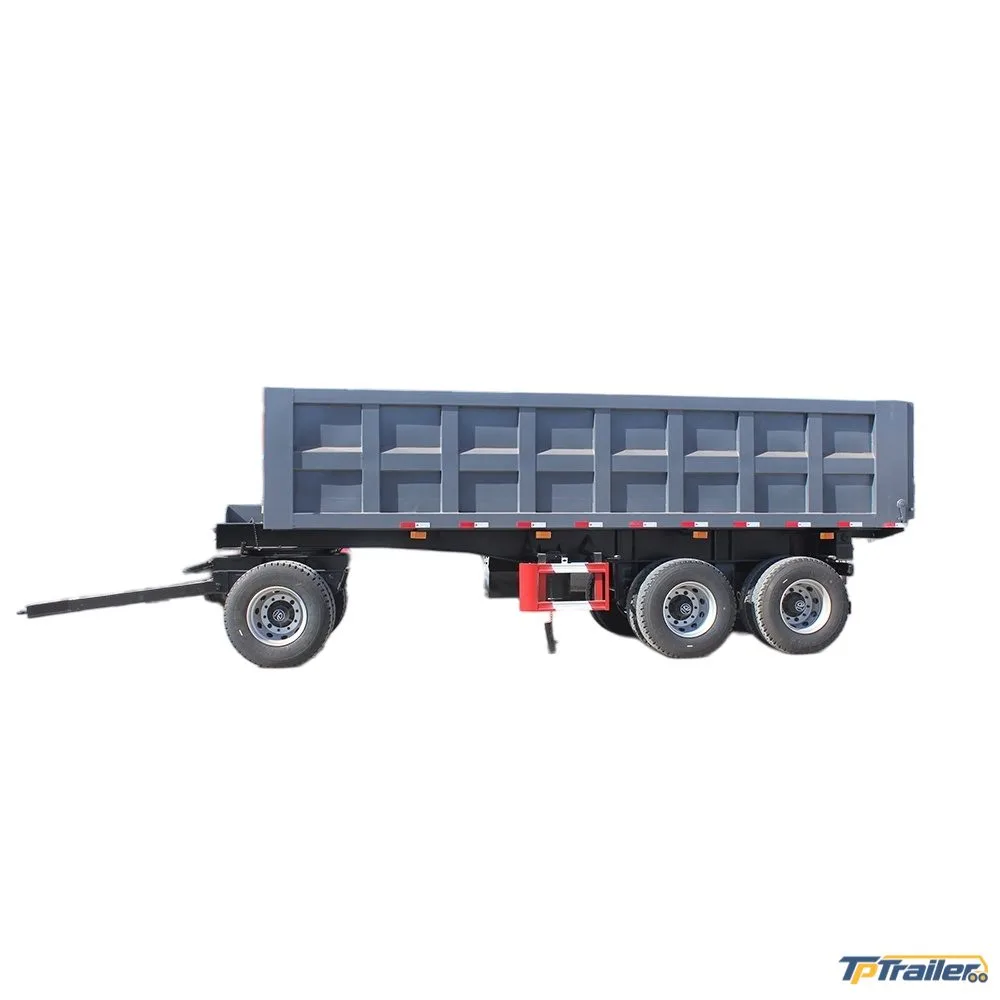
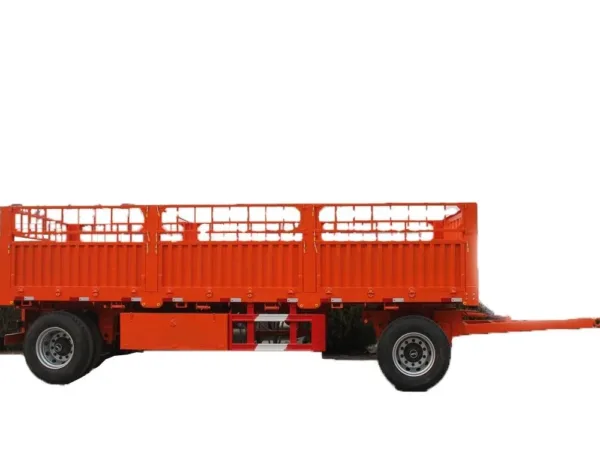
This Tipper/dump Trailer with Draw bar is a steel-bodied tipping semi-trailer built for farms, contractors and haulage fleets that need to tip bulk loads on site without a separate tipping tractor unit. It suits buyers who run mixed routes and want one drawbar unit to handle grain, silage, soil and aggregate. The strongest reason to choose it is the 30000 KG load capacity, which lets a single trailer move full bulk loads in fewer trips. Steel construction keeps the body repairable in the yard, and the drawbar layout spreads the load across the towing vehicle.
Table of Contents
Why It Works On Site
The 30000 KG load capacity means one Tipper/dump Trailer with Draw bar can clear a full grain or silage cut in fewer runs, so the harvester and the haul fleet keep pace instead of waiting on part loads. Buyers moving dense cargo such as wet soil or aggregate also get fewer trips per shift, which cuts fuel and driver hours across the season.
The steel tipping body takes the abrasion of sand, gravel and root crops without the cracking that thinner bodies show after repeated discharge. That matters on sites where the trailer is loaded by bucket and tipped on rough ground, because a repairable steel body can be welded and patched locally instead of being replaced mid-season.
The drawbar coupling lets the Tipper/dump Trailer with Draw bar follow a tractor or dump tractor through field gates and yard corners that a close-coupled semi-trailer cannot swing through. Operators get a tighter turning circle on headlands and in livestock yards, which saves reversing time on every load.
The tipping ram and hinged tailgate let one operator discharge a full load without a second machine or manual shovelling. On farm and construction sites this turns a two-person job into a single pass, so the driver can tip, close up and return for the next load while the spreader or stockpile is still being worked.
The dump tractor configuration keeps the load weight over the trailer axles rather than the towing hitch, which protects the tractor and keeps traction on soft ground. Fleets running a Tipper/dump Trailer with Draw bar across wet fields and unmade yards get steadier hauling without sinking the prime mover.
The steel chassis and body panels are built for straightforward servicing, so a cracked weld or worn floor plate is a yard fix rather than a dealer booking. That keeps the Tipper/dump Trailer with Draw bar in service through harvest and construction peaks, when a week off the road costs more than the repair.
Where It Is Used
Farms and agricultural contractors use the Tipper/dump Trailer with Draw bar for the bulk movements that fill the working day. Grain comes off the combine into the body and goes to the store or the intake pit; silage and haylage are hauled from field to clamp; root crops and potatoes are tipped into grading lines or store bays. The same trailer carries muck and slurry solids out to the fields, lime and fertiliser in, and stone for track repairs.
Because the body tips, the load leaves in one controlled pour instead of being forked out, which suits yards where a telehandler is busy elsewhere. Operators running a Tipper/dump Trailer with Draw bar across a mixed rotation get one unit that covers harvest, spreading and general farm haulage.
Construction and groundworks crews use the same trailer for spoil, sand, gravel, hardcore and road planings on short-haul routes between site and tip. The Tipper/dump Trailer with Draw bar fits jobs where the access is tight and the ground is soft, such as driveway builds, drainage works and yard extensions, because it can be towed in by a tractor and tipped close to the excavation. Municipal and estate teams also use it for green waste, leaves and general clearance.
In each case the pattern is the same: load at the source, short road or track run, tip at the destination, return. That cycle is where a Tipper/dump Trailer with Draw bar earns its place, since the tipping action removes the need for a second machine at the drop point.
Choosing The Right Spec
Match the load capacity to your heaviest regular cargo. The 30000 KG rating covers dense loads such as wet soil, gravel and root crops, so a buyer hauling those materials can plan full loads rather than part loads. If most work is light and bulky, such as straw or empty crates, the same Tipper/dump Trailer with Draw bar still works but the capacity is there for the dense jobs that set your trip count.
Choose the drawbar layout for your turning and access needs. A drawbar unit suits field gates, farmyards and site entrances where a close-coupled trailer would need extra manoeuvring. Buyers who mostly run straight road routes may not need that articulation, but those working headlands and tight yards will notice the difference on every Tipper/dump Trailer with Draw bar load.
Match the towing vehicle to the loaded trailer. A dump tractor or suitably rated tractor needs enough power and braking to control a fully loaded Tipper/dump Trailer with Draw bar on slopes and soft ground. Check the hitch rating and the tractor’s gross combination limit before ordering, because the trailer’s capacity is only usable when the prime mover can hold it on the route you actually run.
Plan the body and tailgate for your cargo. Grain and silage flow freely, while wet soil and clay need a body that discharges cleanly and a tailgate that seals. Buyers tipping into narrow spreaders or store bays should confirm the discharge height and opening suit the receiving equipment, so the Tipper/dump Trailer with Draw bar tips where it is needed rather than beside the target.
Customisation Before Delivery
Axle count. The Tipper/dump Trailer with Draw bar can be ordered with the axle configuration that matches your load and road conditions. Fewer axles suit lighter hauling and tighter turning on farm tracks. More axles spread weight across the road surface. The choice is settled at order confirmation, so state your preference early and keep it fixed through production.
Deck length. Deck length sets how much material each trip moves and how the trailer behaves behind the tractor. A shorter deck turns more easily in yards and narrow lanes. A longer deck carries bulk loads with fewer runs. Confirm the deck length you need when the Tipper/dump Trailer with Draw bar order is finalised, so the body and tipping geometry are built to suit.
Suspension. Suspension choice changes ride quality, load stability and how the trailer tracks over rough ground. Mechanical options are simple to inspect and repair in a farm workshop. Other configurations suit steadier road work. The suspension is agreed at order confirmation, and it must match the axle arrangement you select for the Tipper/dump Trailer with Draw bar.
Tyres. Tyre size and tread pattern should follow the ground you work on. Lugged tread grips in mud and loose soil. Ribbed tread rolls better on hard surfaces. Load rating must suit the duty you plan. Tyre specification is fixed at order confirmation, and it should be recorded with the Tipper/dump Trailer with Draw bar order so replacement stock matches.
Colour and finish. Paint colour is a practical choice as well as a visual one. Bright colours are easier to spot around a working yard. Standard colours are easier to touch up later. State your colour at order confirmation. The finish on the Tipper/dump Trailer with Draw bar is applied before dispatch, and the chosen shade is recorded on the order.
Fitting And Installation
On arrival, the buyer has to match the draw bar and coupling to the tractor. Check the hitch height against the draw bar so the trailer sits level when loaded. Confirm the mounting points line up with the tractor linkage or hitch bracket. Check the tube size on any hydraulic or air line against the tractor outlets. Route hoses clear of the tipping body and moving parts, with enough slack for turns. Confirm the electrical plug matches the tractor socket. Where the input gives no fitment data, a fitment drawing is confirmed at quotation. That drawing is the reference for the Tipper/dump Trailer with Draw bar before production begins.
A mismatch costs downtime at the worst moment. A draw bar that sits too high or low loads the tractor hitch unevenly and wears tyres. A hose that is too short pulls tight on a turn. A hose that is too long can catch on the propshaft or the tipping ram. Wrong mounting points mean drilling or adapters on a new unit. Each fix takes time in a season when the trailer is needed. Reviewing the fitment drawing at quotation removes most of this risk. It also confirms how the Tipper/dump Trailer with Draw bar will connect before the steel is cut.
Service Life And Maintenance
Draw bar and coupling. The draw bar eye and coupling take constant shock loads and wear first. Inspect for elongation, cracks and loose bolts before each season. Check that the hitch closes fully and locks. A worn eye develops play that spreads load into the tractor hitch. Keep the coupling greased and replace worn parts early. The Tipper/dump Trailer with Draw bar stays safer when this joint is checked on a fixed schedule.
Tipping ram and pivots. The tipping ram, pins and pivot points carry the full load during every dump cycle. Look for hydraulic leaks, scored rods and worn pin bushes. Grease the pivots at the stated points. Listen for uneven movement when raising the body. A dry pivot wears fast and can seize under load. Regular greasing of the Tipper/dump Trailer with Draw bar tipping gear extends the working interval between repairs.
Body panels and paint. Steel body panels wear at the floor, corners and tailgate edges where loads shift and scrape. Check for dents, thin spots and paint damage after each heavy season. Touch up chips before rust starts. The coating choice made at order affects how long the finish lasts. A well-maintained coating on the Tipper/dump Trailer with Draw bar slows corrosion and keeps the body sound.
Tyres and wheel bearings. Tyres wear with load, speed and surface. Check pressures when cold and look for uneven tread wear that points to alignment or bearing trouble. Jack each wheel and feel for play in the bearings. Replace damaged tyres before they fail under load. Correct tyre choice and pressure keep the Tipper/dump Trailer with Draw bar rolling evenly and reduce strain on the axle set.
Fasteners and chassis. Vibration loosens bolts over time. Check chassis welds, cross members and body mounting bolts for cracks or looseness. Re-torque fasteners to the values in the manual. Look for rust at welded joints. A clean, dry chassis is easier to inspect. Routine checks on the Tipper/dump Trailer with Draw bar frame catch small faults before they become structural repairs.
Packing And Container Loading
Each Tipper/dump Trailer with Draw bar ships as a complete unit unless the buyer requests breakdown for container efficiency. Steel surfaces receive a protective coating before dispatch. Hydraulic lines and exposed fittings are capped and wrapped so salt air and road grime cannot enter during the sea voyage. The draw bar assembly is braced to prevent movement inside the container. Loose items such as pins and fasteners are bagged and tied to the frame. Buyers should confirm the protective coating type and the bracing arrangement at quotation, since both depend on the shipping route and the carrier chosen.
Nesting and stacking are limited by the trailer frame and the axle set. A Tipper/dump Trailer with Draw bar cannot be stacked on another unit without risking deformation of the tipper body. Where the buyer orders several units, the supplier may offer partial disassembly so more frames fit per container. That decision affects assembly work on arrival. Confirm the loading plan and the number of units per container before booking freight. Ask whether the tipper body is shipped assembled or in sections, and request the loading diagram. On arrival, check the frame for bending, the coating for scuffs, and the hydraulic caps for damage before signing the delivery receipt.
Common Mistakes Buyers Make
Ignoring the draw bar coupling match. A Tipper/dump Trailer with Draw bar only works when the towing tractor’s hitch matches the draw bar eye and height. Buyers order without measuring the tractor, then discover the coupling does not seat. The single check: measure the tractor hitch height and eye diameter, and send both figures with the order.
Underestimating the load capacity requirement. The stated load capacity must cover the heaviest legal load, not the average one. Buyers who plan around typical loads overload on peak days and stress the frame. The single check: list the heaviest load you will legally carry and confirm the load capacity covers it at quotation.
Overlooking axle and tyre configuration. Axle count and tyre size determine ground pressure and road legality. A Tipper/dump Trailer with Draw bar ordered with the wrong axle count may fail local registration. The single check: confirm the permitted axle load in your market and match the axle count to it before ordering.
Skipping the hydraulic system specification. Buyers assume the tipper hydraulics suit their tractor’s output. If the pump and ram do not match the tractor’s flow, tipping is slow or incomplete. The single check: state your tractor’s hydraulic flow and pressure, and ask the supplier to confirm compatibility in writing.
Ordering without a loading plan. A Tipper/dump Trailer with Draw bar ordered in quantity without a container plan can exceed freight space and raise cost per unit. The single check: request the loading diagram and units-per-container figure before you confirm the order quantity.
Buyer Questions
Can the tipper body be shipped partly disassembled to fit more units per container?
Partial disassembly is possible for quantity orders, but it depends on the frame design and the carrier’s limits. Ask the supplier to confirm in writing which sections can be separated and how they are re-joined on arrival. Request the loading diagram showing units per container for the disassembled configuration. Confirm who supplies the fasteners for reassembly and whether the protective coating survives the process. Treat the loading plan as part of the quotation, not an afterthought, because it changes both freight cost and the labour needed at your yard.
What should I measure on my tractor before ordering a Tipper/dump Trailer with Draw bar?
Measure the hitch height from ground level, the draw bar eye diameter, and the tractor’s hydraulic flow and pressure. Record the maximum legal load you intend to tow and the axle load limit in your market. Send these figures with your enquiry so the supplier can confirm the draw bar and hydraulic specification match. If any figure is unknown, confirm it at quotation rather than assuming. A mismatch found after delivery means rework or a return, and both cost more than the measurement itself.
How do I verify the trailer on arrival before accepting delivery?
Inspect the frame for bending or weld damage, check the protective coating for scuffs and rust, and confirm the hydraulic caps and wraps are intact. Count the units against the loading diagram and check that bagged fasteners are present. Photograph any damage before signing the delivery receipt, and note it on the carrier’s paperwork. Then confirm the draw bar and axle configuration match your order. Report discrepancies to the supplier promptly, with photos, so the issue is resolved before assembly begins.
To receive a quotation for a Tipper/dump Trailer with Draw bar, send the required overall length, the axle count you need, and the quantity you plan to order. Include your tractor hitch height and hydraulic flow so the draw bar and tipper system can be matched. Confirm the loading plan for your quantity at quotation.
We use cookies to enhance your browsing experience, serve personalized content, and analyze our traffic. By clicking "Accept All", you consent to our use of cookies. Privacy Policy
Cookie Preferences
Required for the website to function properly. Cannot be disabled.
Help us understand how visitors interact with the website (Google Analytics).
Used to deliver personalized ads and measure ad campaign effectiveness.






















Write a Review