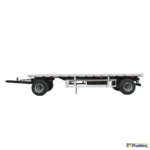
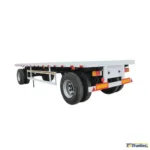
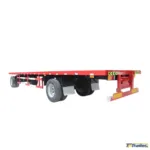
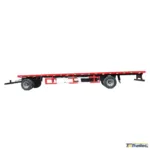
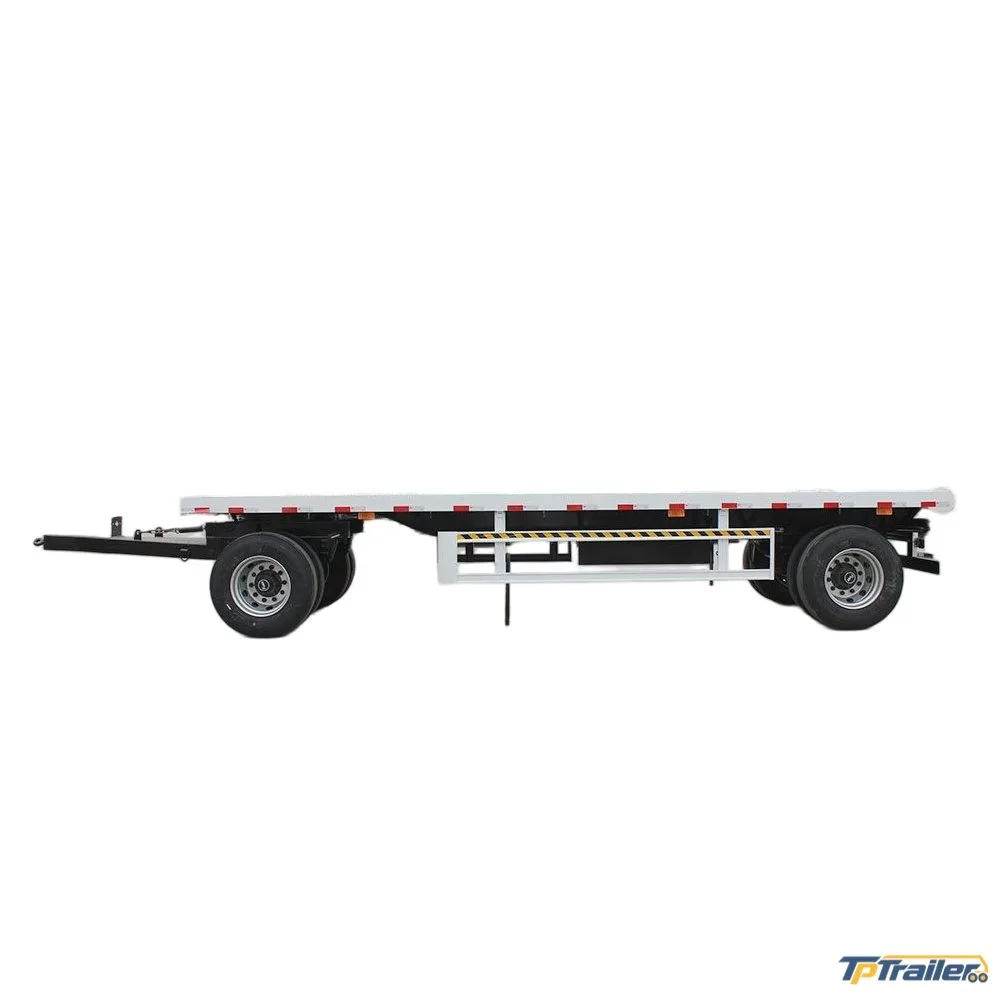
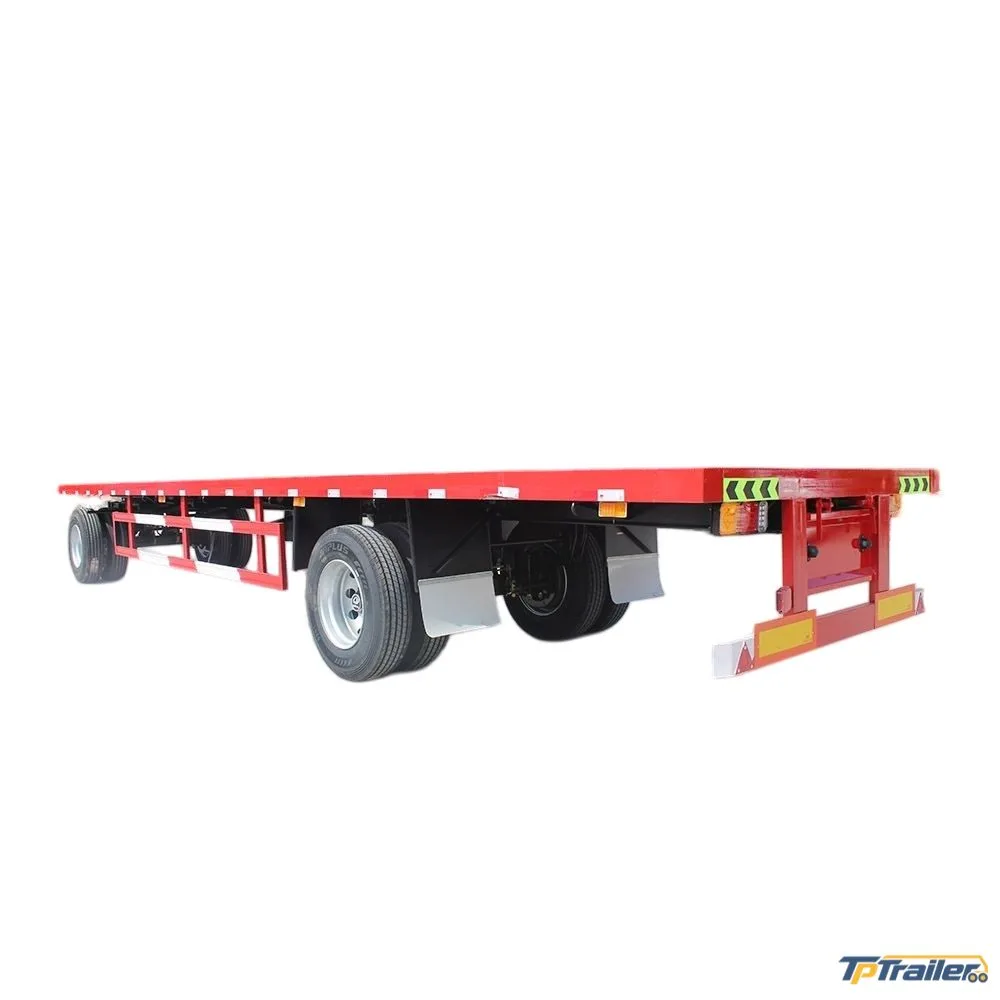
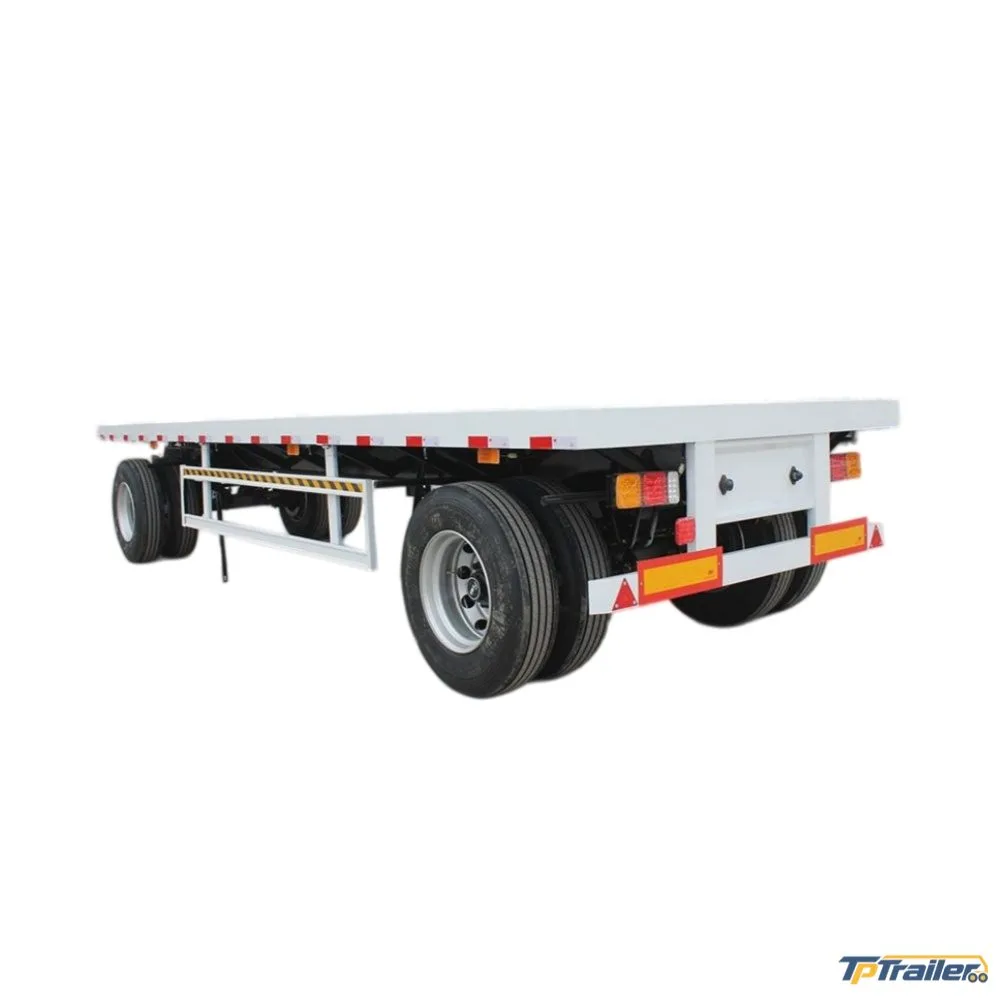
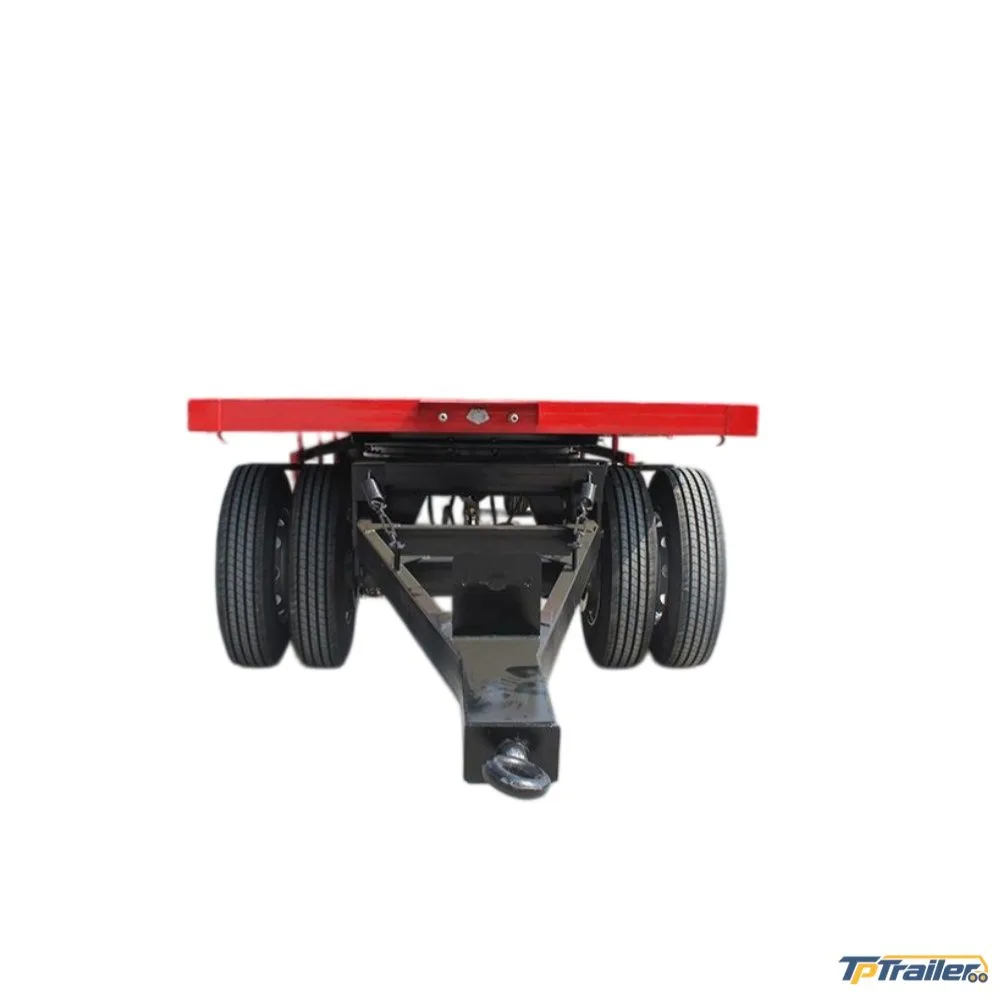
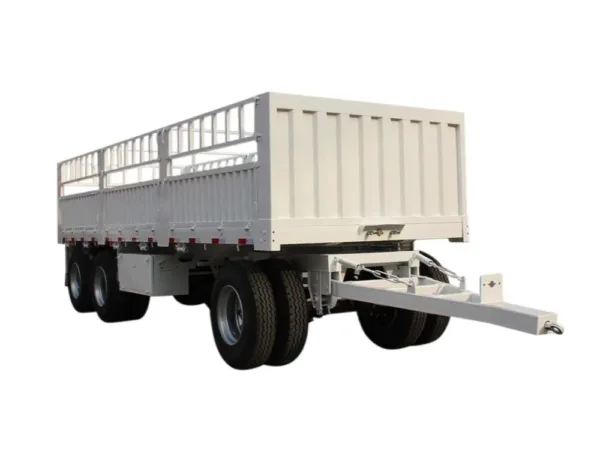
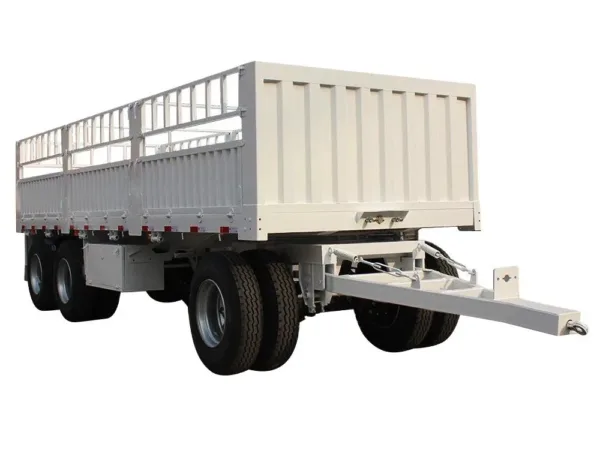
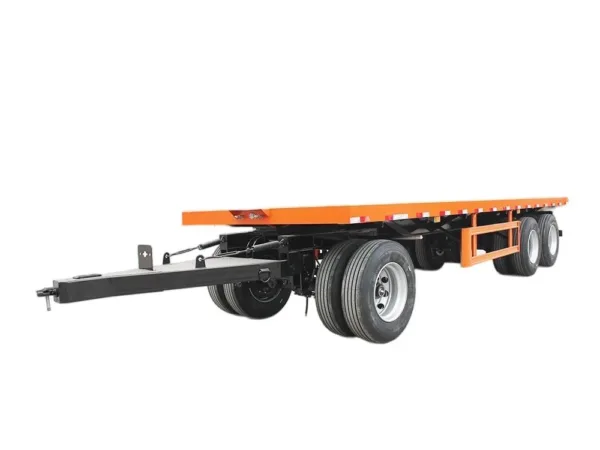
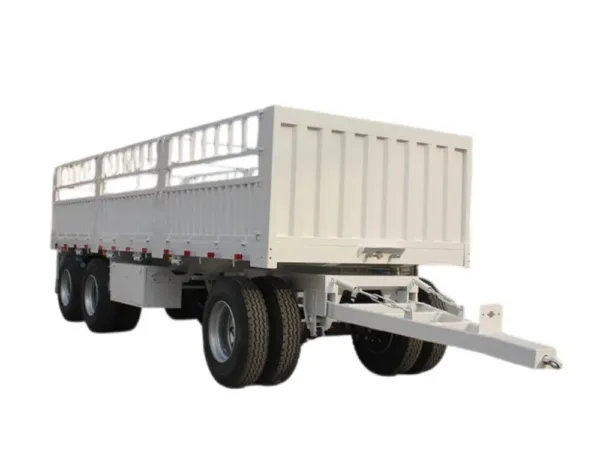
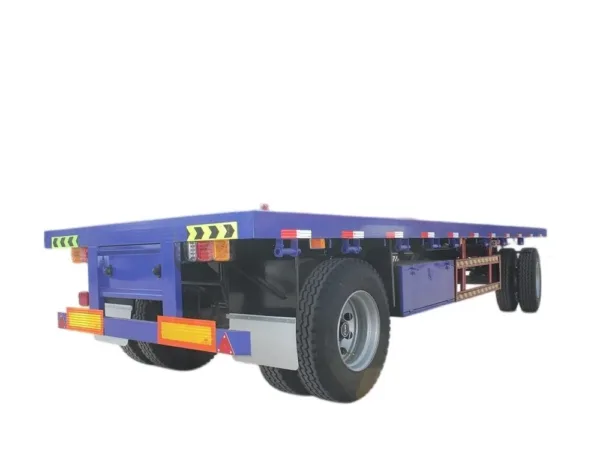
A 2 axle semi trailer with a drawbar coupling is the practical answer for operators moving containers and large equipment without a tractor unit. This flatbed trailer carries loads in the 15001-20000 KG band, runs on a dual line braking system and takes cargo that will not fit a standard box body. It suits farm contractors, plant hire yards and freight fleets that need one platform for containers, machinery and oversized freight. The strongest reason to choose it is versatility: the same deck handles a loaded container today and a wheeled machine tomorrow, so one 2 axle semi trailer covers work that would otherwise need two dedicated units.
Table of Contents
Why It Works On Site
Load capacity in the 15001-20000 KG band puts the deck in the working range for loaded containers and mid-size plant. That means a single 2 axle semi trailer can be booked against jobs that would otherwise split between a container chassis and a machinery float. Operators plan one unit into the week instead of two, and the yard keeps a shorter equipment list without dropping the heavy haul slots.
Drawbar coupling keeps the trailer behind the towing vehicle on a rigid bar rather than a fifth wheel plate. Site crews hook up to a suitable truck or tractor without needing a dedicated prime mover, which matters where the fleet is mixed. A 2 axle semi trailer set up this way can be swapped between available vehicles as the schedule changes, keeping the deck earning instead of parked.
Dual line braking system gives the trailer a service and emergency air circuit rather than a single line. On descents and in stop-start yard traffic the towed unit brakes with the truck instead of pushing it. For anyone running a 2 axle semi trailer on mixed gradients, that control is what makes a loaded deck predictable to stop, and it is the first thing drivers notice on a test pull.
Two, three or four axle configurations let the same trailer family match different ground conditions and load distributions. A two-axle build keeps tare down for road work; more axles spread the load where surfaces are soft or routes are tight. The buyer picks the 2 axle semi trailer layout that fits the hauling pattern rather than adapting a fixed unit to it.
Flatbed deck means the cargo sits on an open platform with no roof or side walls to work around. Containers land and lock down, wheeled machines roll on and lash to the deck, and long stock overhangs where the law allows. A 2 axle semi trailer in this format loads from above and from the side, so forklifts and cranes both have clear access.
Heavy load application is the design brief rather than an afterthought. Deck structure, coupling and braking are specified together for cargo at the top of the capacity band, so the trailer is not working at its limit on every trip. That margin is what a 2 axle semi trailer needs to stay in service across seasons of mixed freight.
Where It Is Used
The most common duty is container movement between yards, depots and railheads. A 2 axle semi trailer with a flatbed deck takes a loaded box straight off a stack and runs it to the next point without a skeleton chassis in the fleet. That suits freight operators who handle containers occasionally rather than as a dedicated trade, because the deck is free for other work once the box is dropped.
The same unit then carries palletised goods, bagged inputs or crated parts on the return leg, so the 2 axle semi trailer is not running empty on a backhaul. Routes tend to be regional road work with yard manoeuvring at each end, which is where the drawbar layout and dual line braking earn their place.
Equipment and machinery hauling is the second steady workload. Plant hire yards, farm contractors and construction suppliers use a 2 axle semi trailer to shift excavators, loaders, compressors and attachment bundles between sites. The open deck lets a machine roll on under its own power or be lifted into place, then lashed down at the points the operator chooses.
Large single items that will not fit a box body, such as tanks, frames and prefabricated sections, also travel on this deck where dimensions and local rules permit. For a fleet covering several depots, a 2 axle semi trailer that switches between container, plant and oversized cargo removes the need to hold a specialist unit for each category, and the dual line braking system keeps the loaded run predictable on the road sections between jobs.
Choosing The Right Spec
Match the axle count to the ground and the route. The trailer is offered in two, three and four axle builds. Fewer axles suit firm road surfaces and keep the unit lighter; more axles spread weight where surfaces are soft or access is tight. Decide this against the worst surface the 2 axle semi trailer will regularly cross, not the best.
Check the load against the capacity band. The stated range is 15001-20000 KG. If most trips sit near the top of that band, specify for the heavy end and accept the extra structure. If typical loads are lighter with occasional peaks, a build aimed at the lower part of the band keeps the 2 axle semi trailer economical to tow.
Confirm the towing vehicle supports a drawbar setup. The drawbar coupling is the interface, so the truck or tractor must be rated and equipped for it, including the air connections for the dual line braking system. Buyers moving from fifth wheel operation should check this before ordering, because it decides whether the 2 axle semi trailer slots into the existing fleet or needs a different prime mover.
Plan the cargo mix before fixing the deck. Container work, wheeled plant and oversized sections each load differently. List the realistic mix and the lashing points each needs, then confirm the flatbed layout covers all of them. That check is what turns a general 2 axle semi trailer purchase into a unit that handles the actual schedule.
Customisation Before Delivery
The axle count is the first choice to settle. The platform can be built as a two-axle unit, and heavier configurations are also available for buyers who expect concentrated loads. Every option is fixed at order confirmation, so the axle layout matches the load you actually carry rather than a stock guess.
Deck length and deck layout follow the cargo. Container twist locks, a flat cargo deck and equipment lashing points are different working surfaces, and the mix is agreed before production. A buyer planning mixed loads should list every cargo type, because the deck configuration of a 2 axle semi trailer is hard to change later.
Suspension and brake hardware are selected together. The dual line braking system is part of the build, and the suspension type is chosen to suit the road conditions and load profile. Buyers comparing a 2 axle semi trailer for farm work with one for highway container runs should state the duty cycle at order.
Tyres, finish and fittings are confirmed at the same time. Tyre specification, surface coating and small fittings such as mudguards and side markers are all listed on the order. Colour is a finish choice only and does not change the structure. Each selection is recorded so the delivered 2 axle semi trailer matches the signed sheet.
Any custom request is captured in the order documents, not agreed verbally. That includes the drawbar arrangement, the deck fittings and the axle count. Because the build is configured to order, the confirmed specification is the reference for inspection on arrival, and the buyer should keep a copy with the shipping papers.
Fitting And Installation
On arrival the buyer has to match the trailer to the towing vehicle. The drawbar coupling, the mounting points and the electrical connection all have to line up with the tractor unit or truck that will pull the trailer. Check the coupling height, the ring or pin type and the position of the safety chains before the first loaded run.
Hose routing for the dual line braking system also needs checking, because the lines must run clear of the drawbar arc through every steering angle. Where the input gives no fitment data, a fitment drawing is confirmed at quotation rather than assumed. That drawing is the document the workshop should work from when a 2 axle semi trailer is prepared for service.
A wrong size costs downtime, and the cost lands on the operator. A coupling that does not match the towing eye stops the trailer from leaving the yard. A brake line routed too tight can chafe or pull loose on a tight turn, which takes the unit out of service until it is repaired. Mismatched mounting points mean drilling or adapter work that was never planned.
Buyers of a 2 axle semi trailer should confirm the towing interface before dispatch, not after the trailer lands. The same applies to the electrical plug and the lighting circuit, which must match the towing vehicle. A short pre-delivery check against the confirmed drawing prevents most of these problems, and it keeps the 2 axle semi trailer working from the first day instead of waiting for parts.
Service Life And Maintenance
Brake linings and drums wear first on any loaded trailer. The operator should inspect the dual line braking system for lining thickness, drum condition and air or fluid tightness at each service check. A 2 axle semi trailer that runs heavily loaded needs this inspection treated as routine, not as a repair job after a fault appears.
Tyres and wheel fittings come next. Check inflation, tread depth and wheel nut security before long runs. Uneven wear points to axle alignment or load distribution problems. On a 2 axle semi trailer the tyre set is the main contact with the road, so small faults are cheaper to correct early than after a blowout on a loaded trip.
The drawbar and coupling are high-wear areas. Inspect the towing eye, the coupling pin and the safety chains for elongation, cracks and looseness. Grease the moving points as part of the routine. A 2 axle semi trailer spends its working life pulling, so the drawbar assembly deserves the same attention as the brakes and tyres.
Deck, container locks and lashing points carry the cargo loads. Check for bent locks, worn pins and cracked welds at the mounting points. Touch up damaged coating before rust starts. The surface finish chosen at order extends the interval between cosmetic repairs, and a dry, clean deck slows corrosion on the 2 axle semi trailer.
Suspension and structure close the list. Look for worn bushes, loose U-bolts and cracked welds after heavy use. Keep the trailer clean and store it under cover where possible. The coating and finish selected at order protect the steel, and regular washing removes the salt and mud that shorten the life of a 2 axle semi trailer.
Packing And Container Loading
Each trailer leaves the works as a complete unit or as a deck-and-running-gear assembly, depending on what the order specifies. Steel surfaces are cleaned before dispatch. Exposed machined faces, hub threads and brake fittings are wrapped or capped so salt air during the sea voyage does not start corrosion. Loose items such as ramps, spare wheels and lighting clusters are boxed and strapped down, not left on the deck. The drawbar and its coupling are braced so the beam cannot swing against the frame. Confirm the packing method in writing when you order, because a 2 axle semi trailer shipped as a bare frame needs different protection from one shipped fully assembled.
Space is the cost driver on any container booking. A flatbed trailer is a long, low, mostly empty rectangle, so nesting and stacking decide how many units fit. Frames can sometimes be stacked deck to deck with timber spacers, and removed axles and ramps can travel inside the frame envelope. Whether your 2 axle semi trailer can be nested depends on the deck height, the axle count and the fittings left on. Ask the supplier for the packed dimensions and the proposed loading plan before you book. Then check the plan against the container’s internal dimensions rather than assuming the trailer will fit.
Common Mistakes Buyers Make
Ordering the wrong axle count. The axle configuration changes the deck length, the tare weight and how the trailer tracks behind the tractor. A buyer who assumes a two-axle unit will carry the same load as a three-axle unit ends up with a trailer that cannot do the job. The check: confirm the axle count against your heaviest planned load before the order is placed.
Ignoring the load capacity band. The rated capacity is a range, not a single figure, and a 2 axle semi trailer sits inside that band only when the tyres, suspension and deck are matched to it. The check: state your maximum payload in the enquiry and ask the supplier to confirm the configuration meets it.
Assuming the coupling matches the tractor. Drawbar couplings vary in height, pin size and mounting pattern. A trailer that arrives with a coupling your tractor cannot accept is unusable. The check: measure the drawbar height and record the coupling type on your tractor before ordering, then send both to the supplier.
Skipping the brake system specification. The braking arrangement must suit the towing vehicle and the local rules for towed equipment. The check: confirm the brake system type in the quotation and match it to the air supply and control fittings on your tractor unit.
Under-planning container space. Buyers book a container before they know the packed dimensions of the 2 axle semi trailer, then discover the unit will not fit with the ramps and spares. The check: request the loading plan and packed dimensions, and verify them against the container’s internal size before booking freight.
Buyer Questions
Can the trailer be shipped partly disassembled to cut freight cost?
Partial disassembly is a packing decision, not a fixed feature, so confirm it at quotation. Ask the supplier which parts can be removed without affecting the structure, how the removed parts are protected, and whether the reassembly instructions travel with the unit. A 2 axle semi trailer with bolt-on ramps and removable lighting is easier to pack tightly than a welded assembly. Request the packed dimensions for each option and compare the freight cost against the extra work at destination.
What should I check when the trailer arrives at the port?
Inspect before you sign the delivery note. Check the frame for bending or twist, the axles and hubs for impact damage, and the brake lines for crushing. Confirm that the drawbar and coupling are straight and that all boxed items listed on the packing list are present. Photograph any damage and note it on the carrier’s document. For a 2 axle semi trailer, also verify the axle count and the deck length against the order, since a swapped configuration is hard to correct later.
How do I confirm the trailer suits my tractor before I order?
Send the supplier the drawbar height, the coupling type and the brake connections on your tractor, and ask for written confirmation that the trailer matches. State your maximum payload and typical route so the load capacity and axle count can be checked against real use. Ask for the packed dimensions and the loading plan at the same time. Anything the supplier cannot confirm from the specification should be marked as confirmed at quotation.
To receive a quotation, send three details: the deck length you need, the axle count you want, and the quantity you plan to order. Add your maximum payload and the coupling type on your tractor if you already know them. With those figures we can confirm the configuration against the load capacity band and prepare a loading plan for your container booking.
We use cookies to enhance your browsing experience, serve personalized content, and analyze our traffic. By clicking "Accept All", you consent to our use of cookies. Privacy Policy
Cookie Preferences
Required for the website to function properly. Cannot be disabled.
Help us understand how visitors interact with the website (Google Analytics).
Used to deliver personalized ads and measure ad campaign effectiveness.




















Write a Review