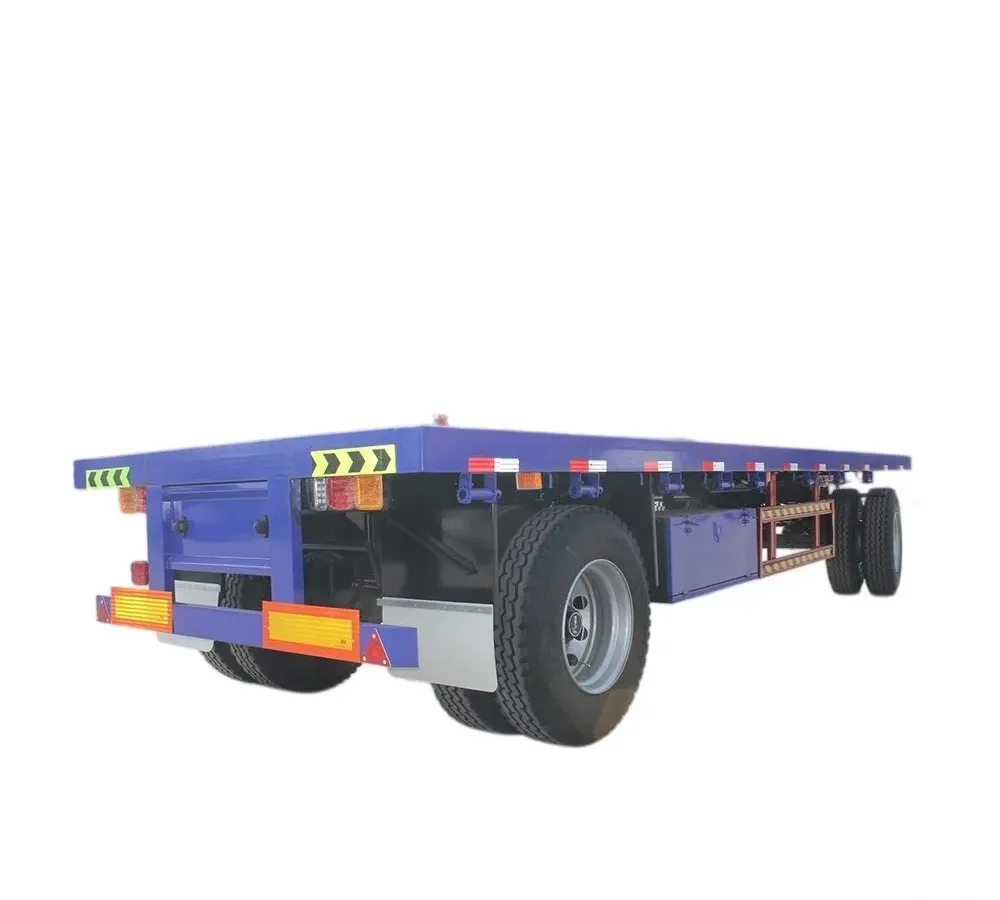
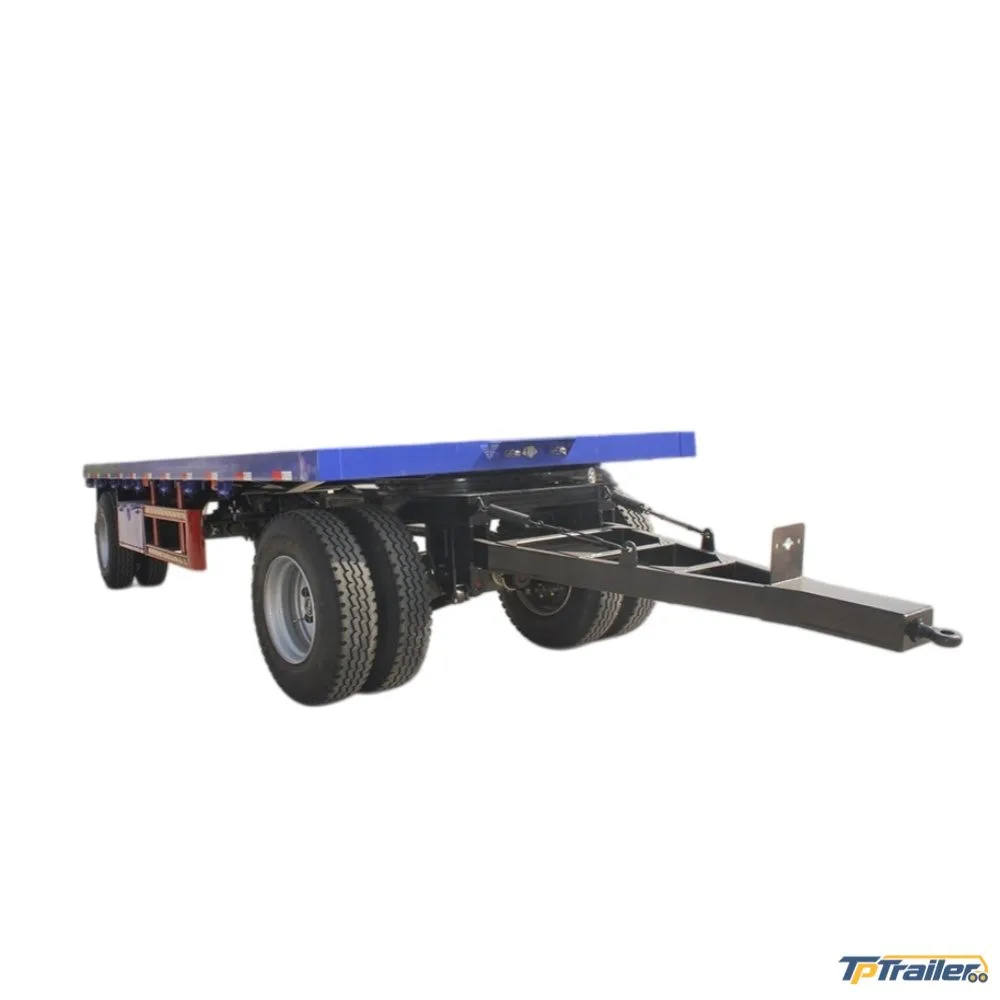
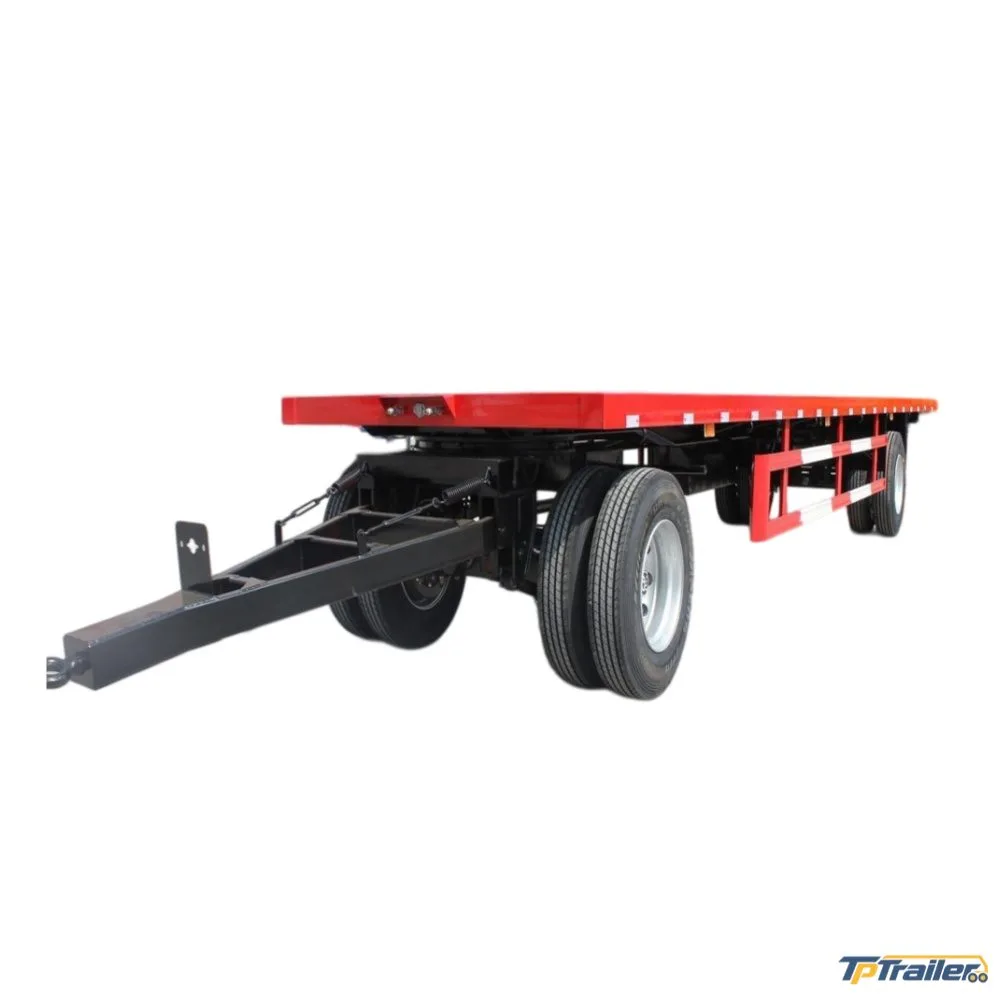
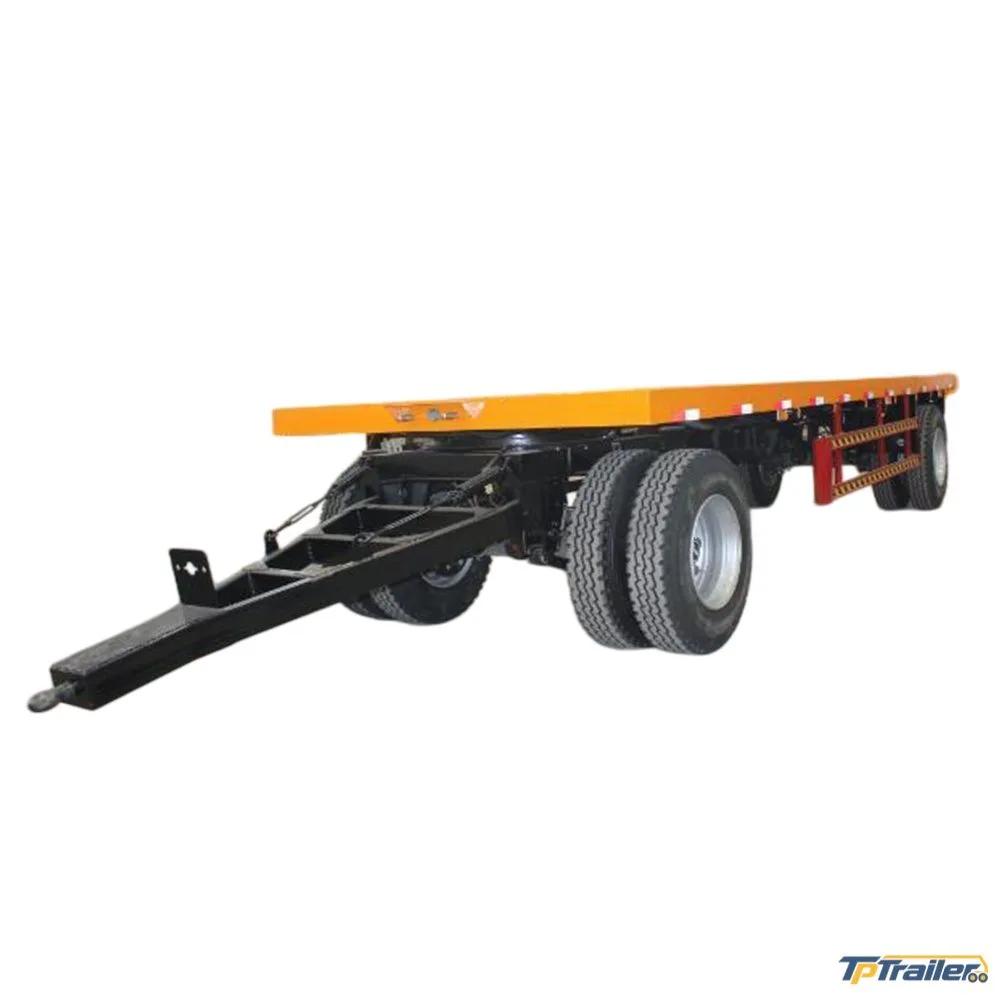
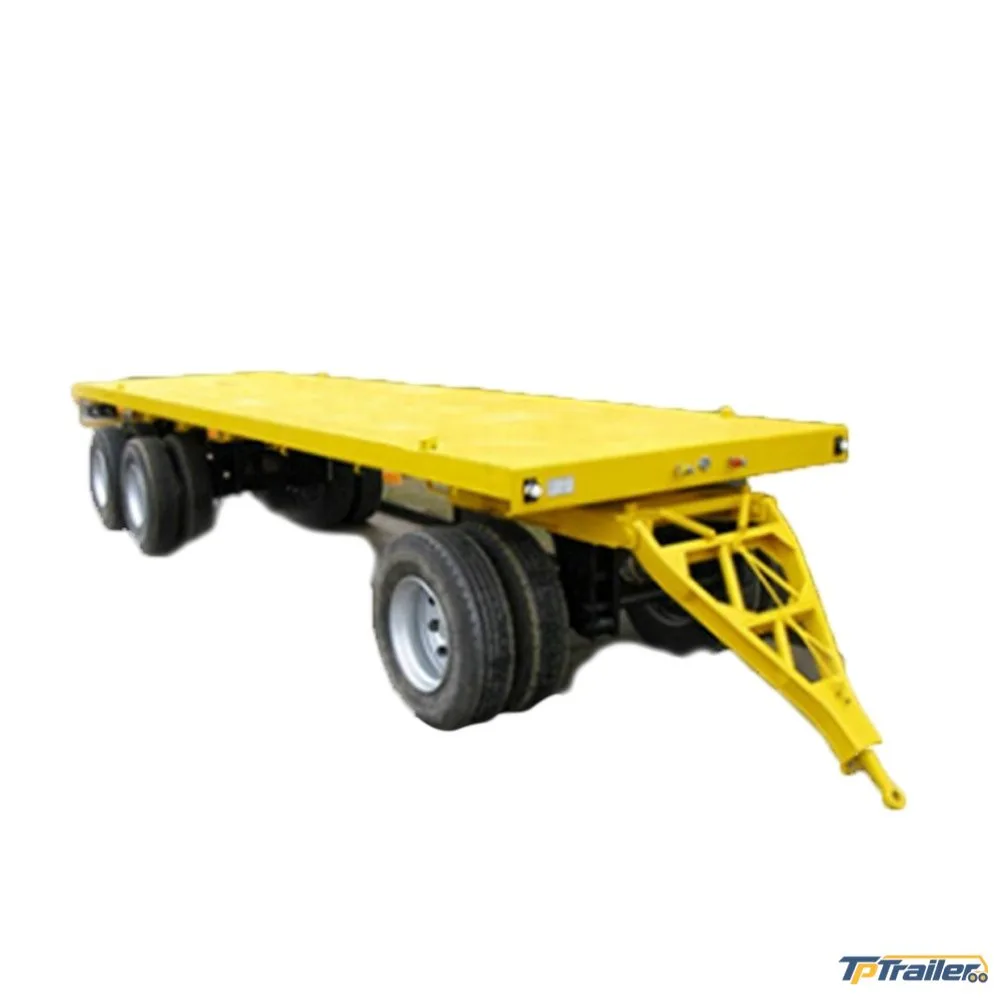
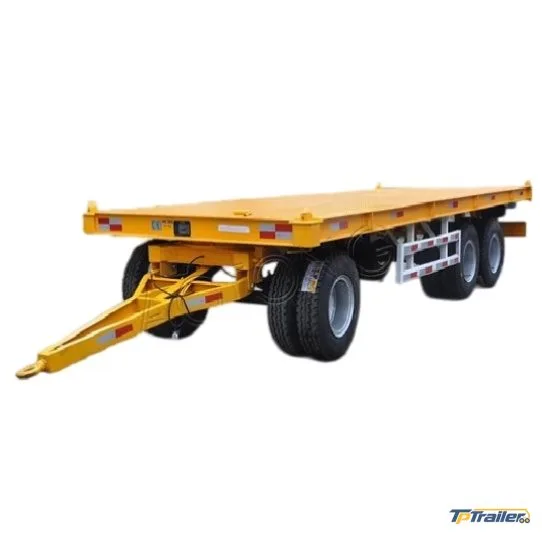
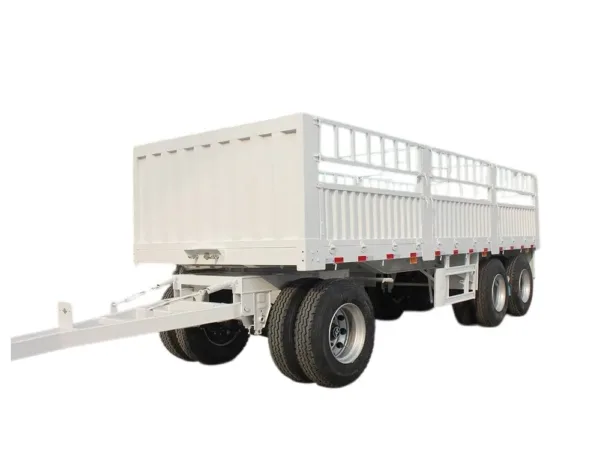
The 20ft flatbed full trailer is a draw bar container carrier built for port and depot transfer work. It moves 20ft and 40ft boxes between quay, yard and gate, and its four twist locks hold each container down while the deck stays clear for loose cargo. This trailer suits fleet operators, terminal haulage contractors and freight yards that need a simple, mechanical running gear they can service on site. The strongest reason to choose it is the combination of a 30000 KG load capacity and a flat, lock-equipped deck: one unit covers container shuttling and general flatbed hauling without a second asset.
Table of Contents
Why It Works On Site
30000 KG load capacity. The rated load capacity sets what the trailer can carry per trip, so a loaded 20ft box plus its own tare stays inside the working limit. That margin lets the operator plan container moves without weighing every unit before dispatch, and keeps the 20ft flatbed full trailer inside normal terminal handling routines.
Four twist locks. The four twist locks are the fixing points that lock a container to the deck at its corner castings. They turn a flat deck into a container carrier, so the same 20ft flatbed full trailer can run a box to the quay in the morning and take loose freight in the afternoon.
20ft and 40ft container transport. The deck is set up to carry both container lengths, which means one trailer type covers the short boxes used in dense port shuttles and the longer boxes moved on the same route. Dispatch can assign any box to any free unit instead of matching trailer to container size.
Mechanical suspension. Mechanical suspension uses steel springs and leaves no air circuit to charge, bleed or leak. On a yard tractor that spends its day starting and stopping, that means fewer checks before the first move and a running gear the workshop can inspect with basic tools.
Draw bar full trailer layout. As a full trailer the unit carries its own axles and couples behind the towing vehicle through a draw bar. That layout spreads the load over its own wheels, which suits short, repeated runs where the tractor stays in the yard and the trailer does the waiting.
Flat deck for loose cargo. With the locks free, the deck works as a plain platform for pallets, crates, drums and bundled goods. The 20ft flatbed full trailer therefore keeps earning between container calls, which matters on routes where box volumes drop between vessel arrivals.
Where It Is Used
The most common job is the port container shuttle: a box is lifted off the quay or out of the stack, set on the deck, locked at the four corners and run to a yard, warehouse gate or rail head a short distance away. On that run the 20ft flatbed full trailer does what a terminal tractor and skeletal trailer do, but as a full trailer with its own axles. The same unit then returns empty or carries a backload, so the trip is not wasted.
Operators also use it for empty repositioning, moving boxes between depots when a stack has to be rebalanced, and for short gate moves where a full road tractor is not needed. Because the deck takes both container lengths, the 20ft flatbed full trailer fits routes where box size changes through the day.
Outside the port gate, the same trailer covers general flatbed work. With the twist locks free, the deck carries palletised building materials, bagged goods, drums, timber bundles, machinery on skids and other freight that does not need a box. That makes the 20ft flatbed full trailer useful to yards that handle containers in one season and loose cargo in another, and to farms and depots that need a platform trailer for feed, fertilizer or equipment moves. Typical routes are short: yard to shed, depot to customer, farm to store. The mechanical suspension and draw bar layout suit that stop-start pattern, and the 30000 KG load capacity gives the operator room to plan mixed loads without changing trailers between jobs.
Choosing The Right Spec
Match the load to the load capacity. Start with the heaviest box or cargo the site handles and check it against the rated load capacity. A yard that only moves empty or light containers has headroom to spare; a site loading dense cargo should plan each trip so the 20ft flatbed full trailer stays inside its rating.
Decide the container mix. The trailer is built to transport 20ft and 40ft containers, so the choice is really about the box lengths on your route. A site that only shuttles short boxes still gains from the longer option when a 40ft unit needs moving, and the 20ft flatbed full trailer covers both without a second fleet type.
Confirm the lock count fits the box. Four twist locks match the corner castings of a standard container. If your work is mostly locked container moves, the lock-equipped deck is the configuration to specify; if most trips are loose cargo, plan how often the locks are used so the 20ft flatbed full trailer is bought for the job it actually does.
Weigh suspension against route length. Mechanical suspension is the simple, steel-spring choice and suits short, repeated yard and depot runs. If your 20ft flatbed full trailer will spend most of its life on long road legs, compare that against the maintenance routine your workshop can support before fixing the specification.
Customisation Before Delivery
Axle count. The 20ft flatbed full trailer can be built as a single-axle or multi-axle unit, and the choice is settled at order confirmation. More axles spread the load across the road surface and change how the trailer tracks behind the tractor. Tell us the routes and the ground conditions, and the configuration is fixed in writing before production begins.
Deck length and container position. The deck is laid out around the container sizes you intend to move. A 20ft flatbed full trailer that carries both 20ft and 40ft boxes needs the twist lock positions set for each length. Confirm which sizes dominate your work at order stage, so the lock layout is cut once and matches the boxes you actually handle.
Suspension type. Mechanical suspension is the standard arrangement on this trailer. It is simple, repairable in a yard, and well suited to steady container transfer work. If your routes mix rough ground with road running, say so at order confirmation and the suspension specification is agreed then, not after the steel is cut.
Tyres and wheels. Tyre size, tread pattern and wheel type are agreed when the order is confirmed. Port work and farm track work wear tyres differently, so the pattern matters as much as the size. State the surface the trailer will mostly run on, and the tyre specification is matched to it before the build is released.
Finish and colour. Paint colour and finish are chosen at order confirmation. A brighter colour helps operators spot the trailer during night shunting in a container yard. The finish is applied to the steel structure and the deck frame, so the choice is recorded with the order and carried through to delivery.
Fitting And Installation
A 20ft flatbed full trailer arrives as a complete unit, so fitting is mostly about matching it to the tractor that will pull it. The draw bar eye, the coupling height and the brake and electrical connections must line up with the towing vehicle. Check the mounting points on the draw bar against the tractor hitch before the trailer is moved. Confirm the lighting plug and the air or electrical lines reach without strain.
Where the input gives no fitment data, a fitment drawing is confirmed at quotation, so the buyer knows the coupling arrangement before the unit ships. Do not force a coupling that does not sit square. A mismatch here shows up as uneven tyre wear and poor tracking, and correcting it after delivery costs working days. The 20ft flatbed full trailer is a heavy unit, so plan lifting and hitching with the right equipment on site.
Installation also covers the twist locks and the deck furniture. The four twist locks are the working heart of a 20ft flatbed full trailer, and each one must seat fully in the container corner casting before the box is carried. Check that every lock turns freely through its full travel and that the handle sits in its rest position. Confirm the deck surface is clear of swarf, paint build-up or debris that would stop a corner casting sitting flat.
A lock that binds will not secure a container, and a container that shifts on the deck is a safety problem, not a delay. Where no torque values are given in the input, they are confirmed with the fitment drawing at quotation. Walk the whole trailer once more before first use, and record anything that does not sit right.
Service Life And Maintenance
Twist locks wear first. The four locks take the repeated load of container corners and are the most worked parts on a 20ft flatbed full trailer. Inspect the lock bodies, the turning handles and the seating faces for wear, bending or slack. A lock that no longer clamps firmly should be replaced rather than adjusted. Keep the lock threads and pivots clean and lightly lubricated so they turn through full travel every time.
Draw bar and coupling. The draw bar carries the whole towing load, so inspect the eye, the welds and the frame around it for cracks or distortion. On a 20ft flatbed full trailer used for port transfer, shunting loads are constant and the coupling takes repeated shock. Check the eye for ovality and the mounting bolts for tightness. Any crack at the draw bar is a stop-work finding, not something to monitor.
Suspension and spring mounts. Mechanical suspension is durable but its bushes, shackles and U-bolts wear with load cycles. Inspect the spring leaves for cracks and the mounts for looseness. A 20ft flatbed full trailer that leans or tracks poorly is often showing suspension wear. Replacing worn bushes early protects the spring leaves and keeps the axle alignment true, which in turn protects the tyres.
Deck and frame corrosion. The steel deck and frame are the surfaces most exposed to weather, salt and container abrasion. Inspect the deck plate for thinning and the frame for paint breakdown at the welds. Touch up bare steel before rust spreads. A protective coating choice made at order confirmation extends the interval between repairs, and keeping the deck drained and clean slows corrosion on the 20ft flatbed full trailer.
Tyres and brake lines. Tyres and brake lines are the routine inspection items on any 20ft flatbed full trailer. Check tyre pressures and tread for uneven wear, which points to alignment or suspension faults. Inspect brake lines and connections for chafing and leaks. Keep the lines routed clear of the draw bar travel. Regular checks here catch small faults before they become roadside failures.
Packing And Container Loading
A 20ft flatbed full trailer ships as a rolling unit or in knock-down form, depending on how the factory and the forwarder agree to load it. The draw bar, twist locks and axle assemblies are the exposed parts most likely to suffer transit damage. Ask for corner protection on the deck edges and strapping that holds the frame to the container floor. Loose twist locks should travel in a marked crate rather than resting on the deck, so they cannot shift against the steelwork during the sea voyage.
Space is the real cost driver on a 20ft flatbed full trailer shipment. The flat deck offers no cargo box to nest into, so stacking savings come from how the chassis frame is broken down and how the deck is braced. Confirm with the supplier whether the unit ships assembled or partly dismantled, and request the loading plan before booking freight. On arrival, verify the twist lock count, check the deck surface for bending, and photograph the strapping points before you sign the delivery note.
Common Mistakes Buyers Make
Ordering the wrong deck length for the container task. The trailer is built to move containers, so the deck length must suit the box you handle most often. A buyer who assumes a standard deck will take every box ends up with overhang or wasted deck. The single check: confirm the container sizes you plan to carry in writing before the order is placed.
Ignoring the load capacity against the real cargo weight. The rated load capacity covers the trailer, not the container plus its contents. Buyers who compare only the box weight overload the running gear. The single check: add the tare of the container to the cargo weight and compare that total with the load capacity on the quotation.
Assuming twist locks are included and fitted. The 20ft flatbed full trailer is supplied with twist locks, but buyers sometimes expect them already positioned for every corner configuration. The single check: ask the supplier to confirm the twist lock quantity and mounting positions in the order confirmation.
Overlooking the suspension type when matching the tow vehicle. Mechanical suspension behaves differently from other layouts under load, and the draw bar geometry must suit the tractor or truck pulling it. The single check: send the coupling height and draw bar requirements to the supplier before production starts.
Treating freight as an afterthought. A 20ft flatbed full trailer is bulky, and buyers who book shipping after the build face re-packing or extra handling. The single check: agree the loading method and the shipping dimensions with the supplier before the unit leaves the line.
Buyer Questions
Can the trailer be shipped in one container, and how is it secured?
Whether a 20ft flatbed full trailer fits a single container depends on the shipping configuration and the container size you book. Ask the supplier for the packed dimensions and the loading plan before you commit to freight. The unit is secured with strapping and corner protection, and loose twist locks travel in a crate. Confirm the loading method at quotation, then share the plan with your forwarder so the booking matches the packed size.
What should I check when the unit arrives at my yard?
Inspect the 20ft flatbed full trailer before you sign for it. Count the twist locks against the order confirmation, look for bent deck edges or frame distortion, and check the draw bar and axle mounts for movement in transit. Photograph every strapping point and any damage. If something is missing or deformed, note it on the delivery document and notify the supplier the same day, with photos attached to the claim.
Can I order a single unit, and what does the quotation cover?
Yes, a single 20ft flatbed full trailer can be ordered, and the quotation is built around that quantity. The price covers the trailer as specified, but packing, freight and destination charges are separate topics to confirm at quotation. Ask the supplier to state what is included and what is not, and to attach the specification sheet. Send your deck length, axle count and quantity so the offer matches your operation.
To receive a quotation for the 20ft flatbed full trailer, send three details: the deck length you need, the axle count you require, and the quantity you plan to order. Add your destination port and any coupling requirements. The supplier can then confirm the configuration, the packing method and the commercial terms in one reply.
We use cookies to enhance your browsing experience, serve personalized content, and analyze our traffic. By clicking "Accept All", you consent to our use of cookies. Privacy Policy
Cookie Preferences
Required for the website to function properly. Cannot be disabled.
Help us understand how visitors interact with the website (Google Analytics).
Used to deliver personalized ads and measure ad campaign effectiveness.





















Write a Review