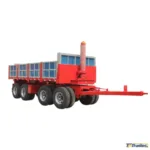
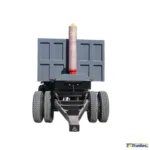
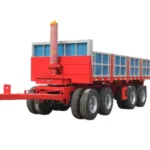
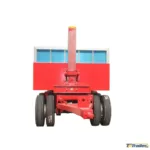
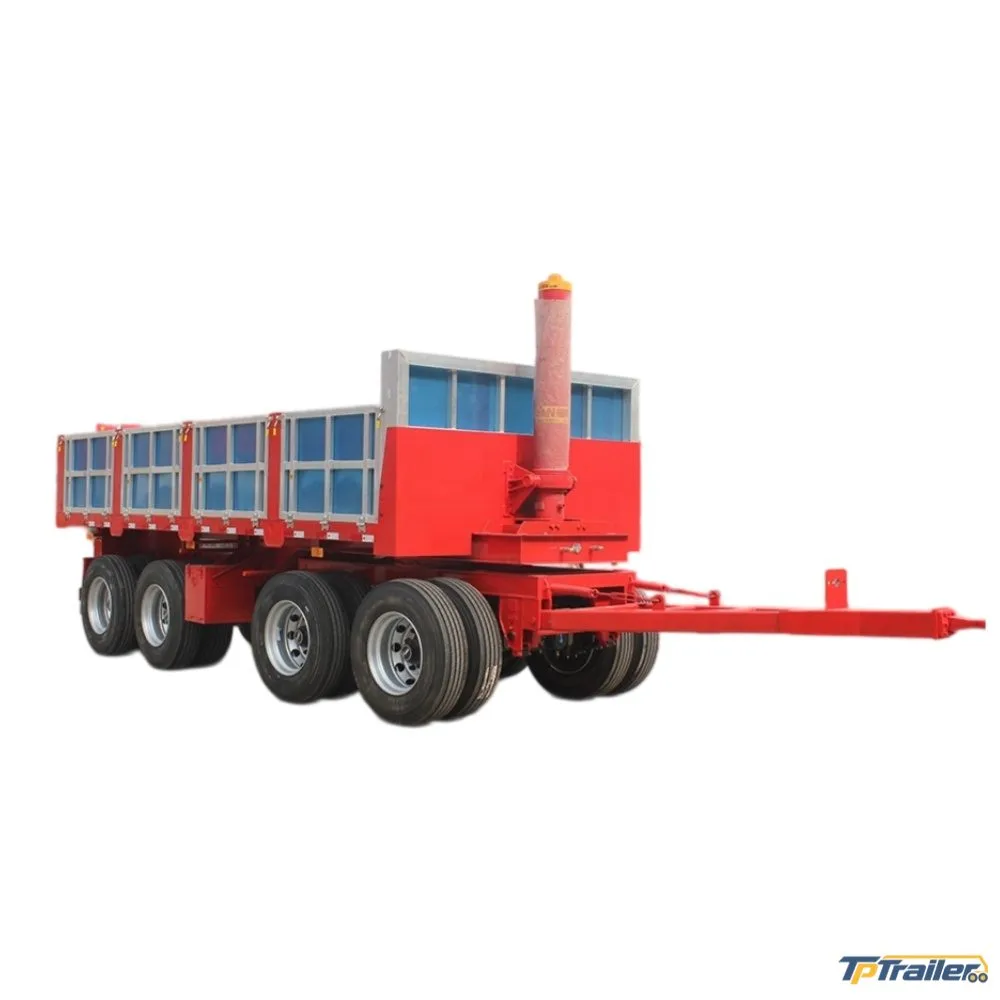
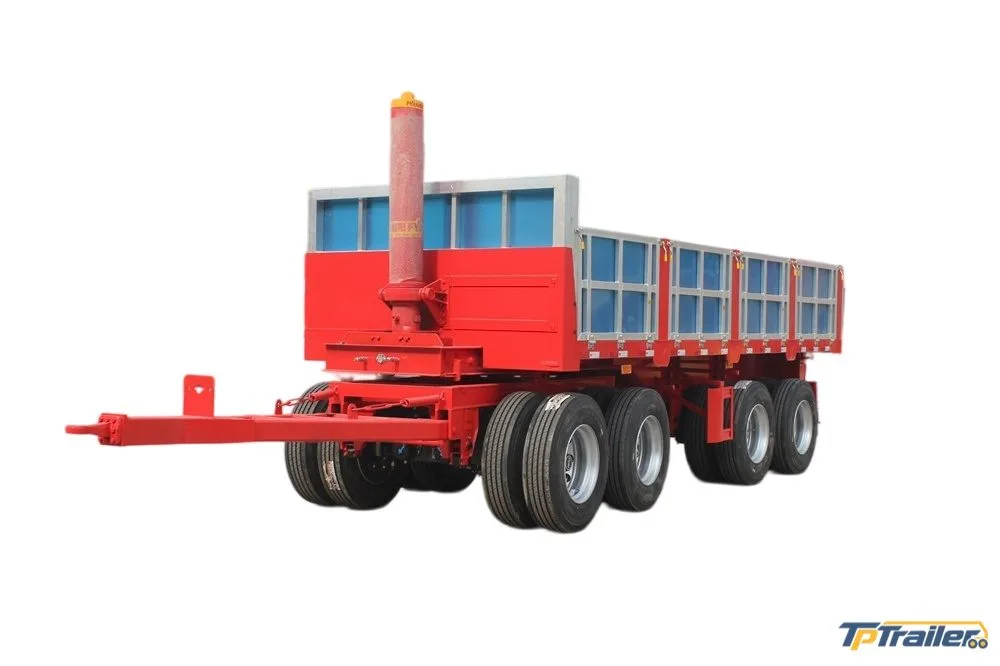
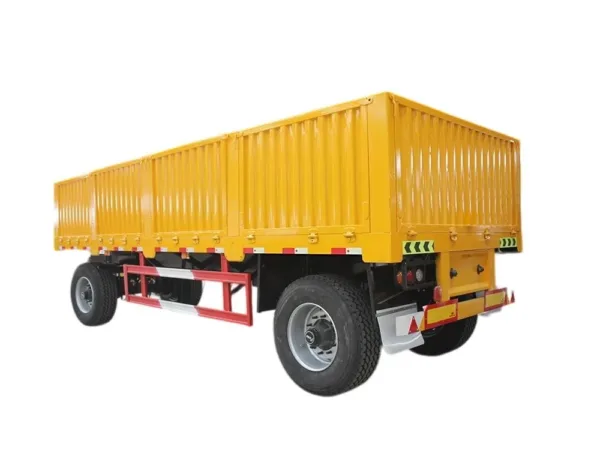
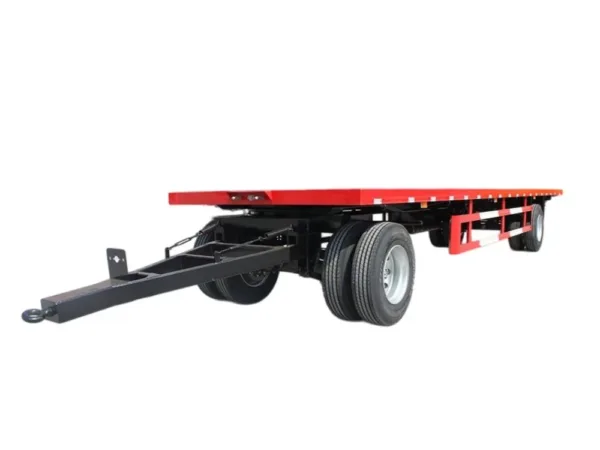
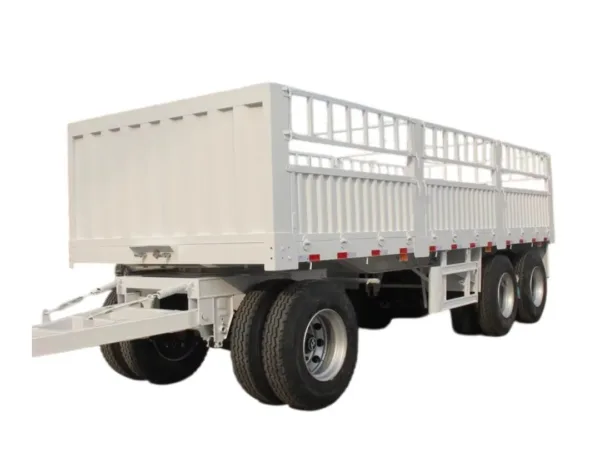
The hydraulic tipper trailer is a draw bar trailer built for moving sand, stone and grain on construction and fleet hauling work. It pairs a tipping body with a tractor or truck draw bar, so one prime mover can pull it, tip it and return for the next load. Fleet operators choose it because the hydraulic tip removes manual unloading from the job. That keeps a single driver productive across repeated trips, short and long. It suits buyers running construction transport, quarry runs and bulk grain movement who want a dedicated tipping unit rather than a general flatbed.
Table of Contents
Why It Works On Site
Hydraulic tipping body. The core of the hydraulic tipper trailer is the tipping action itself. Loaded sand and stone drop out under their own weight once the body lifts, so the driver clears a load without shovels, ramps or a second machine. That shortens each unloading stop and lets the same unit return to the pit or stockpile sooner.
Draw bar towing. The draw bar links the trailer to a tractor or truck that already works your site. You avoid buying a second dedicated chassis and keep the hauling unit flexible. A fleet can move the hydraulic tipper trailer between prime movers as schedules change, which matters when one vehicle is off the road.
Load capacity band. The stated load capacity range of 5001-10000 KG sets the working envelope. It sits in the middle of bulk hauling, heavy enough for dense stone loads yet manageable on site roads and yard surfaces. Operators can match trip counts to that band instead of guessing at overload margins.
Body volume range. A loading capacity of 20-50CBM lets the same hydraulic tipper trailer carry bulky grain at the upper end or denser stone at the lower. Volume and weight limits rarely peak together, so the range covers both light bulky cargo and heavy compact cargo across a working week.
Sand, stone and grain duty. The function is stated as sand, stone and grain transporting. Those are abrasive, free-flowing or granular loads that punish flatbeds and manual unloading. A tipping body built for that duty keeps the hydraulic tipper trailer on the jobs it was specified for rather than stretching it across mixed freight.
Brand-new condition. Every unit ships brand-new, so the tipping body, draw bar and hydraulic hardware arrive unworn. For a fleet adding capacity, that means predictable starting condition and no rework inherited from a previous owner before the hydraulic tipper trailer enters service.
Where It Is Used
Construction transport is the first home for this unit. Site roads, haul tracks and yard surfaces all need aggregate moving in and spoil moving out, and the hydraulic tipper trailer fits that loop. A driver loads at the stockpile, runs the short distance to the pour or fill point, lifts the body and drops the load where the ground crew needs it. Sand for bedding, crushed stone for sub-base and mixed aggregate for access roads are the routine cargoes. Because the body tips, the unloading point does not need a ramp, a tipper truck or a machine with a bucket waiting. That keeps a small crew moving without tying up plant equipment on every drop.
Quarry and bulk grain work is the second setting. Stone leaves the pit dense and heavy, so the load capacity band keeps each trip inside a sensible weight envelope. Grain and similar granular cargo fill volume faster than weight, which is where the stated body volume range earns its place. On longer runs between a stockpile and a processing point, the hydraulic tipper trailer repeats the same load-tip-return cycle without manual handling. Fleet operators also use it for yard transfers, where material moves between storage bays and a tipping body clears each bay quickly. The draw bar format means the same unit can be pulled by whichever tractor or truck is free that day.
Choosing The Right Spec
Match load to the capacity band. The hydraulic tipper trailer is rated at 5001-10000 KG. If your routine cargo is dense stone, plan trips around the upper part of that band and check the prime mover’s towing capability. If loads are lighter and bulkier, the same unit works nearer the lower end, so the band covers both without changing trailer.
Match body volume to cargo type. The 20-50CBM loading capacity is the volume side of the decision. Grain and other light granular loads use more of that volume before weight becomes the limit. Sand and stone reach the weight band sooner. Decide which cargo dominates your week, then confirm the hydraulic tipper trailer volume suits it.
Confirm the draw bar match. The draw bar is what ties the hydraulic tipper trailer to your tractor or truck. Check the coupling and towing setup on the vehicles you plan to use before ordering. A fleet with several prime movers should confirm which ones can pull the unit, so the trailer is not locked to a single vehicle that may be unavailable.
Decide by dominant duty. If most trips are construction aggregate, weight and tipping speed matter most. If grain dominates, volume matters more. Buyers running both should weigh which cargo fills more of the working week. That single question points to the right hydraulic tipper trailer setup faster than a long checklist of secondary features.
Customisation Before Delivery
The hydraulic tipper trailer can be ordered with the axle count your fleet paperwork expects. Single, tandem and tri-axle layouts change how the load sits on the road. Confirm the axle count at order confirmation so the running gear matches your tractor and your haul routes.
Deck length and body volume are open choices on this hydraulic tipper trailer. The loading capacity band covers a wide spread of body sizes. Tell us the material you carry and the access width on your site. The deck and body size are fixed when the order is confirmed.
Suspension type is selected at order confirmation. Leaf spring and other layouts behave differently on rough construction ground. The hydraulic tipper trailer is used for sand, stone and grain hauling, so the ground under the wheels matters. State your usual surface and the choice is locked in.
Tyre size and tread pattern are settled with the order. Site roads and public road sections ask for different tread. The hydraulic tipper trailer spends much of its life loaded, so tyre choice affects grip and wear. Name your surface mix and the tyre set is confirmed.
Paint colour and finish are chosen before delivery. Fleet colour coding helps yard staff and drivers identify units at a glance. This hydraulic tipper trailer is brand-new, so the finish is applied to your chosen colour. Colour is confirmed at order confirmation with the rest of the build.
Fitting And Installation
The hydraulic tipper trailer arrives as a complete unit, so fitting is mostly about matching it to the tractor that will pull it. Check the draw bar and hitch height against your tractor linkage before the trailer is loaded. Confirm the hydraulic take-off pressure and flow your tractor supplies. The tipper ram and valve set must work with that supply, not against it.
Route the hoses so they clear the draw bar through the full turn arc. A hose that rubs on a frame edge fails early. If your tractor differs from the standard arrangement, say so before the order is confirmed, because the hydraulic tipper trailer connection layout is fixed at that point. A fitment drawing is confirmed at quotation rather than assumed here.
A wrong size at the hitch costs real downtime. If the draw bar height does not match the tractor, the hydraulic tipper trailer sits nose-up or nose-down, and the load shifts on the deck. If the hydraulic supply does not match the ram, the tip is slow or weak, and the operator works around it instead of fixing it. Both faults stop the trailer from earning on a construction site.
Walk the mounting points and the hose route with the driver on arrival. Check that the tipping body clears the tractor cab through the full raise. Treat the first tip as a check, not a production run. The hydraulic tipper trailer is built for sand, stone and grain hauling, and a correct hook-up keeps that work moving.
Service Life And Maintenance
The tipping ram and its seals wear first on any hydraulic tipper trailer. Inspect the ram rod for scoring and the seals for weeping before each shift. A scored rod damages seals quickly. Keep the rod clean when the trailer works in sand and stone dust. Report any slow tip or drift at once rather than pushing the hydraulic tipper trailer harder.
Hoses and couplings are the next wear point. Check the hose route for rubbing against the frame and the draw bar. Look for cracks at the crimped ends. Replace a worn hose before it bursts under load. On this hydraulic tipper trailer, a hose failure stops the tip and can strand a loaded unit on site.
The draw bar and hitch take constant load. Inspect the hitch pin, the eye and the mounting bolts for play and wear. Check bolt tightness at the stated torque from the manual. A loose hitch adds shock load to the hydraulic tipper trailer frame. Keep the hitch greased and the pin free of grit.
Wheel bearings, brakes and tyres carry the loaded weight. Check bearing play and brake adjustment on a set schedule. Watch tyre pressure and tread, because a soft tyre heats up under a full load. On a hydraulic tipper trailer used for stone, a slow leak becomes a roadside stop. Fix pressure faults early.
The body and paint finish protect the steel. Wash off sand, stone dust and grain residue that trap moisture. Touch up chips on the deck and the tipping body before rust starts. A good finish extends the repaint interval. The hydraulic tipper trailer works in abrasive material, so a clean body lasts longer.
Packing And Container Loading
A hydraulic tipper trailer is a long, heavy steel assembly with a draw bar, a tipping body and a hydraulic system. Sea freight protection starts with the surfaces that corrode first: the bare steel of the chassis, the draw bar and the body panels. Suppliers apply a protective coating before dispatch, and moving parts are secured so the trailer cannot shift inside the container. Hydraulic hoses and couplings are capped and tied back against the frame. Buyers should confirm at quotation which coating is used and whether the hydraulic system ships filled or dry, because both affect preparation on arrival.
Container loading depends on the trailer size and the container type. A complete hydraulic tipper trailer normally ships as a whole unit or in a small number of major assemblies, so nesting is limited by the fixed chassis and the tipping body. Some suppliers remove wheels or the draw bar to reduce the shipped profile, and stacked loading of several units is only possible where the design allows it. Space saving must never come from stressing the tipping body or the hydraulic rams. Ask for the loading plan and the number of units per container before you book freight.
Common Mistakes Buyers Make
Ordering without checking the towing connection. The draw bar and hitch must match the tractor or truck that will pull the hydraulic tipper trailer. A mismatch in coupling height or pin size means the trailer cannot be used on arrival. Send the supplier the hitch type and mounting height of your towing vehicle and ask them to confirm compatibility in writing before the order is placed.
Ignoring the load capacity range. The stated load capacity is a band, not a single figure. Buyers who assume the top of the band get an undersized axle set or a body that cannot take the density of wet sand. The single check is to state your heaviest planned load and the material density, then ask the supplier to confirm the configuration meets it.
Confusing body volume with payload. Loading capacity is given in cubic metres, which describes the tipping body, not the weight the trailer can carry. Sand and stone are dense, so a full body may exceed the load capacity. Check the weight of a full load against the load capacity before you approve the specification, and confirm the body size you need.
Skipping the hydraulic system details. Buyers order a hydraulic tipper trailer without confirming how the tipping rams are powered and controlled. The tractor or truck must supply the right hydraulic flow. The single check is to confirm the pump and control arrangement, the hose connections and the required oil flow with the supplier at quotation stage.
Not agreeing the packing and loading plan. Freight cost and damage risk both change with how the trailer is packed and loaded. Buyers who leave this to the last minute accept whatever arrangement is offered. The check is to request the packing method, the coating applied and the number of units per container in writing, then verify them against the shipping documents.
Buyer Questions
Can the hydraulic tipper trailer be supplied to match my existing tractor?
Yes, provided you give the supplier the details of the towing vehicle at quotation. Send the hitch type, the coupling height, the hydraulic flow available from the tractor and the control arrangement you prefer. The draw bar and hydraulic connections are matched to these inputs. Do not assume a standard configuration fits; measure the hitch on your tractor and confirm the figures with the supplier before ordering, because a hydraulic tipper trailer that does not couple is unusable.
How many units fit in one container, and what does that mean for my freight cost?
The number of units per container depends on the trailer dimensions, the container type and whether the supplier ships the unit whole or partly disassembled. Ask for the loading plan and the units-per-container figure at quotation, then compare it with your order quantity. Partial disassembly may allow more units per shipment, but it adds assembly work on arrival. Confirm both the loading plan and the assembly requirements in writing so the freight and handling costs are known before you commit.
What should I check when the shipment arrives?
Check the protective coating on the chassis, draw bar and body panels for damage in transit. Confirm the hydraulic hoses and couplings are capped, tied and complete, and that the tipping rams are undamaged. Verify the hitch and draw bar against the agreed specification, and count the units against the packing list. Photograph any damage before unloading. Report discrepancies to the supplier immediately, because claims are easier to resolve while the container is still at the delivery point.
To receive a quotation for the hydraulic tipper trailer, send the body length you need, the number of axles, and the quantity for your construction fleet. Include the hitch and hydraulic details of your towing vehicle so the draw bar and tipping system are matched before shipment. With those inputs, the supplier can confirm the configuration, packing plan and loading arrangement in writing.
We use cookies to enhance your browsing experience, serve personalized content, and analyze our traffic. By clicking "Accept All", you consent to our use of cookies. Privacy Policy
Cookie Preferences
Required for the website to function properly. Cannot be disabled.
Help us understand how visitors interact with the website (Google Analytics).
Used to deliver personalized ads and measure ad campaign effectiveness.



















Write a Review