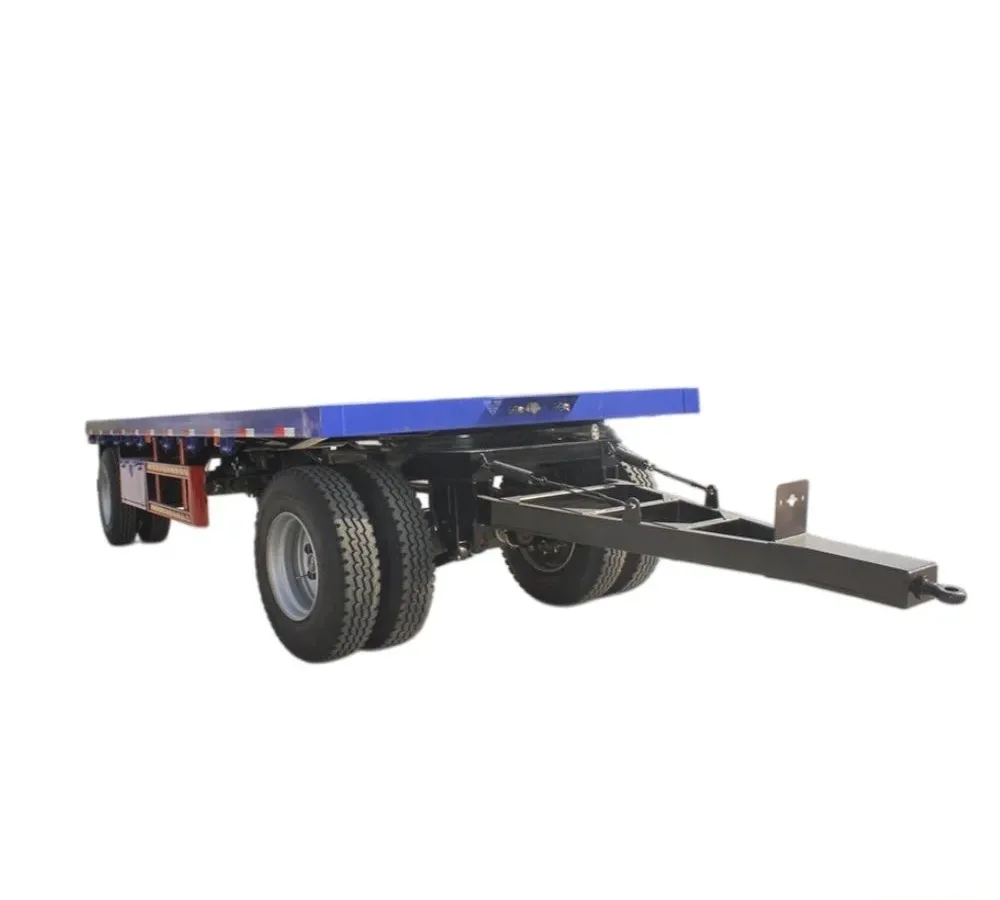
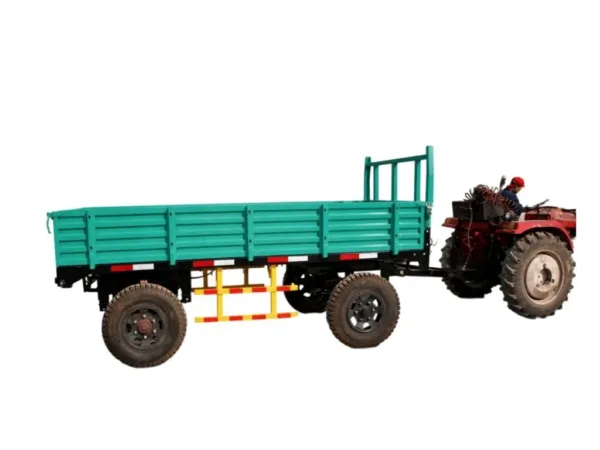
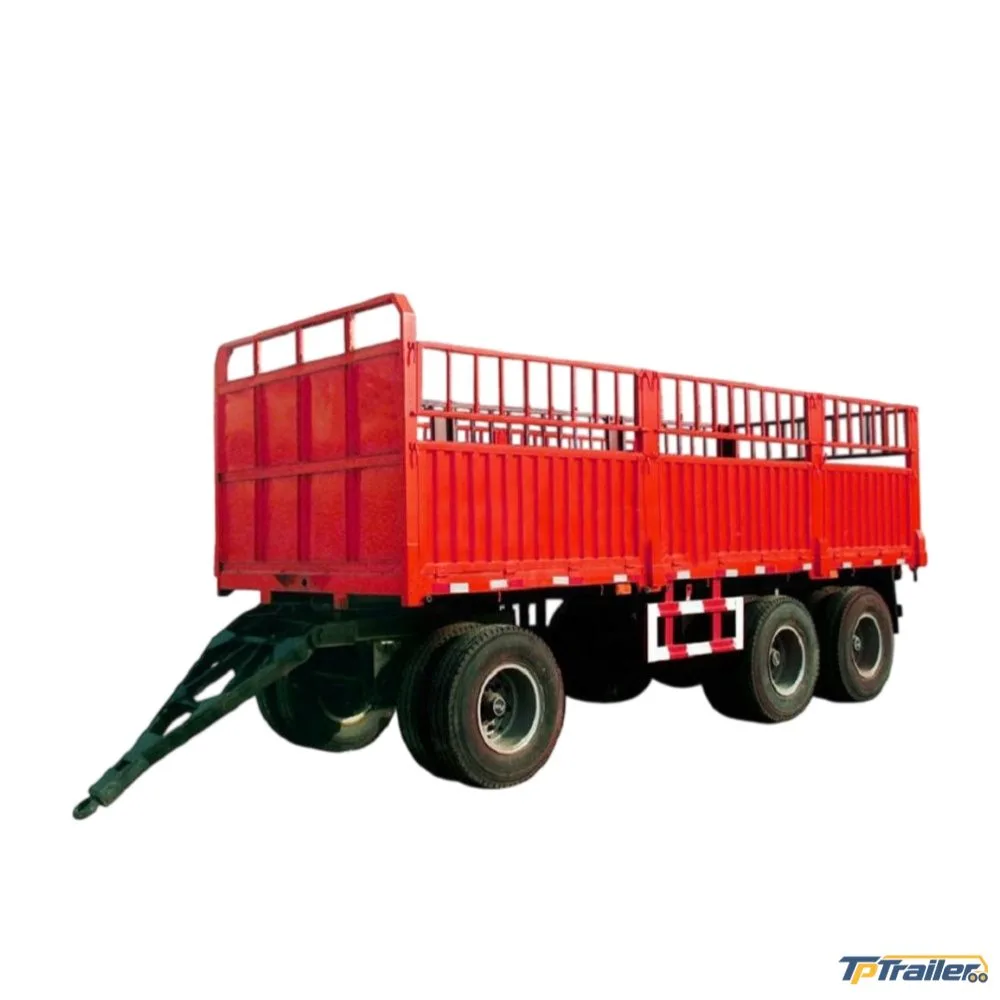
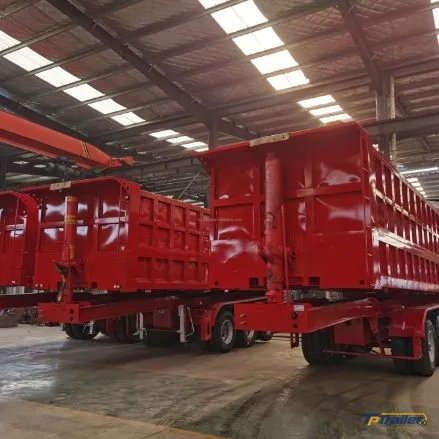
The hydraulic tipping trailer is a high side wall farm trailer built for operators who move bulk agricultural loads and need the body to empty itself under hydraulic power. It is aimed at farms, contractors and haulage fleets that want one steel platform to handle grain, silage, manure and soil without manual shovelling. Its strongest argument is the combination of a high side wall steel body, a three-axle running gear and a dual line braking system, which together let a single unit carry heavy loose cargo and discharge it quickly and safely on site. The model is CE certified and offered with customer-selected colour and branding options.
Table of Contents
Why It Works On Site
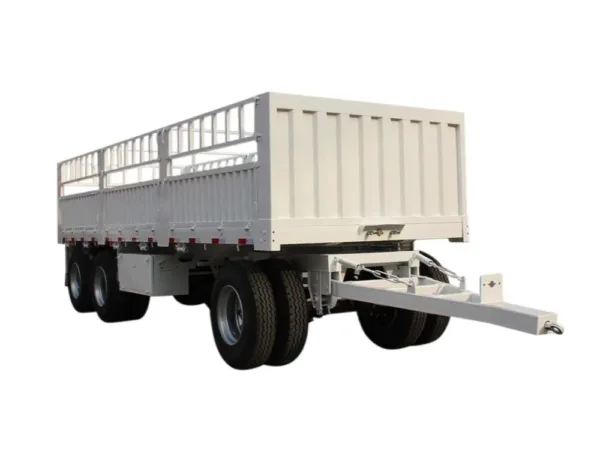
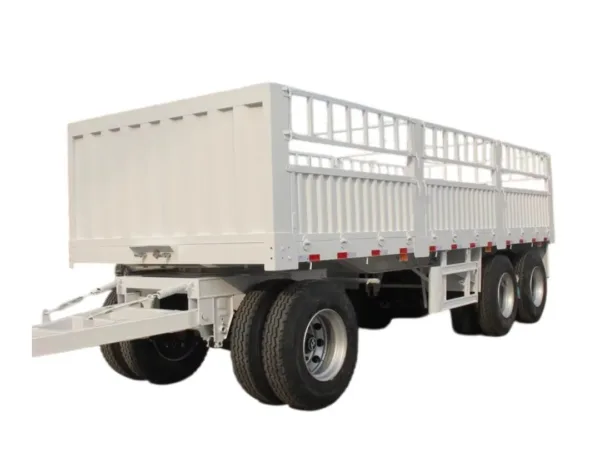
High side wall steel body. The tall walls keep loose loads such as grain, silage and manure inside the body during transport and during the tip, so less material spills onto the field track and fewer passes are needed to clear a heap. The steel construction also stands up to loading by bucket and to repeated contact with abrasive cargo, which is what makes a hydraulic tipping trailer practical on a working farm.
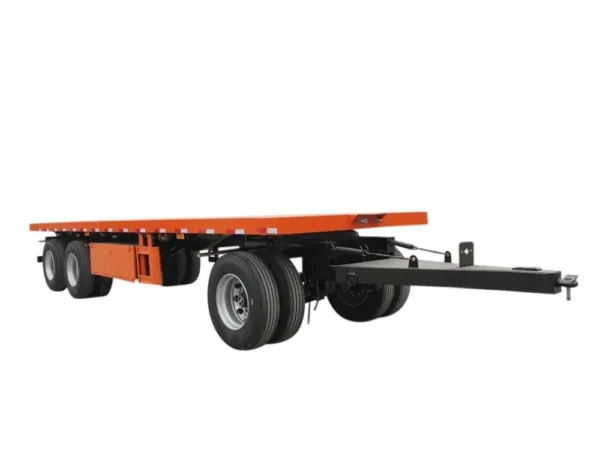
Three-axle running gear. Spreading the load across three axles keeps the weight per axle lower and gives the trailer a stable footprint on field entrances and yard surfaces. Each axle is rated at 13 ton capacity, so the running gear is sized for dense cargo rather than for light bulk alone. That stability matters most when the body is raised, because a hydraulic tipping trailer that stays level while tipping discharges evenly and puts less strain on the tipping rams and the chassis.
Dual line braking with ABS. The braking system gives the driver controlled stopping power when the trailer is fully loaded and travelling on the road between field and store. For this unit used in mixed road and field work, dependable braking is what allows the trailer to be loaded to its full capacity rather than run part empty for safety.
Reinforced cross and side beams. Mild alloy Q235B cross beams and a 16# channel steel side beam form the frame that carries the tipping body and absorbs the shock of loading. This structure is what lets the hydraulic tipping trailer take bucket-loaded soil or stone without the floor and walls flexing out of shape over a season of heavy use.
CE certification. The CE marking gives the buyer a documented basis for putting the trailer into service in markets that require it, and it simplifies the paperwork when the unit is added to a fleet. It is a starting point for the purchasing decision, not a substitute for checking the machine against local road rules.
Custom colour and branding. Colour is chosen by the customer and branding can be specified, so a fleet can keep its hydraulic tipping trailer visually consistent with its other units. That helps with identification on shared sites and with keeping a mixed fleet looking like one operation.
Where It Is Used
The most common job for this hydraulic tipping trailer is moving grain and other free-flowing crops from field to store or from store to the drying floor. A high side wall body holds a full load without spillage on rough tracks, and the tipping action empties the load into a pit or shed without a separate conveyor. Operators also use the same trailer for silage and haylage, where the body needs to discharge cleanly so the material can be pushed and compacted without being handled twice. Because the unit is built around a steel body and a three-axle chassis, it suits farms that run one trailer across several crops rather than keeping separate units for each.
Livestock and arable holdings use the hydraulic tipping trailer for manure, slurry solids, bedding and soil, all of which are dense and awkward to unload by hand. Spreading muck onto fields or moving topsoil for drainage work becomes a matter of positioning the trailer and raising the body, which cuts the labour on each load. Contractors also take the unit onto construction and landscaping sites for stone, sand and spoil, where the same tipping action keeps a small crew productive. On these jobs the trailer typically runs short road sections between a stockpile and a tip point, which is where the braking system and stable axle layout earn their place.
Choosing The Right Spec
Axle capacity and brand choice. The running gear is built around three axles, and the axle brand can be specified by the buyer. Fleets that already service a particular brand should match it to keep spares and maintenance simple; buyers running mixed loads should think about how much of the gross weight sits on each axle when the body is full and the load is concentrated at the rear during tipping.
Braking system. The trailer is offered with a dual line braking system and ABS, which suits buyers who will run loaded on public roads as well as in fields. If the unit will stay on farm tracks only, the same system still adds control on slopes and wet ground. The choice is less about the hardware than about how much road work the hydraulic tipping trailer will actually see.
Body colour and branding. Colour is customer-selected, so the specification can follow a fleet livery or a high-visibility scheme for road work. Branding options let a contractor put its name on the unit, which matters when several operators share a site. Neither choice affects capacity, so it can be settled after the running gear and braking decisions.
Packing and delivery format. The trailer ships in nude form or packed to the customer’s requirement, and that choice should match how the unit will be received. A buyer taking several units at once may prefer one format, while a single unit going straight into service may suit another. Confirm the packing preference with the order rather than after production.
Customisation Before Delivery
The axle count on your hydraulic tipping trailer is fixed at order confirmation. The three-axle arrangement shown suits high side wall work, but the brand of each axle stays optional, so you can pair the trailer with a running gear your workshop already services and stocks parts for.
Colour is a customer choice, applied to the steel body and chassis before the unit leaves the line. Give a reference sample or a standard shade code and the finish is matched to it. The colour is agreed in the same conversation as the order, not after the build starts.
Tyre supply is a brand decision you keep. The running gear accepts the tyre set you nominate, so the hydraulic tipping trailer can arrive on a brand your drivers already trust and your tyre supplier already carries, which keeps replacement simple across a mixed fleet.
Packing is open. The unit can ship in nude form or packed to your customs requirement, and the choice is settled when the order is confirmed. Tell us how the trailer will be handled at the port and on the road, and the packing plan is written around that route.
Body and beam materials are fixed by design, with mild alloy cross beams and channel steel side beams carrying the load. What remains open is the finish and fittings package around them, agreed at confirmation so the hydraulic tipping trailer matches the rest of your implements.
Fitting And Installation
A hydraulic tipping trailer arrives as a complete unit, so fitting work centres on the towing connection and the hydraulic circuit. The buyer has to match the drawbar eye and mounting points to the tractor hitch, confirm the hose couplers suit the tractor’s remote valves, and check that the tube size and hose routing clear the wheels through the full tipping arc. Braking connections must match the dual line system on the trailer, including the ABS interface where fitted.
Torque values and pin sizes are not stated in the supply data, so a fitment drawing is confirmed at quotation. That drawing shows the coupling geometry and hose path, and the buyer signs it off before the unit is built. Nothing about the hitch or the circuit is left to guesswork on arrival.
A mismatch at this stage is expensive in downtime. A drawbar that does not meet the tractor eye, or a hose set that fouls the frame, leaves a hydraulic tipping trailer standing while a replacement is fabricated and shipped. On a working farm that can mean a harvest window missed, because the trailer is the unit that moves the crop from field to store.
Checking the fitment drawing against the tractor before delivery is the cheapest hour of the whole purchase. Confirm the hitch type, the remote valve count and the hose length you need, and the unit arrives ready to couple rather than ready to modify. Where the tractor fleet is mixed, list every model the trailer will work behind.
Service Life And Maintenance
The tipping cylinder and its seals wear first on any hydraulic tipping trailer, because every cycle loads them. Operators should inspect the rod for scoring and the seals for weeping before each season, and keep the oil clean. Contamination is what shortens seal life, not the load itself.
The chassis and body are the long-life parts. Mild alloy Q235B cross beams and channel steel side beams resist distortion under load, but welds and beam ends still deserve a periodic look. A cracked weld caught early is a repair; caught late it is a structural failure on a loaded trailer.
Braking components wear with road use. The dual line braking system and ABS should be checked for air or fluid leaks, pad condition and line chafing. A hydraulic tipping trailer that brakes unevenly is a safety problem, so test the system before the season starts rather than after the first loaded run.
Tyres and axle bearings carry the load. Check tyre pressure and tread before each long haul, and inspect bearings for play or heat after heavy runs. Keeping the axle brand consistent across the fleet makes bearing replacement faster, which matters when the unit is needed back in the field the same day.
The paint finish protects the steel, and the colour choice you make at order is part of that protection. Touch up chips and scuffs on the hydraulic tipping trailer before rust starts, and wash off fertiliser and slurry residue. A sound coating extends the interval between body repairs and keeps resale value intact.
Packing And Container Loading
Every hydraulic tipping trailer leaves the yard in nude packing, as the specification states, unless the buyer asks for a custom arrangement. That means the steel chassis, side walls and tipping body travel exposed, so protection is about contact points rather than a full wrap. Brake lines, hydraulic hoses and fittings are the parts most exposed to chafing in transit. Ask the supplier to confirm how these are tied back and shielded before loading. Loose items such as pins and lights should be boxed and strapped inside the body, not left to move against painted panels during the voyage.
Loading efficiency matters on a hydraulic tipping trailer because the body is bulky and the tare weight of 5000 kg is already substantial before any cargo is added. Nested or stacked units save container space only where the design allows it, and the supplier should confirm the loading plan for your order. Buyers should verify the container type against the trailer length and axle count at quotation. On arrival, check the chassis for transit damage, confirm the components are complete against the packing list, and photograph any deformation before signing the delivery note. Confirm the loading plan and any custom packing requirement in writing.
Common Mistakes Buyers Make
Ordering the wrong body length. A hydraulic tipping trailer that is too long for the tractor and gate geometry cannot be used safely. Measure the turning circle, gate width and storage bay before ordering, then confirm the exact body length in writing rather than assuming a standard size fits your yard.
Ignoring the axle count. Buyers sometimes match trailer capacity to the load alone and overlook how many axles the unit carries. Check the axle configuration against your road rules and towing vehicle, and ask the supplier to confirm it on the quotation before the trailer is built.
Skipping the braking check. The braking system is specified as dual line with ABS, but the towing vehicle must support it. Confirm the coupling and air connections on your tractor match, and test the brakes on delivery rather than discovering a mismatch in the field.
Choosing colour without a sample. Colour is customer optional, so a verbal shade can drift between orders. Request a colour reference or sample panel and approve it in writing. This keeps a second hydraulic tipping trailer matching the first when you reorder for a fleet.
Assuming packing is included. Nude packing is standard, and custom packing must be requested. State your port handling needs and any marking requirements at quotation. Confirm who supplies strapping or protection, so the unit arrives as expected.
Buyer Questions
Can the trailer be shipped in a standard container, and how is it secured?
The input does not state a container size, so the loading plan must be confirmed at quotation against your body length and axle count. Ask the supplier to send the loading diagram before booking freight. Inside the container, the hydraulic tipping trailer should be chocked and strapped at the chassis, with hoses and brake lines tied clear of sharp edges. Confirm who supplies the strapping and whether the loading plan includes any dismantling. Photograph the unit at loading and compare it with the arrival condition.
What should I check on the trailer when it arrives at my yard?
Walk the chassis and body for transit deformation, then confirm the hydraulic tipping trailer is complete against the packing list. Check that brake lines, hoses and lights survived the voyage and that the tipping body moves freely. Verify the axle count and braking system match your order. Note any damage on the delivery document before signing, and photograph it. Report shortages to the supplier immediately, since claims are easier while the container is still on site.
Can I specify colour, axle brand and packing for my order?
Colour is customer optional, and the axle brand is listed as optional, so both can be discussed with the supplier. Packing is nude by default, with custom arrangements possible on request. Send your colour reference, preferred axle brand and any packing or marking requirement with your enquiry, and ask for each to be written into the quotation. The hydraulic tipping trailer should then be built and packed to that confirmed list, which you can check on arrival.
To receive a quote, send the body length you need, the axle count you require, and the quantity you plan to order. Add your colour reference and any packing requirement. The supplier can then confirm the hydraulic tipping trailer configuration, the loading plan and the price tier that applies to your volume.
We use cookies to enhance your browsing experience, serve personalized content, and analyze our traffic. By clicking "Accept All", you consent to our use of cookies. Privacy Policy
Cookie Preferences
Required for the website to function properly. Cannot be disabled.
Help us understand how visitors interact with the website (Google Analytics).
Used to deliver personalized ads and measure ad campaign effectiveness.





















Write a Review