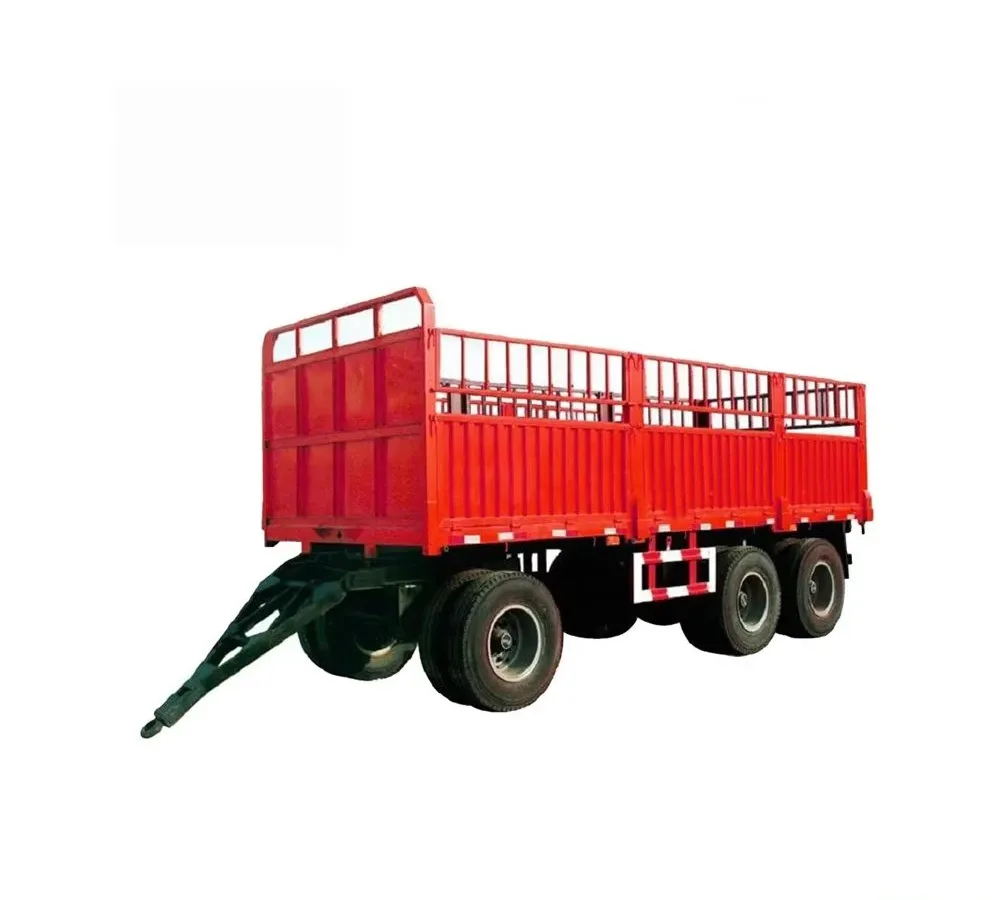
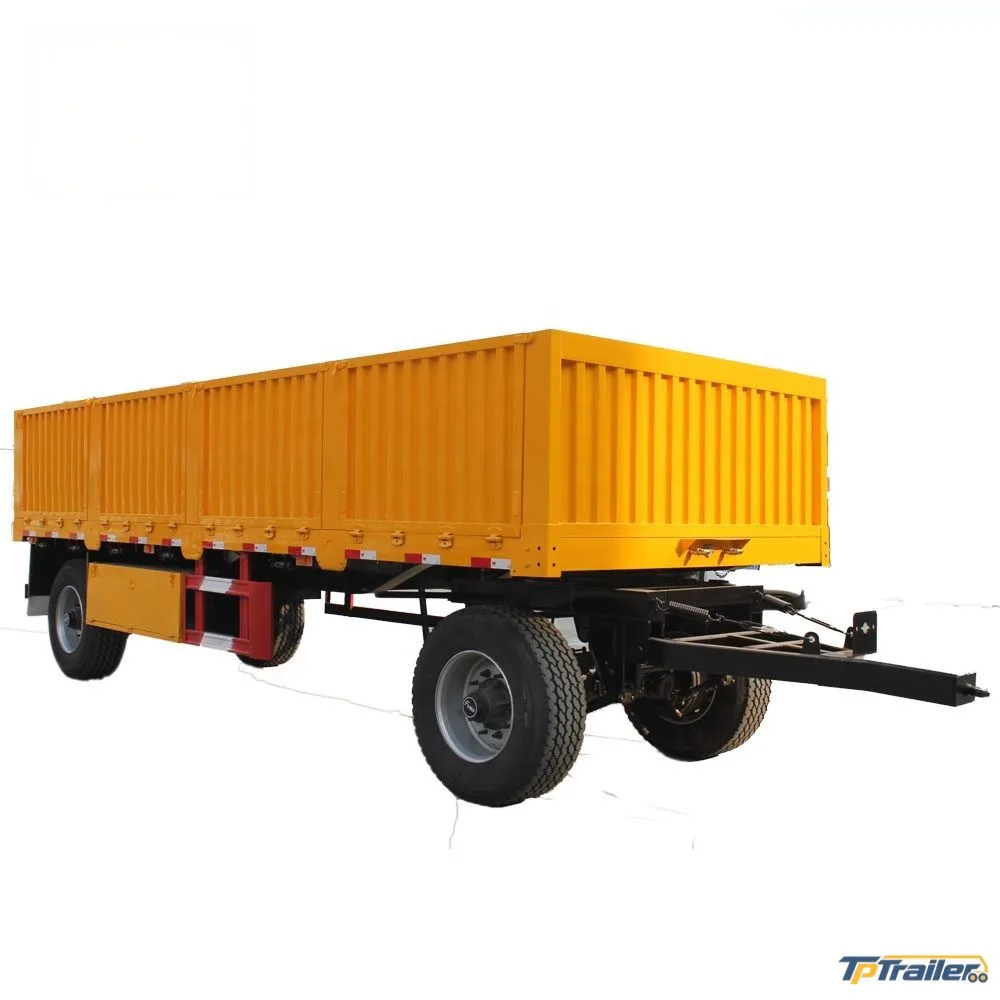
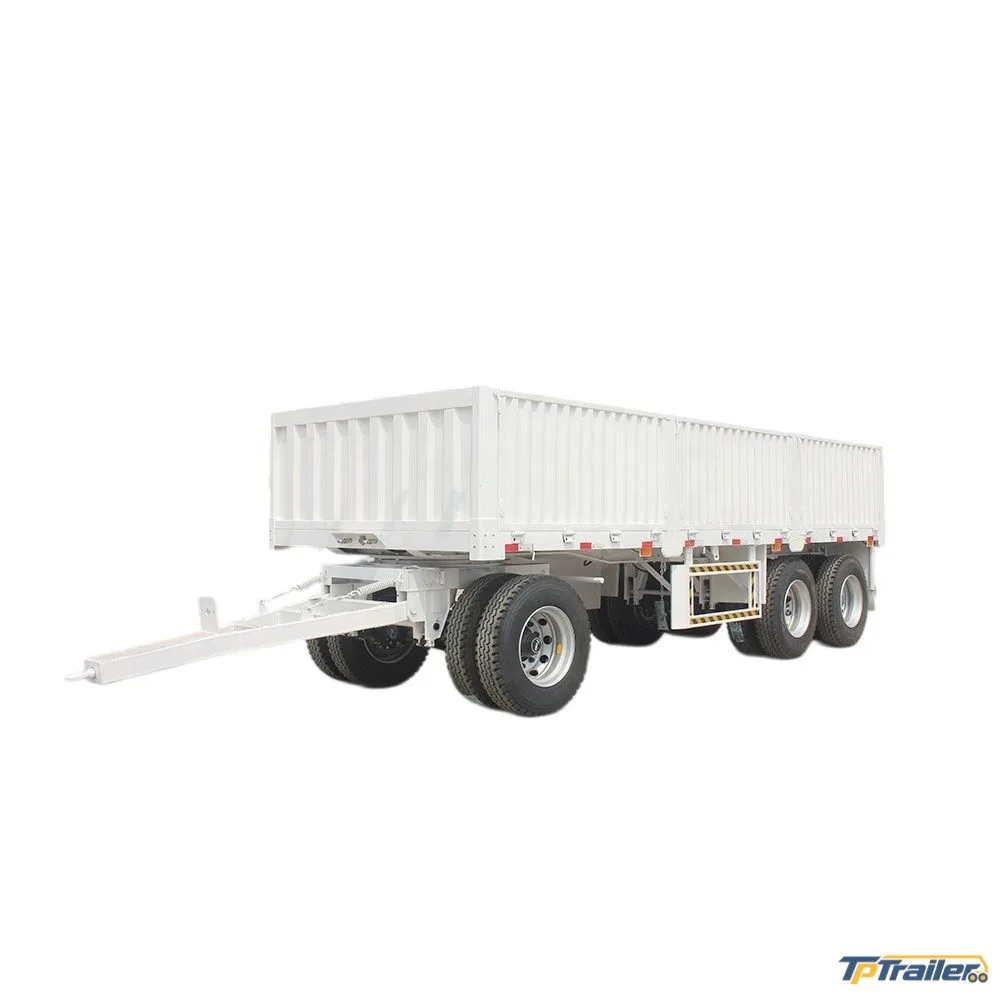
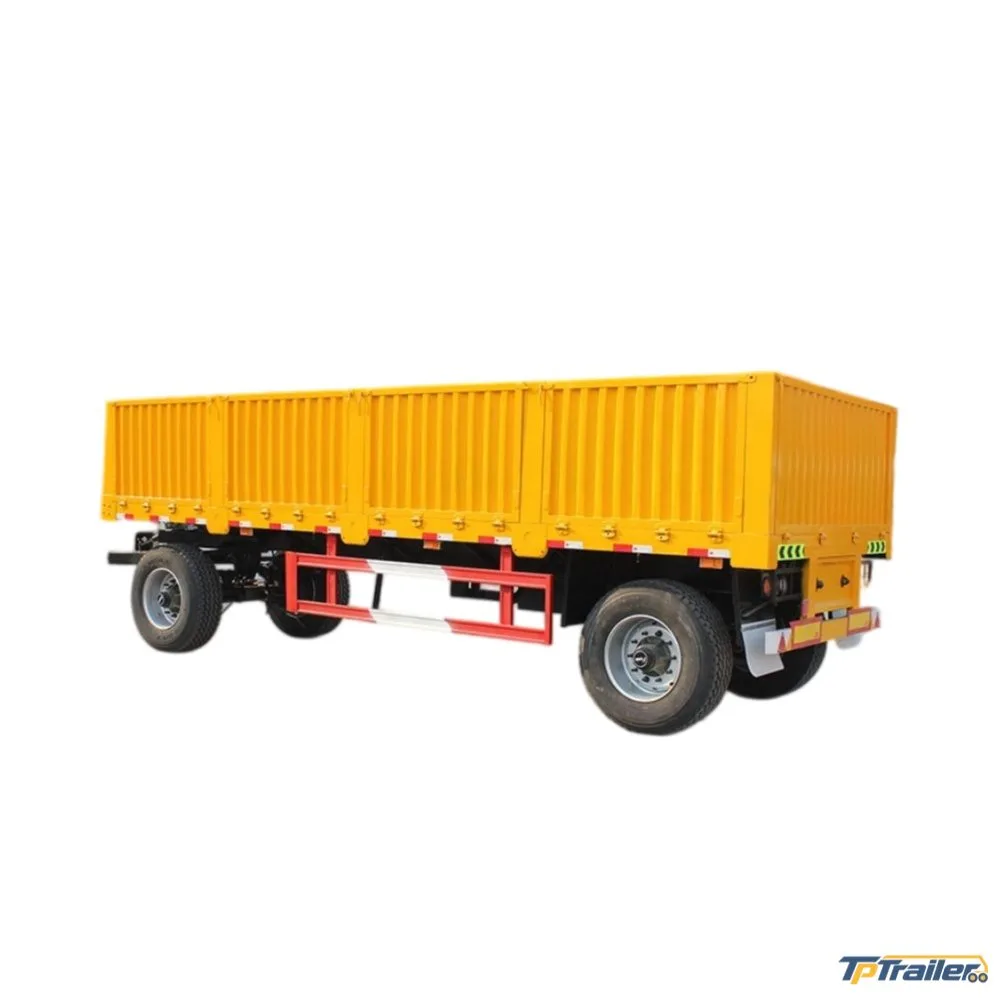
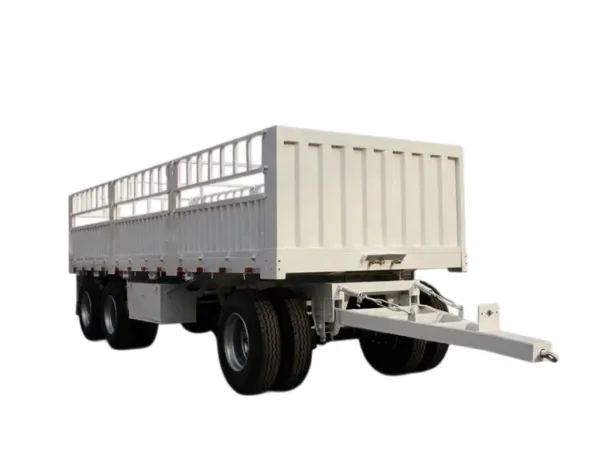
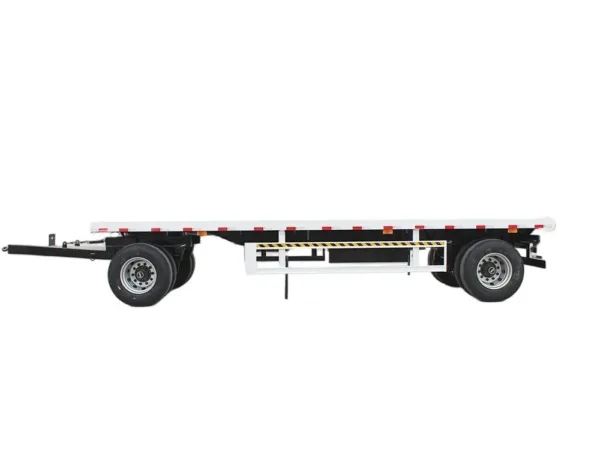
Steel Full Trailer 3 Axle Mini Cargo Draw Bar Trailer
2 axles dolly trailer in hot dipped galvanised steel for farm cargo hauling. Three axle full trailer with draw bar design; request a quote for your fleet.
3
FOB Reference PriceUS$8,000-9,000Final price confirmed by inquiry
Certifications
ISO 9001
Key Features
Steel construction for farm cargo hauling
Hot dipped galvanised finish for corrosion resistance
Three axle full trailer configuration
Draw bar trailer design for towing behind a tractor unit
Customized build available to buyer requirements
Mini cargo trailer size suited to light farm loads
A 2 axles dolly trailer is a steel cargo trailer built for buyers who move goods on mixed roads and need a rig that keeps working when the surface does not. The full trailer carries the load; the dolly trailer adds a second axle set that spreads weight and steadies the draw bar. It suits farm operators, small fleets and contractors who haul feed, tools, produce and building materials on the same route. The strongest reason to choose it is the hot dipped galvanised finish: the whole steel structure is coated after fabrication, so the frame resists rust where mud, slurry and road salt collect.
Table of Contents
Why It Works On Site
Steel structure: the frame and body are fabricated from steel, so the trailer takes impact from gate posts, kerbs and loading equipment without denting like lighter sheet. For the buyer this means the 2 axles dolly trailer survives yard work where a trailer is loaded by forklift and pushed tight against a ramp, and the body still holds its shape after a season of that treatment.
Hot dipped galvanised finish: the coating covers the steel after welding, including the inner faces of the chassis that paint cannot reach. A 2 axles dolly trailer used around livestock or on wet ground therefore resists rust at the joints and under the deck, which is where uncoated trailers fail first and where repair costs start.
Dolly trailer axle layout: the dolly carries its own axle set under the draw bar, so the weight is shared across more contact points. This lets the 2 axles dolly trailer track steadily on crowned lanes and soft verges, reducing the sway that a single-point hitch produces when the load is uneven or the road is rutted.
Draw bar trailer design: the draw bar transfers pull through a long, braced beam rather than a short coupling. That geometry makes reversing and tight turning in farmyards more predictable, and it keeps the towing vehicle clear of the load when the 2 axles dolly trailer is backed into a shed or a loading bay.
Full trailer configuration: as a full trailer, the unit carries its load on its own running gear rather than hanging it over the towing vehicle. The benefit is that heavy or bulky cargo sits low and centred, so the 2 axles dolly trailer can take dense loads without overloading the hitch point or upsetting the balance of the towing unit.
Customised build: the trailer is offered as a customised unit, so deck length, side height and fittings can be matched to the cargo. That means a buyer can order a 2 axles dolly trailer set up for pallets, bulk produce or equipment, instead of adapting a standard body to a job it was not built for.
Where It Is Used
The 2 axles dolly trailer earns its place on routes that mix sealed road, farm track and yard surface in a single trip. A typical run starts at a field or store, crosses a lane with soft edges, and ends on concrete where the load is tipped or unloaded by hand. Because the dolly shares the weight and the draw bar keeps the pull steady, the trailer handles that sequence without the pitching that a lighter rig shows on uneven ground.
Operators use it for bagged feed, hay bales, seed pallets and fencing materials, where the load is dense and the route is short but repeated several times a day. The galvanised steel body means mud and manure washed off at the end of the run do not start corrosion at the seams, so the 2 axles dolly trailer stays in service through wet seasons rather than waiting for repaint.
A second set of jobs sits around construction, maintenance and grounds work, where cargo is awkward rather than uniform. The full trailer deck takes timber, pipe, scaffolding sections and site equipment, and the low, centred load keeps the 2 axles dolly trailer stable when the cargo is long and the road is cambered. Crews use it to move tools between sites, to bring materials to a work area that a rigid truck cannot reach, and to clear spoil and offcuts at the end of a job.
Because the draw bar trailer can be reversed into tight yards and loaded from either side, it suits depots with limited turning space. Buyers running mixed fleets value that the 2 axles dolly trailer covers both the scheduled bulk run and the odd-shaped load without a second unit.
Choosing The Right Spec
Match the axle layout to the route: the dolly trailer arrangement is the right pick when the route includes soft verges, crowned lanes or repeated tight turns, because the extra axle set under the draw bar shares the load and steadies tracking. If most running is on firm, flat surfaces with wide access, the simpler layout does the same job with less to maintain.
Choose draw bar or full trailer by how the load sits: a draw bar trailer suits cargo that should stay behind the towing unit, while the full trailer carries its load on its own running gear. Buyers moving dense, bulky goods should lean toward the full trailer form, and the 2 axles dolly trailer combines both ideas when the route is varied.
Use the customised option to fit the cargo: because the build is customised, deck length, side height and tie-down points can follow the loads actually carried. A buyer hauling pallets needs different fittings from one moving bales or pipe, and specifying at order time avoids retrofitting a 2 axles dolly trailer later.
Weigh finish against the working environment: the hot dipped galvanised finish is the specification to hold onto when the trailer works near livestock, slurry, coast roads or winter salt. Where the 2 axles dolly trailer stays under cover and on dry ground, the same steel structure still serves, but the coating matters less to the total cost of ownership.
Customisation Before Delivery
The axle count is the first choice to settle. A 2 axles dolly trailer suits buyers who want a lighter running gear package, while a three-axle build spreads load across more wheels. State the axle configuration you need at order confirmation so the frame, running gear and draw bar are matched as one assembly.
Deck length and deck layout are open to specification. Tell us the cargo footprint your operation works with, and the full trailer is built around it. Because the deck is steel with a hot dipped galvanised finish, the length is fixed before galvanising, so any change to deck size has to be agreed at order confirmation.
Suspension and tyre choice follow the axle decision. Buyers moving between yard work and road transfer often want a different suspension feel than a pure yard machine. Tyre size and type are selected alongside the axles, and the combination is locked in when the order is confirmed.
Colour and finish detailing are agreed before build. The structural finish stays hot dipped galvanised for corrosion protection, and the top coat or marking scheme is chosen by the buyer. A 2 axles dolly trailer order can carry its own colour scheme without changing the galvanised protection underneath.
The draw bar trailer format itself is a customisation point. Draw bar geometry, coupling position and the dolly arrangement are set to suit the towing vehicle and the routes the trailer will run. Every one of these choices is settled at order confirmation, not after the steel is cut.
Fitting And Installation
Fitting starts with matching the trailer to the towing vehicle. The buyer should confirm the coupling height, the draw bar position and the mounting points on the tractor or dolly before the unit arrives. On a 2 axles dolly trailer, the dolly interface is the critical joint: the pin, the plate and the frame contact faces must line up without packing or force.
Check the tyre and wheel clearance against the vehicle body, because a full trailer that fouls on full lock is a fitment problem, not a towing problem. Have the coupling, the safety connection points and the lighting plug identified in advance. If any of these interfaces are unclear, ask for a fitment drawing to be confirmed at quotation rather than guessing on site.
A wrong size at the coupling or mounting face costs downtime that no schedule absorbs well. The trailer sits idle while adapters are sourced, and the towing vehicle sits with it. On a draw bar trailer the risk concentrates at the draw bar eye and the dolly connection, where a mismatch shows up as slack, uneven wear or a coupling that will not seat.
Checking the mounting points, tube size and hose routing against the vehicle before delivery avoids that. Route the brake and electrical lines so they clear the draw bar through its full swing. Torque values are not stated here; confirm them with the fitment drawing agreed at quotation, and record the settings used on the 2 axles dolly trailer so later inspections have a baseline.
Service Life And Maintenance
Wheel bearings and hub seals are usually the first parts to show wear on a 2 axles dolly trailer. The operator should check for play at the hub, heat after a run and grease weep at the seal. Keeping the hubs clean and the seals intact protects the bearing interval, and the galvanised finish on the surrounding steel keeps corrosion from masking a failing seal.
Brake adjustment and lining condition deserve a routine look. On a loaded full trailer, linings wear faster than most operators expect, and a dragging brake shows as heat and pull. Inspect the linkage, the adjustment points and the drum area, and keep the actuator free of dirt. A 2 axles dolly trailer used on mixed surfaces should be checked more often than one on smooth yard duty.
The draw bar eye, coupling and dolly pin are high-wear points. Check for ovality at the eye, slack at the pin and cracks at the welds where the draw bar meets the frame. Because the structure is hot dipped galvanised, surface corrosion is slow, which makes cracks and deformation easier to spot. A draw bar trailer that tows with any knock should be taken out of service until the joint is checked.
Suspension components and spring eyes wear with load cycles. Look for flattened leaves, worn bushes and loose U-bolts, and check that the axles stay square to the frame. On a 2 axles dolly trailer the two axle sets should track evenly; uneven tyre wear across the pair points to a suspension or alignment issue that is cheaper to fix early.
The galvanised steel frame is the longest-lived part of the trailer and the reason the finish was chosen. Inspect the coating at stone-chip zones, at the deck edges and around fasteners, and touch in any damage before rust starts. Washing off mud and road salt extends the coating life, and a 2 axles dolly trailer kept clean between seasons holds its protection far longer than one left coated in field soil.
Packing And Container Loading
Each 2 axles dolly trailer is prepared for sea freight as a steel assembly. The hot dipped galvanised finish is the first layer of protection, so packing focuses on keeping that coating intact. Contact points are padded, and loose items are tied down so nothing shifts inside the container. The draw bar trailer frame is heavy and rigid, so it is braced rather than boxed. Buyers should ask the supplier how the unit is secured and what wrapping is used. Confirm whether the finish is touched up before loading.
Space is the real cost in container shipping. A 2 axles dolly trailer can be partly broken down, with the draw bar trailer section separated where the design allows, so units sit closer together. Whether units nest or stack depends on the model and the axle arrangement, so confirm the loading plan before booking. Ask for the packed dimensions and the number of units per container. On arrival, check the galvanised finish for scuffs and confirm every loose part listed on the packing note is present.
Common Mistakes Buyers Make
Ordering the wrong draw bar length. The draw bar trailer coupling must match the towing vehicle. A buyer who orders by model name alone can end up with a bar that is too short or too long for the hitch. Measure the distance from the hitch to the trailer body and confirm it at quotation. That single check avoids a rebuild or a return.
Ignoring the axle count. A 2 axles dolly trailer and a three-axle full trailer are different machines with different load behaviour. Buyers sometimes assume the axle count from a photo. State the axle count you need in writing and have the supplier confirm it on the order. That check prevents a unit that cannot do the job.
Assuming the finish is paint. The hot dipped galvanised finish is a coating process, not a cosmetic layer. A buyer who expects a painted look may reject a correct unit. Confirm the finish in the quotation and inspect the coating on arrival. That check keeps expectations and delivery aligned.
Skipping the coupling and hitch check. The dolly trailer connects through a coupling that must suit the towing vehicle. Buyers often confirm the trailer but not the hitch. Send the supplier the hitch type and confirm the match before production. That check avoids a trailer that cannot be towed home.
Ordering one unit when the plan needs several. The 2 axles dolly trailer price changes with quantity, so a single-unit order can cost more per trailer. Buyers sometimes order one to test and then reorder at a higher unit price. Confirm the quantity break at quotation and plan the fleet order together.
Buyer Questions
How is the 2 axles dolly trailer protected during sea freight?
The unit is secured and padded at contact points so the hot dipped galvanised finish is not scuffed in transit. Loose parts are tied down and listed on the packing note. Ask the supplier for the loading plan and the packing list before shipment. On arrival, inspect the coating and count the loose parts against the list. Report any damage with photos before unloading is complete, so the claim is documented.
Can several units share one container?
Partly broken-down units can sit closer together, and the draw bar trailer section may be separated where the design allows. The number per container depends on the model, the axle arrangement and the packed dimensions. Ask for the packed dimensions and the loading plan before booking freight. Confirm how many units fit and whether stacking is used. That answer decides your freight cost per trailer.
What should I confirm before ordering a 2 axles dolly trailer?
Confirm the axle count, the draw bar length, the coupling type and the finish in writing. Send the supplier the hitch details of the towing vehicle and the load you plan to carry. Ask for the packed dimensions and the quantity break at quotation. Check that the order lists the full trailer configuration you need. A written confirmation before production prevents most fitment returns.
Send the trailer length, the axle count and the quantity you plan to order for a quotation. Include the coupling type and the finish you expect, plus the packed dimensions you need for freight planning. With those details, the supplier can confirm the 2 axles dolly trailer configuration and the price for your volume.
We use cookies to enhance your browsing experience, serve personalized content, and analyze our traffic. By clicking "Accept All", you consent to our use of cookies. Privacy Policy
Cookie Preferences
Required for the website to function properly. Cannot be disabled.
Help us understand how visitors interact with the website (Google Analytics).
Used to deliver personalized ads and measure ad campaign effectiveness.




















Write a Review