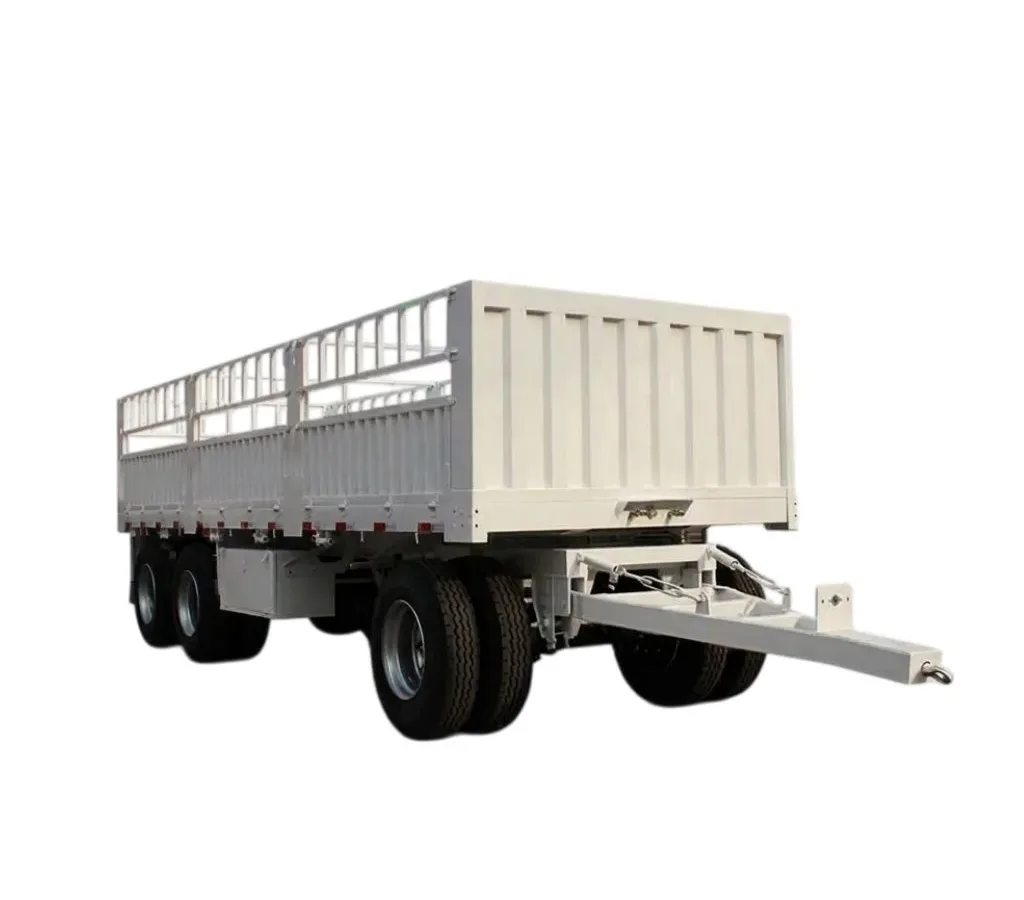
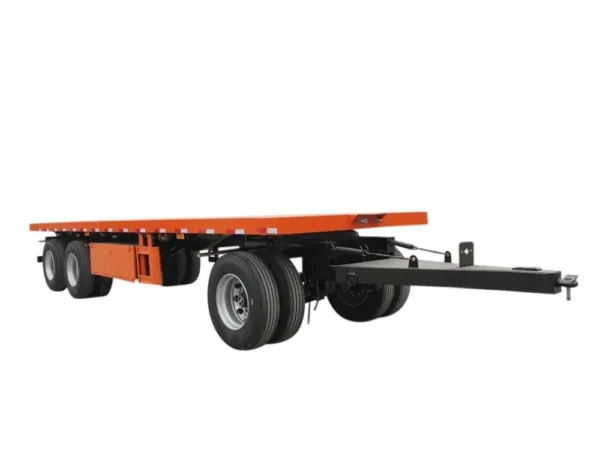
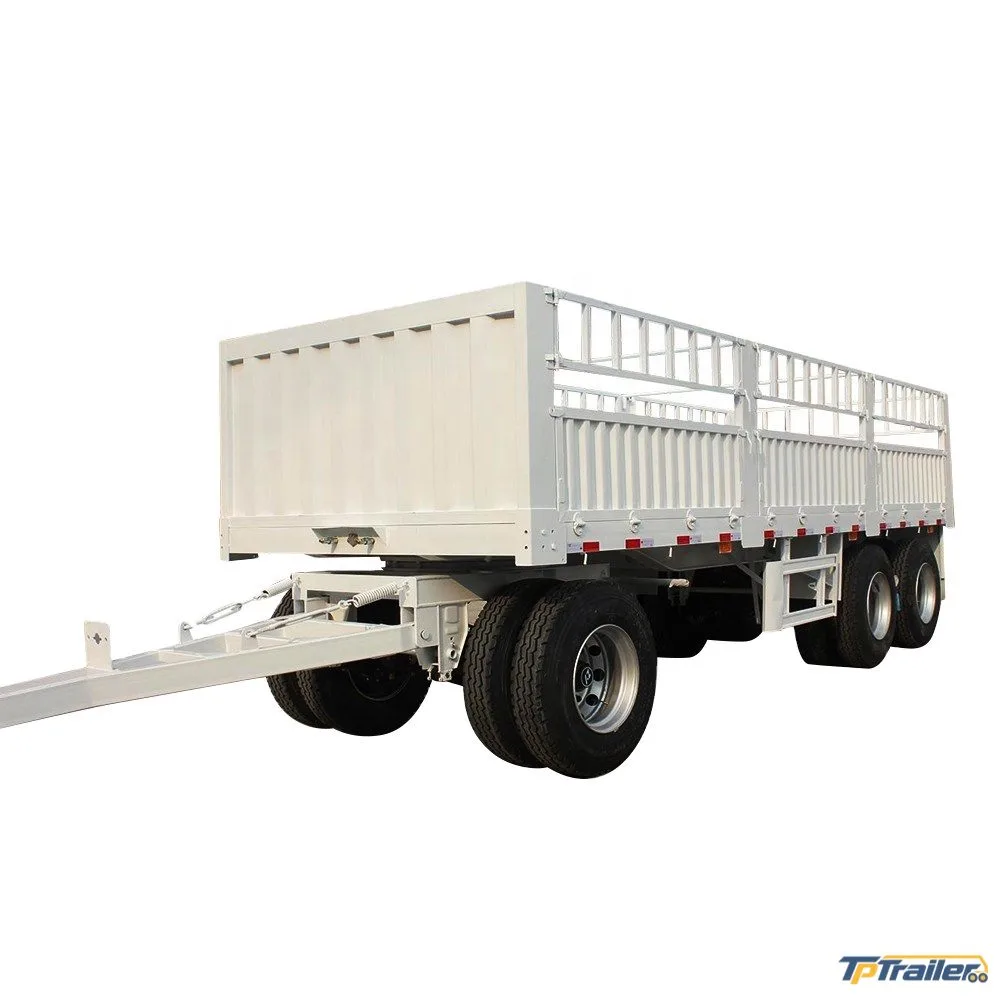
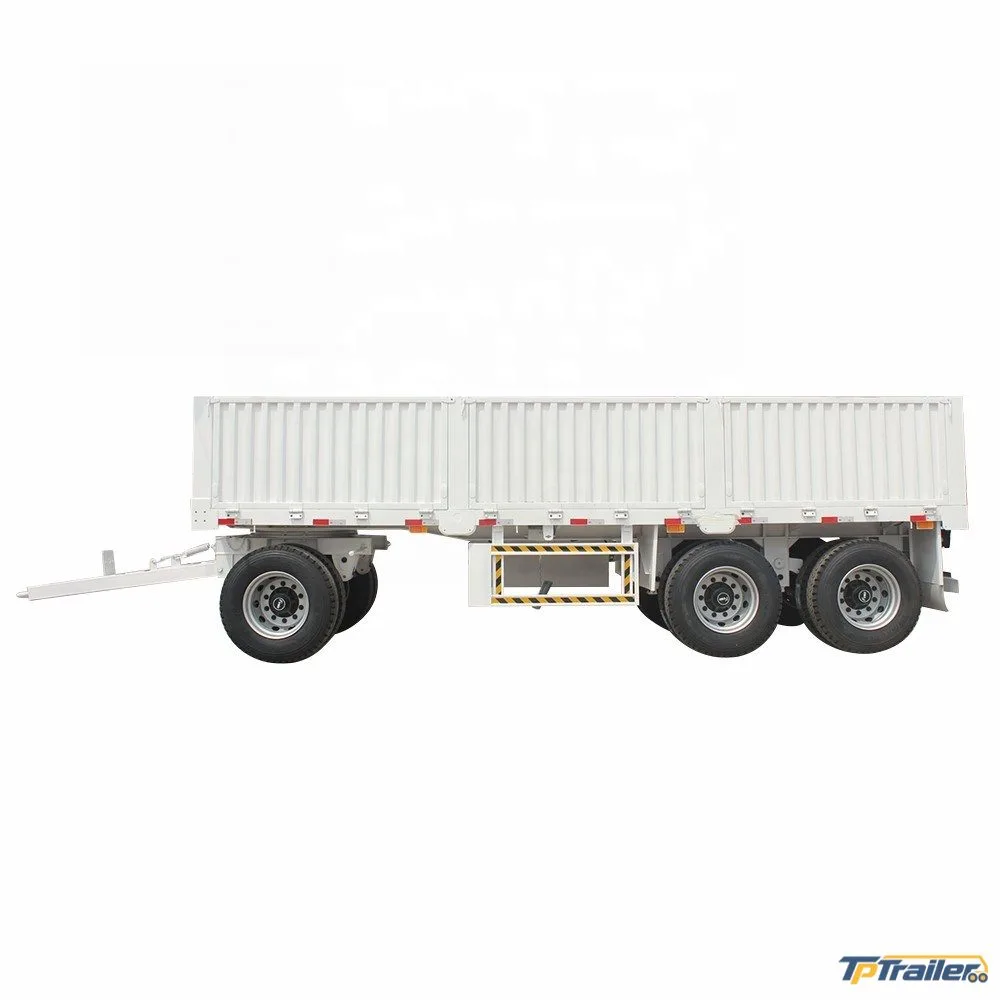
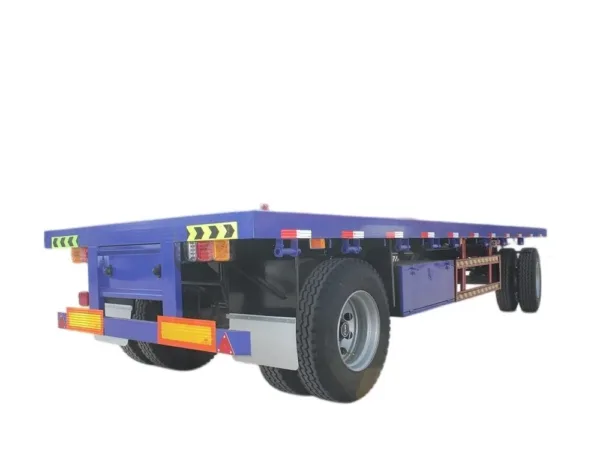
This drawbar trailer is a steel flatbed cargo unit built for hauling heavy farm and site loads behind a tractor, with a 20ft drawbar, drop side walls and a 40T load capacity. It suits fleet operators, farm managers and equipment dealers who move bulk goods on mixed road and yard routes. The strongest reason to choose it is the load rating: one unit covers grain, feed, machinery and building material runs that would otherwise need two lighter trailers. Two special trailer axles with rear-axle braking keep the platform stable under that load, so you spend less time planning trips around weight and more time moving cargo.
Table of Contents
Why It Works On Site
40T load capacity. The platform is rated to carry loads that lighter farm platforms split across two trips. That means one drawbar trailer can take a full grain or feed run in a single pass, cutting trips per day and the fuel and labour that go with them. For a fleet, fewer passes on the same route is the fastest way to lift throughput without adding vehicles.
Two special trailer axles. The load is shared across a twin-axle setup rather than a single beam, which keeps the deck level and the tow stable when the cargo is dense or unevenly stacked. Operators loading bales, pallets or machinery get a platform that tracks predictably through yard turns and gateways, so the drawbar trailer stays usable on tight farm layouts.
Rear-axle braking. Braking on the back axle gives the unit stopping control when the deck is fully loaded and the tractor alone would be working hard. On downhill field tracks and gravel lanes, that control is what lets a loaded drawbar trailer be moved safely by a standard tractor rather than a dedicated heavy hauler.
20ft drawbar and flatbed deck. The drawbar length and open deck make loading from three sides practical with a forklift, telehandler or ramps. Long cargo such as timber, pipe or feeder sections sits flat and overhangs predictably, so site crews spend less time re-stacking and more time on the next job.
Side wall cargo body. Drop side walls contain loose loads like grain, sand, feed and produce without a separate tarp or crate setup. The walls also protect cargo edges during loading, which matters when the drawbar trailer is used for mixed runs where one trip carries bagged goods and the next carries bulk material.
Steel construction and custom colour. A steel body takes impact from ramps, buckets and stacked pallets without the denting that softer bodies show. Custom colour lets a fleet standardise its drawbar trailer units to match existing equipment, which simplifies identification on shared yards and keeps branding consistent across the fleet.
Where It Is Used
On mixed farms, this drawbar trailer handles the bulk runs that fill a working day: grain and feed from store to livestock areas, bagged fertiliser from the yard to field edges, and produce moving from field to packhouse. The drop side walls keep loose material contained on rough tracks, while the flatbed deck takes pallets and crates when the load changes between trips.
Because the load capacity covers heavy single runs, one unit can replace several lighter trips, which suits farms where labour is tight and every pass between buildings and fields costs time. The rear-axle braking helps on the sloped lanes and gravel roads common around farm buildings, where a loaded trailer has to be held and stopped without relying on the tractor alone.
Beyond the farm gate, the same drawbar trailer works for construction and site supply routes: moving timber, pipe, blocks and equipment between depots and active sites, or shuttling machinery on flatbed runs. Equipment dealers use it to move stock between yards, and landscape or groundwork crews use the open deck for plant and material in the same week. The steel body and side walls suit loads that shift between bagged and bulk, which is typical of hire fleets and contractors serving several job types. On yard work, the drawbar length gives enough clearance for tight turns around buildings, so the drawbar trailer can be loaded, moved and unloaded without a second vehicle.
Choosing The Right Spec
Match the load rating to your heaviest routine run. The 40T capacity is the ceiling, so compare it with the densest cargo you move regularly, not the average. If most trips are grain, feed or aggregate, the rating leaves margin for wet or tightly packed loads. Operators whose heaviest runs sit well below the ceiling can still use the drawbar trailer for mixed duties without changing units between jobs.
Decide by cargo type: bulk or flatbed. Side wall cargo suits loose material that needs containment, while the flatbed deck suits pallets, machinery and long sections. If your schedule mixes both, the walled deck with an open top is the practical middle choice. Buyers who mostly move crated goods should check that the wall height does not obstruct forklift access from the side before confirming the drawbar trailer order.
Consider axle and brake setup against your tractor. Two special trailer axles with rear-axle braking are the stated configuration, so confirm your tractor’s hitch and towing setup matches a unit of this size. Fleets running several tractors should check that each can handle the loaded drawbar trailer on their steepest regular route. Where routes include long descents, the rear-axle brake arrangement is the deciding factor in safe operation.
Plan colour and volume together. Custom colour is available, so standardise it across the fleet when ordering more than one unit. Volume tiers reward planning: a two-unit order and a ten-unit order sit at different price points, so map your replacement schedule before committing. Matching colour across a batch keeps the drawbar trailer fleet consistent and simplifies spotting units on shared yards.
Customisation Before Delivery
Colour and finish. The steel structure can be ordered in a customised colour, matched to your fleet or your dealer’s branding. Paint choice is agreed at order confirmation, and the shade is recorded on the order so the factory works from one reference. A drawbar trailer in a single house colour is easier to identify in a yard shared with other equipment.
Axle configuration. The build uses two special trailer axles, and the brake is fitted to the back axle. Buyers who run mixed fleets should confirm the axle arrangement on the order, because a drawbar trailer that matches its towing unit is easier to schedule and to service alongside existing stock.
Deck and side wall layout. The flatbed with side walls can be configured around the cargo you carry most. Deck length and wall height are settled before production, so measure your longest loads and your loading dock before you confirm. A drawbar trailer sized to the job avoids wasted deck space.
OE and mounting details. The OE number is customised, which lets the trailer carry your own part reference. Coupling height, mounting points and towing eye position are confirmed against your tractor at order confirmation, so the drawbar trailer arrives ready for your fleet rather than needing rework.
Order quantities and price tiers. Unit price steps down as the order grows, from the minimum order of two units upward. The specification is fixed at order confirmation, and the colour, axle and deck choices are locked at the same point. A drawbar trailer ordered in volume should carry one consistent specification across the batch.
Fitting And Installation
On arrival, the buyer’s workshop has to match the trailer to the towing tractor. Check the coupling height against the drawbar eye, and confirm the mounting points line up with the tractor’s hitch before the trailer is loaded. The hydraulic and pneumatic lines, where fitted, should follow the routing shown on the confirmed drawing, with enough slack for articulation and no chafing against the frame. Brake adjustment on the back axle is checked after the first coupling. Torque values are not published here; the workshop should use the figures supplied with the unit. A drawbar trailer that sits level behind the tractor tows predictably, so measure the hitch height before the first run rather than after.
A wrong size costs downtime. If the drawbar eye does not match the tractor’s hitch, the trailer cannot enter service, and the fix is a new coupling or a modified drawbar, not a field adjustment. If the deck height is wrong for your loading bank, every load takes longer and the side wall becomes a handling problem rather than an aid. If the brake line routing is wrong, the back axle brake may not release cleanly, and the unit is parked until it is corrected. Fitment data is not fixed in advance for every tractor; a fitment drawing is confirmed at quotation, so the drawbar trailer is built to your coupling, not to a generic assumption.
Service Life And Maintenance
Drawbar and coupling. The drawbar eye and coupling take the towing load and wear first. Inspect for elongation, cracks and loose fasteners before each long run. A drawbar trailer used on rough farm tracks should be checked more often than one kept on sealed roads, and any worn eye should be replaced rather than reworked.
Back axle brake. The brake sits on the back axle, so its shoes, drum and linkage carry the stopping duty. Check adjustment, lining thickness and air or fluid leaks at each service. A drawbar trailer that pulls to one side under braking usually points to an imbalance here, and early correction protects the drums.
Side walls and deck. The steel side walls and flatbed take loading impact. Inspect for dents, bent panels and cracked welds along the wall-to-deck joint. Keeping the deck clean and free of corrosive cargo residue extends the paint life, and a drawbar trailer stored under cover keeps its finish longer between repaints.
Tyres and axle bearings. The two special trailer axles carry the load, so tyre pressure, tread wear and bearing play are routine checks. Uneven tyre wear points to axle alignment or overload. On a drawbar trailer working at high load, bearing inspection at every tyre change is cheap insurance against a roadside failure.
Steel structure and finish. The steel frame is the long-life element, and the customised colour coat is what protects it. Touch up chips and scratches before rust sets in, and wash off fertiliser and slurry residue. A drawbar trailer with a maintained coating resists corrosion far longer than one left to weather.
Packing And Container Loading
Each drawbar trailer leaves the yard with the steel chassis and flatbed protected against sea air and handling damage. Surfaces are cleaned and coated before dispatch, and the side wall panels are braced so they cannot flex against the frame during transit. Loose items such as pins, ramps and lighting units are boxed and strapped to the deck rather than shipped loose. The drawbar is treated as a separate handling point because it overhangs the body. Buyers should ask the supplier to confirm in writing how the drawbar and axles are supported inside the container.
Space saving is a real question on a drawbar trailer order. The flatbed and side walls are the bulky parts, so the practical approach is partial disassembly where the design allows it, with side wall sections laid flat and stacked in sequence. Nested or stacked loading reduces wasted air but adds handling at both ends. Confirm with the supplier whether the unit ships assembled or knocked down, and check that the loading plan matches the container type you booked. The axle set and brake assemblies need their own footprint either way.
Common Mistakes Buyers Make
Ordering the wrong drawbar length. A drawbar trailer that is too long will not turn inside a farm gate or yard corner, and one that is too short can foul the towing vehicle on full lock. Measure the tightest turn on your route and the distance from hitch to implement before you confirm the build sheet.
Ignoring the load capacity against the axle count. Buyers compare the headline rating with the trailer they actually need and skip the axle configuration. Check the number of axles and the brake arrangement on the back axle against your loads, then confirm the combination in writing on the order.
Assuming the paint finish is fixed. Colour is customised on this drawbar trailer, so a buyer who never states a colour gets whatever the standard batch carries. Send a sample, a code or a clear reference photo with the order and have the supplier confirm the match before production starts.
Overlooking coupling and hitch compatibility. The drawbar trailer must mate with the tractor or towing vehicle you own, and the coupling type is not something to leave open. Photograph your existing hitch, note its size, and ask the supplier to confirm the match at quotation before the frame is built.
Skipping the arrival inspection. Sea freight moves steel, and buyers sign off before checking the frame, side walls and brake linkage. Inspect against the packing list on arrival, photograph any deformation before unloading, and report shortages or transit damage to the supplier within the agreed window.
Buyer Questions
Can the drawbar trailer be shipped knocked down to cut freight cost?
That depends on the build and must be agreed before production. The flatbed, side walls and drawbar can be partly disassembled on some configurations, which reduces the container footprint but adds reassembly work at destination. Ask the supplier to state in the quotation whether the unit ships assembled or partly knocked down, which fasteners and fittings are included, and whether the loading plan has been checked against the container you intend to book. Do not assume a knocked-down unit arrives ready to tow.
What should I confirm about the axles and brakes before ordering?
Confirm the axle configuration and the brake arrangement on the rear axle in writing, because both affect how the drawbar trailer behaves under load. Tell the supplier the towing vehicle, the typical load and the ground conditions on your farm. Ask which brake actuation the rear axle uses and whether the fittings are included. The static load rating alone does not tell you whether the axle set suits your duty cycle, so match the configuration to the work, not to the headline figure.
Which documents and markings come with the unit?
The input lists CCC and ISO9001 certification, and the OE reference is customised, so ask for copies of the certificates that apply to your order and confirm how the frame and axle markings are stamped. State the colour and any branding you need, since colour is customised and OE numbers are made to order. Ask what the packing list covers and whether a loading photo set is provided before the container is sealed. Anything not stated is confirmed at quotation.
To price a drawbar trailer for your farm, send the overall length you need, the number of axles and the brake arrangement you want, plus the quantity you plan to order. Add your colour reference and the towing vehicle details so the supplier can confirm compatibility before quoting.
We use cookies to enhance your browsing experience, serve personalized content, and analyze our traffic. By clicking "Accept All", you consent to our use of cookies. Privacy Policy
Cookie Preferences
Required for the website to function properly. Cannot be disabled.
Help us understand how visitors interact with the website (Google Analytics).
Used to deliver personalized ads and measure ad campaign effectiveness.



















Write a Review