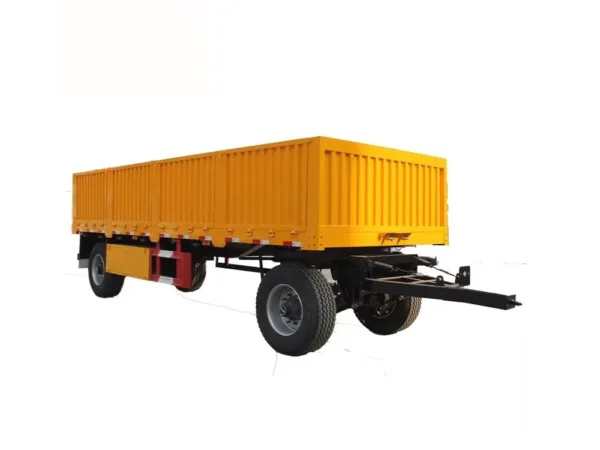
Two Axle Steel Flatbed Semi-Trailer 30000KG Max Payload
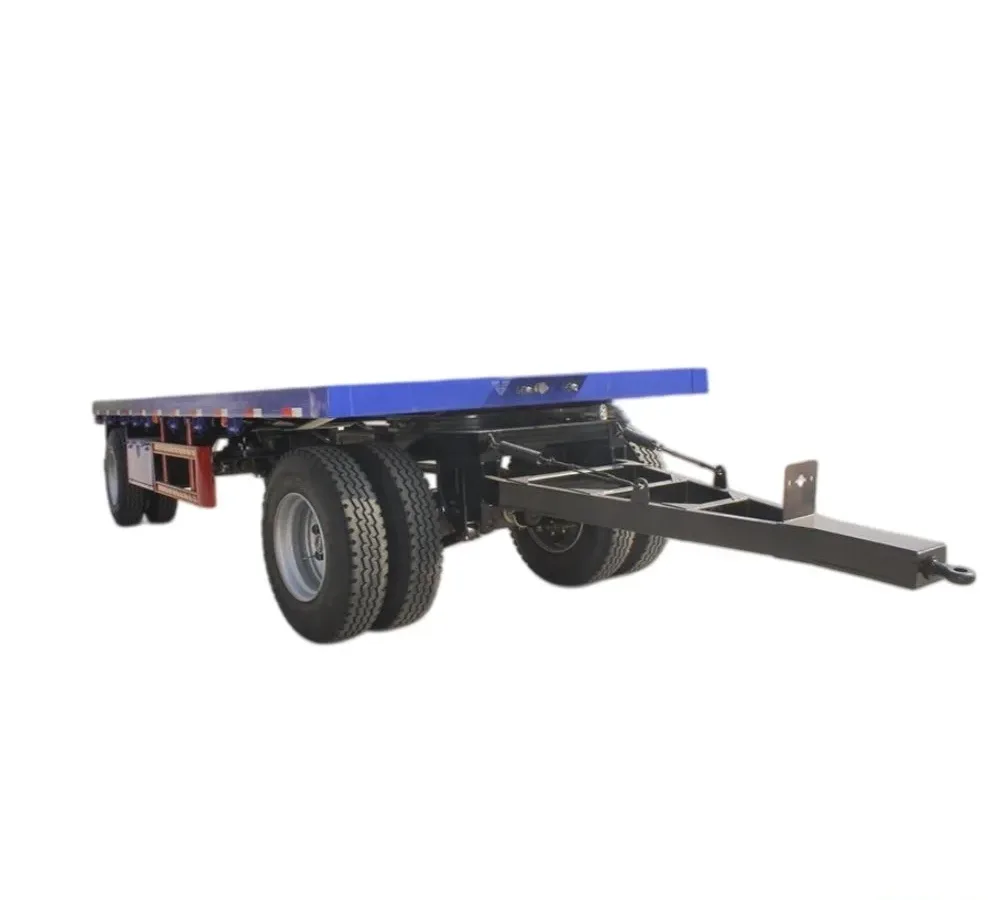
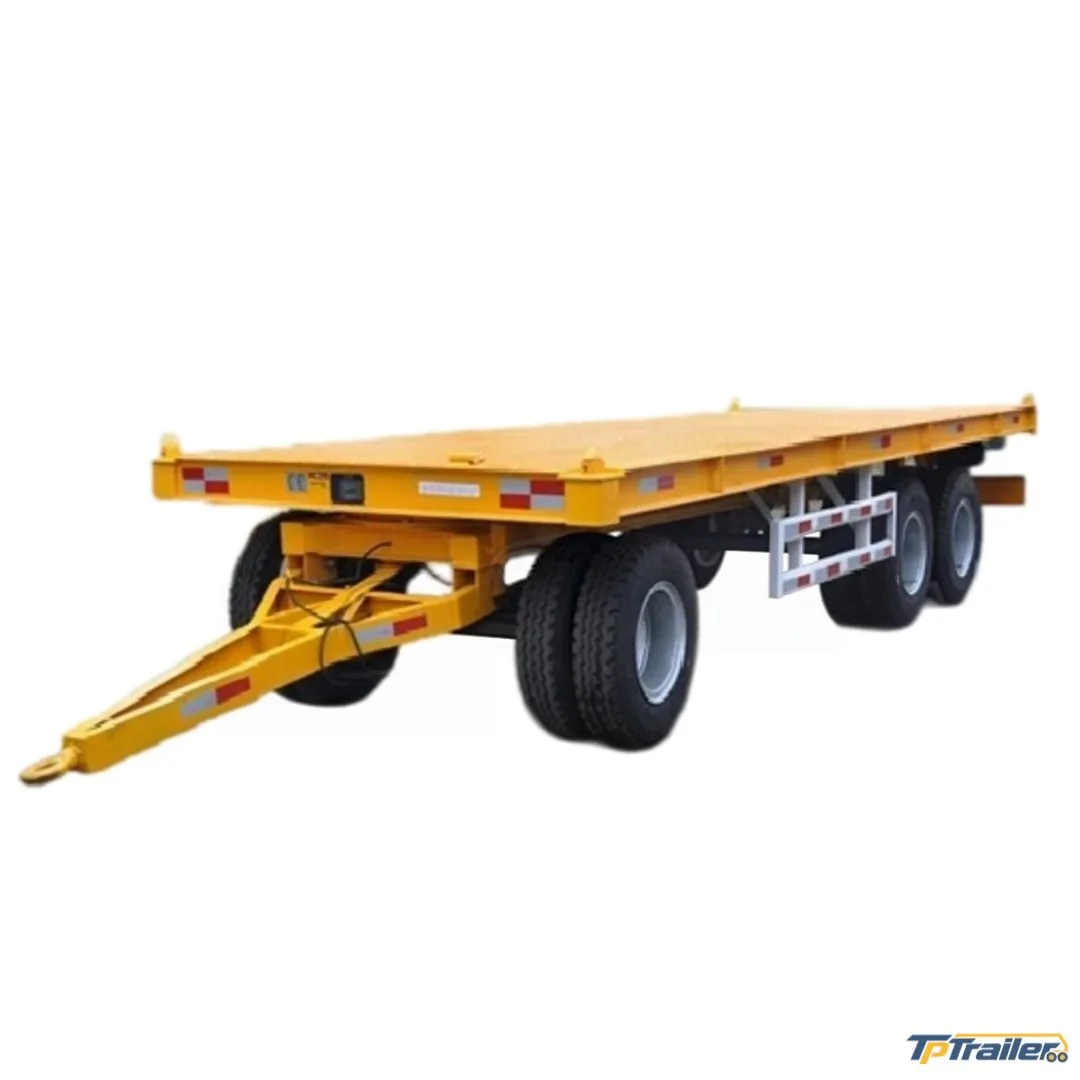
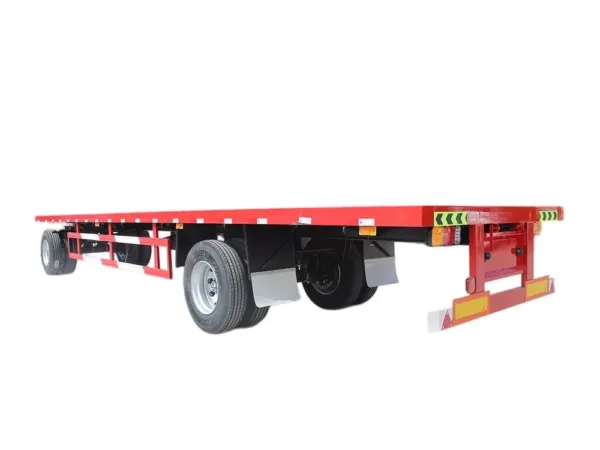
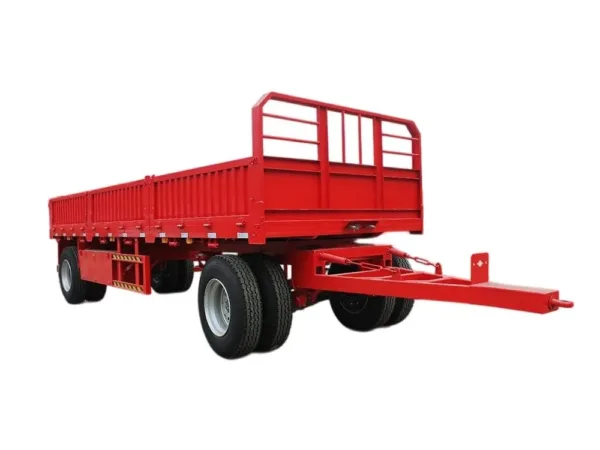
This flatbed platform full trailer carries up to 30000KG on a two axle steel chassis, with a drawbar and container cargo deck for flexible freight hauling.
30000KG 2
FOB Reference PriceUS$7,200-8,900Final price confirmed by inquiry
The flatbed platform full trailer is a two-axle steel cargo unit built for buyers who move mixed freight on a drawbar coupling and need one deck to handle both palletised loads and containers. It suits fleet operators, farm businesses and freight contractors who want a simple, repairable trailer rather than a specialist body. Its strongest argument is versatility under load: a 30000KG load capacity on a flat deck that also accepts container cargo, so one asset covers platform hauling and boxed freight without a second purchase. The steel structure, mechanical suspension and standard landing gear keep servicing straightforward for workshops that already run heavy trailers.
Table of Contents
Why It Works On Site
Load capacity matched to mixed freight. The trailer is rated for a 30000KG load, which lets a flatbed platform full trailer carry dense platform cargo such as steel, bagged material or machinery on one trip. That rating is what makes the deck practical for operators who cannot predict whether the next job is light or heavy, so the same unit stays in service across a varied workload.
Thirteen-ton brand axles. The axle set is rated at thirteen tons per axle on a brand unit, giving the running gear headroom behind the deck rating. For the buyer this means the axles are not the weak point when the trailer is loaded near its limit, and replacement parts follow a known pattern that most heavy workshops already stock and understand.
12R22.5 tyres. The 12R22.5 tyre size is a common heavy-trailer fitment, so a flatbed platform full trailer running this size is easy to keep rolling on long routes. Operators can source replacements locally instead of waiting on a specialist order, which shortens downtime after a puncture and keeps the trailer working through a busy haulage week.
Mechanical suspension. Mechanical suspension keeps the flatbed platform full trailer simple to inspect and repair, with no hydraulic circuit to diagnose. On site that translates into predictable behaviour under load and fewer specialist callouts, which matters for fleets that service their own equipment between jobs rather than sending every trailer to a dealer.
Standard 28-ton landing gear. The standard 28-ton landing gear holds the trailer steady when it is uncoupled and loaded, so a flatbed platform full trailer can be dropped at a yard or dock without blocking the tractor. That lets one prime mover serve several trailers across a working day, which is how most fleets actually schedule drawbar equipment.
Drawbar and container cargo layout. The drawbar format and container cargo capability let the same deck switch between loose platform freight and boxed loads. A flatbed platform full trailer used this way avoids idle days when one cargo type is slow, because the operator can take the next job on the other configuration without buying additional equipment.
Where It Is Used
A flatbed platform full trailer earns its place on routes where the load changes from week to week. Typical work includes moving palletised building materials from a supplier yard to a construction site, hauling bagged feed and fertiliser between a store and farm buildings, and shifting steel sections, pipe or timber that will not fit a closed body. Because the deck is open, loading is done from above with a forklift or from the side with a crane, which suits depots that lack a raised dock.
Operators also use the container cargo capability to move boxed freight on the same chassis, so a flatbed platform full trailer can take a container run in the morning and a platform load in the afternoon without a swap. That pattern fits regional haulage where backloads are unpredictable and the trailer has to adapt rather than sit idle.
The second common pattern is agricultural and rural distribution. A flatbed platform full trailer towed behind a suitable prime mover can carry seed, fertiliser, feed or equipment between a farm store and outlying fields, then switch to moving produce or supplies to a collection point. The drawbar layout keeps the combination manoeuvrable in yards and farm tracks where a long articulated unit would struggle.
Contractors also use the trailer for machinery movement, carrying implements and small plant on the open deck where a ramp or crane is available at each end. In each case the flatbed platform full trailer is chosen because the deck is flat, the load is visible and the cargo does not need weather protection for the trip. Buyers running mixed platform and container work get the most from it.
Choosing The Right Spec
Match the load rating to your heaviest regular job. The 30000KG load capacity is the figure to check against your typical cargo weight, not your occasional peak. If most trips sit well below that rating, the trailer gives margin for dense loads and uneven distribution. If your work regularly approaches the limit, confirm the axle, tyre and suspension combination with the supplier before ordering a flatbed platform full trailer.
Decide between platform and container use. Buyers who mostly carry loose freight should focus on deck length and fixing points, while those who expect container cargo should confirm the locking arrangement suits the boxes they handle. Because the flatbed platform full trailer covers both, the choice is about which mode dominates your schedule and whether the deck fittings support it.
Check tyre and axle supply locally. The 12R22.5 tyres and thirteen-ton brand axles are common heavy-trailer components, so the practical question is whether your workshop or a nearby supplier stocks them. A flatbed platform full trailer that can be repaired quickly stays productive; one that waits on parts does not. Ask your service provider before you commit to a fleet order.
Plan coupling and landing gear around your yard. The drawbar format and standard 28-ton landing gear suit operators who drop trailers and swap prime movers. If your yard has tight access or sloped ground, check how the combination turns and how the gear sits before ordering. Colour is customer optional, so livery and fleet marking can be specified alongside the flatbed platform full trailer at order stage.
Customisation Before Delivery
Axle count. The flatbed platform full trailer is built on a two-axle layout as standard, and the axle count is confirmed against the load you intend to carry. Buyers moving dense machinery sometimes ask for a different arrangement, and that request is settled at order confirmation so the running gear matches the duty cycle you describe.
Suspension type. Mechanical suspension is the fitted arrangement, and the choice is locked in when the order is confirmed. Tell us the road surfaces and the load profile the flatbed platform full trailer will see, and the suspension decision is recorded alongside the axle specification. Nothing is changed after the build sheet is signed.
Tyres. The flatbed platform full trailer runs on 12R22.5 tyres, and the tyre specification is fixed at order confirmation. If your fleet already standardises on a particular tyre size for spares pooling, raise it before the build sheet closes. Mixed tyre stock across a fleet is a maintenance cost nobody budgets for.
Colour. Colour is customer optional on this flatbed platform full trailer. Supply a reference or a code at order confirmation and the paint schedule follows it. Colour choice does not change the structure, the deck or the running gear, so it can be settled late in the conversation without reopening the engineering.
Deck and body details. Deck length, side rail treatment and container twist-lock provision are agreed at order confirmation. The flatbed platform full trailer carries stuff and container cargo, so tell us which duty dominates. That answer shapes the deck furniture, and it is cheaper to decide now than to modify later.
Fitting And Installation
On arrival, the buyer matches the trailer to the towing vehicle before anything else. Check the drawbar eye and the coupling height against the tractor or truck that will pull the flatbed platform full trailer. Confirm the mounting points on the deck line up with the container twist-locks or the cargo fixtures you plan to use. Inspect the landing gear mounting and the standard 28Ton landing gear legs for transit damage.
Route the air lines and the electrical harness along the paths the trailer provides, and keep them clear of the suspension travel. Torque values are not published in this brief, so tighten to the figures in the documentation supplied with the unit. A fitment drawing is confirmed at quotation if you need one before the order.
A wrong size at this stage costs downtime, not just money. A drawbar eye that does not match the coupling stops the flatbed platform full trailer from leaving the yard. A deck height that sits wrong for your loading dock changes how every pallet is handled. Container twist-locks that miss the corner castings turn a container job into a manual lift. Air line routing that fouls the mechanical suspension wears through a hose on the first rough road. Each of these is a small mismatch that becomes a stopped vehicle. Confirm the fitment drawing at quotation, walk the coupling and deck against your equipment before dispatch, and the arrival inspection becomes a checklist rather than a repair order.
Service Life And Maintenance
Tyres and axle ends. Tyres and wheel-end bearings are the first items to show wear on any flatbed platform full trailer. The operator should check tread depth, sidewall condition and bearing play at each pre-trip inspection. Uneven tyre wear points to axle alignment or suspension issues, so catch it early. Keeping tyres at the correct pressure protects both the casing and the fuel bill.
Suspension and bushes. The mechanical suspension carries the load, and its bushes and shackles take the punishment. Inspect for cracked bushes, elongated shackle holes and loose U-bolts on the flatbed platform full trailer. A worn bush changes axle location and accelerates tyre wear. Replace bushes as a set rather than one at a time, so the axle stays square under load.
Deck surface and coating. The deck takes abrasion from cargo, chains and container corners. Walk the flatbed platform full trailer deck for cracked welds, bent cross members and worn coating. A specified colour and coating choice extends the interval between touch-ups, because a sound coating keeps moisture off the steel. Treat chips early, before rust creeps under the paint line.
Drawbar and coupling. The drawbar and coupling are the safety-critical interface on this flatbed platform full trailer. Inspect the eye for ovality, the coupling for play and the safety chain points for cracks. Check the mounting bolts for movement after every long run. Any deformation at the drawbar is a stop-use finding, not a maintenance note.
Landing gear and brakes. The standard 28Ton landing gear and the brake system deserve a scheduled look. Check landing gear legs for bending, the crank for smooth travel and the feet for wear. On the flatbed platform full trailer, confirm brake adjustment and air line condition together, since a leaking line masks itself as a brake fault. Log every inspection so wear trends are visible.
Packing And Container Loading
Each flatbed platform full trailer is prepared for sea freight as a complete unit or in knocked-down sections, depending on how the order is configured at quotation. Steel surfaces are cleaned and coated before dispatch so the deck and frame do not corrode in transit. Axles, suspension and landing gear stay assembled where shipping allows, which reduces the risk of loose parts moving inside the container. Buyers should confirm the packing method in writing before the order is released, because the choice affects both handling at the destination port and the equipment needed for unloading.
Space saving is limited for a flatbed platform full trailer, since the deck and frame form a rigid structure that cannot be compressed. Where several units ship together, the supplier may separate deck sections from running gear to reduce wasted volume. Stacking is only practical when the design and the buyer’s approval allow it, and it must never load the suspension or tyres. Ask for a loading plan showing how many units fit per container, and check it against the quantity you ordered.
Common Mistakes Buyers Make
Assuming the drawbar suits any towing vehicle. The drawbar and coupling must match the tractor or truck that will pull the flatbed platform full trailer. Buyers often order without checking the coupling height and hitch type, then find the trailer sits nose-up or nose-down. The single check is to measure the hitch point on the towing vehicle and send it with the order.
Ignoring the load capacity when choosing tyres. A flatbed platform full trailer rated for heavy cargo needs tyres and axles that match that duty. Buyers sometimes accept whatever tyre size is quoted without checking it suits the routes and loads planned. The single check is to confirm the tyre specification against the axle rating and the intended payload before signing.
Overlooking the landing gear rating. The landing gear must hold the trailer when it is uncoupled and loaded. Buyers forget that a laden flatbed platform full trailer puts far more stress on the legs than an empty one. The single check is to compare the landing gear rating with the maximum load you expect to carry while parked.
Ordering the wrong suspension type. Mechanical suspension behaves differently from other systems on rough ground and at speed. Buyers choose it for price without confirming it suits their roads and cargo. The single check is to describe the typical route and load to the supplier and confirm the suspension choice in the quotation for the flatbed platform full trailer.
Skipping the colour and finish decision. Colour is buyer-selectable, so an unspecified finish becomes a default the buyer may not want. Buyers also forget to confirm whether the coating suits their climate. The single check is to state the colour and finish in writing before production starts on the flatbed platform full trailer.
Buyer Questions
How is the trailer protected during sea freight?
The flatbed platform full trailer is coated before dispatch and its running gear stays assembled where shipping allows. Loose items are secured so they cannot shift inside the container. Buyers should request the packing list and confirm which components ship detached. On arrival, check the deck coating for scuffs, confirm the axles and suspension are undamaged, and verify that every detached part listed on the packing list is present before you sign the delivery receipt.
Can several units be nested or stacked to cut container cost?
Nesting is not possible for a flatbed platform full trailer because the deck and frame are rigid. Stacking depends on the design and must be approved in the loading plan, and it must never put weight on the suspension or tyres. Ask the supplier how many units fit per container and request the loading plan with the quotation. Compare that plan with your order quantity so you know the real freight cost per unit.
What should I confirm before the order is released?
Confirm the drawbar and coupling match your towing vehicle, and state the colour and finish in writing. Check that the tyre specification suits the axle rating and the payload you plan to carry. Confirm the suspension type suits your routes, and compare the landing gear rating with the load you expect while parked. Ask for the packing list and loading plan, then confirm every point in the quotation for the flatbed platform full trailer before production begins.
To receive a quotation for the flatbed platform full trailer, send the deck length you need, the number of axles, and the quantity you plan to order. State your towing vehicle coupling and preferred colour so the offer matches your operation. Confirmed details are returned in writing.
We use cookies to enhance your browsing experience, serve personalized content, and analyze our traffic. By clicking "Accept All", you consent to our use of cookies. Privacy Policy
Cookie Preferences
Required for the website to function properly. Cannot be disabled.
Help us understand how visitors interact with the website (Google Analytics).
Used to deliver personalized ads and measure ad campaign effectiveness.



















Write a Review