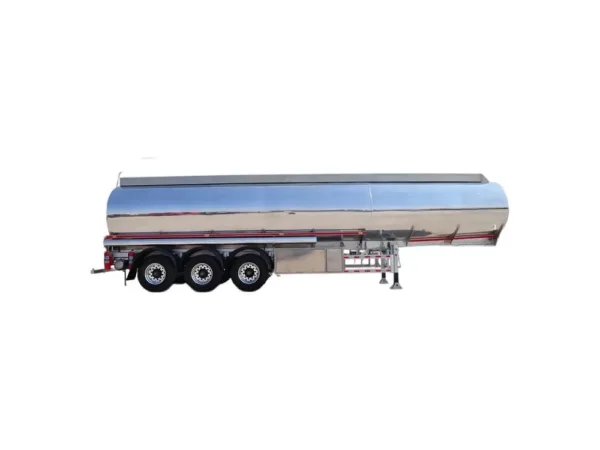
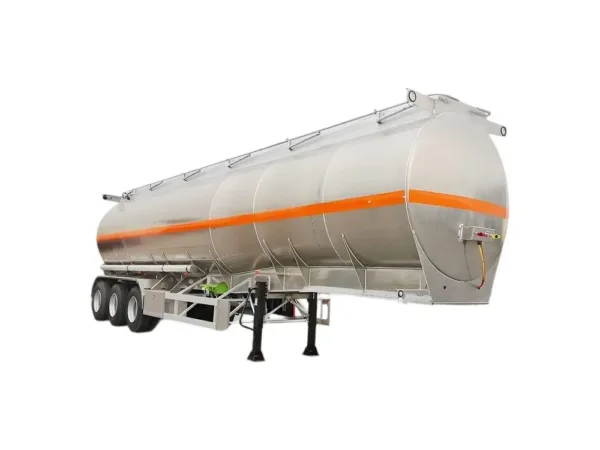
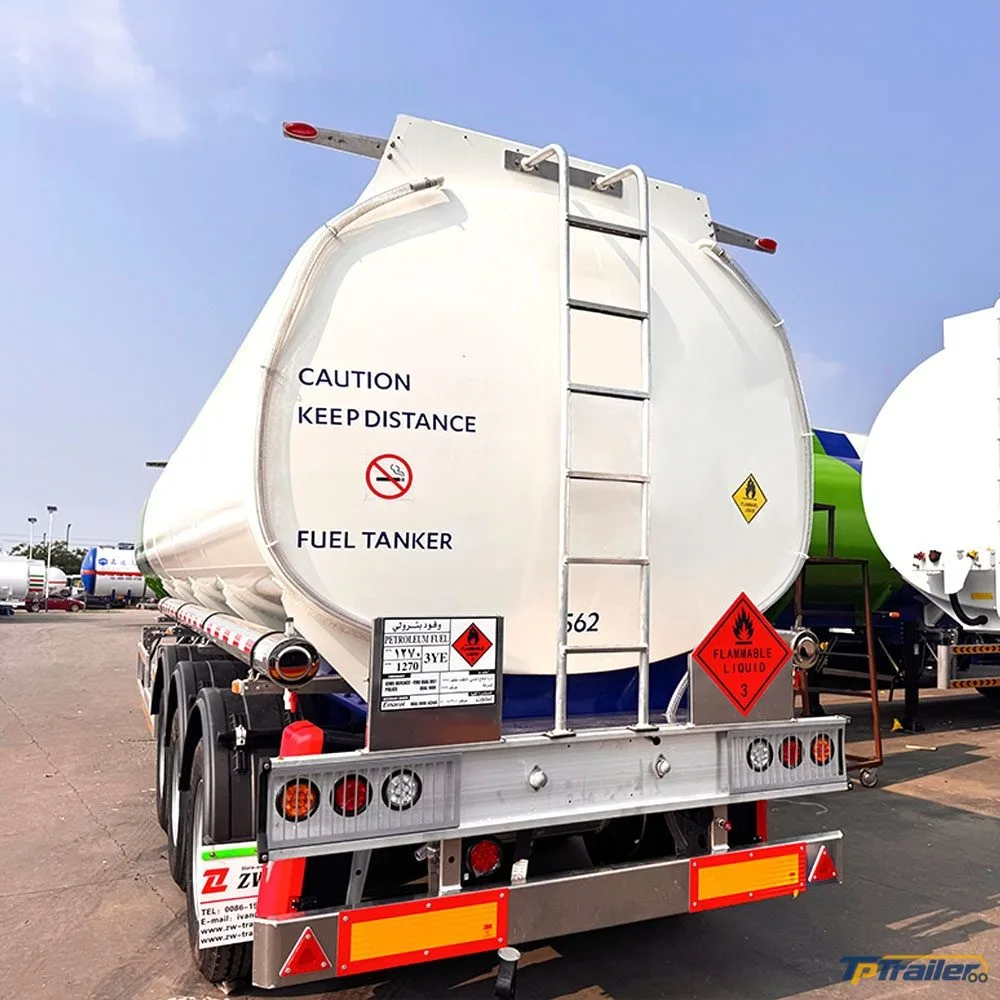
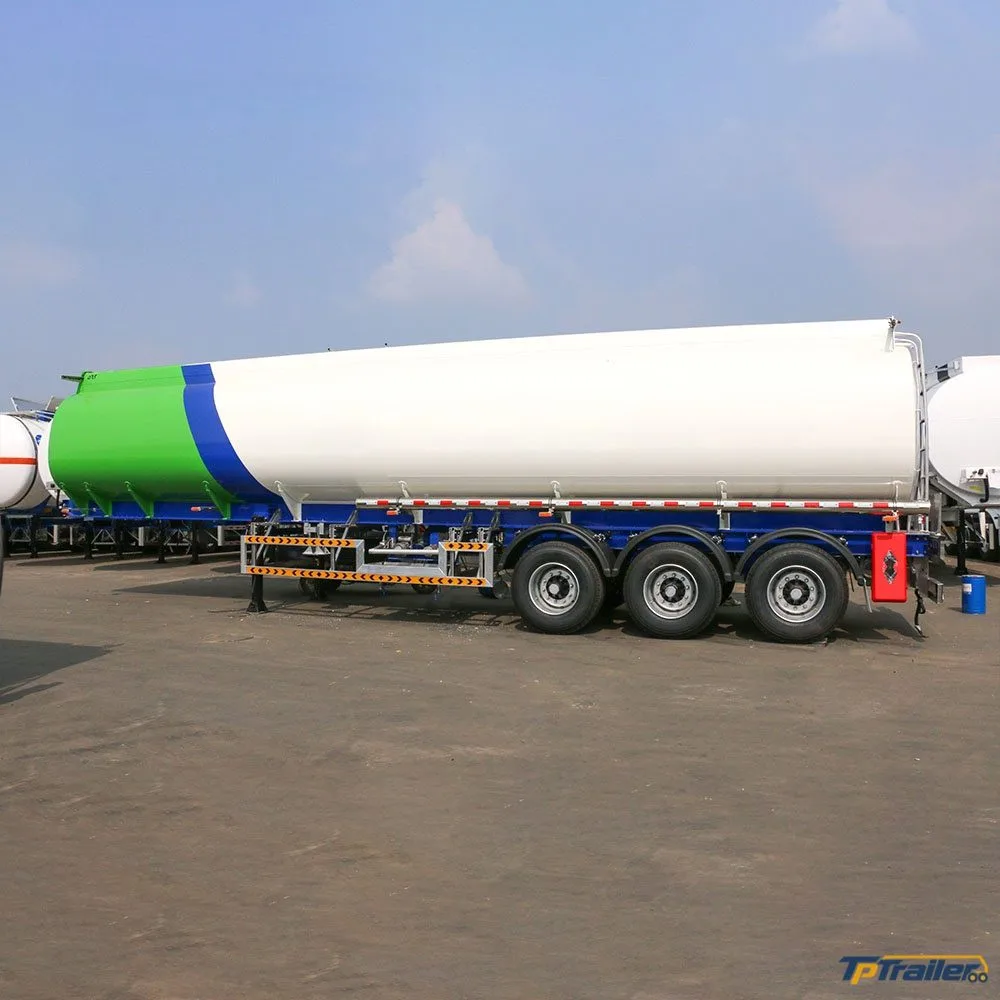
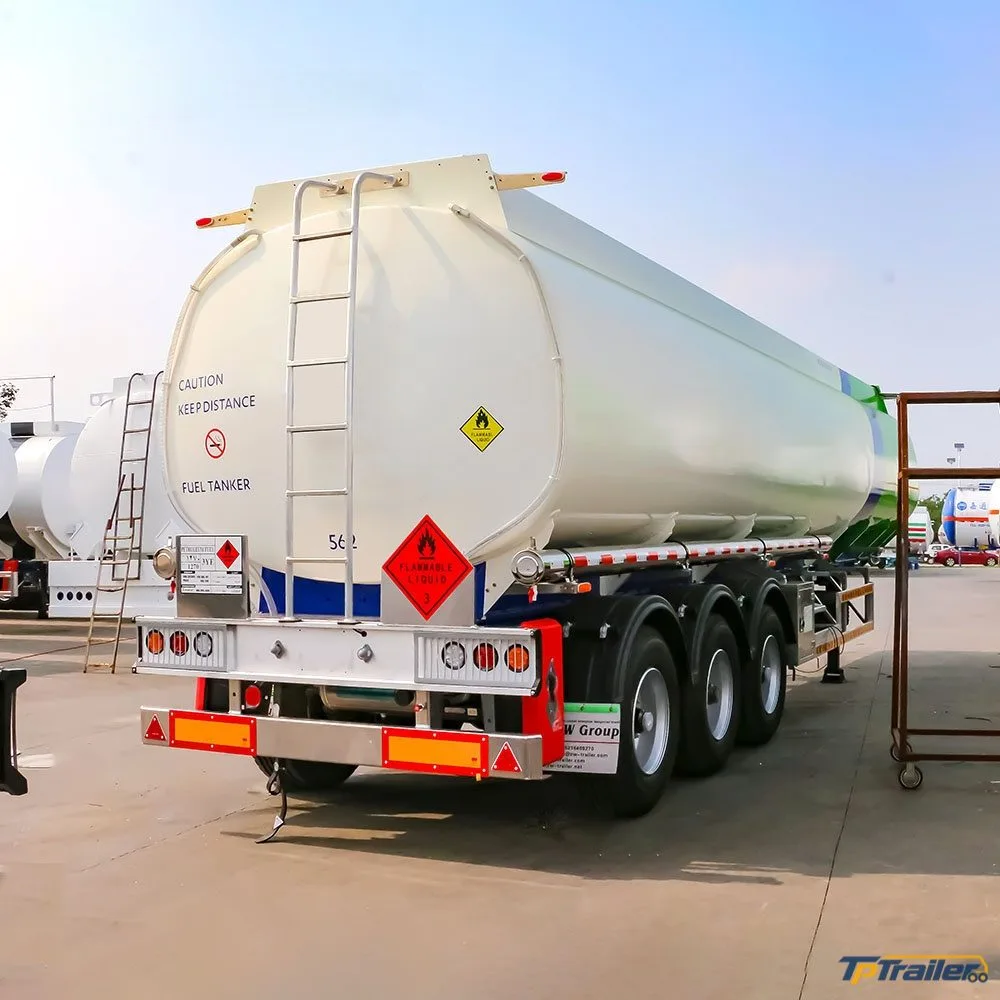
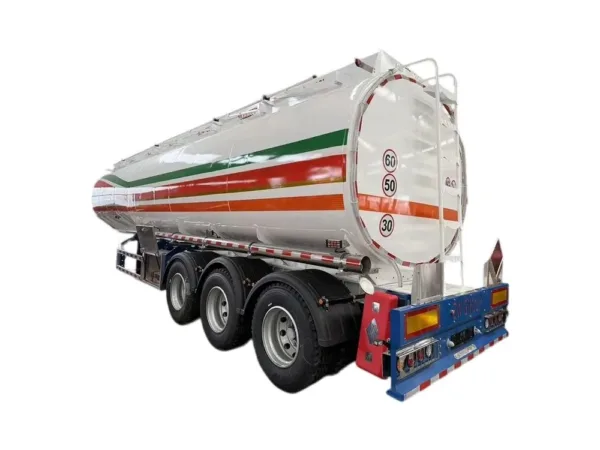
Lightweight aluminum fuel tanker trailer transport for gas station logistics supply: 45000 liters, 3 axle aluminum alloy semi trailer with 30000kg payload.
30000 3
FOB Reference PriceUS$6,000-10,000Final price confirmed by inquiry
Certifications
ISO 9001
Key Features
45000 Liters tank volume for high-capacity fuel delivery runs
3 axle aluminum alloy semi trailer build for gas station logistics supply
30000kg load capacity for bulk diesel and fuel transport
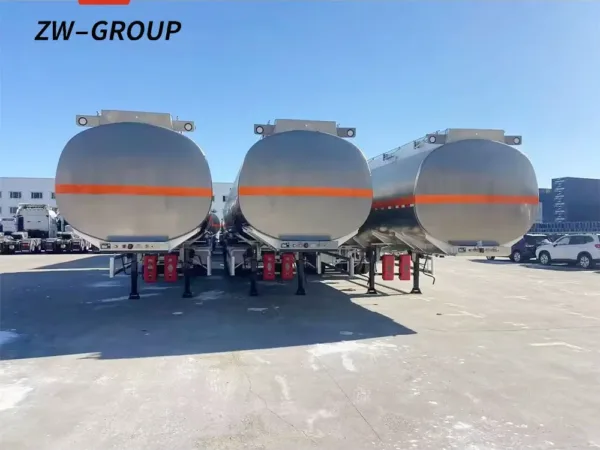
Aluminum alloy construction keeps the tanker trailer lightweight
Suited to fuel depot, gas station and overland supply routes
Lightweight aluminum fuel tanker trailer transport starts with the barrel itself, and this unit pairs a 45000 liter tank with a three-axle aluminum alloy semi trailer platform rated for a 30000 kg payload. It is built for fuel distributors, gas station supply fleets and oil transport operators who move diesel and other liquid fuels on fixed delivery routes. The strongest reason to choose it is the weight saved by the aluminum alloy construction: more of the legal gross weight goes to cargo instead of dead structure, so each trip carries revenue rather than steel. The tank and chassis work as one integrated unit, sized for station replenishment and depot-to-depot runs.
Table of Contents
Why It Works On Site
30000 kg payload rating. The load capacity is matched to the tank volume, so a full barrel stays inside the trailer’s rated envelope on normal station supply runs. Operators plan loads per trip with confidence instead of guessing, which keeps dispatch schedules stable and reduces the risk of overloading on busy delivery days.
Aluminum alloy barrel and structure. Aluminum keeps the trailer’s own weight down, so a larger share of the rated payload goes to fuel. For lightweight aluminum fuel tanker trailer transport this matters most on repeated short hauls, where every kilogram of structure is weight the tractor pulls without earning revenue.
45000 liter tank volume. The barrel size suits station replenishment and depot transfers in one movement. Fewer trips per delivery cycle mean less tractor time, fewer driver hours and less terminal congestion at the loading bay, which is exactly what high capacity fuel trailer aluminum diesel tanker delivery operations are planned around.
Three-axle semi trailer layout. Spreading the load across three axles keeps axle loads within road limits when the barrel is full. That makes the unit practical for long trunk routes and mixed road surfaces, and it gives the fleet a stable, predictable platform for lightweight aluminum fuel tanker trailer transport schedules.
Aluminum alloy corrosion behavior. Aluminum resists the rust that attacks steel barrels in humid or coastal conditions. For durable aluminum fuel tanker trailer oil transport africa operators value, that means less barrel maintenance between services and a body that holds its appearance and structure over years of fuel hauling.
Semi trailer coupling. The standard semi trailer format lets the unit work with the tractors already in the fleet. A distributor can add capacity without changing prime movers, which keeps the purchase focused on the trailer and shortens the time before the unit enters service.
Where It Is Used
Gas station logistics supply is the most common duty for this trailer. A distributor loads at a fuel depot, runs a fixed route and discharges into station storage tanks at each stop. The 45000 liter barrel means one trailer can cover several stations before returning to the terminal, which reduces the number of trips a tractor makes per day. Fleet planners building lightweight aluminum fuel tanker trailer transport routes pair this capacity with delivery windows, so each station is replenished before stock runs low. The three-axle layout keeps the unit stable when the barrel is full, and the aluminum alloy body keeps the tare weight low enough that the payload allowance is spent on fuel rather than structure.
The same trailer suits depot-to-depot transfers and bulk diesel movement for construction, mining and agricultural supply. In these jobs the cargo is often diesel for generators, machinery and site equipment, delivered on scheduled runs over highway and secondary roads. Operators running high capacity fuel trailer aluminum diesel tanker delivery schedules appreciate that the barrel volume covers a full day of site demand in one movement. For durable aluminum fuel tanker trailer oil transport africa fleets, the aluminum alloy construction is the practical choice where humidity and road dust are constant. Each of these jobs depends on predictable payload, so lightweight aluminum fuel tanker trailer transport planning starts with the load rating and the route profile together.
Choosing The Right Spec
Match payload to route demand. Start with the 30000 kg load capacity and compare it with the fuel volume your busiest route needs per trip. A station cluster with steady daily demand fits the full rated payload, while lighter routes may run partly loaded. Either way, lightweight aluminum fuel tanker trailer transport planning begins with the payload figure, not the barrel size alone.
Size the barrel to the delivery cycle. The 45000 liter tank volume maps to how often you want the tractor to return to the depot. Fewer, larger drops suit long trunk routes; more frequent smaller drops suit tight urban station networks. Choose the barrel around the cycle you actually run, and lightweight aluminum fuel tanker trailer transport stays efficient.
Check axle count against road limits. The three-axle configuration spreads the loaded weight across more contact points than a two-axle unit. On routes with strict axle load enforcement, that spread is what keeps a full barrel legal. Confirm your local limits before ordering, then plan lightweight aluminum fuel tanker trailer transport around the axle spread the trailer provides.
Weigh tare against payload. The aluminum alloy build reduces the trailer’s own weight, so more of the gross combination weight is available for fuel. If your tractor has a fixed gross limit, that difference decides how much cargo each run carries. For lightweight aluminum fuel tanker trailer transport buyers, this is the specification that pays back on every loaded trip.
Customisation Before Delivery
Axle count and load spread. The running gear is chosen against the payload you declare, not a default. Discuss the axle count with your engineer before the order is confirmed. The suspension type is settled at the same time. For lightweight aluminum fuel tanker trailer transport, the right combination keeps the load even across every wheel position.
Tank and deck length. Length changes how the unit sits behind the tractor and how it turns at a forecourt entrance. State the body length you need for your routes. The choice is fixed at order confirmation, not after production starts. Lightweight aluminum fuel tanker trailer transport planning works best when the route is known first.
Suspension and tyre specification. Suspension style and tyre size are selected together with the axle layout. Tell us the road surfaces and the typical load per trip. A softer setup suits poor surfaces, a firmer one suits highways. Every lightweight aluminum fuel tanker trailer transport decision here should follow the roads you actually run.
Colour and markings. Colour and livery are agreed at order confirmation. Provide your artwork or a plain colour reference. Markings are applied to the finished shell, so they are confirmed before the build. Fleets that standardise livery find lightweight aluminum fuel tanker trailer transport easier to manage across depots.
Fittings and accessory layout. Cabinet position, ladder placement and hose carrier location are part of the order. Walk the layout on paper with your operators first. The arrangement is locked in at confirmation. A sensible layout keeps lightweight aluminum fuel tanker trailer transport work faster at every stop.
Fitting And Installation
On arrival, the buyer matches the trailer to the tractor that will pull it. Check the fifth wheel height and the kingpin engagement first. Then confirm the landing gear clears the ground when raised. Air and electrical couplings must reach the tractor connections without strain. The input for this model gives no fitment figures, so a fitment drawing is confirmed at quotation instead of being assumed here. Bring your tractor dimensions to that conversation. Coupling height, hose length and cabinet clearance are all settled on the drawing. That single step removes most of the guesswork from lightweight aluminum fuel tanker trailer transport commissioning.
A wrong size costs downtime, and downtime at a forecourt is expensive. If the couplings fall short, the unit sits idle while hoses are sourced. If the kingpin height is wrong, the deck runs nose-up and the load shifts. Operators then fight the unit on every trip. Confirm the fitment drawing before the build, not after delivery. Your workshop should also check that the hose routing clears the suspension through full articulation. Hose routing is a property of the finished unit, so it is agreed on the drawing. Good lightweight aluminum fuel tanker trailer transport starts with a trailer that couples cleanly on day one.
At handover, walk the unit with the driver. Confirm that every valve is reachable and every cabinet door opens fully. Check that the ladder lands where an operator expects it. Then confirm the hose carrier holds the hoses you actually use. These checks take an hour and prevent weeks of complaint. A fitment drawing confirmed at quotation is the reference for all of it. Once the unit couples and routes correctly, lightweight aluminum fuel tanker trailer transport settles into a routine the drivers trust.
Service Life And Maintenance
Inspect the running gear first. Tyres, brake chambers and suspension bushes wear before the tank does. Walk the unit before each long run. Look for uneven tyre wear, which points to alignment or load spread. A correct axle layout protects the whole assembly. Lightweight aluminum fuel tanker trailer transport rewards a short, regular walk-around.
Watch the tank shell and welds. The shell is the part that ends a trailer’s life if it is neglected. Inspect seams and baffle welds for cracks at each service. Keep the exterior clean so a crack is visible early. Aluminum alloy resists corrosion well, but a coating choice still extends the inspection interval. Lightweight aluminum fuel tanker trailer transport depends on a shell that stays sound.
Check valves, seals and couplings. Seals harden and valves weep before they fail outright. Test the emergency valve and the discharge valve at each service. Replace worn seals rather than topping up. A small weep becomes a spill if it is ignored. Careful lightweight aluminum fuel tanker trailer transport operators log every seal change.
Mind the coating and finish. The finish choice affects how long the shell stays protected. Wash road salt and chemical residue off promptly. Touch up chips before they spread. A sound finish keeps the alloy looking right and inspection simple. Lightweight aluminum fuel tanker trailer transport fleets that wash regularly see fewer finish repairs.
Keep the electrical and air lines sound. Lamps, wiring and air lines fail from vibration and weather. Check them at every service and before long trips. Secure any loose conduit before it rubs through. Replace cracked lines rather than taping them. Reliable lightweight aluminum fuel tanker trailer transport needs working lamps and leak-free air.
Packing And Container Loading
Each unit is prepared for ocean freight as a complete assembled trailer. The tank shell, walkway and ladder are cleaned and dried before dispatch. Exposed openings are sealed so moisture and dust stay out of the barrel during the voyage. Surfaces are protected against scuffs from handling equipment and from contact with other cargo. Braking and electrical connections are secured so they do not swing loose in transit. The exact protection method is confirmed at quotation, since it depends on the shipping route and the handling equipment at both ports. Buyers planning lightweight aluminum fuel tanker trailer transport should ask for the packing list and confirm what is covered before the unit leaves the works.
These trailers ship as finished units. They do not nest or stack the way loose parts do. A single unit can be loaded onto a flat rack or into a suitable open-top container, depending on dimensions and the shipping line’s rules. Loading plans are confirmed at quotation, because the deck space and lifting points must match the carrier’s requirements. The buyer should verify lifting points, tiedown positions and axle clearance before booking. For lightweight aluminum fuel tanker trailer transport over long sea legs, a clear stowage plan protects the tank shell and the running gear. On arrival, check the shell for dents, confirm seals are intact, and inspect axles, tyres and lights before the unit leaves the port.
Common Mistakes Buyers Make
Ignoring the payload figure. The rated load capacity is the ceiling for cargo, not a suggestion. Buyers who plan loads above it stress the tank shell, the suspension and the axles. The single check: match your heaviest planned load against the rated load capacity before ordering, and confirm the figure on the quotation. This is the most common reason a unit is rejected on delivery, and it is avoidable with one comparison.
Ordering the wrong axle count. Axle count affects load distribution and how the unit behaves on the road. A buyer who assumes a configuration without checking the route rules can end up with a trailer that does not suit the job. The single check: confirm the required axle count with your transport authority and state it on the order. Then verify it against the build sheet before dispatch.
Skipping the tank volume check. Buyers sometimes order by habit rather than by the volume their gas station or depot actually needs. The single check: measure your delivery cycle and confirm the tank volume suits it. Then compare the ordered volume against the specification sheet. A volume that is too small limits lightweight aluminum fuel tanker trailer transport efficiency, and a volume that is too large wastes capacity on every run.
Overlooking material and weight. Aluminum alloy saves weight, but buyers who never confirm the alloy and shell thickness cannot compare suppliers fairly. The single check: ask for the material specification in writing and compare it line by line. This matters for lightweight aluminum fuel tanker trailer transport where fuel economy per trip is the goal. Confirm the shell construction before you sign, not after the unit arrives.
No pre-shipment inspection plan. Buyers who wait until arrival to inspect have no record of condition at dispatch. The single check: agree on an inspection checklist and photo record before loading. Cover the tank shell, walkway, ladder, axles, tyres and lights. This one step protects lightweight aluminum fuel tanker trailer transport claims and gives both sides a shared reference if damage appears later.
Buyer Questions
Can the trailer be shipped in a standard container?
That depends on the unit’s dimensions and the carrier’s loading rules, so it is confirmed at quotation. Send your destination port and the shipping line you plan to use. The supplier can then confirm whether a flat rack, open-top container or another method fits. Do not book freight before this is settled. Ask for the loading plan in writing and check lifting points and tiedown positions against it. For lightweight aluminum fuel tanker trailer transport, booking freight too early is the most common cause of port delays.
What should I check when the unit arrives?
Inspect the tank shell for dents or scuffs, confirm the seals on openings are intact, and check axles, tyres, lights and the walkway. Compare the unit against the build sheet and the quotation line by line. Photograph anything that differs before you sign the delivery receipt. Report issues to the supplier with photos and the packing list reference. A written arrival checklist makes lightweight aluminum fuel tanker trailer transport disputes easier to resolve, because both sides work from the same record.
How do I confirm the specification before ordering?
Ask for a written specification sheet and compare it with your route and depot requirements. Confirm the load capacity, tank volume, axle count and material. State the quantity on the order so the price tier is clear. Request the build sheet before dispatch and check it against the quotation. This step keeps lightweight aluminum fuel tanker trailer transport predictable from order to arrival. Anything not stated in the written specification should be treated as unconfirmed until the supplier puts it in writing.
To receive a quote, send the trailer length you need, the axle count, and the quantity you plan to order. Add your destination port and any route restrictions that affect the configuration. With those details, the supplier can confirm the build, the packing plan and the price tier in one reply.
We use cookies to enhance your browsing experience, serve personalized content, and analyze our traffic. By clicking "Accept All", you consent to our use of cookies. Privacy Policy
Cookie Preferences
Required for the website to function properly. Cannot be disabled.
Help us understand how visitors interact with the website (Google Analytics).
Used to deliver personalized ads and measure ad campaign effectiveness.



















Write a Review