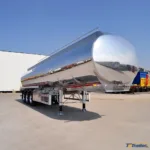
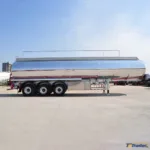
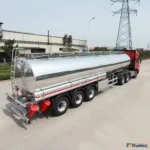
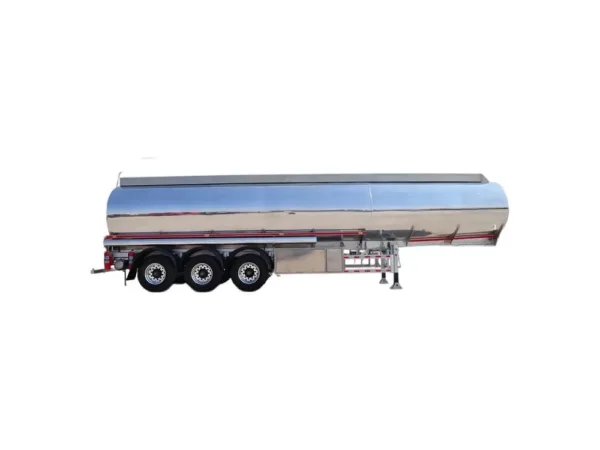
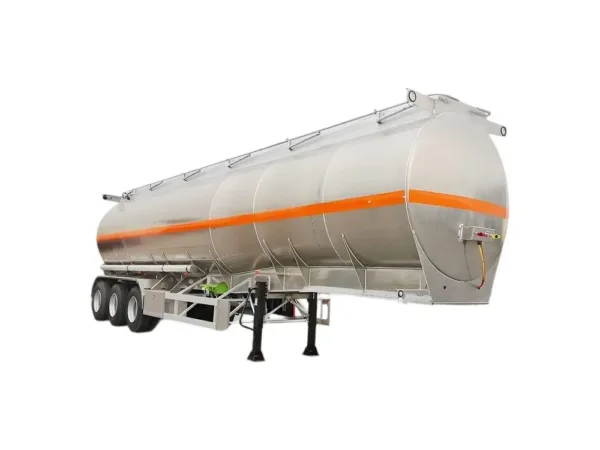
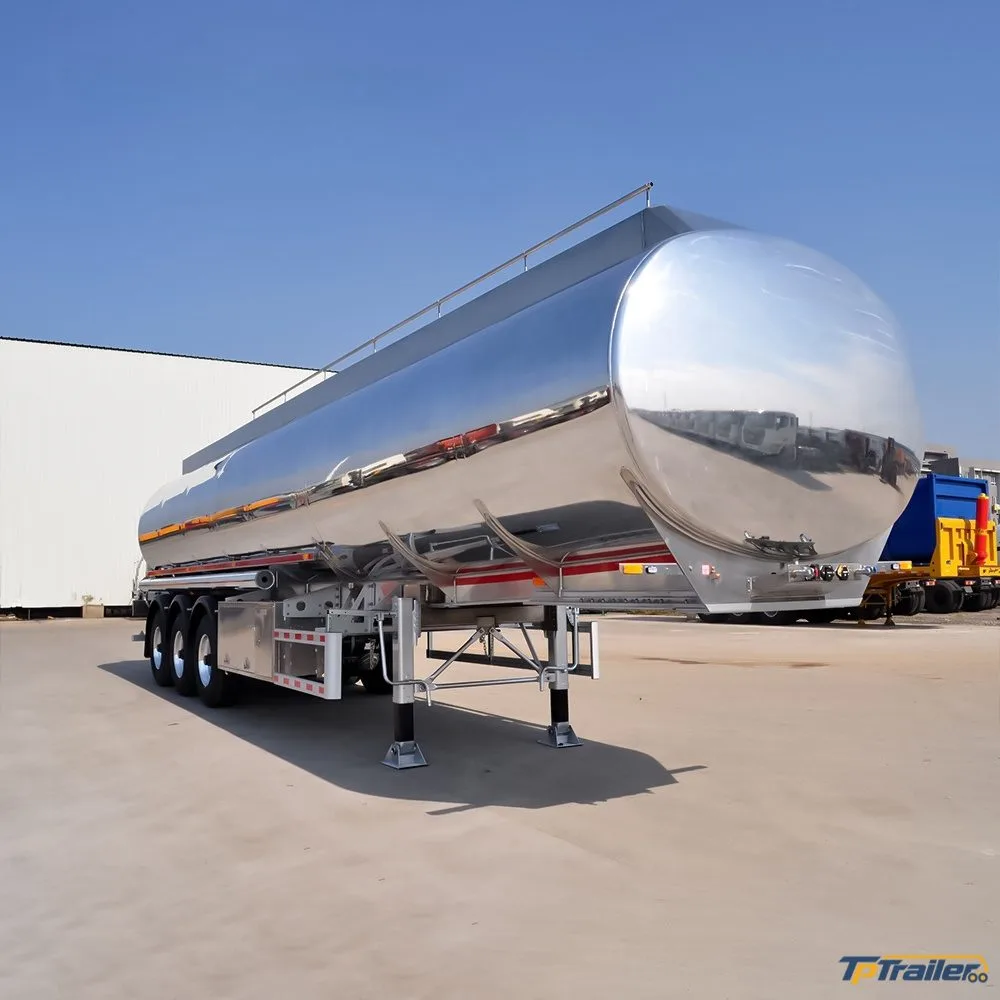
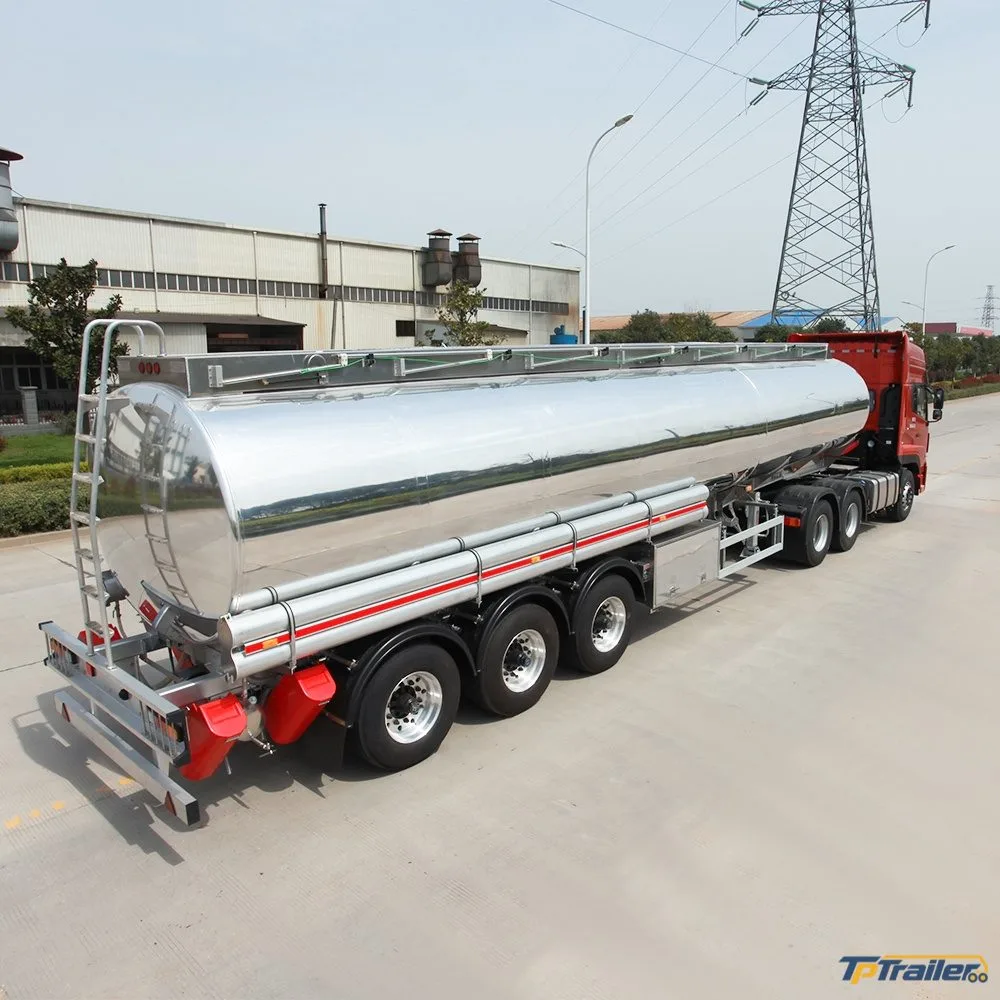
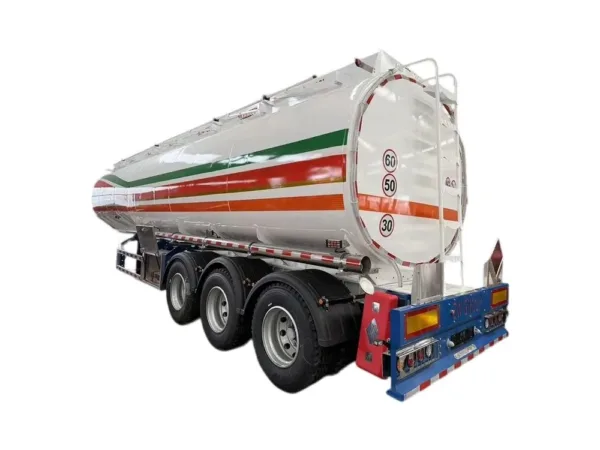
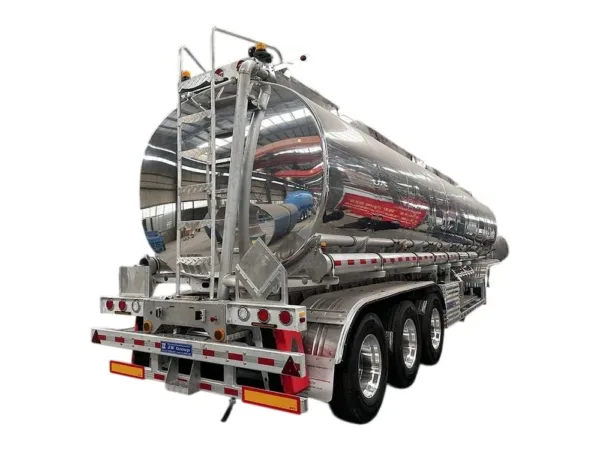
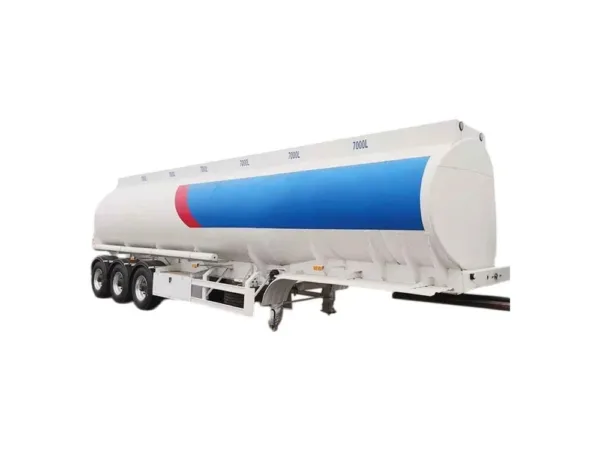
Fuel Gas Tanker Semi Trailer is the working name for this three-axle aluminium alloy liquid fuel transport tanker, built to haul petrol, diesel, gasoline and crude oil in bulk. It is aimed at fuel distributors, depot operators and haulage fleets that move liquid product between terminals, depots and retail sites. The strongest reason to choose it is the combination of an ADR-certified build and a lightweight aluminium alloy barrel: the trailer carries more of what pays and less of what does not, while the certification supports compliant operation on regulated fuel routes. Volume, compartment count and discharge hardware are all selectable, so one platform covers several hauling patterns.
Table of Contents
Why It Works On Site
Payload matched to the tractor. The declared load capacity sits in the 25001-30000 KG band, which lets a fleet operator plan axle loading and route permits around a known figure instead of guessing. That matters on depot runs where every kilogram of product counts toward revenue and every kilogram of trailer counts against it. A Fuel Gas Tanker Semi Trailer built to this band keeps the payload predictable across the fleet.
Aluminium alloy barrel. The tanker body is formed in aluminium alloy at 5mm, which keeps tare weight down relative to the payload envelope. Lower tare means the same tractor can move more product per trip, and the barrel resists corrosion in continuous fuel service. That is the core trade a Fuel Gas Tanker Semi Trailer makes: less steel, more cargo.
Compartment flexibility. One to nine compartments let one trailer carry several grades in a single run. A depot can load petrol and diesel together, or split a delivery across different retail sites without a second vehicle. For operators running mixed drops, this Fuel Gas Tanker Semi Trailer removes a whole trip from the schedule.
Manholes and venting. Two to nine 16-inch or 20-inch manholes with vent valves give safe access for loading, sampling and inspection while managing vapour pressure. Ground crews can open, gauge and seal each compartment quickly, which shortens turnaround at the loading gantry and keeps the Fuel Gas Tanker Semi Trailer moving.
Discharge and bottom valve options. A 4-inch API adaptor valve or 3-inch spherical valve pairs with a 3-inch or 4-inch bottom valve controlled by pneumatic block. That gives the operator a discharge setup that matches the receiving terminal’s coupling, and pneumatic control keeps the operator out of the product line during unloading.
Optional bottom loading. Where the terminal supports it, overfilling and recovery systems allow bottom loading, which cuts vapour generation and speeds the fill. Fleets working modern gantries can specify this on the Fuel Gas Tanker Semi Trailer and load without top-side handling.
Where It Is Used
The most common duty is the depot-to-station run. A Fuel Gas Tanker Semi Trailer loads at a fuel terminal and delivers petrol and diesel to retail forecourts, splitting the drop across compartments so one trip serves several sites. Compartment counts in the upper range suit this pattern, because each site gets its own sealed section and the crew is not decanting between deliveries.
Short urban and peri-urban routes reward the aluminium barrel, since repeated stop-start work is where tare weight and quick turnaround pay back most. Manhole access and pneumatic bottom valves matter here, because forecourt unloading points vary and the crew needs to connect, discharge and disconnect without delay. Operators running a mixed fleet will recognise this as the bread-and-butter work of a Fuel Gas Tanker Semi Trailer.
The second pattern is bulk transfer between terminals, refineries and storage farms, where the trailer moves crude oil or large single-grade volumes over longer highway legs. Here the higher end of the payload band and the larger volume range come into play, and a single-grade configuration with fewer compartments is often the simpler choice.
The main beam in Q345 carbon steel carries the barrel over sustained road duty, and the handrail, manual or pneumatic, gives the crew a safe walkway for top access during gauging and sampling. Fleets that also run industrial deliveries use the same Fuel Gas Tanker Semi Trailer for heating oil and other liquid fuel cargo, keeping one trailer type across several contracts rather than dedicating units to a single product.
Choosing The Right Spec
Volume against payload. The volume range runs from 28000 to 70000 liters, and the declared load capacity sits in the 25001-30000 KG band. Match the barrel size to the product density you actually haul and to the payload band, so the trailer is filled by weight as well as by volume. A Fuel Gas Tanker Semi Trailer sized this way avoids running part-full on dense cargo.
Compartment count. Choose one to nine compartments by how many drops or grades a trip must cover. Single-grade terminal transfers favour fewer, larger compartments; multi-site forecourt delivery favours more, smaller ones. This is the decision that most changes how the Fuel Gas Tanker Semi Trailer earns its keep day to day.
Discharge hardware. Pick the 4-inch API adaptor valve or the 3-inch spherical valve according to the coupling your receiving terminals use, and pair it with a 3-inch or 4-inch pneumatic bottom valve. Getting this right at order time means the trailer connects without adapters on site, which keeps unloading quick and safe.
Loading method and access. Specify bottom loading with overfilling and recovery where the gantry supports it, and choose manual or pneumatic handrail for top access. Manhole sizing, 16-inch or 20-inch, follows your loading and sampling routine. Each choice should follow the terminals the Fuel Gas Tanker Semi Trailer will actually visit.
Customisation Before Delivery
Axle count is the first decision on a Fuel Gas Tanker Semi Trailer, because it sets how the load is spread and how the trailer tracks. The configuration is agreed at order confirmation, together with the suspension type, so the running gear matches your routes and your tractor. Nothing is fixed until both sides sign off the order sheet.
Volume and compartment count go together. The tank body is built to the capacity and the number of compartments you select, and each compartment carries its own manhole and discharge valve arrangement. Buyers moving one product usually choose fewer, larger compartments; buyers serving several grades choose more. The split is settled at order confirmation.
Discharge hardware is a choice, not a default. You can specify the API adaptor valve or the spherical valve, and the bottom valve is operated by pneumatic block. Handrail operation can be manual or pneumatic. These selections change how the operator works at the terminal, so they are confirmed on the order rather than assumed.
Optional bottom loading adds overfilling protection and a recovery system. This suits operators loading at terminals with vapour recovery, and it is specified before build because the pipework and fittings differ from a top-loading layout. Whether you take it is agreed at order confirmation, along with the rest of the Fuel Gas Tanker Semi Trailer specification.
Finish and fittings round out the order. Colour, and the small hardware items that suit your fleet, are recorded on the same sheet as the structural choices. Because the tank, running gear and valves are all built to one order, every option is locked in at confirmation, and later changes are handled as a new instruction rather than a build adjustment.
Fitting And Installation
On arrival, the work starts at the coupling. The tractor must present a compatible fifth wheel, and the trailer’s kingpin and landing gear positions have to line up with the tractor’s geometry. Air lines and electrical cables are then run to the trailer, and the brake system is checked for correct connection and release.
Because the input gives no fitment dimensions, a fitment drawing is confirmed at quotation, and the buyer should match mounting points, tube size and hose routing against that drawing before the trailer enters service. A Fuel Gas Tanker Semi Trailer that is coupled to the wrong tractor height or plumbed to the wrong line size will sit badly or brake unevenly, and the correction is workshop time you did not plan for.
The tank side of installation is about the valves and the loading interface. Manholes, the discharge valve and the pneumatic bottom valve controls must be reachable and correctly connected, and the handrail system, manual or pneumatic, has to be operable from the standing position your terminal expects. Hose routing from the discharge valve to the receiving point should be checked for length and bend before the first load.
Where bottom loading is fitted, the overfilling and recovery connections need to match the terminal equipment. A wrong size here costs downtime at the gantry, not just at the workshop, and a Fuel Gas Tanker Semi Trailer held at the loading bay is earning nothing. Confirm the interface at quotation, then verify it on arrival.
Service Life And Maintenance
The tank shell is the first thing to watch. The aluminium alloy body carries the product, so the operator should inspect for dents, abrasion and any sign of stress around the mountings. Keeping the shell clean and free of standing corrosive residue extends its working life, and prompt attention to minor damage stops it spreading on a Fuel Gas Tanker Semi Trailer in daily fuel service.
Valves wear first. The discharge valve, the bottom valve and the pneumatic block see movement and product on every load, so they should be checked for seepage and for free operation. Seals are consumable items. Replacing them when they first weep protects the load and the ground, and it is cheaper than dealing with a failed valve on a Fuel Gas Tanker Semi Trailer mid-route.
Manhole covers and vents need routine attention. Each cover carries a vent valve, and a blocked or stiff vent disturbs loading and discharge. The operator should open and close each cover, confirm the seal seats, and check that the vent is clear. This is a short check that prevents pressure problems and keeps a Fuel Gas Tanker Semi Trailer loading at the expected rate.
The running gear carries the load. Tyres, suspension and brake components should be inspected on a regular walk-round, with attention to uneven wear that points to alignment or load distribution issues. The main beam is Q345 carbon steel, and its welds and mountings deserve a look at each service. Catching a loose fixing early protects the tank body on a Fuel Gas Tanker Semi Trailer.
Handrails and access hardware are safety items. Manual or pneumatic handrail systems should be checked for secure mounting and smooth movement, and the pneumatic control should be tested for response. Any slack or sticking is corrected before the next load. A Fuel Gas Tanker Semi Trailer is only as safe as its access points, and this check takes minutes at the depot.
Packing And Container Loading
The Fuel Gas Tanker Semi Trailer ships as a complete unit or in sections, depending on the volume ordered. The tanker body is wrapped to keep road grit and salt spray off the aluminum alloy shell during sea freight. Manholes and discharge valves are capped so no moisture enters the barrel. The main beam and running gear are braced to stop movement inside the hull. Buyers should ask the supplier to photograph the unit before loading.
Nesting is not possible for a Fuel Gas Tanker Semi Trailer. The barrel, main beam and running gear form a rigid unit that cannot be stacked without risking shell distortion. Loading is normally roll-on or lift-on, one unit per slot. Where several units ship together, axle sets and loose fittings travel separately in crates. The buyer should confirm the loading plan and check the tanker shell, manhole covers and valve seats on arrival. Any dent or seal damage must be noted before signing.
Common Mistakes Buyers Make
Ordering the wrong axle count. A buyer specifies a three-axle Fuel Gas Tanker Semi Trailer but later needs a four-axle layout for local road rules. The running gear cannot be changed after build. The single check is to confirm the permitted axle configuration with the transport authority before signing the order, and to state the axle count in writing on the purchase order.
Ignoring compartment count. The number of compartments sets how many products can be carried in one trip. Buyers often accept a single-compartment tank and then discover they need segregated loads. The single check is to list every fuel grade the trailer will carry and map each one to a compartment before the tanker body is welded.
Mismatching the discharge valve. A Fuel Gas Tanker Semi Trailer can be built with an API adaptor valve or a spherical valve, and the two do not interchange at the terminal. The single check is to confirm the coupling type used at the buyer’s unloading point and to name that valve type on the order.
Overlooking bottom loading options. Overfilling protection and recovery systems are optional, and a buyer who skips them may find the Fuel Gas Tanker Semi Trailer cannot load at a vapour-recovery terminal. The single check is to ask the loading site whether bottom loading with recovery is required, then confirm the option at quotation.
Assuming the tanker body thickness suits every duty. The shell thickness is fixed per build, and a buyer who never states the duty cycle may get a specification that does not match the routes. The single check is to state the payload and the products carried, then confirm the tanker body specification against that duty in writing.
Buyer Questions
Can the Fuel Gas Tanker Semi Trailer be shipped in one container?
A complete unit is too large for a standard container, so it is usually shipped as break bulk, roll-on or flat rack, depending on the route. Ask the supplier to confirm the shipping method and the number of units per shipment before you book freight. Measure the unit length, width and height from the approved drawing, then compare them with the vessel or terminal limits. Packing details and the loading plan are confirmed at quotation.
What should I check on arrival before accepting delivery?
Inspect the aluminum alloy shell for dents, the manhole covers for seal damage, and the discharge and bottom valve seats for packing debris. Check that the main beam and running gear show no movement marks, and that handrail fittings are complete. Photograph every panel before signing. Any damage must be recorded on the delivery note and reported to the supplier the same day. The exact inspection list is confirmed at quotation.
Can I order different compartment counts in one batch?
Yes, compartment counts can differ between units in one order, because each Fuel Gas Tanker Semi Trailer is built to its own specification. Give the compartment count, valve type and loading option for each unit separately. Mixing configurations in one batch can affect the loading plan, so confirm it with the supplier before booking. The full configuration set and batch terms are confirmed at quotation.
To receive a quotation, send the overall length you need, the axle count, the compartment layout and the quantity of units. State the discharge valve type and whether bottom loading is required. Our team will confirm the Fuel Gas Tanker Semi Trailer configuration and packing plan against your route and terminal.
We use cookies to enhance your browsing experience, serve personalized content, and analyze our traffic. By clicking "Accept All", you consent to our use of cookies. Privacy Policy
Cookie Preferences
Required for the website to function properly. Cannot be disabled.
Help us understand how visitors interact with the website (Google Analytics).
Used to deliver personalized ads and measure ad campaign effectiveness.



















Write a Review