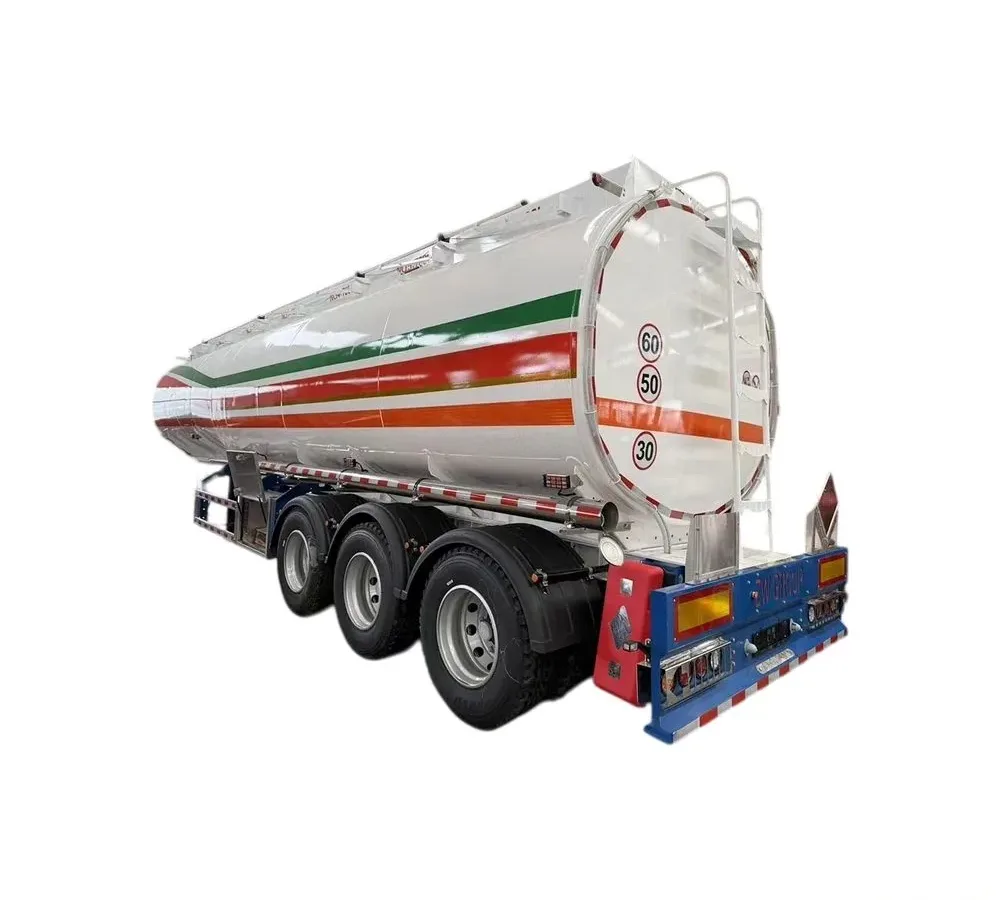
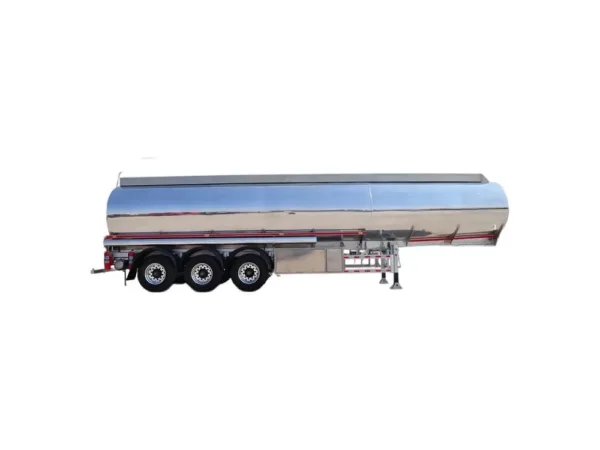
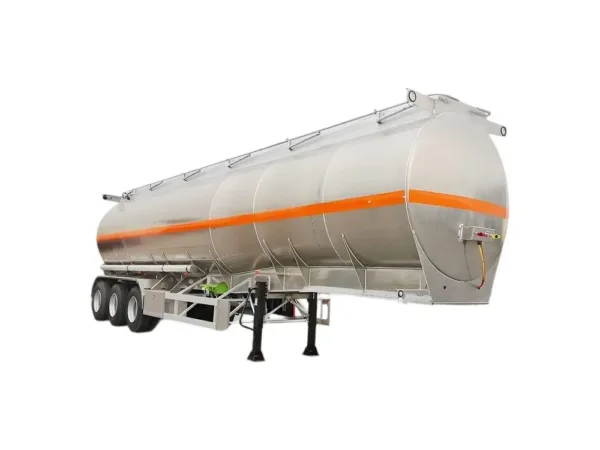
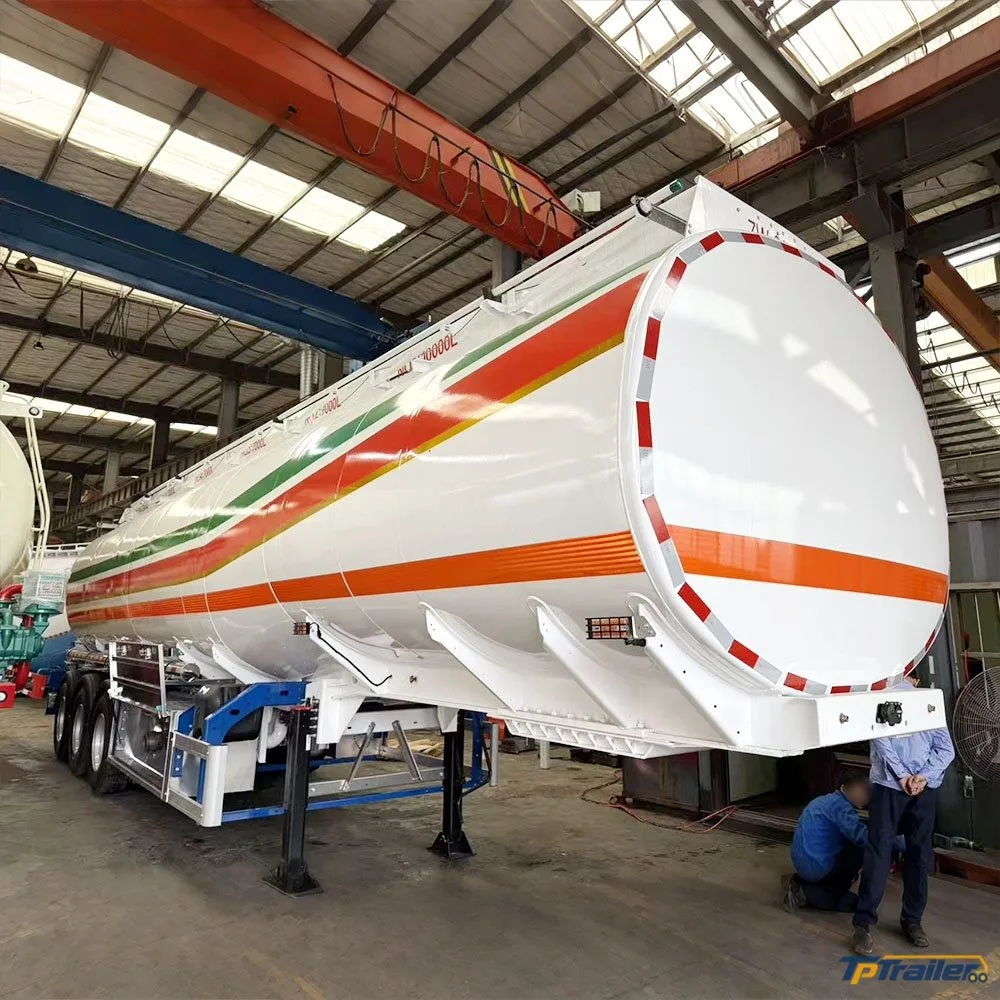
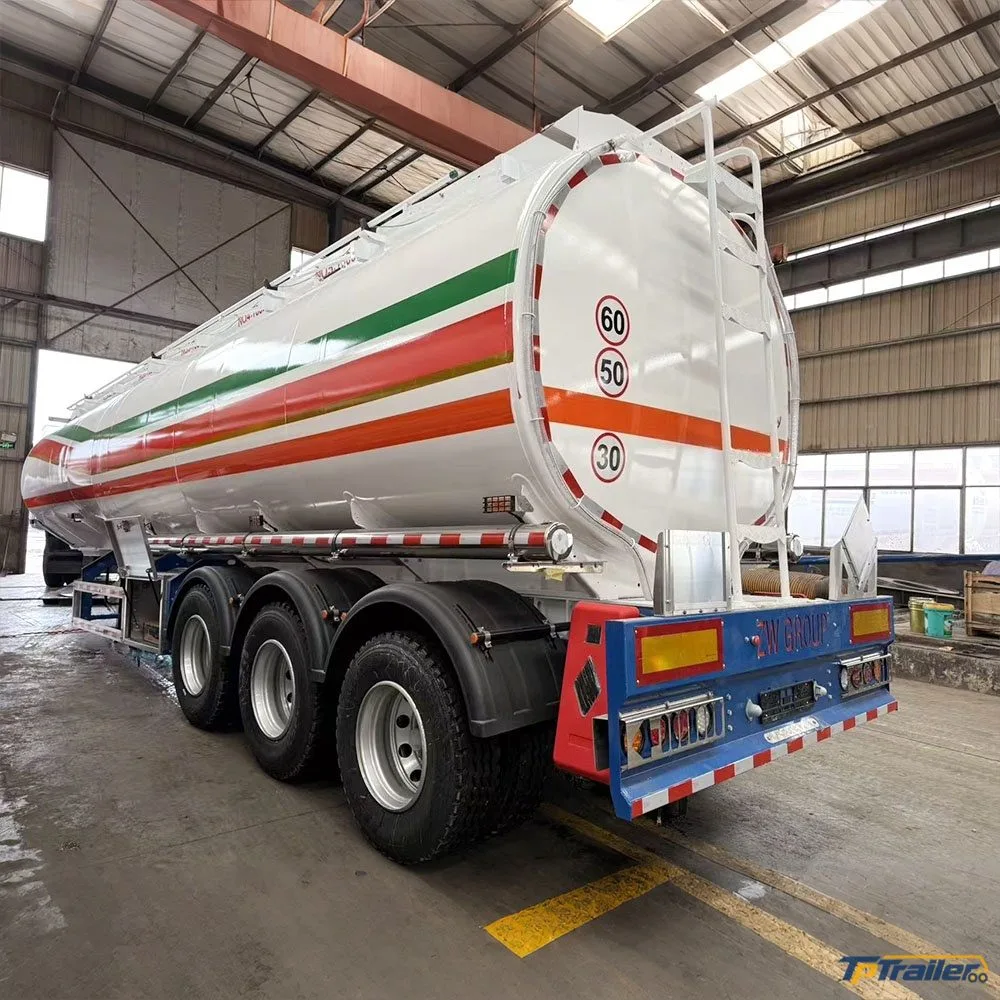
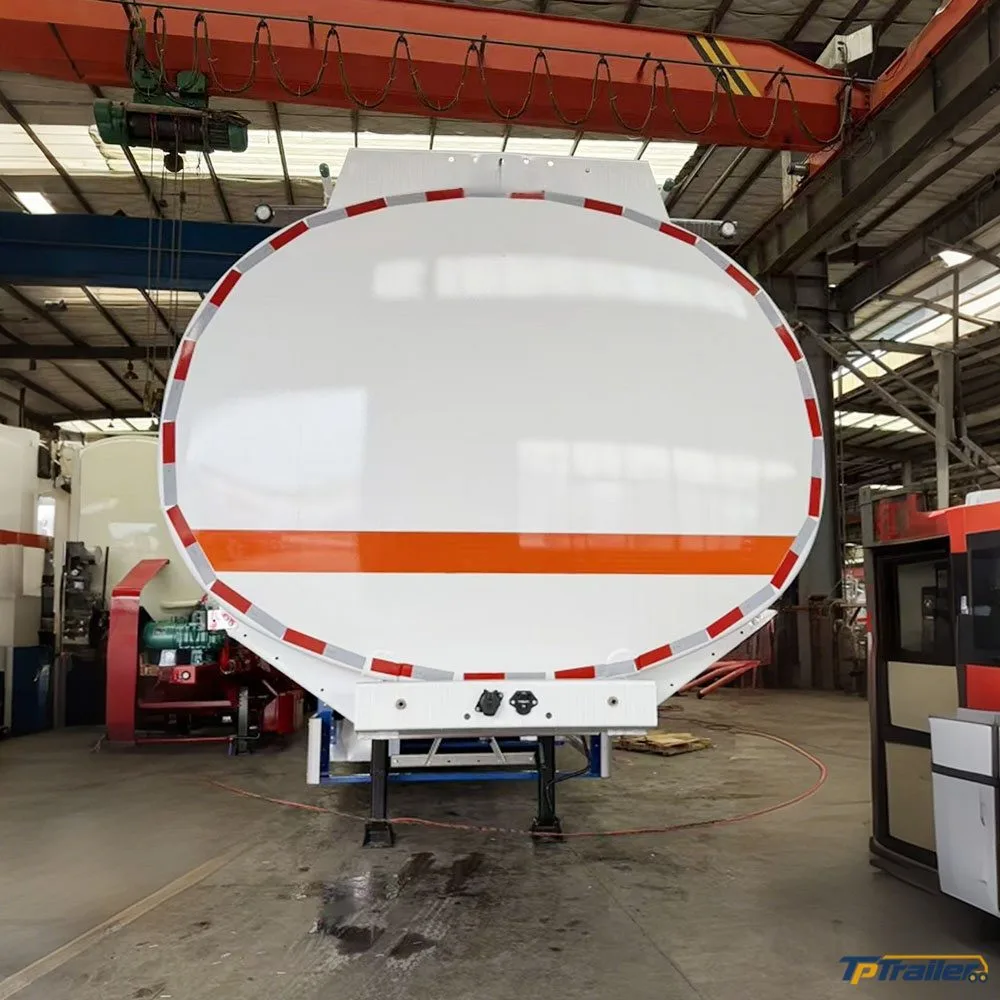
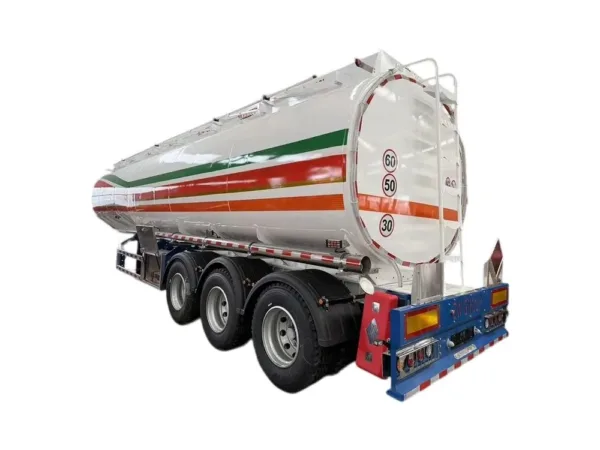
Lightweight aluminum fuel tanker trailer transport with 45000L capacity and 3 axles for diesel, gasoline and crude haulage. Quotes available on request.
30000 3
FOB Reference PriceUS$6,000-10,000Final price confirmed by inquiry
Certifications
ISO 9001
Key Features
45000L tank volume for high-capacity diesel, gasoline and crude loads
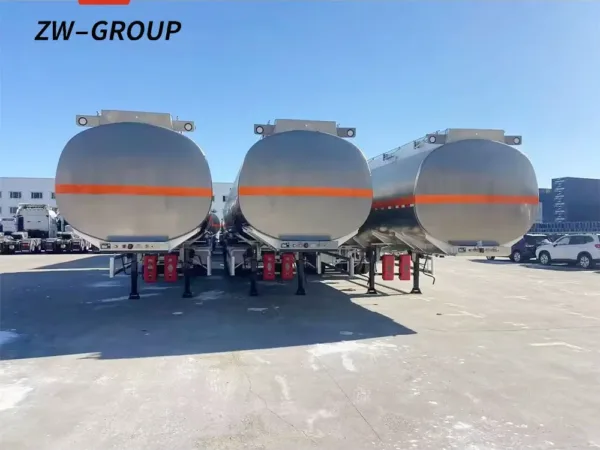
Aluminum construction keeps the trailer lightweight for the road
3 axle configuration for stable hauling on long routes
Suited to fuel delivery and oil transport fleets in Africa
Lightweight aluminum fuel tanker trailer transport starts with the tank body itself, and this unit pairs a 45000L barrel with a three-axle running gear for long-haul fuel delivery. It is built for fleet operators, fuel distributors and depot managers who move diesel, gasoline or crude oil between terminals and retail sites. The aluminum construction keeps the tare weight down, so more of the rated load goes to the cargo instead of the structure. That single advantage is why operators choose it over heavier steel-barrelled units on repeated hauls. The tank is sized for volume work, and the three-axle layout spreads that volume over the road. It suits buyers who want a working tanker without paying for weight they cannot bill.
Table of Contents
Why It Works On Site
Aluminum barrel keeps payload working. The tank shell is formed in aluminum rather than steel, which trims the structure’s own weight from every trip. That matters on a 30000 load capacity rating, because the difference between tare and gross is what the buyer actually earns. Less dead weight carried means the same tractor effort moves more product, and the trailer returns more per kilometre on every run.
45000L volume suits depot-to-station runs. The barrel is sized for bulk movement rather than small drops, so a single loading fills several retail tanks. Operators plan fewer loading cycles and fewer site visits per shift. That rhythm fits scheduled delivery routes where the trailer leaves full and returns empty, and it keeps the tanker in productive motion instead of waiting at the gantry.
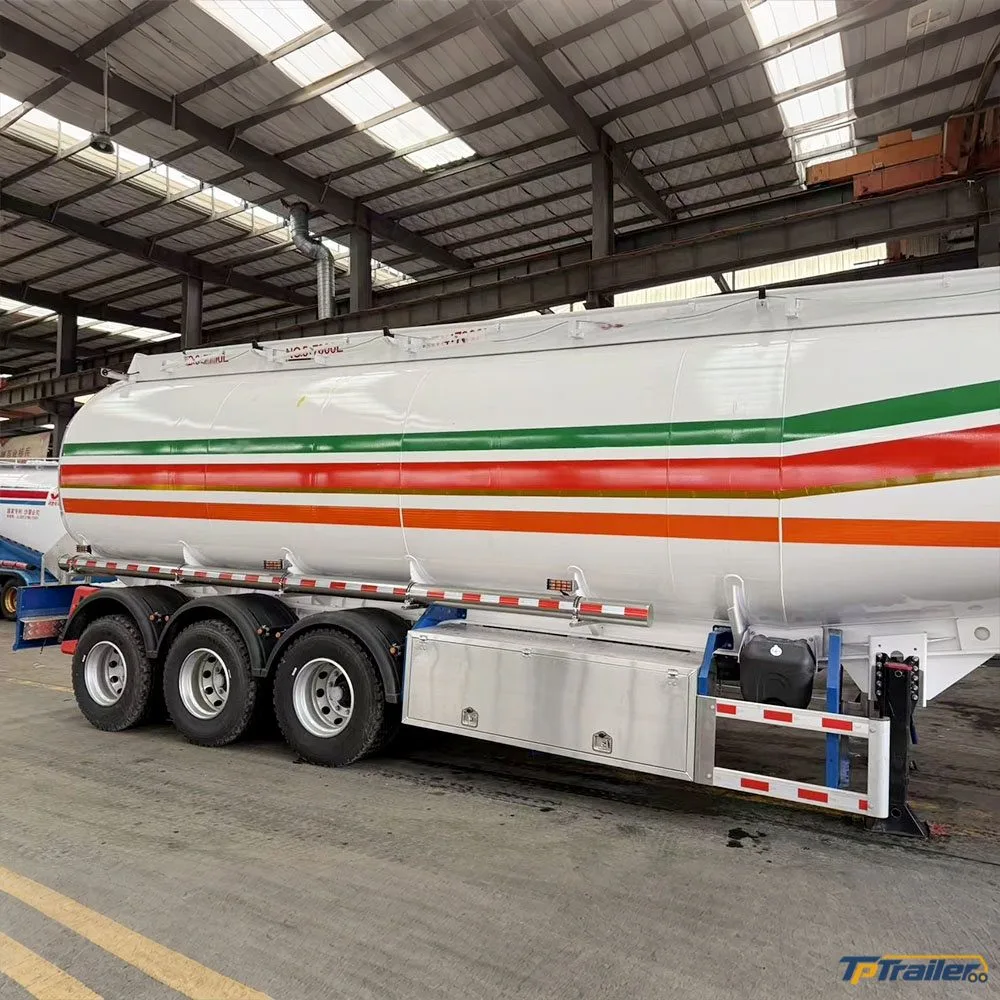
Three axles spread the load. The triple-axle bogie shares the gross weight across more contact patches, which is the practical answer to road limits and long-distance wear. It also steadies the trailer when the barrel is partly filled and the liquid shifts. For lightweight aluminum fuel tanker trailer transport over mixed highways and feeder roads, that stability is a working benefit, not a brochure line.
Aluminum resists product contamination. Fuel quality is a commercial issue, and an aluminum tank interior avoids the rust scale that can flake into the load. Cleaner product means fewer rejected deliveries at the receiving depot. The same surface behaviour reduces internal corrosion over the trailer’s working life, so the barrel holds its condition through repeated fill and discharge cycles without the interior breaking down.
Purpose-built tanker chassis. The frame, supports and barrel are engineered as one assembly rather than a tank dropped onto a general deck. That gives the operator a predictable centre of gravity and a structure that behaves the same loaded or empty. Drivers get consistent handling on the route, and maintenance crews work on known components instead of adapting generic parts.
Simple mechanical layout for African routes. The running gear and tank fittings use conventional, serviceable designs. That keeps lightweight aluminum fuel tanker trailer transport viable where specialist diagnostics are far away. A workshop with basic tools can handle brakes, bearings and seals, so the trailer spends less time waiting for a part and more time on the delivery schedule.
Where It Is Used
The most common job for this trailer is bulk fuel distribution between a terminal or refinery depot and a network of filling stations. A 45000L barrel means one loading covers a full day of station drops rather than a series of small top-ups, and the three-axle layout handles the highway leg between the gantry and the retail sites. Operators running scheduled routes value the repeatable cycle: load, run, discharge, return.
Because the aluminum barrel keeps tare low, lightweight aluminum fuel tanker trailer transport on these routes returns more litres per trip than a heavier unit of the same volume. The trailer also suits depot-to-depot transfers, where the cargo moves in volume and the discharge point is another storage tank rather than a retail pump.
Beyond retail supply, the trailer fits construction and industrial fuel logistics. Sites running generators, plant and heavy equipment need diesel delivered where there is no pipeline, and a tanker of this size keeps several machines supplied from one run. The same applies to agricultural operations during peak season, when fuel demand concentrates in a short window. Crude oil and gasoline movement between collection points and storage yards is another recognised duty, provided the operator matches the tank and fittings to the product. For lightweight aluminum fuel tanker trailer transport across long intercity corridors with mixed road surfaces, the triple-axle running gear and stable barrel behaviour make the trailer a practical choice for fleets that cannot afford downtime.
Choosing The Right Spec
Match barrel volume to route density. The 45000L barrel suits operators whose routes combine several drops or one large transfer per cycle. If your daily demand is smaller, the same trailer still works but carries unused capacity. Buyers should compare their typical load size against the barrel volume before ordering, because the right match keeps the trailer full on most runs and protects the delivery economics.
Check the load capacity against your product. The rated load capacity is 30000, and fuel density varies by product, so the operator must confirm the barrel is not filled beyond the rated figure for the cargo carried. Gasoline, diesel and crude do not weigh the same per litre. Matching the fill level to the rating is the difference between a compliant run and an overloaded one, and it protects both the trailer and the driver.
Plan around the three-axle configuration. Three axles suit long-haul and mixed-road duty where weight distribution and stability matter. Operators running mostly short depot shuttles still benefit from the steadier loaded behaviour, while fleets crossing long corridors gain from the shared load across the bogie. Consider your route profile and road limits when confirming the axle layout with the supplier.
Order quantity changes the unit price. Pricing steps down as order volume rises, so a single unit and a fleet order are different commercial decisions. Buyers adding several trailers to a lightweight aluminum fuel tanker trailer transport fleet should plan the order size against the published tiers rather than buying one at a time, and should confirm the specification stays identical across the batch.
Customisation Before Delivery
Axle count and configuration. The trailer is offered as a three-axle unit, and the axle arrangement is confirmed against the loads you plan to move. Buyers who run lighter routes sometimes ask for fewer axles to trim tare weight. For lightweight aluminum fuel tanker trailer transport, the axle choice sets how the load spreads across the road. Every option is settled at order confirmation, not guessed afterwards.
Suspension type. Mechanical and air suspension are both discussed at quotation, and the choice depends on the road surfaces on your regular routes. Air suspension suits operators who want a softer ride over long hauls. Mechanical suspension is often picked for rougher running. For lightweight aluminum fuel tanker trailer transport, the suspension also affects how the tank shell is stressed. Confirm it when you place the order.
Tyre specification and spares. Tyre size, brand tier and the number of spare wheels are agreed before the build starts. Fleets that cross long distances often carry one or two spares per unit. The tyre set must match the axle rating you selected. In lightweight aluminum fuel tanker trailer transport, a mismatched tyre size is a roadside problem, so settle it at order confirmation.
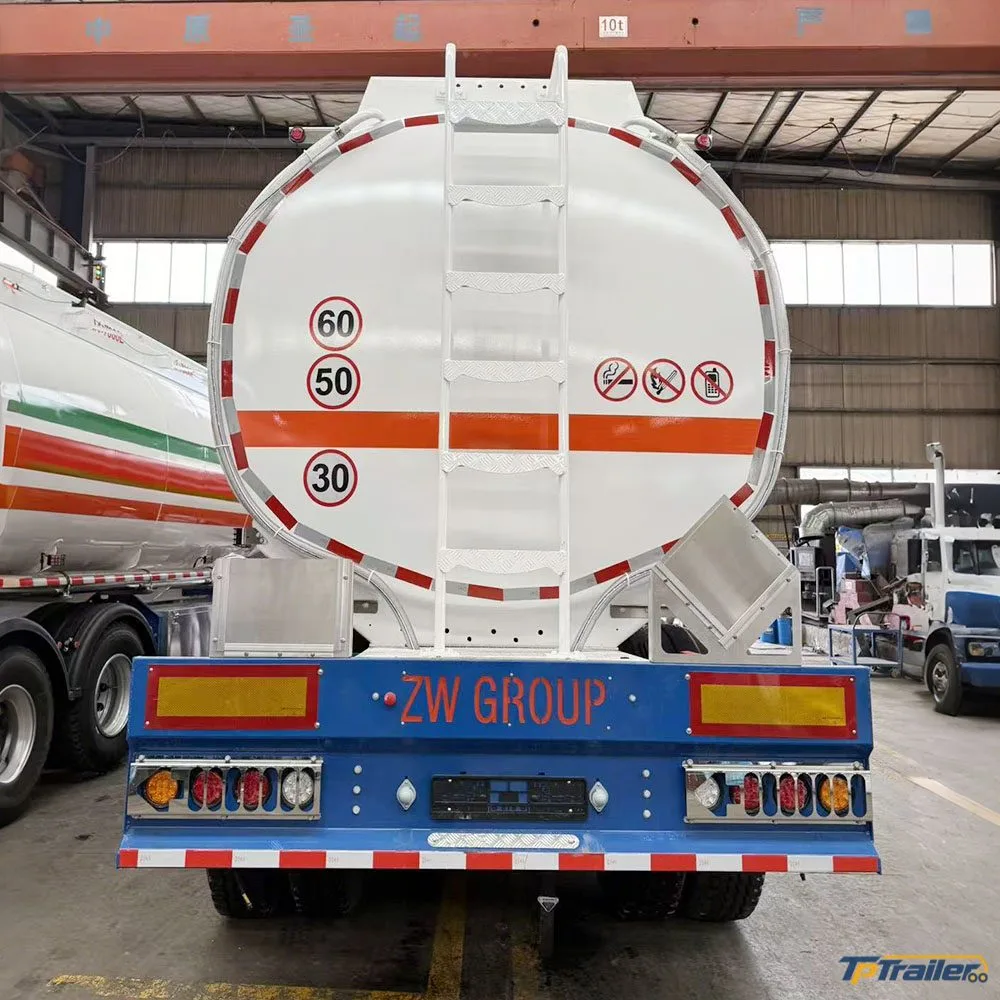
Colour and marking scheme. Tank and chassis colour, reflective striping and any fleet lettering are chosen at order confirmation. Operators shipping into Ghana often pick high-visibility colours for dusty roads. Markings are applied per your artwork, and the layout is approved before production. Lightweight aluminum fuel tanker trailer transport fleets use consistent colour to simplify inspection records across a fleet.
Tank fittings and accessory set. Manhole covers, bottom valves, hose carriers and ladder placement are selected from the options offered. The accessory list is fixed alongside the tank layout so the fittings line up with your loading point. For lightweight aluminum fuel tanker trailer transport, accessory choice affects daily turnaround at the depot. All of it is confirmed at order confirmation.
Fitting And Installation
On arrival, the buyer has to match the trailer to the towing tractor and to the loading and unloading points. Check the kingpin and fifth wheel interface first, then the electrical socket and air line couplings. Confirm the landing gear position clears your yard ramps. The tank fittings must line up with the hose and nozzle sizes you use at the depot.
Mounting points on the chassis are fixed by the build, so the tractor setup is what usually needs adjusting. Because the input carries no fitment drawing, a fitment drawing is confirmed at quotation instead of being assumed here. That drawing is the reference for hose routing and for where the discharge valve sits relative to your unloading bay. For lightweight aluminum fuel tanker trailer transport, a trailer that matches the tractor on day one is the difference between a working unit and a parked one.
A wrong size costs downtime that no schedule recovers. If the hose coupling does not match the depot nozzle, the trailer sits idle while an adapter is sourced. If the electrical plug does not match the tractor socket, lights and brake signals fail the pre-trip check. If the kingpin height is wrong, the tractor cannot couple safely and the unit cannot leave the yard.
Each mismatch is a separate delay, and they stack up when a fleet takes delivery of several units at once. For lightweight aluminum fuel tanker trailer transport, the fix is to confirm the fitment drawing before the build, not after arrival. Send your tractor model, hose sizes and unloading arrangement with the order. The drawing then locks the interface points, and the delivery inspection becomes a checklist rather than a negotiation.
Service Life And Maintenance
The tank shell and welds. The aluminum shell and its welds are the first place to watch on any unit. Operators should inspect seams, baffle welds and the shell surface for cracks or corrosion at each scheduled check. Aluminum resists corrosion better than steel, which is why it is chosen for fuel service. For lightweight aluminum fuel tanker trailer transport, clean shell surfaces make small defects visible before they grow.
Valves, seals and gaskets. Bottom valves, manhole gaskets and pipe seals wear before the tank does. The operator should check for weeping at every joint and replace gaskets at the first sign of hardening. A leaking seal is a safety issue, not just a spill. In lightweight aluminum fuel tanker trailer transport, valve condition decides whether a unit passes its pre-load check. Keep spare gaskets on the shelf.
Baffles and internal structure. Baffles control load movement, and their welds carry repeated stress. Inspectors should look for loose baffles by listening for movement and by checking weld lines through the manhole. A baffle that has worked loose changes how the load shifts in a turn. For lightweight aluminum fuel tanker trailer transport, baffle integrity is a handling issue as much as a structural one. Record every inspection.
Suspension, axles and brakes. Suspension bushes, brake linings and axle bearings are the running-gear items that wear first. The operator should check brake adjustment, tyre pressure and bush condition on a fixed schedule. Air suspension adds components that need their own inspection. For lightweight aluminum fuel tanker trailer transport, running-gear checks protect both the load and the tank shell from road shock. Keep the inspection log with the unit.
Surface finish and chassis coating. The chassis coating and any painted surfaces take the road grit. Wash the chassis after long dusty runs and touch up chips before they spread. The aluminum tank needs less coating care than a steel shell, which extends the interval between cosmetic repairs. For lightweight aluminum fuel tanker trailer transport, a clean chassis reveals leaks early. Record touch-ups so the next inspection starts from a known state.
Packing And Container Loading
An aluminum tanker trailer ships as a complete unit, not as a boxed part, so protection focuses on the shell, the running gear and the exposed fittings. The tank body is cleaned and sealed, and openings are capped so sea air and moisture stay out of the barrel. Axles, suspension and landing gear travel as fitted. Buyers planning lightweight aluminum fuel tanker trailer transport should confirm which fittings are removed and packed separately before booking freight.
Stacking is not possible for a finished trailer, and nesting does not apply. Each unit occupies its own footprint on a flat rack, in a bulk hold or on a ro-ro deck, so freight planning is about deck space rather than container volume. Lightweight aluminum fuel tanker trailer transport rewards early booking because space is booked per unit. On arrival, check the shell for dents and abrasion, verify seals and caps, and inspect the running gear before the unit leaves the port.
Common Mistakes Buyers Make
Ordering capacity by habit rather than by route. The load capacity in the specification is the figure the trailer is built around, and the title mentions a larger tank volume. Buyers who mix the two end up with a unit that does not match their permit or their cargo plan. Check both numbers against the intended duty before signing.
Ignoring axle count and layout. The axle count affects how the trailer sits on the road and how it is rated for the load. A buyer who specifies the wrong count for the route discovers it at registration. Confirm the axle configuration in writing on the order, not from a photo.
Assuming a standard finish suits every climate. Aluminum resists corrosion, but fittings, seals and coatings still matter in hot, humid or coastal service. A buyer who skips the climate discussion gets a generic build. State the operating region and ask which fittings are specified for it.
Leaving packing and loading to the supplier. Lightweight aluminum fuel tanker trailer transport goes more smoothly when the buyer confirms how the unit is secured, which parts are removed and what documentation travels with it. Buyers who stay silent on loading get assumptions. Agree the loading plan before the unit is dispatched.
Checking only the shell on arrival. Dents on the barrel are obvious, but damaged seals, caps or running gear are easy to miss. Once the unit leaves the port, claims get harder. Inspect every fitting against the packing list and photograph anything that looks wrong.
Buyer Questions
How is the trailer protected during sea freight?
The tank body is cleaned and sealed, and all openings are capped so moisture and salt air cannot enter the barrel during the voyage. Fittings that could catch or rub are removed or packed separately, and the unit is secured on its own deck space. Ask the supplier to confirm the exact packing list and securing method at quotation. Before the unit leaves the port, inspect seals, caps and the shell, and photograph any damage so a claim can be raised while the cargo is still with the carrier.
Can the trailer be shipped in a container to save cost?
A finished tanker trailer is a large unit and cannot be nested or stacked, so lightweight aluminum fuel tanker trailer transport is normally arranged on a flat rack, in a bulk hold or on a ro-ro deck rather than inside a standard container. Confirm the shipping method and the dimensions with the supplier at quotation. The buyer should then match that footprint against the carrier’s deck space and book early, because space is allocated per unit rather than per cubic metre.
What should I confirm before placing the order?
Confirm the load capacity against your route and cargo plan, the axle count and layout for registration, and the fittings specified for your operating climate. Ask how the unit will be packed and secured, and which documents travel with it. Lightweight aluminum fuel tanker trailer transport also depends on booking deck space early, so agree the shipping method at the same time. Put every point in the written order rather than relying on a photo or a verbal assurance.
Send the trailer length you need, the axle count and the quantity you plan to order. With those three details the supplier can confirm the build, the loading plan and the price tier that applies to your volume. Include your destination port so lightweight aluminum fuel tanker trailer transport can be quoted alongside the unit.
We use cookies to enhance your browsing experience, serve personalized content, and analyze our traffic. By clicking "Accept All", you consent to our use of cookies. Privacy Policy
Cookie Preferences
Required for the website to function properly. Cannot be disabled.
Help us understand how visitors interact with the website (Google Analytics).
Used to deliver personalized ads and measure ad campaign effectiveness.
















Write a Review