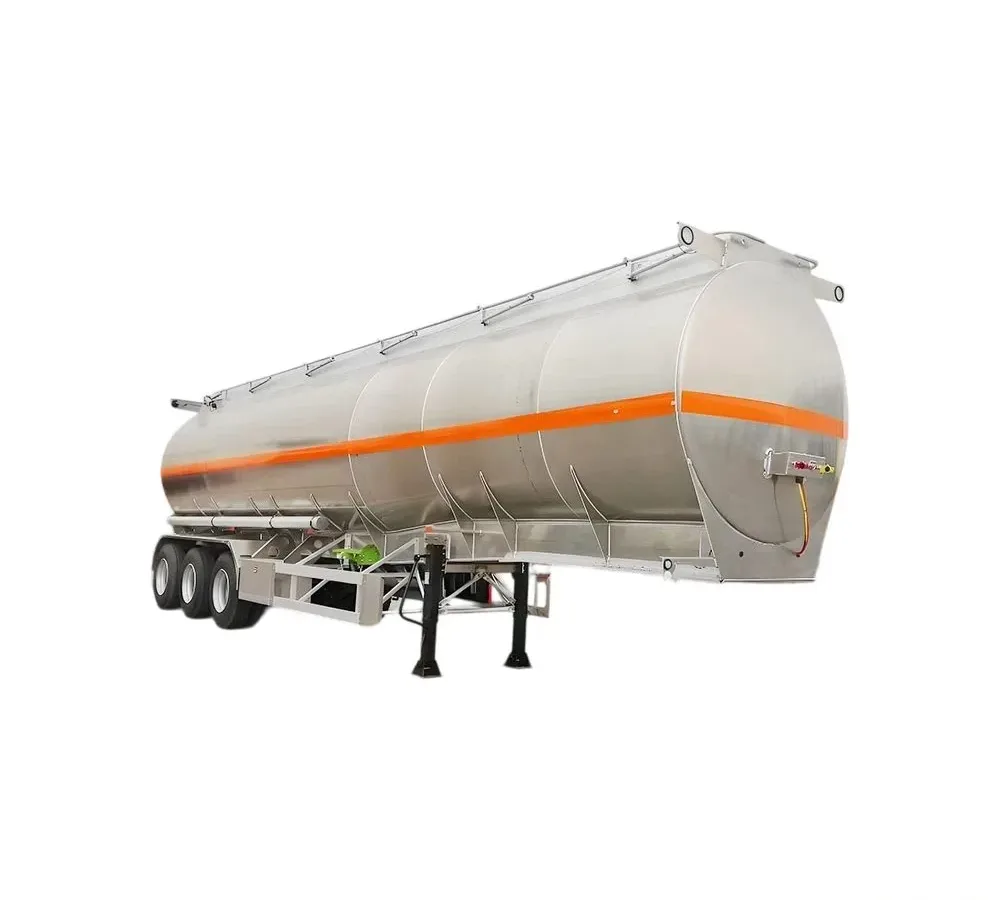
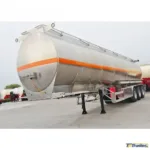
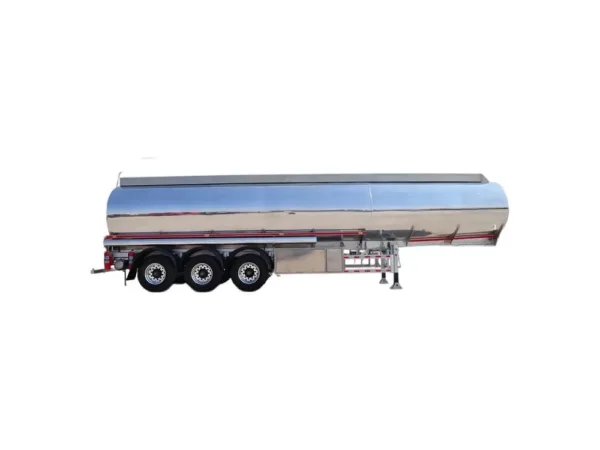
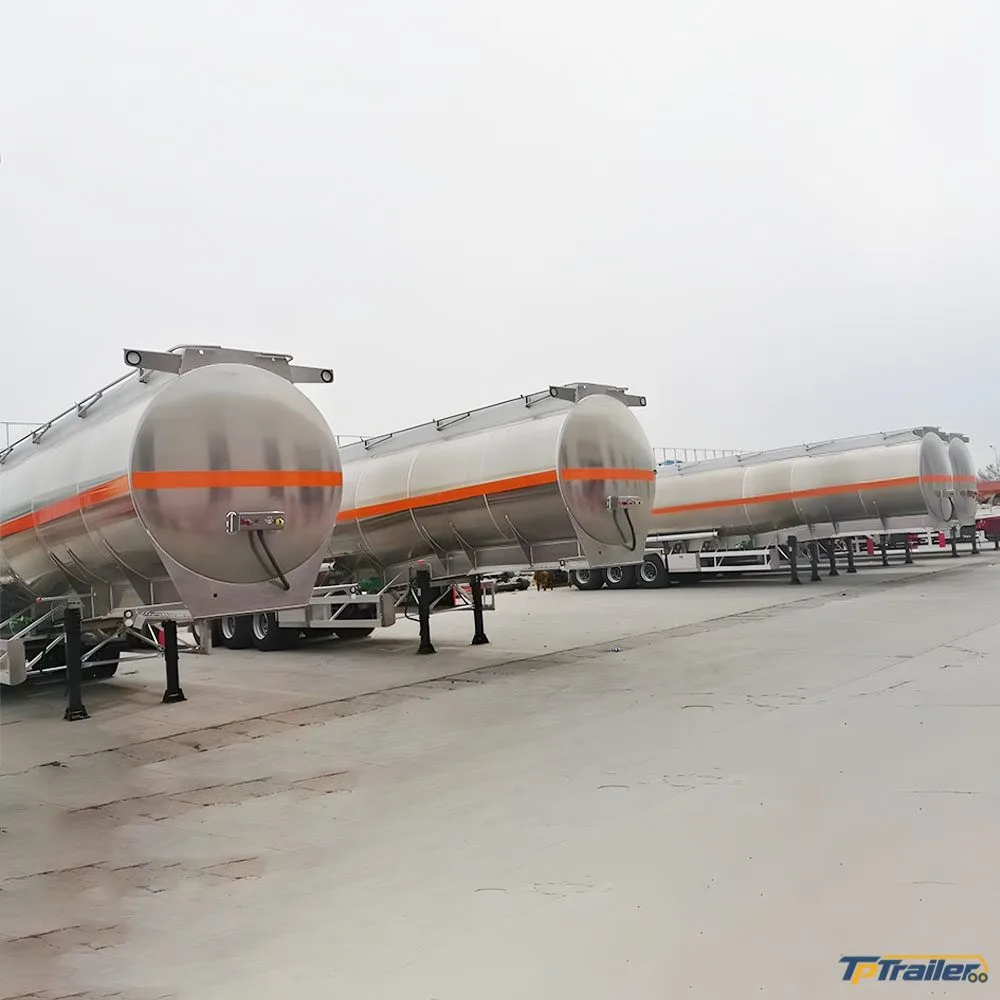
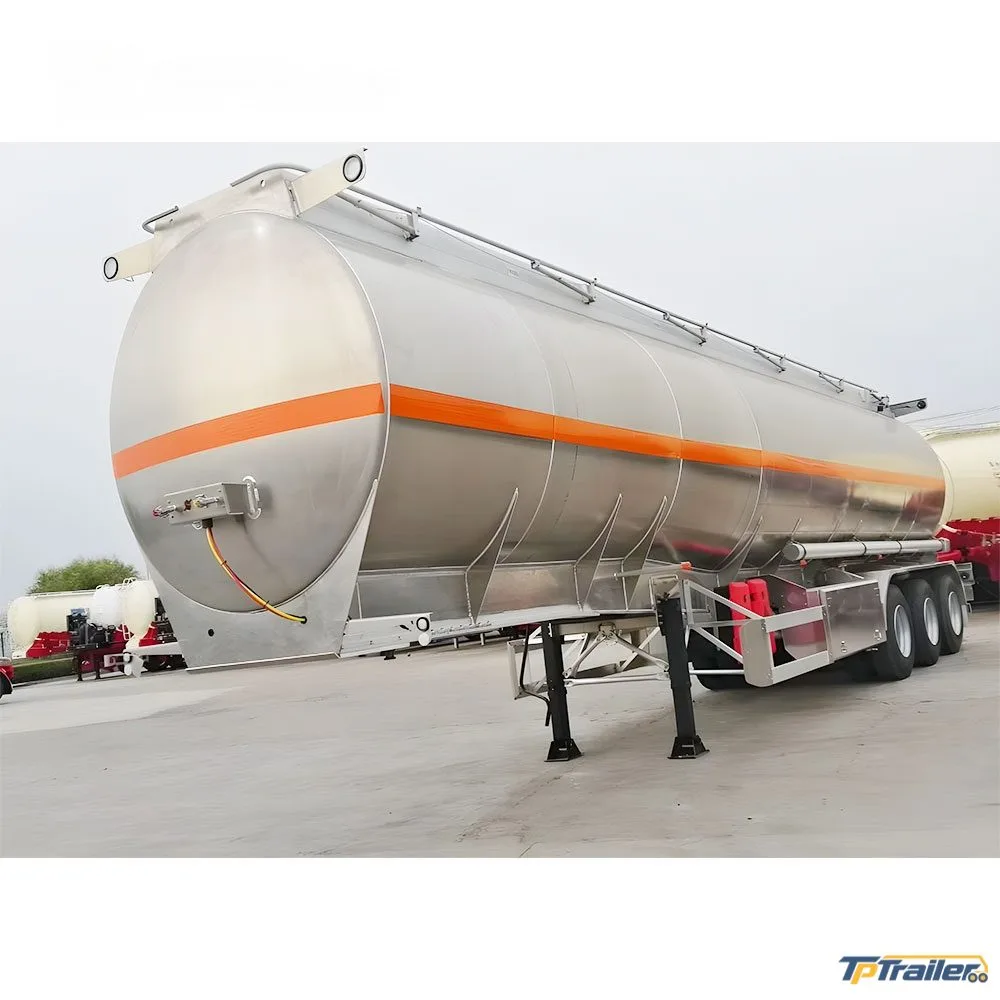
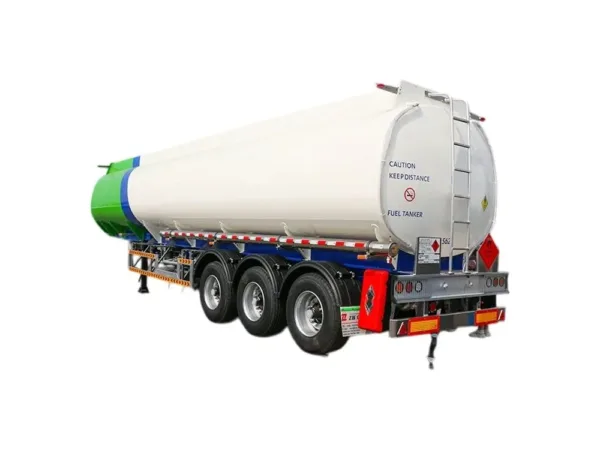
Fuel tanker trailer prices are the first thing a fleet operator checks before adding liquid-hauling capacity, and this ZW Group three-axle unit is built to answer that question with a steel tank body, a mechanical suspension and a 28T landing gear. It is a semi-trailer for diesel, petrol and other petroleum liquids, aimed at hauliers, fuel distributors and depot operators who move product between terminals and retail sites. The strongest reason to choose it is the balance it strikes: a Q235 steel tank shell and end plate, proven pneumatic bottom valves and a common mechanical suspension keep the build straightforward to service while the price stays workable for fleets buying more than one unit.
Table of Contents
Why It Works On Site
Steel tank body and end plate. The Q235 shell and end plate give the barrel a stiff, repairable structure that holds its shape under repeated loading. That matters on site because a tank that keeps its form keeps its seals seated, so manhole covers and discharge fittings stay tight through daily fill-and-run cycles.
Two manhole covers with breather valves. Each cover carries its own breather valve, so vapour pressure equalises during loading instead of building behind a closed lid. Operators can open the tank safely after a run, and the two openings let a depot load from either side of the barrel without walking the length of the trailer.
Four-inch disc valve and seamless tube. The discharge line uses a disc valve and a seamless steel tube, which gives a straight, unrestricted path for the product. Gravity discharge finishes faster, and the smooth bore leaves less liquid behind, so a change of grade between loads needs less flushing.
Aluminum API pneumatic bottom valve. One or two of these valves sit at the low point of the barrel and open under air pressure. The driver can dump a compartment from the cab-controlled air supply rather than reaching under the trailer, which shortens turnaround at a gantry and keeps hands away from a hot exhaust and wet ground.
Common mechanical suspension. A mechanical setup is simple, visible and easy to inspect at a roadside stop. There are no air bags to leak or level valves to drift, so a loaded trailer keeps a predictable ride height and the axles share load the way a workshop can check with a tape and a spanner.
WEBCO brake chambers and 28T landing gear. Recognised brake chambers make replacement a parts-counter job rather than a dealer order, while the heavy-rated landing gear carries a loaded trailer when it is dropped and hooked again. Both reduce the chance that a small failure keeps a tanker off the road.
Where It Is Used
This trailer suits the work that fills a fuel distributor’s week: drawing product from a terminal rack and delivering it to service stations, depots and industrial yards. A three-axle barrel of this size carries a full load of diesel or petrol on a route that mixes highway running with town delivery stops, and the steel shell takes the knocks of tight forecourts without demanding gentle handling.
Operators comparing fuel tanker trailer prices for a first tanker or a fleet addition usually want a unit that can be loaded at a rack, driven a few hundred kilometres and discharged by gravity into an underground tank, and that is exactly the cycle this build is arranged around. The pneumatic bottom valve and disc valve discharge make the drop quick, so the same trailer can serve several stations in a day.
The second use is bulk movement between storage points, where the load is petroleum liquid rather than a packaged product. That covers transfers from a port or rail siding to an inland depot, and the reverse run when a depot is being topped up ahead of demand. On those runs the mechanical suspension and the vacuum tyres carry a steady load over long stretches of highway, and the two manhole covers let a driver load at a rack that only reaches one side of the barrel.
Hauliers who watch fuel tanker trailer prices closely for this kind of work tend to value a simple, repairable tank over a light alloy shell, because a steel body can be welded and straightened by a local workshop instead of going back to a specialist. The landing gear also lets the trailer be parked loaded between runs without extra support.
Choosing The Right Spec
Match the tank material to the repair network. The Q235 steel body and end plate suit operators whose nearest workshop welds steel. If your routes run far from that kind of support, the steel shell is the safer choice, and it is the version most buyers weigh when they compare fuel tanker trailer prices across suppliers.
Decide how many bottom valves you need. The build offers one or two aluminum API pneumatic valves. A single valve suits a barrel discharged as one body of product, while two let you split the load between compartments or drop faster at a site with a high-flow connection. Choose before ordering, because the valve count is fixed at build.
Think about discharge speed at your delivery points. The four-inch disc valve and seamless tube set the flow you get at the receiving tank. Sites with large-bore connections will fill quickly, while older stations with narrow inlets will be limited by the site, not the trailer. Knowing this helps you read fuel tanker trailer prices against the turnaround you actually need.
Weigh tyre and axle choices against your route. The vacuum tyre specification and three-axle layout are aimed at highway running with town delivery at each end. Operators on long, fast trunk routes get the most from this arrangement, while short urban shuttles may find the same trailer more capacity than the day needs. That is the point to settle when fuel tanker trailer prices are being compared across configurations.
Customisation Before Delivery
Axle configuration. The running gear is built around the axle count you specify, and the three-axle layout suits heavy liquid loads on long hauls. Buyers comparing fuel tanker trailer prices should weigh axle count against the routes they actually run. Every axle choice is settled at order confirmation, so the build matches your load plan rather than a stock pattern.
King pin and suspension. The king pin brand and the common mechanical suspension are both confirmed with you before production. Mechanical suspension keeps the trailer simple to service in markets where air systems are harder to support. Because fuel tanker trailer prices vary with running gear, fixing these items early keeps the quotation honest and avoids a mid-build change.
Tyre specification. The trailer runs on vacuum tyres in the stated size, and the tyre set is agreed at order confirmation. Operators on mixed sealed and gravel roads should consider how tyre choice affects fuel tanker trailer prices over the life of the unit. Tyres are a running cost, so the right set matters more than the lowest sticker.
Tank body and end plates. The tank body and end plates are built from steel plate in the stated thicknesses, with an aluminum option where weight matters. Manhole covers, breather valves and the aluminum API pneumatic bottom valves are ordered as a set. These choices feed directly into fuel tanker trailer prices, so confirm them together rather than one at a time.
Discharge and landing gear. The discharge line uses a disc valve and seamless steel tube, and the landing gear is rated for the standing load. Buyers should state the discharge arrangement they need at order confirmation. Fuel tanker trailer prices quoted for a bare unit will not cover a different valve layout, so settle it before the build starts.
Fitting And Installation
On arrival, the buyer has to match the trailer to the tractor before any liquid is loaded. The king pin and the fifth wheel must engage cleanly, and the landing gear must be able to take the standing load on firm ground. The brake chamber connections and the pneumatic bottom valve supply need to line up with the tractor’s air system, and the discharge tube route should be checked against the hose set you plan to use.
No fitment drawing is issued with the base specification, so a fitment drawing is confirmed at quotation for each order. That drawing is the document your workshop should work from, not a guess made at the yard. Getting fuel tanker trailer prices right at quotation stage means the fitment details are agreed in the same conversation, before the unit is built.
A wrong size costs downtime, and downtime on a fuel trailer is expensive. If the fifth wheel height does not suit the king pin, the trailer sits nose-up or nose-down and the load shifts against the baffles. If the discharge tube does not match the hose and valve set, the operator cannot empty the tank at the depot and the load waits. If the air supply to the bottom valve is routed badly, the valve will not open on demand.
These are not faults in the trailer; they are mismatches found on the first day. Settle them through the confirmed fitment drawing, and treat fuel tanker trailer prices as the start of the cost, not the end. A short pre-delivery check against the drawing protects the whole haul.
Service Life And Maintenance
Tyres and wheel ends. Tyres wear first on any tanker, and vacuum tyres on the stated size should be checked for pressure and tread at every turnaround. Uneven wear points to axle alignment or bearing play, so inspect the wheel ends at the same time. Fuel tanker trailer prices should be judged against tyre life, because a cheap set that wears fast costs more per kilometre than a good one.
Brake chambers and air lines. The WEBCO brake chambers and the air lines to the bottom valve are the next items to inspect. Look for cracked diaphragms, chafed hose and loose fittings before each long run. A leaking chamber lengthens stopping distance when the tank is full. Operators tracking fuel tanker trailer prices over years will find brake and air maintenance is a steady, predictable cost.
Bottom valve and discharge line. The aluminum API pneumatic bottom valve and the disc valve on the discharge line should be cycled and checked for seepage. Inspect the seamless steel tube for dents and the valve seat for wear. A valve that does not seal fully is a spill risk and a compliance problem. Fuel tanker trailer prices rarely include valve replacement, so treat this as routine.
Tank body and end plates. The steel plate body and end plates should be washed down and inspected for corrosion at seams and welds, especially where the coating is thin. The aluminum option resists corrosion better in humid conditions and can extend the inspection interval. Look for stress marks around manhole covers and breather valves after rough road use.
Manhole covers and breathers. The manhole covers and their breather valves need their seals checked and the covers seated correctly after every loading. A breather that clogs causes pressure build-up in the tank. Inspect the gaskets for hardening and replace them when they no longer seal. Fuel tanker trailer prices quoted for the unit do not cover seal kits, so plan for them.
Packing And Container Loading
The tanker is prepared for sea freight as a complete unit. The tank body and end plates are cleaned and sealed before dispatch. Manhole covers stay fitted so the interior is closed to dust and salt air during the voyage. The discharge valve and pipework are secured against movement, and the bottom valve sets are protected so the pneumatic parts are not knocked in transit. The chassis is supported on timber or steel packing at the contact points, and the landing gear is set to carry load off the trailer frame. Buyers comparing fuel tanker trailer prices should ask how the unit is blocked and braced inside the container, because packing quality decides whether the trailer arrives ready to work.
Loading depends on the trailer length and the container type. A complete semi-trailer is normally shipped in a flat rack or on a platform, not inside a standard box, because the unit is long and cannot be nested. The axles, suspension and tyres sit below the tank, so stacking is not possible without risking damage to the running gear. Where several units move together, they are loaded side by side or end to end within the allowed envelope. Ask for the loading plan before booking freight, since the plan affects freight cost and therefore the delivered fuel tanker trailer prices you compare across suppliers.
Common Mistakes Buyers Make
Ignoring the axle brand. The axle brand is listed as a property, but buyers often accept whatever is fitted without checking the name against the quotation. A mismatched axle set is the most common reason a trailer is rejected at handover. The single check: confirm the axle brand in writing on the order before the deposit is paid.
Treating the king pin as a generic item. The king pin carries a brand, and that brand must match the tractor unit in your fleet. Buyers forget to state it and receive a pin that does not suit their coupling. The check: compare the king pin brand on the quotation with the coupling on the tractor you will actually use.
Assuming the suspension suits every route. The common mechanical suspension is a fixed choice, not a variable one. Buyers order it for routes where it does not suit the load, then blame the trailer. The check: confirm the suspension type on the order and match it to your normal road and load conditions.
Overlooking the tyre specification. The vacuum tyre size is stated in the specification, but buyers rarely confirm it matches their spares stock and local service. A tyre that cannot be replaced locally costs downtime. The check: verify the tyre specification on the quotation against what your workshop and tyre supplier can support.
Chasing the lowest quoted figure only. Buyers compare fuel tanker trailer prices across suppliers and pick the lowest number without matching the specification line by line. The cheap quote often carries different valves or plate thickness. The check: put two quotations side by side and confirm every property matches before you decide.
Buyer Questions
How is the tank body protected during shipping, and what should I inspect on arrival?
The tank body and end plates are closed with the manhole covers fitted, and the valve and pipework are secured for the voyage. On arrival, inspect the tank shell for dents and the end plates for distortion. Open the manhole covers and check the interior for moisture or debris. Confirm the discharge valve, pipe and bottom valve sets are present and undamaged. Check the tyres and rims for transit damage. Record any issue with photographs before you sign the delivery note, and confirm the packing method with the supplier at quotation.
Can several units be shipped together to reduce freight cost?
Complete semi-trailers cannot be nested or stacked, because the axles, suspension and tyres sit below the tank. Multiple units are loaded side by side or end to end within the allowed envelope, so the saving comes from sharing the shipment rather than from stacking. Ask the supplier for a loading plan for your quantity before you book freight. Freight cost is part of the delivered fuel tanker trailer prices you compare, so the plan matters as much as the unit figure.
Which specification points should I confirm in writing before ordering?
Confirm the axle brand, king pin brand, suspension type, tyre specification, tank plate thickness, manhole cover size and count, discharge valve and pipe size, bottom valve sets, brake chamber brand and landing gear rating. Each of these appears in the specification, and each is a common source of mismatch. Put them on the order as written properties, not as verbal agreements. Where a detail is not stated in the specification, ask for it to be confirmed at quotation. Then compare fuel tanker trailer prices only between quotations that match on every line.
Send the trailer length you need, the axle count you want and the quantity you plan to order. With those three details we can confirm the specification and quote fuel tanker trailer prices against your volume, from a single unit to a full shipment. Include your destination port so the loading plan can be prepared with the quotation.
We use cookies to enhance your browsing experience, serve personalized content, and analyze our traffic. By clicking "Accept All", you consent to our use of cookies. Privacy Policy
Cookie Preferences
Required for the website to function properly. Cannot be disabled.
Help us understand how visitors interact with the website (Google Analytics).
Used to deliver personalized ads and measure ad campaign effectiveness.


















Write a Review