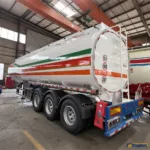
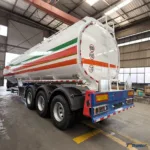
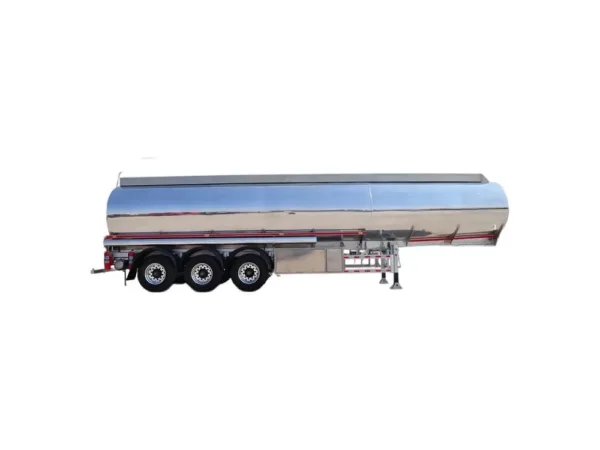
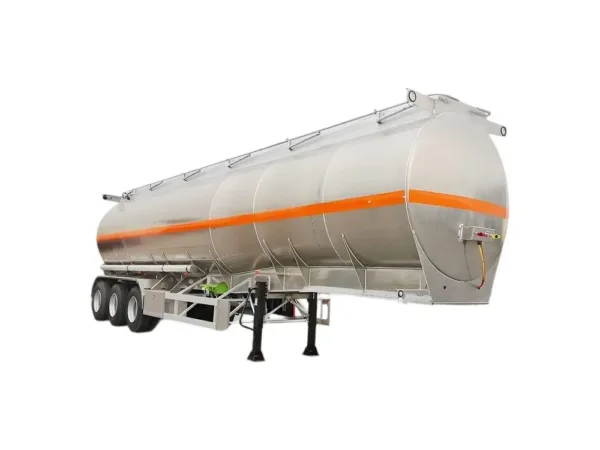
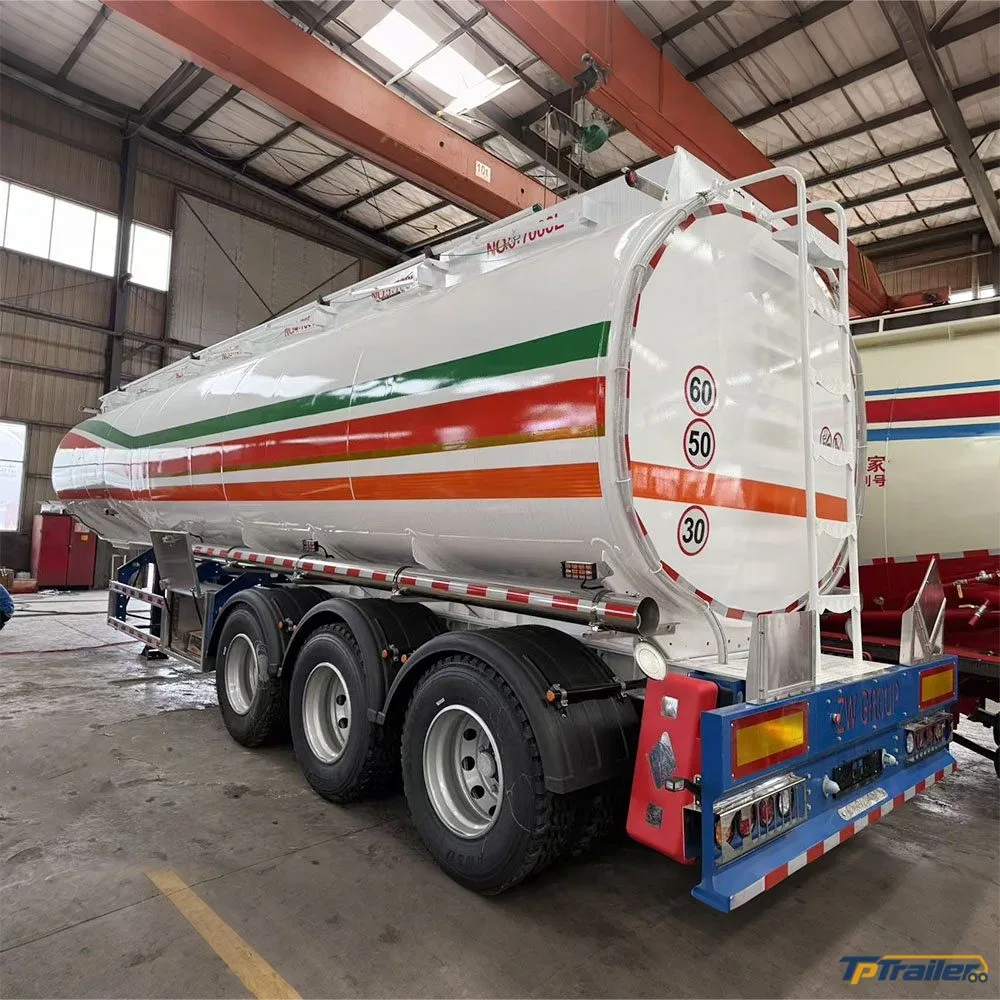
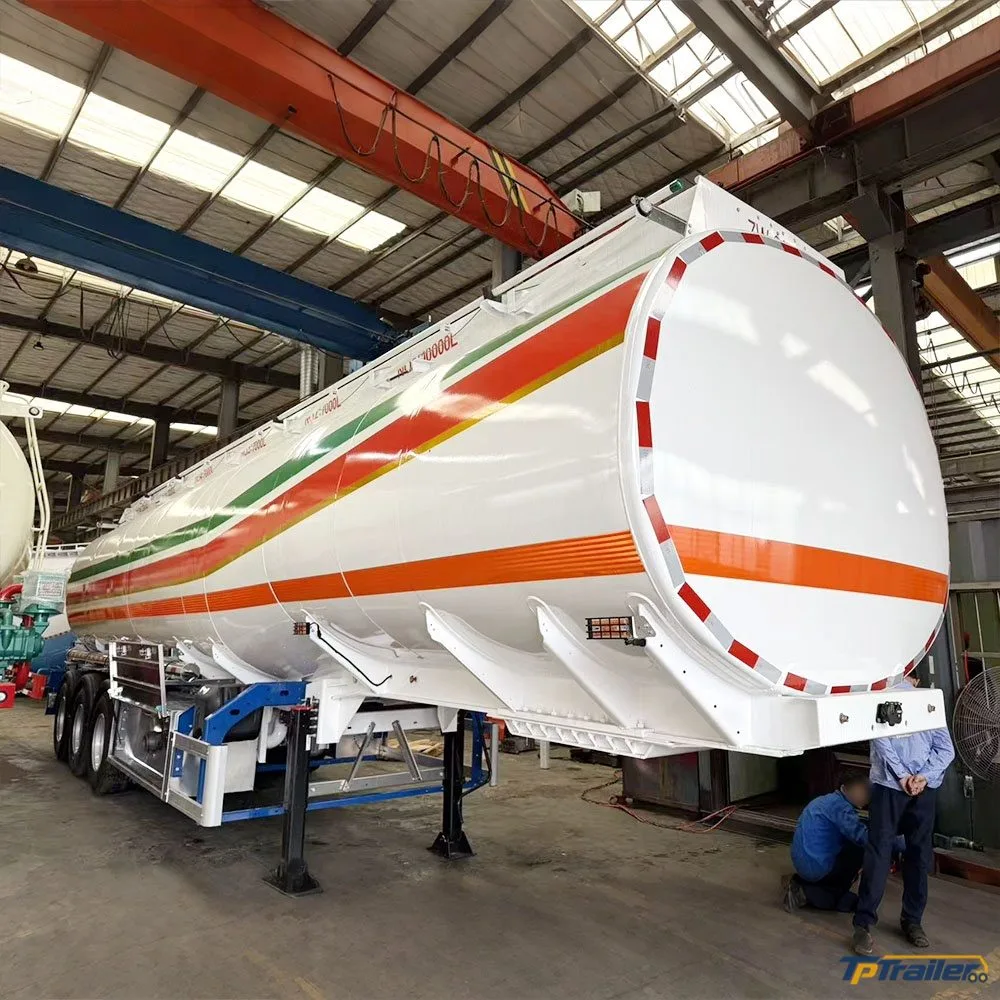
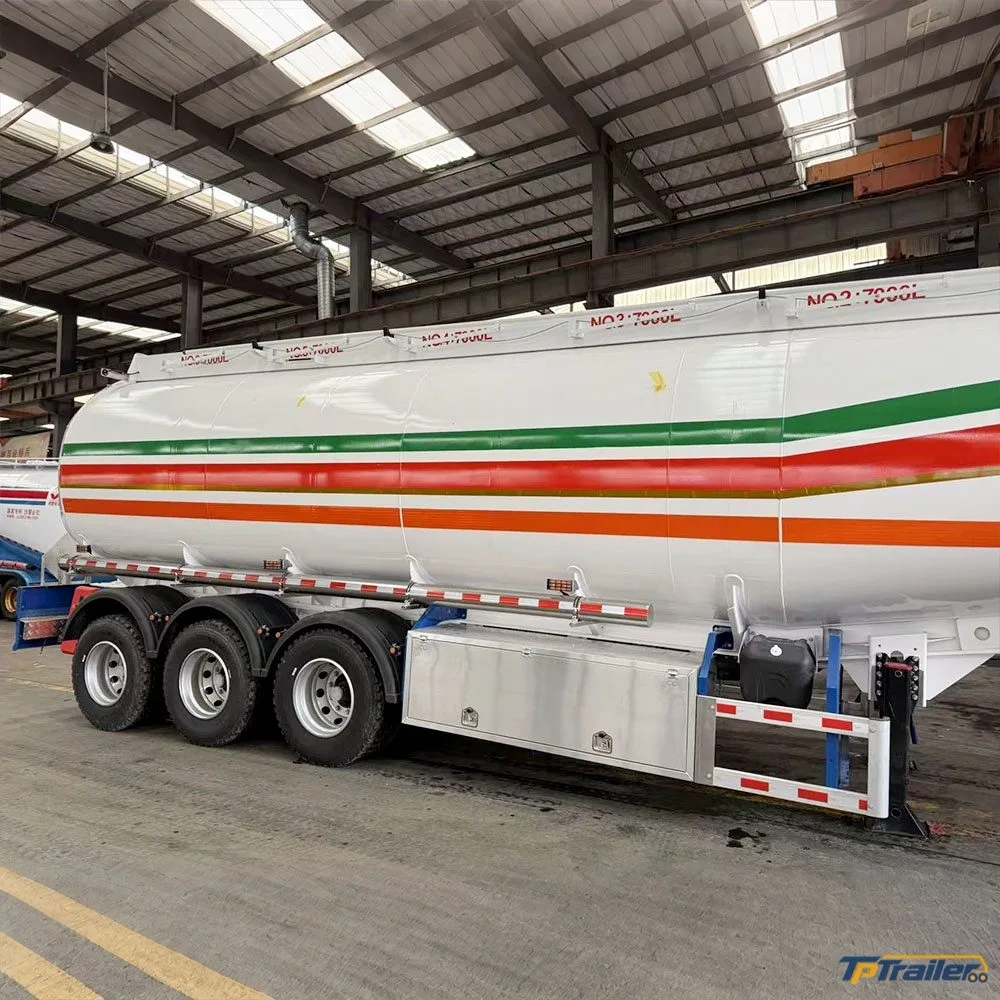
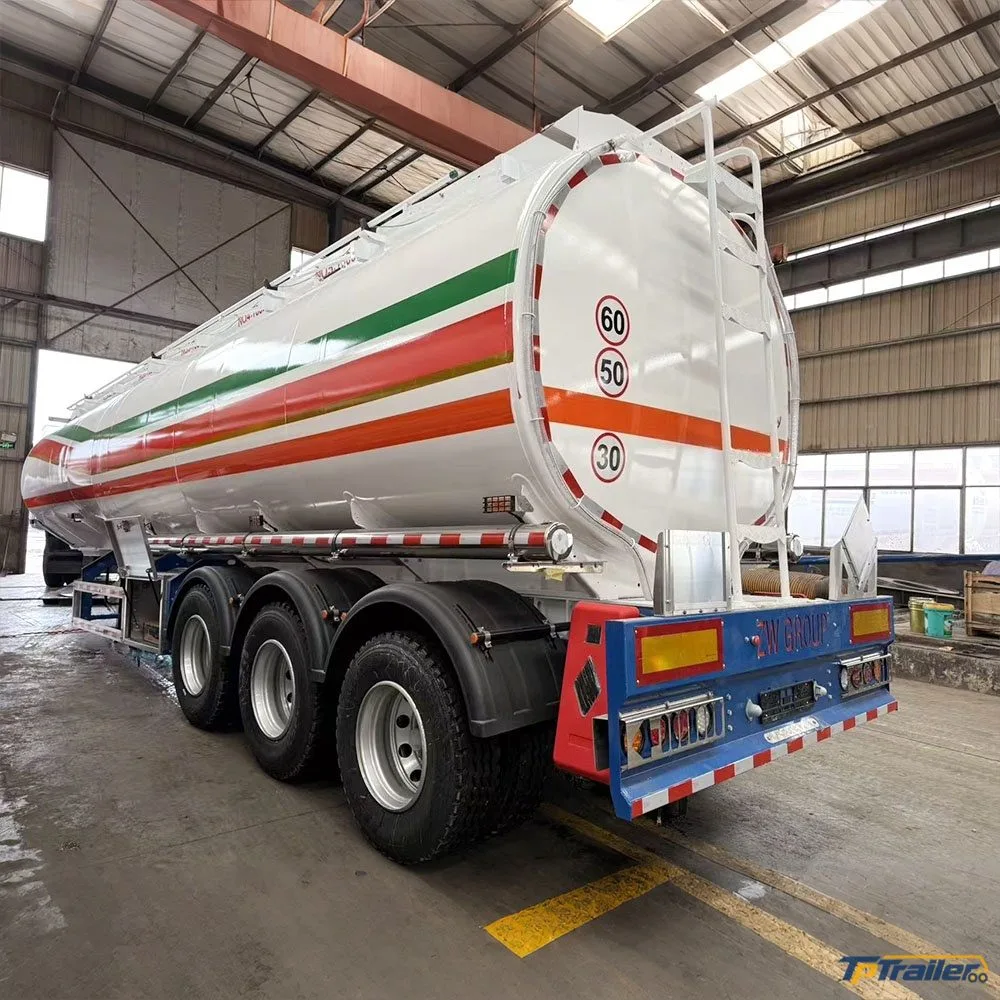
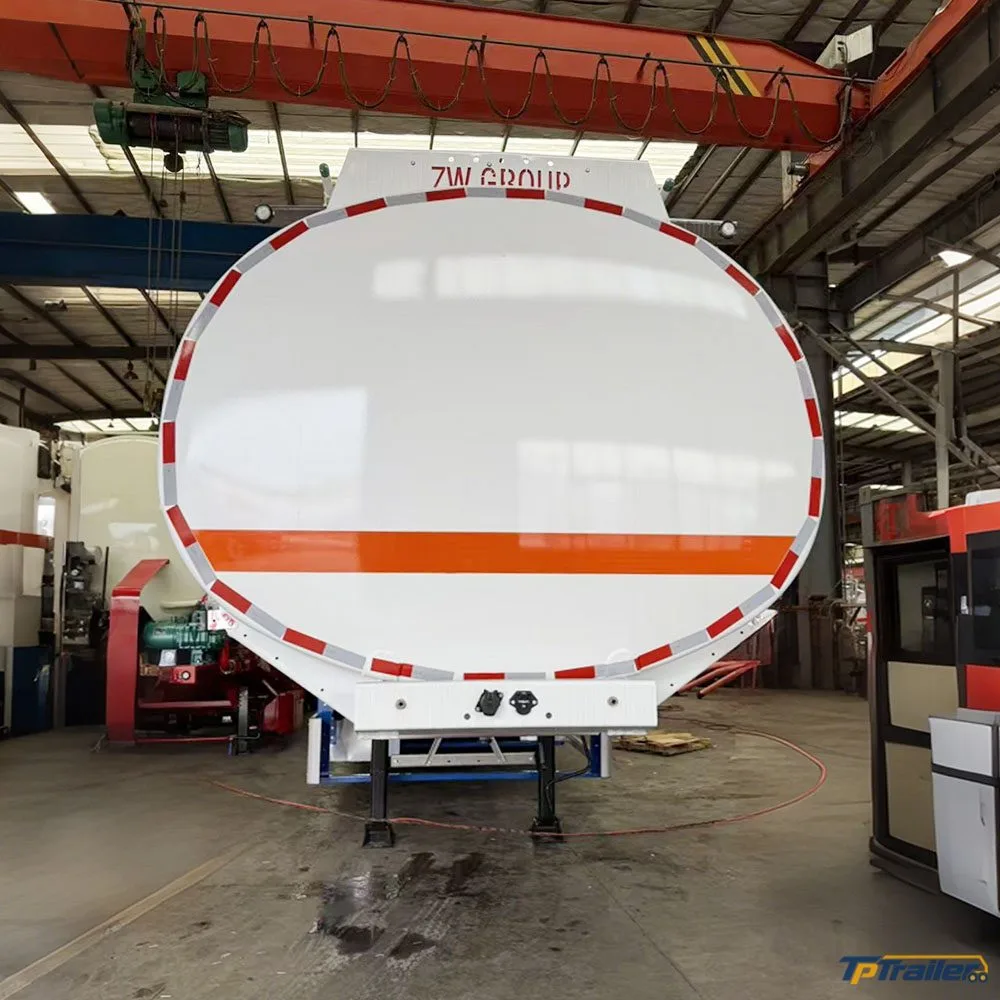
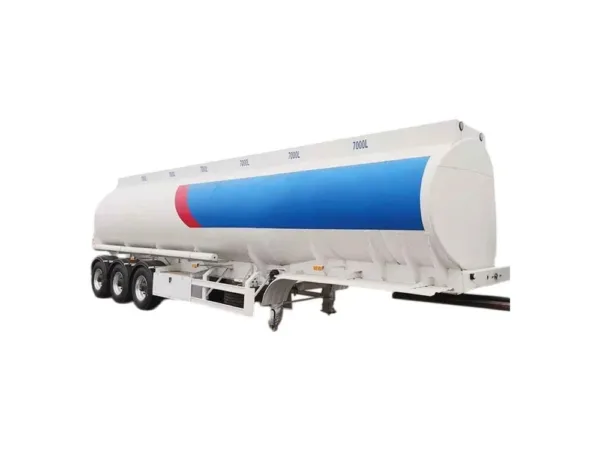
Lightweight aluminum fuel tanker trailer transport begins with the barrel, and this unit pairs a 45000L tank shell with a three-axle running gear. It is a semi trailer built to move petrol and diesel in bulk, aimed at fuel distributors, depot operators and haulage fleets that already run a tractor unit. The strongest reason to pick it is the payload-to-weight balance: an aluminum barrel keeps tare down, so more of the rated load goes to product rather than to steel. That is the practical case for lightweight aluminum fuel tanker trailer transport on routes where every trip is weighed or tolled.
Table of Contents
Why It Works On Site
Aluminum barrel construction. The tank shell is aluminum rather than mild steel, which cuts the trailer’s own weight before a litre is loaded. For lightweight aluminum fuel tanker trailer transport, that margin is what lets a fleet load closer to the rated capacity on every run instead of stopping short to stay legal. Less tare also means the tractor works less on gradients and in stop-start depot traffic.
Three-axle running gear. Spreading the load across three axles keeps ground pressure per wheel lower than a two-axle arrangement. That matters on yard surfaces, site roads and depot ramps that were not built for heavy point loads. It also gives the combination more stability under braking with a full barrel, which is the part of lightweight aluminum fuel tanker trailer transport that drivers notice first.
45000L barrel volume. A large single-barrel capacity means fewer trips per delivery round. For a depot supplying several stations or a construction site on a fixed schedule, that converts directly into fewer driver hours and fewer tractor kilometres. This is the core of high capacity fuel trailer aluminum diesel tanker delivery work: one load covers a route that would otherwise need two.
Rated load capacity of 30000. The load rating sets what the trailer is engineered to carry, and it is the figure to match against your product density and route permits. It tells the buyer how barrel volume and running gear are balanced. Use it to plan loads per trip rather than filling the barrel and hoping the axle weights work out.
Petrol and diesel service. The unit is specified for both fuels, so one trailer type can cover a mixed fleet without separate assets per product. That simplifies scheduling and spare parts. It also supports durable aluminum fuel tanker trailer oil transport africa routes where a single trailer may be asked to switch products between depot runs.
Tanker semi trailer format. As a semi trailer, it couples to a standard tractor unit your fleet already runs, with no dedicated prime mover needed. That keeps capital tied up in the trailer rather than in another power unit. For lightweight aluminum fuel tanker trailer transport operators scaling up, it is the cheapest way to add capacity per tractor.
Where It Is Used
The most common job is depot-to-station replenishment, and lightweight aluminum fuel tanker trailer transport earns its place on that loop. A fuel distributor loads at a terminal or bulk depot and runs a fixed circuit of filling stations, emptying compartments as it goes. The 45000L barrel and the rated load capacity of 30000 set how much product moves per loop, and the three-axle gear keeps axle weights manageable when the barrel comes back part-full. On this kind of work, the unit is judged on trips per day and litres per trip, not on top speed. Operators running several stations off one depot usually find the large barrel pays for itself in fewer returns to base.
The second job is site and remote supply. Construction sites, quarries, mining camps and agricultural estates need diesel delivered where there is no pipeline and often no rail. Routes are longer, surfaces are rougher, and the trailer may sit loaded overnight. A durable aluminum fuel tanker trailer oil transport africa profile fits here because the aluminum barrel resists the corrosion that shortens steel tank life in humid conditions. The same trailer handles petrol deliveries to smaller retail points on the return leg. For lightweight aluminum fuel tanker trailer transport planning, the question is how many drops fit in one shift before the driver’s hours run out.
Choosing The Right Spec
Match barrel volume to route length. The 45000L barrel suits operators with long runs or many drops per trip. If your routes are short and drops are few, the same trailer still works but you carry unused volume. Compare your average litres per shift against the barrel size before committing. Lightweight aluminum fuel tanker trailer transport economics turn on this match more than on any single component.
Check the load rating against your product. The rated load capacity of 30000 is the number to weigh against your cargo density and the axle limits on your routes. A full barrel of a denser product may reach the rating before the barrel is full. Plan loads per trip from the rating, not from the barrel volume, and the trailer stays inside its design envelope.
Three axles versus your road network. Three axles distribute weight well and suit established highways and paved depot access. If your routes include soft ground or tight yard turns, confirm the turning geometry and surface conditions with your own site survey. The axle count is fixed on this unit, so it is a fit question rather than an option. High capacity fuel trailer aluminum diesel tanker delivery routes usually reward the extra axle.
Single product or mixed service. The trailer is specified for petrol and diesel, which suits fleets that switch products between runs. If you need segregated loads, plan compartment use around your delivery pattern. For lightweight aluminum fuel tanker trailer transport buyers adding a first unit, the petrol and diesel specification covers most depot supply work without a second trailer type.
Customisation Before Delivery
Customisation on lightweight aluminum fuel tanker trailer transport is settled in writing, not over the phone. Each choice below is written into the order confirmation, so both sides work from the same signed sheet. Nothing is assumed after that point, and the build does not start until the sheet is agreed.
Axle configuration. The three-axle layout is the reference build for this tanker. Buyers moving into lighter corridors can discuss a different axle count with the sales team, and the agreed figure is recorded on the confirmation sheet.
Suspension choice. Mechanical and air suspension options are settled at order confirmation. The choice affects ride quality over rough roads and how the tank barrel handles vibration. For lightweight aluminum fuel tanker trailer transport across long hauls, the suspension decision deserves a direct conversation with the technical contact.
Tyre specification. Tyre size and pattern are agreed when the order is placed. Operators running mixed surfaces should state their typical route so the right set is fitted. Tyre choice is not a small detail on a fuel tanker, and it is confirmed in writing before production begins.
Colour and finish. Barrel and chassis colour are selected at order confirmation. The finish is a practical decision as much as a visual one, since light colours show road grime differently. Buyers planning lightweight aluminum fuel tanker trailer transport in hot regions often ask about reflective finishes during this discussion.
Compartment layout. Internal compartment divisions and discharge arrangement are fixed at order confirmation. The layout should match how the operator actually loads and delivers. Getting this right early avoids rework later, and it keeps the lightweight aluminum fuel tanker trailer transport plan aligned with real depot practice.
Fitting And Installation
On arrival, the buyer’s workshop has to match the trailer to the tractor unit, and that first coupling is where lightweight aluminum fuel tanker trailer transport plans are either kept or broken. The job means checking the kingpin coupling height, the mounting points on the chassis, and the electrical and pneumatic connections. Hose routing along the drawbar and the position of the discharge pipework also need checking against the tractor’s layout. Where the input gives no fitment dimensions, a fitment drawing is confirmed at quotation instead. Do not guess at these interfaces. A tanker that couples correctly on the first attempt saves a full day of workshop time, and it keeps the delivery schedule intact from the first load.
A wrong size at the coupling or a mismatched hose route is not a minor nuisance. It grounds the trailer while parts are sourced, and it delays every delivery the unit was bought to make. The cost shows up as idle drivers, missed depot slots and rented replacement capacity. Buyers running lightweight aluminum fuel tanker trailer transport on tight schedules feel that downtime directly. Confirm the fitment drawing before dispatch, walk the workshop team through it, and book the coupling check into the arrival day. Treat the first coupling as an inspection, not a formality, and the unit enters service without a second visit.
Service Life And Maintenance
Barrel seams and welds. These are the first places to watch on any aluminum tanker. Inspect seam condition and look for staining that suggests a weep. The aluminum construction resists corrosion better than steel, which supports a longer inspection interval. Operators running lightweight aluminum fuel tanker trailer transport should still check seams at every scheduled service.
Mounting and support points. Vibration works on the cradle and support brackets over time. Check fasteners for looseness and look for movement marks between barrel and frame. A correctly specified suspension choice reduces the vibration reaching these points. This check belongs on the routine list for every lightweight aluminum fuel tanker trailer transport unit in the fleet.
Valves and discharge pipework. Seals and gaskets wear before the metal does. Inspect valve bodies for seepage and confirm that caps and couplings seat properly. Replacing seals early is cheaper than cleaning up a spill. Any operator serious about lightweight aluminum fuel tanker trailer transport should log valve condition at each service and act on small faults.
Tyres and running gear. Tyres, brake components and wheel bearings wear on a predictable curve. Check tread depth, brake adjustment and bearing play at each service. The tyre specification chosen at order confirmation sets the wear pattern the operator should expect. Running gear checks keep lightweight aluminum fuel tanker trailer transport safe on long routes.
Surface finish and chassis coating. The barrel finish and chassis coating are the first defence against the environment. Wash off road salt and chemical residue, and touch up chips before they spread. A reflective or light finish chosen at order confirmation helps here by showing damage early. Good finish care extends the working life of any lightweight aluminum fuel tanker trailer transport asset.
Packing And Container Loading
Each unit is prepared for sea freight as a complete trailer, not as a kit. The tank shell, walkway, ladders and discharge pipework stay assembled, and the axle sets remain bolted to the frame. Exposed openings are capped, and the paint or polished surfaces are wrapped where handling equipment makes contact. Buyers should treat the packing list as the control document: it names what is fitted and what travels loose. Ask for photographs of the unit before it is loaded, and keep them with the shipping documents for the arrival inspection.
Stacking is not part of the plan for a finished tanker. A three-axle unit with a large barrel is loaded on its own wheels and secured to the deck by chocks and lashing points, so the container or vessel space it needs is fixed by its footprint and height. That matters for planning lightweight aluminum fuel tanker trailer transport on busy routes, because you cannot halve the slot by nesting two shells. Confirm the shipping method and the securing arrangement at quotation, then check the lashing points and tyre condition on arrival before the unit leaves the port.
Common Mistakes Buyers Make
Ordering the barrel size without checking the load rating. A high-capacity barrel and the declared load capacity must agree, or the trailer is plated for less than the buyer intends to move. The single check is to confirm the load capacity and barrel volume together on one specification sheet before the order is released.
Assuming a fixed axle configuration. Buyers plan routes and road limits around an axle count they never confirmed in writing. The check is to state the required axle count and the intended gross weight in the inquiry, then have the supplier confirm both against the frame design.
Ignoring discharge layout. Compartments, valves and pipe routing decide how fast a depot can unload. Buyers discover a mismatch only at the first delivery. The check is to send a simple sketch of the required discharge points and confirm the compartment arrangement before production starts.
Skipping the tare weight question. Lightweight construction is the selling point, but the actual tare weight decides payload on every trip. The check is to request the tare weight in writing and compare it with the payload you need, rather than judging lightness from the material name alone.
Booking freight before confirming dimensions. Overall length, height and width decide the shipping slot and the road permits. The check is to obtain the final dimensions after the specification is frozen and pass them to the freight forwarder before any space is reserved for lightweight aluminum fuel tanker trailer transport.
Buyer Questions
How do I confirm the trailer suits my fuel type and depot?
State the fuel you carry, petrol or diesel, and the discharge arrangement your depot uses. Then confirm the compartment count, valve positions and pipe routing against that layout. For lightweight aluminum fuel tanker trailer transport, the material and barrel construction should be confirmed in writing with the rest of the specification. Ask for the tank drawing before production and check that walkways, ladders and hose storage sit where your operators expect them. Any point the drawing leaves open should be confirmed at quotation.
What should I check when the unit arrives?
Inspect the tank shell, welds and pipework for transit damage, and confirm the fitted equipment matches the packing list. Check tyre condition, wheel fixings and the lashing points used for the voyage. Verify that the plate details match the specification you ordered, including the load capacity and axle count. Photograph anything that differs before signing the delivery receipt, and raise it with the supplier while the shipping documents are still together. Final acceptance terms should be confirmed at quotation.
Can I combine several units in one shipment?
Yes, subject to the shipping method and the space each unit occupies. Because a finished trailer is not nested, plan the vessel or container slot from the overall dimensions of each unit rather than assuming they compress. For lightweight aluminum fuel tanker trailer transport across a fleet order, group the units by identical specification so loading and documentation stay simple. Send the quantity and required axle count, and confirm the loading plan and freight terms at quotation.
To receive a quote, send the overall length you need, the axle count and the quantity you plan to order. Add the fuel type and the discharge layout if your depot has specific requirements. With those three points, the specification can be matched to your route and your fleet plan, and pricing confirmed for the volume you intend to buy. That is how lightweight aluminum fuel tanker trailer transport is specified once and delivered correctly.
We use cookies to enhance your browsing experience, serve personalized content, and analyze our traffic. By clicking "Accept All", you consent to our use of cookies. Privacy Policy
Cookie Preferences
Required for the website to function properly. Cannot be disabled.
Help us understand how visitors interact with the website (Google Analytics).
Used to deliver personalized ads and measure ad campaign effectiveness.


















Write a Review