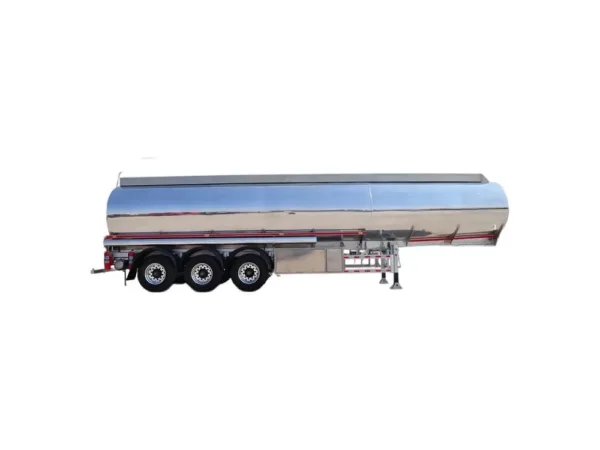
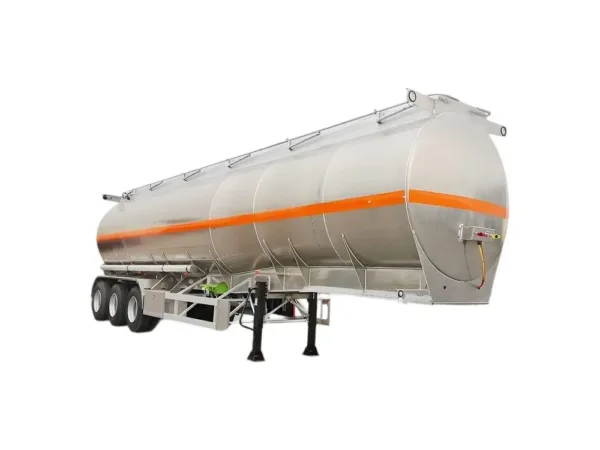
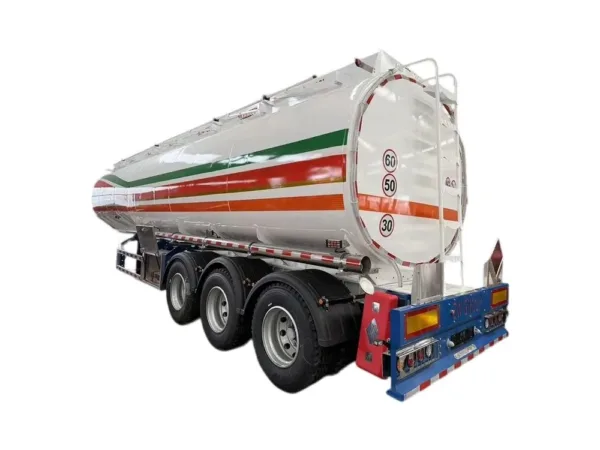
Lightweight aluminum fuel tanker trailer transport starts with a simple question: how much payload can you move on every trip without overloading the rig? This 45000L polished aluminum diesel tanker semi trailer is a three-axle oil and fuel transport unit built for fleets and independent haulers who move liquid fuel over long distances. Its polished aluminum barrel keeps the tare weight down, so more of the rated load goes to the cargo instead of the steel. For operators running repeated fuel runs, that is the strongest reason to choose it: the same tractor and the same route can carry a larger legal payload on every single trip.
Table of Contents
Why It Works On Site
Load capacity matched to the barrel size. The Load Capacity=45000 rating is not a marketing figure bolted onto a generic shell; it defines how the barrel, baffles and chassis are put together. That means the tanker is sized for full-volume fuel loads rather than partial fills, so each dispatch earns its keep. For lightweight aluminum fuel tanker trailer transport, a capacity that matches the barrel is what keeps the payload honest on the weighbridge.
Aluminum barrel keeps tare weight down. Aluminum saves weight against a comparable steel shell, and that saving goes straight into payload. On a fuel run, every kilogram not spent on the trailer is a kilogram of diesel you can legally deliver. Fleets working tight weight limits feel this most, because lightweight aluminum fuel tanker trailer transport lets them load closer to the permitted gross weight without guessing.
Three-axle running gear spreads the load. Three axles share the barrel’s mass across more tyres and more contact patches, which steadies the trailer on crowned roads and long highway grades. It also keeps axle loads within typical highway limits when the barrel is full. For lightweight aluminum fuel tanker trailer transport over mixed road surfaces, that spread is what makes a full barrel behave predictably.
Polished finish that survives the yard. The polished aluminum surface is not only cosmetic; it resists the dulling that bare metal picks up in daily service and makes inspection easier. A clean, bright barrel shows leaks, scuffs and fittings quickly during a pre-trip walkaround. That matters for lightweight aluminum fuel tanker trailer transport, where a fast visual check keeps a loaded unit from sitting idle.
Diesel and fuel duty built into the design. The unit is configured as an oil and fuel carrier, so the fittings, compartments and discharge arrangement suit liquid petroleum products rather than dry bulk. Operators moving diesel, gasoline or similar fuels get a trailer aimed at their cargo from the start. In lightweight aluminum fuel tanker trailer transport, matching the barrel to the product is what avoids workarounds later.
Manufacturer-direct build and support. Buying from the manufacturer means the specification conversation happens with the people who build the unit, not a reseller passing messages along. Questions about capacity, axle layout or fittings reach the production side directly. For lightweight aluminum fuel tanker trailer transport buyers planning a fleet, that direct line shortens the gap between the route profile and the trailer spec.
Where It Is Used
The most common duty for this trailer is bulk fuel delivery between a terminal or depot and the places that burn the fuel. A hauler loads at the rack, runs a highway leg, and discharges into storage tanks at depots, farms, mines or construction sites. The 45000L barrel suits operators who want to move a full load per trip rather than shuttling smaller quantities.
Because the unit is built for oil and fuel, it fits routes where diesel, gasoline or similar petroleum products are the cargo and where the receiving point has storage to take a full discharge. Fleets running scheduled depot-to-depot transfers use lightweight aluminum fuel tanker trailer transport to keep the same tractor busy while the payload per trip stays high.
A second set of jobs is project and site supply, where fuel has to reach equipment that never leaves the site. Generators, earthmoving machines and plant fleets on remote works consume diesel steadily, and a tanker that can hold a full load reduces the number of resupply runs. The three-axle layout helps on access roads and unpaved site tracks where a shorter or lighter trailer would be less settled when loaded.
Operators also use this trailer for inter-facility transfers, moving product between storage yards or between a main depot and satellite tanks. In each case, lightweight aluminum fuel tanker trailer transport is chosen because the barrel volume and the rated load line up with a full, single-drop delivery instead of a partial one.
Choosing The Right Spec
Match the barrel volume to your delivery size. The 45000L figure tells you the working volume of the barrel, so the first question is whether your receiving tanks can take a full discharge in one drop. If they can, the unit works as intended. If your drops are smaller, plan the discharge routine around partial loads. Lightweight aluminum fuel tanker trailer transport pays off when the barrel volume and the drop size are planned together.
Check the rated load against your route limits. The Load Capacity=45000 rating is the ceiling the trailer is built for, but the legal limit on your roads may be lower once the tractor, fuel density and axle rules are counted. Compare the rated load with the gross weight your routes allow before committing. Buyers comparing lightweight aluminum fuel tanker trailer transport options should treat the rating as a design limit, not a target to beat.
Confirm the three-axle layout suits your roads. Three axles spread the load, which helps on highways and firm site tracks, but turning circles and yard space still matter. Check that your depot, rack and receiving points can take a trailer of this length and axle count. For lightweight aluminum fuel tanker trailer transport into tight urban depots, the axle layout is part of the fit question, not an afterthought.
Decide how the polished finish fits your maintenance. The polished aluminum barrel is easier to inspect and holds its appearance better than bare metal, but it still needs a wash routine to stay that way. If your fleet has a wash bay and a pre-trip check habit, the finish earns its keep. Operators weighing lightweight aluminum fuel tanker trailer transport for a long service life should plan that routine from day one.
Customisation Before Delivery
Axle configuration. The running gear is the first choice a buyer settles at order confirmation. Axle count changes how the load is spread and how the trailer behaves on soft or uneven surfaces. Match it to the routes the unit will actually run, not to the heaviest road it might one day meet. For lightweight aluminum fuel tanker trailer transport, the axle set also decides how much of the payload reaches the road legally.
Suspension type. Mechanical and air options ride differently and load the frame differently. Air suspension suits long highway legs and fragile cargo; mechanical systems favour simpler servicing in remote workshops. The choice is fixed at order confirmation so the mounting points are built to match. Buyers planning lightweight aluminum fuel tanker trailer transport over mixed roads should weigh ride quality against local repair skills before deciding.
Tyre specification. Tyre size, tread pattern and load rating are confirmed with the order, because they set the rolling radius and the clearance around the mudguards. A highway tread and a mixed-service tread wear at different rates. Operators running lightweight aluminum fuel tanker trailer transport on long sealed corridors usually accept a road-biased tyre for lower rolling resistance.
Tank finish and colour. The polished aluminum surface can be left bright or finished to a buyer-specified colour scheme. Finish choice affects how the shell is cleaned and how heat is reflected. It is agreed at order confirmation so the surface treatment is planned before assembly. Fleets using lightweight aluminum fuel tanker trailer transport in hot climates often favour a reflective finish for the shell.
Ancillary layout. Compartment arrangement, cabinet positions and pipe routing are settled at order confirmation. Where the discharge points sit decides how the hoses reach the ground and how the operator works at each stop. Getting this right early avoids rework later. Every lightweight aluminum fuel tanker trailer transport unit is built to the layout the buyer signs off.
Fitting And Installation
The trailer arrives as a finished unit, so fitting means matching it to the tractor and to the site, not assembling it from parts. The buyer has to confirm the coupling height and the fifth wheel position before the first hook-up, because a mismatch changes how the trailer sits when loaded. Check the landing gear footprint against the ground where the unit will stand when uncoupled.
Confirm the hose and coupling sizes at the discharge points against the receiving equipment on site. If the input for this build states no fitment drawing, the drawing is confirmed at quotation rather than assumed. That single step protects anyone planning lightweight aluminum fuel tanker trailer transport across a mixed fleet, where one tractor may pull several trailers.
A wrong size costs downtime in the least convenient place. A coupling that does not mate stops the unit at the gate. A hose thread that does not match the receiving line strands a full load until an adapter arrives. Clearance that was never checked turns a routine turn into a damaged mudguard.
None of these failures is dramatic, and all of them idle a driver and a load. That is why the fitment drawing is agreed at quotation for every lightweight aluminum fuel tanker trailer transport order, and why the buyer signs it off before the build starts. Confirm the receiving equipment on site at the same time, so the delivery point and the trailer agree on the day the unit lands.
Service Life And Maintenance
Inspect the shell first. The aluminum shell is the part that carries the load and the part most exposed to road spray and salt. Walk the barrel and the end caps at every service and look for dents, scuffs and loose fittings. Polished aluminum resists corrosion well, but a deep knock still needs attention. Anyone running lightweight aluminum fuel tanker trailer transport should treat the shell walk-around as the first check, not the last.
Watch the running gear. Tyres, brake linings and wheel bearings wear before anything else on a trailer that covers long distances. Check tyre pressure and tread depth, listen for bearing noise, and confirm the brakes release cleanly. A lightweight aluminum fuel tanker trailer transport unit that sits idle for weeks should still have the running gear checked before it returns to service.
Check the discharge system. Valves, seals, gaskets and hose couplings degrade with use and with the products carried. Inspect for weeping at the joints and for stiff valve action. Replace seals as they show wear rather than waiting for a leak. On any lightweight aluminum fuel tanker trailer transport route, a small seal failure at a discharge point is the most common cause of an unplanned stop.
Keep the polished finish clean. Road film and product residue dull the polished aluminum and hide small defects. Wash the shell on a routine the operator sets, and rinse the areas where dirt collects around fittings. A clean surface is easier to inspect and reflects heat better. Operators using lightweight aluminum fuel tanker trailer transport in dusty conditions should shorten the wash routine to match.
Record what you find. Keep a simple log of inspections, replacements and repairs for each unit. Patterns show up in the log before they show up at the roadside. A part that keeps loosening points to a cause worth fixing. Fleets running lightweight aluminum fuel tanker trailer transport across several units use that record to decide which trailer goes to the long route and which stays local.
Packing And Container Loading
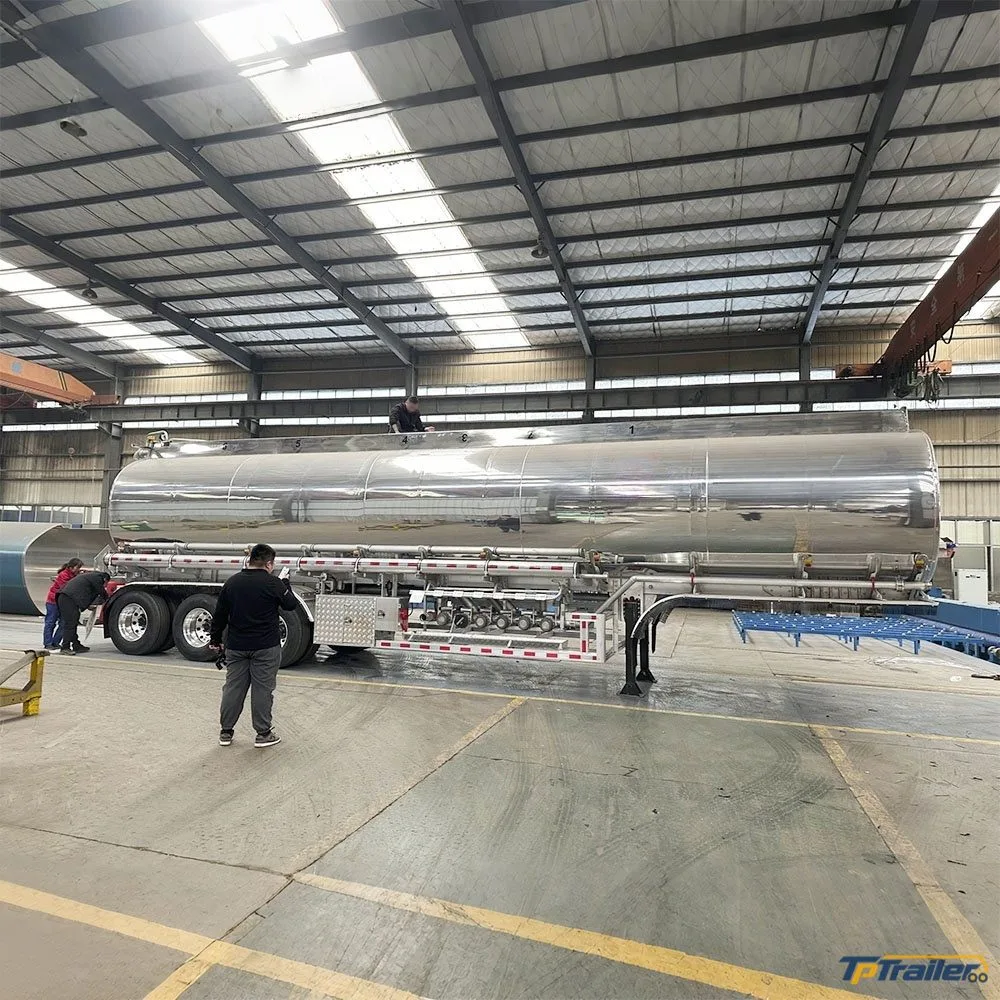
Each unit leaves the factory with its barrel surfaces wrapped and its fittings protected against salt air and road grit during ocean transit. The polished shell is the visible selling point, so packing focuses on keeping that finish free of scuffs and on keeping valves, manholes and pipe ends from taking knocks. Buyers planning lightweight aluminum fuel tanker trailer transport should ask the supplier to photograph the unit before loading, with the wraps in place. That photo set becomes the reference for any damage claim. Confirm which fittings are removed and boxed separately, and where those boxes are stowed, so nothing is lost between the yard and the port.
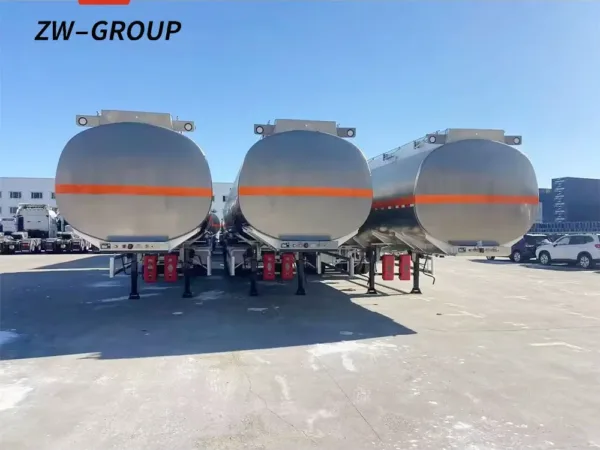
Stacking is not realistic for a complete tanker. The unit rolls or drives onto the vessel or flat rack as a single piece, and the axles, landing gear and tank barrel set its footprint. For lightweight aluminum fuel tanker trailer transport, the saving comes from loading arrangements, not nesting: several units can share one vessel booking, and the supplier can advise how many fit on a flat rack or in a break-bulk hold. Ask for the loading plan before booking freight. On arrival, check the wraps, the polish, the manhole covers, the valve caps and the axle ends, and record any marks before signing.
Common Mistakes Buyers Make
Assuming a standard container fits. A complete tanker trailer is long and wide, so it usually ships on a flat rack or as break-bulk cargo. The check: give the supplier the exact overall length and width you expect and ask them to confirm the shipping method in writing before you book freight.
Ordering without matching the tractor. Coupling height, kingpin position and landing gear settings must suit the truck that will pull the trailer. The check: send the tractor model and the fifth-wheel height, then ask the supplier to confirm the coupling geometry against your figures at quotation.
Ignoring axle and suspension choice. The number of axles and the suspension type change how the load rides and how the unit is loaded. The check: state the axle count you need and the roads it will run on, and have the supplier confirm the configuration in the order documents.
Skipping compartment planning. A single barrel and a multi-compartment barrel serve different delivery patterns, and changing after build is costly. The check: map your fuel grades and drop sizes first, then ask for a compartment layout drawing to approve before production starts.
Leaving discharge equipment vague. Pump, hose and valve arrangements vary, and a mismatch delays commissioning. The check: list the discharge equipment you expect and ask the supplier to confirm what is included and what is optional, item by item, in the quotation.
Buyer Questions
How is the tanker protected during sea freight?
The barrel is wrapped, and the fittings, valves and pipe ends are covered or boxed so salt air and handling do not reach them. Ask the supplier to send photos of the wrapped unit at the yard and again at the port. Confirm which loose parts travel in a separate crate and where that crate is stowed. On arrival, inspect the wraps and the polished surfaces before signing the delivery note, and photograph any mark immediately. Specific packing materials are confirmed at quotation.
Can several units ship together to reduce freight cost?
Yes, several complete units can share one vessel booking, but the count depends on the shipping method and the vessel. Ask the supplier for a loading plan that states how many units fit per flat rack or hold, and get it before you book freight. For lightweight aluminum fuel tanker trailer transport, grouping units in one shipment also simplifies port handling. Exact vessel arrangements and freight terms are confirmed at quotation.
What should I check when the trailer arrives?
Walk the unit before signing anything. Check the polish for scuffs, the manhole covers and valve caps for damage, the axle ends and landing gear for movement in transit, and the boxed fittings against the packing list. Confirm the compartment layout and axle count match your approved order documents. Photograph the wraps and any marks. Report discrepancies to the supplier in writing the same day, with photos, so the claim is documented while the unit is still at the port.
To receive a quote, send the overall length you need, the axle count, and the quantity you plan to order. Add your tractor coupling height and preferred compartment layout if known. With those details, the supplier can confirm configuration, shipping method and pricing for your lightweight aluminum fuel tanker trailer transport requirement.
We use cookies to enhance your browsing experience, serve personalized content, and analyze our traffic. By clicking "Accept All", you consent to our use of cookies. Privacy Policy
Cookie Preferences
Required for the website to function properly. Cannot be disabled.
Help us understand how visitors interact with the website (Google Analytics).
Used to deliver personalized ads and measure ad campaign effectiveness.



















Write a Review