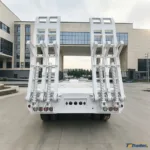
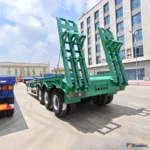
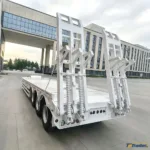
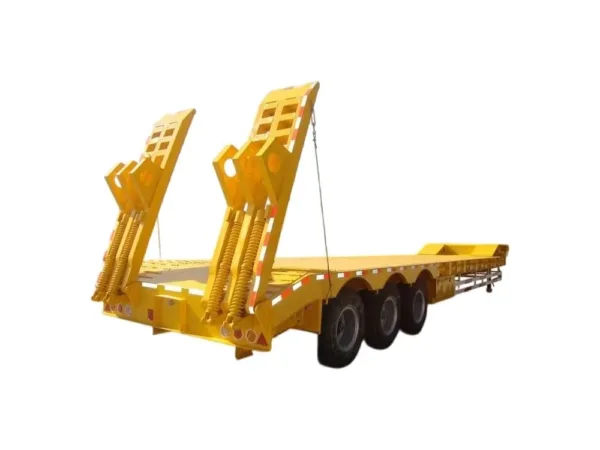
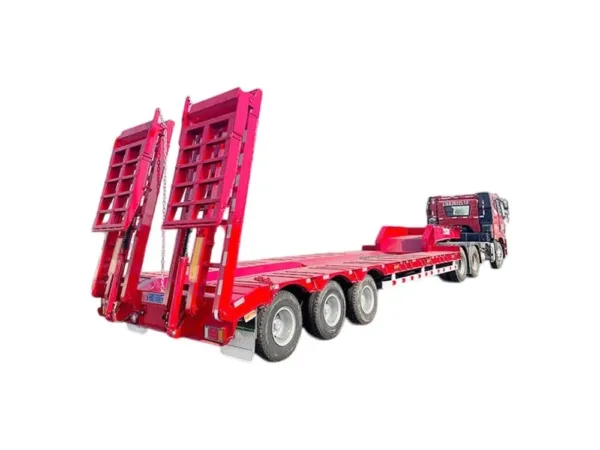
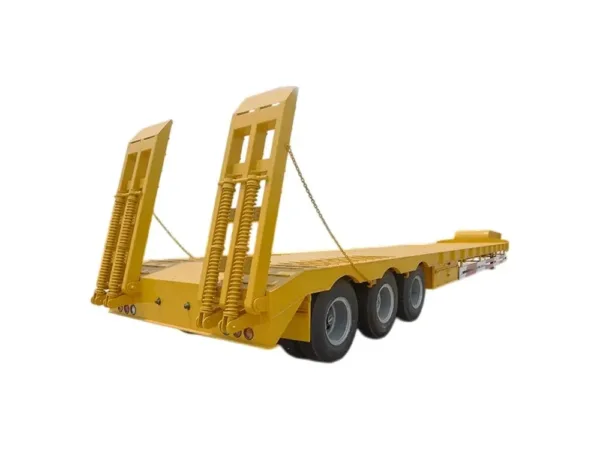
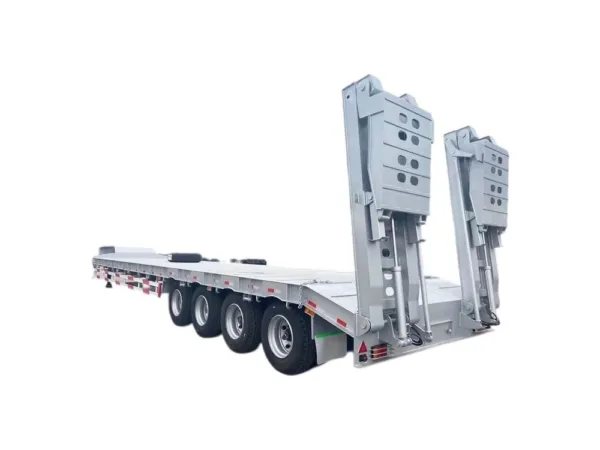
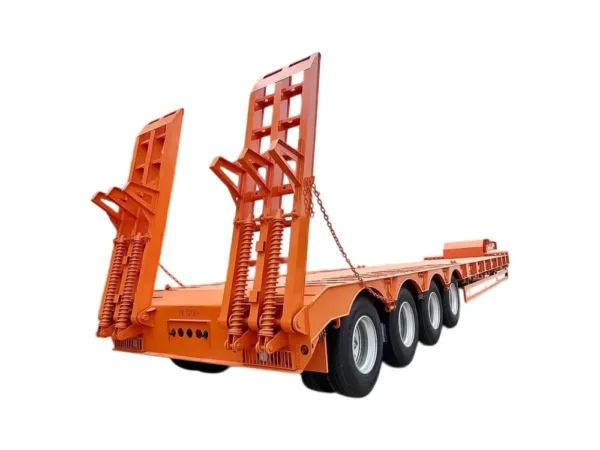
The 60 ton lowbed semi trailer is a three-axle heavy-haul platform built for fleets that move mining equipment, plant machinery and oversized loads over mixed road and site conditions. It suits haulage contractors, equipment rental yards and mine support fleets that need a low deck for tall cargo and a suspension that survives repeated loading. Its strongest argument is the combination of a reinforced low-profile deck and heavy duty suspension on a three-axle running gear: the trailer keeps deck height workable for loading while spreading weight across six tyre positions, so the same unit can handle routine plant transfers and tougher site work without a second trailer in the yard.
Table of Contents
Why It Works On Site
Heavy duty suspension matched to mining work. Site roads are rarely smooth, and repeated trips over unsealed ground punish weak running gear. The heavy duty suspension absorbs shock loads from potholes and ramps, so axles, hangers and the deck frame take less fatigue. That keeps a 60 ton lowbed semi trailer in service instead of in the workshop, which matters when a machine is waiting at the pit.
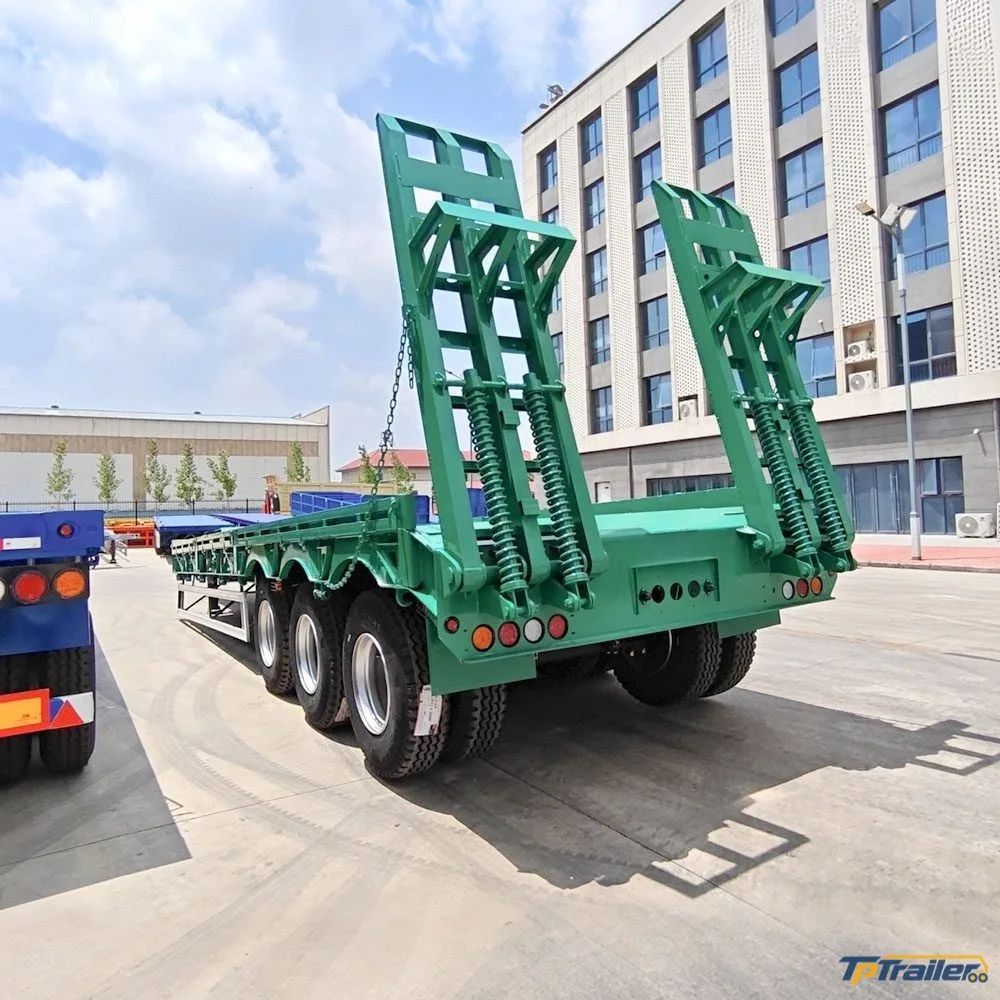
Three-axle running gear for load spread. Three axles distribute cargo weight across more contact points than a tandem setup. For the operator this means better stability on crowned roads and softer ground, and less concentration of load on any single tyre group. It is the layout that lets a 60 ton lowbed semi trailer handle long, dense cargo without the rear end feeling light or wandering.
Low deck height for tall cargo. The lowbed format keeps the cargo platform close to the ground. Mining excavators, dozers and drill rigs carry their height in the body and cab, so a low deck keeps the loaded combination within vertical limits and lowers the centre of gravity. That is the reason a 60 ton lowbed semi trailer is the default choice for tall plant rather than a flatbed.
Reinforced deck for concentrated point loads. Tracked machines and ballasted equipment put weight on small footprints. A reinforced deck spreads those point loads into the frame instead of letting them sit on one plate. For the buyer, this means loading by ramp or winch without worrying that the deck will deflect under a track shoe or an outrigger pad.
Rated load capacity for planned hauling. The stated load capacity gives the fleet a clear planning figure for what the trailer is built to carry. Dispatch can match jobs to the unit, quote with confidence and avoid overloading. A 60 ton lowbed semi trailer with a known rating is easier to schedule across a mixed fleet than one with vague limits.
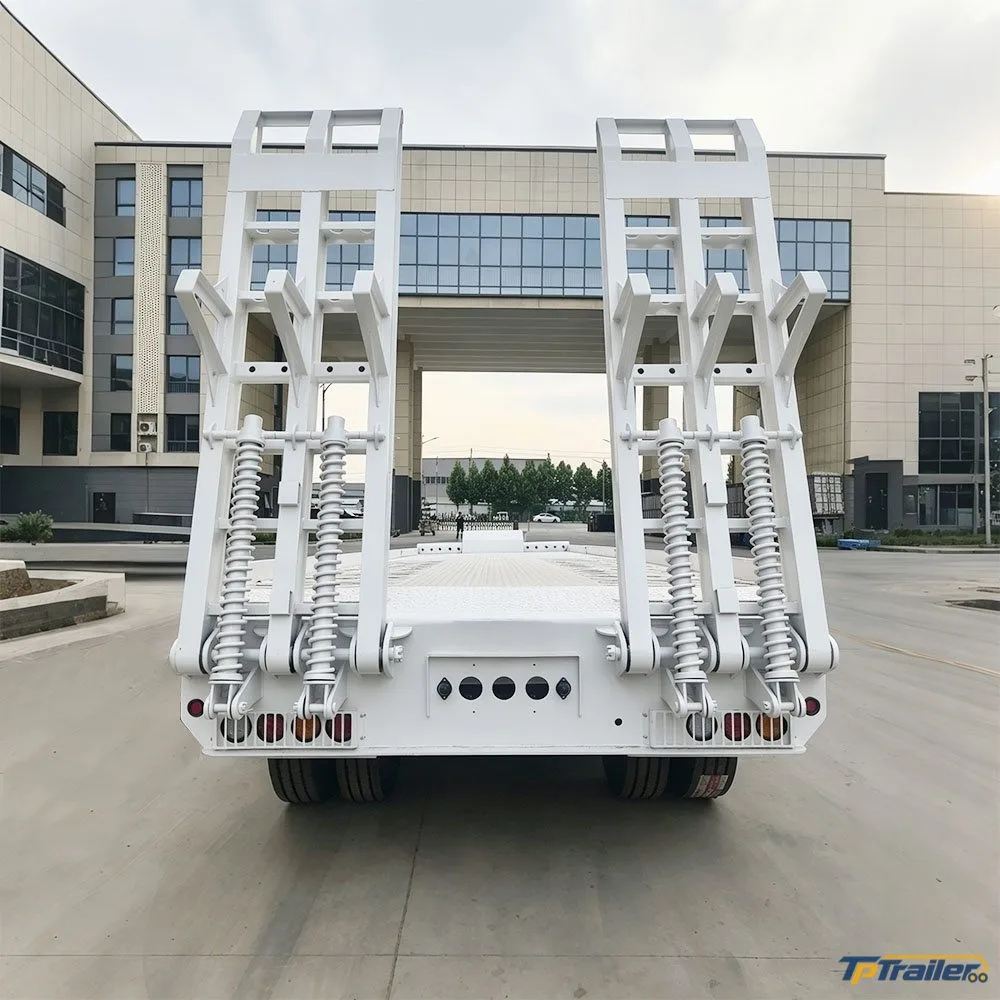
Ramp and loading access. A lowbed deck with a rear ramp approach lets wheeled and tracked equipment drive or winch on directly. That reduces crane dependency at the loading point, shortens turnaround and lets a 60 ton lowbed semi trailer work at sites where lifting gear is not available or not booked.
Where It Is Used
The most common job for a 60 ton lowbed semi trailer is moving earthmoving and mining plant between pits, stockyards and maintenance yards. Excavators, wheel loaders, bulldozers and drills are loaded over the rear and carried on the low deck. Routes usually mix sealed highway with unsealed site access, so the trailer has to cope with both a steady road speed and rough ground at each end. Fleets also use it for plant relocation between projects, where the same unit carries different machines across a season. Because the deck sits low, tall equipment clears overhead structures and the loaded combination stays stable on long highway runs.
A second set of jobs involves oversized and awkward cargo that will not sit on a standard flatbed. That includes crusher components, conveyor sections, screen boxes, generator sets and site cabins. Here the 60 ton lowbed semi trailer works as a general heavy-haul platform: cargo is winched or lifted on, secured to the deck and carried at low height. Operators also use it for recovery and yard shunting, moving disabled machines short distances without calling a specialist heavy-haul contractor. In rental fleets, the trailer earns across mining support, construction and quarry work, which keeps utilisation up between large plant moves.
Choosing The Right Spec
Match the load capacity to your heaviest regular job. The stated load capacity is the planning ceiling. Look at the machines you move most often, add the weight of attachments and ballast, and compare that to the rating. If most jobs sit well under the figure, the standard build is enough. If your regular cargo approaches it, plan loading and routes with that margin in mind. A 60 ton lowbed semi trailer chosen against real job weights stays within its design intent.
Three axles versus lighter running gear. Three axles suit operators who carry dense cargo and want load spread and stability. Fleets moving lighter plant on good roads may find the extra axle capacity unnecessary, but for mining support work the three-axle layout is the safer match. Consider how often you run on soft or uneven ground before settling on the configuration of your 60 ton lowbed semi trailer.
Suspension choice against route quality. Heavy duty suspension is the right pick when a large share of trips includes unsealed site roads, ramps and yard tracks. If your work is mostly sealed highway with occasional site access, the same trailer still performs, but the benefit shows most on rough routes. Buyers should map their typical routes first, then confirm the 60 ton lowbed semi trailer specification fits that duty cycle.
Deck format for your cargo type. Tall tracked machines favour the low deck for height clearance and a low centre of gravity. Long, flat cargo may need more deck length and secure lashing points. Before ordering a 60 ton lowbed semi trailer, list the cargo types you expect over the next few years and check deck length, ramp access and tie-down provision against them, so one unit covers the fleet’s real mix of jobs.
Customisation Before Delivery
The axle count is the first choice to settle. A three-axle layout suits the mining haul you describe, but the configuration is confirmed at order confirmation so the running gear matches your permitted weights. Decide this early, because the axle count shapes the suspension mounts and the brake plumbing on the 60 ton lowbed semi trailer.
Deck length and deck height are open options. State the longest load you carry and the ramp angle your machines need. These two choices drive the deck layout, and both are locked in at order confirmation. Getting them right keeps the 60 ton lowbed semi trailer within your route clearances.
Suspension type is selected to match the ground you work on. Heavy duty suspension is the standard direction for mining duty, and the spring and mounting arrangement is agreed before build. Tell us the surface and the load profile, and the 60 ton lowbed semi trailer is specified around it.
Tyre size and brand are your call, within what the axle and deck layout accepts. Mining sites often want a tougher casing and a tread that clears mud. The tyre choice is fixed at order confirmation, and it affects the spare you carry and the 60 ton lowbed semi trailer stance.
Colour and finish are agreed at order confirmation, together with any marking you want on the frame. Paint and coating choices matter on a mining site where slurry and grit are constant. Confirm the finish you expect so the 60 ton lowbed semi trailer leaves the line as specified.
Fitting And Installation
On arrival, the buyer has to match the trailer to the tractor. Check the fifth wheel height against the kingpin, the coupling plate, and the air and electrical connections. Confirm the mounting points on the gooseneck line up with your truck, and check that the supply lines reach without strain. The 60 ton lowbed semi trailer is built to a confirmed configuration, so the fitment drawing is agreed at quotation and travels with the order. Have that drawing on site before the unit lands. A mismatch found at the yard costs hours; a mismatch found at the mine gate costs a shift.
A wrong size is expensive in downtime, not in parts. If the kingpin height is off, the deck sits at the wrong angle and the ramps no longer suit your machines. If the air line routing does not match the tractor, the brakes will not release cleanly and the 60 ton lowbed semi trailer stays parked. If the mounting points do not line up, you are drilling on a new frame. Walk the coupling, the lines and the deck angle against the drawing before you load. Where the input gives no fitment data, treat the drawing confirmed at quotation as the authority, not a guess on the yard.
Service Life And Maintenance
Tyres wear first on any mining route, especially on the rear axle group where scrub is highest. Inspect tread depth, sidewall cuts and pressure across the set, and rotate where the layout allows. A matched set protects the 60 ton lowbed semi trailer running gear and keeps the deck level under load.
Brake linings and drums are the next wear item on constant haul roads. Check lining thickness, drum condition and slack adjuster travel, and listen for drag after release. On the 60 ton lowbed semi trailer, brake work is easier when the plumbing was confirmed at build, so keep the drawing on file.
Suspension bushes and spring leaves take the shock of loaded travel over rough ground. Inspect for cracked leaves, worn bushes and loose U-bolts, and re-torque to the values in the manual. Heavy duty suspension extends the interval only when the bushes are checked, so put it on the walk-around.
The deck surface and ramps wear from loading and from grit dragged aboard. Check for bent crossmembers, worn ramp lips and cracked welds, and keep the deck clean. A coating chosen for mining duty slows corrosion, and the 60 ton lowbed semi trailer lasts longer when the deck is washed down.
Kingpin, fifth wheel contact and landing legs deserve a regular look. Grease the kingpin, check for play at the coupling, and inspect the leg gears and feet. A worn kingpin shows as slack in the 60 ton lowbed semi trailer coupling, so catch it before it works on the gooseneck.
Packing And Container Loading
A 60 ton lowbed semi trailer ships as a partly disassembled unit. The main deck and frame travel as one welded assembly. Axle assemblies, suspension components and ramps are packed separately where the design allows. Steel contact points get protective wrapping to limit chafing on the voyage. Small parts such as pins, bolts and fittings go into labelled crates or sacks. Buyers should confirm at quotation which components arrive loose and which stay fitted, because that decision changes handling at the destination port. A 60 ton lowbed semi trailer is a large welded structure, so a clear packing list matters more than the crate itself.
Space saving depends on the trailer configuration and the shipping plan. A 60 ton lowbed semi trailer is not a part that nests inside another like a bracket. Partial disassembly can shorten the shipped footprint, and loose axles and ramps can be stowed to reduce wasted volume. The supplier should state the shipping dimensions and the total weight before booking. Buyers should verify the lift points, the centre of gravity and the lashing positions on the packed unit. Ask for loading photos before the container is sealed. That record protects both sides if damage is found on arrival.
Common Mistakes Buyers Make
Ignoring the load capacity rating. The stated load capacity is the ceiling for the whole trailer, not a comfortable working figure. Buyers who plan around peak loads without checking the rating against their heaviest haul end up with an overloaded 60 ton lowbed semi trailer. The single check: compare your heaviest planned load with the rated load capacity at quotation.
Skipping the axle count review. The axle count must match the load and the road rules where the trailer will run. A buyer who orders without confirming the axle count can receive a trailer that is legal in one market and restricted in another. The single check: confirm the required axle count in writing before the order is placed.
Not confirming suspension type. Heavy duty suspension is named in the product title, but the exact configuration should still be confirmed. Buyers who assume a suspension style can face a mismatch with their tractor or their haul route. The single check: ask the supplier to state the suspension type and mounting details at quotation.
Overlooking ramp and deck use. Loading and unloading needs are often left out of the enquiry. A 60 ton lowbed semi trailer ordered without discussing ramp use may not suit the equipment it is meant to carry. The single check: describe the cargo, its dimensions and how it will be loaded before ordering.
Forgetting shipping dimensions. Container loading is planned around the shipped footprint and weight. Buyers who book freight before receiving the shipping data risk a container that is too short or a load that is too heavy. The single check: get the shipping dimensions and total weight in writing before booking.
Buyer Questions
What should I measure before ordering a 60 ton lowbed semi trailer?
Measure the cargo first: its length, width, height and weight. Then measure the tractor that will pull the trailer, especially the coupling height and the fifth wheel position. Confirm the road rules in the markets where the trailer will operate, because they can limit the axle count and the overall length. Write these figures into the enquiry and ask the supplier to confirm the trailer will suit them. For a 60 ton lowbed semi trailer, the cargo and tractor figures matter more than any catalogue photo.
How is the 60 ton lowbed semi trailer loaded into a container?
Loading depends on the shipped configuration. The trailer may travel partly disassembled, with axles, ramps and suspension parts packed separately to fit the container and reduce wasted volume. Ask the supplier for the shipping dimensions, the total weight and the loading plan before you book freight. Confirm the lift points and lashing positions on the packed unit. Request loading photos before the container is sealed, so the condition at dispatch is documented for both sides.
Can I order a single 60 ton lowbed semi trailer, and what is confirmed at quotation?
Yes, a single unit can be ordered, and the price tiers are published for larger quantities. The published price range covers the trailer as described in the specification. Details such as the suspension configuration, the exact packing list, the shipping dimensions and the loading plan should be confirmed at quotation. State your quantity, your cargo dimensions and your destination port in the enquiry. The supplier can then confirm the configuration and the price tier that applies to your order.
To receive a quote, send the trailer length you need, the axle count and the quantity you plan to order. Add your cargo dimensions, the suspension type you expect and your destination port. With those details, the supplier can confirm the configuration and price for your 60 ton lowbed semi trailer.
We use cookies to enhance your browsing experience, serve personalized content, and analyze our traffic. By clicking "Accept All", you consent to our use of cookies. Privacy Policy
Cookie Preferences
Required for the website to function properly. Cannot be disabled.
Help us understand how visitors interact with the website (Google Analytics).
Used to deliver personalized ads and measure ad campaign effectiveness.





















Write a Review