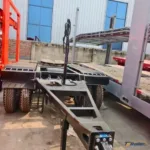
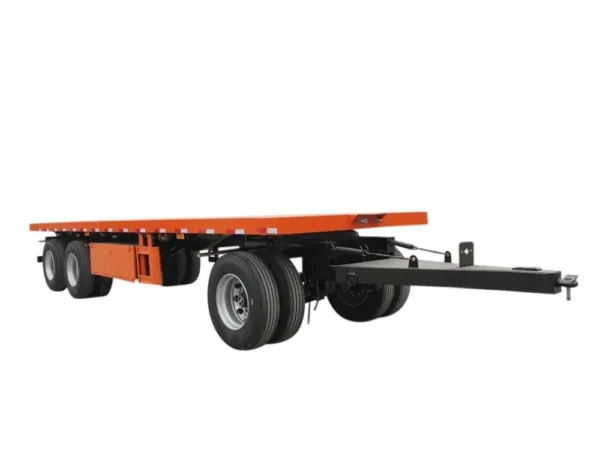
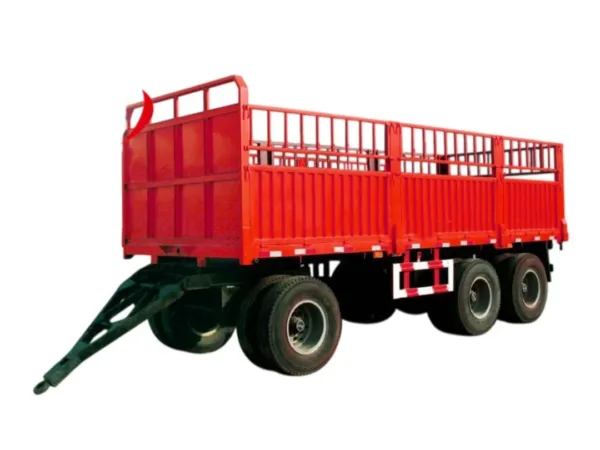
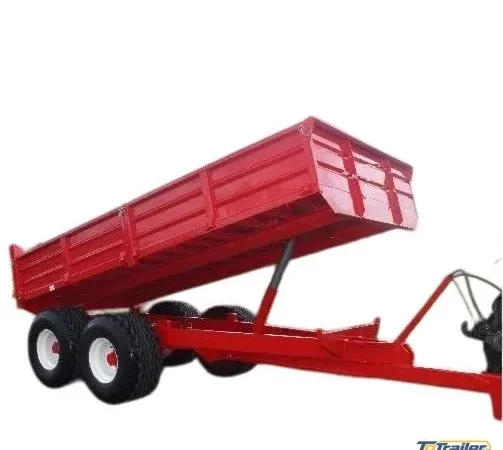
A farm flatbed trailer built as a steel full trailer with side walls turns one tractor into a cargo hauler for the whole yard. This drawbar dolly model pairs a 20ft flatbed with a rated 40T load capacity, twin special trailer axles and a braked back axle, so it moves feed, bales, implements and bagged goods behind a mini farm tractor. It suits smallholders, contracting crews and depots that already run compact tractors and need one trailer to cover several jobs. The strongest reason to choose it is the payload headroom: the deck carries loads far beyond what a light farm tipping trailer handles, while the drawbar keeps it stable behind a low-power tractor.
Table of Contents
Why It Works On Site
Rated 40T load capacity. The rating sets how much cargo each run can carry, so a single trip covers what several light trailer loads would. That cuts tractor hours, fuel and driver time per tonne moved, and it lets one farm flatbed trailer serve harvest, feed and equipment hauling without a second unit on standby.
Steel full trailer construction. A steel frame and steel deck tolerate rough yard surfaces, repeated loading of dense goods and the knocks that come from fork or loader work. The full trailer layout spreads weight across both axles, so the tractor carries less of the load and the farm flatbed trailer stays level on uneven ground.
Two special trailer axles. Twin axles distribute the payload and keep the deck steady when cargo shifts. For the operator this means fewer load-shift surprises on field tracks and yard ramps, and a farm flatbed trailer that tracks straight behind a compact tractor instead of swaying at the drawbar.
Braked back axle. Braking on the rear axle helps control a loaded trailer when slowing on slopes or turning into a gateway. It gives the driver a margin when hauling dense cargo downhill, and it makes the farm flatbed trailer easier to stop at low tractor speeds around buildings and stock.
20ft flatbed with side walls. The long deck takes pallets, bales and long implements, while the side walls contain loose or stacked cargo. Loaders can drop goods over the walls and the farm flatbed trailer keeps them in place, so fewer loads need strapping and fewer items slide off on the route.
Customised colour and OE number. Colour and OE reference can be matched to an existing fleet, so a new farm flatbed trailer fits the livery and the parts records a depot already keeps. That simplifies identification in a shared yard and keeps paperwork consistent when the unit joins a working fleet.
Where It Is Used
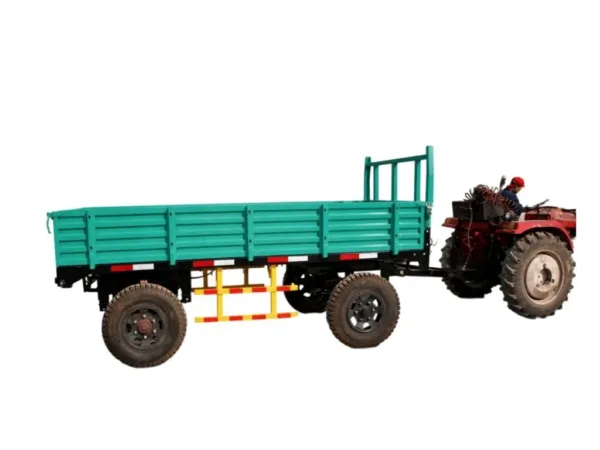
Fleet operators use this farm flatbed trailer for the heavy, repetitive jobs that a compact tractor can pull but a pickup cannot. Typical work is moving wrapped bales from field to stack, hauling bagged feed and fertiliser from the yard to the shed, and shifting pallets of seed or supplies between stores. The flat deck with side walls also takes crates, drums and stacked timber, so the same unit covers harvest transport and general yard logistics.
On mixed farms the farm flatbed trailer doubles as an implement carrier, moving mowers, seeders and small attachments between fields instead of driving them on the road. Because the deck is long and the walls contain the load, one operator can load with a loader and drive away without a second person checking every item.
On contracting and depot work, the trailer suits routes that stay on farm tracks, yard concrete and short road links between sites. It fits jobs where cargo is dense and trips are short: stone, sand, soil, feed sacks and produce boxes. The braked back axle matters on sloping gateways and yard ramps, and the twin axles keep the farm flatbed trailer steady when a loader places weight at one end of the deck.
Crews also use it as a mobile stock point, parking it near a work area and drawing materials from it through the day. Where a fleet already runs several compact tractors, one farm flatbed trailer can be swapped between them, keeping the capital tied up in a single high-capacity unit rather than several small ones.
Choosing The Right Spec
Match the load rating to your heaviest routine job. The 40T load capacity covers dense cargo and stacked goods, so pick this unit when regular loads are heavy rather than occasional. If most trips are light and short, a smaller trailer may use less fuel, but the farm flatbed trailer here removes the need for repeat runs on the days that matter.
Choose deck length by cargo type. The 20ft flatbed takes long implements, pallets in rows and full bale loads. Measure your longest regular item and your pallet count before ordering, then confirm the side walls suit how you load; the farm flatbed trailer works best when the deck matches the cargo footprint rather than exceeding it.
Decide on colour and OE reference early. Customised colour and a customised OE number are set at order, so agree them with your parts and fleet records before production. A farm flatbed trailer that matches existing livery and numbering is easier to track, service and insure across a mixed fleet.
Plan around the axle and brake layout. Two special trailer axles with a braked back axle suit tractors that tow on slopes and yard ramps. Check your tractor’s hitch and towing setup against the drawbar dolly before committing, and confirm the farm flatbed trailer fits the routes and gateways your crews actually use.
Customisation Before Delivery
Axle configuration. The farm flatbed trailer runs on two special trailer axles as standard. Buyers who tow heavier or longer loads can discuss an axle count change at order confirmation. The final axle layout is written into the order before production starts, so the running gear matches the load you actually carry.
Braking setup. The rear axle carries the brake on the standard build. If your towing pattern or local rules call for a different arrangement, raise it when the order is confirmed. Brake layout is fixed in the signed order, not changed on the floor later, which keeps the farm flatbed trailer matched to your tractor and route.
Colour and finish. Colour is customised on this farm flatbed trailer. You can match a fleet livery, a dealer colour or a high-visibility shade for road work. The shade is agreed at order confirmation and applied to the steel body during build, so the unit arrives ready to brand rather than needing a repaint.
Deck length and side walls. The 20ft flatbed with side walls is the reference build. Deck length and wall height are settled at order confirmation if your cargo needs a different envelope. Because the body is steel, wall and deck changes are a fabrication decision made before cutting, not an afterthought.
OE and marking details. The OE number is customised, so buyers with a house part number or a marking requirement can have it applied. Share the reference at order confirmation. It is recorded against the build so the farm flatbed trailer arrives identified the way your paperwork expects.
Fitting And Installation
A farm flatbed trailer is only as good as the hitch-up, so plan the arrival inspection before the unit lands. Check the drawbar and coupling geometry against your tractor first. Confirm the mounting points on the towing vehicle line up with the dolly and drawbar arrangement, and that the pin or ball size matches what you run. Because the OE number is customised, the coupling interface is agreed at order confirmation, so the delivered unit should meet the reference you supplied.
Walk the brake line routing from the rear axle forward and confirm the hose lengths reach your tractor take-off without strain or chafe. Check the side walls sit square and the deck is true. A fitment drawing is confirmed at quotation, so measure against that drawing rather than assuming. Record what you find and photograph the coupling area before first tow.
The cost of a wrong size is downtime you cannot schedule around. A coupling that does not match the tractor parks the farm flatbed trailer until an adapter arrives. A brake line that is short or badly routed fails inspection and keeps the unit off the road. A deck or wall dimension that misses the cargo envelope means rework on steel, which is slow and costly. Because the load capacity is high, an ill-fitting hitch is also a safety matter, not just an inconvenience. Settle the mounting points, tube size and hose routing at quotation, confirm them at order confirmation, and check them again on arrival. That sequence keeps the first tow short and the unit earning.
Service Life And Maintenance
Brake components first. The rear axle carries the brake, so linings and drums are the earliest wear point on this farm flatbed trailer. Inspect them for glazing, scoring and uneven contact. Keep the actuation free and adjusted. Brake condition is checked before any loaded run, because a trailer that will not stop squarely is a risk on every slope.
Coupling and drawbar. The hitch takes shock loads every time you start and stop. Inspect the coupling for play, the pin for wear and the drawbar for cracks at the welds. A farm flatbed trailer worked hard on rough ground shows this first. Replace worn pins rather than shimming them, and keep the coupling clean and lightly greased.
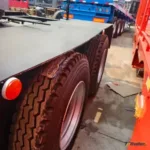
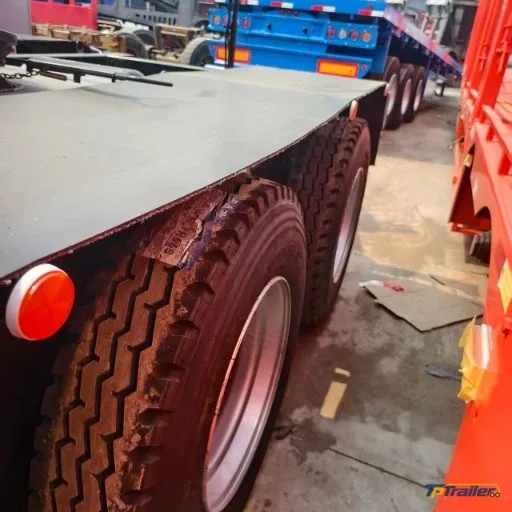
Tyres and axle bearings. Tyres wear by load and surface, so check pressure and tread across the set and look for uneven wear that points to alignment. Feel the hubs after a run for heat that suggests bearing trouble. On a farm flatbed trailer used across yards and lanes, sidewall damage from stubble and stone is as common as tread loss.
Steel body and coating. The body is steel, so the coating is what buys you time. Inspect the deck, side walls and underside for chips, scuffs and surface rust, and touch them in early. Keeping the coating intact on this farm flatbed trailer extends the interval before bodywork needs attention, especially where fertiliser and slurry splash the frame.
Fasteners and structure. Walk the unit periodically and check wall fixings, deck fasteners and axle mounts for looseness. Vibration loosens what impact starts. Re-torque to the values in the drawing confirmed at quotation, and look for cracks around mounting points. A short inspection after each heavy season keeps the farm flatbed trailer serviceable far longer than a repair after failure.
Packing And Container Loading
Each farm flatbed trailer ships as a steel structure with its axles, brake hardware and side walls secured for sea freight. Axle ends and brake components are wrapped against moisture, and loose fittings are boxed and tied to the frame. Exposed steel edges are protected so they do not rub through wrapping during handling. The buyer should confirm the packing method at quotation, because it depends on whether the unit ships complete or partly dismantled. Ask for photos of a packed unit before dispatch.
Space saving depends on how the units are prepared. A farm flatbed trailer with removable side walls and separate axles can be partly broken down, so several units share a container footprint. Stacking is limited by the steel frame and axle weight. Confirm the loading plan before booking freight. On arrival, check the frame for bending, count the axle sets and brake parts against the packing list, and photograph any damage before unloading. Verify the certificate documents against the order.
Common Mistakes Buyers Make
Ordering without confirming the drawbar interface. The tractor end of the dolly must match the hitch on the towing vehicle. Measure the coupling height and pin size on the tractor before ordering a farm flatbed trailer. A mismatch here is the most common reason a unit cannot be used on delivery.
Ignoring the load capacity when matching the tractor. The load capacity is a maximum, not a target. Buyers who plan loads above it risk axle and brake failure. Check the rated load capacity against the heaviest load you intend to tow, and confirm the tractor can pull it safely.
Assuming brakes on every axle. The brake arrangement is specified per axle, and only some axles carry brakes. Confirm which axles are braked and that the tractor has the matching hydraulic or air connection. Skipping this check leaves the trailer without working brakes on the road.
Overlooking the side wall height. Cargo retention depends on wall height and fixing points. Measure the tallest load you carry and confirm the side wall dimensions on the farm flatbed trailer. Buyers who skip this find loads sit above the walls and need extra strapping.
Treating the colour as fixed. Colour is customised, so it must be stated on the order. Confirm the colour code and the finish in writing before production starts. Without a written colour reference, a farm flatbed trailer can arrive in a shade the buyer did not intend.
Buyer Questions
Can the side walls be removed for flatbed work?
Confirm this at quotation, since the input does not state whether the walls are fixed or removable. If you need a farm flatbed trailer that converts between walled and open deck use, ask the supplier to confirm the fixing method and how the walls are secured. Also ask whether removal affects the load capacity rating. Order the configuration you need at the start, because retrofitting walls after delivery is a workshop job.
What should I measure before ordering a farm flatbed trailer?
Measure the drawbar coupling on your tractor, the height of the hitch point and the width of your gateway or lane. Check the deck length against your longest load and the side wall height against your tallest cargo. Confirm the axle count and brake arrangement you need. Send these figures with your enquiry so the supplier can confirm the configuration before you place the order.
How do I confirm the certificate and customisation details?
The product carries CCC and ISO9001 certification, and the OE number is customised. Ask for copies of the certificates with the quotation and check that the model on the certificate matches the unit you are buying. For customisation, put the colour and any OE reference in the purchase order. Confirm at quotation which documents travel with the shipment, so customs clearance is not delayed.
To receive a quote, send the deck length you need, the number of axles and the quantity you plan to order. State your required colour and the tractor coupling details. With those figures, the supplier can confirm the configuration and the price tier for your volume.
We use cookies to enhance your browsing experience, serve personalized content, and analyze our traffic. By clicking "Accept All", you consent to our use of cookies. Privacy Policy
Cookie Preferences
Required for the website to function properly. Cannot be disabled.
Help us understand how visitors interact with the website (Google Analytics).
Used to deliver personalized ads and measure ad campaign effectiveness.


















Write a Review