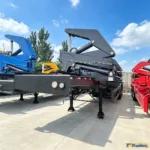
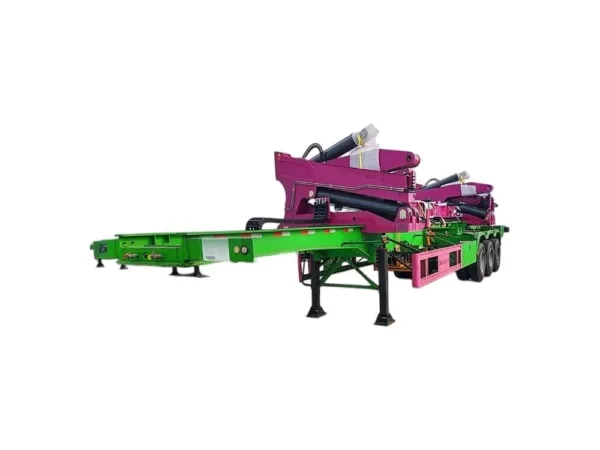
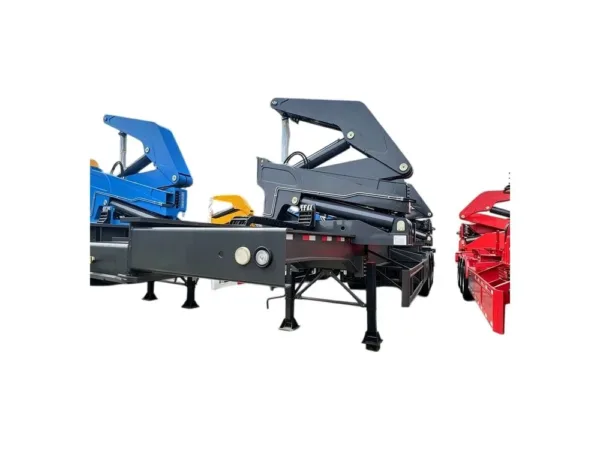
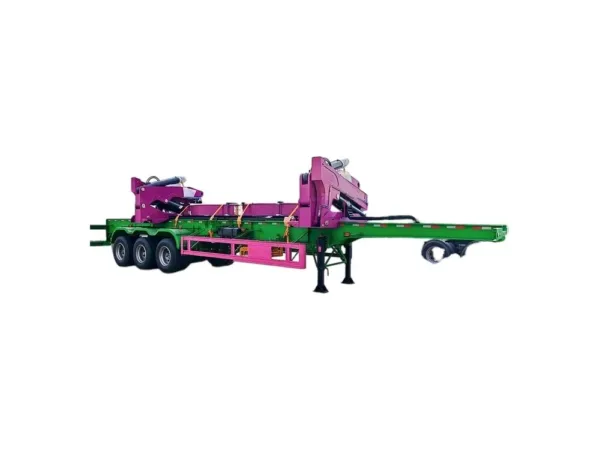
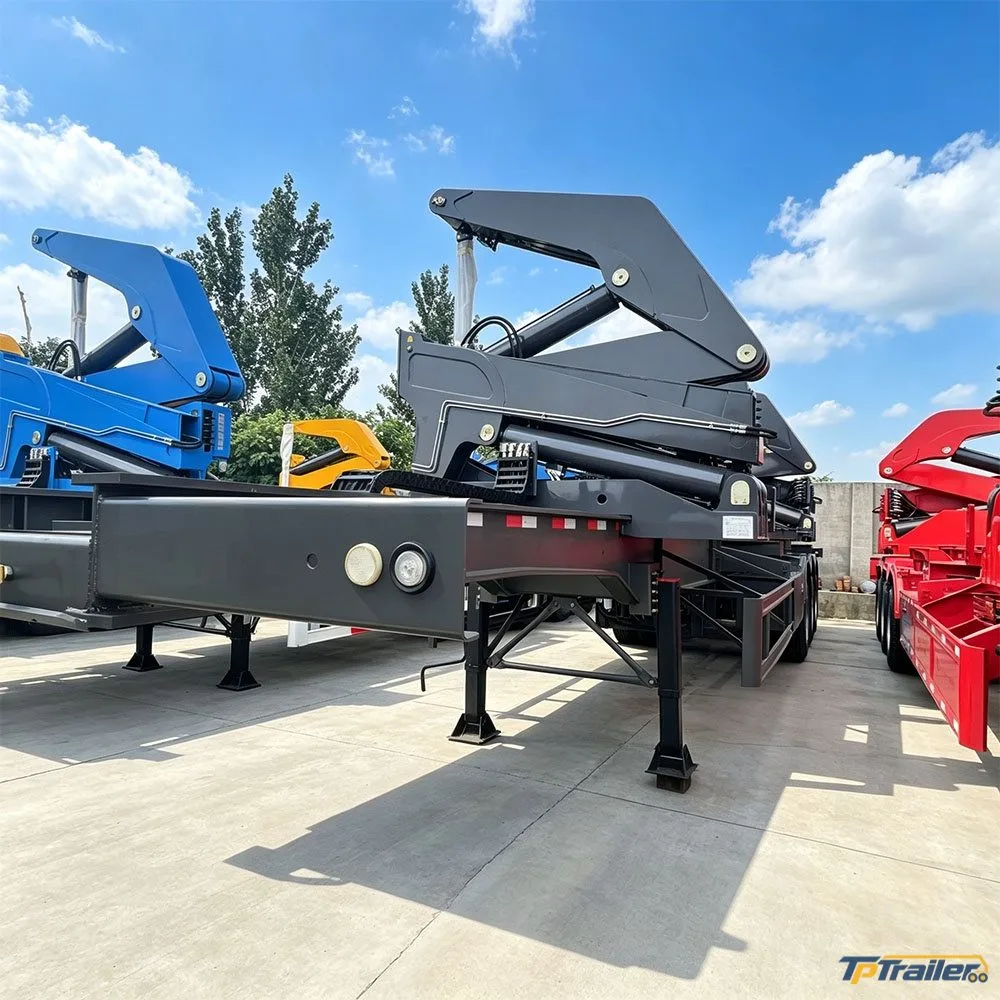
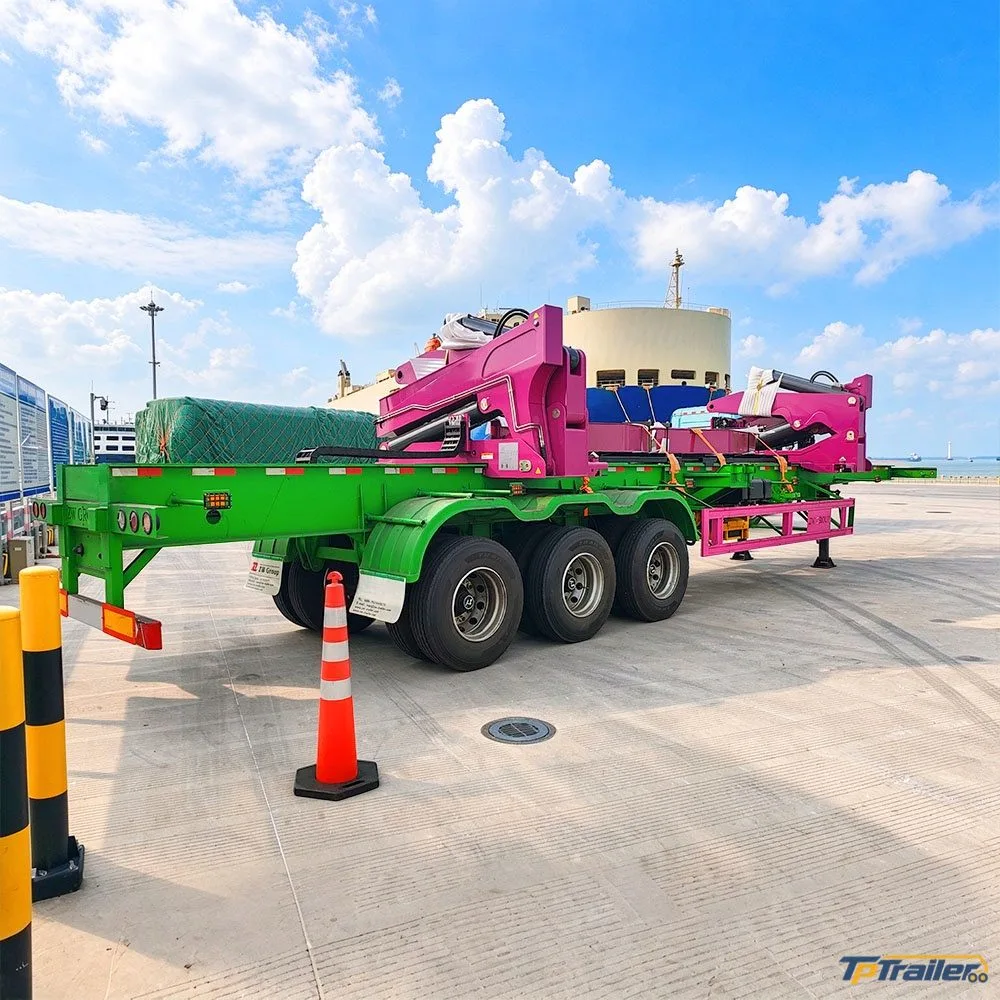
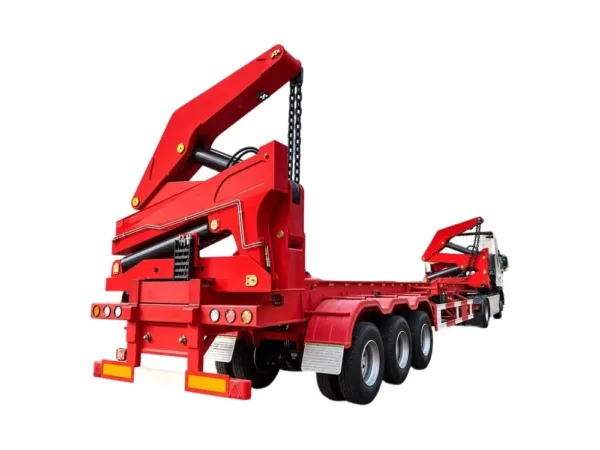
Heavy Duty 3 Axle Self Loading Container Trailer 40 Ton Side Lifter
Heavy duty self loading container trailer with 3 axle chassis and 40 ton side lifter for container yard operations. Request a quote for your fleet today.
>30000 KG 3
FOB Reference PriceUS$7,000-10,000Final price confirmed by inquiry
Certifications
ISO 9001
Key Features
3 axle self loading container trailer for container yard operations
40 ton side lifter handles container lifting and placement on site
Heavy duty build for repeated container handling cycles
Self loading design reduces reliance on separate yard lifting equipment
Suits shipping container yard and depot operations
The self loading container trailer is a three-axle chassis built to lift and carry shipping containers without a crane, forklift or extra ground crew. It is made for container yard operators, haulage fleets and depots that move loaded boxes between stack, gate and truck. A 40 ton side lifter does the lifting, so one driver and one unit handle the whole cycle. The strongest reason to choose it is independence: the trailer loads itself, so yard throughput no longer waits on crane availability or a second machine. It suits operators who want a self-contained loading and hauling unit rather than a bare skeleton trailer.
Table of Contents
Why The Self Loading Container Trailer Works On Site
Self-contained lifting cycle. The 40 ton side lifter is mounted on the trailer, so the unit picks a container from the ground or a stack and sets it on its own deck. That removes the crane booking from every job and lets a single driver clear a queue of boxes without waiting for lifting equipment to arrive on site.
Rated for loaded boxes. The stated load capacity covers loaded container work rather than empty repositioning only. A fleet can plan the self loading container trailer around revenue cargo, not just empty runs, which keeps the asset earning on the days when the yard has full boxes waiting for collection.
Three-axle stability under load. Three axles spread the carried weight across the road and keep the chassis settled while the side lifter swings a box out and in. Drivers get a steadier platform during the lift, and the unit tracks predictably on the road between the yard and the delivery point.
Side loading in tight yards. Lifting from the side means the trailer does not need clear space in front of or behind the container. Boxes parked close together, against a fence line or in a narrow lane can still be collected, which matters where yard space is tight and boxes are stacked in rows.
One unit, two jobs. The same machine loads and hauls, so a small fleet covers collection and delivery without splitting work between a lifting rig and a separate tractor-trailer. That reduces the number of assets tied to each container movement and simplifies dispatch planning for the self loading container trailer.
Driver-led operation. Controls sit with the operator, so the lift happens as part of the run rather than as a separate scheduled step. The trailer lets a driver arrive, load, secure and leave, which shortens the time each box spends waiting in the yard.
Where It Is Used
Container yard operations are the core duty. The self loading container trailer moves boxes between the stack, the inspection bay and the gate, and it collects containers parked on the ground where no crane is stationed. Depots that handle steady inbound and outbound flows use it to shift loaded boxes onto the road without calling in lifting equipment for each move. It also suits rail sidings and inland terminals where containers are grounded in rows and need to reach a road vehicle. Because the side lifter works from the side, the assembly fits yards where boxes sit close together and there is little room to manoeuvre a crane or a forklift around each container.
On the road, the trailer covers the runs a haulage fleet recognises: port to warehouse, depot to consignee, and terminal to distribution site. It carries standard shipping containers, and the side lift means the driver can set a box down at a site that has no lifting gear of its own. That makes it useful for deliveries to yards, industrial units and storage plots where the receiving end cannot unload a container from a flatbed. Fleets also use the self loading container trailer for repositioning empty and loaded boxes between their own sites, where the ability to load without ground support keeps the schedule moving and avoids tying a run to an outside lifting booking.
A third setting is the smaller operator without a permanent yard crane. For a business running a handful of boxes a day, the trailer replaces the capital and maintenance cost of lifting plant while still allowing loaded container handling. The leg earns its place because it turns a tractor unit into a loading and hauling tool, and the driver does not need a second machine or a banksman to complete a collection.
Choosing The Right Spec
Match capacity to the cargo mix. Start with the load capacity you actually haul. If most runs are loaded boxes at the top of your weight band, the stated capacity is the figure to check against your typical container weights. A fleet that mostly repositions empties has different headroom than one moving dense cargo, so read the self loading container trailer rating against real loads, not averages.
Three axles for road and yard duty. The three-axle layout is the fixed choice here, and it shapes where the unit works best. It supports the lift and the road leg together, so plan routes and yard surfaces around a unit of this size. Operators weighing the trailer against a lighter chassis should confirm the axle set suits their regular roads and site access.
Side lifter rating against box type. The 40 ton side lifter defines what the unit can handle at the lift. Check it against the container types and gross weights in your normal book of work. If your jobs sit well inside that envelope, the assembly gives margin for the lift cycle; if you regularly approach the limit, plan the duty cycle around it.
Volume tiers for fleet build-out. The price tiers step down as order quantity rises, so the choice is also a fleet question. A single unit suits a depot testing self-loading capability, while a larger order fits an operator standardising a yard on the self loading container trailer. Compare the per-unit position across tiers before fixing the order size.
Customisation Before Delivery
Axle count is the first choice to settle. A self loading container trailer can be ordered with the axle configuration that matches your yard routes and the loads you carry. Confirm the count at order confirmation so the running gear, brake hardware and suspension mounts are built as one matched set rather than adapted later.
Deck length and container positions are agreed before build. Tell us which container sizes the unit will handle most often, and the deck is laid out around that mix. Getting this right at order stage keeps the twist locks and side-lifter geometry aligned with your actual freight profile, which is the difference between a trailer that lifts cleanly and one that needs rework.
Suspension type is selected at order confirmation. Mechanical and other suspension arrangements change how the self loading container trailer sits under load and how the axle group is bracketed. The choice is recorded with the order so the frame and mounting points are fabricated for that arrangement from the start.
Tyres and colour are specified with the order. Tyre size and pattern follow the surfaces the trailer works on, and paint colour is chosen to suit your fleet marking. Both are locked in at confirmation so the build sheet and the delivery paperwork match.
Any other option is agreed in writing at order confirmation. Because the self loading container trailer is built to order, changes after confirmation affect the build sheet and the delivery schedule. Settle every choice in one round so nothing is left open when fabrication begins.
Fitting And Installation
On arrival, the self loading container trailer has to be matched up with your tractor unit and your yard. Check the coupling height and the kingpin engagement first, then confirm the mounting points on the tractor match the trailer frame. Look at the hydraulic system as a whole: tube size, hose routing and the clearance around moving parts all have to suit the installation.
Where the input gives no fitment data, a fitment drawing is confirmed at quotation, so the buyer knows what to prepare before the unit ships. Walk the side-lifter arms through their full travel before loading anything, and check that no hose or bracket fouls the frame at either end of the stroke. Record what you find, because a baseline makes later inspections faster.
A wrong size at this stage costs downtime, not just a part. If the coupling height is off, the assembly cannot be worked until the mismatch is corrected, and the yard loses the days the unit was meant to save. Hose runs that are too short or routed against a sharp edge wear through and take the hydraulic circuit out of service.
Mounting points that do not line up force field modification, which is slower and harder to check than a factory build. That is why the fitment drawing for the self loading container trailer is confirmed at quotation: the buyer can compare it against the tractor and the yard layout while there is still time to adjust the order. Confirm the drawing before delivery and the installation becomes a planned task instead of a repair.
Service Life And Maintenance
Hydraulic hoses and seals wear first on a self loading container trailer. The operator should inspect the full hose run for chafing, cracks and weeping joints, and check the cylinder seals around the side-lifter arms. Keep hoses clear of edges and heat. Replacing a worn hose on schedule is far cheaper than losing the hydraulic circuit mid-shift in a busy yard.
The side-lifter arm pivots and slides carry the load every cycle. Inspect pivot pins, bushes and slide surfaces for play, scoring and uneven wear. A trailer that lifts containers all day works these points hardest, so they deserve a fixed place on the inspection sheet. Grease points kept clean and covered last longer than dry ones.
Tyres and axle hardware are next in line. Check tyre pressure, tread and sidewall condition, and look at wheel nuts and axle brackets for looseness. On the assembly the axle group takes both road travel and yard manoeuvring, so a quick walk-around before each shift catches most problems while they are still small.
The frame and coating decide how long the structure stays sound. Inspect welds, box sections and the deck surface for cracks, corrosion and paint damage, and touch up chips before rust spreads. Choosing the coating option at order stage extends the interval between repairs on a self loading container trailer that works outdoors or near the coast.
Brake and electrical systems complete the routine. Test the brake response, check the lines and look at lamp wiring and connectors for water ingress. A trailer that passes a short functional check each day is easier to keep in service than one inspected only when something fails. Log every finding so wear trends are visible over time.
Maintenance planning depends on duty cycle rather than calendar alone. A unit that lifts dozens of boxes a shift on rough yard concrete will work its pivots and tyres harder than one doing a few moves a day on sealed surfaces. Build the inspection interval around the number of lift cycles and the ground conditions, not just the hours on the road. That way the self loading container trailer is serviced before wear turns into a breakdown, and the parts you hold in stock match the points that actually fail first.
Packing And Container Loading
Each self loading container trailer leaves the yard with its lift arms locked in the transport position. Exposed hydraulic rams are wrapped and strapped, and hose ends are capped so sea air cannot reach the seals. Steel contact points get a protective coating before dispatch. The buyer should confirm the locking method and the wrap material at quotation, because a trailer that shifts in the hold arrives with bent rams and stretched hoses.
The unit ships as a complete assembly, so nesting is not possible. Stacking a self loading container trailer on another unit loads the lift arms and frame in a direction they were not designed for. Book flat rack or open top space and confirm the securing plan with the forwarder. Ask for loading photos before the container is sealed, and check the lift arm locks and ram wrap on arrival against those photos.
Common Mistakes Buyers Make
Ordering without checking the container size. A side lifter handles standard shipping containers, and the buyer who never confirms which lengths the yard receives can end up with a unit that cannot lift what arrives. Check the container lengths your yard handles and match them to the lifting capability before you order.
Ignoring the load capacity figure. The rated load capacity is the ceiling for the whole lift, not a target. Buyers who plan around heavier boxes overload the arms and frame. Compare your heaviest regular container against the rated load capacity and keep a margin for spreader and twist lock weight.
Assuming any tractor will pull it. The self loading container trailer couples to a standard tractor unit, but the buyer must confirm the fifth wheel, air lines and electrical connections match. Check the coupling specification against your existing tractor fleet before the order is placed.
Skipping the hydraulic oil and pressure check. A trailer that sat in transit can arrive with low oil or air in the lines, and the first lift then runs dry. Confirm the oil grade and the pressure setting at quotation, and check both before the first container is lifted.
Not agreeing who handles spares and manuals. Buyers who never ask about the spare parts list, the manual language or the warranty terms end up sourcing seals and hoses alone. Request the spare parts list and the manual language in writing with the quotation.
Buyer Questions
Can the self loading container trailer be shipped in a standard container?
The unit ships as a complete assembly, so nesting and stacking are not possible. Ask the supplier to confirm the packed dimensions and the shipping method at quotation, then compare them with the internal dimensions of the container or flat rack you plan to book. Measure the yard gate and the unloading area as well, because a wide trailer needs room to roll out.
What should I check on arrival before signing the delivery note?
Walk the unit before signing. Check the lift arm locks, the ram wrap and the hose caps, and compare the frame and paint against the loading photos. Photograph any damage before the driver leaves. Then confirm the oil level and the pressure setting against the quotation, and run one empty lift cycle only after those checks pass.
Does the load capacity cover the container plus the cargo?
The rated load capacity is the working limit for the lift, so treat it as the combined figure rather than a cargo-only figure. Add the container tare weight to your heaviest regular cargo and compare the total with the rated load capacity. If the total sits close to the limit, confirm the margin with the supplier at quotation.
Ready to price a self loading container trailer for your yard? Send the container lengths you handle, your required axle count and the quantity you plan to order. We will match the configuration to your fleet and return a written quotation with the packing and loading plan included.
We use cookies to enhance your browsing experience, serve personalized content, and analyze our traffic. By clicking "Accept All", you consent to our use of cookies. Privacy Policy
Cookie Preferences
Required for the website to function properly. Cannot be disabled.
Help us understand how visitors interact with the website (Google Analytics).
Used to deliver personalized ads and measure ad campaign effectiveness.

















Write a Review