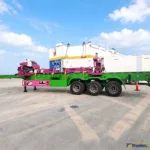
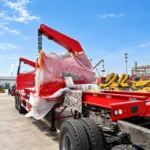
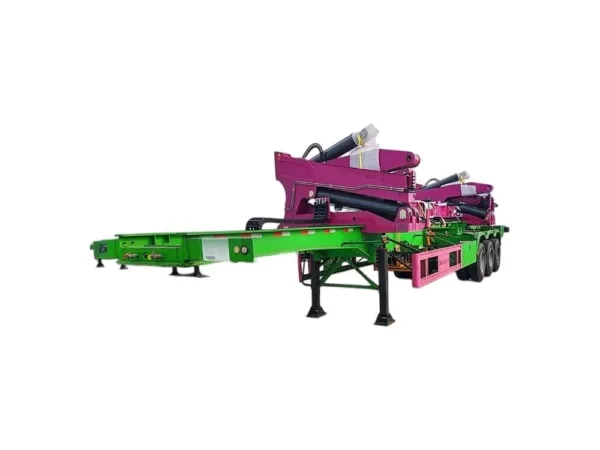
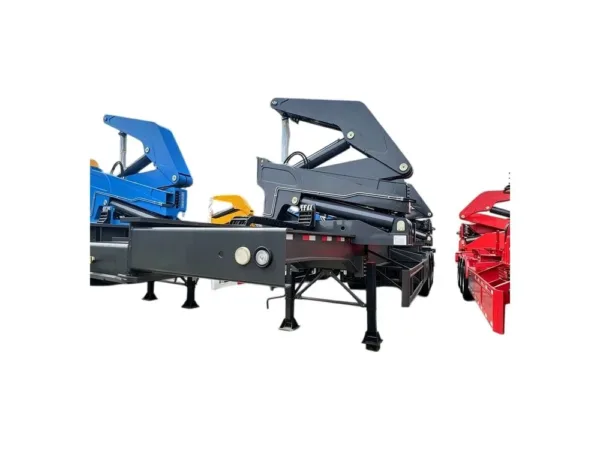
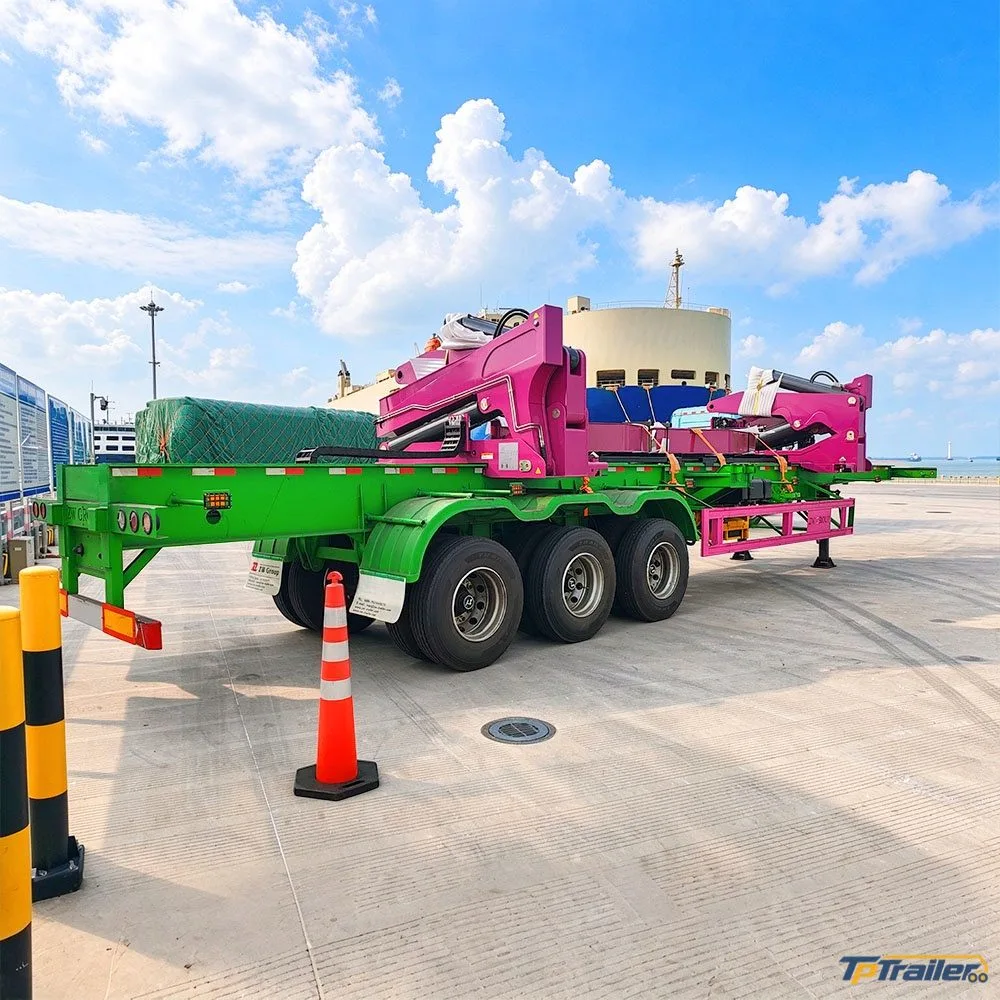
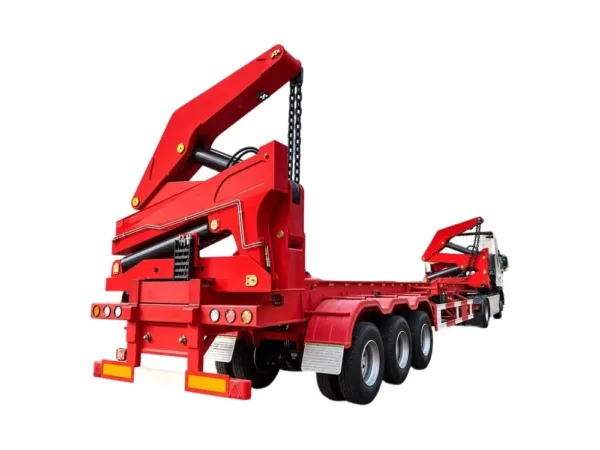
Container sidelifter semi trailer is a self-loading skeletal trailer built to lift and carry 20ft and 40ft containers without a crane or forklift on site. It suits fleet operators, container depots, and haulage contractors who move boxes between yards, ports, and customer premises. The single strongest reason to choose it: the trailer loads and unloads itself, so a hauling job starts the moment the truck arrives. Load capacity is rated at 30000 KG, matching standard container weights on regular delivery runs. It is a working tool for operators who need one unit to handle lifting and road transport in the same trip.
Table of Contents
Why It Works On Site
Self-loading geometry removes crane dependency. The sidelifting arms lift a container from the ground to the trailer bed without a crane, forklift, or extra crew on site. That turns any flat, firm yard into a loading point. A container sidelifter semi trailer can serve depots and customer premises that have no lifting equipment of their own, so the operator controls the schedule instead of waiting for a third party.
The 30000 KG load capacity sets the working envelope. This rating covers a loaded 20ft or 40ft container within normal road limits. The operator can plan each run around a known payload ceiling rather than guessing. Because the capacity is fixed, dispatch staff can match box weight to trailer before the truck leaves the yard, which cuts rejected loads and wasted trips on a container sidelifter semi trailer.
ABS brakes support stable stopping under load. ABS keeps wheels from locking during hard braking on wet or loose surfaces. With a loaded container raising the centre of gravity, that control matters at junctions and yard entrances. The system works with the tractor unit’s braking to keep the combination straight. For a container sidelifter semi trailer working mixed routes, ABS is a safety baseline rather than an optional extra.
Three axles spread the load across the road. A three-axle bogie distributes container weight over more tyres and more road contact. That improves traction on uneven ground and reduces per-axle loading. The layout also keeps the trailer stable when the lifting arms are raised and the container is in motion. Operators running a container sidelifter semi trailer on varied surfaces get a more settled ride than a shorter axle set would give.
One trailer handles both 20ft and 40ft boxes. The sidelifter accepts both container lengths, so a single unit covers short depot shuttles and long-haul deliveries. Fleets avoid keeping separate trailers for each size. Dispatch can assign any box to any available trailer, which simplifies planning. A container sidelifter semi trailer that covers both sizes reduces the number of units a yard needs to keep productive.
Sidelifting keeps the load path short. The arms lift from the side rather than over the top, so the container never swings above the cab or nearby people. Loading and unloading happen in a compact footprint, which suits tight yards and roadside collection points. The operator gains a safer, more predictable lift cycle. A container sidelifter semi trailer built this way fits sites where overhead clearance or space is limited.
Where It Is Used
Container depots and yards are the first home for this trailer. Boxes arrive, get stacked, and leave again on tight schedules, often without a crane on every row. A container sidelifter semi trailer lets one driver collect a grounded container and place it on the bed alone, then repeat the cycle across the yard.
Depots also use it to reposition empties between storage lanes, shift boxes for inspection, and load customer collections at the gate. Because the unit lifts from the side, it can work narrow aisles where a top-lift cannot reach. The same trailer then runs the box to its next stop on public roads, so the depot gains a single asset that covers yard handling and delivery in one shift.
Construction and industrial supply runs are the second common job. Sites often sit behind gates, on gravel, or at the end of a lane with no lifting gear. A container sidelifter semi trailer delivers a loaded 20ft or 40ft box, sets it down where the site needs it, and leaves without waiting for a crane booking.
The same pattern fits factories receiving raw materials, farms taking delivery of bulk goods, and event or temporary sites that need a container as storage. On the return leg the trailer can collect an empty box or a loaded one for the yard. Operators value the flexibility: the truck never arrives unable to unload, and the site never needs to hire lifting equipment for a single drop.
Choosing The Right Spec
Match the load capacity to your heaviest routine box. The 30000 KG rating is the ceiling for this model. Operators should compare it with the heaviest container they expect to move on normal runs, not the occasional exception. If routine loads sit well under the rating, this unit covers the job with margin. A container sidelifter semi trailer chosen this way avoids both overload risk and the cost of capacity the fleet never uses.
Decide by container mix: 20ft, 40ft, or both. The trailer accepts both lengths, so the choice is about how often each appears in your schedule. Fleets running mostly short boxes still gain from 40ft capability on mixed jobs. Yards that handle both sizes daily get the most from one unit. A container sidelifter semi trailer that covers the full mix keeps dispatch simple and avoids splitting work across separate trailers.
Weigh axle count against your routes and surfaces. Three axles suit operators who run a mix of yard work, gravel access roads, and public highways. The extra axle spreads load and steadies the trailer when the arms are working. Fleets with tight turning areas should confirm the trailer fits their yard layout before ordering. Choosing a container sidelifter semi trailer with the right axle set keeps the unit usable across every site on the route.
Confirm ABS and brake compatibility with your tractor units. ABS brakes need to work with the towing vehicle’s system, so check the fleet’s tractor specifications before purchase. Operators running mixed tractor ages should confirm the connection standard. This matters most for fleets doing loaded highway runs in wet conditions. A container sidelifter semi trailer matched to the existing tractor fleet avoids downtime and keeps every unit road-ready from day one.
Customisation Before Delivery
The container sidelifter semi trailer can be ordered with the axle count that suits your container mix and road rules. Axle count affects how the load is spread and how the unit tracks. Tell us the configuration you need, and the choice is settled at order confirmation, so the build sheet matches your fleet.
Deck length is another option on the container sidelifter semi trailer. The deck must match the container sizes you move and the way the lifting arms stow. Confirm the length you want when you place the order, and the workshop sets the frame and arm geometry to that size before delivery.
Suspension type is chosen at order confirmation. Mechanical and air options behave differently under load and on rough ground. The container sidelifter semi trailer can be specified to match your routes and your drivers’ habits. The selection is locked in with the order, so the running gear is built to one plan.
Tyres and colour are settled at order confirmation too. Tyre size and pattern should suit your terrain and your spare-part stock. Colour helps with fleet identity and with visibility on site. Both are recorded on the container sidelifter semi trailer order sheet before production starts.
Brake hardware follows the ABS system fitted to the container sidelifter semi trailer. Confirm the arrangement you need so the wiring and sensor layout are built correctly. Any option you choose is written into the order at confirmation, and the build then follows that agreed list without later changes.
Fitting And Installation
When the container sidelifter semi trailer arrives, the buyer has to match several things up before the unit goes to work. Check the mounting points on your tractor unit against the trailer coupling and the frame height. Confirm the hydraulic tube size and the hose routing so lines do not rub on the frame or the arms. Look at the electrical connection for the ABS system and the lighting circuit.
If the input gives no fitment data for your tractor, a fitment drawing is confirmed at quotation instead of being guessed. Have the torque values for the mounting bolts from the manual to hand. Walk the whole container sidelifter semi trailer with the delivery paperwork and tick off each connection before the first lift.
A wrong size costs downtime. If the coupling height is off, the container sidelifter semi trailer sits at the wrong angle and the lifting arms cannot work through their full travel. If the tube size does not match, the hydraulic circuit will not build pressure correctly, and the unit stands idle while you source adapters. If the hose routing is wrong, lines chafe and fail early. Each mismatch means a stopped trailer and a crew waiting. That is why the fitment drawing is agreed at quotation and checked again on arrival. A short check on the container sidelifter semi trailer before first use protects the whole delivery schedule and keeps the unit earning from day one.
Service Life And Maintenance
The lifting arms and their pivot points wear first on a container sidelifter semi trailer. The operator should inspect pins, bushes and arm joints for play and for cracks. Grease the moving parts as the manual directs. A coating choice on the arm structure helps slow corrosion in wet or coastal work, so the wear interval stays longer.
Hydraulic hoses and seals are the next wear item on the container sidelifter semi trailer. The operator should check for weeping joints, cracked covers and rubbed lines. Keep hoses clear of sharp edges and hot surfaces. Route them as the fitment drawing shows. Good hose routing and protected lines extend the time between replacements.
Tyres and suspension take constant load on the container sidelifter semi trailer. Inspect tread depth, sidewall damage and uneven wear at each check. Look at the suspension bushes and shackles for looseness. Correct tyre choice for your ground conditions, settled at order, spreads load better and lengthens tyre life.
Brakes and the ABS system need routine attention on the container sidelifter semi trailer. The operator should check pad or lining thickness, drum condition and sensor wiring. Test the ABS warning circuit before each trip. Keep connectors clean and dry. A sound ABS system protects the load and the crew, so faults are fixed before the next container run.
The frame and coating decide how long the container sidelifter semi trailer lasts. Inspect for rust, paint damage and bent members after rough use. Touch up chips before corrosion spreads. Choose a coating that suits your climate when you order. That choice, plus regular inspection, keeps the structure sound and the unit in service longer.
Packing And Container Loading
A container sidelifter semi trailer is a long, heavy assembly, so sea freight protection starts with how the unit is broken down. Expect the lifting arms and hydraulic components to be secured in their transport position and braced against movement. Exposed hydraulic rods and cylinder ends are the parts most likely to suffer corrosion on a crossing, so the buyer should ask how those surfaces are wrapped. Paint and decals on the chassis should be protected against chafing from straps. Confirm the packing method in writing before the unit leaves the supplier.
Space saving matters because a container sidelifter semi trailer does not nest like a flat rack. Stacking complete units is not normal practice, since the arms and frame do not allow a stable stack. The realistic saving comes from shipping the trailer knocked down or with removable parts stowed inside the frame envelope. Ask the supplier for the packed dimensions and the loaded weight per unit, then compare that against the container internal dimensions and the payload limit. Verify the lifting points and lashing points on arrival, and photograph any damage before unloading.
Common Mistakes Buyers Make
Ordering the wrong container size coverage. A container sidelifter semi trailer is built around the container lengths it must handle, and a unit set up for one size range will not lift another without changes. The single check is to list every container length you handle and match it to the supplier’s stated working range before you approve the drawing.
Ignoring the load capacity margin. Buyers compare the rated load capacity with the heaviest loaded container and stop there, forgetting that the lifting gear and trailer structure carry their own share. The check is to confirm the load capacity figure applies to the complete loaded container, and to state your heaviest working load in the enquiry.
Overlooking the brake and electrical specification. A container sidelifter semi trailer ordered with the wrong brake system or connector type cannot be registered or coupled in the destination market. The check is to send your local coupling, voltage and brake requirements with the order, and to have the supplier confirm them on the quotation.
Skipping the axle and tyre configuration review. The axle count and tyre size must suit your road rules and the loads you plan to move, and a mismatch is expensive to correct after delivery. The check is to confirm the permitted axle load in your market and compare it with the supplier’s configuration before signing.
Not agreeing the packing and loading plan. Buyers assume the unit ships ready to work, then find parts stowed separately or protection missing. The check is to request the packing list and loading photos as a condition of the order, and to confirm who is responsible for any reassembly at destination.
Buyer Questions
Can the container sidelifter semi trailer be shipped in one standard container?
That depends on the packed dimensions and weight, which the supplier must confirm at quotation. Ask for the packed length, width, height and total weight per unit, then compare them with the internal dimensions and payload limit of the container you intend to book. Do not assume a complete unit fits. If it does not, ask whether the supplier ships it partly dismantled and what reassembly is needed at destination.
What should I check on the unit when it arrives?
Inspect the lifting arms, hydraulic cylinders and hoses for bending, chafing or corrosion first, because these are the parts most exposed in transit. Check that the paint is intact and that all loose parts listed on the packing list are present. Photograph any damage before unloading and record it on the delivery documents. Then confirm the brake and electrical connections match what you ordered before the container sidelifter semi trailer enters service.
Which documents and details should I confirm before ordering?
Send the container lengths you handle, the heaviest loaded container you will lift, your axle and brake requirements, and the quantity. Ask the supplier to confirm the load capacity, axle configuration and brake specification on the quotation, since those details decide whether the container sidelifter semi trailer suits your operation. Any certification or market-specific approval must be requested and confirmed at quotation, because the standard supply does not state it.
To receive a quotation for a container sidelifter semi trailer, send the container lengths you handle, the axle count you require, and the quantity you plan to order. State your brake and electrical requirements and your heaviest working load. The supplier can then confirm the configuration, packing plan and price tier against your enquiry.
We use cookies to enhance your browsing experience, serve personalized content, and analyze our traffic. By clicking "Accept All", you consent to our use of cookies. Privacy Policy
Cookie Preferences
Required for the website to function properly. Cannot be disabled.
Help us understand how visitors interact with the website (Google Analytics).
Used to deliver personalized ads and measure ad campaign effectiveness.


















Write a Review