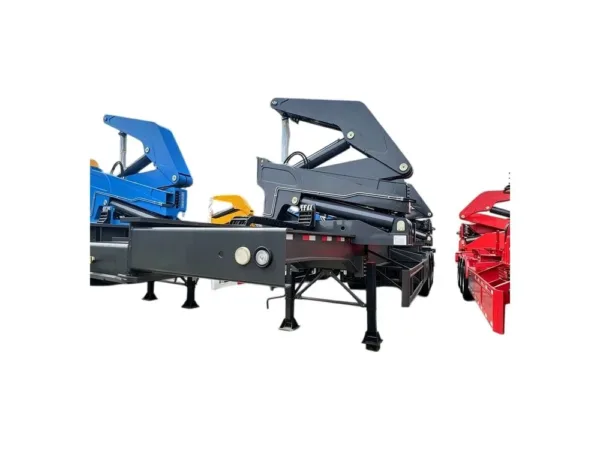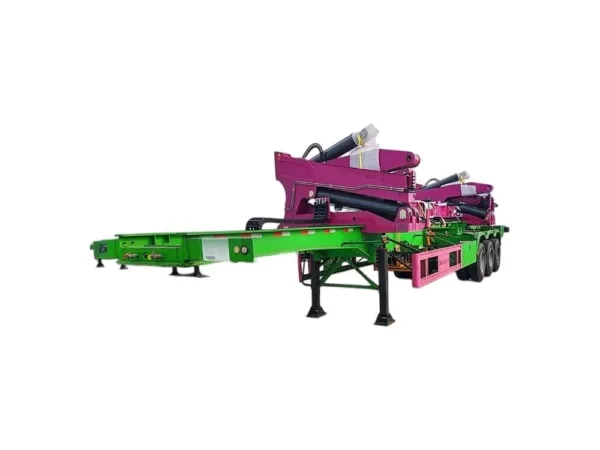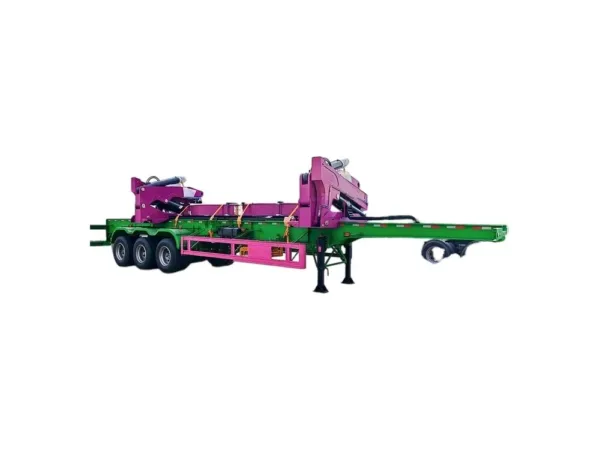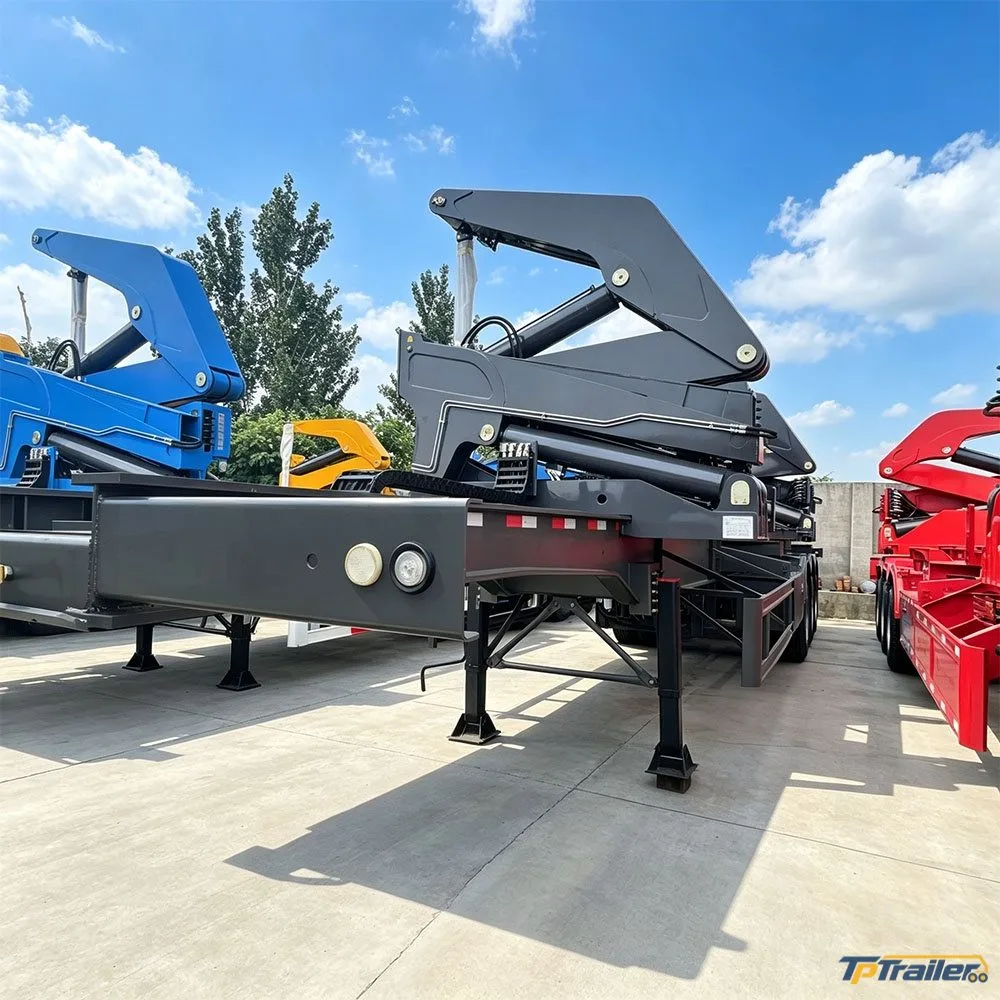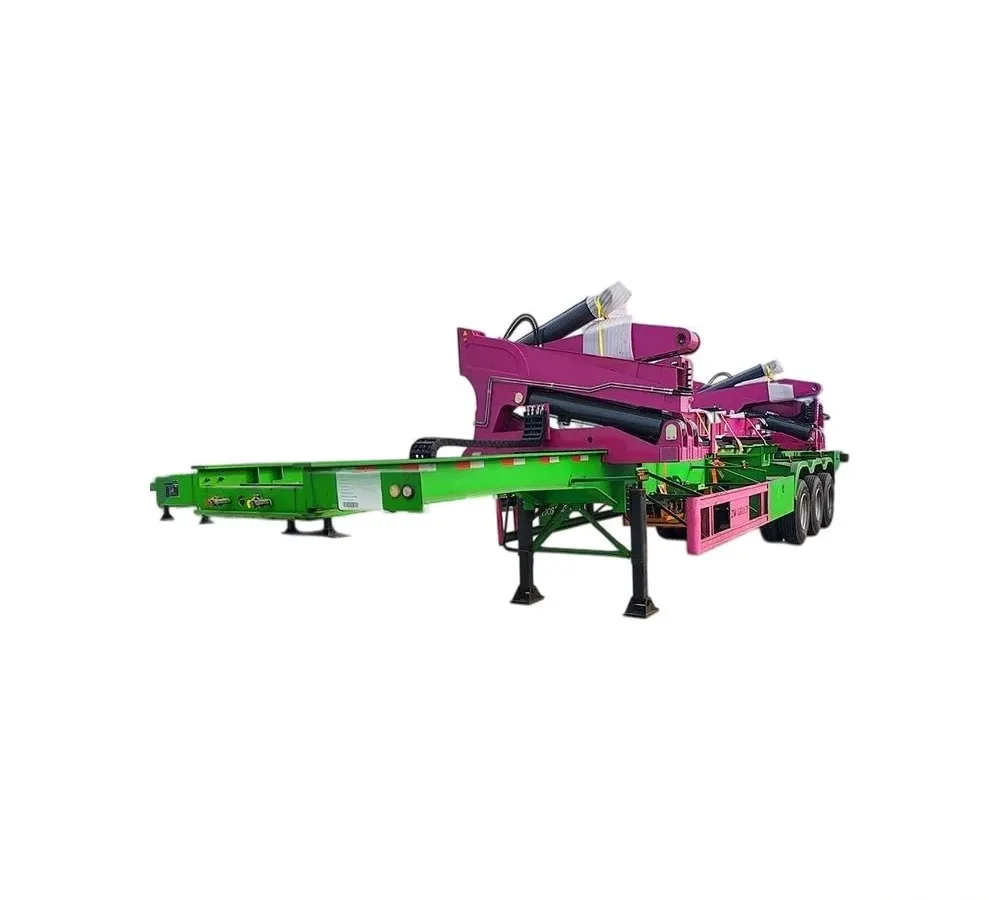
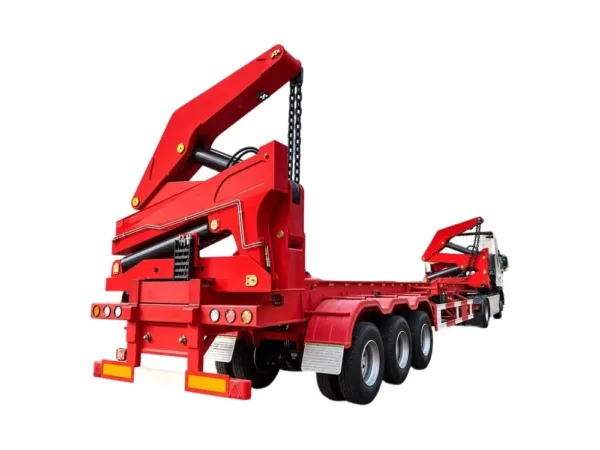
Heavy Duty 3 Axle Container Side Loader Trailer 30000 KG

This container side loader trailer carries up to 30000 KG on three axles, with dual line ABS brakes for stable freight terminal operations.

>30000 KG 3
FOB Reference Price US$7,000-10,000 Final price confirmed by inquiry

Certifications

  • ISO 9001

Key Features

  • 30000 KG load capacity for container handling at freight terminals
  • 3 axle configuration spreads load across the running gear
  • Dual line ABS brakes support controlled stopping under load
  • Heavy duty build for repeated terminal operations
  • Designed for container side loading work
Load Capacity >30000 KG
Type Semi-Trailer
Max Payload >30000 kg

For freight terminals that need to move boxes without a crane on hand, the container side loader trailer is the practical answer. It is a heavy duty three-axle unit built to lift and set down containers from the side of the chassis, so a single operator can handle a box on a tight yard or a roadside bay. It suits fleet operators, terminal managers and haulage contractors who want self-loading capability in one asset. The strongest reason to choose it is the combination of the load capacity and dual line ABS brakes: a platform rated to carry serious freight weight, with braking control that keeps a loaded unit stable through repeated terminal stops and starts.

Why It Works On Site

  • Load capacity of 30000 KG: the chassis and lifting gear are rated to take a fully loaded container in one lift, so a terminal can move a box from the stack to the truck bed without splitting the job or calling in a second machine. That keeps the yard moving on a single pass and cuts the wait between the stack and the gate.
  • Three-axle running gear: spreading the freight weight across three axles keeps the unit settled on the road and in the yard. For the buyer this means a loaded container side loader trailer tracks predictably on terminal concrete and on the highway leg, so drivers are not fighting a light front end when the box is on.
  • Dual line ABS brakes: two independent brake circuits with anti-lock control give the driver a backup if one line loses pressure. On a loaded container side loader trailer, that redundancy matters at terminal junctions and gate ramps, where a heavy unit needs to shed speed without locking the wheels.
  • Side-loading geometry: the lifting frame works from the side of the chassis rather than overhead. That lets the container side loader trailer set down or pick up a box where there is no room for a crane boom, which is the difference between a usable bay and a dead space in a crowded yard.
  • Self-loading design: because the container side loader trailer carries its own lifting gear, the buyer does not need a separate reach stacker or crane on site for every move. That frees yard equipment for other jobs and lets one driver complete a pick-and-place cycle alone.
  • Heavy duty build for terminal duty: the unit is built for repeated lift-and-carry cycles rather than one-off transport. That suits buyers who run the same container side loader trailer through dozens of moves a shift, where a lighter trailer would wear out its lifting points early.

Where It Is Used

The most common job for a container side loader trailer is the freight terminal itself. A box arrives on a chassis or sits in a stack, and the trailer lifts it from the side and sets it onto its own deck for the road leg. Terminal managers use this cycle to move containers between storage rows and loading bays without waiting for a crane to become free.

container side loader trailer - detail 1

The same pattern applies at rail sidings, where containers come off flat wagons and need to reach a truck bed quickly. Because the unit loads from the side, it can work a narrow lane between stacked boxes, which is where a crane-fed operation would stall. The container side loader trailer also handles the reverse move, lifting a box off its own deck and placing it in a stack or onto a waiting chassis, so the yard keeps a steady flow in both directions.

Beyond the terminal gate, the container side loader trailer earns its place on depot and distribution work. Operators use it to reposition empty containers, shuffle boxes between yards, and deliver to sites where the customer has no lifting equipment of their own. A driver can arrive, set the box down where it is needed and leave without a second machine on site.

That makes the unit useful for construction supply runs, where a container serves as on-site storage, and for depots that handle a mix of full and empty boxes through the day. The three-axle layout and the braking package suit loaded road legs between these points, so the same container side loader trailer that works the yard can also cover the highway stretch to the next job. Fleet operators value that flexibility because one asset covers both the lift and the haul, and the container side loader trailer does not sit idle waiting for a crane slot to open.

Choosing The Right Spec

  • Match the load capacity to the boxes you carry: the stated load capacity tells you the freight weight the container side loader trailer is built to handle. Compare it against the heaviest loaded container in your regular cycle, not the average, because the lifting gear works hardest on the top end of your range. A buyer who runs mostly light empties has headroom; one who moves dense cargo should check every load against the rating.
  • Weigh the three-axle layout against your routes: three axles spread the freight weight and suit a container side loader trailer that spends its day between yard and highway. If your work is short yard shuttles, the layout still gives you stability under load. If your routes are longer road legs, the axle count is what keeps the unit settled when a full box is on the deck.
  • Treat dual line ABS as a duty-cycle choice: the dual line ABS brakes matter most where a loaded container side loader trailer stops often, such as terminal gates, ramps and junctions. Buyers running repeated stop-start cycles get the most from the redundant circuits. Where the unit mostly sits in a yard, the brakes still give the driver control on the loaded moves that do happen.
  • Compare the price tiers by fleet size: the published tiers reward volume, so a buyer adding one container side loader trailer to a fleet and a buyer ordering a batch are choosing between different unit costs. Work out how many units your terminal cycle needs before you commit, because the tier you land in changes the total outlay for the same specification.

Customisation Before Delivery

  • Axle count is the first decision on a container side loader trailer. The three-axle layout suits terminal running and road transfer. If your routes or loads differ, confirm the axle configuration you need at order confirmation so the build sheet is fixed before production starts.
  • Deck length and the side-lifting frame geometry are set against the container sizes you handle. Tell the sales team which box lengths dominate your yard. The container side loader trailer is then built to that working envelope, and the choice is locked in at order confirmation.
  • Suspension type is selected for the ground you run on. Terminal concrete and public road surfaces ask for different behaviour. State your preference when the container side loader trailer is ordered, and the suspension is matched to the duty you describe rather than a default.
  • Tyres and wheel equipment are chosen with the axle set. Load range and tread pattern follow the surfaces and distances in your operation. Confirm tyre specification at order confirmation so the container side loader trailer arrives ready for the work you actually do.
  • Colour and finish are agreed last. Paint and coating selection is recorded on the order so the container side loader trailer matches your fleet identity. Every option above is settled at order confirmation, and the agreed configuration is what the factory builds.

Fitting And Installation

Plan the arrival of a container side loader trailer around the tractor unit that will pull it. Check the fifth wheel height and the coupling position first. Then confirm the hydraulic and pneumatic take-off points on the tractor match the trailer connections. Mounting points, tube size and hose routing are checked against a fitment drawing confirmed at quotation. Do not assume a drawing exists until the sales team issues one.

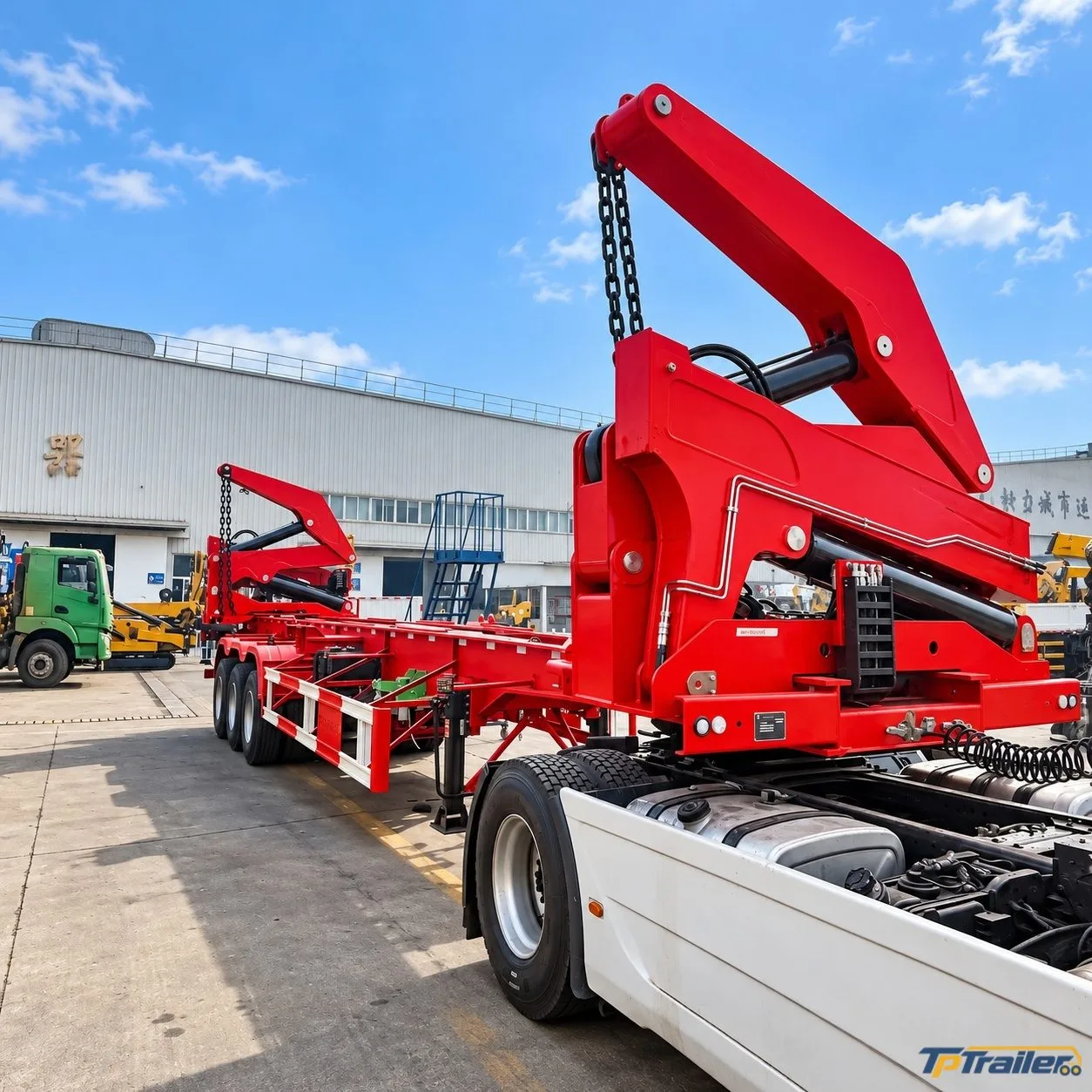
container side loader trailer - detail 3
container side loader trailer - detail 2

If your tractor fleet is mixed, list every unit that will couple to the trailer. A mismatch found on the day costs unloading time, yard space and a parked asset. The container side loader trailer is only productive once the tractor side and trailer side agree on every connection. Walk the route from tractor to trailer before the unit is scheduled to move. That check is short and prevents the most common first-day delay.

Route hoses and cables so they clear the side-lifting frame through its full travel. A hose that rubs on a frame member wears through and takes the container side loader trailer out of service. Secure lines at the intervals the fitment drawing shows. Where the drawing gives torque values, follow them exactly; where it does not, ask before tightening.

A wrong tube size or thread on a hydraulic line means a leak, a lost shift and a repair that could have been avoided at the quotation stage. Keep the fitment drawing with the trailer documents. Operators who know the routing and connection points handle coupling faster and damage less. Treat the first coupling as a check, not a formality, and record anything that does not line up so it is corrected before regular running begins.

Set aside a short commissioning window before the unit enters the shift roster. Run the lifting frame through its full arc empty, then with a box on, and watch for hose stretch, frame contact and uneven travel. Check that the ABS warning behaves as the manual describes when the ignition is switched on and the unit rolls forward. A container side loader trailer that passes this bench test on day one gives the workshop a baseline for every later inspection. Log the pressures, the cycle times and any noise, because a comparison against a known-good reading is faster than diagnosing from memory.

Service Life And Maintenance

  • Brake linings and drums wear first on a container side loader trailer that works a terminal all day. The dual line ABS brakes depend on correct adjustment and clean air. Inspect lining thickness and drum condition at each service. Keep the ABS sensors and wiring clear of dirt and impact so the system keeps reading wheel speed correctly.
  • Hydraulic hoses and seals are the next wear point on the side-lifting frame. Look for chafing, weeping joints and cracked covers. Route and clamp lines as the fitment drawing shows, and replace a damaged hose before it fails under load. A container side loader trailer held up by a burst hose loses a full shift.
  • Suspension bushes, shackles and U-bolts take constant load. Check for play, cracks and loose fasteners. The suspension choice made at order confirmation sets the inspection pattern, so record what is fitted. A container side loader trailer with worn suspension bushes steers poorly and wears tyres faster than it should.
  • Tyres and wheel bearings reward routine attention. Check inflation cold, look for uneven wear and listen for bearing noise. Keep wheel nut torque checked at the interval your workshop sets. On a container side loader trailer, a soft tyre or noisy bearing is an early warning that is cheap to act on and expensive to ignore.
  • Frame, coating and lifting points decide how long the structure lasts. Wash off salt and grit, and touch up paint chips before rust starts. Inspect welds and pivot points for cracks. The coating chosen at order confirmation extends the interval between touch-ups, and a container side loader trailer kept clean and painted holds its value longer.

Build the service schedule around the duty cycle rather than the calendar alone. A container side loader trailer that runs three shifts in a busy port accumulates lift cycles faster than one on a single-shift depot, and the lifting gear should be inspected on cycle count where your workshop can track it. Keep a simple log of lifts, hose replacements and brake adjustments so the next owner, or your own resale file, can show the asset was maintained to a pattern. That record is what separates a working trailer from a worn one at trade-in time.

Packing And Container Loading

Each container side loader trailer leaves the works with its structural steel protected against salt air and road spray. Coating and exposed machined faces are covered before dispatch. Loose items such as pins, hoses and fittings are boxed and lashed to the frame rather than shipped loose. Ask the supplier to photograph the unit at packing, so you can match the photos to the delivery. That record settles most damage claims before they start.

A container side loader trailer is a long, wide chassis, so loading is planned around its footprint. The unit is normally shipped knocked down or partly assembled to fit standard container dimensions. Confirm whether the supplier ships it assembled or in sections, and how the sections brace against each other. The buyer should check the loading plan before the container is sealed. Verify lashing points, timber blocking and wheel chocks on arrival, and inspect the finish for rub marks.

Give your freight forwarder the loading plan early, not after the container is booked. The plan states the container type, the number of sections and the lifting points the crane operator should use at the port. Where the unit ships in sections, label each section and match the labels to the packing list so the assembly crew on site can find parts without opening every crate. A container side loader trailer that arrives with a clear section map is reassembled in hours; one that arrives unlabelled can cost a day of sorting before the first lift.

Common Mistakes Buyers Make

  • Ordering without checking the load capacity against real cargo. Buyers pick a container side loader trailer on price, then find the rated load is short for their heaviest box. Check the load capacity against your actual container weights and the axle count before you confirm.
  • Ignoring the brake specification. The dual line ABS system is a fitment point, not a detail. Confirm the air line connections and electrical plug match your tractor unit. The single check is a written list of your tractor’s couplings sent with the enquiry.
  • Skipping the terminal turning envelope. A long three axle container side loader trailer needs room to swing at the ramp. Measure your yard, gate and loading bay, and compare them with the trailer’s turning circle and overall length before ordering.
  • Assuming the side loader works with every container size. Buyers order for one box type, then need another. Confirm which container lengths and heights the lifting gear handles, and ask for the working range in writing on the quotation.
  • Leaving shipping terms vague. Buyers accept a price without agreeing how the container side loader trailer is packed, braced and documented. Ask for the loading plan, packing list and photos before the container is sealed, and confirm who pays for blocking.

Buyer Questions

How is the container side loader trailer packed for sea freight?

The container side loader trailer is protected at the coating and machined faces, and loose parts are boxed and lashed to the frame. The exact packing method, whether the unit ships assembled or in sections, and the blocking and bracing plan are confirmed at quotation. Ask the supplier for the packing list and loading photos before the container is sealed. On arrival, check the coating, the lifting gear and the brake lines against those photos.

Can the trailer be shipped in one container, and how much space does it need?

Container loading depends on the unit’s footprint and on whether it ships partly dismantled. The supplier should give you a loading plan stating the container type, the number of sections and the bracing used. Confirm this plan at quotation and compare it with your freight forwarder’s requirements. Do not assume a standard container fits until the plan is in writing, because the container side loader trailer is long and wide.

What should I confirm before ordering a container side loader trailer?

Confirm the load capacity against your heaviest container, the axle count for your routes, and the brake system’s compatibility with your tractor unit. Ask which container sizes the side loader handles and state the terminal’s turning space. Quantity affects the price tier, so give the number of units you plan to buy. Everything the input does not state, including delivery terms and documentation, is confirmed at quotation.

To receive a quote, send the trailer length you need, the axle count, and the quantity you plan to order. Add your container sizes and the tractor coupling details, so the container side loader trailer is quoted against your terminal. Bulk quantities move to lower price tiers.

Explore more container side loader trailer in this range.

Load Capacity >30000 KG Type Semi-Trailer
Max Payload >30000 kg Place of Origin China
Use Truck Trailer Material Steel
Size 14100mm × 2500mm × 4100mm

Reviews (0)

No reviews yet — click the Review button on the right to share your experience with this product.

Frequently Bought Together

Inquiry about: Heavy Duty 3 Axle Container Side Loader Trailer 30000 KG

Fill in the form below and our team will respond within 24 hours.