
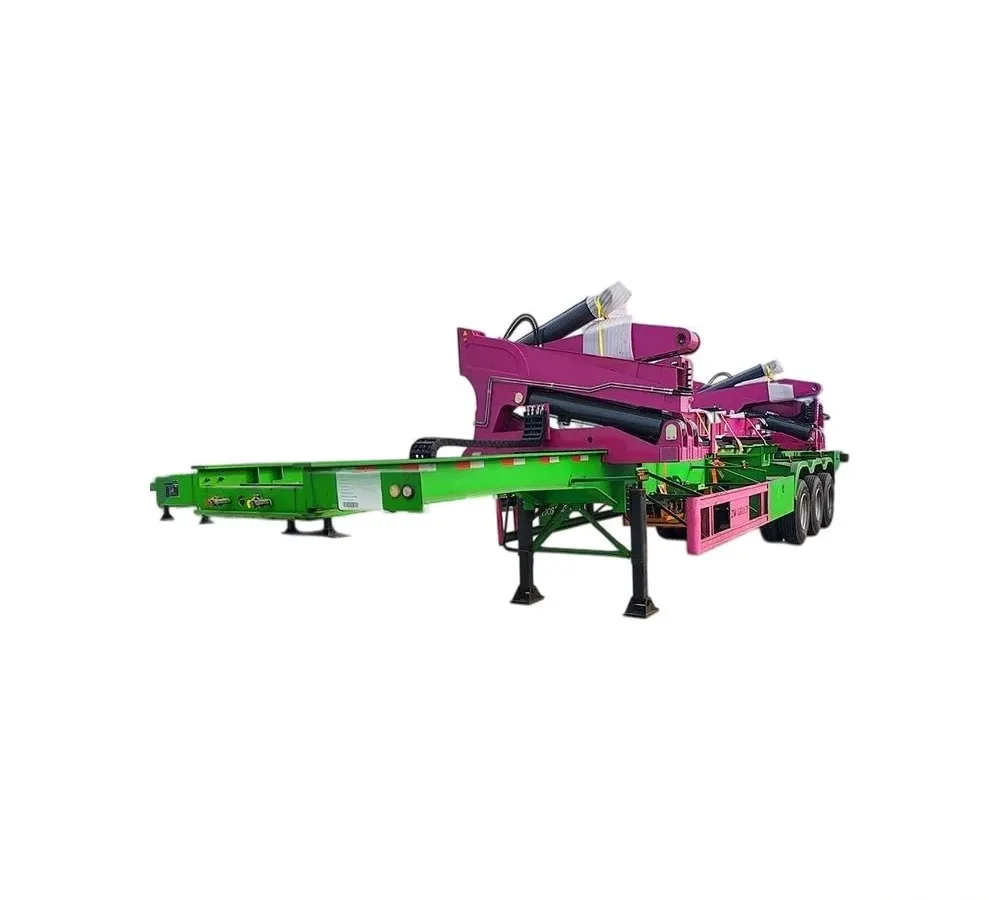



Container side lifter trailer with 3 axles and 30000 KG load capacity for 20ft and 40ft containers. High tensile steel build; quotes available on request.

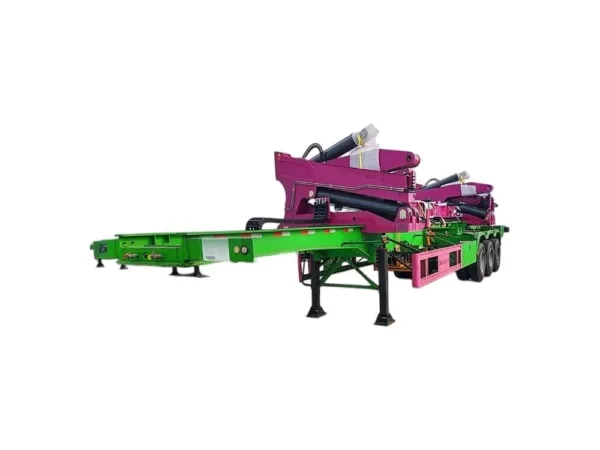

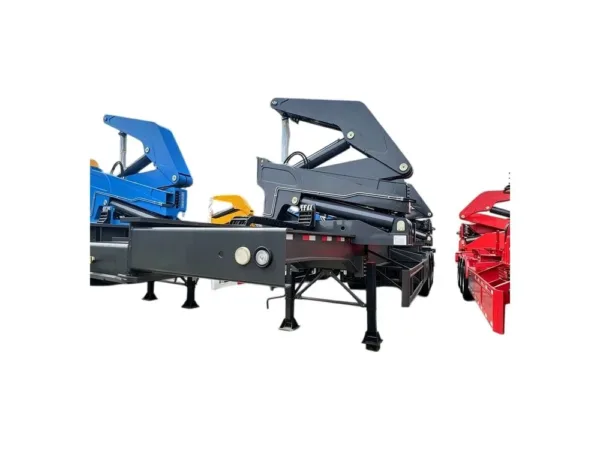

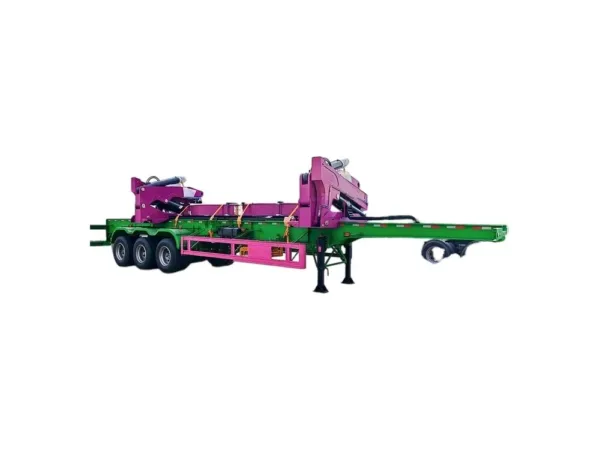

The container side lifter trailer is a self-loading sideloader built to lift, carry and set down 20ft and 40ft containers without a crane or a forklift on site. It is made for fleet owners, container depot operators and haulage contractors who move boxed cargo between yards, ports and customer premises. Its high tensile steel frame keeps the unladen weight down while carrying a rated load capacity of 30000 KG. The strongest reason to choose it is independence: one operator and one truck can complete a loading cycle that would otherwise need lifting equipment booked in advance.
The most common duty for a container side lifter trailer is container depot and yard work. The unit pulls up beside a box standing on the ground, lifts it onto its own deck and drives it to the loading bay or the customer gate. Depot operators use this cycle to shuffle containers between storage rows, to load outgoing boxes onto trucks and to receive incoming ones without keeping a crane on standby.
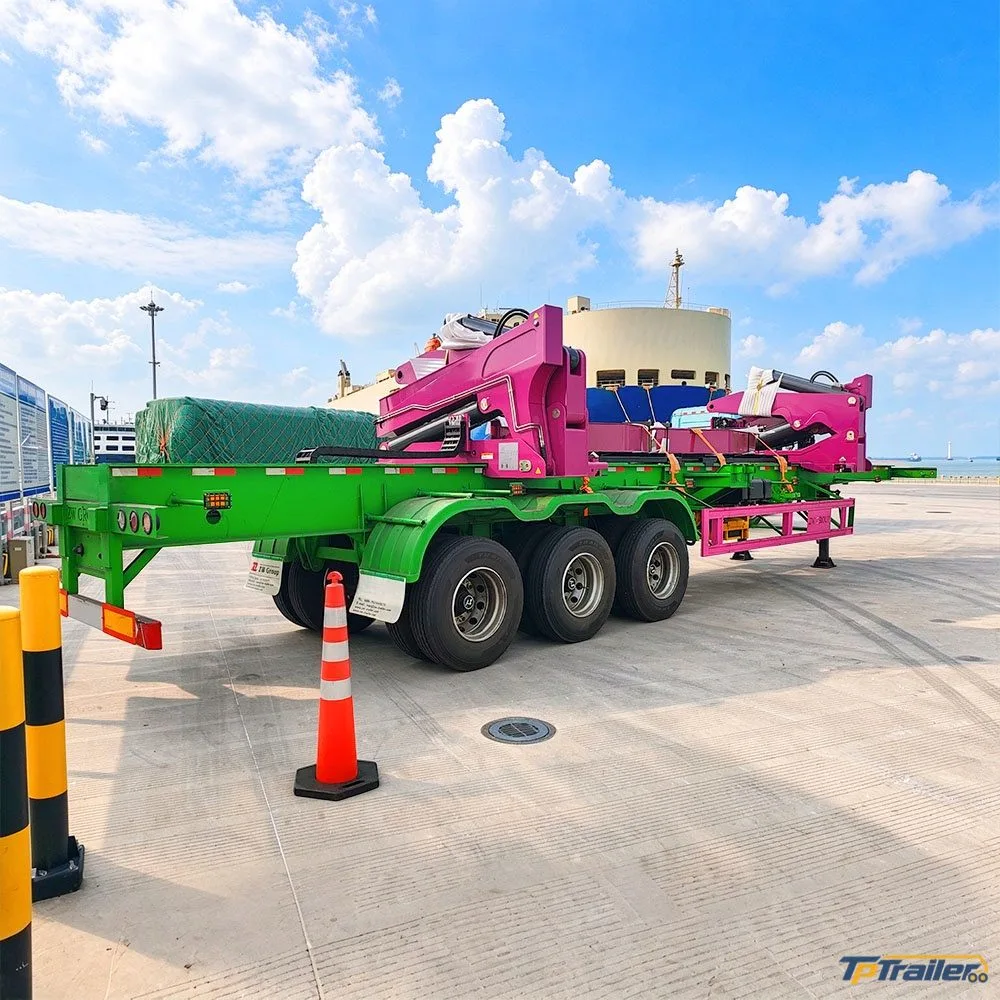
Because the lift happens at the side of the vehicle, the trailer can work in narrow aisles between stacked rows where a crane or a large forklift would have no room to set up. The same cycle repeats all day, so the value shows up in the number of boxes moved per shift rather than in any single lift.
The second duty is road haulage between ports, inland terminals and customer premises. Here the container side lifter trailer earns its place because the driver can deliver a loaded container and collect an empty or full one on the same run, without waiting for lifting equipment at either end. Typical cargo includes dry goods, bagged materials, packaged building products and general freight that travels in standard boxes. On routes where the receiver has no crane or forklift, the trailer becomes the only lifting equipment on site, which is often the difference between a booked job and a lost one. Fleet operators also use it for repositioning empty containers between depots, where fast turnarounds matter more than payload.
A third setting is the construction and project site, where a container arrives as a store, a site office or a tool crib. The container side lifter trailer can place the box directly where the site plan needs it, then lift it again when the works move on. That removes the need to hire a crane for a few hours of lifting at each location, and it keeps the delivery schedule under the haulier’s control rather than the crane operator’s.
A container side lifter trailer arrives as a complete unit, but several interfaces still have to match the buyer’s tractor and site. The fifth wheel height, the kingpin position and the hydraulic coupling points must line up before the trailer is put to work. The buyer should compare the delivered coupling geometry with the tractor that will pull it, and check that the lifting arms clear the ground and any site obstacles through their full travel.


Where the input gives no fitment data, a fitment drawing is confirmed at quotation instead, so the buyer knows the interfaces before the unit ships. Hose routing deserves the same attention: lines should follow the frame without rubbing, and every connection should be checked against the drawing before the first lift. Torque values should come from the drawing and the fasteners supplied, not from guesswork.
A mismatch at this stage is expensive in a way that is easy to underestimate. If the coupling height is wrong, the container side lifter trailer sits at the wrong attitude and the lifting cycle is compromised from the first day. If a hose is routed against a sharp edge, the failure shows up as a burst line and a stopped job rather than as a visible defect.
If the mounting points do not line up, the unit waits while brackets are reworked, and every waiting day is a day the fleet is not earning. Buyers who confirm the fitment drawing at quotation avoid most of this. The rest is a careful arrival inspection: compare the delivered unit with the drawing, check the interfaces against the tractor, and only then release the trailer into service.
The first lift should be a dry run with an empty container. It lets the operator watch the arm travel, confirm the outrigger footprint and check that the hydraulic controls respond as the drawing describes. Any hesitation in the circuit, any noise from a pivot or any drift in a cylinder is easier to correct before the unit enters a paid schedule. Log the pressures and the cycle time from that first lift, because they become the baseline for every later service check on the container side lifter trailer.
A container side lifter trailer ships as a self-propelled unit with hydraulic booms, outriggers and a chassis frame. Protect the hydraulic cylinders with wooden cradles or strapping so the rods cannot score during the voyage. Cap every port and hose end against salt air. Lash the unit to the vessel deck through the chassis frame, not through the lifting arms. Ask the supplier for the loading plan before dispatch, because a trailer that shifts in heavy weather arrives with bent outriggers and a claim instead of a delivery.
These units do not nest. A container side lifter trailer is a complete road vehicle with its own running gear, so stacking two on top of each other is not possible without risking the booms and axle alignment. Book flat rack or break bulk space rather than a standard box. On arrival, check the cylinder rods for rust, confirm the outrigger beams extend and retract, and photograph the frame before unloading. Verify the shipping marks and the serial plate against your order documents while the unit is still on the quay.
Usually not. A container side lifter trailer is a full road vehicle with booms and outriggers, so it normally moves on a flat rack or by break bulk. Ask the supplier for the packed dimensions and weight before you book freight. Measure your destination port’s handling equipment and confirm the shipping method in the quotation, because the freight cost often changes the landed price more than the unit itself.
Inspect the hydraulic cylinder rods for corrosion, confirm the outriggers and booms move through their full stroke, and check the chassis frame for impact damage. Compare the serial plate and shipping marks with your order. Photograph everything before unloading. If you find damage, note it on the delivery receipt and notify the supplier the same day, because a claim on a container side lifter trailer is far harder to pursue once the unit has left the quay.
Send the supplier your container length, the heaviest loaded box you handle, and your axle and tyre requirements. Ask for a written quotation that states the load capacity, axle configuration and hydraulic oil grade. Confirm the delivery port and Incoterm in the same document. Review that quotation line by line against your route rules before you release a deposit on any container side lifter trailer.
To get a quote, send the container length you handle, the axle count you need, and the quantity you plan to order. Include your delivery port and the heaviest loaded box in your fleet. The supplier can then confirm the configuration, the load capacity and the shipping method for your container side lifter trailer in one written offer.
Explore more container side lifter trailer in this range.
| Load Capacity | >30000 KG | Type | Semi-Trailer |
|---|---|---|---|
| Max Payload | >30000 kg | Place of Origin | China |
| Use | Truck Trailer | Material | Steel |
| Size | 14100mm × 2500mm × 4100mm | ||


No reviews yet — click the Review button on the right to share your experience with this product.








Fill in the form below and our team will respond within 24 hours.
Write a Review