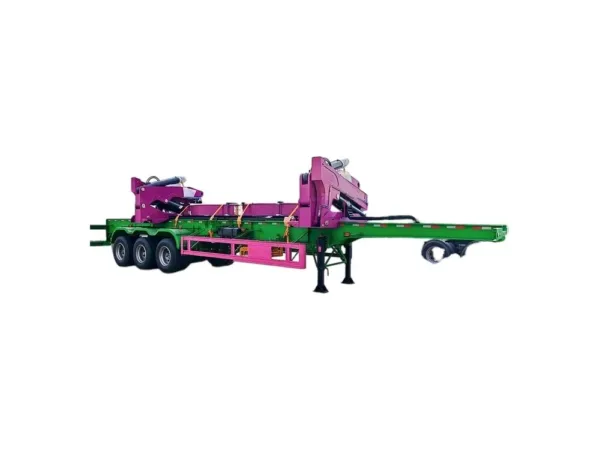
A container side lifter trailer is a self-loading transfer unit built to lift shipping containers from the ground onto its own deck and set them down again without a crane or forklift on site. It suits freight depot operators, container yard managers and haulage fleets that move boxes between stacks, trucks and storage rows. The strongest reason to choose this unit is independence: one operator and one tractor unit handle the whole lift-and-carry cycle. The 30000 KG load capacity covers a wide band of standard container work, so the same asset serves loading bays, transfer lanes and short depot shuttles instead of sitting idle between crane bookings.
Table of Contents
Why It Works On Site
Load capacity matched to loaded boxes. The 30000 KG load capacity is the figure that decides which container weights the unit can handle fully laden. That matters at depots where boxes arrive packed rather than empty, because the operator can plan lifts around real cargo weight instead of guessing. It also lets dispatch assign the container side lifter trailer to heavier import boxes and keep lighter units for empty repositioning work.
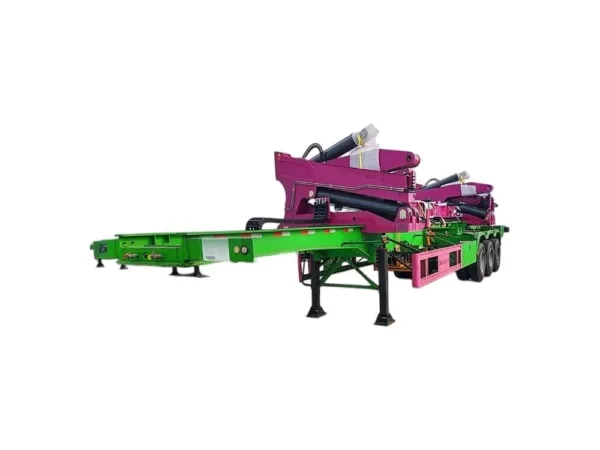
Three-axle running gear for stability under load. Three axles spread the lifted container and trailer weight across more tyre contact points than a shorter chassis would. On uneven yard surfaces or a slight camber at the loading lane, that spread keeps the unit planted while the side-lift arms are extended. Drivers get a steadier platform for the lift cycle, and the tractor unit carries less of the transfer load.
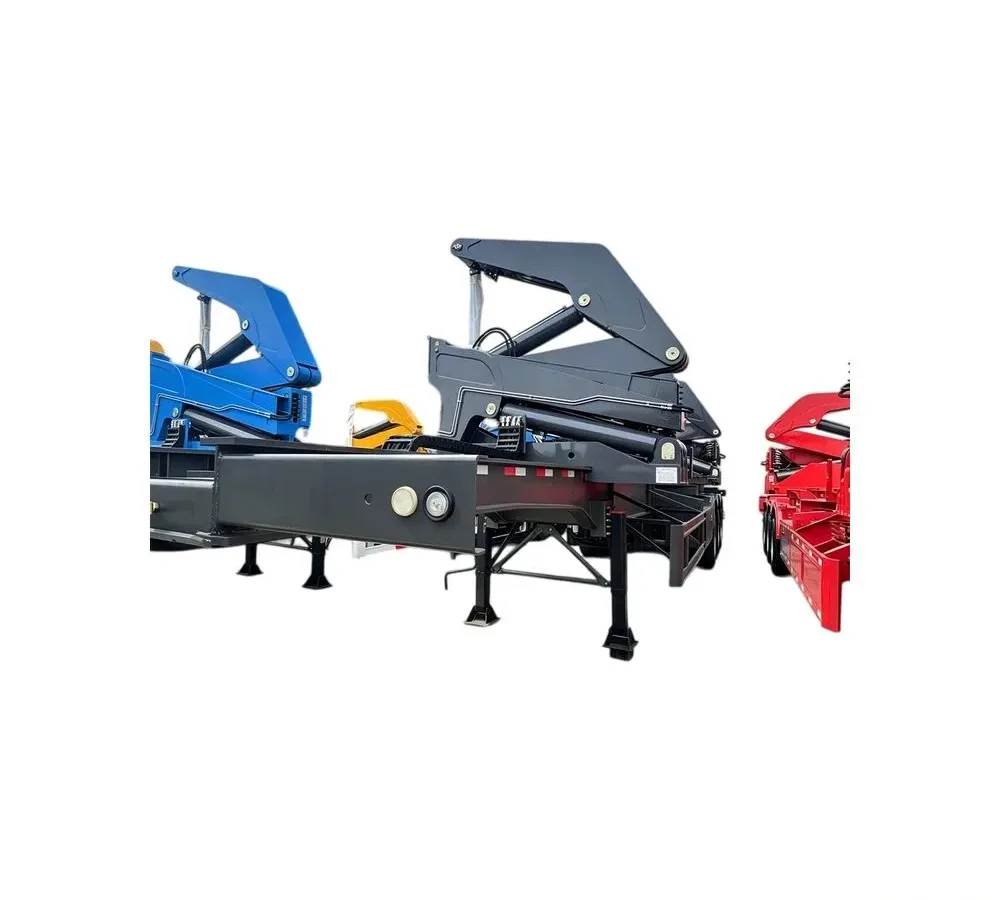
Side-lift geometry that works inside tight lanes. The lifting arms work from the side of the trailer rather than from above. That means the container side lifter trailer can pick a box from a stack row and place it on its own deck without needing overhead clearance or a crane path. In depots where rows sit close together, this side approach is what keeps the transfer moving.
Self-loading cycle removes crane dependency. Loading and unloading happen through the trailer’s own hydraulic lift sequence, controlled by the operator. A depot that runs this unit no longer waits for a crane slot or pays a third-party lift charge for every box movement. The container side lifter trailer turns a scheduled crane job into a routine transfer the driver completes on arrival.
Single-operator transfer keeps labour cost down. One trained operator runs the lift, the carry and the set-down. There is no rigger on the ground guiding a crane hook and no second vehicle shuttling boxes to the lane. For a fleet moving containers between stacks and outbound trucks all day, that single-operator model is the difference between a two-person job and a one-person job on every box.
Trailer format fits existing tractor fleets. Because the unit is a trailer, it couples to a tractor unit the fleet already runs. Operators add container transfer capability without buying a dedicated self-propelled handler. The container side lifter trailer slots into normal haulage scheduling, so the same prime mover can pull it in the morning and run other work later.
Where It Is Used
Freight depots are the natural home for this unit. A depot receives containers by road, stacks them in rows, and releases them to outbound trucks through the day. The container side lifter trailer handles the middle step: lifting a box off an inbound chassis, carrying it to a stack row, and setting it down in position.
The same unit then pulls a box from the stack and places it onto an outbound trailer. Because the lift comes from the side, the operator works within the row spacing a typical yard already has, without clearing an overhead crane path or waiting for a reach stacker to free up. Depots that handle a mix of full and empty boxes use the load capacity to sort which lifts go to this unit and which wait for heavier equipment.
Beyond the depot gate, the container side lifter trailer earns its place on transfer runs between storage yards, rail sidings and loading bays. A fleet moving boxes from a rail terminal to a nearby warehouse yard can self-load at the siding and self-unload at the destination, so neither end needs lifting equipment on standby. Hauliers use it for container repositioning, shifting empties between depots to balance stock, and for short shuttles where a crane booking would add delay.
Construction and event sites that receive a container as a storage unit also benefit, because the box can be set down exactly where it is needed. On every one of these jobs, the value is the same: the container side lifter trailer arrives, lifts, carries and sets down without outside lifting support.
Choosing The Right Spec
Match load capacity to the boxes you actually move. Start with the 30000 KG load capacity and compare it against the heaviest loaded container in your regular flow. If most of your work is packed import boxes, this rating is the deciding number. If your yard mostly shuffles empties, the same unit still works, and the headroom simply gives the operator margin on the occasional heavy lift.
Use the three-axle layout as a route guide. The three-axle configuration suits depot lanes, yard rows and short road transfers between sites. Fleets planning longer road legs with a loaded box should weigh axle count against the routes they run and the surfaces they cross. The container side lifter trailer is built for transfer duty, so match it to transfer distances rather than to long-haul trunking.
Decide by lift frequency, not just by price tier. The published price tiers step down as order quantity rises, from single-unit buying to fleet-level volumes. A depot replacing crane bookings on a few boxes a day sits at one end of that scale. A multi-yard operation standardising transfer equipment across sites sits at the other. Choose the tier that matches how many units you will actually keep working.
Check the coupling fleet before the trailer. The container side lifter trailer needs a tractor unit with the right coupling and hydraulic supply to run its lift cycle. Before ordering, confirm which prime movers in your fleet can pull it and whether they can support the hydraulic demand. Getting that match right at the specification stage is what lets the unit go straight into service instead of waiting for a compatible tractor.
Customisation Before Delivery
Axle count. The container side lifter trailer is built around a three-axle running gear in the standard layout. Buyers who move heavier or longer loads can discuss a different axle arrangement at order confirmation. The final configuration is written into the signed order, so both sides work from the same document. No change is made after the build starts.
Deck length. Deck length is matched to the container sizes the operator handles most often. A fleet working mainly with one size can shorten the deck; a mixed fleet keeps a longer platform. The chosen length is fixed when the order is confirmed. Ask for the deck drawing before signing if your containers vary.
Suspension. Suspension type is selected for the roads the container side lifter trailer will travel. Mechanical and other options suit different surfaces and load patterns. State your usual route and surface at enquiry so the right setup is quoted. The decision is locked at order confirmation, not on the production line.
Tyres and wheels. Tyre size and pattern are chosen for the surface and the distance between depot and yard. Buyers running on paved roads and buyers crossing rough ground need different rubber. Confirm the tyre specification in writing with the order. Spare wheels can be added to the same confirmation document.
Colour and finish. Paint colour and finish are agreed at order confirmation. A colour code or sample can be supplied so the unit matches an existing fleet. Finish choice also affects how the steel is protected over time. Record the colour on the order so the delivered unit matches what was approved.
Fitting And Installation
Fitting starts with the mounting points on the towing unit or the ground-level pad. The buyer must confirm the coupling height, the mounting hole pattern and the frame width before the container side lifter trailer arrives. Hydraulic tube size and hose routing also have to be matched to the donor equipment. Where the input gives no fitment data, a fitment drawing is confirmed at quotation. That drawing shows the interfaces the buyer has to prepare. Check it against the actual machine before the unit ships, not after.
A wrong size at the interface costs downtime. A mismatched mounting pattern means drilling or adapter plates, and a hose route that fouls the frame means rework before the first lift. Every hour spent correcting a fitment error is an hour the container side lifter trailer is not moving boxes. Confirm the tube size, the coupling height and the hose path in writing at quotation. Keep the approved drawing on site. The installation crew then works from one reference, and the handover is faster.
Service Life And Maintenance
Hydraulic hoses and seals. Hoses and seals are usually the first parts to show wear on a container side lifter trailer. The operator should check for weeping joints, cracks and chafing at every inspection. Hose routing agreed at installation protects the lines from rubbing. Replacing a worn hose early is cheaper than losing a lift mid-shift.
Lifting arms and pivots. The arm pivots and pins carry the load cycle after cycle. Inspect for play, scoring and loose fasteners during routine checks. Grease points should be reached without dismantling the arm. A pivot that is checked regularly keeps the container side lifter trailer lifting squarely.
Structural welds and frame. Walk the frame and look at welds around the mounting points and arm brackets. Cracks usually start where stress concentrates. The paint or coating chosen at order confirmation protects the steel between inspections. Touch up any chipped coating before rust sets in on the container side lifter trailer.
Tyres and axle hardware. Tyre pressure, tread wear and axle fasteners belong on the daily check sheet. Uneven wear points to alignment or loading issues. The tyre specification selected at order confirmation sets the wear pattern to expect. A container side lifter trailer on correct pressures runs cooler and lasts longer.
Controls and safety devices. Test the control response and the safety devices before each shift. A slow or sticky response is a warning, not a nuisance. Keep the operating manual with the unit and follow its checks. A container side lifter trailer that is inspected daily is a trailer that stays in service.
Packing And Container Loading
A container side lifter trailer ships as a long, heavy structure with hydraulic lifting arms, so protection starts with the arms themselves. The arms are retracted and secured in the transport position, and hydraulic lines are capped to keep sea air and grit out of the circuit. Exposed cylinder rods are wrapped, and the control points are covered. Steel contact faces are treated against corrosion for the voyage. The buyer should ask the supplier to confirm the arm lock method and the wrapping used, because a container side lifter trailer that shifts inside the frame during handling can arrive with bent linkage or scored rods.
Stacking is not possible for this product. A container side lifter trailer carries its own lifting gear and axle set, so units are shipped as flat, individual loads rather than nested frames. Space saving comes from loading method, not from stacking: the unit is driven or winched into the container or onto a flat rack, then blocked and lashed at the chassis points. On arrival, verify the lashing points are intact, the arms move freely by hand where possible, and the hydraulic caps are still fitted. Photograph the unit before unloading, and check the container side lifter trailer against the packing list before signing the delivery receipt.
Common Mistakes Buyers Make
Ordering without checking the load capacity against the real container weight. The rated load capacity is the ceiling, not a comfortable working figure. A buyer who plans to move loaded boxes at the top of that rating leaves no margin for uneven weight distribution. The single check: weigh a typical loaded container at your depot and compare it with the rated load capacity before you order the container side lifter trailer.
Ignoring the axle count when matching the trailer to the tractor unit. The axle configuration affects how the unit tracks and how the load is spread, and a mismatch shows up on the road, not on the quotation. The single check: confirm the axle count you need with your transport manager and state it in the enquiry, so the container side lifter trailer is quoted with the right running gear.
Assuming the lifting gear suits every container size. Side lift arms are built around a container range, and a buyer who never states the sizes in use may receive a unit that cannot grip their boxes. The single check: list every container length and type at your site and send that list with the enquiry, then have the supplier confirm the container side lifter trailer covers all of them.
Forgetting the hydraulic and control requirements. The lifting arms need a power source and a control arrangement, and buyers often order the trailer alone without confirming how it will be driven. The single check: confirm the hydraulic drive and control setup with the supplier at quotation, and record it in the order, so the container side lifter trailer arrives ready to work.
Not planning the unloading site before the unit ships. A heavy trailer needs room, a suitable surface and lifting equipment at the receiving end, and depots without a plan lose days. The single check: walk the unloading area, confirm access and ground conditions, and agree the unloading method with the supplier before the container side lifter trailer leaves the factory.
Buyer Questions
What should I measure before ordering a container side lifter trailer?
Measure the containers you handle and the ground where the unit will work. Record each container length and type in use, the heaviest loaded container you expect to move, and the turning and parking space at the depot. Then check the rated load capacity against that heaviest figure. Send these measurements with your enquiry so the supplier can confirm the configuration. Access width and surface condition at the unloading point matter too, because the container side lifter trailer needs room for its arms to work.
Can I ship more than one unit in a single container?
This depends on the unit dimensions and the container type, and the input does not fix a packing quantity per container. The container side lifter trailer is shipped as a flat, individual load, not nested, so each unit takes floor space. Ask the supplier to confirm how many units fit in the container you plan to book, and treat that figure as confirmed at quotation. For larger orders, request a loading plan showing positions and lashing points before you book freight.
What should I confirm about the hydraulic system before I order?
Confirm how the lifting arms are powered, which control arrangement is supplied, and how the hydraulic circuit is protected in transit. The input does not state these details for this model, so treat them as confirmed at quotation. Ask the supplier to put the hydraulic drive, control points and arm lock method in writing on the quotation. Also ask what spares are recommended, and check that the caps and wraps described for shipping will be in place when the container side lifter trailer is loaded.
To receive a quotation, send the container lengths you handle, the axle count you need, and the quantity you plan to order. State your heaviest loaded container so the load capacity can be checked against it. With those three details, the supplier can confirm the configuration and the price tier for your order.
We use cookies to enhance your browsing experience, serve personalized content, and analyze our traffic. By clicking "Accept All", you consent to our use of cookies. Privacy Policy
Cookie Preferences
Required for the website to function properly. Cannot be disabled.
Help us understand how visitors interact with the website (Google Analytics).
Used to deliver personalized ads and measure ad campaign effectiveness.

















Write a Review