


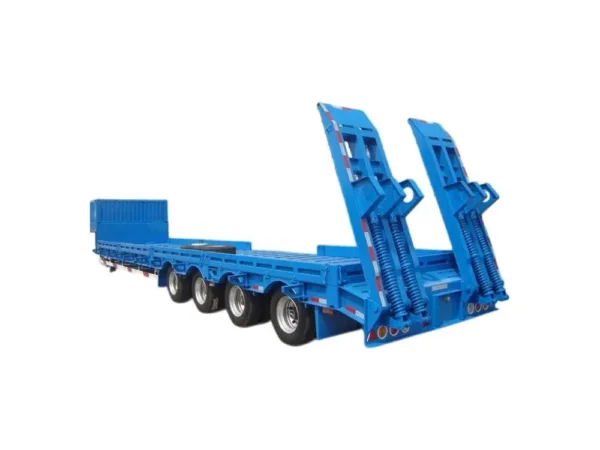
60 ton lowbed semi trailer with 3 axles and steel construction for excavator transport. Heavy duty build for construction machinery. Quotes are available.

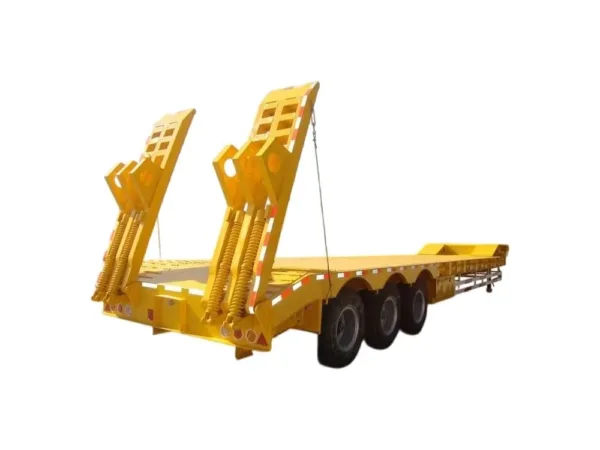


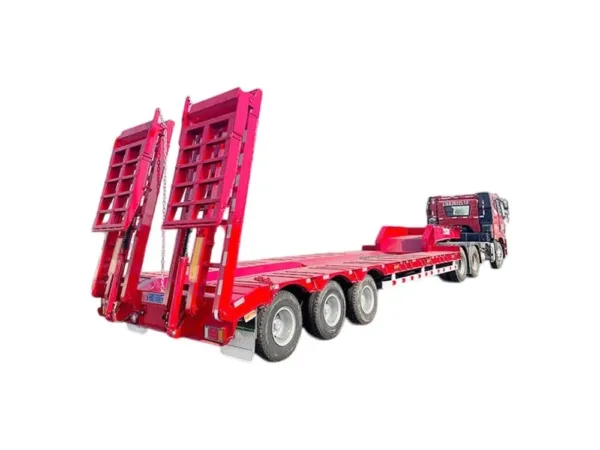
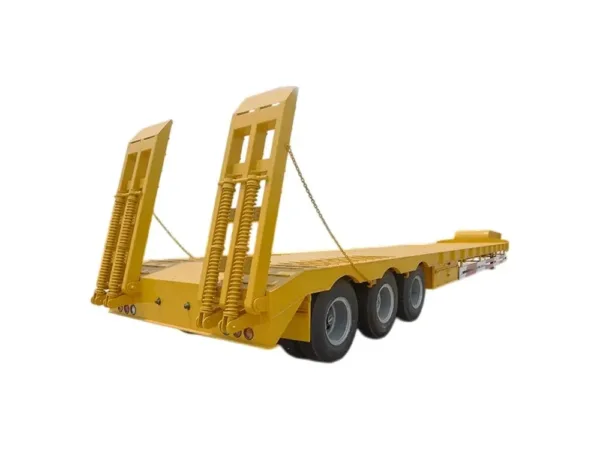

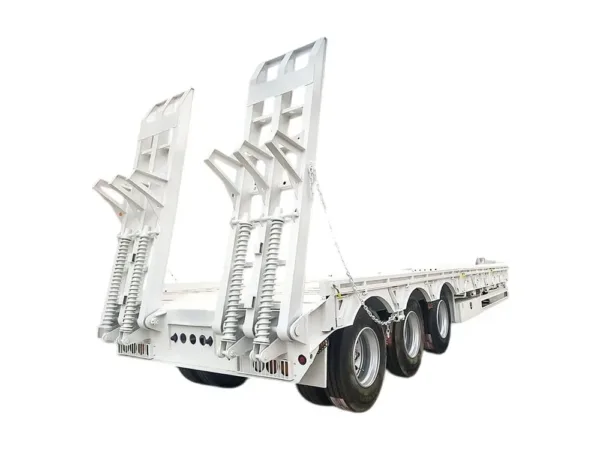
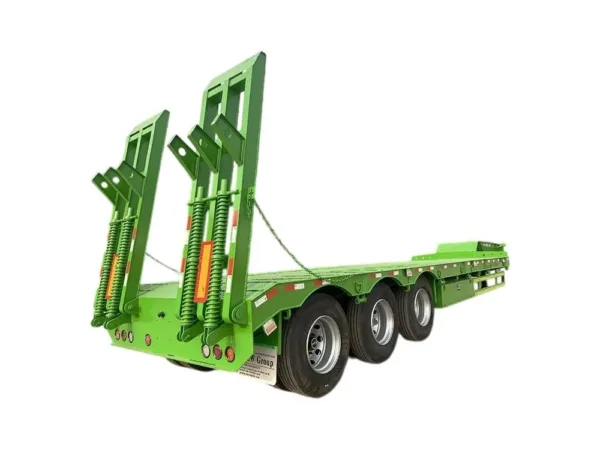
The 60 ton lowbed semi trailer is a heavy-duty three-axle steel platform built to move excavators and construction machinery over the road. It pairs a deep low deck with a hydraulic ramp, so tracked and wheeled equipment loads under its own power instead of waiting on a crane. Fleet operators, plant hire yards and machinery dealers buy it for one reason: it turns a machine that cannot legally travel on its own into a normal road haul. The 60T load capacity covers the excavators and dozers most contractors run, and the ramp removes the loading bottleneck that slows every job move.
The most common job is moving a tracked excavator between job sites. A contractor finishes a foundation dig and needs the machine on a road project across the region. The 60 ton lowbed semi trailer takes the excavator on its tracks up the hydraulic ramp, locks it down, and delivers it ready to work. The same run happens in reverse at the end of the contract. Plant hire companies rely on this pattern daily, because their machines move far more often than they dig in one place. A 60 ton lowbed semi trailer that loads without a crane is what makes a same-day turnaround possible, and it is the reason hire yards keep one on standby.
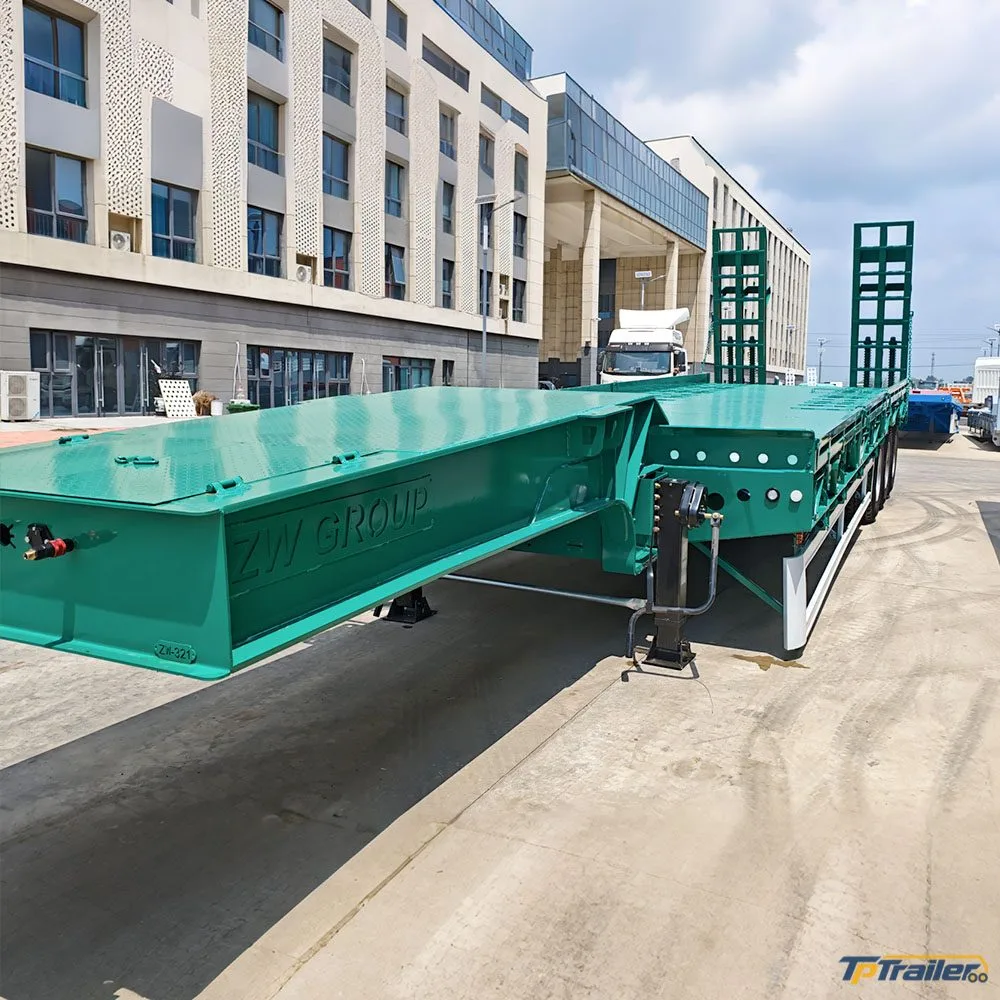
The second pattern is construction machinery transport around a large site or between sister projects. Wheeled loaders, dozers, compactors and telehandlers all need to shift as a job phase changes, and each has its own weight and footprint. The low deck and the ramp let a single operator handle all of them with one trailer rather than booking a different unit per machine type. On road-building and earthworks contracts, where equipment rotates between sections every few weeks, that flexibility is the difference between a tight schedule and idle machines. Operators running a 60 ton lowbed semi trailer for this kind of work value the fact that the trailer adapts to the machine, not the other way round.
A third use sits in the dealer and resale trade. Machinery dealers move stock between yards and to customer sites, often on short notice and with a mix of tracked and wheeled units on the same run. The 60 ton lowbed semi trailer lets a dealer quote delivery on a machine before the sale is closed, because the loading method does not depend on whether a crane is available at either end. That single capability turns a delivery into a routine booking rather than a subcontract, and it keeps the margin on the machine where it belongs.
The 60 ton lowbed semi trailer is built to order, so the specification conversation happens before the steel is cut, not after the unit lands. Each choice below changes either the load case, the road legality or the loading method, and each is agreed in writing at order confirmation.
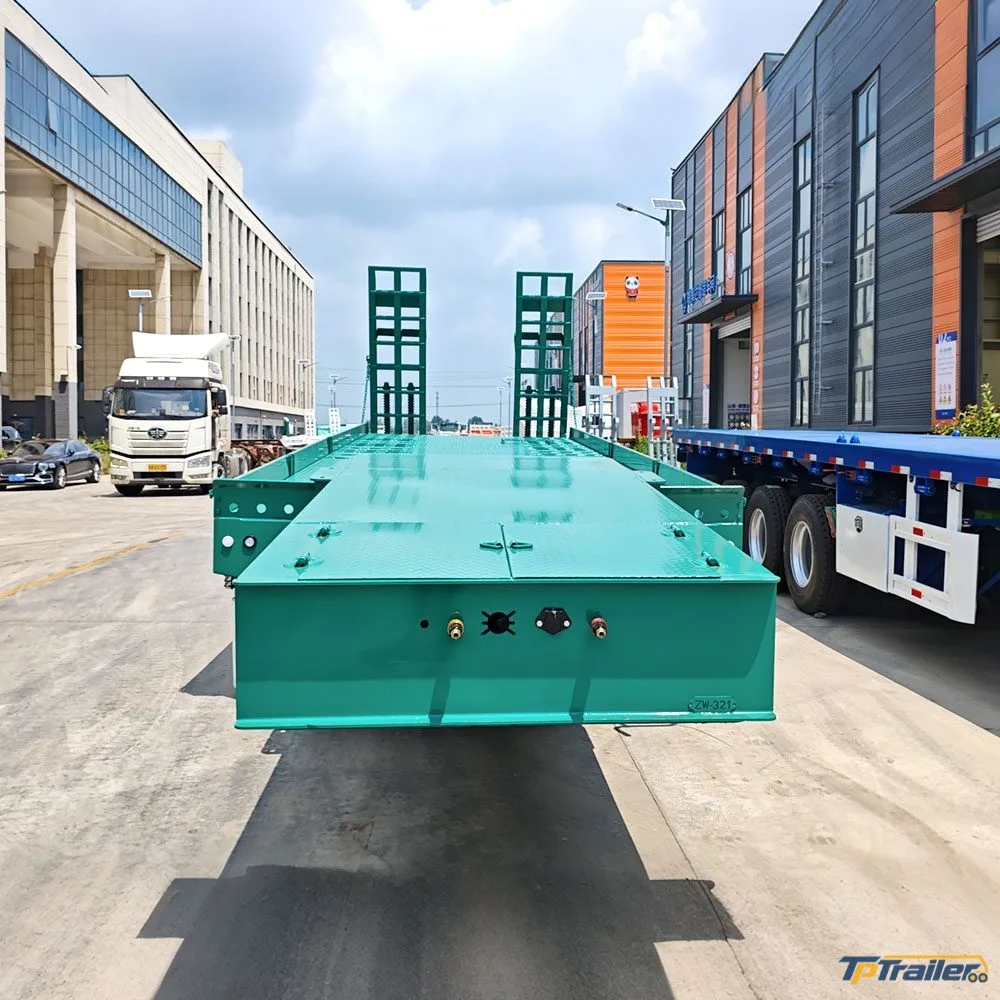
A 60 ton lowbed semi trailer arrives as a finished unit, so fitting work is mainly about the tractor side. Check the fifth wheel height and the kingpin position against the trailer coupling. Confirm the air line couplers and the electrical socket match the tractor. Route the brake and suspension hoses so they clear the landing legs through a full turn. Torque values for the kingpin bolts and the wheel nuts should come from the trailer paperwork. Where a hydraulic ramp is fitted, check the pump coupling and the hose routing to the ramp cylinders. A fitment drawing is confirmed at quotation, so nothing is left to guesswork on arrival.
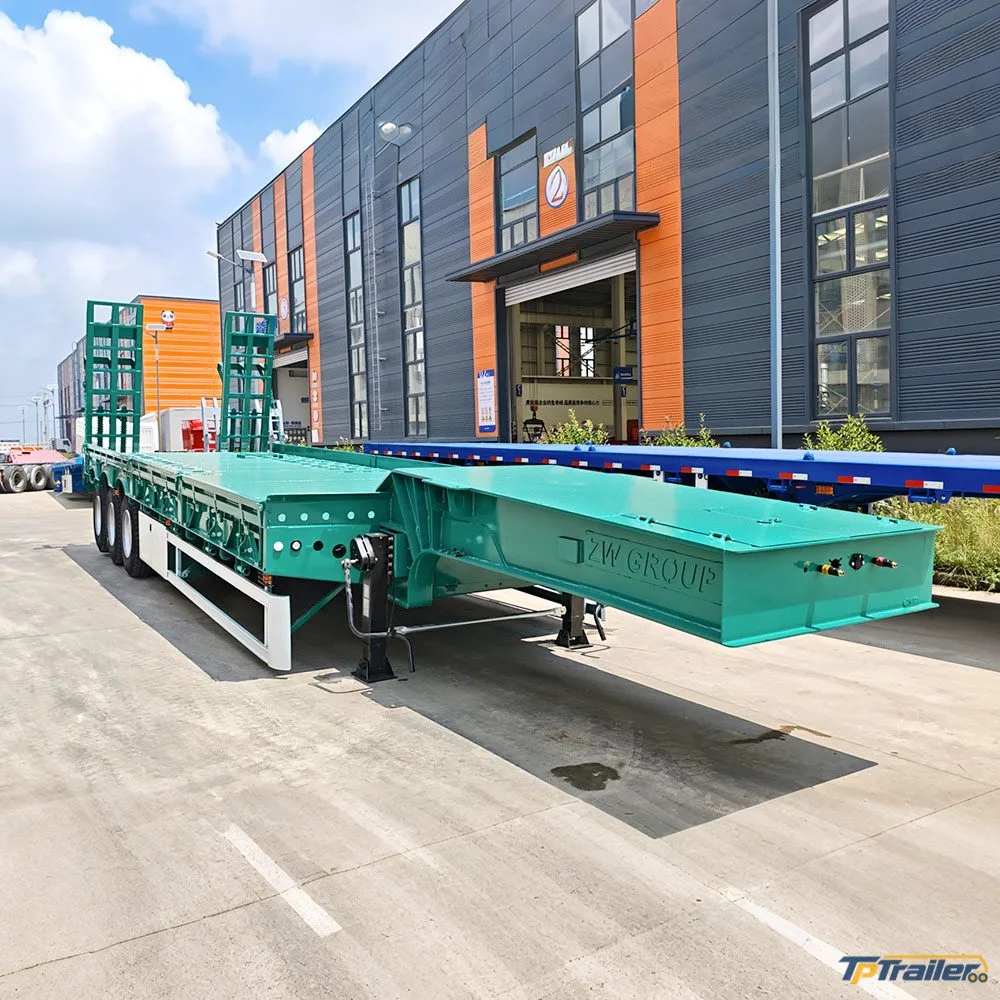
A wrong match costs downtime that no discount recovers. A kingpin that sits at the wrong height loads the tractor frame and the trailer neck unevenly. Air lines that do not couple leave the brakes and the suspension dead, and the unit cannot move. Hoses routed too tight chafe through on the first tight turn. On the ramp side, a mis-sized coupling starves the cylinders and the ramp rises slowly or not at all. Each of these faults stops the 60 ton lowbed semi trailer at the yard gate. Confirm the fitment drawing before dispatch and the arrival checks take an hour instead of a week.
The first loaded run is the real test, and it should be treated as a check, not a delivery. Load the heaviest machine you own, watch the ramp travel through its full stroke, and check the deck for deflection at the crossmembers. Walk the coupling after the first few kilometres and re-check the wheel nut indicators. A 60 ton lowbed semi trailer that passes that run is ready for scheduled work; one that shows a soft ramp or a wandering coupling tells you the fitment needs attention before the next booking.
Service life on a 60 ton lowbed semi trailer is decided by a small number of wear points, and each one is cheap to inspect and expensive to ignore. The routine below is the one most fleets settle into after the first year.
A 60 ton lowbed semi trailer is not a part that ships in a crate. It moves as a break-bulk unit or in a flat rack, and the protection work happens at the factory before dispatch. Expect the chassis frame, ramp assembly and exposed hydraulic lines to be wrapped or coated against salt air and road grit. Loose items travel separately and are listed on the packing note. Ask for that note before the unit leaves the yard, because a 60 ton lowbed semi trailer on the water is a closed shipment you cannot inspect.
Nesting and stacking are limited by the trailer’s own geometry. A 60 ton lowbed semi trailer has a fixed deck, axle group and ramp that do not collapse into a compact bundle, so the buyer should not assume several units fit where one fits. Where space is tight, the 60 ton lowbed semi trailer is loaded as a single unit and the saving comes from choosing the right vessel space rather than from stacking. Verify the ramp is secured and the hydraulic circuit is capped on arrival, and confirm the 60 ton lowbed semi trailer matches the agreed configuration before signing.
Lashing is the part buyers underestimate. The unit needs rated points on the chassis and on the ramp frame, and the forwarder needs the loaded weight and the centre of gravity to plan the stow. A 60 ton lowbed semi trailer that is lashed only at the axles can shift on a long ocean leg, and the damage shows up as a bent ramp or a twisted neck. Give the forwarder the shipping dimensions and the lashing plan in one document, and the loading becomes a routine lift rather than a negotiation at the dock.
Protection is applied at the factory and covers the surfaces most exposed to salt air and handling. Ask the supplier to state in writing what is wrapped, what is coated and which loose items ship separately with the unit. Request the packing note and photograph the unit before loading. On arrival, inspect the ramp assembly and hydraulic lines first, since those are the areas where transit damage shows. Any coating or wrapping specification beyond that is confirmed at quotation.
The deck, axle group and ramp do not fold into a compact bundle, so nesting is limited. Whether a second unit fits depends on the vessel space and the loading plan, not on the trailer alone. Ask the supplier for the shipping dimensions of the assembled unit and the loaded weight, then give both to your freight forwarder. Container or flat rack suitability, lashing points and any dimensional limits are confirmed at quotation for your quantity.
Confirm the configuration in writing: axle count, ramp type, load capacity and the machine you intend to carry. Ask for the packing note and the shipping dimensions so your forwarder can plan. Check that the quantity tier you are pricing matches the quantity you are ordering. Payment terms, documentation and the final delivery arrangement are not fixed by the product listing and are confirmed at quotation.
To price a 60 ton lowbed semi trailer, send the deck length you need, the axle count and the quantity you intend to order. Add the machine type and weight so the ramp and load capacity can be matched. Those four details are enough for a quotation.
Explore more 60 ton lowbed semi trailer in this range.
| Load Capacity | 60T | Type | Semi-Trailer |
|---|---|---|---|
| Max Payload | 60Ton | Place of Origin | China |
| Use | Truck Trailer | Material | Steel |
| Size | Customer | ||


No reviews yet — click the Review button on the right to share your experience with this product.













Fill in the form below and our team will respond within 24 hours.
Write a Review