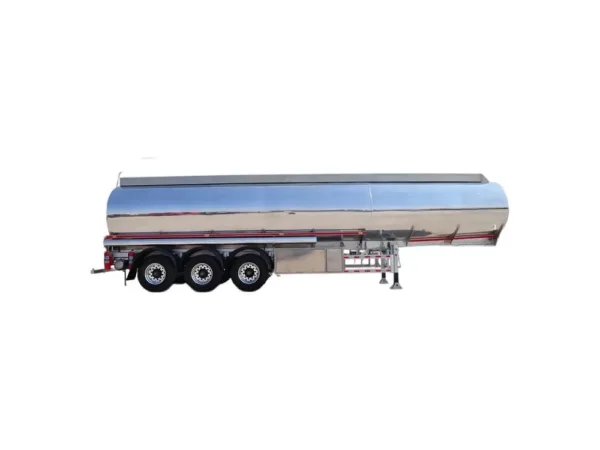
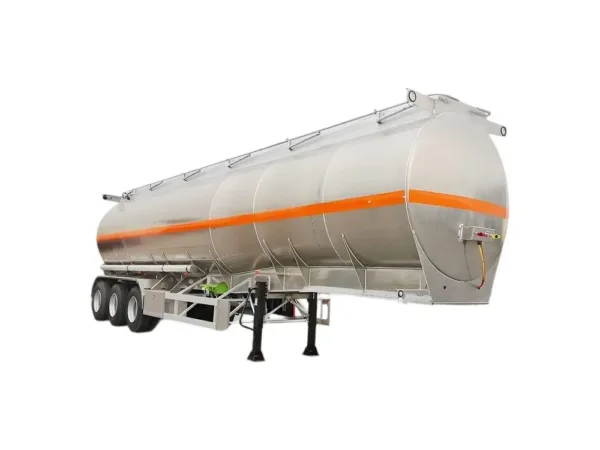
Lightweight aluminum fuel tanker trailer transport starts with the right tank body, and this 3 axle 45000L unit is built for bulk gasoline and diesel delivery. It is an aluminum tanker semi trailer aimed at fuel distributors, depot operators and fleet buyers who move large volumes over long routes. The strongest reason to specify it is payload efficiency: an aluminum barrel keeps the tare weight down, so more of the legal combination weight goes to cargo. With a rated load capacity of 30000, it suits operators running repeated bulk runs rather than short shuttle work. Every lightweight aluminum fuel tanker trailer transport decision here comes down to matching tank volume, axle count and load rating to the job.
Table of Contents
Why It Works On Site
High tank volume against a controlled load rating. The 45000L barrel gives a big working envelope, but the rated load capacity of 30000 sets the real ceiling for each run. That pairing means the operator plans loads by weight, not by tank size, which keeps every lightweight aluminum fuel tanker trailer transport trip within the combination limits the tractor and axles are rated for.
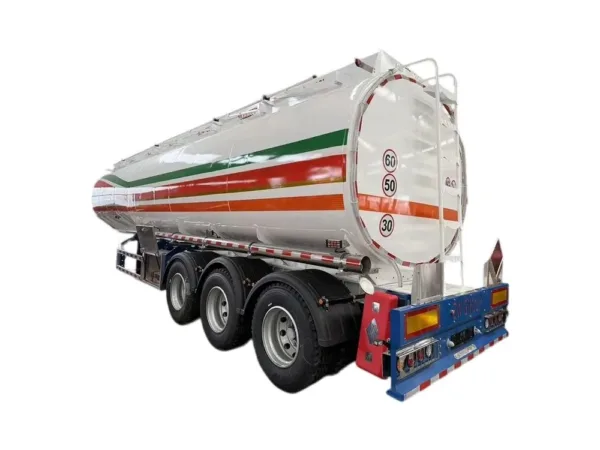
Three axles sharing the load. A 3 axle layout spreads the gross weight across more tyres and suspension points than a tandem setup. On site, that means steadier handling on loaded runs and less stress on any single axle group. For lightweight aluminum fuel tanker trailer transport over mixed road surfaces, the extra axle also gives the driver margin when the tank is filled to its rated capacity.
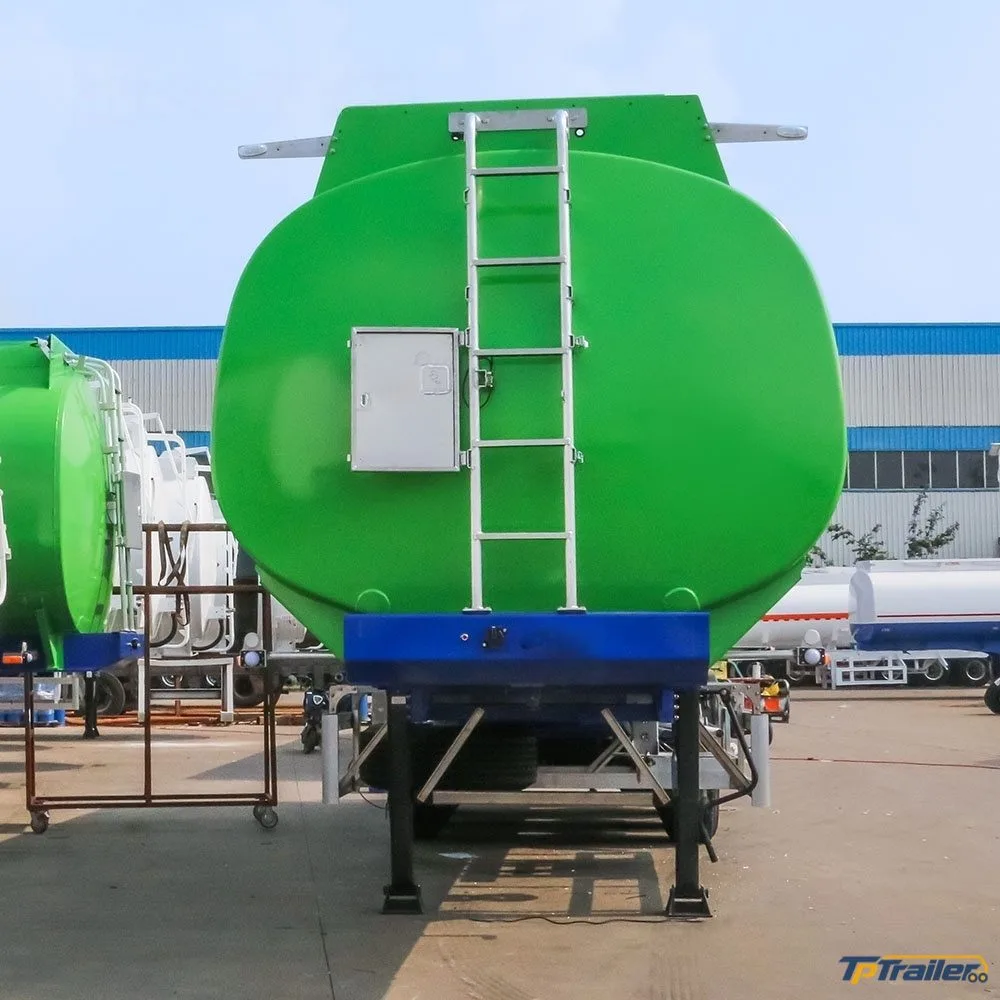
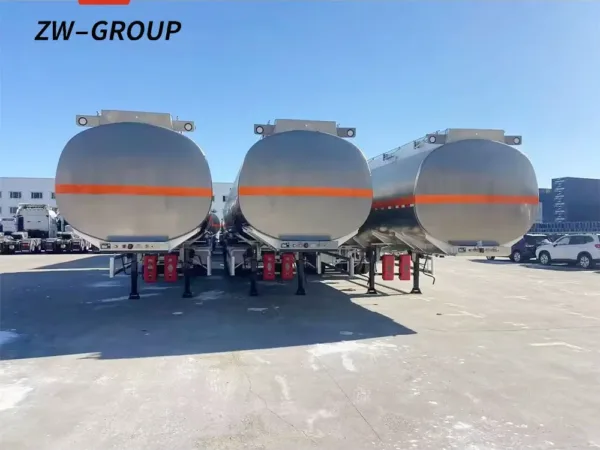
Aluminum barrel construction. Aluminum keeps tare weight lower than a comparable steel barrel, so the tractor pulls less dead weight on every trip. In lightweight aluminum fuel tanker trailer transport, that difference shows up as more usable payload per journey and lower fuel burn on long hauls. It also reduces the load the kingpin and landing gear carry when the trailer is parked loaded at a depot.
Dedicated fuel service build. The unit is configured for gasoline and diesel bulk delivery rather than general liquid haulage. That focus matters on site because the compartments, fittings and discharge arrangement are chosen around petroleum products. An operator planning lightweight aluminum fuel tanker trailer transport around depot-to-station runs gets a trailer whose layout matches how fuel is actually loaded, sealed and unloaded.
Semi trailer format for tractor fleets. As a semi trailer, it couples to an existing tractor unit instead of needing a dedicated rigid truck. That lets a fleet add bulk fuel capacity without buying a new prime mover. Lightweight aluminum fuel tanker trailer transport then becomes a matter of swapping trailers between tractors as demand shifts, which is how most distribution fleets already schedule their equipment.
Volume and weight figures that can be quoted. Because the tank volume and the load capacity are both stated, a buyer can calculate trips per delivery before ordering. That makes lightweight aluminum fuel tanker trailer transport planning concrete rather than estimated, and it lets a depot manager compare this trailer against existing units on paper before committing to a fleet addition.
Where It Is Used
The most common job is depot-to-station replenishment. A fuel distributor loads at a terminal or bulk depot, runs a fixed route of filling stations, and returns empty. In that pattern, lightweight aluminum fuel tanker trailer transport is judged on how many stations one load can cover and how quickly the trailer turns around between trips.
The 45000L barrel gives the room to serve several stops before returning, while the rated load capacity of 30000 keeps each run inside the weight the combination is allowed to carry. Operators on this duty care about compartment access and discharge speed as much as tank size, because a trailer that is slow to unload ties up the tractor and the driver. This trailer fits routes where the load is planned by weight and the stops are known in advance.
A second use is bulk diesel delivery to worksites, farms and remote fuel points. Here the trailer often runs partly loaded and covers longer distances on mixed surfaces, so the 3 axle layout and the aluminum barrel both matter. Lightweight aluminum fuel tanker trailer transport on these routes benefits from lower tare weight because the tractor is not hauling unnecessary steel over every kilometre.
The rated load capacity of 30000 still governs how much product goes in, which is important when a site needs a full delivery but the access road or bridge has limits. Operators also use this format for inter-depot transfers, moving stock between storage points when demand shifts. In all three patterns, the trailer is a bulk mover, not a retail dispenser, and it is specified for gasoline and diesel rather than multi-product chemical service.
Choosing The Right Spec
Match tank volume to route length. A larger barrel suits routes with several stops or long distances between refills, because fewer return trips are needed. A shorter route with frequent depot returns may not need the full envelope. When sizing for lightweight aluminum fuel tanker trailer transport, compare the tank volume against the rated load capacity of 30000 and plan the load by weight, so the extra volume is usable rather than ballast.
Confirm the load rating against local weight rules. The stated load capacity is the figure to check against the axle and bridge limits on your regular routes. If your typical load sits well below it, the trailer still works, but you are carrying capacity you may not need. Buyers comparing options for lightweight aluminum fuel tanker trailer transport should confirm the rating against the tractor’s gross combination limit before ordering.
Weigh axle count against route access. Three axles spread load and steady the trailer when full, which suits long trunk routes and mixed surfaces. Tighter urban delivery loops with frequent turns may favour a different axle arrangement. For lightweight aluminum fuel tanker trailer transport where the trailer is loaded near its rated capacity most of the time, the 3 axle setup is the safer match for stability and tyre loading.
Use the volume tiers to plan fleet size. Ordering one unit, ten units or twenty units changes the price per trailer. A single unit suits a trial or a small depot; larger orders suit fleets standardising a route network. When budgeting lightweight aluminum fuel tanker trailer transport across a fleet, compare the tier pricing against the number of routes you intend to cover before deciding how many trailers to specify.
Customisation Before Delivery
The axle count sets how the load is spread across the road and how the trailer tracks behind the tractor. Buyers moving dense fuel loads often ask for a different axle arrangement than buyers running lighter runs. Every axle choice is settled at order confirmation, together with the running gear that goes with it, so the build sheet matches your route and your hauling pattern. Lightweight aluminum fuel tanker trailer transport planning starts with this decision.
Suspension type changes ride quality, axle articulation and how the tank shell copes with rough surfaces. Mechanical and air options behave differently on uneven ground, and the right answer depends on the roads you actually use. The selection is confirmed at order confirmation and locked into the build sheet, so the suspension, axle count and tank mounting are agreed as one package rather than chosen separately.
Tyre size and pattern are chosen for the surfaces the trailer will meet. Highway running favours one pattern, while mixed or unpaved routes call for another. Because tyre choice affects ride height and load distribution, it is agreed at order confirmation alongside the axle and suspension selection. Buyers comparing options for lightweight aluminum fuel tanker trailer transport should settle this early.
Colour and finish are agreed at order confirmation. The finish protects the aluminum shell and identifies the unit within a fleet, and the choice is recorded on the build sheet before production begins. Buyers weighing lightweight aluminum fuel tanker trailer transport options often match finish to fleet livery so the trailer reads as part of the same working set from day one.
Compartment layout and the fittings around the tank are agreed at order confirmation, together with the axle, suspension and tyre choices. Because these items interact, they are settled as one specification rather than added later. That single confirmation point keeps the build sheet consistent and gives the buyer a clear record of what was ordered before the unit enters production.
Fitting And Installation
On arrival, the buyer has to match the trailer to the tractor that will pull it. That means checking the coupling height, the mounting points on the tractor frame, and the routing of any hose or line that runs between the two units. The tank shell, the running gear and the axle set are built as one assembly, so the fitment work at your end is about the connection to the tractor rather than the trailer itself.
Where the input gives no fitment figures, a fitment drawing is confirmed at quotation, and that drawing is the document your workshop should work from. Do not rely on a verbal description of the coupling or the hose path. Lightweight aluminum fuel tanker trailer transport depends on that connection being right the first time.
A wrong size at the coupling or a mismatched mounting point costs downtime, not just a parts bill. The trailer sits idle while adapters are sourced, and the delivery schedule slips while the tractor waits. Because the load capacity and the axle set are fixed at build, the connection points are the part you can still control at installation. Confirm the fitment drawing at quotation, check it against the tractor before the unit ships, and book the workshop slot around that drawing. Buyers planning lightweight aluminum fuel tanker trailer transport should treat the fitment drawing as a required document, not an optional extra, and keep a copy with the trailer paperwork.
Service Life And Maintenance
The running gear wears first on any tanker trailer. Tyres, brake components and wheel-end parts take the load and the road surface directly, so they set the inspection rhythm. Operators should check tyre condition, brake adjustment and wheel security on a regular schedule, and record what they find. On a lightweight aluminum fuel tanker trailer transport unit, the axle count and suspension choice agreed at order confirmation shape how that wear develops across the fleet.
The tank shell and its seams deserve a routine look. Aluminum resists corrosion better than steel in many fuel-hauling conditions, but seams, welds and mounting points still need checking for movement or damage. A visual pass along the shell after rough routes catches small issues before they grow. Operators running lightweight aluminum fuel tanker trailer transport should build this check into the same routine as the running gear inspection.
Hose routing and the connections between trailer and tractor are a wear point in daily use. Lines that rub or flex repeatedly will fail earlier than lines that are routed cleanly. The operator should inspect the routing, the fittings and the connection points at each service, and correct any chafing before it becomes a leak. Good routing practice supports lightweight aluminum fuel tanker trailer transport over the long run.
The finish chosen at order confirmation is a maintenance decision, not only a cosmetic one. A sound coating protects the aluminum surface and makes inspection easier, because damage shows up clearly against an intact finish. Operators should wash the shell and check the coating at the same time, touching up where it has been worn through. Buyers planning lightweight aluminum fuel tanker trailer transport should treat the finish as part of the service plan.
Load distribution affects how long the structure lasts. Keeping loads within the stated load capacity and spreading them correctly across the axles reduces stress on the shell and the running gear. The operator should confirm that loading practice matches the axle and suspension specification agreed at order confirmation. Sensible loading is the simplest way to extend service life on any lightweight aluminum fuel tanker trailer transport unit, and it costs nothing to get right.
Packing And Container Loading
The trailer ships as a complete unit or in disassembled sections, depending on the shipping method agreed at order. Steel contact points are wrapped and the aluminum shell is protected against scuffing before loading. Buyers planning lightweight aluminum fuel tanker trailer transport should confirm the loading plan with the supplier early, because the trailer footprint decides whether it moves as a whole unit or as separated assemblies. Ask for the loading diagram before the vessel booking is confirmed.
Stacking of complete trailers is not practical for this category. Axle sets and landing gear can be crated separately to reduce height. For lightweight aluminum fuel tanker trailer transport, the buyer should verify the lifting points, the cradle positions and the tie-down anchors shown on the diagram. On arrival, check the shell for dents, the frame for bending and the seals for damage. Photograph every panel before signing the delivery receipt.
Common Mistakes Buyers Make
Ordering without checking the load capacity against the real cargo weight. The rated capacity is a ceiling, not a target. Overloading stresses the shell and the running gear. The single check: compare your heaviest planned load with the rated figure and confirm the margin at quotation before signing.
Ignoring axle count and suspension choice for local roads. Road conditions and legal axle limits differ by market. The single check: confirm the axle configuration and suspension type against your route permits before the order is released to production.
Skipping compartment and baffle confirmation. Bulk delivery often needs divided compartments and internal baffles to control surge. The single check: send your delivery plan and confirm the compartment layout in writing before fabrication starts.
Assuming a standard tank shell suits every fuel grade. The shell material and lining must match the product carried. The single check: state the fuel types and confirm material compatibility with the supplier before the build is scheduled.
Leaving discharge equipment unspecified. Pumps, valves and hose routing change the trailer layout. The single check: list the discharge equipment you need and confirm it is included in the quotation scope, not assumed.
Buyer Questions
How is the trailer protected during sea freight?
Protection depends on the shipping method agreed at order. Ask the supplier for the packing list and loading diagram before booking. Confirm which surfaces are wrapped, which steel contact points are shielded and how the unit is tied down inside the container or on deck. For lightweight aluminum fuel tanker trailer transport, the aluminum shell is the surface most exposed to scuffing, so confirm the wrapping covers the full barrel. Photograph the unit at loading and again at arrival.
Can the trailer be shipped in one container?
Container fit depends on the trailer length and the container size, so confirm the loading plan at quotation. Ask for the external dimensions of the unit as packed and compare them with the internal dimensions of the container you intend to book. If the complete unit does not fit, ask whether disassembled shipping is offered. For lightweight aluminum fuel tanker trailer transport, the loading diagram is the document that settles this question.
What should I check when the trailer arrives?
Inspect the shell for dents and scuffing, the frame for bending and the axles and landing gear for movement in transit. Check that seals and valves are intact and that the packing list matches what was unloaded. Photograph every panel and the tie-down points before signing the receipt. For lightweight aluminum fuel tanker trailer transport, record any damage on the delivery document at once, because claims are easier to support with arrival photos.
Send us the trailer length, the axle count and the quantity you need. We will confirm the compartment layout, discharge equipment and shipping plan, then issue a quotation for your lightweight aluminum fuel tanker trailer transport requirement. State the fuel types you carry so the shell specification is matched before production.
We use cookies to enhance your browsing experience, serve personalized content, and analyze our traffic. By clicking "Accept All", you consent to our use of cookies. Privacy Policy
Cookie Preferences
Required for the website to function properly. Cannot be disabled.
Help us understand how visitors interact with the website (Google Analytics).
Used to deliver personalized ads and measure ad campaign effectiveness.


















Write a Review