4 Axle 80 Ton Fence Semi Trailer for Cargo Transport
High Capacity Cargo Fence Trailer with 4 axles and 80 ton capacity, built for bulk goods and livestock hauling. Request a quote for fleet pricing today.
>30000 KG 4
FOB Reference PriceUS$6,000-10,000Final price confirmed by inquiry
Certifications
ISO 9001
Key Features
Strong chassis built for heavy duty semi trailer work
4 axle configuration for stable load distribution
80 ton capacity suited to bulk goods and livestock hauling
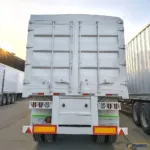
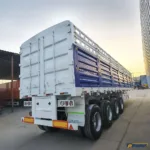
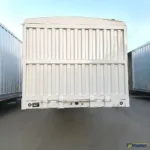
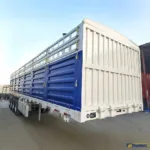
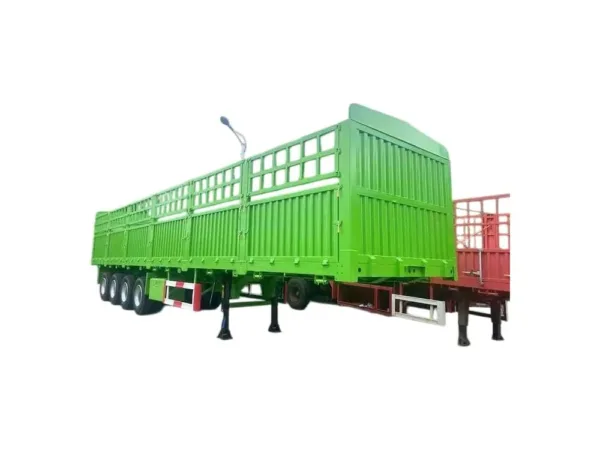
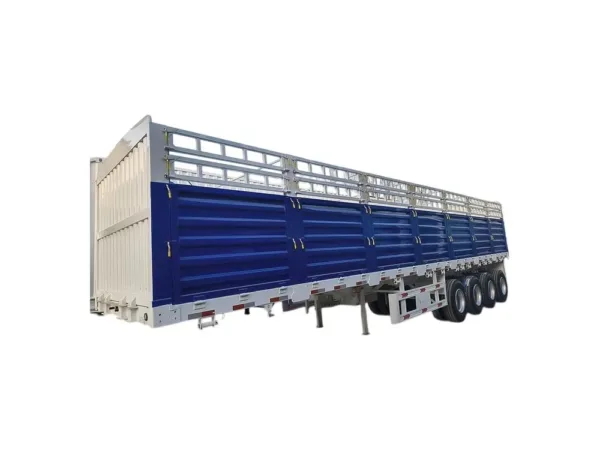
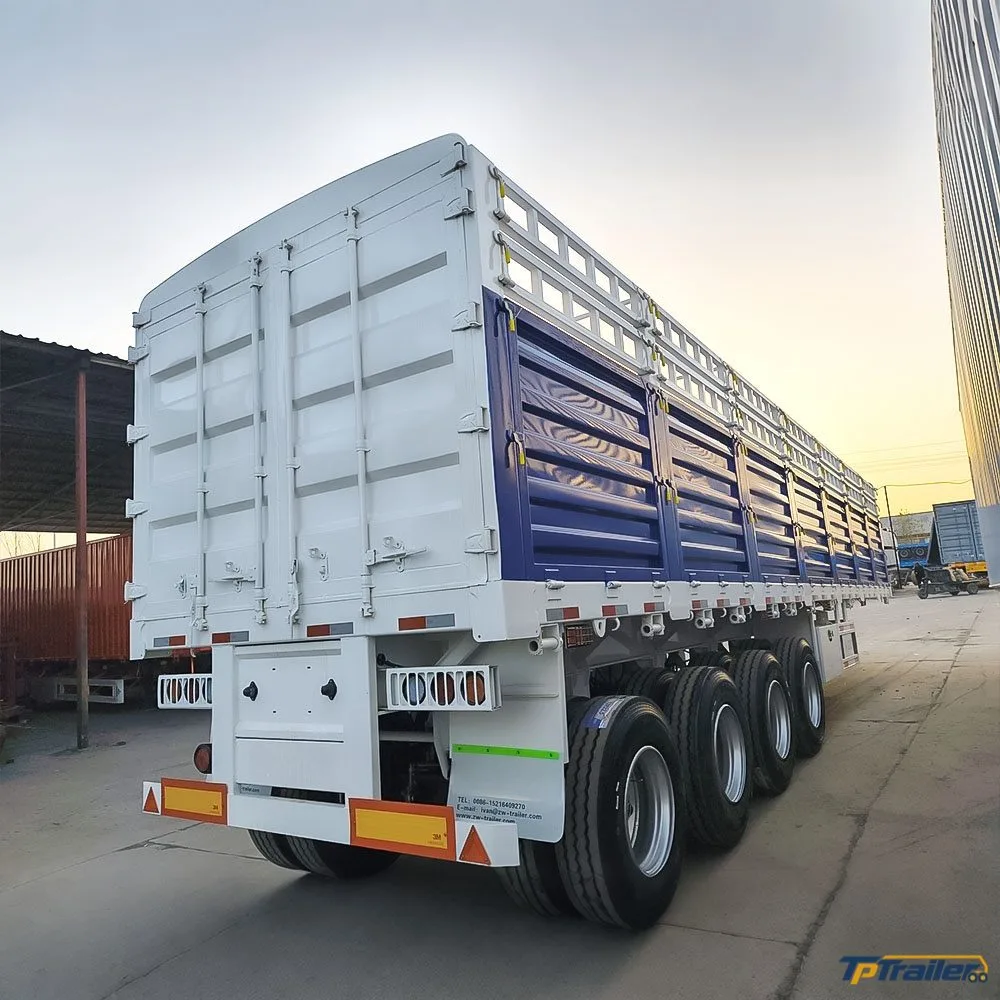
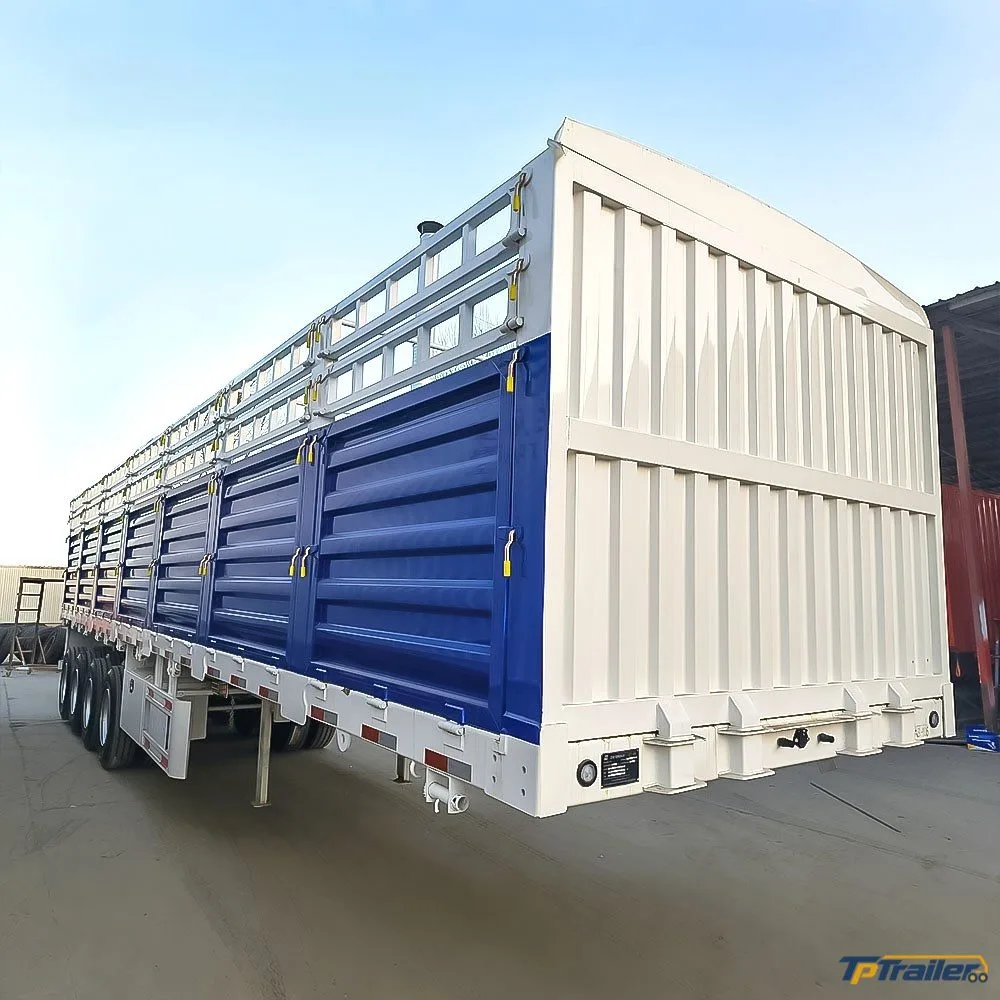
High Capacity Cargo Fence Trailer is the working name for this four-axle fence semi trailer, built to move bulk goods, farm loads and livestock behind a road tractor. It is a steel side wall freight trailer with a slatted fence body rather than a closed box, so loads stay contained while air moves through. Fleet operators, farm hauliers and bulk goods contractors are the buyers it suits. The strongest reason to choose it is capacity per trip: the fence body lets you load long, loose or palletised cargo in volume, and the chassis is rated to carry a stated load capacity of 30000 KG. One trailer, many cargo types.
Table of Contents
Why It Works On Site
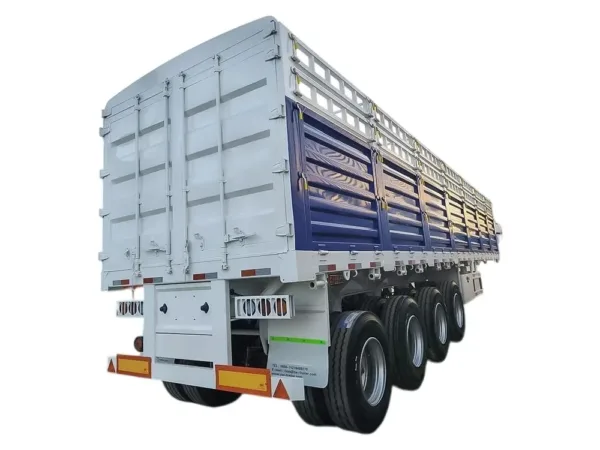
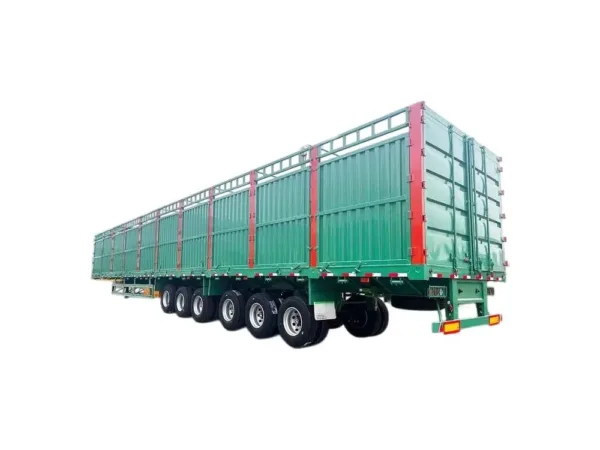
Four-axle running gear spreads the load. Four axles under a fence body put more tyres on the road than a shorter trailer, which is what lets a High Capacity Cargo Fence Trailer carry its rated load without overloading any single axle group. For the buyer this means fewer trips per consignment and steadier braking on long descents.
The stated load capacity sets the daily job. With a load capacity of 30000 KG, the trailer is aimed at bulk goods, bagged feed and livestock runs rather than light parcel work. That rating is the number to match against your tractor and your route permits before you commit a fleet unit to it.
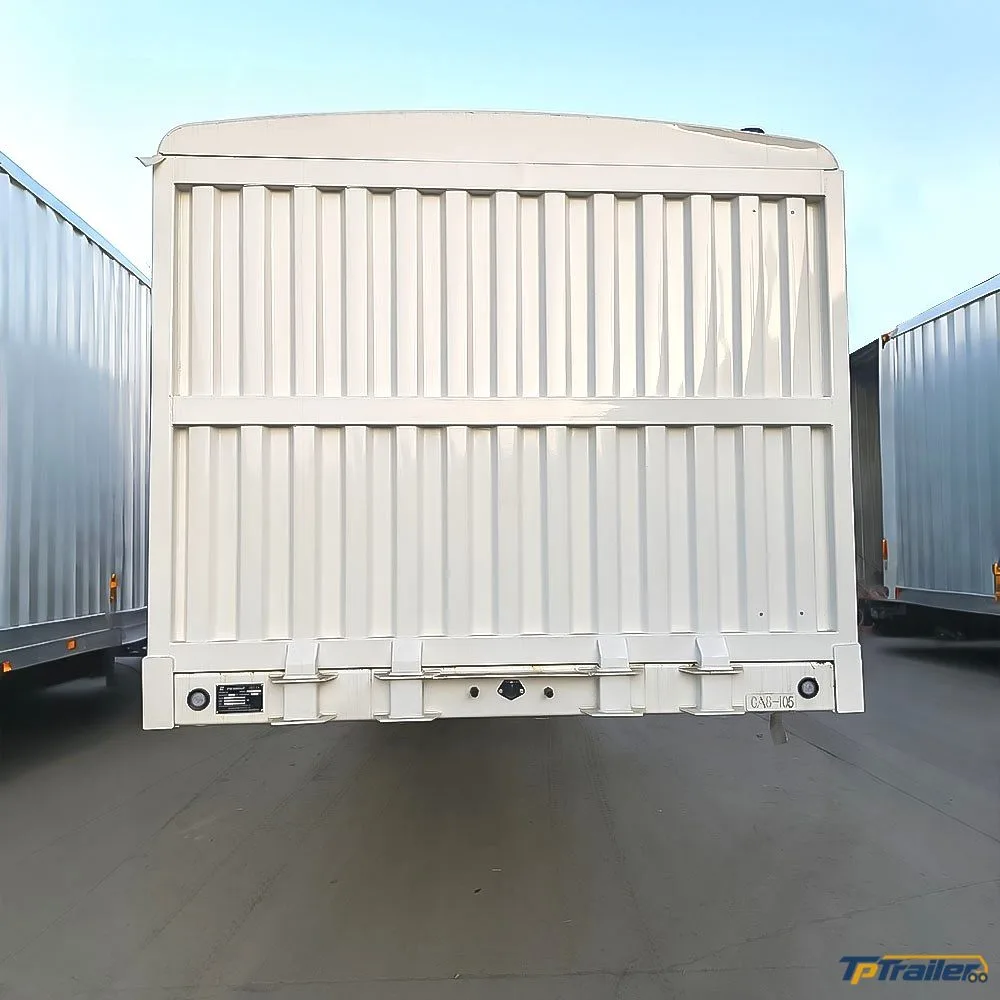
Steel side walls contain loose cargo. The fence body is built from steel side walls and slats, so grain sacks, crates and pallets stay inside the trailer footprint instead of shifting against the curtain. Loading crews can drop loads from three sides, and a High Capacity Cargo Fence Trailer reloads faster at a farm yard or depot.
Open slats cut wind drag and condensation. A fence body lets air pass through the load, which matters for hay, livestock and damp bulk goods. The buyer gets less condensation build-up on long runs and a lighter trailer than a fully enclosed box of the same footprint, so a High Capacity Cargo Fence Trailer stays stable in crosswinds.
Strong chassis takes rough yard surfaces. The chassis is built for site tracks, farm lanes and unpaved depots, not just sealed highway. That matters when a High Capacity Cargo Fence Trailer has to turn inside a barn yard or cross a rutted field entrance with a full load, where a lighter frame would flex.
Fence format keeps one trailer multi-purpose. Because the body is open at the top and slatted at the sides, the same unit handles bagged goods, livestock and long stock. A fleet operator can move a High Capacity Cargo Fence Trailer between contracts without buying a second, cargo-specific trailer.
Where It Is Used
Bulk goods transport is the core job. A High Capacity Cargo Fence Trailer suits bagged feed, fertiliser, grain sacks, palletised building materials and crates that are loaded by forklift or by hand and need side access. On depot-to-depot runs, the steel side walls keep pallets from slipping when the tractor brakes hard, and the open top lets a grab or crane drop loads straight in.
Hauliers running mixed backloads use the fence body because it takes a part-load of sacks in the morning and a part-load of crates in the afternoon without a rebuild. The stated load capacity of 30000 KG is the figure to plan each consignment against, so dispatchers know how much can go on before a second trailer is called.
Farming and livestock transport is the second home for this trailer. A High Capacity Cargo Fence Trailer moves hay bales, straw, feed blocks and bagged supplements between fields, stores and markets, and the slatted sides let air through so a damp load does not sweat on the road. For livestock runs, the fence body gives ventilation along the full length of the load, which is the reason many farm hauliers prefer it to a closed box. The same unit then switches to bagged fertiliser or seed without a body change. Routes are typically farm lane to depot, depot to market, and yard-to-yard shuttles where the trailer is loaded and tipped several times a day.
Choosing The Right Spec
Match the load rating to your heaviest regular consignment. The trailer is rated at a load capacity of 30000 KG, so it fits hauliers whose normal load sits below that figure with margin for pallet weight and packaging. If most of your work is lighter, you are paying to move capacity you rarely fill; if your loads sit near the rating, this is the right bracket.
Four axles suit long-haul and heavy routes. Choose the four-axle version when your work is long-distance bulk hauling where axle load spread and braking stability matter. A High Capacity Cargo Fence Trailer in this configuration is built for highway runs between depots, not for tight urban delivery loops where a shorter unit turns more easily.
Fence body versus closed body. Pick the fence format when your cargo needs side loading, ventilation or crane access: bulk goods, hay, livestock and crates. A High Capacity Cargo Fence Trailer is the wrong choice for weather-sensitive cargo that must stay dry, so keep a closed trailer in the fleet for those jobs and use this one for open-air loads.
Order volume maps to the price tiers. The published tiers step down from a single unit to ten units and again to twenty, so a fleet replacing several trailers at once should plan the order as one batch. A High Capacity Cargo Fence Trailer bought in a batch lowers the unit price, which matters when a haulier is standardising a whole bulk goods fleet on one body type.
Customisation Before Delivery
The axle count on a High Capacity Cargo Fence Trailer is fixed at order confirmation. Buyers moving dense loads choose the heavier axle arrangement, while lighter bulk goods may suit a simpler setup. Confirm the axle count together with the load capacity you plan to carry, so the running gear matches the cargo rather than the other way round.
Deck length and side wall height are settled at order confirmation. A longer deck suits bulky farming and livestock loads, while a taller side wall helps contain loose bulk goods. State the deck length and wall height you need, and the factory builds the High Capacity Cargo Fence Trailer around those figures.
Suspension type is chosen at order confirmation. Mechanical and other available suspension options change how the High Capacity Cargo Fence Trailer behaves on rough farm tracks and long highway runs. Tell the factory which surfaces the trailer will mostly travel, and the suspension is matched to that duty.
Tyre specification is confirmed with the order. Tyre size and pattern affect grip on wet fields and wear on paved roads. For a High Capacity Cargo Fence Trailer working mixed routes, state the tyre type you prefer so the wheels arrive ready for your operating conditions.
Colour and finish are agreed at order confirmation. Paint choice affects how the steel fence panels and chassis resist weather over the years. Buyers can specify the finish that suits their fleet, and the High Capacity Cargo Fence Trailer leaves the factory in the colour recorded on the order.
Fitting And Installation
On arrival, the buyer has to match the tractor unit to the trailer. Check the fifth wheel coupling height and the kingpin engagement first. Confirm the landing gear position clears the tractor frame on tight turns. Verify the electrical connector type and the air line couplings match the tractor. Look at the mounting points on the chassis and confirm they line up with the intended hitch and accessory brackets. Because the input gives no fitment dimensions, a fitment drawing is confirmed at quotation instead of a fixed figure being quoted here. That drawing shows the coupling points, the fence panel mounts and the side wall fixings so the workshop can prepare before the High Capacity Cargo Fence Trailer arrives.
A wrong size costs downtime. If the coupling height is off, the trailer sits nose-up or nose-down and the load shifts. If the electrical plug does not match, lights fail at the first inspection. If the fence panel mounts do not line up, the side walls cannot be fitted and the High Capacity Cargo Fence Trailer sits idle. Every mismatch means a return trip, a replacement part or workshop time that was not planned. Settling the fitment drawing at quotation removes that risk. The buyer confirms the tractor details, the factory confirms the mounting arrangement, and the High Capacity Cargo Fence Trailer arrives ready to couple rather than ready to modify.
Service Life And Maintenance
The tyres wear first on any High Capacity Cargo Fence Trailer. Operators should check tread depth and sidewall condition before each long run. Uneven wear points to alignment or suspension issues that need attention early. Rotating tyres where the axle layout allows spreads the wear. Keeping tyres at the correct pressure protects both the tyres and the load, and it is the cheapest habit for extending the working life of the trailer.
Brake and air line components are the next wear point. The operator should inspect hoses for cracks and chafing, and check couplings for secure fit. A leaking line weakens braking and puts the High Capacity Cargo Fence Trailer at risk on descents. Regular inspection of the air system keeps the trailer roadworthy and avoids unplanned stops. Replace worn hoses before they fail rather than after.
The steel fence panels and side walls take impact from bulk goods and livestock. Inspect the panel welds and the wall fixings for cracks or bending. A bent panel can be straightened, but a cracked weld needs proper repair. The High Capacity Cargo Fence Trailer keeps its shape when these checks are routine. Touch up chipped paint on the fence and walls so rust does not start at the damage point.
The chassis coating is the main defence against corrosion. Operators should wash off mud, manure and road salt, especially around the mounting points and welds. Inspect the coating for chips and scuffs, and repair them before moisture reaches bare steel. Choosing a durable finish at order confirmation extends the interval between repaints. A High Capacity Cargo Fence Trailer that is washed and touched up regularly lasts longer than one left dirty.
Suspension and axle fixings should be checked for looseness and wear. Look at the springs, shackles and U-bolts for movement or cracking. A loose fixing on the High Capacity Cargo Fence Trailer can grow into a costly repair if ignored. Confirm the suspension choice at order so the running gear suits the routes. Routine checks on these parts keep the trailer stable under load and protect the cargo.
Packing And Container Loading
A High Capacity Cargo Fence Trailer is a long steel structure, so sea freight protection is about controlling movement and moisture. Units are prepared for shipment with the fence panels, side walls and chassis secured against shifting. Exposed steel surfaces are protected for the voyage, and loose fittings are packed so they cannot rub against painted panels. Buyers should confirm the packing method at quotation, including how the structure is braced inside the container or on deck. Ask which surfaces are covered and how the covering is fixed. The goal is simple: the trailer should arrive with its geometry unchanged and its coating intact.
Container loading follows the transport mode, and the High Capacity Cargo Fence Trailer is usually shipped in a configuration that keeps the overall envelope within the chosen container type. Whether units can be nested or stacked depends on the fence and side wall design, so this is a loading question, not an assumption. Confirm the loaded dimensions and the number of units per container before booking freight. On arrival, check the fence panels for distortion, inspect the side walls and chassis for contact damage, and verify that all loose parts listed on the packing note are present. Photograph any damage before unloading.
Common Mistakes Buyers Make
Ordering the wrong deck length. A High Capacity Cargo Fence Trailer is built around the cargo bed, and a length that does not match the freight profile wastes capacity or blocks loading. Measure the longest load and the turning space at both ends before ordering. The single check is to confirm the deck length against the actual cargo, not against a nominal class.
Ignoring the load capacity rating. Buyers compare the headline rating without checking how it is distributed across the axles and deck. A High Capacity Cargo Fence Trailer must be loaded within its stated limits, so ask how the rating applies in service. The check is to confirm the load capacity figure in writing on the quotation.
Mismatching the axle count to the route. Four axles suit heavy bulk haulage, but the buyer must confirm the configuration matches local road and bridge rules. The check is to verify the axle count and the resulting axle load against the routes the trailer will run, before the order is placed.
Assuming fence and side wall heights. The fence and side wall heights determine what the High Capacity Cargo Fence Trailer can contain, and assumptions here cause rework. The check is to state the required containment height for the cargo and have it confirmed on the drawing.
Skipping the coupling and brake check. Fitment problems at the coupling, brake system and lighting connections send trailers back. The check is to confirm the coupling type, brake system and electrical connection against the towing vehicle before shipment, and to request the matching specification in writing.
Buyer Questions
How do I confirm the High Capacity Cargo Fence Trailer will carry my bulk cargo?
Start with the cargo itself: its density, its loading method and the longest item you will place on the deck. Compare these against the deck length, the fence and side wall heights, and the load capacity rating. Then confirm how the load is distributed across the axles, because a High Capacity Cargo Fence Trailer is rated as a complete unit, not per panel. Ask for the load capacity to be stated on the quotation and check it against your heaviest planned trip, not an average one.
Can the fence and side walls be configured for livestock or farming transport?
The High Capacity Cargo Fence Trailer is described for bulk goods, farming and livestock transport, so the fence and side wall arrangement matters more than any single figure. Specify the containment height you need, whether the side walls must be solid or open, and how you will load and unload animals or bulk material. Ask for the fence and side wall configuration to be confirmed on the quotation drawing. Where the input is silent on a specific arrangement, treat it as confirmed at quotation rather than assumed.
What should I check on the trailer when it arrives?
Check the fence panels and side walls for distortion, the chassis for contact damage, and the coating for scuffs from transit. Confirm that the axle count and coupling match the order, and that all loose parts on the packing note are present. Photograph anything damaged before unloading, and keep the shipping documents together. For a High Capacity Cargo Fence Trailer, also confirm the deck length and the load capacity shown on the paperwork match what you ordered before the unit enters service.
To receive a quotation, send the deck length you need, the axle count and the quantity of units. State your cargo type and the fence or side wall height required, and confirm the coupling and brake system on your towing vehicle. With those details, the High Capacity Cargo Fence Trailer can be specified against your route and freight profile.
We use cookies to enhance your browsing experience, serve personalized content, and analyze our traffic. By clicking "Accept All", you consent to our use of cookies. Privacy Policy
Cookie Preferences
Required for the website to function properly. Cannot be disabled.
Help us understand how visitors interact with the website (Google Analytics).
Used to deliver personalized ads and measure ad campaign effectiveness.

















Write a Review