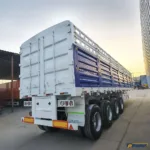
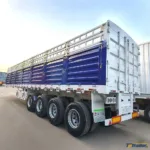
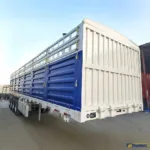
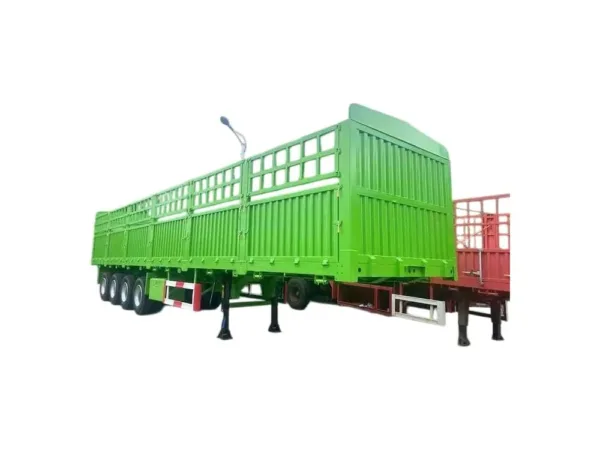
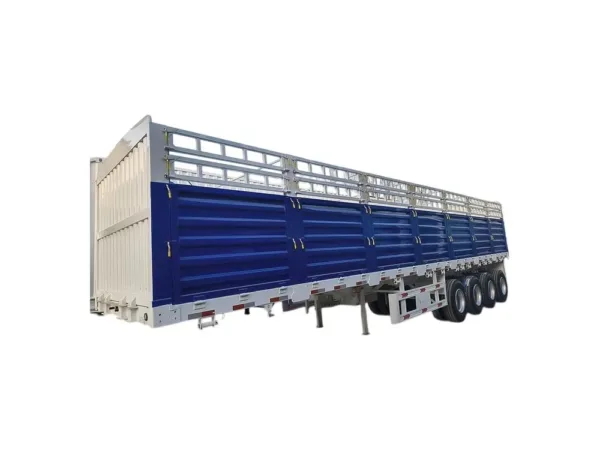
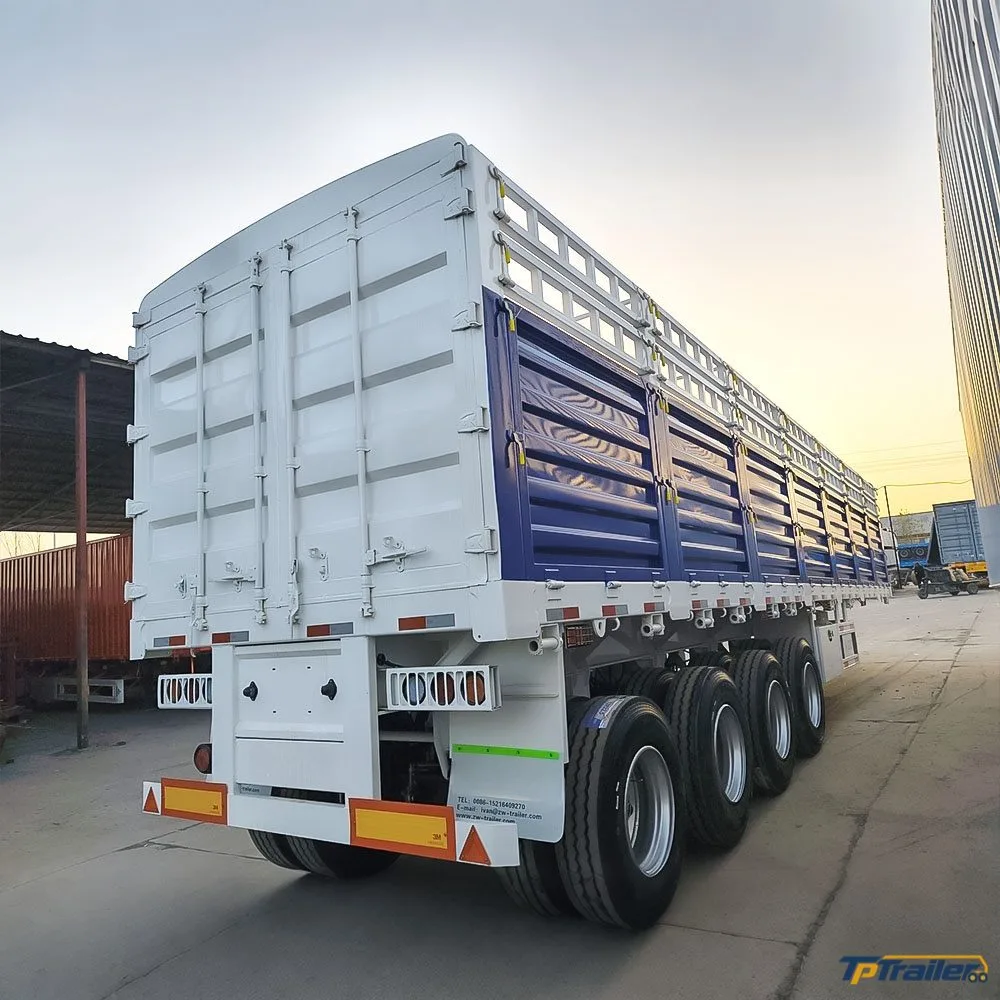
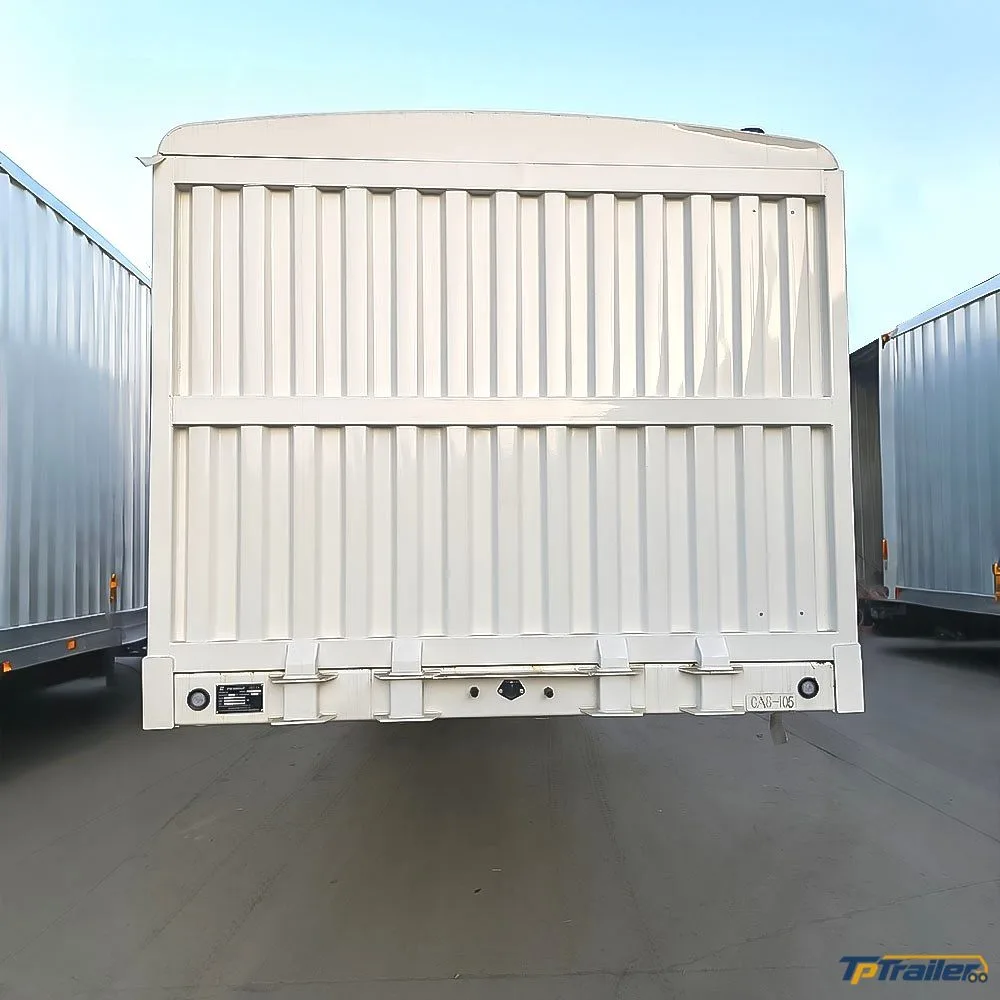
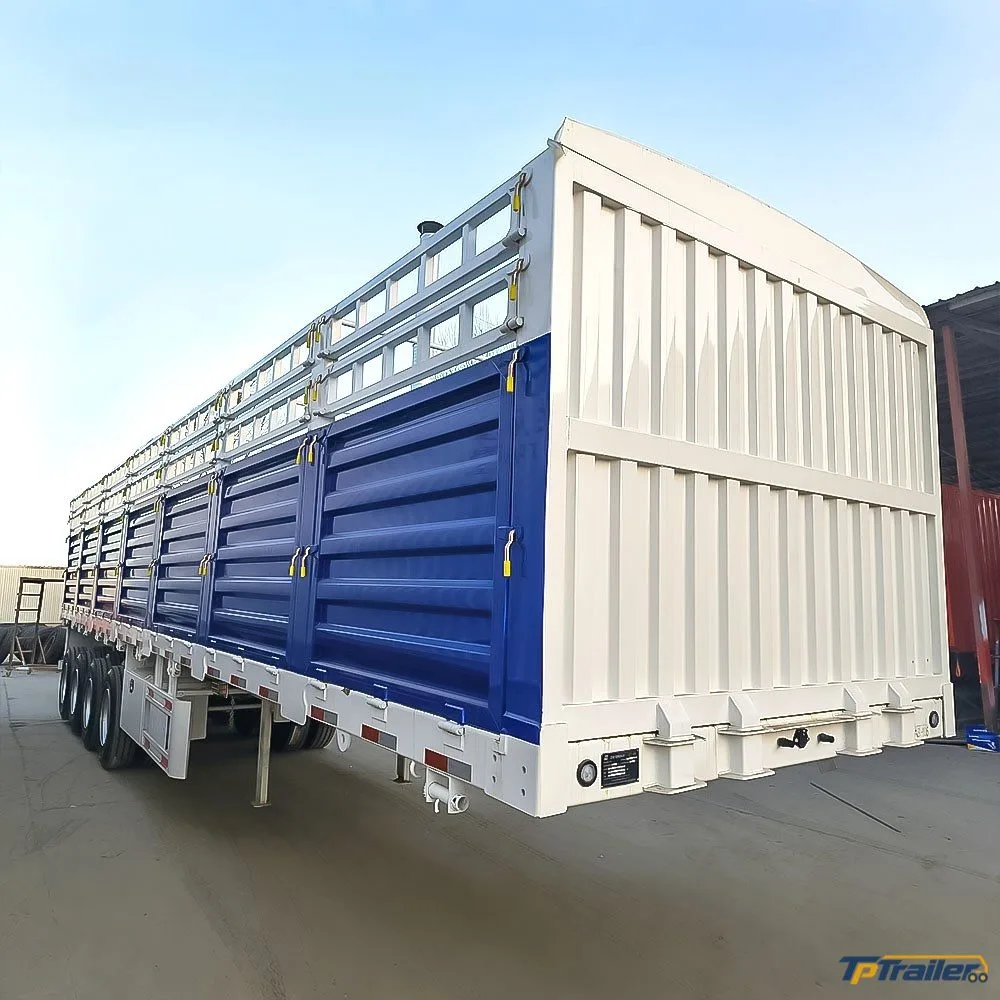
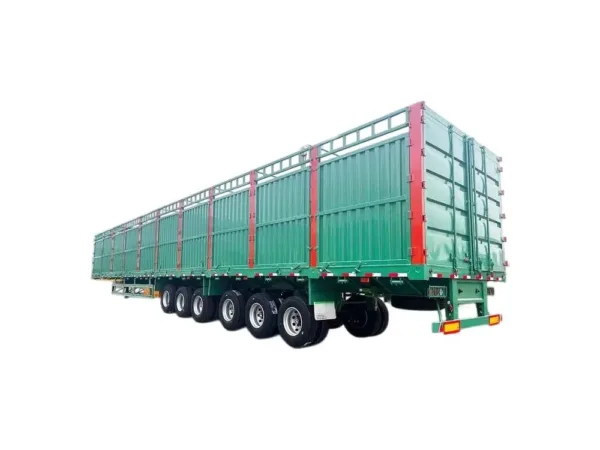
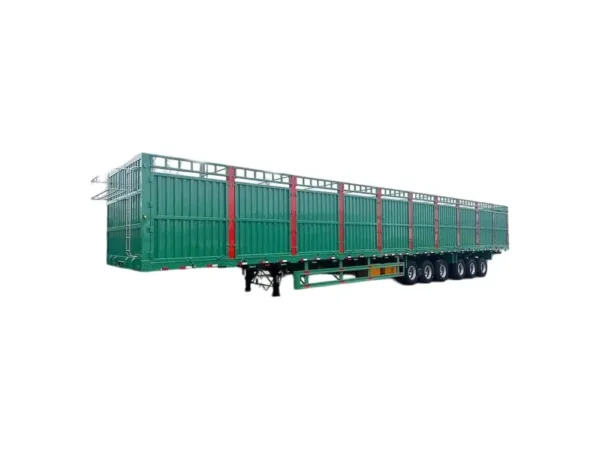
The High Capacity Cargo Fence Trailer is a four-axle steel side wall semi trailer built for fleet operators who move bulk goods, farm produce and livestock over long and mixed routes. It pairs a fence-type cargo body with a rated load capacity of 30000 KG, giving hauliers a single platform for palletised freight, bagged grain and animals. builds it for buyers who need one trailer to do several jobs without buying several units. The strongest reason to choose it is the fence-and-side-wall layout: it holds loose and stacked cargo in place while keeping the deck open enough for fast loading. It suits operators running regular bulk hauls where flexibility matters more than a single fixed body style.
Table of Contents
Why It Works On Site
Rated load capacity of 30000 KG. The trailer is rated to carry 30000 KG, so a single trip can move a full bulk load instead of splitting it across smaller units. That matters on bagged grain, fertiliser and palletised goods, where trip count drives fuel and driver cost. Operators get more payload per run from one tractor unit and one driver.
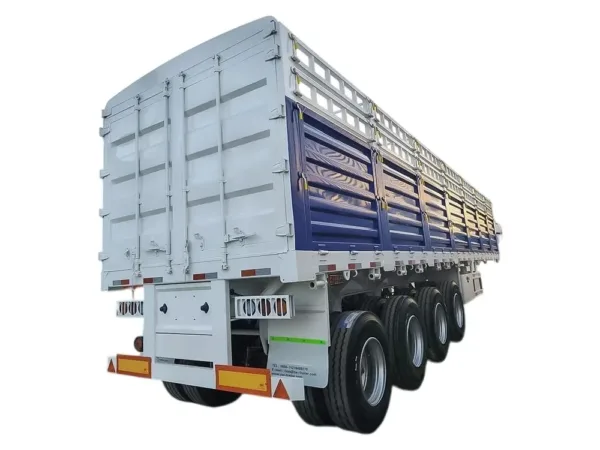
Four-axle running gear. Spreading the load across four axles keeps weight distributed along the frame rather than concentrated on one point. On long highway runs and rough site access roads, that spread reduces stress on the deck and running gear, so the trailer holds up under repeated loaded trips. It also helps the High Capacity Cargo Fence Trailer stay stable when the load is unevenly stacked.
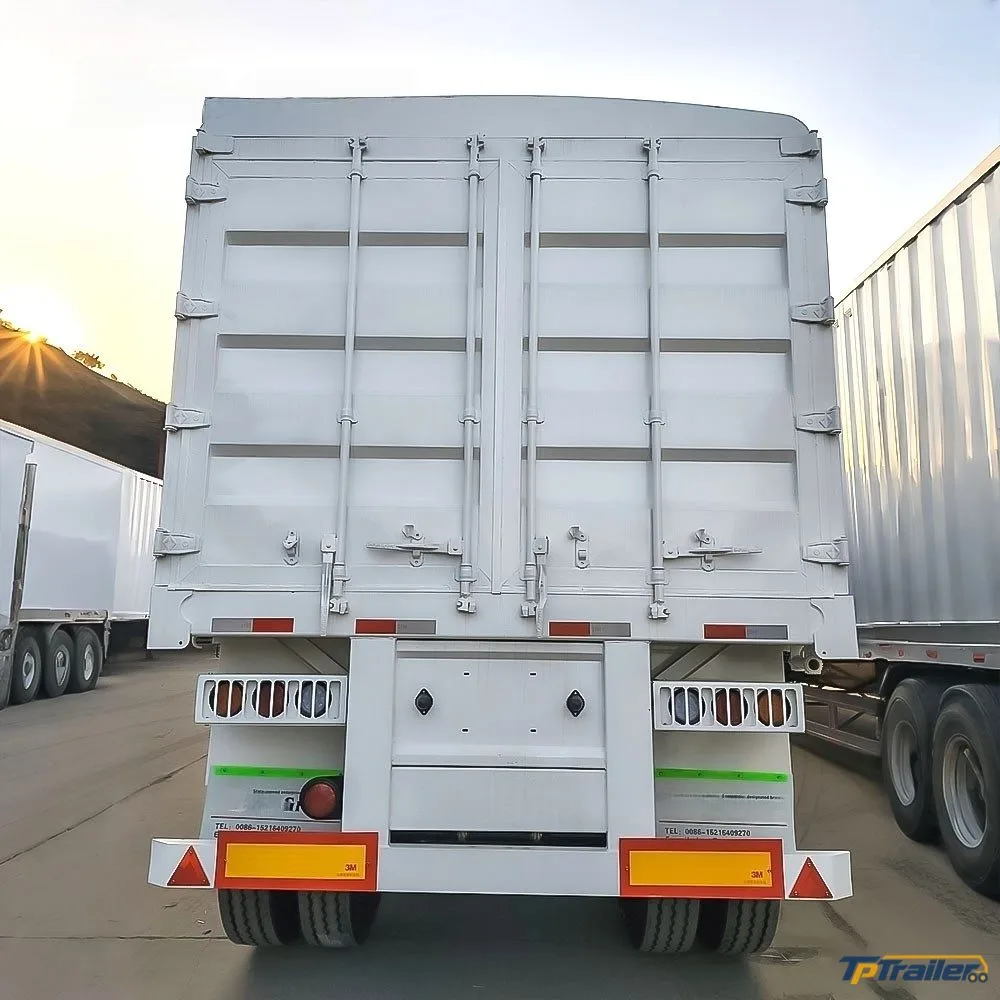
Steel side walls. The steel side walls contain cargo that would otherwise shift, spill or lean against the fence. For bagged goods, stacked crates and loose farm produce, the walls keep the load inside the deck footprint. That means less re-stacking at the gate and fewer rejected loads on arrival.
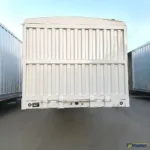
Fence-type cargo body. The fence structure gives tie-off points along the length of the trailer. Drivers can rope or strap tall, awkward loads, and the open upper section lets a loader drop cargo in from above. This is what makes the High Capacity Cargo Fence Trailer practical for mixed loads that change from trip to trip.
Open deck for fast turnaround. With no enclosed roof, loading and unloading run from the top and sides. Forklifts, manual crews and livestock handlers all work faster on an open deck. Shorter loading windows mean more trips per day, which is where the High Capacity Cargo Fence Trailer earns its keep on busy routes.
One body, several cargo types. The same trailer takes palletised freight, bagged bulk goods, farm produce and livestock with minimal changeover. A fleet running varied contracts does not need to match a different trailer to every job. That flexibility lowers the number of units a fleet must keep on the road.
Where It Is Used
The High Capacity Cargo Fence Trailer fits hauling work that mixes cargo types across a working week. A fleet operator running bulk goods transport will load bagged grain, fertiliser, cement or feed on one leg and return with palletised stock. The steel side walls hold stacked bags in place, and the fence body gives the driver points to secure the load for highway running. On farming and livestock transport, the same trailer carries feed, seed and equipment to the farm and moves animals on the return leg.
The open deck lets handlers load from the side and top, which speeds up work where there is no loading dock. Operators on regional supply routes use it because it does not need a dedicated dock or crane to load. That keeps the High Capacity Cargo Fence Trailer working on routes where fixed-body trailers would sit idle between jobs.
On longer trunk routes, the four-axle layout and the load rating let the trailer run at full bulk capacity between depots and distribution points. Fleet managers assign it to lanes where cargo varies by season, so the trailer is never tied to a single commodity. During harvest or peak supply periods, the High Capacity Cargo Fence Trailer moves produce and bagged goods on repeated trips. Between peaks it takes general freight, building materials or equipment.
The steel side walls protect the load edges in mixed traffic, and the fence body allows tall loads that would not fit a low-sided unit. For operators moving goods between farms, markets, warehouses and construction sites, this trailer covers the range without a change of unit. It is a working trailer for mixed-duty fleets, not a single-purpose asset.
Choosing The Right Spec
Match the load rating to your heaviest routine load. The trailer carries a rated 30000 KG. Buyers should compare that against the heaviest load they expect to move regularly, not the occasional peak. A trailer run near its rating every trip wears faster than one with headroom. The High Capacity Cargo Fence Trailer suits fleets whose normal bulk loads sit within the rating.
Four axles for long and mixed routes. Four axles spread weight and suit operators running long highway legs plus site access. Fleets working mostly short, smooth depot runs may not need the extra axle set, but those crossing rough ground or running loaded over distance benefit from the distribution. Choose this layout when route conditions vary across the week.
Steel side walls versus open fence. The steel side walls suit bagged, stacked and loose cargo that must stay contained. If your loads are mostly tall, irregular or need side access, the fence body above the walls does that work. Buyers moving livestock and farm produce should confirm the wall height and fence spacing match how they load. This choice decides how fast the High Capacity Cargo Fence Trailer turns around on site.
Volume and order size. The published price steps move with order quantity, so a fleet replacing several units at once can plan around a larger order. Single-unit buyers should weigh the per-unit cost against their replacement schedule. Order size is a commercial decision, so match it to fleet growth rather than to a single hauling job. The High Capacity Cargo Fence Trailer is priced across three order tiers.
Customisation Before Delivery
The axle count is fixed at order confirmation, so a buyer can match the High Capacity Cargo Fence Trailer to the loads actually hauled. Fewer axles suit lighter duty cycles, while the full set spreads weight across more contact points. State the intended route and payload profile when the order is placed, and the configuration is locked in writing before production begins.
Deck length and side wall height are chosen per order. Longer decks suit bulk goods and livestock runs where volume matters more than tight turning. Wall height decides how much loose material stays contained during transit. Confirm both dimensions against the loading bay and the tallest cargo the High Capacity Cargo Fence Trailer will carry.
Suspension type is selected at confirmation. Mechanical and other arrangements behave differently on rough ground, and the choice should follow the road surfaces the trailer will meet. Buyers running the High Capacity Cargo Fence Trailer on mixed terrain should say so early. The selection is recorded on the order so the build matches the duty cycle.
Tyre specification and rim choice are settled with the order. Tyre size affects ground clearance, load spread and how the High Capacity Cargo Fence Trailer sits when loaded. Buyers should name the surface type and typical trip length. The final tyre set is confirmed in the quotation rather than assumed.
Colour and finish are agreed before production. A durable coating protects the steel side walls and fence structure against weather and daily handling. Buyers can align the High Capacity Cargo Fence Trailer with fleet livery or keep a plain finish. Colour is confirmed at order stage and applied during build.
Fitting And Installation
On arrival, the buyer has to match the trailer to the towing unit and the yard. Check the mounting points on the tractor or drawbar against the trailer coupling, and confirm the tube size of any connection the buyer intends to add. Hose routing for the braking system needs a clear path with no chafing against the frame or the side wall structure. Electrical connections should reach without strain.
Where the input gives no fitment data, treat a fitment drawing as confirmed at quotation rather than assumed. The High Capacity Cargo Fence Trailer should be levelled on firm ground before any connection is made, so the frame is not twisted while hoses and lines are attached. A dry run of the coupling, the lines and the lighting before loading gives the operator a chance to catch a mismatch while the yard is still quiet.
A wrong size costs downtime that no schedule absorbs. If the coupling does not match the tractor, the High Capacity Cargo Fence Trailer sits idle while an adapter is sourced. If a hose is routed too tight, it fails under articulation and the unit is grounded for repair. If the mounting points do not line up, the frame can be stressed every trip, and the damage shows up later in the structure.
Every hour lost at the start of a season is an hour of bulk goods or livestock transport that does not happen. The High Capacity Cargo Fence Trailer is built to work, but the first connection has to be right. Confirm the fitment drawing at quotation, inspect on arrival, and correct any mismatch before the first loaded run.
Service Life And Maintenance
The tyres wear first on any High Capacity Cargo Fence Trailer. Operators should inspect tread depth and sidewall condition before each long run, and check inflation when the trailer is cold. Uneven wear points to alignment or load distribution problems that need attention early. Rotating the set where the configuration allows spreads the wear and keeps the trailer tracking straight under load.
Brake and air lines are the next item to watch. Inspect hoses for cracks, chafing and loose fittings, and check routing after any work on the frame. A line that rubs against steel will fail without warning. Keeping the High Capacity Cargo Fence Trailer lines clear of the side wall structure is a simple habit that protects the braking system over the long term.
The steel side walls and fence structure carry the daily load. Operators should look for bent posts, loose hinges and worn latch points, and check that the panels sit square. The steel construction of the High Capacity Cargo Fence Trailer resists the knocks of bulk goods handling, but a bent post should be straightened before it spreads stress to the frame.
The coating is the first defence against corrosion. Inspect the finish for chips and scratches, especially where cargo and equipment contact the High Capacity Cargo Fence Trailer. Touch up bare steel before rust takes hold. A well-maintained coating extends the interval between major inspections and keeps the structure sound through wet seasons and dusty hauling alike.
Running gear and suspension need periodic checks. Look at spring condition, shackle wear and the tightness of fasteners after rough ground work. Grease points should be serviced on a set routine. For the High Capacity Cargo Fence Trailer, a short inspection after each heavy season catches wear before it becomes a breakdown on the road.
Packing And Container Loading
A High Capacity Cargo Fence Trailer ships as a partly knocked-down unit. Steel side walls, fence panels, axles and landing gear are protected with anti-rust treatment before dispatch. Wearing surfaces are wrapped, and loose fittings are boxed and strapped to the chassis. Buyers should ask for photos of the packed unit before the container is sealed. The load capacity figure is a design rating, so packing must keep the frame straight and free of impact damage. Any bend in the chassis rails is hard to correct on arrival and affects how the trailer tracks.
Container space matters on a High Capacity Cargo Fence Trailer order. Side wall panels and fence sections can be nested where the design allows, and several units can be stacked with timber dunnage between them. That nesting is what keeps ocean freight cost per unit sensible on a bulk order. The buyer should confirm the loading plan in writing, including how many units fit per container and where the heaviest parts sit. On arrival, check the container seal, count the panels against the packing list, and inspect the axle tubes and side wall edges for transit damage before signing.
Common Mistakes Buyers Make
Ordering the wrong axle count. A High Capacity Cargo Fence Trailer is specified by axle count, and a buyer who assumes a configuration without checking the quotation gets a trailer that does not match the haul. The single check: confirm the axle count in writing on the order before the deposit is paid.
Ignoring the load capacity rating. The load capacity is a design limit, not a target. Overloading a High Capacity Cargo Fence Trailer shortens axle and tyre life. The single check: compare your heaviest planned load against the rated load capacity and keep a margin.
Skipping the side wall height check. Side wall height decides whether bulk goods and livestock stay contained. A buyer who orders without measuring the load profile gets a High Capacity Cargo Fence Trailer that spills. The single check: measure your tallest load and confirm the side wall height on the drawing.
Not confirming the coupling and landing gear. Tractor coupling type and landing gear position vary, and a mismatch blocks use on arrival. The single check: send the tractor model and confirm the coupling arrangement on the quotation for the High Capacity Cargo Fence Trailer.
Forgetting the registration paperwork. A High Capacity Cargo Fence Trailer needs documents that match the chassis and axle details. Missing papers stall registration. The single check: list the documents your authority requires and confirm each one is supplied at quotation.
Buyer Questions
How do I confirm the trailer suits my tractor and route?
Send the tractor model, the coupling type and the routes you run. The supplier can then confirm the coupling arrangement and the axle count on the High Capacity Cargo Fence Trailer. Measure your typical load length and height, and compare them with the side wall height and deck length on the drawing. Confirm the load capacity rating against your heaviest load. Anything not covered by the drawing should be confirmed at quotation, in writing, before the deposit.
What should I check when the container arrives?
Check the seal and count every panel and fitting against the packing list. Inspect the chassis rails, axle tubes and side wall edges for bends or paint damage. Photograph anything damaged before you sign. Confirm the anti-rust treatment is intact on the wearing surfaces. Then check the High Capacity Cargo Fence Trailer against the order: axle count, side wall height and coupling. Report shortfalls to the supplier with photos the same day, so a claim is not delayed.
Can several units ship in one container, and how is that planned?
Nesting and stacking are what make a multi-unit order practical, and the High Capacity Cargo Fence Trailer is built to allow it where the design permits. Ask for the loading plan in writing: units per container, stacking order and dunnage placement. Confirm the plan at quotation, since it depends on the final configuration. More units per container lowers freight cost per trailer. Check the plan against your unloading equipment before you approve it.
To quote a High Capacity Cargo Fence Trailer, send the trailer length you need, the axle count and the quantity for your order. Add your tractor coupling type and side wall height if you have them. The supplier will confirm the configuration, the load capacity rating and the loading plan at quotation.
We use cookies to enhance your browsing experience, serve personalized content, and analyze our traffic. By clicking "Accept All", you consent to our use of cookies. Privacy Policy
Cookie Preferences
Required for the website to function properly. Cannot be disabled.
Help us understand how visitors interact with the website (Google Analytics).
Used to deliver personalized ads and measure ad campaign effectiveness.

















Write a Review