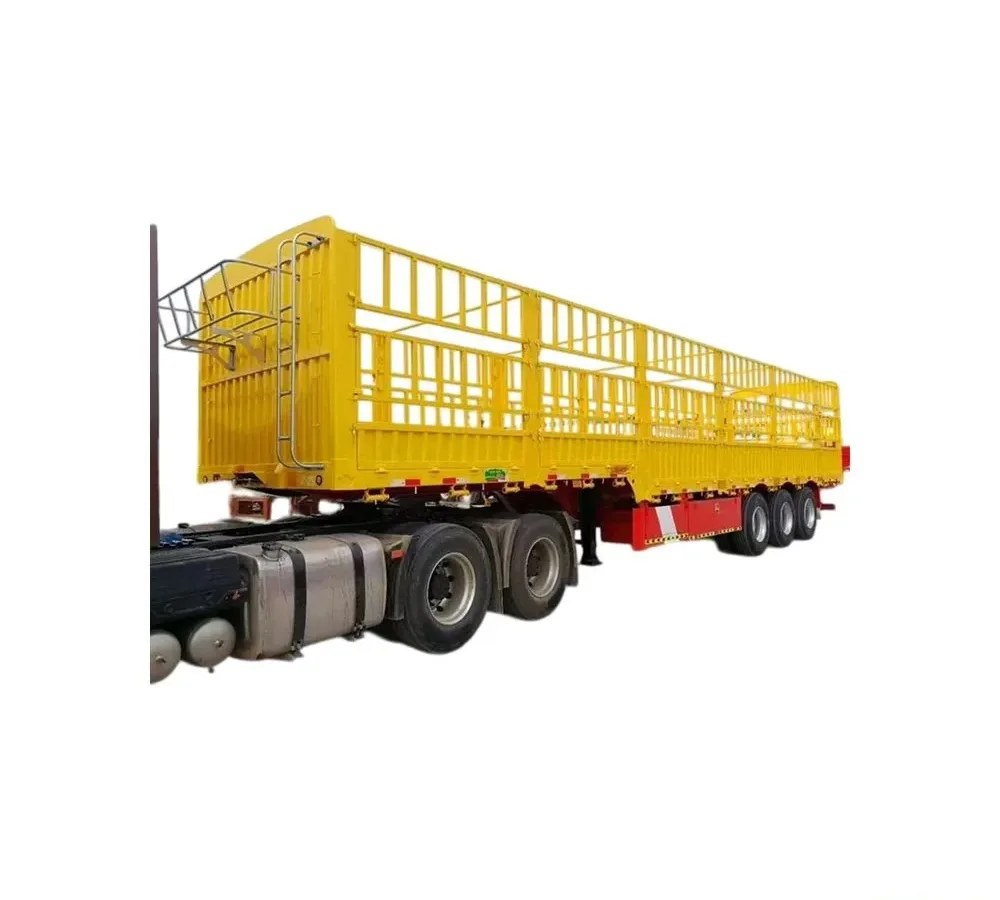
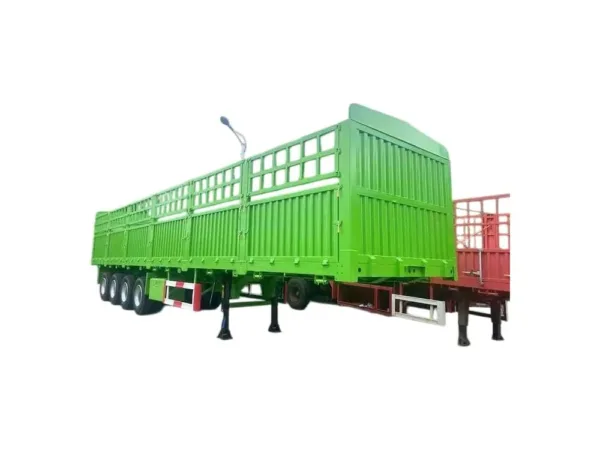
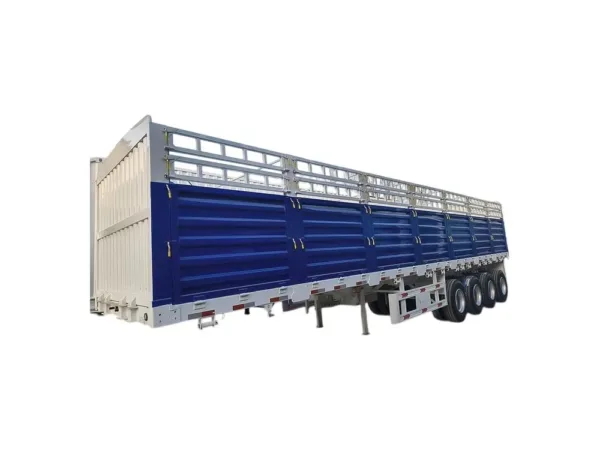
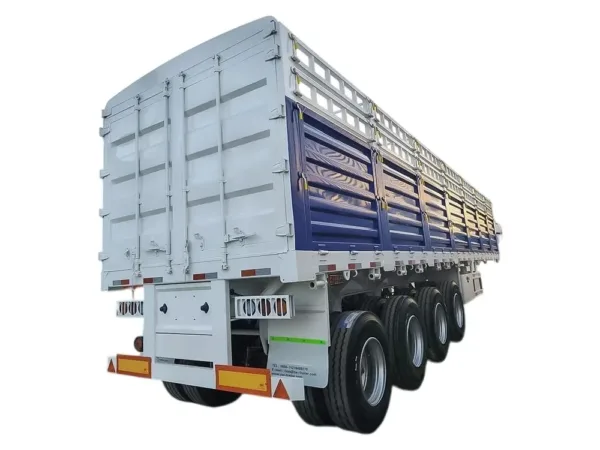
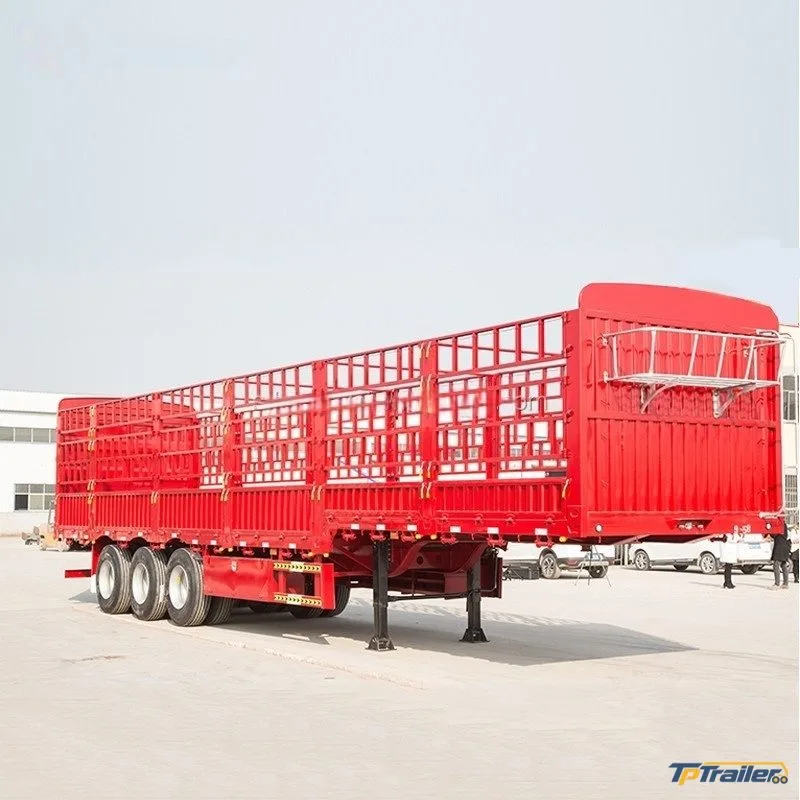
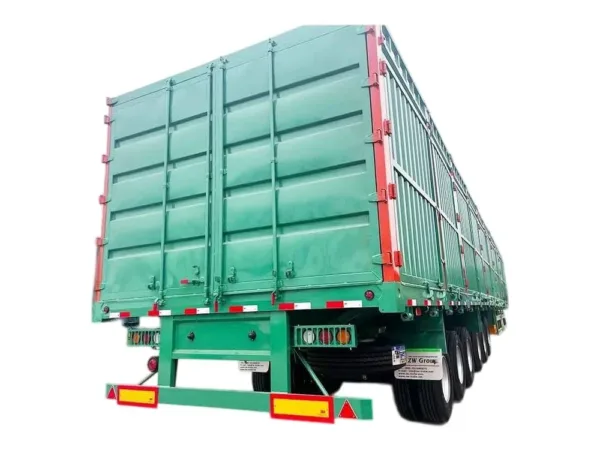
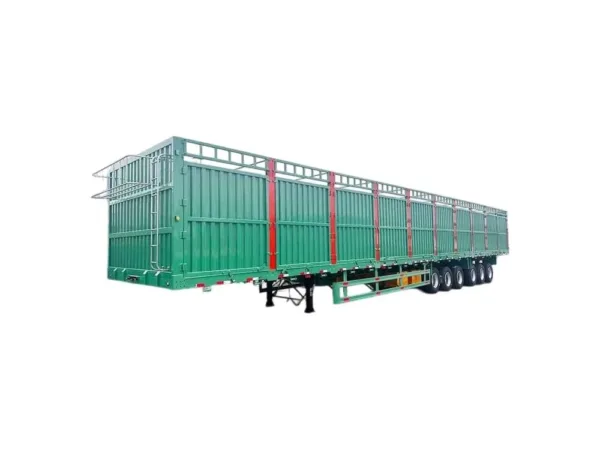
This tri axle fence trailer is a steel cargo semi trailer built around a stake-and-fence body, made for hauling bulky freight that needs side support rather than a sealed box. It suits fleet operators, freight contractors and own-account hauliers who move mixed loads and want one platform that loads from the top, the side and the rear. The strongest reason to choose it is the combination of a rated 60T load capacity and a fence structure that keeps long and awkward cargo contained without the weight and access limits of a van trailer. Steel construction, a configurable axle setup and a flat or diamond platform plate make it a working tool rather than a single-purpose unit.
Table of Contents
Why It Works On Site
Rated load capacity matched to dense cargo. The trailer carries a 60T load capacity, so the platform is rated for heavy, dense freight rather than light bulky goods only. That means an operator can plan loads around weight instead of guessing whether the deck is up to the job, and the same trailer keeps working across different cargo types without being re-specified for each contract.
Fence and stake body for open loading. The fence panel and stake layout let a forklift or crane drop cargo from above, while the side stakes hold it in place on the move. This is the reason a tri axle fence trailer loads faster than a closed body on mixed freight, because there is no roof and no fixed side wall to work around when the load shape changes.
Common mechanical suspension for predictable behaviour. Mechanical suspension keeps the axle group tracking in a consistent way under load, which matters on uneven yard surfaces and site access roads. The setup is familiar to most workshops, so inspection and routine maintenance follow standard procedures rather than specialist ones, which keeps the trailer in service instead of in the bay.
Steel spring packs sized per axle. Spring packs of 10/10/10 pieces per axle spread the load across the axle group and support the rated capacity without relying on a single point. For the buyer this means the trailer can take repeated heavy cycles and still hold ride height, which protects the platform plate and the cargo resting on it during long runs.
Choice of traction pin and support legs. A 50# or 90# king pin and support legs rated for the standing load let the operator match the trailer to the tractor unit already in the fleet. That makes it practical to add this tri axle fence trailer to an existing tractor pool without changing coupling hardware, and the legs hold a loaded trailer stable during loading and parking.
Platform plate and finish options. A 3mm diamond or flat platform plate gives a defined deck surface for the cargo type, and the polished finish with good surface quality supports visibility of wear and damage. Colour and logo can follow the client’s requirements, so the trailer fits a fleet identity without a separate paint or branding step after delivery.
Where It Is Used
The most common work for this tri axle fence trailer is construction and infrastructure hauling. Steel bar, pipe, scaffold tube, timber, palletised bricks and site equipment all load from above and ride against the fence stakes, so a crane or forklift can place and lift them without a roof in the way. On depot-to-site runs the open body lets a loader work from either side, which shortens turnaround at both ends of the trip.
Because the platform plate is available in diamond or flat form, the deck can be matched to whether cargo tends to slide or needs a defined walking surface during loading. Operators running a mixed construction book often keep one of these trailers as the flexible unit in the fleet, because the fence body switches between cargo shapes without a reconfiguration step between jobs.
Beyond construction, the trailer suits agricultural and general freight work where loads arrive in irregular shapes. Bagged goods, crates, drums, palletised feed and bundled materials all sit inside the stake line, and the rated 60T load capacity means the weight ceiling is not the first limit reached on a dense load. Long regional runs on mixed road surfaces are a normal duty for a tri axle fence trailer, and the mechanical suspension and spring packs are there for that pattern of repeated loaded travel.
Yard work, distribution shuttles and seasonal peaks also fit, since the open deck can be loaded from multiple directions and the trailer does not need a dock to be worked. For hauliers who cannot predict the next cargo, this fence Stake cargo semi trailer covers more job types than a fixed-body unit.
Choosing The Right Spec
Match the traction pin to the tractor. The 50# or 90# king pin option is the first decision, because it determines whether the trailer couples to the tractor units already in the fleet. Choose the pin size that matches the fifth wheel in service, then confirm the support legs suit the standing load the trailer will carry when parked loaded between trips.
Pick the platform plate for the cargo. A 3mm diamond plate gives grip and a defined surface where cargo and foot traffic meet, while a flat plate suits loads that need an even bed. The choice should follow what the trailer will mostly carry, since the deck surface affects how cargo is secured and how easily it is swept and inspected between loads.
Set the wheel and tyre specification to the route. The 11.00R22.5 or 12.00R22.5 vacuum tyre options, in the specified brand, change how the tri axle fence trailer behaves across long runs and site access. Match the tyre choice to the surfaces and distances the trailer will cover, and keep the axle group consistent so the rated load capacity is supported evenly across all three axles.
Use colour, logo and finish as fleet decisions. Colour to the client’s requirements, logo to the customer request and a polished finish with good surface quality are specified at order stage rather than added later. Deciding these together with the axle and suspension configuration keeps the build coherent, and it means the tri axle fence trailer arrives ready to enter service under the fleet’s own identity.
Customisation Before Delivery
Axle configuration. The Tri axle fence trailer is offered with the axle count stated in the specification, and the brand of axle can be agreed to match the running gear you already service. Confirm your preference when the order is placed, so the build sheet and the quotation describe the same unit.
Suspension type. A common mechanical suspension is the standard arrangement for this Tri axle fence trailer. If your routes or loads call for a different suspension behaviour, raise it at quotation stage. The choice is settled at order confirmation, not after the chassis is built.
Tyres and wheels. Tyre size and brand are selectable, including the vacuum tyre options listed for this Tri axle fence trailer. State the size and brand you want on the order, so the wheels supplied match the spare stock and the tyre service you already use.
Colour and finish. The Tri axle fence trailer is painted to the client’s requirements, with a polished surface for a good finish. Supply your colour reference at order confirmation. Logo placement is also agreed then, so the marking is applied before dispatch.
King pin and platform. The traction pin size and the platform plate pattern are both buyer choices on the Tri axle fence trailer. Confirm which pin suits your tractor unit and which deck surface suits your cargo. Both are fixed at order confirmation so the build matches your fleet.
Fitting And Installation
On arrival, the work starts at the coupling. The king pin fitted to the Tri axle fence trailer must match the fifth wheel on your tractor unit, so check the pin size against the coupling before the trailer is moved under load. Then check the support legs against the ground conditions where the trailer will stand uncoupled, and confirm the landing gear reaches a stable footing. Walk the suspension and check that the spring packs sit as described on the build sheet.
Check the wheel fitment against your tyre stock, and confirm the platform plate pattern is the one you ordered. Because the input gives no fitment drawing, torque values or hose routing data, a fitment drawing is confirmed at quotation instead of being assumed here. Treat that drawing as the reference for the mounting points and the air line route.
A mismatch found after delivery is expensive in a way the invoice does not show. If the king pin does not suit the tractor, the Tri axle fence trailer sits idle while a replacement is arranged, and every day of that wait is a day your cargo does not move. A support leg that cannot carry the standing load forces the operator to keep the unit coupled or to find blocking on site. Wrong tyre fitment strands the spare wheel and complicates roadside repair.
Wrong platform plate means the cargo slides or the deck wears early. Each of these is settled on paper before the build, which is why the fitment drawing and the order confirmation matter as much as the steel. The Tri axle fence trailer is a simple unit to put into service when the interfaces are checked first.
Service Life And Maintenance
Tyres and wheel ends first. Tyres and wheel bearings are the earliest wear points on any Tri axle fence trailer. The operator should check tread depth, sidewall condition and bearing play at each inspection. Choosing the specified vacuum tyre brand keeps the replacement pattern consistent across the fleet and makes the check quicker to complete.
Spring packs and suspension. The steel spring packs are a known wear item on a loaded Tri axle fence trailer. Inspect for cracked leaves, shifted clips and loose U-bolts, and check the mechanical suspension joints for play. Keeping the load within the rated capacity protects these parts and keeps the inspection interval predictable.
King pin and coupling area. The king pin and the surrounding structure carry the coupling load on every trip. The operator should look for wear at the pin, cracks at the mounting area and looseness at the coupling plate. A pin matched to the tractor at order stage avoids the abnormal wear that comes from a poor fit.
Paint and surface protection. The polished surface and the buyer-selected paint system are the first defence against corrosion on a Tri axle fence trailer. Inspect the deck edges, the stake pockets and the underside for chips and exposed steel, and touch up promptly. The chosen colour and finish extend the interval between full repaints.
Platform plate and fence structure. The platform plate and the fence stakes take the direct cargo load. Check for deformation, loose stakes and worn deck surface, and confirm the plate pattern still suits the cargo carried. A deck matched to the load at order stage reduces wear and keeps the Tri axle fence trailer in service longer.
Packing And Container Loading
Each Tri axle fence trailer leaves the yard with the stake panels, side rails and platform protected for sea freight. Steel surfaces are polished and painted before dispatch, so the coating is the first line of defence against humidity on deck. Buyers should confirm at quotation how the unit is braced inside the container and whether touch-up paint is included. Ask the supplier to photograph the loading sequence. That record protects both sides if the coating is marked on arrival.
Fence trailers are bulky, so nesting and stacking options matter for freight cost. A Tri axle fence trailer is normally shipped as a complete unit or in knocked-down form, and the supplier should state which option applies. Confirm whether stake pockets and panels are removed for tighter packing. Verify the container type and how many units fit. The buyer should check the loading plan against the order before the container is sealed, because rework after departure is expensive.
On arrival, inspect the Tri axle fence trailer before signing the delivery note. Check the platform plate for dents, the stake panels for bends and the paint for scuffs. Confirm the axle count and suspension type match the order. Verify the king pin and support legs are present and undamaged. Photograph any issue immediately. A Tri axle fence trailer is a heavy asset, so a short inspection now avoids a long dispute later.
Common Mistakes Buyers Make
Ignoring the load capacity. Buyers order a Tri axle fence trailer without matching it to the cargo weight they actually haul. Overloading shortens axle and spring life. The single check: confirm the load capacity against your heaviest planned load before signing the order.
Skipping the axle and brand choice. The axle specification and brand are options, and a vague order invites substitution. The single check: write the axle brand and suspension type into the purchase order, not just the model name.
Forgetting the king pin size. The traction pin comes in two sizes, and the wrong one will not couple to the tractor. The single check: measure your tractor’s fifth wheel and confirm the pin size at quotation.
Overlooking tyre and wheel choice. Tyre size and brand affect traction, wear and replacement cost. The single check: state the tyre size and brand you want, and confirm the wheel fitment matches your fleet.
Leaving colour and logo open. Paint and logo are made to the client’s requirements, so an unclear brief delays production. The single check: approve a colour sample and logo artwork before the Tri axle fence trailer enters the paint line.
Buyer Questions
Can the fence panels and stakes be removed for shipping?
The input does not state a knocked-down option, so confirm at quotation whether the stake panels can be removed for loading. If they can, ask for the packed dimensions and the number of units per container. If not, plan for a complete unit and check the loading plan. Either way, inspect the Tri axle fence trailer on arrival for bent stakes and scratched paint.
What should I confirm about the suspension and springs?
The suspension is a common mechanical type, and the steel spring is specified per axle. Ask the supplier to state the spring configuration in the order confirmation. Then check it against your typical route and load. A Tri axle fence trailer used on rough ground needs the spring pack reviewed before dispatch, and the buyer should verify the fitted springs on arrival.
How do I specify colour, logo and platform plate?
Colour follows the client’s requirements, and the logo is applied to the customer’s request. Send a colour reference and logo artwork with the order. State the platform plate type you need, diamond or flat. The supplier should confirm these in writing before production. On arrival, check the Tri axle fence trailer paint and logo against the approved sample.
To quote your Tri axle fence trailer, send the overall length, the number of axles and the quantity you need. Add your preferred colour, logo and platform plate type. We will confirm the specification and price against your order.
We use cookies to enhance your browsing experience, serve personalized content, and analyze our traffic. By clicking "Accept All", you consent to our use of cookies. Privacy Policy
Cookie Preferences
Required for the website to function properly. Cannot be disabled.
Help us understand how visitors interact with the website (Google Analytics).
Used to deliver personalized ads and measure ad campaign effectiveness.
















Write a Review