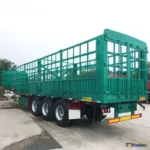
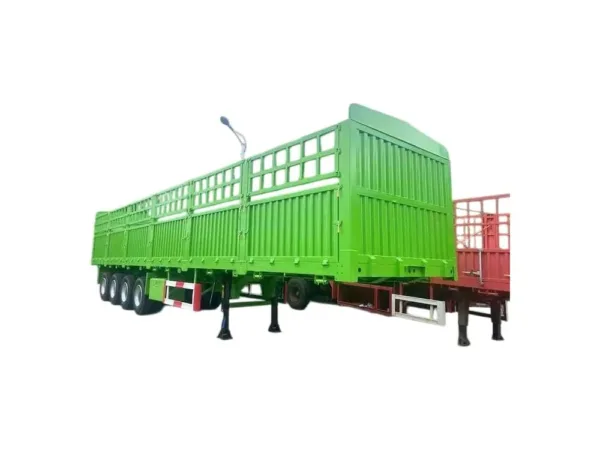
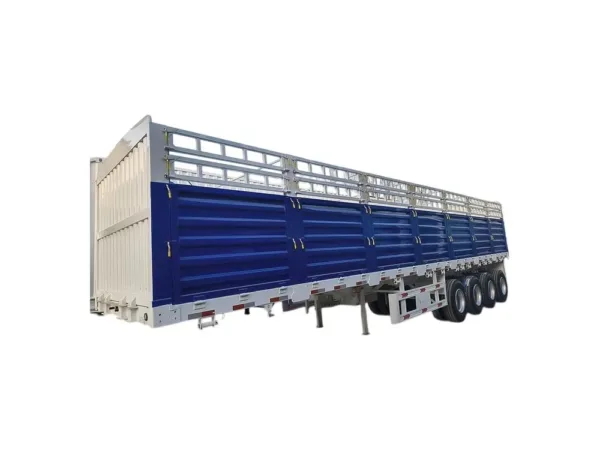
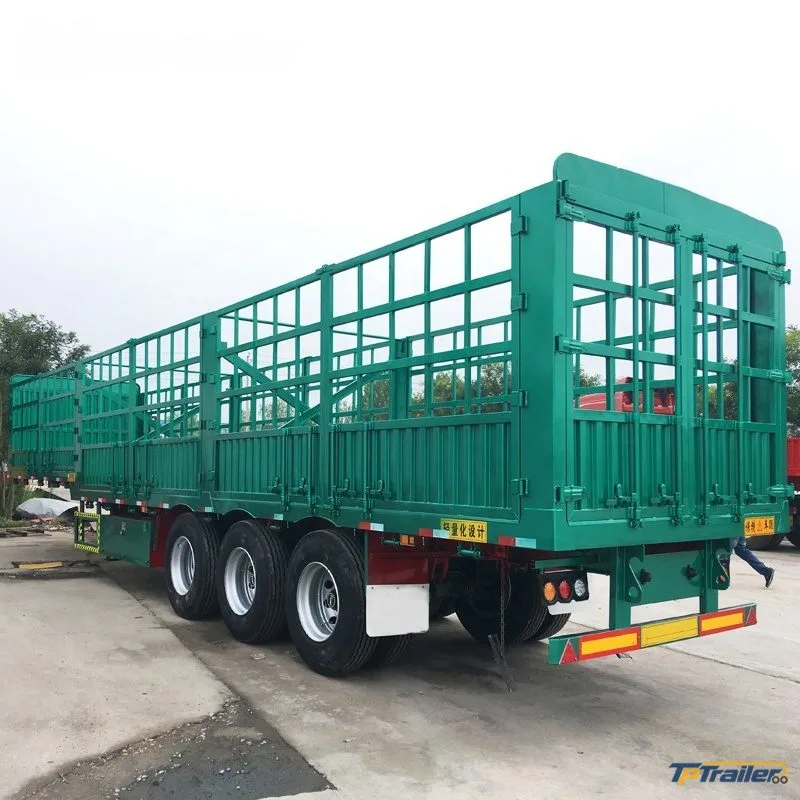
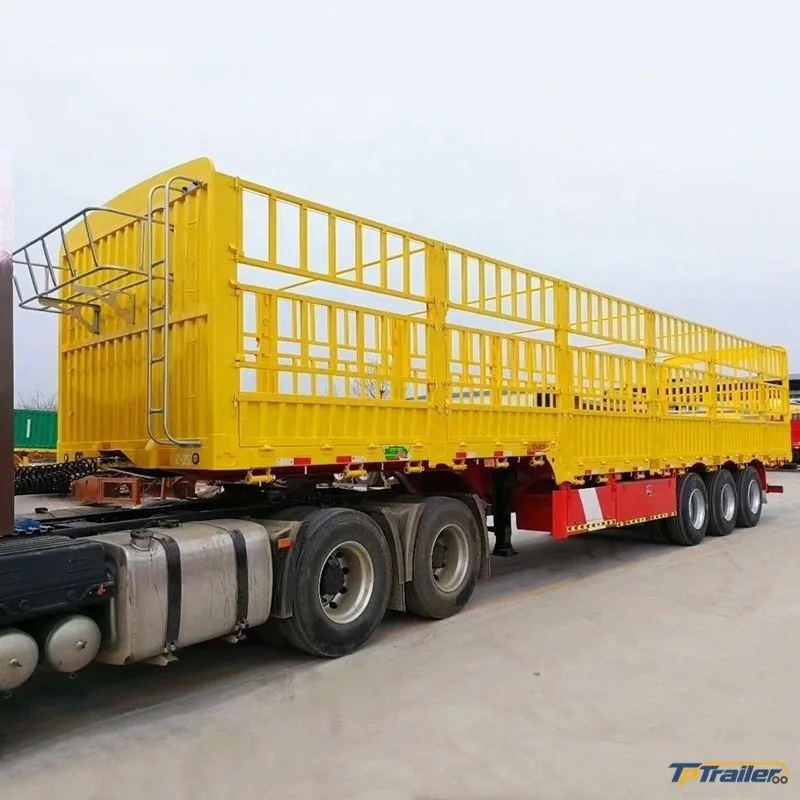
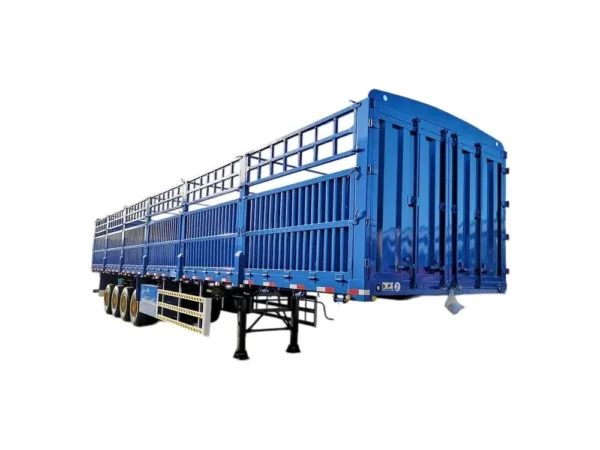
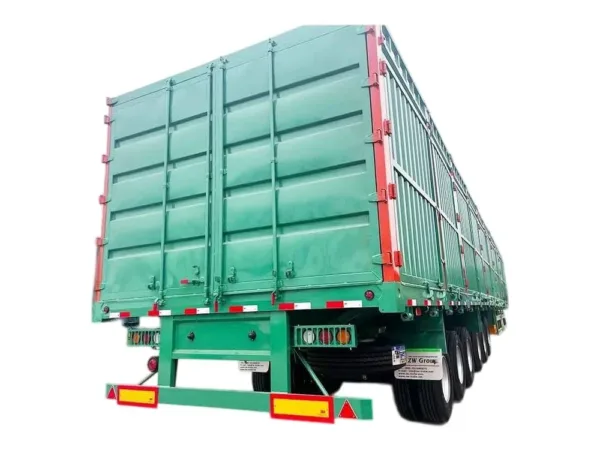
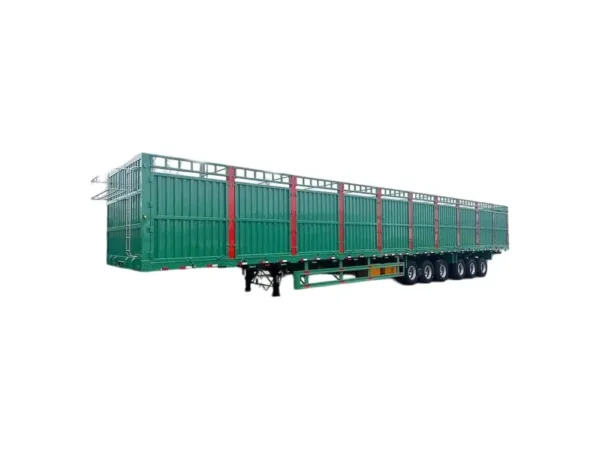
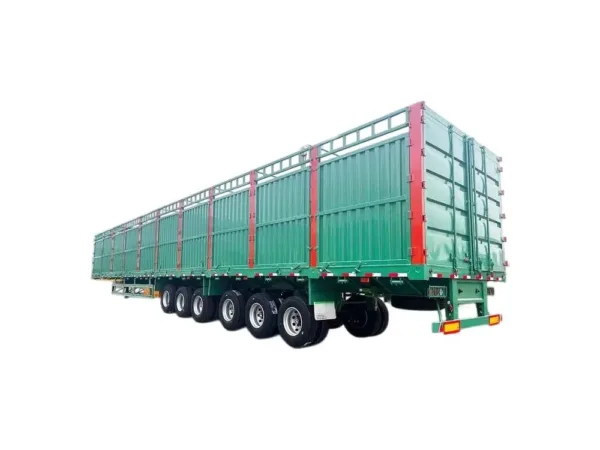
The fence semi trailer is a three-axle steel cargo transport unit built for hauling that needs walls you can see through and a deck you can load from any side. ZW Group supplies it with a stake fence body on a straight beam chassis, aimed at fleet operators and freight contractors moving livestock, bagged goods and general cargo on mixed road conditions. Its strongest argument is structural honesty: a mild alloy main beam welded under automatic submerged arc processes, a mechanical suspension that any workshop can service, and a tare weight that leaves most of the rated payload free for revenue freight. You get a working truck, not a showpiece.
Table of Contents
Why It Works On Site
Rated load capacity of 40T to 80T gives the operator a clear band to plan against. Light bagged cargo sits at the low end and keeps the axle group comfortable; dense loads such as sand, cement or steel billets run higher. You match the trailer to the freight you actually carry, so the fence semi trailer is neither overloaded on heavy runs nor running half empty on light ones.
The I shape main beam in 16Mn mild alloy, welded by automatic submerged arc, is what holds the deck flat under repeated point loads. Forklift wheels, cattle hooves and concentrated pallet stacks all press on the same few spots. A continuous machine weld keeps the web and flange consistent along the length, which is the difference between a deck that stays true and one that develops sag.
The 10/10/10 leaf spring suspension spreads load across the three axles and absorbs the potholes and unpaved shoulders that fence routes often include. Leaf springs are repairable in the field with basic tools, so a broken leaf does not park the fence semi trailer for a week waiting on a specialist part.
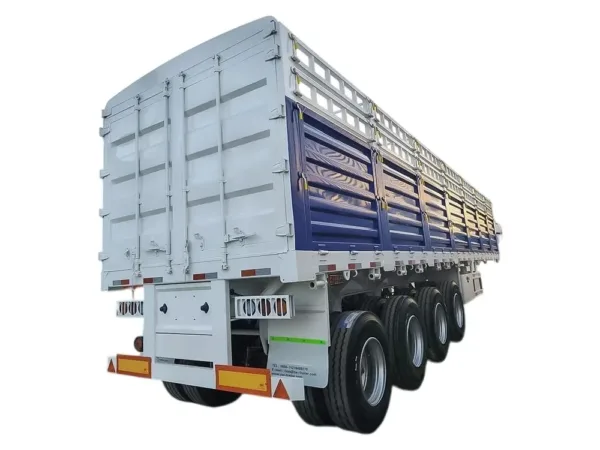
Twelve tires across the axle group lower the ground pressure per wheel and give the driver margin when one position is damaged. The operator can limp to the next town instead of blocking a lane. Multiple tire sizes are offered so the buyer can match what the rest of the fleet already stocks.
The standard 30 ton landing gear lets a loaded trailer be uncoupled and left standing while the tractor works elsewhere. That matters when a fence semi trailer doubles as a storage buffer at a collection point, holding livestock or bagged stock until the next haul is ready.
The 2 inch or 3.5 inch king pin option means the trailer couples to the tractors the buyer already runs. Fleets with mixed tractor ages avoid adapters and mismatch risk, and a replacement tractor can be assigned without checking the fifth wheel specification first.
Where It Is Used
Livestock movement is the most familiar duty for a fence semi trailer. Cattle, goats and sheep load through the rear and stand behind a stake fence that lets air move through the body, which keeps animals cooler on long runs and lets the driver see the load from the cab mirror. The open slats also let handlers check the herd at a stop without climbing into the body.
Because the fence panels are structural steel rather than mesh, animals lean and push against them without deforming the side. Operators running regular collection routes between grazing areas, holding grounds and markets use the same trailer for feed sacks and water tanks on the return leg, so the asset earns on both directions of the trip.
General cargo work is the second home for this trailer. Bagged grain, cement, fertiliser, building blocks and timber all load onto the flat deck and are held by the stake fence, which stops pallets and sacks from sliding off the edge on crowned roads. The open top lets a loader crane or forklift place loads from above or from the side, saving the time a closed box body would cost.
On regional routes that mix tarmac with gravel and dirt sections, the mechanical suspension and the axle spread keep the fence semi trailer stable when the surface breaks up. Construction suppliers, agricultural traders and freight contractors use it as a flexible unit that does not need a dedicated dock or a covered yard to be productive.
Choosing The Right Spec
Load capacity band. The 40T to 80T range is the first decision. A buyer hauling light, bulky freight such as hay, empty containers or bagged feed can work at the lower end and keep tire and spring wear down. A buyer moving dense cargo should plan at the upper end and check that the tractor and route bridges match. Do not pick the top of the band for light work and pay for capacity you never use.
Wheel base options. The two listed wheel base arrangements differ in how the load sits over the axle group. The longer setting suits operators who want weight further forward for stability with tall livestock loads; the shorter setting tightens the turning circle for yards and market access. Match the choice to the tightest place the fence semi trailer must manoeuvre, not to the longest open road it will see.
Tire and king pin selection. Tire sizes are offered across the 11.00 and 12.00 families in both bias and radial construction, so the sensible choice is the size the buyer’s workshop already stocks and fits. The king pin choice is a coupling question: 2 inch for lighter tractors, 3.5 inch where the fleet runs heavier prime movers. Getting both right at order time avoids a trailer that sits idle for want of a matching part.
Suspension and tare weight. The mechanical suspension is the simpler, more repairable option and suits operators working far from dealer support. With a tare weight around eight tonnes, the fence semi trailer leaves a large share of its rated capacity for payload. Buyers comparing against heavier bodies should weigh the payload gain against the routes and loading methods they actually use.
Customisation Before Delivery
Axle configuration. The fence semi trailer is offered with a three-axle layout as standard, and the axle count is fixed at order confirmation. Buyers moving dense loads should settle the axle arrangement before the build starts, because the running gear determines how the load is spread across the road. Confirm the configuration in writing so the specification sheet matches what is delivered.
Deck length and wheel base. Two wheel base options are listed for this fence semi trailer, and the deck length follows the chassis layout chosen. Tell the sales team which option suits the cargo and the routes. The choice is locked in at order confirmation, so measure the loading area you actually work with before signing off.
Suspension and leaf springs. Mechanical suspension with a ten-leaf spring pack is the listed setup for this fence semi trailer. If your routes mix rough tracks with highway running, discuss the spring specification with the sales team at quotation. Suspension choice affects ride height and how the trailer tracks when empty.
Tyres and rims. Several tyre sizes are available for the fence semi trailer, including tubed and tubeless patterns in the listed size range. The tyre and rim combination is selected at order confirmation. Match the tyre to the surface you run on most, and keep the spare set consistent with the fitted size.
King pin and landing gear. The king pin is offered in two sizes to suit the tractor in your fleet, and the landing gear is the standard rated unit. Confirm the king pin size against your fifth wheel before the order is placed. A mismatch here is the most common reason a new fence semi trailer cannot be coupled on arrival.
Fitting And Installation
Fitting starts at the fifth wheel. Check that the king pin size ordered matches the coupling on your tractor, and inspect the mounting plate for wear before the fence semi trailer is backed under. Confirm the landing gear sits clear of the ground when raised and that the crank turns freely. Where the trailer carries a stake fence, check that the fence panels and posts are seated in their pockets and that the locking pins are present. No torque values are stated in the specification, so follow the workshop manual for your tractor and the fasteners supplied with the trailer. If the input gives no fitment drawing, a fitment drawing is confirmed at quotation instead of being assumed on site.
A wrong size costs downtime that no schedule absorbs. A king pin that does not match the fifth wheel leaves the fence semi trailer parked while a replacement is sourced. A tyre size that differs from the rest of the fleet means a spare that fits nothing else. Hose and cable routing is the other point to check: run the lines so they clear the landing gear and the spring packs through the full range of articulation. Route them away from sharp edges and hot surfaces, and secure them at intervals so they do not sag onto the road. Confirm the electrical connection works before the first loaded run, and test the brakes on a level surface.
Service Life And Maintenance
Spring packs and hangers. The leaf springs and their hangers take the first punishment on a loaded fence semi trailer. Inspect for cracked leaves, shifted clips and worn bushings at every service. The ten-leaf spring pack is a consumable in heavy haulage, so keep the mounting hardware checked and replace worn bushings before they oval the hanger holes.
Tyres and wheel ends. Tyres wear fastest on the trailer axles that carry the most load. Check inflation cold, look for uneven tread wear and inspect the wheel nuts for movement. The listed tyre options all need the same discipline: correct pressure, matched pairs on an axle, and a spare kept at the same size as the fitted set.
Main beam and welds. The I-shape main beam is welded from mild alloy by automatic submerged arc welding. Walk the chassis at each service and look for cracks at the crossmember joints and around the spring hangers. A fence semi trailer that works rough roads should have its welds checked more often, and any crack dressed and repaired before it spreads.
Stake fence and panels. The fence and stake pockets are the working surfaces that see the most handling. Check posts for bending, pins for loss and panels for loose fixings. Loads that press against the fence put stress on the pockets, so inspect the welds where the pockets meet the deck and straighten bent stakes before they tear the surrounding steel.
Landing gear and king pin. The landing gear and king pin are the coupling points that decide whether the fence semi trailer stays in service. Grease the landing gear screw and check the leg for bending. Inspect the king pin for wear and the mounting plate for cracks. Keep the fifth wheel lubricated and confirm the coupling locks fully before every trip.
Packing And Container Loading
A fence semi trailer ships as a complete unit or in a knocked-down configuration, depending on how the order is confirmed at quotation. Steel surfaces receive protection against sea air before dispatch. Stake panels and fence sections are bundled so they do not rub against the frame. Small fittings, pins and fasteners go into marked boxes fixed to the structure. The buyer should ask the supplier to photograph the loaded unit before the doors close, so the packing method is documented.
Nesting and stacking depend on the configuration and the container type. A fence semi trailer does not nest like a small component; the main beam, suspension and landing gear set the footprint. Loading plans are confirmed per order, and the buyer should request the loading diagram before shipment. On arrival, check the stake fence for bent uprights, inspect the main beam welds, confirm the tire count and verify the king pin size against the order. Report any transit damage before unloading.
Common Mistakes Buyers Make
Wrong king pin size. The fence semi trailer is offered with more than one king pin option, and a mismatch with the tractor coupling blocks use on day one. Check the fifth wheel on the towing tractor and state the required king pin size in the order. Confirm it in writing on the quotation before the build starts.
Ignoring the wheel base. Two wheel base options exist, and the choice affects how the trailer sits behind the tractor. Measure the turning area and the route the fence semi trailer will travel, then confirm the wheel base in the order. Do not assume the standard layout fits every operation.
Underestimating tare weight. The tare weight is stated for the unit, and it reduces the payload available under the load capacity. Compare the tare weight against the gross combination weight allowed on the routes the fence semi trailer will run. Ask for the figure in writing and check it against the tractor rating.
Tire specification mismatch. Several tire sizes are listed, and the wrong choice affects axle loading and spare parts stock. Decide the tire size and the number of tires before ordering, then confirm the specification on the fence semi trailer quotation. Keep the same size across the fleet where possible.
Assuming livestock fitment. A stake fence trailer is not automatically a cattle carrier. Check the fence height, panel spacing and floor arrangement against the animals to be moved. If the fence semi trailer will carry livestock, state the requirement at enquiry so the stake layout is confirmed before production.
Buyer Questions
How is the fence semi trailer protected for sea freight?
Steel surfaces are protected before loading, and the stake fence is bundled to prevent movement. Fasteners and small fittings are boxed and fixed to the frame. Ask the supplier to confirm the protection method and to send photographs of the loaded fence semi trailer before the container doors close. On arrival, inspect the stake panels for bends, check the main beam welds and confirm that all listed fittings are present before signing the delivery receipt.
Can more than one unit be loaded in a single container?
Loading quantity depends on the trailer configuration, the container type and the shipping method. The fence semi trailer is a large unit, so the number per container is confirmed at quotation. Ask for a loading diagram with the quotation and check the dimensions against the container internal size. If the order is large, ask whether a knocked-down configuration is possible, and confirm what assembly is required on arrival.
What should the buyer confirm before production starts?
Confirm the king pin size against the towing tractor, the wheel base for the intended routes and the tire specification for the fleet. State the load capacity required and the cargo type, especially if the fence semi trailer will carry livestock. Ask for the tare weight and the suspension type in writing. Once these are agreed, request a written order confirmation that lists every property before the build begins.
To receive a quotation for the fence semi trailer, send the required length, the number of axles and the quantity you plan to order. Add the king pin size, wheel base, tire specification and intended cargo so the configuration can be confirmed in writing.
We use cookies to enhance your browsing experience, serve personalized content, and analyze our traffic. By clicking "Accept All", you consent to our use of cookies. Privacy Policy
Cookie Preferences
Required for the website to function properly. Cannot be disabled.
Help us understand how visitors interact with the website (Google Analytics).
Used to deliver personalized ads and measure ad campaign effectiveness.



















Write a Review