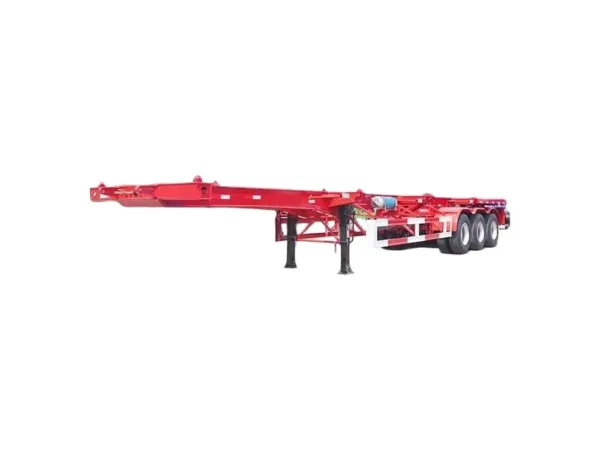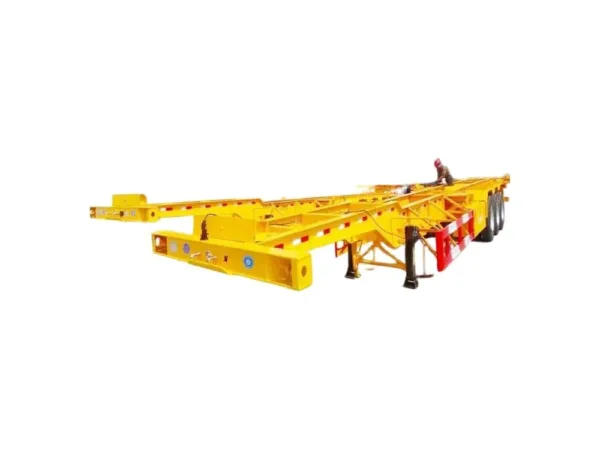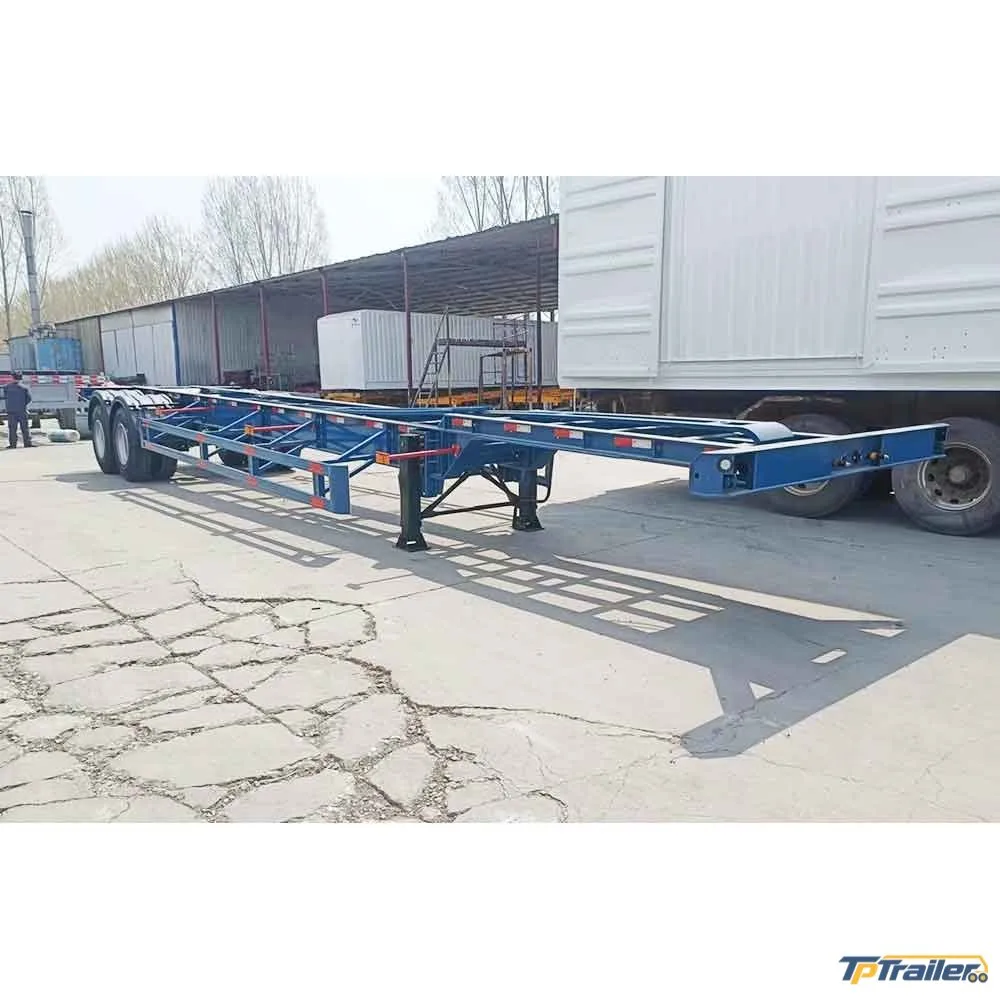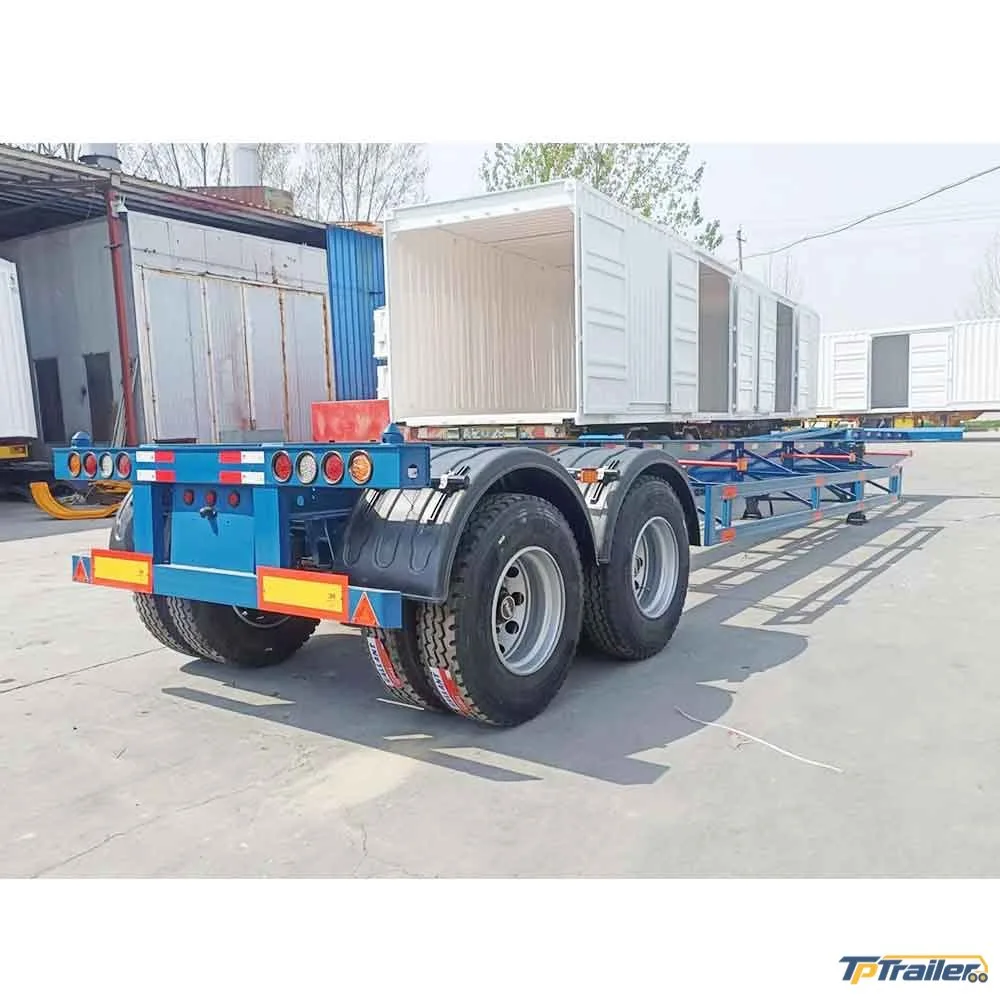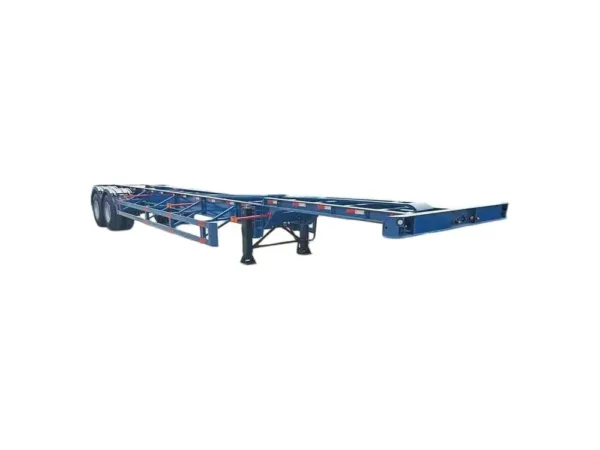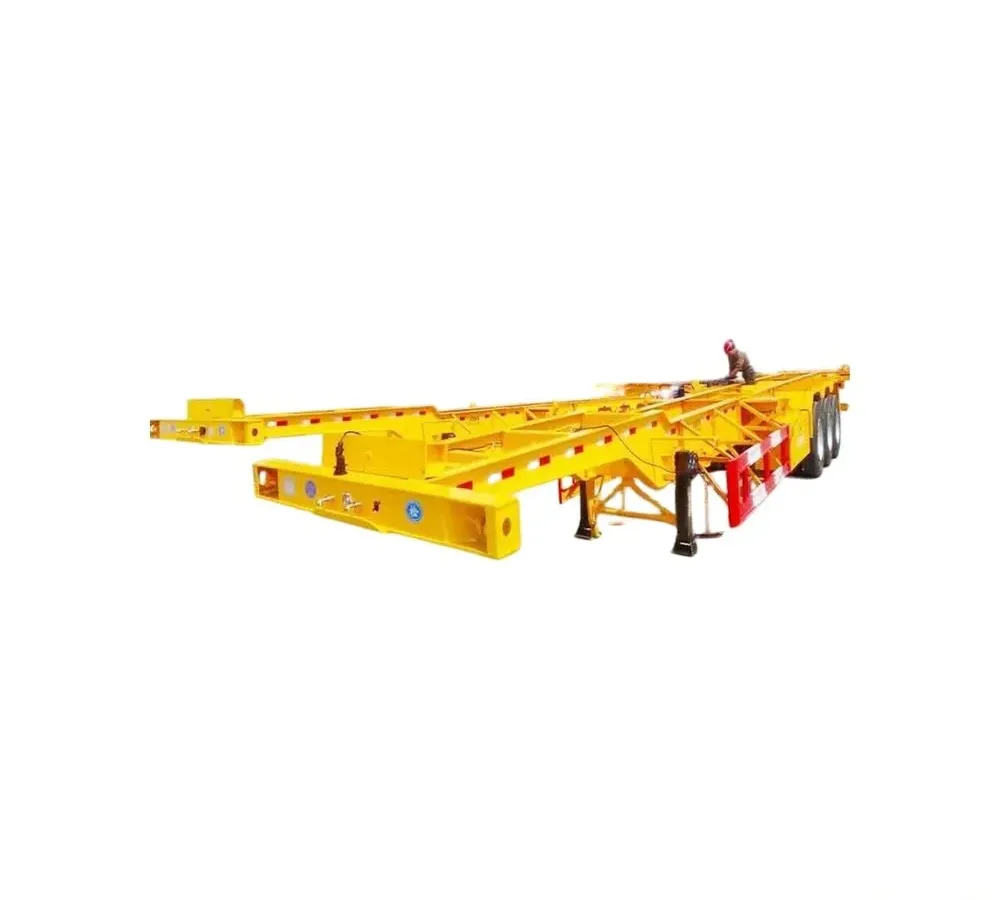
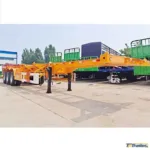
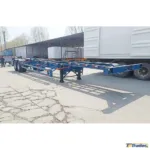
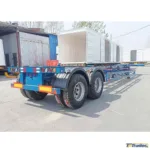
Tri Axle Skeletal Semi Trailer 60 T Steel Container Chassis

Skeletal truck trailer with 60 T load capacity and steel chassis. Tri axle container chassis trailer for 20ft containers; request a quote for your fleet.
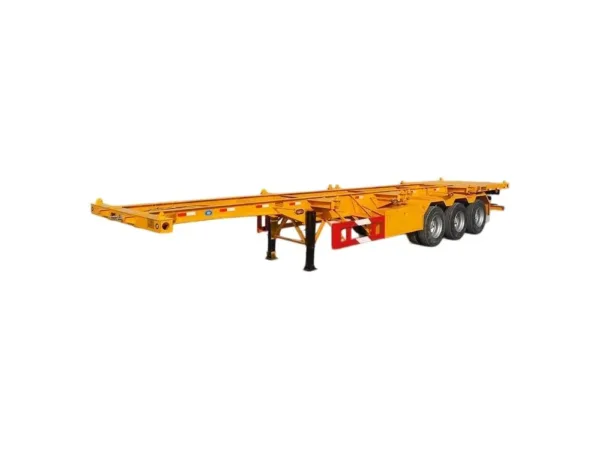
60 T 3
FOB Reference Price US$5,000-8,000 Final price confirmed by inquiry

Certifications

  • ISO 9001

Key Features

  • Steel chassis built for 20ft container haulage
  • 60 T load capacity for heavy container loads
  • Tri axle configuration for stable load distribution
  • Common mechanical suspension for simple servicing
  • Automatic air brakes for safer stopping
  • 24v electrical system for trailer lighting
  • 10 Ton tare weight keeps payload efficient
Load Capacity 60 T
Type Semi-Trailer
Max Payload 60 tons

The skeletal truck trailer is a steel-chassis container carrier built to move loaded ISO boxes between ports, depots and railheads without a flatbed deck in the way. It suits fleet operators, freight forwarders and container haulage contractors who need a dedicated chassis rather than a multi-purpose platform. The strongest reason to choose it is the bare-frame design: twistlocks lock a container straight onto the rails, so loading is faster, tare weight stays down and the cargo sits low. This 20ft tri-axle unit pairs a welded steel main beam with a proven running gear package, which keeps it working on routine box shuttles rather than sitting idle between jobs.

Why This Skeletal Truck Trailer Works On Site

  • Steel chassis and 60 T load capacity. The welded main beam and cross members carry the rated load through the frame rather than the deck, so a fully loaded box sits stable on the rails. That matters on yard work where the same skeletal truck trailer is loaded and tipped many times a day and the frame takes repeated point loads at the twistlocks.
  • Two to four axles. The buyer picks the axle count that matches the payload and the roads the unit will run on. A lighter configuration keeps tare down for port shuttles, while the heavier setup spreads weight across more tyres for long highway legs, letting one container skel trailer cover several duty cycles.
  • Automatic air brakes. Air braking gives progressive, predictable stopping under a loaded container and couples to the tractor unit through standard air lines. On a skeletal truck trailer working dock queues and gate ramps, that control is what keeps the box level and the tractor stable during repeated slow-speed stops.
  • 24V electrical system. The standard commercial voltage runs the trailer lights, markers and ABS feed from the same supply as the tractor. Fitters already know the wiring, so a lamp fault is a quick roadside fix rather than a diagnostic session, keeping the unit on the road.
  • Kingpin in 50# or 90#. The kingpin choice lets the operator match the trailer to the fifth wheel already in the fleet. A unit that couples cleanly to existing tractors avoids a mixed coupling inventory and lets any available tractor pull any chassis without adapters or swap-over time.
  • Tare weight around 10 Ton. A lean bare frame leaves more of the legal gross combination weight for the box itself. That headroom is the difference between carrying a full container and leaving part of the payload behind, and it shows up directly in fuel and trip economics for a container skel trailer.

Where It Is Used

The core job is the port-to-depot shuttle. A skeletal truck trailer backs under a loaded 20ft box at the quay, the twistlocks close, and the unit runs the short leg to a container freight station or an empty park. These trips repeat all day, often over the same route, so a bare-frame chassis with fast locking and a low tare keeps turnaround short.
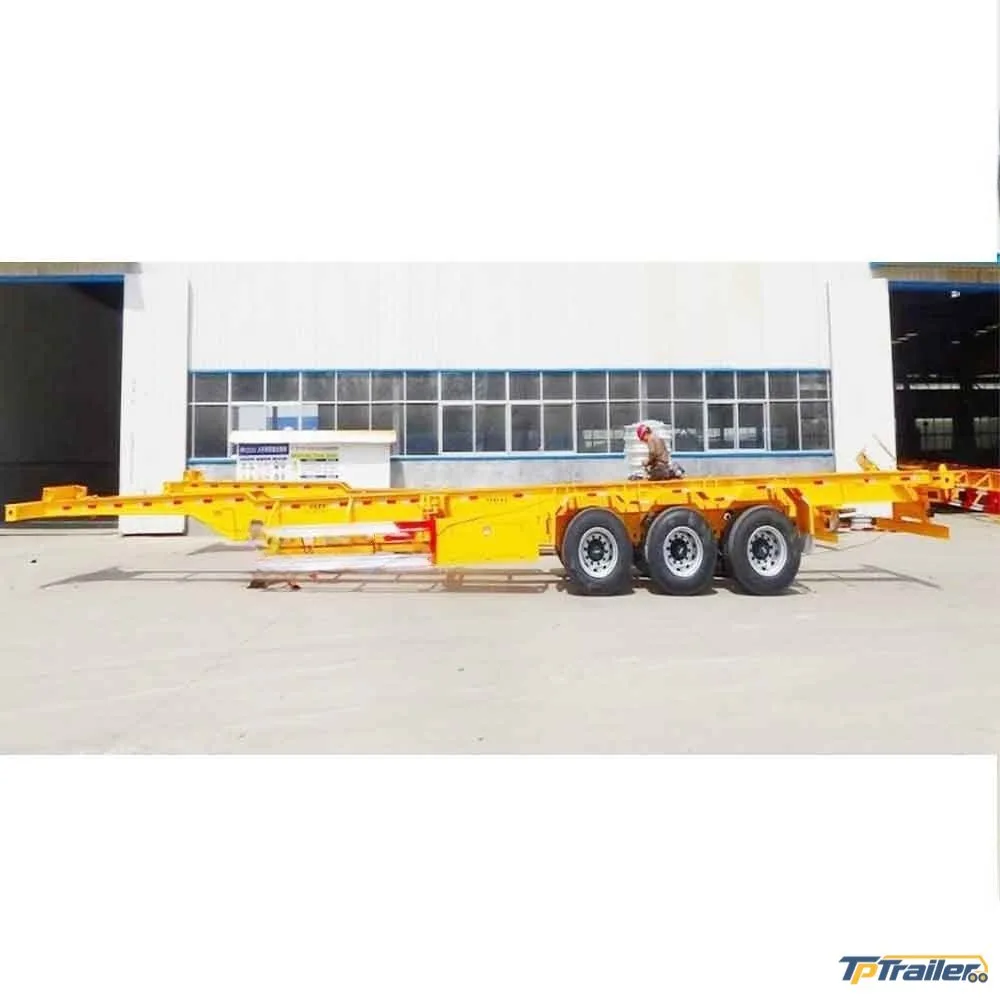
skeletal truck trailer - detail 1

The same container chassis trailer then handles the return leg with an empty box, which is where the light frame and simple steel structure pay off. Operators running this loop care less about deck features and more about how quickly a box can be locked, moved and released, which is exactly what the skeletal layout is built for.

The second familiar duty is the railhead and inland transfer run. Here a container skel trailer collects boxes that arrived by train and delivers them to warehouses, or feeds export boxes back to the terminal before cutoff. Loads are mixed: general freight, palletised goods, bagged materials and machinery, all travelling inside standard containers rather than on an open deck. Because the cargo is sealed in the box, the trailer only has to carry the container safely, and the steel chassis with its rated load capacity does that without the extra weight of a platform. Fleets also use the skeletal truck trailer for one-way repositioning and depot balancing, where an empty chassis is moved to where the next box is waiting.

A third use is the short-sea and feeder port network, where boxes land at a smaller terminal and need to reach a depot inland. A skeletal truck trailer that can take a 20ft box directly from the quay avoids a double handling step that a flatbed would require, and the low centre of gravity helps on the winding access roads that often surround older port estates. Operators on these runs value the container skel trailer because the same unit can carry a full import box one way and an export box on the return, with no change of equipment.

Choosing The Right Spec

  • Axle count for the duty cycle. The range of two to four axles maps to how the unit will be used. Fewer axles suit short, frequent yard and port shuttles where tare and manoeuvrability matter most. More axles suit longer highway legs and heavier boxes, where spreading the load across more tyres keeps each axle within limits and steadies the skeletal truck trailer at speed.
  • Kingpin size for the tractor fleet. The 50# and 90# options are a coupling decision, not a performance one. Match the kingpin to the fifth wheels already fitted to the tractors that will pull the container chassis trailer. Keeping one standard across the fleet means any tractor can take any chassis, which simplifies dispatch and avoids a unit sitting idle because the wrong tractor is on shift.
  • Tyre specification for the route. The 12R22.5 vacuum tyre and 11.00R20 options differ in size and in how they suit the surfaces the trailer meets. The larger fitment is common on highway work where mileage and stability dominate, while the alternative suits mixed routes and local conditions. Choose the size your workshop already stocks so a container skel trailer is not waiting on a tyre.
  • Painting and finish. Painting is optional, so the buyer decides how much corrosion protection the operating environment demands. Coastal ports and humid yards justify a full paint system on the steel chassis; dry inland depots may accept a simpler finish. This is a cost-versus-service-life call on the skeletal truck trailer, and it should follow the climate the unit will actually work in.

Customisation Before Delivery

  • Axle count and axle brand. The skeletal truck trailer can be ordered with a different number of axles to suit the load you carry and the roads you run on. Axle brand is also chosen at order. Both choices change the running gear layout, so they are settled at order confirmation and fixed on the build sheet before production starts.
  • Suspension type. A common mechanical suspension is the standard arrangement on this container chassis trailer. Buyers moving into other duty cycles can raise the suspension question at quotation. The choice affects ride height and axle spacing, so it is locked in with the rest of the running gear rather than changed later on the line.
  • Tyre specification. Two tyre sizes are offered for the skeletal truck trailer, and the size is picked alongside the rim and hub package. Tyre choice is confirmed at order so the spare set, the tool kit and the axle loading all match the trailer that arrives. Mixing sizes after delivery is not advised.
  • Kingpin grade. The kingpin is supplied in a brand option with two rated grades. The grade must match the fifth wheel on the tractor that will pull the container skel trailer. This is confirmed at order confirmation, because the pin is fitted during assembly and swapping it afterwards means workshop time.
  • Painting and finish. Painting is optional on this skeletal truck trailer. A buyer can take the standard finish or specify a paint scheme at order. Colour and coating choice are agreed with the order, so the steel chassis leaves the line in the finish the buyer signed off.

Fitting And Installation

On arrival, the first job is to match the trailer to the tractor. Check the kingpin grade against the fifth wheel on the unit that will pull the container chassis trailer. Confirm the coupling height and the clearance around the pin. The electrical system runs on a 24v circuit, so the tractor socket and the trailer plug must agree before any road test.
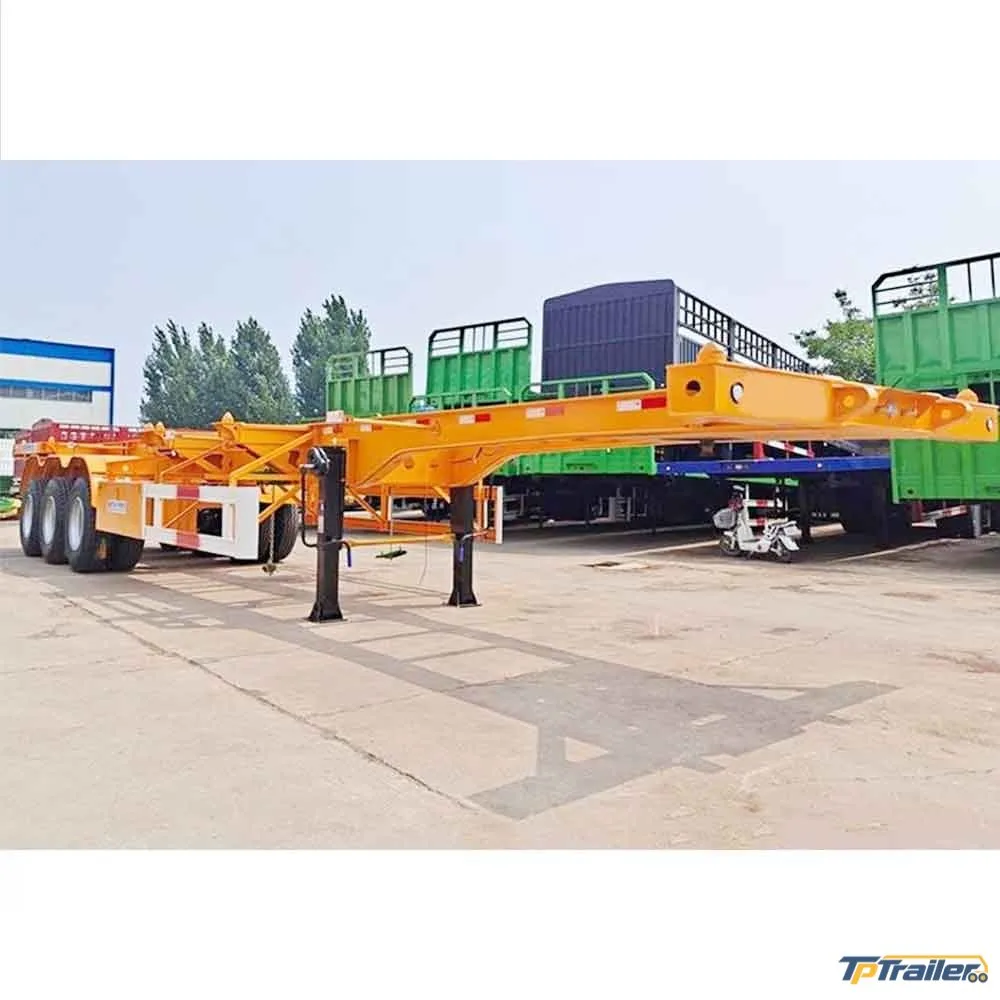
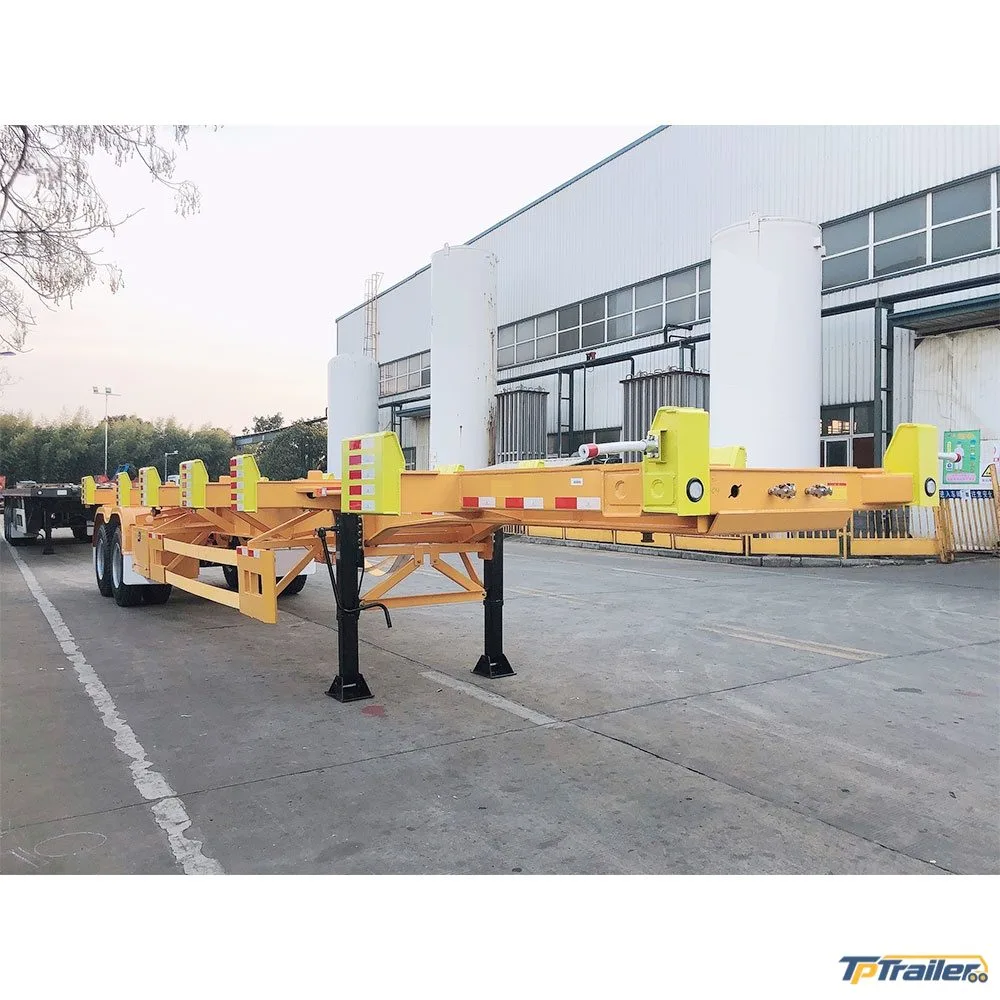
skeletal truck trailer - detail 3
skeletal truck trailer - detail 2

Walk the air lines from the tractor to the brake system and confirm the couplings seat. The automatic air brakes should be checked for hose routing and for chafing against the chassis. A fitment drawing is confirmed at quotation for this skeletal truck trailer, so the buyer knows the mounting points and connection layout before the unit ships. Do not assume a drawing from another trailer will apply.

A mismatch costs downtime, not just a part. If the kingpin grade does not suit the fifth wheel, the container skel trailer cannot be coupled safely and stays parked. If the electrical circuit does not match, lights and the 24v feed fail at the first inspection. A tyre or rim package that does not match the spare set leaves the operator without a usable spare on the road. Checking these points against the confirmed order before the skeletal truck trailer enters service is cheaper than fixing them at a workshop. Keep the order confirmation and the fitment drawing together. They are the reference for every later inspection.

Service Life And Maintenance

  • Tyres and wheels first. Tyres are the fastest-wearing item on any skeletal truck trailer. Inspect tread depth, sidewall condition and inflation on a fixed schedule. Check wheel nut torque and look for cracks around the stud holes. A matched tyre specification, chosen at order, keeps the spare set consistent and makes rotation and replacement simpler across the fleet.
  • Brake and air system. The automatic air brakes deserve a regular walk-round. Listen for leaks, check hose condition and confirm the couplings hold pressure. Look for chafing where lines pass the chassis. On a container chassis trailer, a slow leak is easy to miss until braking performance drops, so put the air system on every pre-trip check.
  • Kingpin and coupling area. Inspect the kingpin for wear and the mounting area for cracks. Grease the pin on schedule and keep the fifth wheel plate clean. The kingpin grade fitted to the skeletal truck trailer must stay matched to the tractor in use. If the trailer is moved between tractors, confirm the coupling before the first trip.
  • Chassis and paint. The steel chassis carries the load, so check for cracks at weld joints and cross-member connections. Painting is optional on this skeletal truck trailer, and the chosen coating protects the steel. Touch up chips and scuffs before rust starts. A maintained finish extends the interval between repaints and keeps inspection easier.
  • Suspension and running gear. The common mechanical suspension has bushings and joints that wear with distance. Inspect them for play and check the axle alignment at service. Confirm the tyre specification still matches what was ordered. A container skel trailer used on rough ground should be checked more often, and any looseness in the running gear should be dealt with before the next loaded run.

Packing And Container Loading

A skeletal truck trailer ships as a bare steel frame, so protection focuses on paint, fittings and exposed steel rather than on boxed goods. The chassis is cleaned before dispatch, and painted surfaces are covered where handling equipment makes contact. The kingpin area, brake chambers and electrical connectors are wrapped or capped so dust and salt air do not reach them during the voyage. Loose items such as the spare tyre carrier parts and small hardware are packed separately and secured to the frame. Buyers should ask how the finished skeletal truck trailer is protected at the contact points, because a frame that arrives with scuffed paint is a cost even when nothing is bent.

A container chassis trailer is loaded by driving or lifting it into or onto the ship, and the method decides the freight bill. These units are not designed to be nested like small parts, and stacking bare frames is not normal practice because the suspension, axles and landing gear sit below the deck. Space is saved by shipping a single unit on deck or by loading several units in one vessel booking rather than by stacking. Ask the supplier to confirm the loading plan in writing. For a skeletal truck trailer order of more than one unit, confirm whether each frame is shipped separately and how the axles are supported during the crossing.

On arrival, inspect before signing the delivery note. Check the frame for bends at the gooseneck and cross members, and look for paint damage on the main beams. Confirm the axle brand and count against the order, and verify the tyre specification and the kingpin size fitted. Test the electrical system and the automatic air brakes before the trailer enters service. A buyer receiving a container skel trailer should photograph any damage and record it on the carrier’s paperwork. Verifying these points early protects the warranty position and avoids disputes about who handled the unit.

Common Mistakes Buyers Make

  • Ordering the wrong kingpin size. The kingpin brand and size must match the tractor that will pull the trailer. A mismatch means the unit cannot be coupled safely and may need rework before use. Check the fifth wheel on your tractor and state the required kingpin size on the order. Confirm it in writing before the skeletal truck trailer is built, because changing it after assembly is costly.
  • Ignoring the axle quantity. The quantity of axle ranges across the range, and the load capacity depends on the configuration chosen. A buyer who orders a lighter configuration for heavy work will overload the frame. Decide the axle count from your actual payload and route, then check it against the load capacity on the quotation for the skeletal truck trailer before you confirm.
  • Overlooking the suspension type. The suspension listed is common mechanical, which suits standard road work. Buyers who assume a different suspension will be fitted discover the error at delivery. Confirm the suspension type on the specification sheet and match it to your operating conditions. Ask for the suspension to be stated on the order for the container chassis trailer so there is no ambiguity.
  • Not checking the tyre specification. Tyre size and type affect axle load and spare part availability in your fleet. Ordering a size your workshop does not stock creates downtime. Confirm the tyre specification against your existing fleet and state it clearly. A buyer should also confirm whether a spare is included, since the quotation for a skeletal truck trailer may not list one.
  • Skipping the tare weight check. The tare weight affects how much payload the tractor can legally pull. Buyers who compare only the load capacity miss this. Ask for the tare weight on the quotation and check it against your gross combination limits. For a container skel trailer used on weight-restricted routes, this single check prevents an expensive mismatch.

Buyer Questions

Can the trailer be customised for my fleet?

Customisation is possible within the options listed in the input. The painting is optional, the kingpin is offered in two sizes, and the axle quantity can be set across the range. Buyers should list every requirement on the enquiry: paint colour and finish, kingpin size, axle count, tyre specification and suspension type. Anything outside those options should be raised as a question and confirmed at quotation. Do not assume a custom feature is included; ask for it in writing on the order for the skeletal truck trailer.

What should I check before confirming the order?

Confirm the load capacity, tare weight, axle quantity and tyre specification against your operating needs. Check the kingpin size against your tractor fleet and the suspension type against your routes. Ask how the electrical system and brake system are configured, and confirm the painting option if appearance matters. Request the full specification sheet and compare it line by line with the quotation. Any point not stated should be confirmed at quotation before you place the order for the container chassis trailer.

How is the price structured for different quantities?

The price depends on order quantity, with lower unit prices at higher volumes. The tiers shown on the page apply to the stated quantities, and the price range reflects those tiers. Buyers should state the exact quantity they intend to order so the correct tier is applied. If your volume falls between tiers, ask how the quotation will be calculated. Price, payment terms and delivery arrangements should all be confirmed at quotation for the skeletal truck trailer.

To receive a quotation, send the trailer length, the axle count you need, and the quantity you plan to order. Include your kingpin size, tyre specification and any painting requirement. State your destination port so the loading plan can be confirmed. With those details, the supplier can match the skeletal truck trailer to your fleet and return a written offer.

Explore more skeletal truck trailer in this range.

Load Capacity 60 T Type Semi-Trailer
Max Payload 60 tons Place of Origin China (Mainland)
Use Truck Trailer Material Steel
Size 11200 × 2500 × 4000mm Dimensions * *

Reviews (0)

No reviews yet — click the Review button on the right to share your experience with this product.
Frequently Bought Together

Inquiry about: Tri Axle Skeletal Semi Trailer 60 T Steel Container Chassis

Fill in the form below and our team will respond within 24 hours.