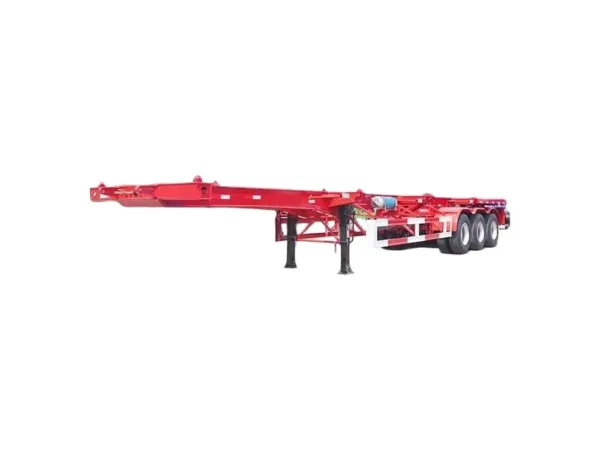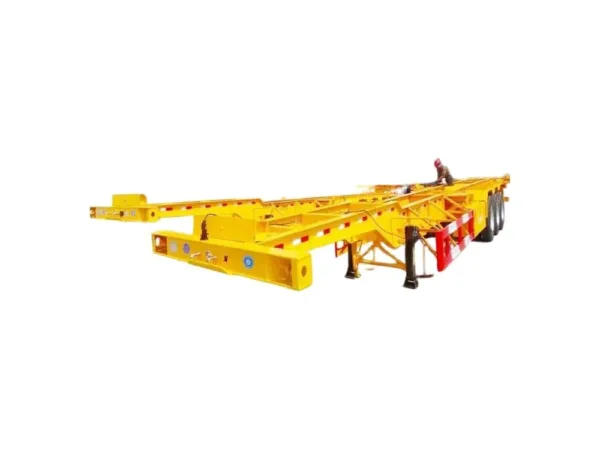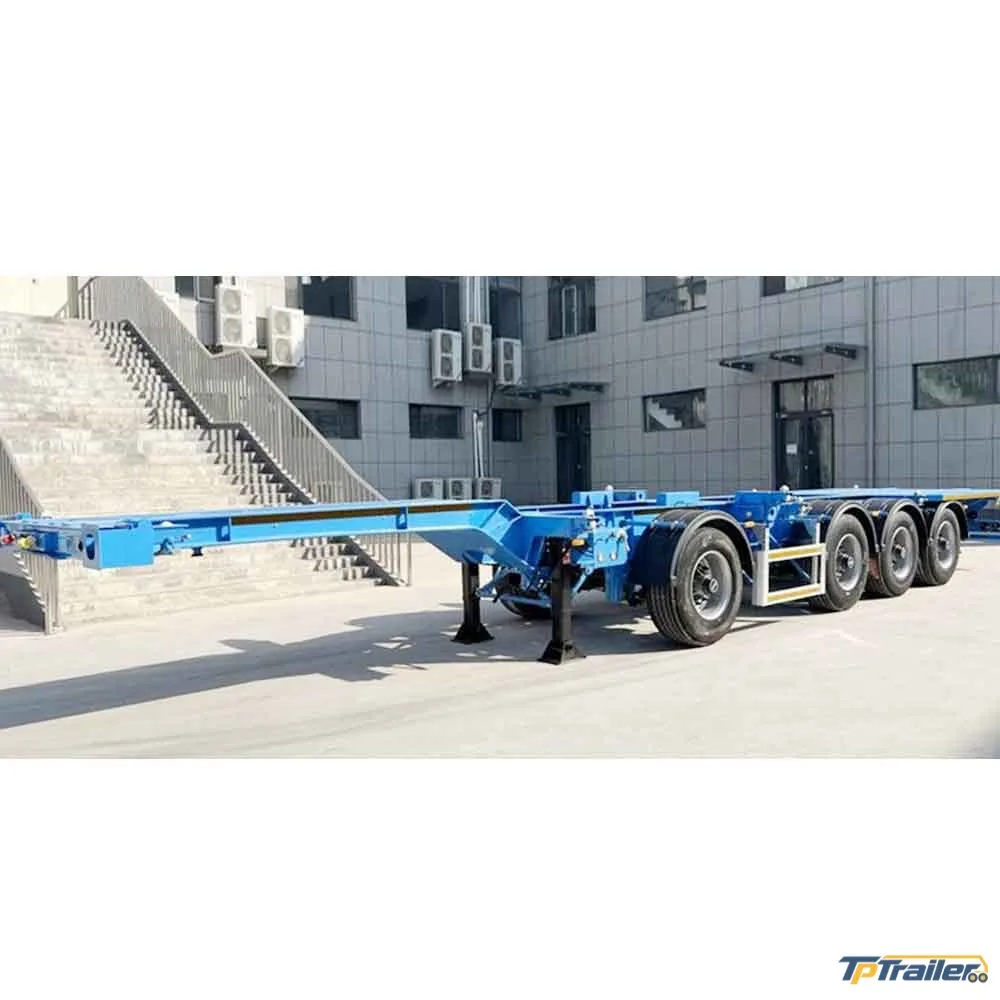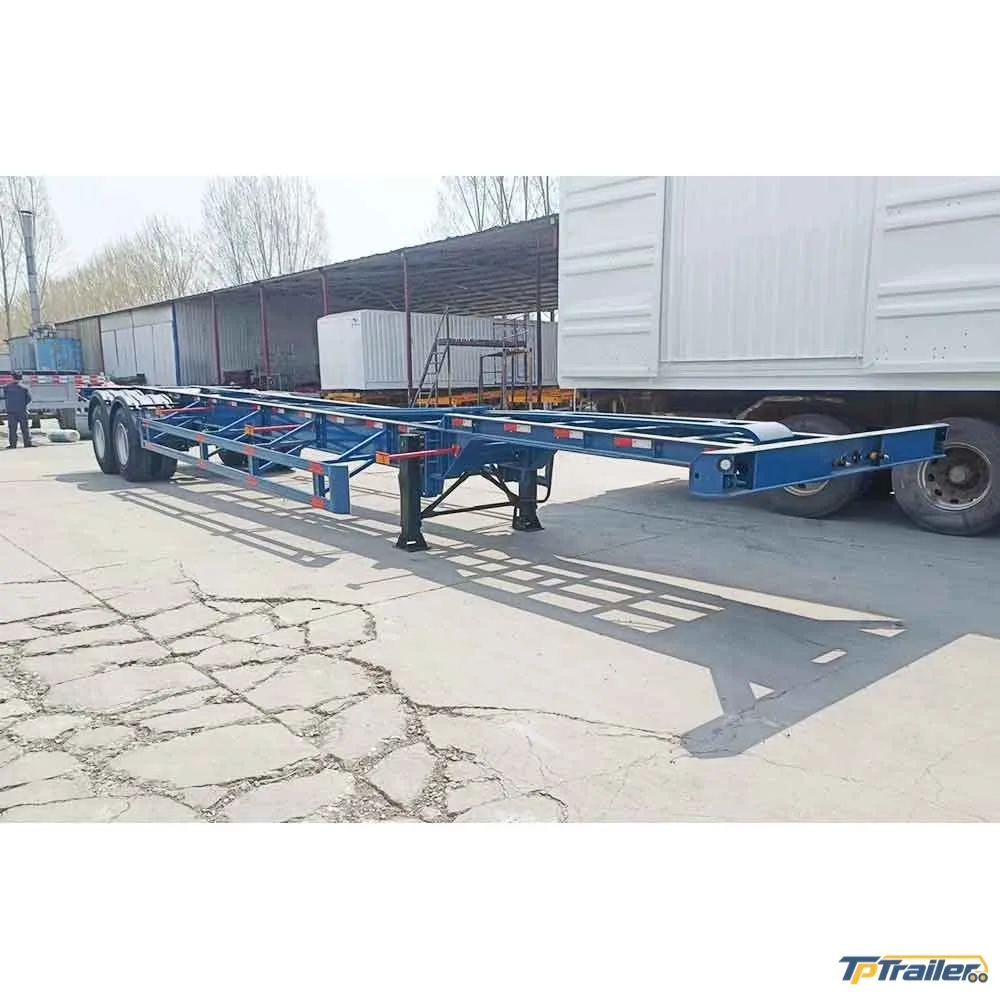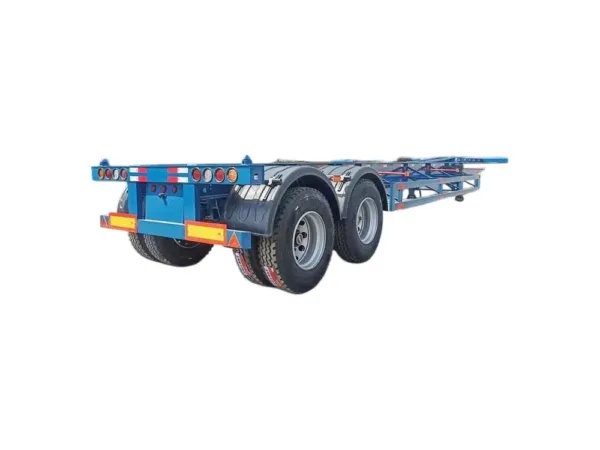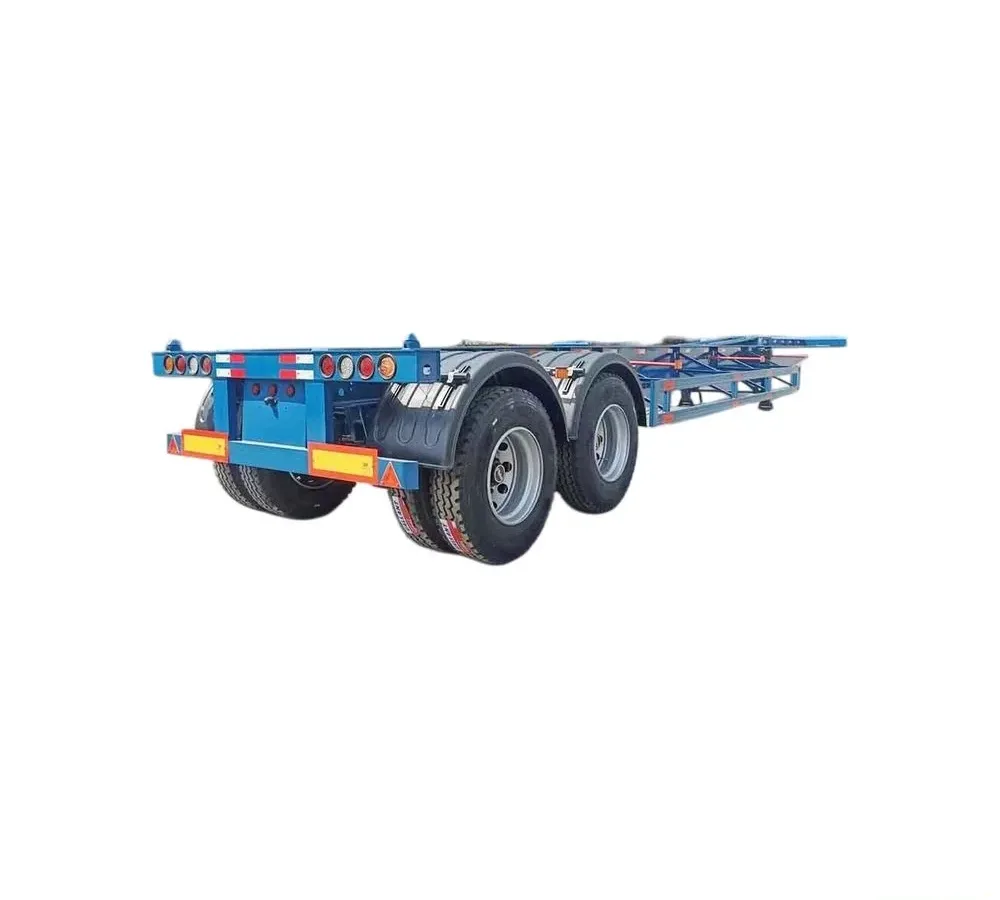
2 Axle 20ft 40ft Skeleton Semi Trailer 40T-60T Container Chassis

Container Skeleton Semi Trailer Truck 20ft 40ft Chassis with 2 or 3 axles and 40T-60T capacity. Steel frame, 12R22.5 tires. Request a quote today.
2
FOB Reference Price US$4,500-6,500 Final price confirmed by inquiry

Certifications

  • ISO 9001

Key Features

  • Steel skeleton frame carries 20ft and 40ft containers on one chassis
  • 2 or 3 axle configuration with mechanical suspension for steady road holding
  • 40T-60T load capacity for heavy container haulage duty
  • 12R22.5 or 11.00R20 tires on a 6800+1310+1310 mm wheelbase
  • 3-5mm diamond plate floor for lasting wear resistance
  • 24v electrical system and 50# 90# kingpin for standard tractor hookup
Dimensions 500 × 500 × 500

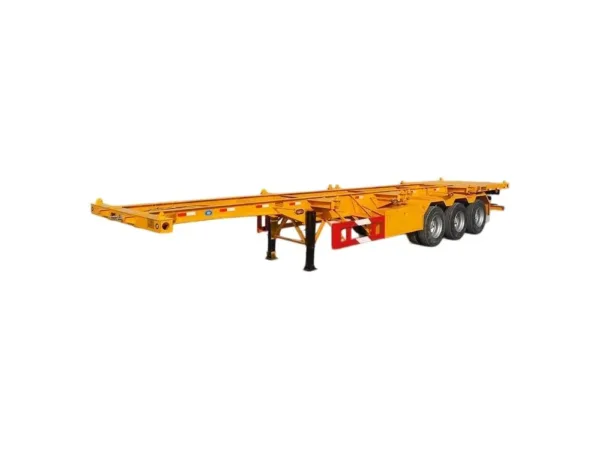
The Container Skeleton Semi Trailer Truck 20ft 40ft Container Chassis Skeleton Semi Trailer is a steel skeletal frame trailer built to carry shipping containers on public roads. It is aimed at fleet operators, freight forwarders and container hauliers running short-sea, port and inland legs. The frame carries the box, the axles carry the load, and everything else stays simple. That simplicity is the strongest reason to choose it: fewer wearing parts, a floor you can inspect at a glance, and a structure a workshop can repair without special tooling. It suits operators who want a predictable chassis for daily container moves rather than a multi-purpose trailer.

Why It Works On Site

  • Axle count matched to the load. The chassis can be ordered with two axles or three, so a fleet running lighter container moves can trim tare weight and tyre cost, while heavier routes take the extra axle. The buyer gets one trailer family across the fleet instead of two different chassis types. That keeps spares, brake parts and driver familiarisation in one place and simplifies scheduling.
  • Rated capacity across the container range. The stated capacity band covers the loaded weights typical of container haulage, so the same Container Skeleton Semi Trailer Truck 20ft 40ft Container Chassis Skeleton Semi Trailer can be assigned to a twenty-foot box in the morning and a forty-foot box in the afternoon. Dispatch does not have to match trailer to box size before releasing a job, which keeps utilisation high on mixed freight.
  • Kingpin options for different tractors. The kingpin is offered in two common sizes, so the trailer can be coupled to the tractor units a fleet already runs without an adapter. That matters when a trailer is shared across depots or pulled by a hired tractor. Coupling is a routine operation rather than a compatibility question, and the fifth-wheel interface stays within the specification the trailer was built to.
  • Mechanical suspension for rough access roads. Mechanical suspension keeps the axle location fixed and the design free of air lines and levelling valves. On port roads, yard tracks and unpaved approaches to a container yard, that means fewer components to leak or fail. The assembly with this setup is easier to inspect during a pre-trip check and cheaper to keep in service.
  • Diamond plate floor for footing and wear. The floor is specified as diamond plate in a light-gauge range, which gives grip underfoot when a driver walks the deck to check twist locks or lashings. It also resists the scuffing that comes from sliding container corners and spreader contact. The deck stays a working surface, not a cosmetic panel, and it is easy to replace locally if a section is damaged.
  • Electrical system built for trailer lighting. The electrical system runs on a common low-voltage trailer supply, so lamps, markers and the connection to the tractor follow familiar practice. Any workshop that handles trailer wiring can maintain the unit, and a failed lamp is a quick swap. That keeps roadworthiness checks short and gets the outfit back on the road.

Where It Is Used

The core job for the Container Skeleton Semi Trailer Truck 20ft 40ft Container Chassis Skeleton Semi Trailer is moving a loaded shipping container between a port or terminal and a warehouse, yard or railhead. The box is lifted on by crane or reach stacker, the twist locks are seated, and the trailer runs the road route to the consignee. Typical cargo is general merchandise, bagged goods, palletised freight and building materials packed into standard containers.
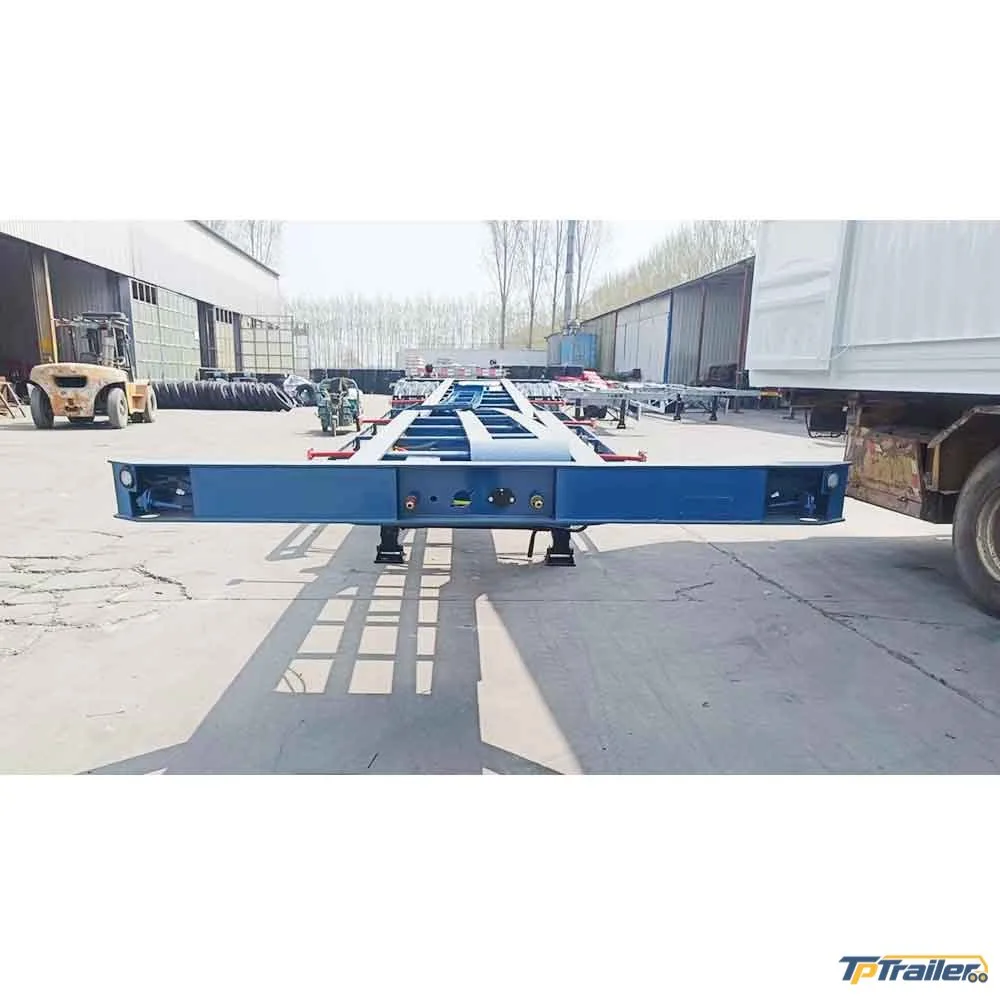
Container Skeleton Semi Trailer Truck 20ft 40ft Container Chassis Skeleton Semi Trailer - detail 1

Routes are usually short to medium distance: terminal gates, ring roads, industrial estates and warehouse parks. Because the frame carries the box rather than a flat deck carrying loose cargo, loading and unloading are crane operations, and the trailer spends its time either moving or waiting in a queue. That pattern suits a simple steel chassis with mechanical suspension and a deck you can walk on.

A second common pattern is the empty and repositioning run. Containers do not move in balance, so hauliers spend part of the week moving empty boxes back to a terminal or between depots. Here the trailer’s tare weight and axle count matter more than payload, and a Container Skeleton Semi Trailer Truck 20ft 40ft Container Chassis Skeleton Semi Trailer with the lighter axle configuration earns its place.

The same unit then handles a loaded forty-foot box when demand returns, so the fleet does not need a dedicated empty-run trailer. Operators also use this chassis for container storage shuttles, where a box is dropped at a site and collected later, and for railhead transfer work where boxes are staged for train loading. In every case the work is the same: pick up a box, secure it, move it, set it down.

Choosing The Right Spec

Specification decisions on the Container Skeleton Semi Trailer Truck 20ft 40ft Container Chassis Skeleton Semi Trailer come down to how the trailer will actually be worked, not to a long options list. Each choice below changes tare weight, parts inventory or the coupling interface, so it is worth settling before the order is confirmed rather than after the drawing is issued.
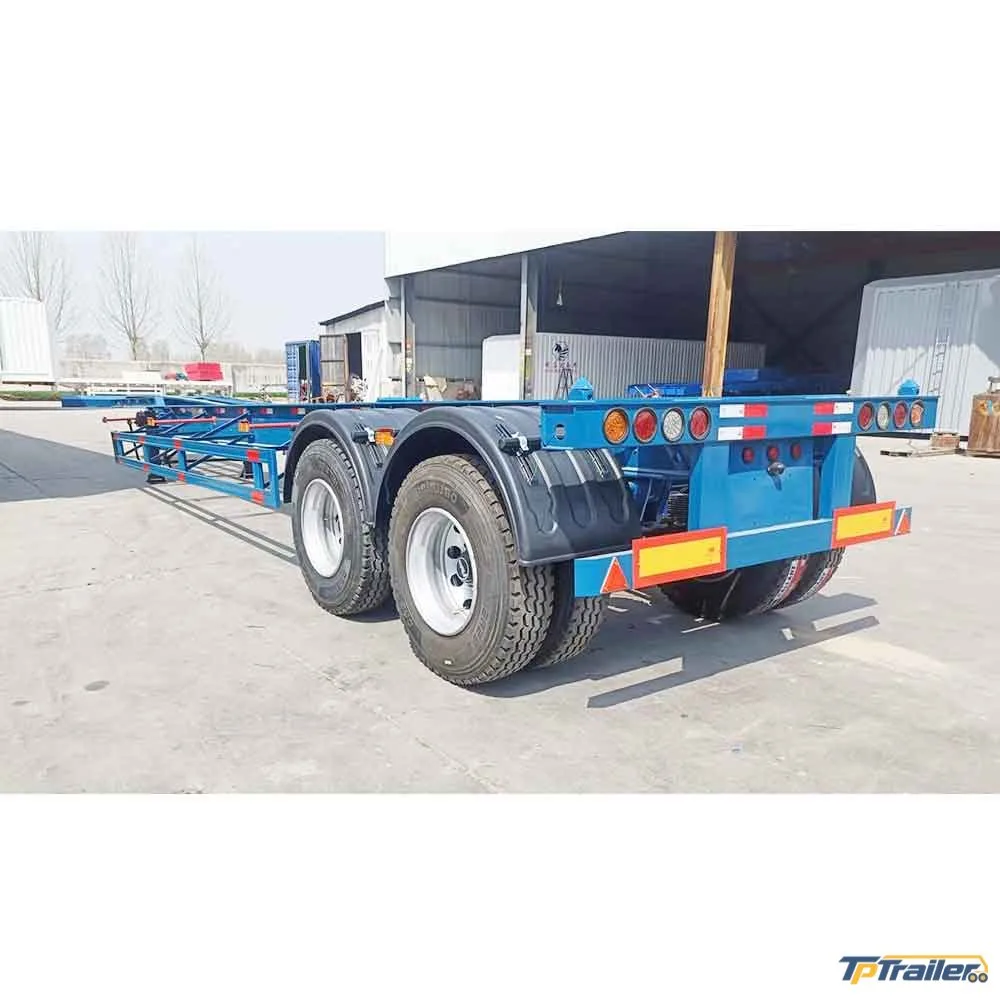
Container Skeleton Semi Trailer Truck 20ft 40ft Container Chassis Skeleton Semi Trailer - detail 2
  • Two axles or three. The axle quantity is the first decision. A two-axle build suits lighter container loads, shorter routes and fleets watching tare weight and tyre spend. A three-axle build spreads load over more contact points and is the natural pick where the same trailer regularly takes the heavier end of the capacity band. Both come from the same frame family, so the choice is about duty cycle, not about buying a different product.
  • Axle brand as an option. Axle brand is listed as optional, which lets a buyer align the running gear with the brands already in the workshop or with the tractor fleet’s service arrangements. The leg ordered this way keeps brake and bearing parts familiar to the maintenance team. That reduces the learning curve for fitters and keeps stock decisions inside an existing parts relationship.
  • Kingpin size and tractor match. The kingpin choice should follow the fifth wheel on the tractors that will pull the trailer. Where a trailer is shared across depots or pulled by a hired unit, matching the common coupling size avoids adapters and keeps hook-up quick. The buyer should confirm the coupling specification against the tractor fleet before ordering, since this is the one interface that decides whether the trailer can leave the yard at all.
  • Floor gauge and tyre specification. The diamond plate floor is offered in a light-gauge range, and the tyre specification is offered in two common sizes. A fleet working mostly crane-loaded containers can take the lighter floor, while a yard that drags boxes and spreaders across the deck may prefer the heavier gauge. Tyre choice should follow what the fleet already stocks, so a Container Skeleton Semi Trailer Truck 20ft 40ft Container Chassis Skeleton Semi Trailer fits existing tyre pressure and replacement routines rather than creating a second inventory line.

Customisation Before Delivery

Customisation on the Container Skeleton Semi Trailer Truck 20ft 40ft Container Chassis Skeleton Semi Trailer is mostly a matter of fixing the variables that affect the running gear and the coupling, then recording them on the order confirmation. Each item below is agreed before production starts, because changing a frame or an axle layout after the build has begun is a new trailer, not an amendment.

  • Axle count. The trailer can be ordered with a two-axle or three-axle layout. Two axles suit lighter container loads and shorter runs. Three axles spread the load over more tyres and better match heavier haulage. The count is fixed at order confirmation, so state the duty cycle first.
  • Deck length. The chassis is built to carry either a twenty-foot or a forty-foot container, and the frame layout follows that choice. Tell the supplier which box sizes you move and whether mixed loads are common. The frame is then set for the agreed length before build.
  • Suspension and kingpin. Mechanical suspension is the standard arrangement on this skeleton trailer, and the kingpin can be supplied in the common upper-plate sizes. Match the kingpin to your tractor’s fifth wheel before the order is locked. A mismatch here is a coupling problem, not a paint problem, and it stops the unit working.
  • Tyres and finish. Tyre specification is selectable between the listed sizes, so confirm which one matches your existing fleet stock. Painting is optional, and colour is agreed at order confirmation. Keeping tyres common with your other trailers simplifies spares and roadside replacement on the Container Skeleton Semi Trailer Truck 20ft 40ft Container Chassis Skeleton Semi Trailer.
  • Axle brand. The axle brand is optional, which lets you align the running gear with the parts your workshop already stocks. Name the brand preference when the order is placed. The assembly is then built to that specification, and the choice is recorded on the confirmation.

Fitting And Installation

On arrival, the first job with a Container Skeleton Semi Trailer Truck 20ft 40ft Container Chassis Skeleton Semi Trailer is to match the trailer to the tractor that will pull it. Check the kingpin against the fifth wheel, confirm the landing gear height clears the ground when coupled, and verify the electrical socket matches the twenty-four volt system. The unit arrives complete, so most of the work is verification rather than assembly.
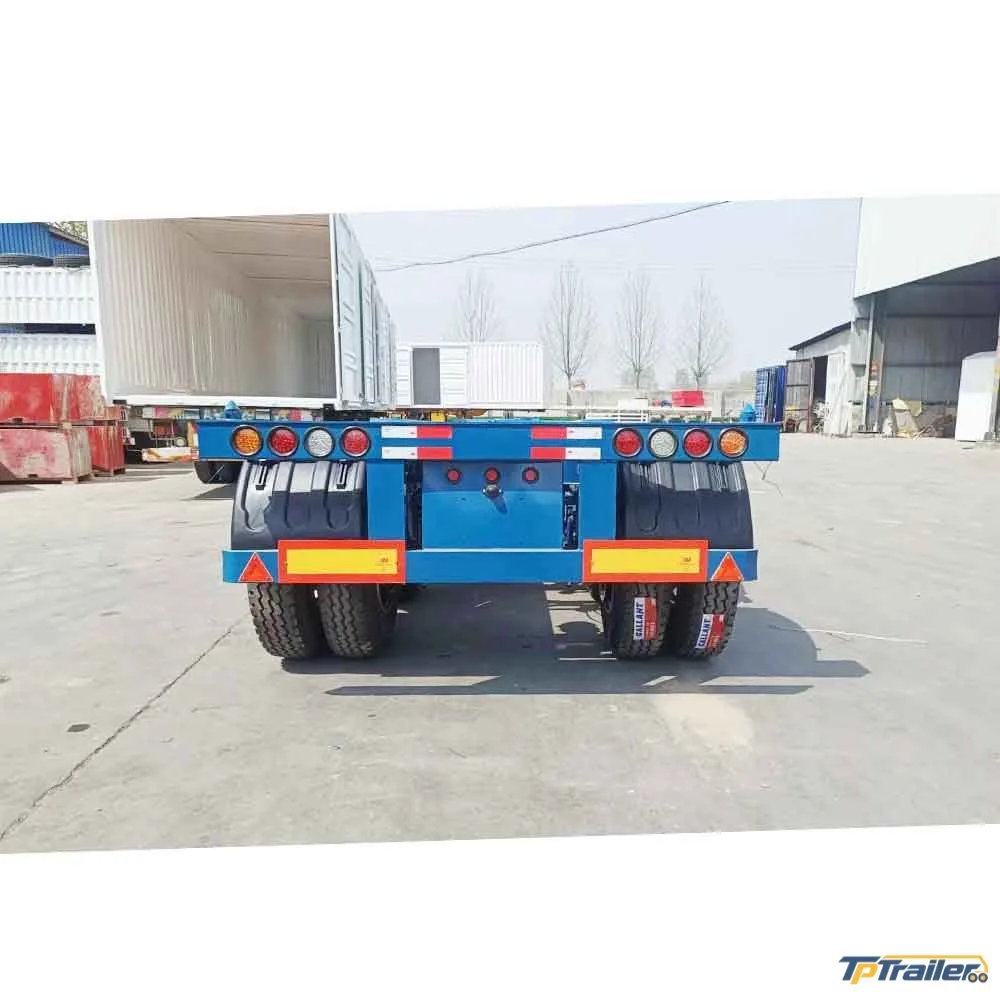
Container Skeleton Semi Trailer Truck 20ft 40ft Container Chassis Skeleton Semi Trailer - detail 3

Walk the frame with a torque wrench on the wheel nuts and suspension bolts, following the values your workshop uses for the fastener sizes fitted. Confirm the twist locks line up with your container corner castings before the first lift. Where the input gives no fitment drawing, a fitment drawing is confirmed at quotation instead of being assumed.

A wrong match is expensive in downtime. A kingpin that does not seat keeps the unit parked until a replacement is fitted. A tyre size that differs from fleet stock means a roadside puncture becomes a wait for a part rather than a swap from the rack. Electrical pinouts that differ from the tractor leave lights dead and the outfit off the road.

For this reason the Container Skeleton Semi Trailer Truck 20ft 40ft Container Chassis Skeleton Semi Trailer order should record the tractor model, the coupling size and the tyre choice together. Hose and harness routing should be checked along the frame so nothing rubs on the deck edge or the suspension. A short inspection at handover avoids repeat trips to the workshop later.

Service Life And Maintenance

Service life on the Container Skeleton Semi Trailer Truck 20ft 40ft Container Chassis Skeleton Semi Trailer is decided by a small number of wear points, and a routine that covers them keeps the trailer earning. The checks below are the ones that repay attention at every service interval, and each maps to a part that is straightforward to replace when it is caught early.

  • Tyres and wheel ends. Tyres and wheel bearings are the first items to show wear on any Container Skeleton Semi Trailer Truck 20ft 40ft Container Chassis Skeleton Semi Trailer. Inspect tread depth, sidewall condition and bearing play at each service. Keeping tyre specification common across the fleet shortens replacement time. Watch for uneven wear, which points to alignment or suspension issues rather than tyre age.
  • Suspension and bushes. Mechanical suspension bushes and shackle pins take constant load and are early wear points. Check for looseness, cracked bushes and shifted leaves. The trailer should be inspected after heavy or uneven loads. Replace worn bushes promptly so the axle stays located and tyre wear stays even.
  • Frame and welds. The steel skeleton frame carries the whole container load, so inspect welds around the twist locks and cross members. Look for cracks, corrosion and deformation at the corners. The Container Skeleton Semi Trailer Truck 20ft 40ft Container Chassis Skeleton Semi Trailer benefits from a specified paint finish, which slows corrosion and keeps inspection points visible. Touch up chips before rust spreads.
  • Floor plate. The diamond plate floor takes foot traffic, twist-lock access and fork contact. Check for dents, lifted edges and worn anti-slip texture. A thicker plate specification extends the interval before replacement. Keep the plate clear of standing water so the steel beneath stays sound.
  • Electrical and brakes. The twenty-four volt electrical system and the brake lines are simple but exposed. Inspect lamp function, connector condition and hose routing at every service. Look for chafed wiring along the frame and air leaks at fittings. Clean, dry connectors and secure routing prevent most roadside faults on the leg.

Packing And Container Loading

Each Container Skeleton Semi Trailer Truck 20ft 40ft Container Chassis Skeleton Semi Trailer leaves the yard as a steel frame, so sea protection targets rust and impact rather than fragility. Weld seams, the kingpin plate and the suspension mounts receive a primer coat before the finish paint. Exposed threads on the twist locks and the landing gear screw get grease and a wrap. The electrical harness is tied back and its connectors capped, because salt air attacks open terminals faster than painted steel. Buyers should ask which surfaces are coated and which are only greased, then photograph those same points at loading.

A skeleton chassis is a flat frame, so nesting is limited. Frames can be stacked only where the gooseneck and cross members allow it, and the stack must sit on timber bearers rather than on painted steel. Most units ship one per flat rack or loaded onto a flatbed, with wheels and axles adding height. Ask the supplier for the stack plan and the loaded height before booking space. On arrival, check bearer marks, twist lock threads, axle alignment and lamp function before signing the delivery note.

Common Mistakes Buyers Make

Most problems with a Container Skeleton Semi Trailer Truck 20ft 40ft Container Chassis Skeleton Semi Trailer trace back to a detail that was never written down, not to a defect in the build. The list below covers the omissions that show up most often at handover, and each one is cheap to prevent at the enquiry stage.

  • Ordering the wrong axle count. A buyer matches the trailer to a route without checking the axle quantity the road rules allow. The check is simple: state the axle count in writing on the purchase order and confirm it against the drawing before deposit.
  • Assuming the kingpin size. The kingpin is offered in more than one size, and a mismatch with the tractor fifth wheel stops the first haul. Never accept a verbal answer. Ask for the kingpin size on the spec sheet and compare it with the fifth wheel on the truck that will pull the trailer.
  • Ignoring the wheelbase. The wheelbase of a Container Skeleton Semi Trailer Truck 20ft 40ft Container Chassis Skeleton Semi Trailer affects turning and bridge loading. Buyers approve a drawing without measuring their yard or route. Check the wheelbase figure against the tightest turn on the route and the local axle load rules before signing.
  • Skipping the suspension choice. Mechanical suspension suits many routes, but buyers order without stating road conditions. Then the trailer arrives unsuited to the terrain. Write the road type and load profile into the enquiry, and confirm the suspension type on the order before production begins.
  • Leaving the tyre specification open. Tyre size changes deck height and load behaviour. A buyer who confirms neither gets whatever is in stock. Name the tyre specification you want, confirm it on the proforma invoice, and check the sidewall markings against that document at arrival.

Buyer Questions

Can the Container Skeleton Semi Trailer Truck 20ft 40ft Container Chassis Skeleton Semi Trailer carry both a twenty and a forty foot box?

Yes. The chassis is built for both container lengths, and the twist locks are positioned for each. What you should confirm is the locking layout on the drawing, because the number and position of locks must match the boxes you plan to haul. Measure the distance between lock centres on the approved drawing and compare it with your container corner castings. If you plan to mix lengths on one route, say so in the enquiry so the layout is confirmed before production.

What should I confirm about the electrical system before ordering?

Confirm the voltage and the lamp layout, because the tractor in your fleet must match. Ask for the wiring diagram with the order and check that the connector type suits your trucks. The electrical system runs on a low-voltage circuit, so a mismatch with the tractor plug is the usual cause of dead lamps on the first trip. Test every lamp, brake light and indicator at handover, and photograph the connector before the trailer leaves the yard.

How is the floor and deck specified on this chassis?

The deck uses diamond plate flooring, and the thickness is a choice rather than a fixed figure. Ask which plate thickness is quoted and what load it is intended to bear. If you carry heavy boxes or run equipment over the frame, state that in the enquiry so the plate is matched to the duty. Confirm the plate thickness on the proforma invoice, then check the deck surface for flatness and weld continuity on arrival.

For a quotation on the Container Skeleton Semi Trailer Truck 20ft 40ft Container Chassis Skeleton Semi Trailer, send three details: the container length you haul, the axle count you need, and the quantity for the order. Add your kingpin and tyre preferences if they are fixed. With those points in writing, the supplier can confirm the configuration, packing plan and price tier without a second round of questions, and the assembly can be scheduled against a specification both sides have already agreed.

Explore more Container Skeleton Semi Trailer Truck 20ft 40ft Container Chassis Skeleton Semi Trailer in this range.

Dimensions 500 × 500 × 500

Reviews (0)

No reviews yet — click the Review button on the right to share your experience with this product.

Frequently Bought Together

Inquiry about: 2 Axle 20ft 40ft Skeleton Semi Trailer 40T-60T Container Chassis

Fill in the form below and our team will respond within 24 hours.