
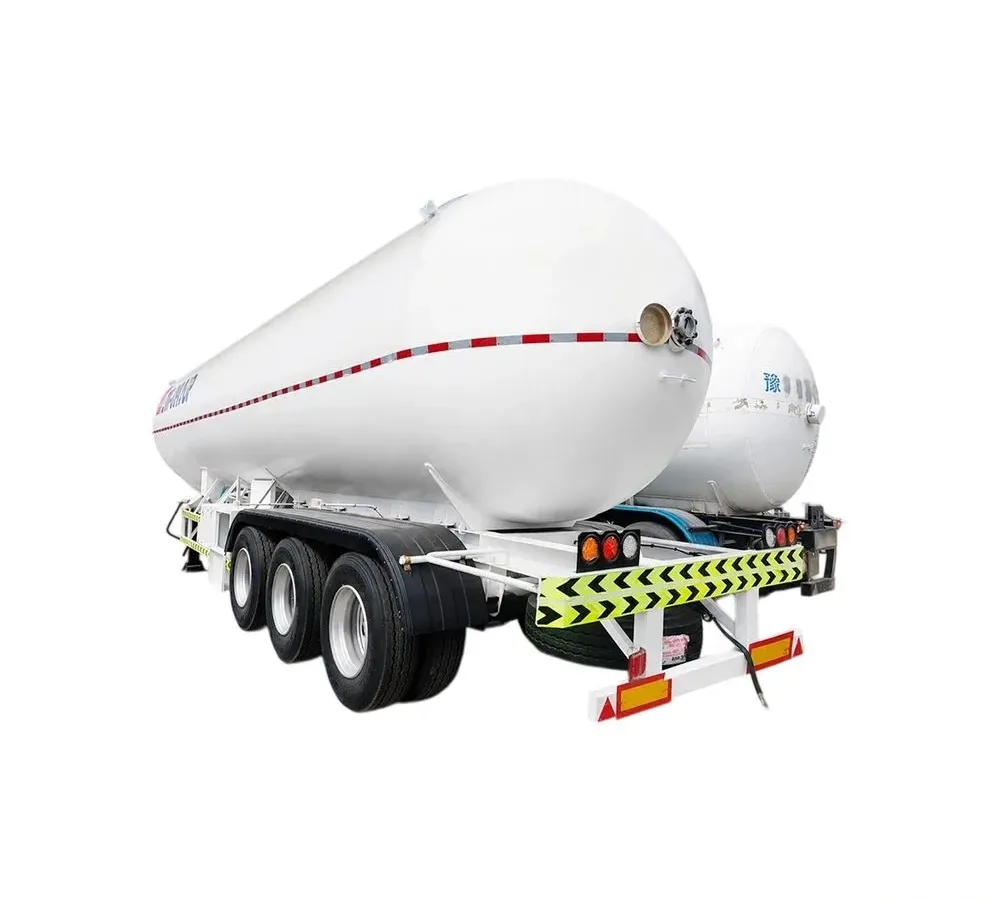
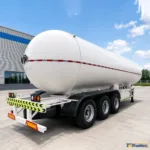

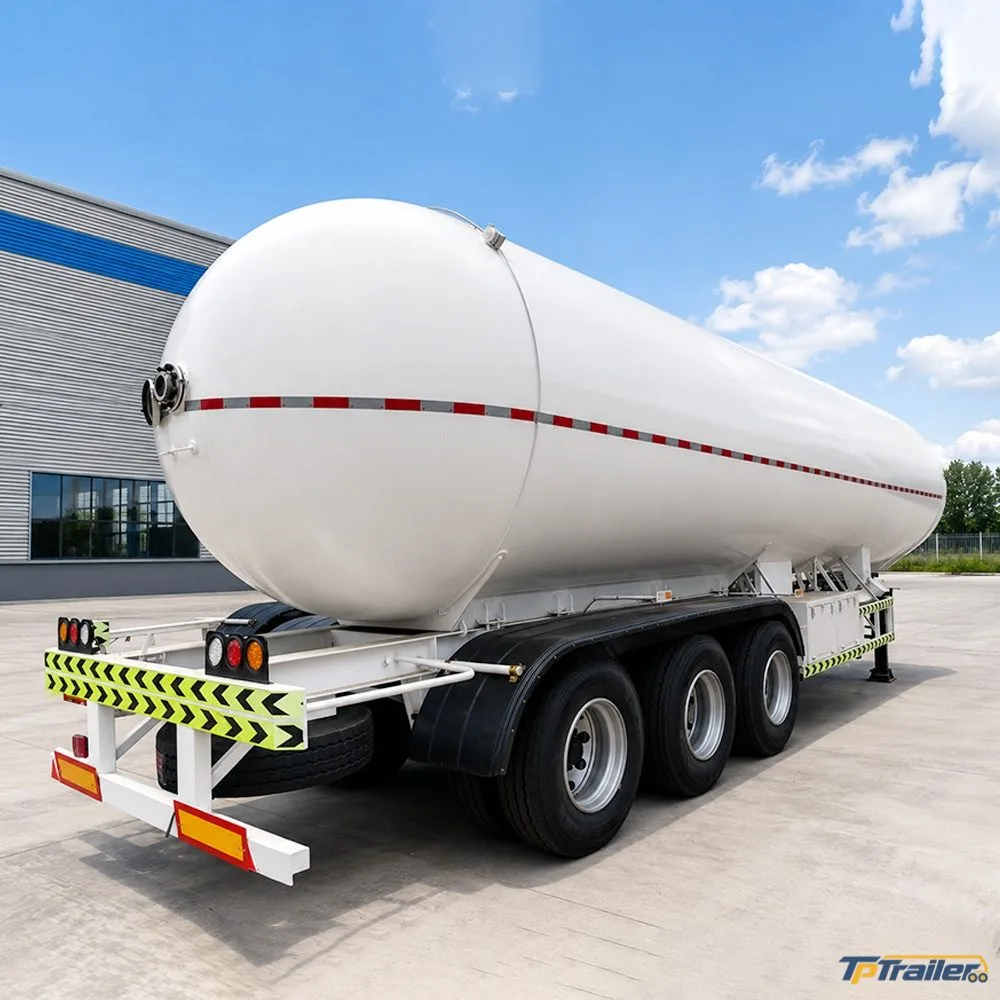
LPG tank semi trailer with 56CBM capacity and 3 axles for bulk propane transport. Load capacity 15001-20000 KG. Request a quote for industrial gas supply.
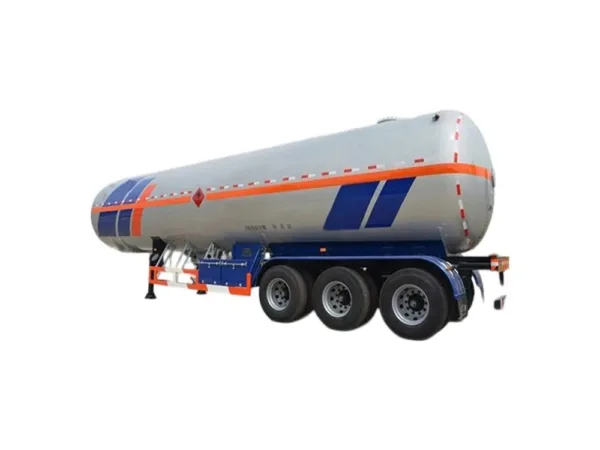
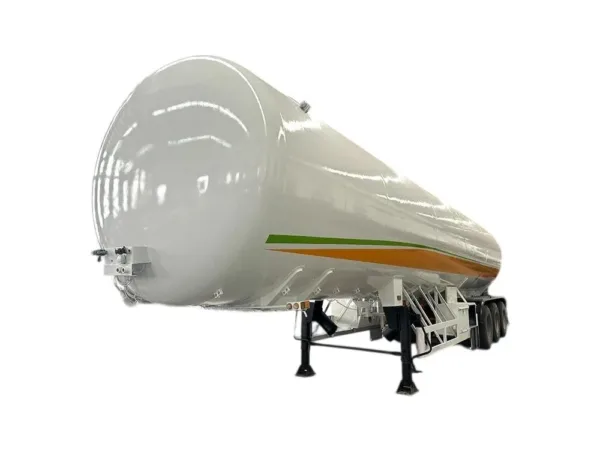
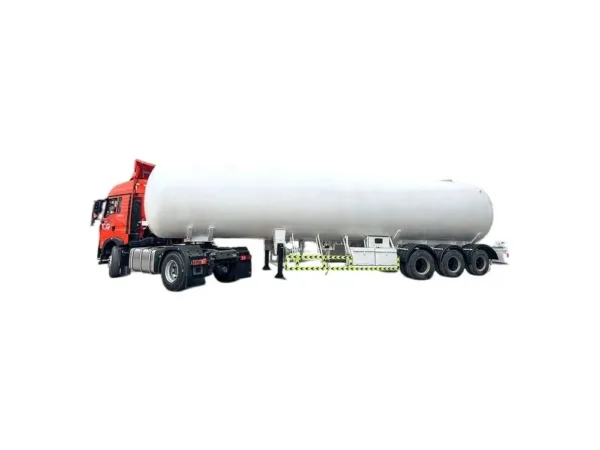

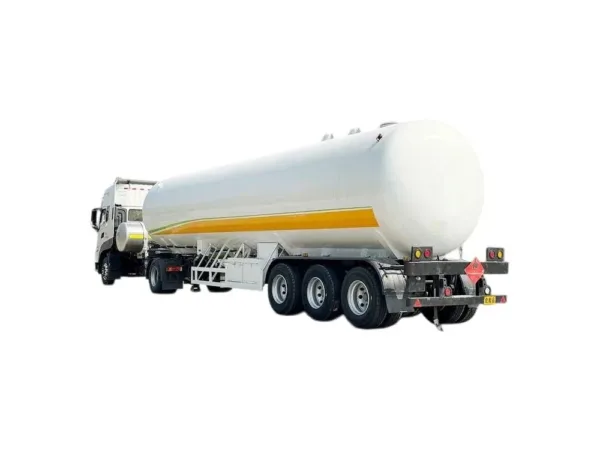
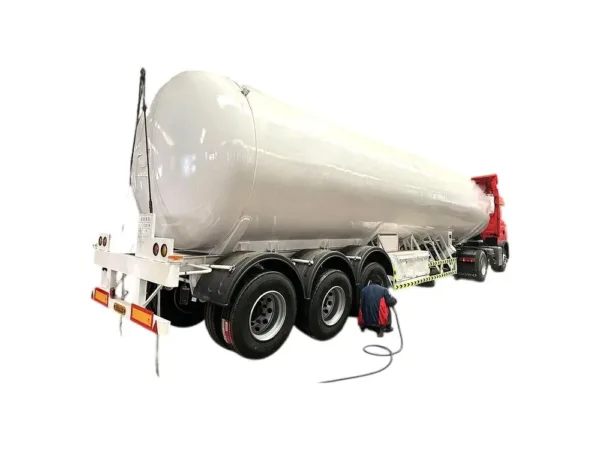
An LPG tank semi trailer is the bulk-gas workhorse a fleet builds its propane delivery schedule around. This unit pairs a high-capacity barrel with a three-axle running gear, so one trip moves more product and fewer trips are needed per route. It suits gas distributors, industrial supply fleets and bulk hauliers who move propane in volume between depots, terminals and customer sites. The strongest reason to choose it is payload per trip: a load capacity of 15001-20000 KG on a single chassis lets you consolidate deliveries without adding vehicles to the roster. Every trip carries more gas, and every stop costs less to serve.
Fleet operators run an LPG tank semi trailer on depot-to-depot transfers, where gas is moved from a terminal or bulk storage point to a regional yard. These are scheduled runs, often over highway distance, and the goal is volume per trip. The high-capacity barrel and the load capacity of 15001-20000 KG let a planner fill the trailer once and clear a full transfer list.
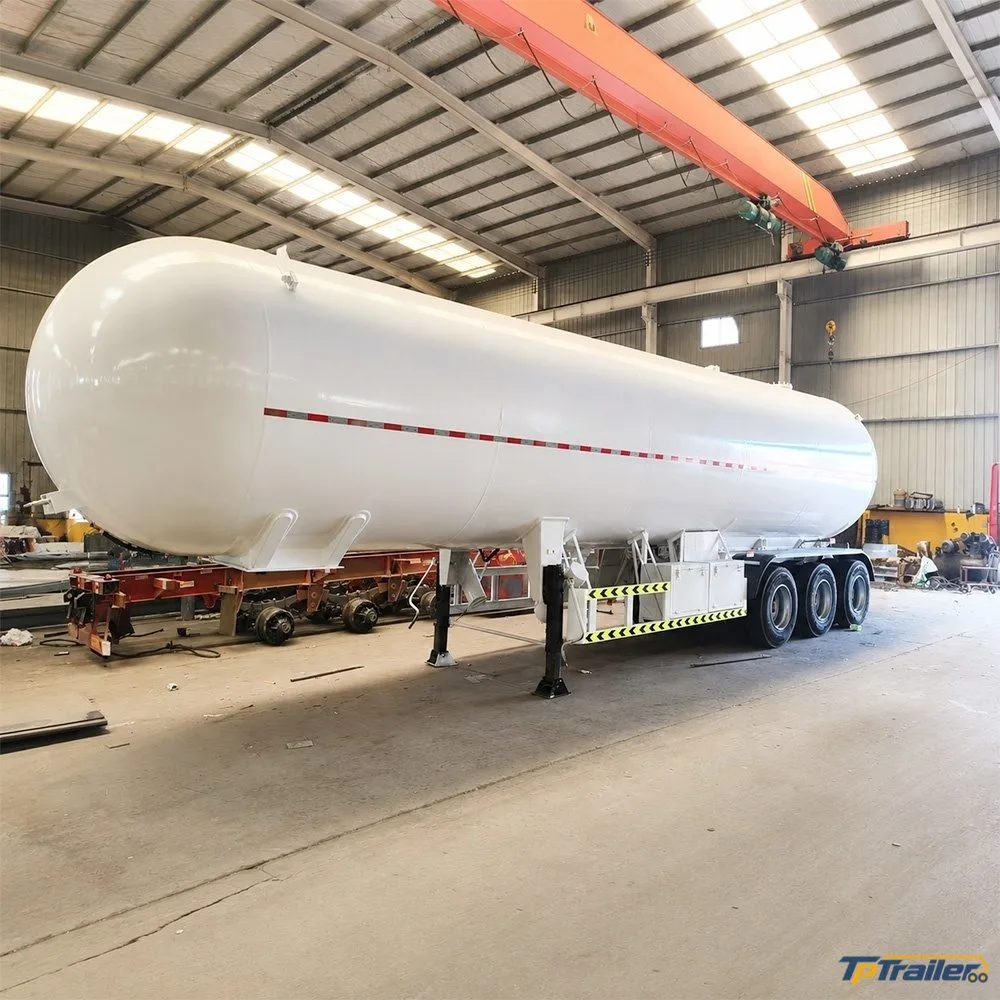
On these routes the three-axle running gear matters most at highway speed and on long gradients, where a settled trailer is easier to manage. Dispatch can time arrivals around filling windows instead of running two lighter units on the same lane. The LPG tank semi trailer becomes the fixed link in the supply chain between storage and distribution.
The same trailer earns its place on customer delivery loops, carrying propane to industrial sites, workshops and bulk gas users. Here the job is stop-start work: arrive, discharge, move on, repeat. A large barrel reduces the number of returns to base between drops, so the LPG tank semi trailer covers more customers per shift. Industrial supply fleets also use it for scheduled top-ups where demand is steady and predictable. The semi-trailer coupling helps most when one tractor serves several routes, because the trailer can be reassigned as orders shift. Operators get one gas-carrying asset that flexes across the working week without a second prime mover.
There is a third pattern worth planning for: seasonal peaks. When industrial demand climbs for a few weeks, the LPG tank semi trailer can be pulled into extra shifts without a matching rise in vehicle count, and when the peak passes it returns to the standard loop. Fleets that size their tractor pool around this trailer rather than around peak volume avoid buying prime movers that sit idle for most of the year.
On arrival, the buyer’s team has to match the LPG tank semi trailer to the tractor unit that will pull it. Check the fifth wheel height, the kingpin position and the landing gear footprint against the drawing supplied with the unit. Confirm the clearance between the barrel and the tractor cab through a full turn.

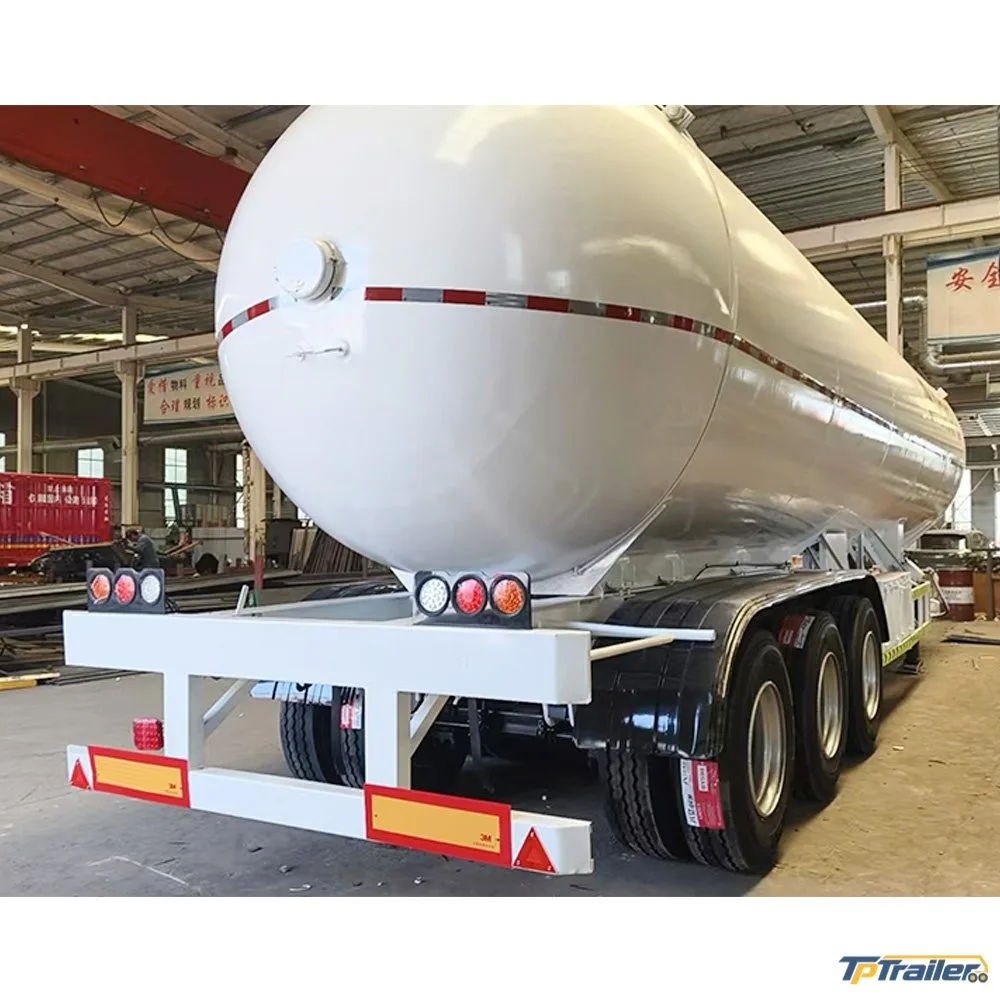
Hose routing from the discharge point to the customer’s transfer pump must be planned before first filling, because a route that crosses hot surfaces or sharp edges is a rejection point at inspection. If the input gives no fitment data for your tractor, a fitment drawing is confirmed at quotation instead of being assumed. Torque values for structural fasteners are taken from the manual that ships with the LPG tank semi trailer, not from memory.
A wrong size at this stage is expensive in a way that is easy to underestimate. If the mounting points do not line up, the LPG tank semi trailer sits idle while brackets are reworked, and the rework itself has to be inspected before the unit can carry product. If the hose route is too short or too long, the transfer takes longer and the operator improvises, which is where damage to valves and fittings usually starts.
Downtime is not only the repair hours; it is the missed delivery slots and the standing cost of a tractor that cannot work. Confirm the fitment drawing early, walk the tractor and trailer together before the first load, and the LPG tank semi trailer enters service on the day it was planned to.
Set a short commissioning routine before the first commercial load. Pull the unit with the tractor on level ground and through the tightest turn on your regular route. Check that the landing gear clears the ground under full load and that no hose or cable is trapped at the coupling point. Have the driver walk the assembly once with the fitment drawing in hand, so any mismatch is found in the yard rather than at a customer’s gate. Record the as-fitted dimensions and keep them with the unit’s file; they become the reference for every later inspection and for any second trailer ordered to the same specification.
Keep a single maintenance log for the assembly and write every check into it, including the ones that found nothing. When a valve is replaced or a tyre is swapped, the date and the reason belong in the same file as the fitment dimensions. That record is what lets a fleet compare two units on cost per loaded hour, and it is the first thing an inspector asks for. A trailer with a complete history is easier to keep in service and easier to justify keeping in the fleet.
An LPG tank semi trailer ships as a pressure vessel, so the packing plan starts with protecting the shell, the valves and the fittings. The vessel is cleaned and dried before dispatch. Openings are capped or blanked so nothing enters the tank during the voyage. Exposed valves, the manway and the piping are wrapped or boxed to stop movement and impact damage. The chassis and running gear travel assembled. Surfaces exposed to salt air are treated for the crossing. Fixing points are marked so the stevedore can lash the unit without pulling on the tank shell or the pipework.
Nesting and stacking do not apply here. A loaded LPG tank semi trailer is a long, heavy unit, and it cannot be stacked on another trailer. Space is saved by shipping the unit as one assembled piece and by planning the load around its overall length and width. Depending on the size ordered, one unit may take a full deck position, or a smaller unit may share a flat rack or a break-bulk deck with other cargo. The loading plan is agreed before booking, so the buyer knows which freight option fits the LPG tank semi trailer they ordered.
The vessel is cleaned and dried, and all openings are capped or blanked. Valves, the manway and the piping are wrapped or boxed and secured against movement. The chassis and running gear travel assembled. Exposed surfaces are treated for the sea crossing, and lashing points are marked so the unit can be fixed without loading the shell. Ask the supplier to list the packing steps in the quotation and to photograph the unit before loading, so you can compare the condition on arrival.
An assembled LPG tank semi trailer is a long, heavy unit and normally needs its own deck position, flat rack or break-bulk slot rather than fitting inside a standard container. Whether a second unit can share the same shipment depends on the overall dimensions and the freight option chosen. Confirm the shipping method with the supplier before you book, and ask which dimensions drive the slot, so the freight quote matches the unit you order.
Inspect the tank shell for dents and abrasion, and check that every cap and blank is still in place. Look at the valves, manway and piping for impact damage or loosened fittings. Confirm the chassis, axles and running gear match the order, and compare the unit against the dimensioned drawing. Photograph anything that differs and raise it with the supplier before the unit leaves the port. Ask in advance which documents travel with the LPG tank semi trailer.
To receive a quotation, send the overall length you need, the axle count, and the quantity you plan to order. State the load capacity you require and the terminal fittings at the receiving end. With those details, the supplier can confirm the configuration, packing scope and freight plan for your LPG tank semi trailer.
Explore more LPG tank semi trailer in this range.
| Load Capacity | 15001-20000 KG | Type | Semi-Trailer |
|---|---|---|---|
| Place of Origin | China | Use | Truck Trailer |
| Material | Aluminum / Alloy | Size | Customer |

No reviews yet — click the Review button on the right to share your experience with this product.










Fill in the form below and our team will respond within 24 hours.
Write a Review