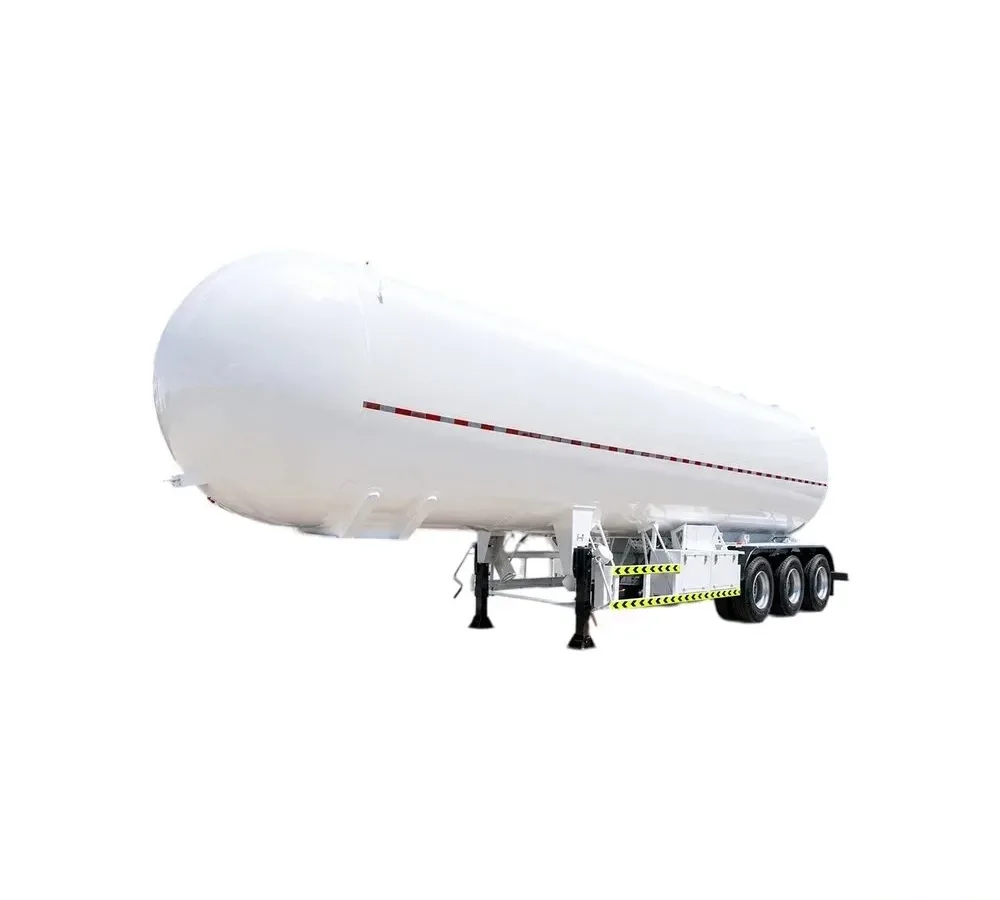
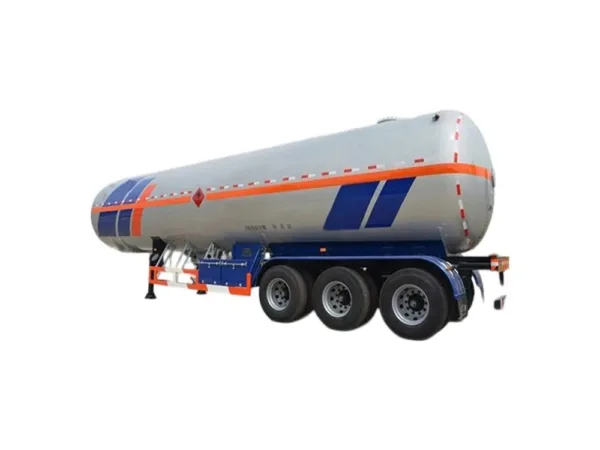
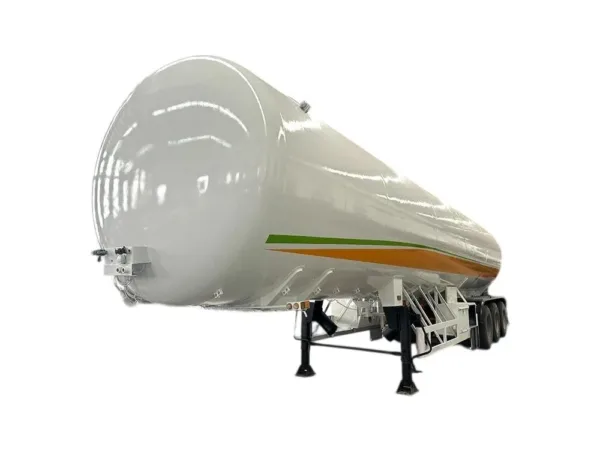
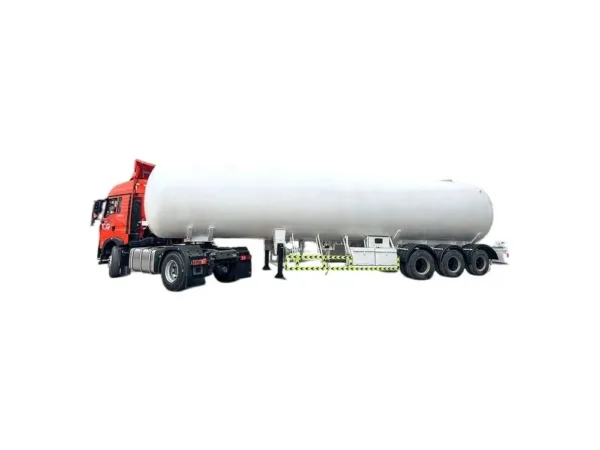
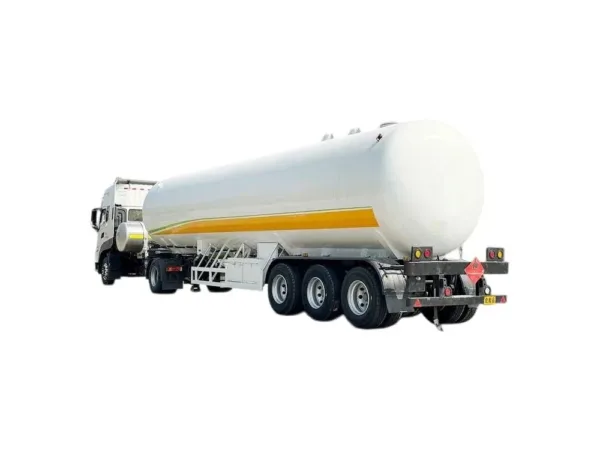
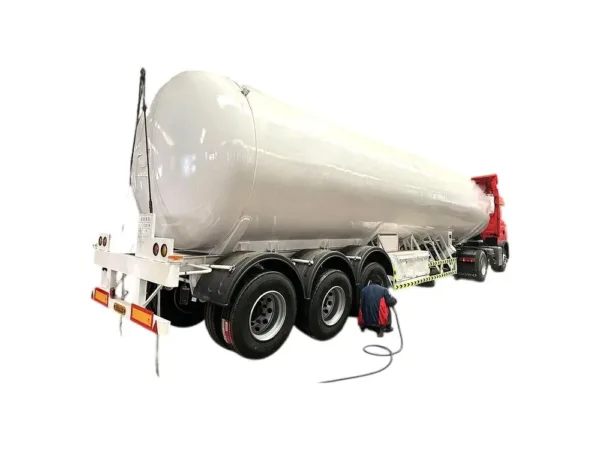
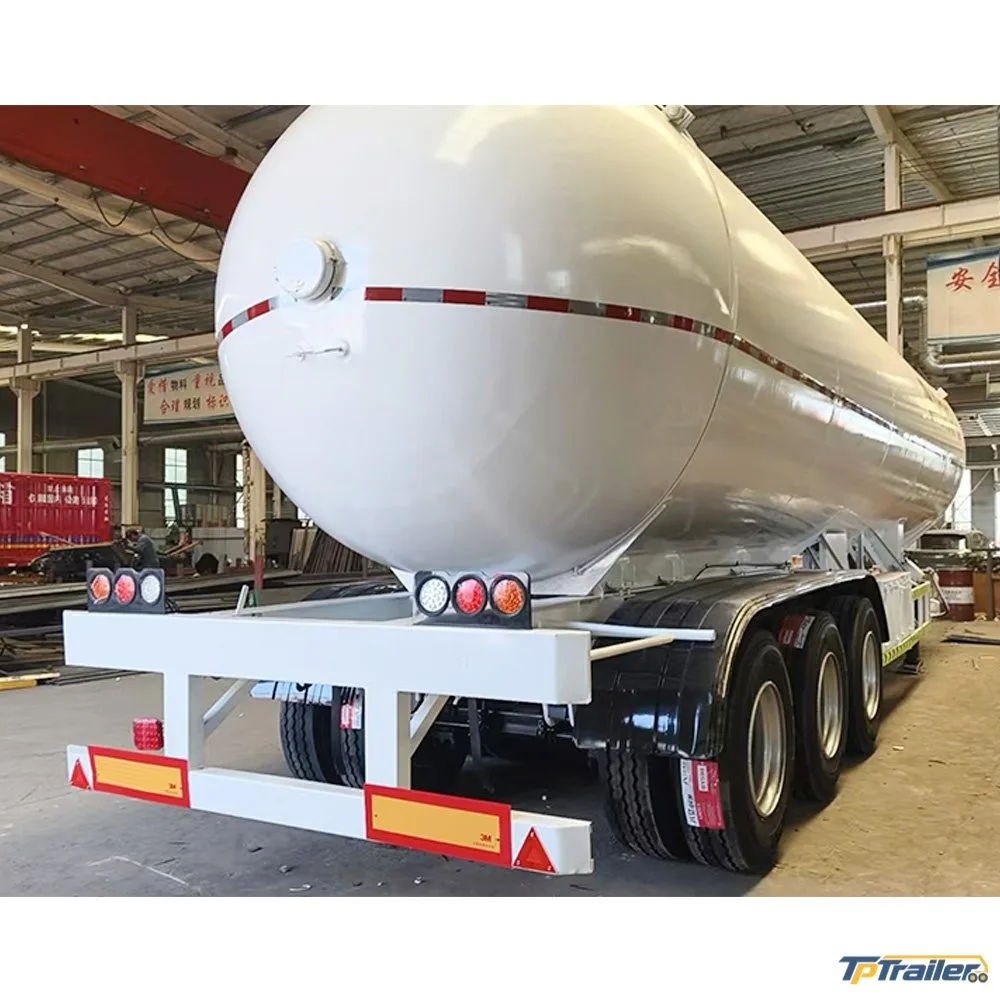
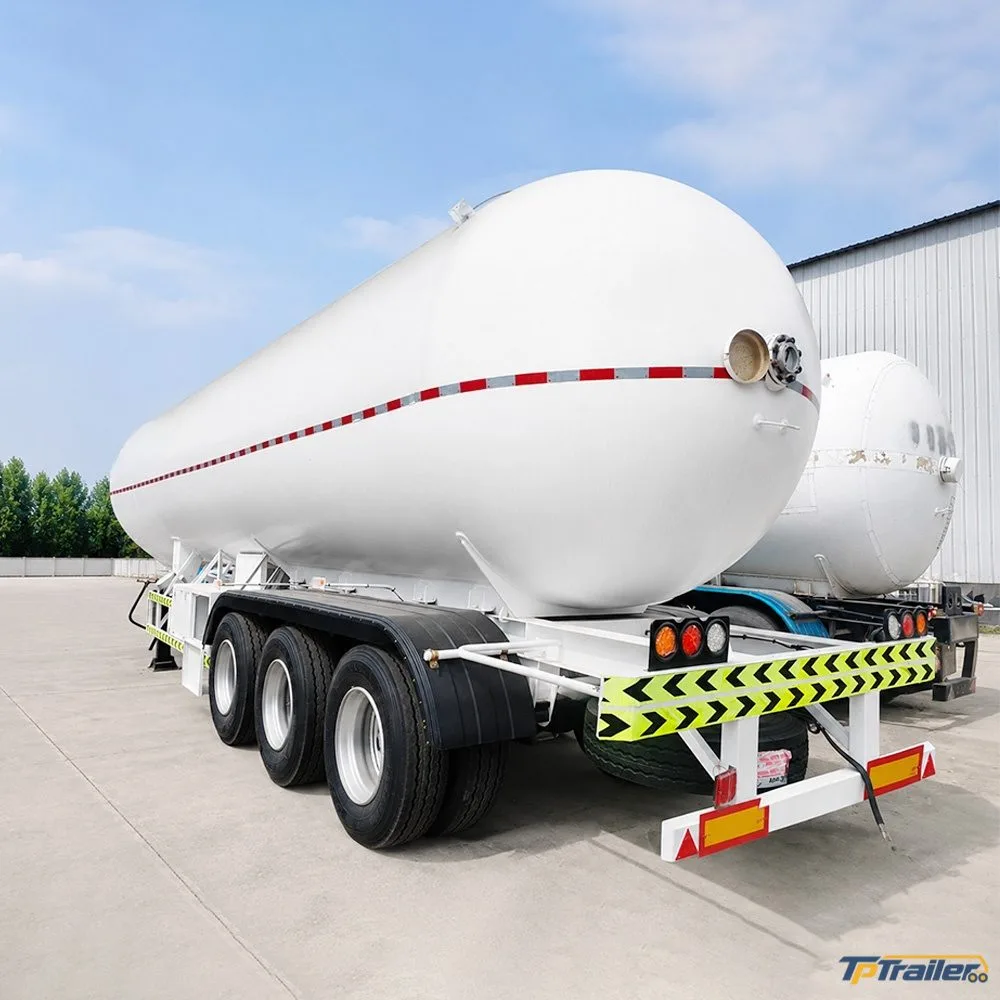
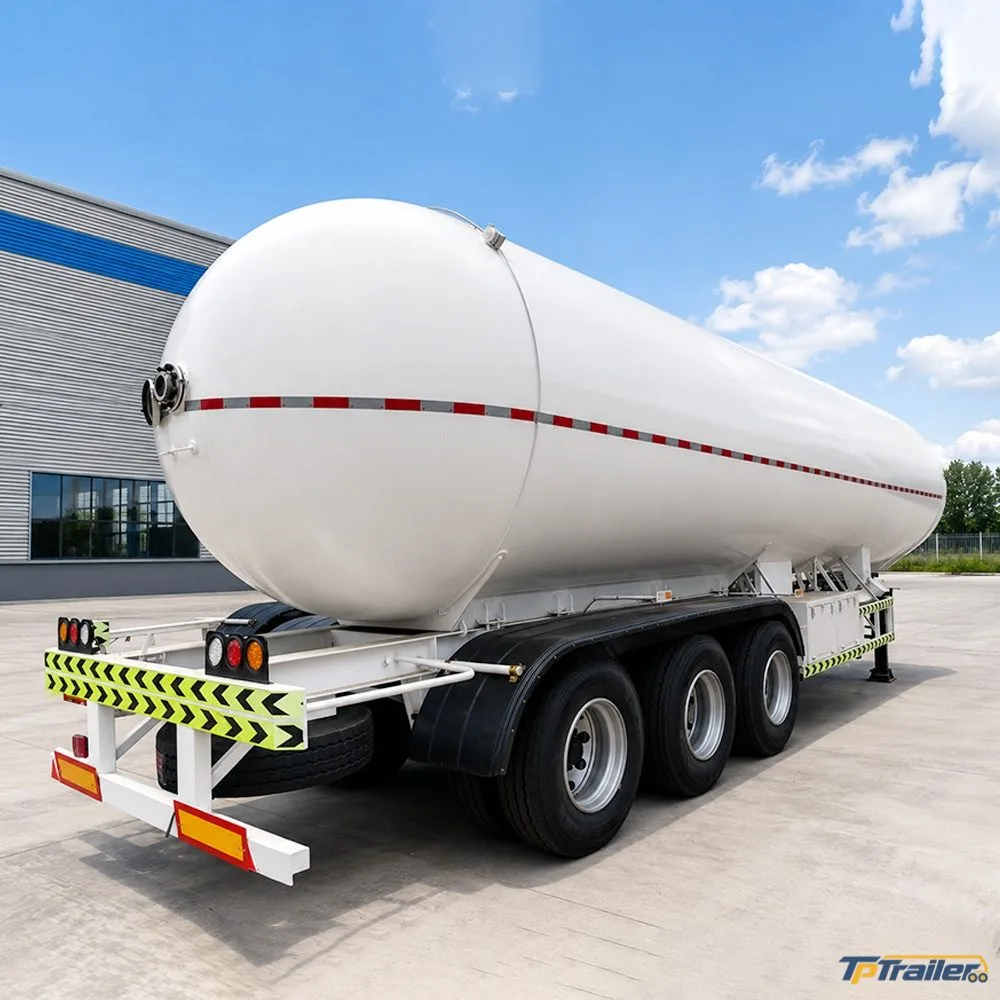
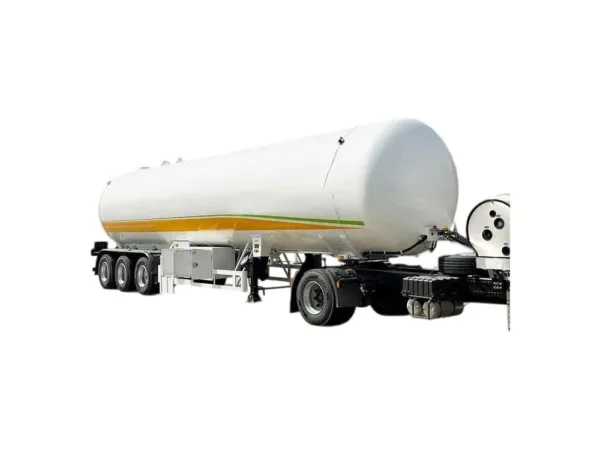
An LPG tanker semi trailer moves liquefied petroleum gas in bulk between terminals, depots and industrial sites. This unit is a three-axle aluminum alloy semi-trailer built for propane transport, with a 56CBM barrel and a load rating in the 15–20 ton band. It suits fleet operators and gas distributors who need a dedicated gas carrier rather than a converted general-purpose tank. The strongest reason to choose it is the payload-to-tare balance the aluminum barrel gives: more of the rated load goes to product instead of to the steel shell, so each run earns more per litre carried. Operators running repeat propane shuttles get the benefit on every trip.
Table of Contents
Why It Works On Site
Aluminum alloy barrel. The low tare weight of the alloy shell lets the LPG tanker semi trailer put more of its rated load into product rather than structure. That matters when the load capacity band is fixed: a lighter barrel means fewer trips for the same delivered tonnage, and less fuel burned per tonne moved on a steady shuttle route.
Three-axle running gear. Spreading the load across three axles keeps the LPG tanker semi trailer within axle-load limits on public roads while still carrying a full barrel. For a haulier, that turns a borderline legal load into a routine one and reduces the risk of being stopped or re-routed on a long trunk run.
56CBM barrel volume. The barrel size sets how much propane one run can shift, so the LPG tanker semi trailer matches depot replenishment cycles instead of forcing mid-week top-ups. Distributors plan fewer, fuller deliveries, and terminal-to-depot legs stay productive even when the round trip is long.
15–20 ton load band. The rated load capacity of 15001-20000 KG covers a working range rather than a single figure. Operators can pair the LPG tanker semi trailer with the tractor unit and route profile they already run, and keep a margin for the fittings and product they actually carry.
Propane-dedicated build. A trailer designed for LPG from the start carries the right fittings, walkway and pipework layout for the job. That means the LPG tanker semi trailer goes into service without the compromises of a repurposed tank, and the crew works around equipment arranged for gas handling, not retrofitted around it.
Semi-trailer format. Hitching to an existing tractor keeps the LPG tanker semi trailer inside a fleet that already runs standard prime movers. No dedicated rigid truck is needed, so capital goes into the tank body and the same tractor can pull other trailers between gas runs.
Where It Is Used
The most common duty for an LPG tanker semi trailer is the terminal-to-depot shuttle. Bulk propane leaves a storage terminal and runs to a regional gas depot, where it is decanted into smaller storage or into cylinders. These legs are short to medium distance and repeat daily, so the trailer spends its life loaded in one direction and empty in the other.
The 56CBM barrel and the 15–20 ton load band suit that pattern: each trip carries a full depot top-up, and the three-axle layout keeps the unit legal on the road network between the two sites. Fleet managers on this duty care about turnaround at the loading bay and steady payload, not peak speed, and a dedicated LPG tanker semi trailer is built around exactly that rhythm.
A second familiar job is bulk delivery to industrial gas users. Plants that run propane for cutting, heating or process work take road-tanker deliveries into on-site storage, and the LPG tanker semi trailer is the unit that bridges the supply terminal and the customer’s tank. These runs vary more than depot shuttles: some are long trunk hauls on highways, others are shorter urban legs to a factory gate.
The semi-trailer format helps here, because the same tractor can handle both kinds of work and the trailer can be dropped while the tractor takes another load. Operators also use the LPG tanker semi trailer for seasonal peaks, when demand for propane rises and the fleet needs extra capacity without buying a rigid tank truck. In each case the trailer carries propane only, and the crew handles a single, familiar cargo.
Choosing The Right Spec
Match the load band to the route. The 15001-20000 KG load capacity range is the first decision. Operators on long trunk hauls usually want the LPG tanker semi trailer configured toward the upper part of the band so each run delivers more. Shorter depot shuttles with frequent loading can work comfortably lower in the range, where legal axle loads and bridge limits are tighter.
Size the barrel to the depot cycle. A 56CBM barrel is a large single delivery. If the receiving depot turns its stock quickly, the LPG tanker semi trailer refills it in fewer trips. If storage is smaller, the same barrel may be too much for one drop, and the operator should check that receiving tanks and decanting equipment can take a full load before committing to the size.
Check the tractor and coupling. The LPG tanker semi trailer only performs as well as the prime mover pulling it. Buyers should confirm the tractor’s rated pulling capacity, fifth-wheel rating and air supply match the loaded trailer. A tractor sized for general freight may be marginal when the barrel is full, so the pairing deserves a check before the trailer joins the fleet.
Plan for the fittings you need. The trailer is a propane carrier, so the pump, hose, valve and metering arrangement should match how the buyer actually decants. Operators who deliver into customer tanks need transfer equipment on the LPG tanker semi trailer itself. Those who only drop at depots may need less. Settle this before ordering, because it shapes the layout of the unit.
Customisation Before Delivery
Axle count and configuration. The three-axle layout suits the rated load band, but a buyer running lighter loads on long hauls may prefer a different axle arrangement. Every change to the running gear is settled at order confirmation, so the LPG tanker semi trailer leaves the line matched to your route profile rather than a generic default.
Suspension choice. Mechanical and air suspension behave differently on rough roads and on cargo that must stay stable. Tell us the road conditions and the loading pattern you expect. The suspension fitted to your LPG tanker semi trailer is confirmed in writing before production begins, together with the axle set it is matched to.
Tyre specification. Tyre size, tread pattern and brand tier are open items at quotation. A highway operator and a mixed-road operator rarely want the same tyre on an LPG tanker semi trailer. State your preference early, because the tyre choice affects the spare-wheel carrier and the clearance around the mudguards.
Colour and finish. The aluminium alloy shell and the chassis can be finished in the colour you specify, with markings and reflective tape placed where your fleet standard requires. Colour is a simple item to lock in, yet it is the one most often left to the last minute on an LPG tanker semi trailer order.
Deck and accessory layout. Where the toolbox, spare carrier and hose storage sit is decided with you, not for you. Accessory positions on the LPG tanker semi trailer are agreed at order confirmation so that the finished unit arrives ready for your fittings, without a rework stop before first load.
Fitting And Installation
On arrival, the buyer has to match the trailer to the tractor unit and to the loading facility. Check the kingpin and fifth-wheel engagement first, then the landing gear footprint on your yard surface. Confirm the suspension mounting points sit where your workshop expects them. The discharge pipework is the part that catches people out: tube size, flange pattern and hose routing must line up with your pump skid and your vapour return line.
Because this page states no fitment figures, a fitment drawing is confirmed at quotation instead. That drawing shows the connection points and the space around them, and it is the document your fitters should work from. Do not let a workshop improvise on an LPG tanker semi trailer from memory or from a photo of a similar unit.
A wrong size is not a small inconvenience. If a flange pattern does not match, the unit sits idle while an adapter is machined or a hose is remade. If the hose routing fouls a frame member, the fix means re-routing pipework and re-testing the joints before the trailer can carry product. Every idle day costs haulage revenue and pushes back the first delivery on an LPG tanker semi trailer you have already paid for.
The same applies to electrical connections: a lighting plug that does not match the tractor keeps the unit off the road for a trivial reason. Confirm the fitment drawing, walk the connection points with your fitters, and raise any mismatch before the unit ships. It is far cheaper to correct a drawing than a finished LPG tanker semi trailer standing in your yard.
Service Life And Maintenance
Valves and fittings wear first. On any LPG tanker semi trailer, the working parts at the tank openings see the most movement. Inspect valve bodies, seals and gauge connections at each scheduled check. Look for weeping at joints and for seals that have hardened. Replacing a seal early is cheap; ignoring a slow weep is not. Keep a written record of every inspection so the history travels with the unit.
Inspect the shell and welds. The aluminium alloy shell resists corrosion well, but it still needs a visual walk-round. Check the welds at saddle supports and at the tank ends for cracks or rubbing marks. Look at the paint or coating on the chassis, where stone chips start corrosion. A touch-up of chipped coating on an LPG tanker semi trailer is a small job that protects the structure underneath.
Watch the running gear. Tyres, brake linings and wheel bearings wear according to load and road. Check tyre pressure and tread at every pre-trip walk-round, and inspect brake adjustment on a fixed schedule. Uneven tyre wear on an LPG tanker semi trailer often points to alignment or suspension trouble, so treat it as a signal rather than a nuisance. Record tread depth so you can spot a trend.
Keep the suspension and mounts tight. Loose U-bolts and worn bushings change how the tank sits on the frame. Inspect the suspension mounts and the tank saddle fasteners at each service. The suspension type you chose at order confirmation sets what to check. On an LPG tanker semi trailer, a mount that works loose lets the shell flex where it should not, so torque checks belong on the routine list.
Protect the finish to extend intervals. The coating choice made at order confirmation decides how much cosmetic work the unit needs later. A well-coated chassis on an LPG tanker semi trailer sheds water and road salt better, so chips stay small. Wash the underside after winter use, touch up bare spots, and keep the data plate and markings legible. Good finish care stretches the time between repairs.
Packing And Container Loading
An LPG tanker semi trailer moves as a complete unit, not as loose parts. The vessel body is cleaned and sealed before dispatch. All openings are capped and taped so sea air and dust stay out of the barrel. Valves, fittings and the manhole assembly get protective covers. Small accessories travel in a labelled crate strapped inside the frame. The chassis and running gear are checked for loose fasteners before loading. Your inspection on arrival should confirm that every cap is still in place and that the protective covers are unbroken.
A finished LPG tanker semi trailer cannot be nested or stacked. Its barrel and frame form one rigid unit, so each trailer takes one slot on deck or in a breakbulk hold. Space saving comes from how the unit is secured, not from stacking. Wheel chocks, lashing chains and timber packing hold the chassis in place. Buyers should ask for loading photos before the vessel sails. On arrival, check the barrel surface, the frame welds and the valve covers against those photos. Note any damage on the delivery receipt before signing.
Common Mistakes Buyers Make
Ignoring the load capacity. Buyers match the trailer to the tractor and forget the load capacity. An overloaded LPG tanker semi trailer puts stress on the barrel and the running gear. Check the load capacity against the density of the gas you carry before you order. State the figure on the purchase order so the factory builds to it.
Skipping the coupling check. The kingpin and landing gear must suit your tractor. A mismatch turns a new LPG tanker semi trailer into a yard ornament. Measure the fifth wheel height and the kingpin size on your tractor. Send those measurements with the order and ask for written confirmation.
Not confirming axle count. Axle count drives weight distribution and tyre cost. Buyers order the wrong count, then face rework. Confirm the axle count you need against your route rules and load. Put it in the purchase order and ask for a drawing of the running gear before production starts.
Overlooking valve orientation. Valve position affects safe filling and discharge. A buyer who leaves it to the factory may get an LPG tanker semi trailer that does not fit the filling bay. Sketch the hose route at your terminal. Send the sketch and confirm the valve layout in writing before the barrel is welded.
Ordering without a drawing. Many buyers accept a verbal order. The LPG tanker semi trailer then arrives with details nobody agreed on. Ask for an approval drawing showing the barrel, frame and fittings. Sign it before production. Keep it as the reference for arrival checks and any later dispute.
Buyer Questions
How do I confirm the trailer matches my tractor before ordering?
Measure the fifth wheel height on your tractor and the kingpin position you need. Note the landing gear height and the clearance under the frame. Send these figures with your enquiry and ask the supplier to confirm them on the approval drawing. For an LPG tanker semi trailer, a small coupling mismatch can stop the unit from sitting level. Check the drawing before production, not after the vessel arrives.
What should I inspect when the trailer arrives at my yard?
Walk the unit before signing the delivery receipt. Check the barrel surface for dents and the frame welds for cracks. Confirm the valve covers and caps are still sealed. Look at the tyres, the landing gear and the kingpin for transit damage. Photograph anything that looks wrong. For an LPG tanker semi trailer, compare the unit against the loading photos and the approval drawing. Report damage in writing the same day.
Can I change the valve layout or axle count after ordering?
Changes are cheapest before the barrel is welded. Once the LPG tanker semi trailer enters production, a valve or axle change means rework and delay. Ask for the approval drawing early and mark your changes on it. Confirm the final layout in writing. If a change comes later, ask the supplier what it affects before agreeing. Any cost or schedule impact is confirmed at quotation.
To receive a quote, send the overall length you need, the axle count and the quantity you plan to order. Add your tractor coupling measurements and your preferred valve layout. Our team will confirm the build details and the price tier for your volume.
We use cookies to enhance your browsing experience, serve personalized content, and analyze our traffic. By clicking "Accept All", you consent to our use of cookies. Privacy Policy
Cookie Preferences
Required for the website to function properly. Cannot be disabled.
Help us understand how visitors interact with the website (Google Analytics).
Used to deliver personalized ads and measure ad campaign effectiveness.
















Write a Review