


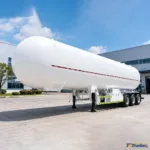
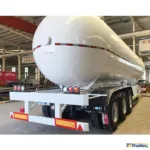
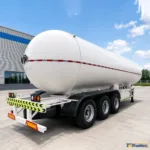

LPG tanker semi trailer with 56CBM capacity and 3 axles for propane transport. Load capacity 15001-20000 KG. Contact us for a quote on this gas trailer.
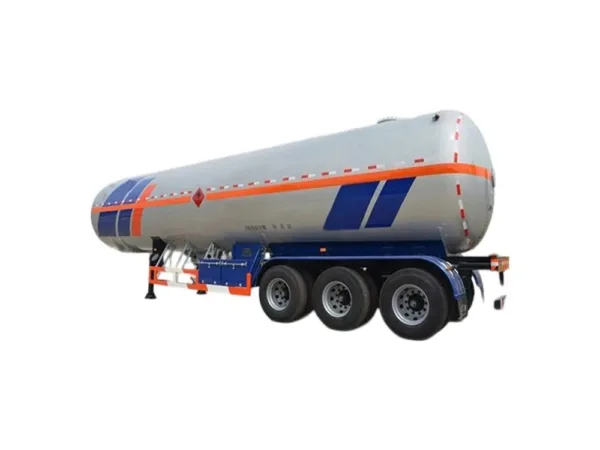
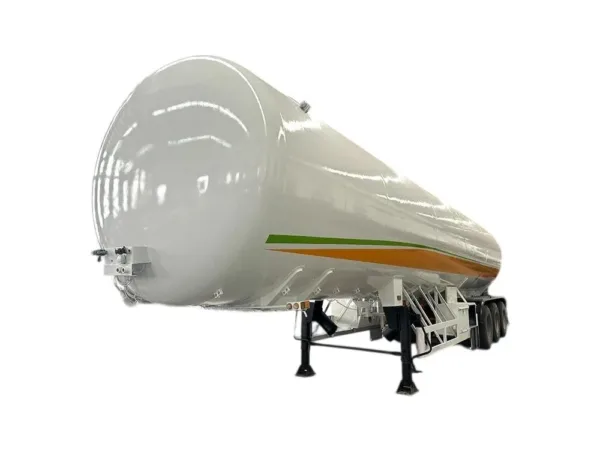
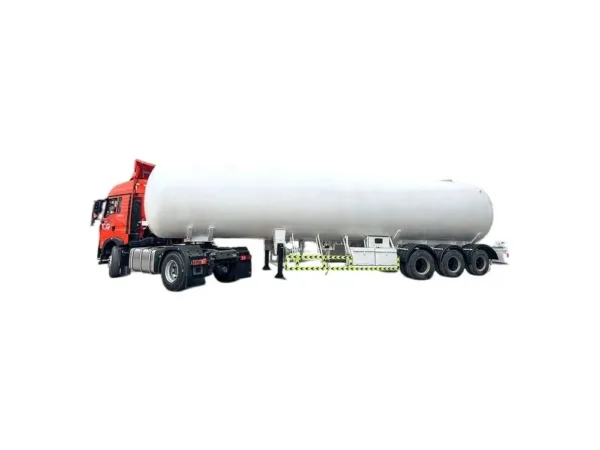

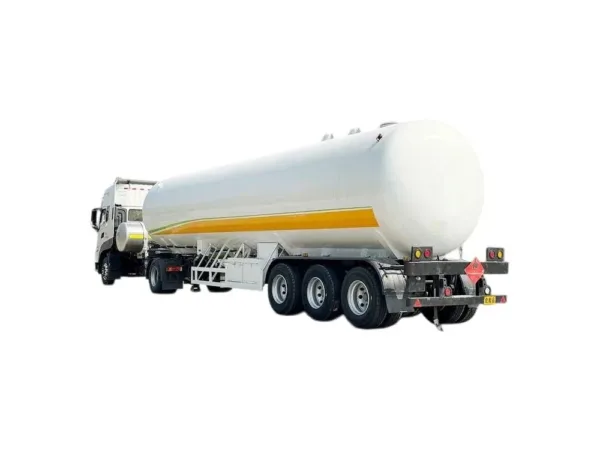
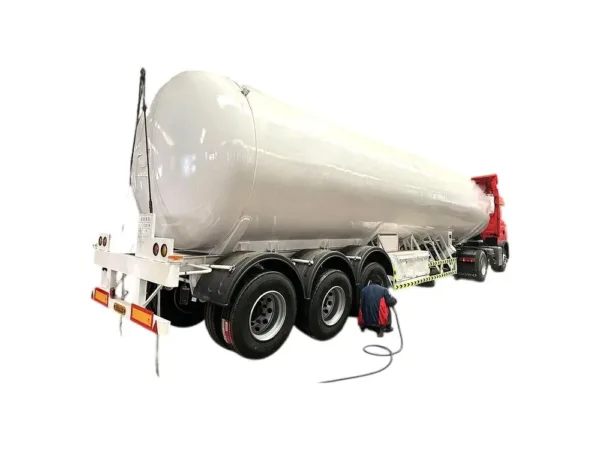
This LPG tanker semi trailer is a three-axle propane transport unit built for fleets that move liquefied petroleum gas from terminal to depot and on to the end user. It suits hauliers, gas distributors and energy logistics operators who need a dedicated bulk gas asset rather than a general-purpose tank. The strongest reason to specify it is the factory-direct build: the unit is assembled and supplied without an intermediary layer, so the specification you agree is the specification that is built. It carries a load capacity of 15001-20000 KG, matching mid-size propane delivery routes where a rigid truck would run out of volume.
The most common duty for this LPG tanker semi trailer is the depot-to-customer run: loading at a bulk gas terminal or refinery gate, then delivering to cylinder filling plants, industrial estates and commercial sites that hold their own storage. On these routes the trailer spends its day in short hops with frequent stops, and the three-axle layout handles the repeated loaded and empty cycles well.
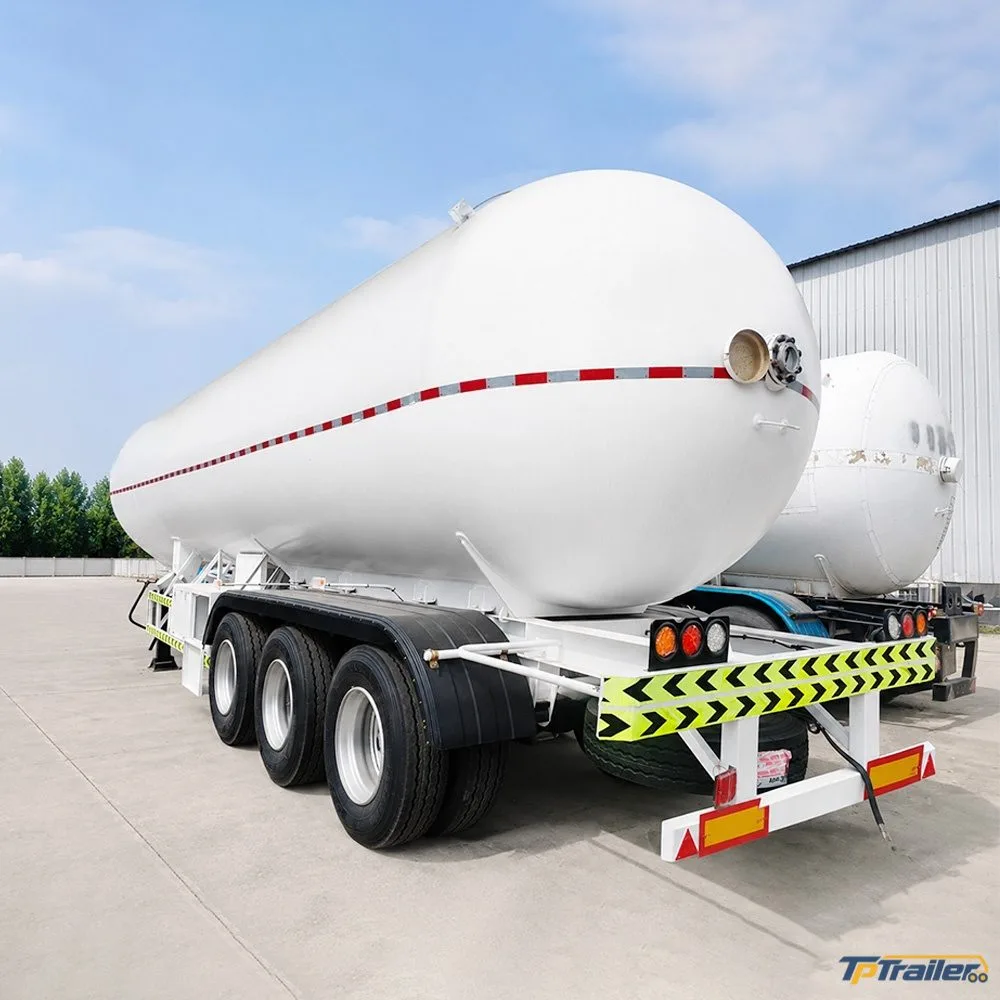
Operators running this pattern typically pair the trailer with a tractor that stays on the same duty, so the LPG tanker semi trailer becomes a fixed part of a scheduled delivery loop rather than a pool asset. The load capacity of 15001-20000 KG suits a route plan built around several part-load drops instead of one large delivery.
A second pattern is the regional transfer run, where gas is moved between a coastal or border terminal and inland depots that hold working stock. These are longer, steadier journeys on main roads, and the semi-trailer format lets a haulier swap tractors at a depot without unloading. The 56CBM volume gives the planner room to consolidate several depot requirements into one movement, which is the main reason fleets choose this size of LPG tanker semi trailer over a smaller rigid unit. It also fits energy logistics work where gas is one of several bulk products moving through the same yard, because the trailer can be parked, coupled and dispatched on the same schedule as other tank assets.
The axle count is confirmed at order confirmation, so the running gear matches the load you actually carry rather than a standard assumption. Buyers moving dense product on long hauls should settle this first. It changes the brake hardware and the tyre package that follow it, so decide it before anything else on the list.

Tyre specification is chosen alongside the axles. The tyre and wheel package on an LPG tanker semi trailer has to suit the road surfaces and load profile of the route it will run. State the intended duty at order confirmation and the tyre choice is locked in with the rest of the running gear.
Suspension type is settled at order confirmation. Mechanical and other arrangements suit different road conditions and different cargo weights. The choice affects ride height and the mounting points the tractor has to meet, so it belongs in the same conversation as the axles, not a later one.
Body colour and finish are agreed before production. Livery, fleet colour and any marking scheme are recorded at order confirmation so the coating is applied once, correctly. Changing a finish after the shell is painted means stripping and recoating, which is why this decision is taken early.
Deck length and any layout variation are confirmed at order confirmation. Where a buyer needs a different overall length or a changed arrangement of the fittings, it is written into the order rather than assumed. Anything not agreed in writing at that point is built to the standard configuration.
A customised LPG tanker semi trailer is only as good as the brief behind it. Every option above is recorded at order confirmation, and nothing is left to a verbal understanding. Buyers who settle axle count, tyres, suspension, colour and length in one sitting avoid the rework that comes from a change requested mid-build. The order confirmation is the document that fixes the build, so read it against your route and your cargo before signing.
On arrival, the buyer has to match the trailer to the tractor that will pull it. That means checking the mounting points, the coupling height and the position of the landing legs against the tractor’s own geometry. The tube size and hose routing for the product lines also have to be confirmed against the receiving facility, because a mismatch here stops the first fill.
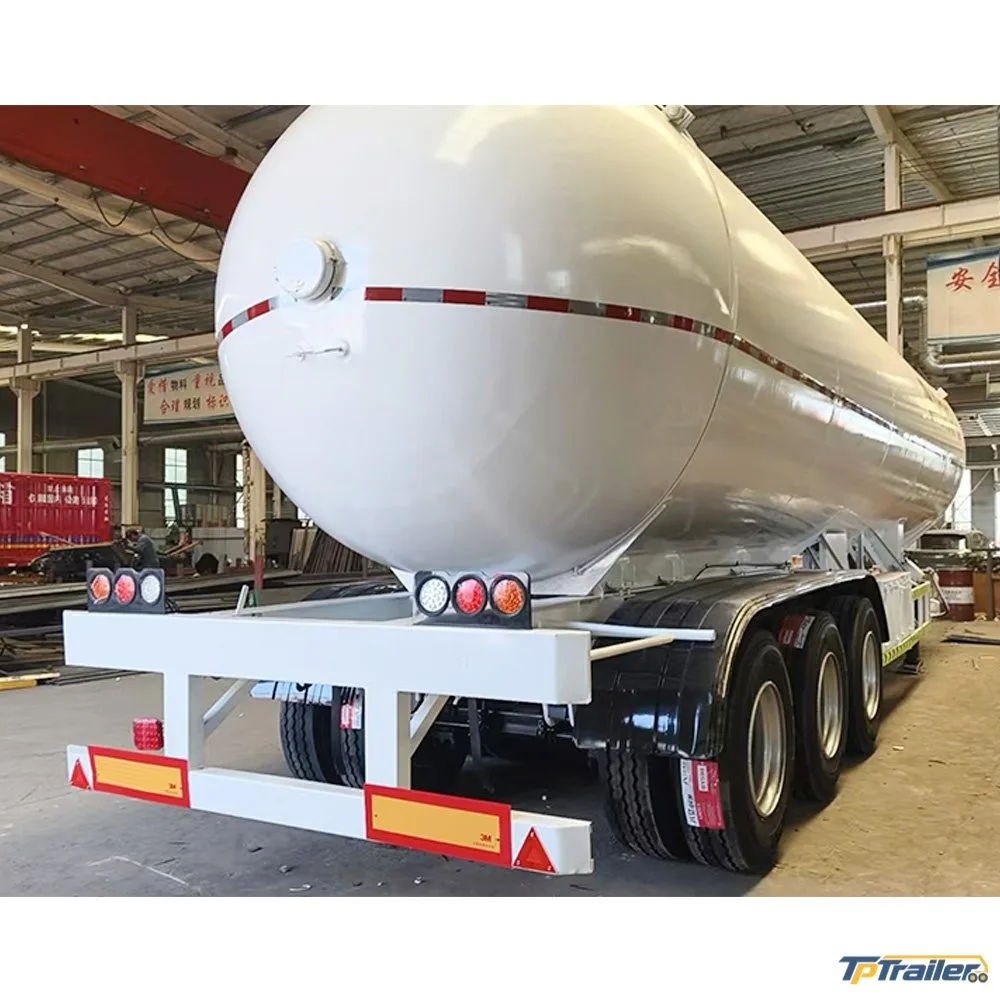
No fitment data is stated in this listing, so a fitment drawing is confirmed at quotation instead of being assumed. Treat that drawing as the reference document for the installation and check every interface against it before the trailer is put into service. A wrong size found at the yard costs a day; the same error found at the loading bay costs far more.
The cost of a mismatch is downtime, and it lands on the operator, not the factory. A coupling that does not meet the tractor, a hose route that fouls a guard or a landing leg that sits at the wrong height all mean the LPG tanker semi trailer sits idle while parts are sourced. On a working route that idle time is lost revenue and a missed delivery window. Confirm the fitment drawing at quotation, walk the interfaces with the tractor present, and record any deviation in writing before commissioning. Buyers who treat installation as a checklist rather than a formality get the trailer into service without a return trip to the yard.
The running gear wears first on any LPG tanker semi trailer. Brake linings, tyres and suspension bushes take the load and the road, so they set the inspection rhythm. Check them at every scheduled stop and record tread depth and lining thickness. A worn tyre or a glazed lining is a safety item on a loaded trailer, not a cosmetic one.
The tank shell and its coating are the next thing to watch. Inspect for chips, scuffs and any breakdown of the finish, and treat them before corrosion starts. The coating choice agreed at order confirmation is what sets how often this inspection needs to be repeated, so match the check to the finish actually applied.
Valves, fittings and the product lines need a regular look. Check for seepage, loose connections and damage to the hose routing. On an LPG tanker semi trailer these are the points where a small fault becomes a serious one, so inspect them on a fixed schedule and log every finding against the trailer’s record.
Fasteners and structural joints should be checked for looseness after the first loaded runs and at each service. Vibration works on a loaded trailer continuously. A torque check on the mounting points and the running gear connections catches a problem while it is still cheap to fix, rather than after a component has failed.
The material and coating choices made at order confirmation set the maintenance interval for the shell. A finish suited to the climate and the cargo extends the time between recoats, while a poor match shortens it. Record the choice and inspect against it, so the service life of the LPG tanker semi trailer is set by the specification, not by chance.
Maintenance on an LPG tanker semi trailer is a schedule, not a reaction. The operator who inspects the running gear, the shell, the fittings and the fasteners on a fixed rhythm spends less over the trailer’s life than the one who waits for a failure. The specification agreed at order confirmation, from axle count to coating, decides how long each interval can run. Keep the records, match the inspection to the build, and the trailer earns its keep for the full term of service.
An LPG tanker semi trailer moves by sea as a large, pressure-rated unit, so protection starts at the shell. Exposed fittings, valves and pipework are the parts most likely to suffer in transit. Wrapping and guarding them keeps dust and salt spray off machined surfaces. The buyer should confirm with the supplier which components are covered and how. Ask for loading photos before dispatch. Damage in transit is usually visible at the fittings first.
Space is the real cost driver on an LPG tanker semi trailer shipment. A unit of this size is normally shipped as a complete trailer rather than broken down, and the supplier decides the loading plan. Ask whether the unit travels on a flat rack, in a break-bulk hold or by ro-ro, and who secures it. Stacking is not something to assume. Confirm the securing method, the lashing points used and the condition report on arrival before you sign the delivery note.
Protection focuses on the parts that corrode or bend: valves, pipework, flanges and any exposed machined faces. These are typically wrapped and guarded, and the shell is kept clear of standing water. Ask the supplier to describe the protection in writing and to send photos of the unit secured before the vessel sails. On arrival, inspect the fittings first, note any damage on the delivery document, and photograph it before unloading begins.
Multiple units are a loading-plan question, not a catalogue one. Ask the supplier how many LPG tanker semi trailer units fit per vessel space or frame, and whether the quantity changes the loading method. Quantity also drives the price tier, so state your planned volume in the enquiry rather than after the quote. Freight terms, port of loading and insurance are confirmed at quotation, because the input does not fix them.
Check the shell for dents and coating damage, then the valves, pipework and flanges for bends or missing caps. Confirm the axle count and the load capacity plate match your order. Photograph everything before you move the LPG tanker semi trailer. Compare the delivery condition report with the pre-shipment photos, and raise any discrepancy with the supplier in writing while the unit is still at the port.
To quote your LPG tanker semi trailer, send the overall length you need, the axle count, and the quantity you plan to order. Add your destination port and any fitting requirements. With those details, the supplier can confirm the configuration, the loading plan and the price tier that applies to your volume.
Explore more LPG tanker semi trailer in this range.
| Load Capacity | 15001-20000 KG | Type | Semi-Trailer |
|---|---|---|---|
| Place of Origin | China | Use | Truck Trailer |
| Material | Aluminum / Alloy | Size | Customer |

No reviews yet — click the Review button on the right to share your experience with this product.










Fill in the form below and our team will respond within 24 hours.
Write a Review