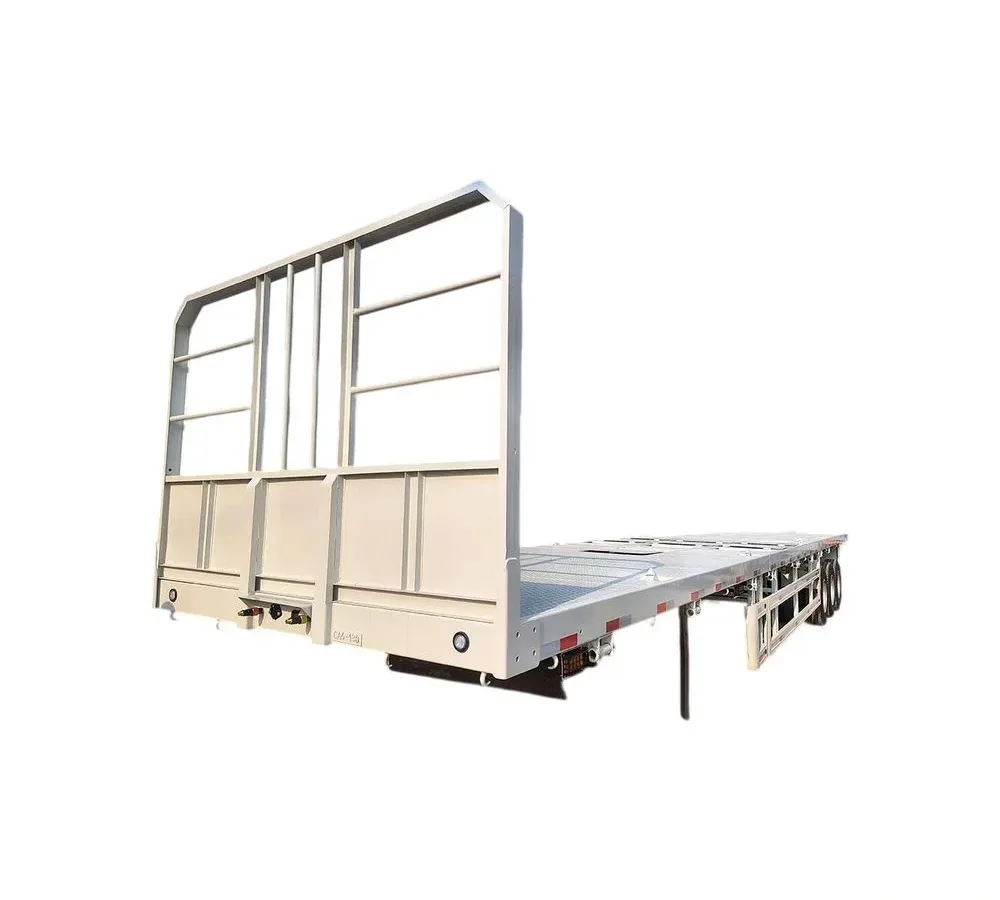
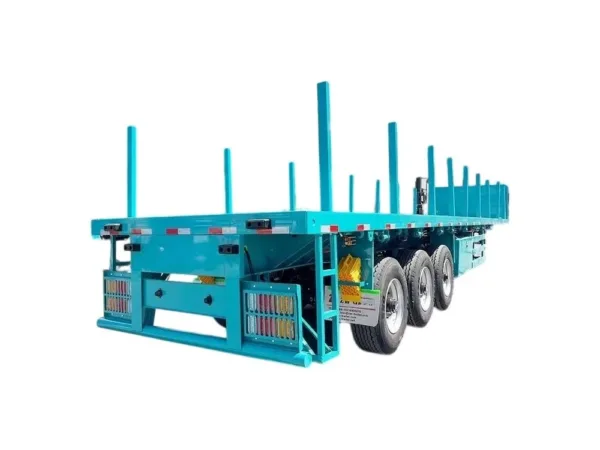
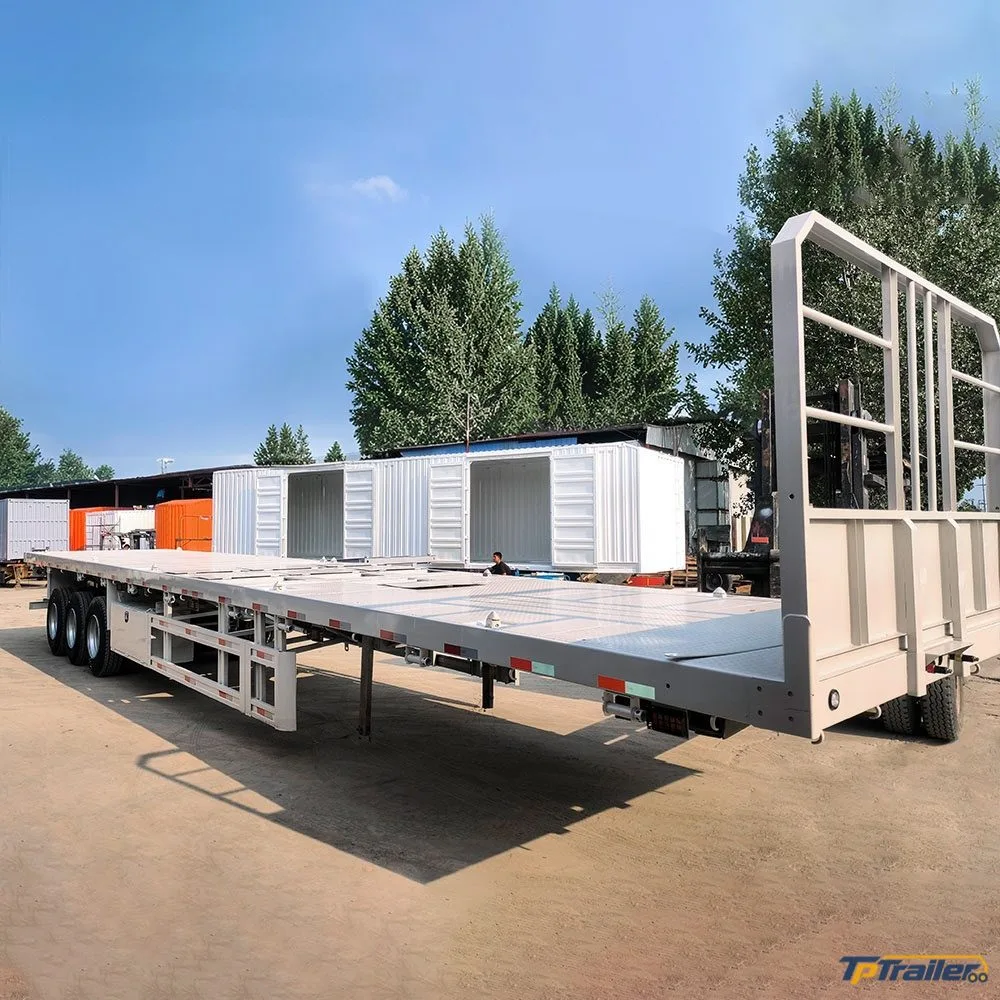
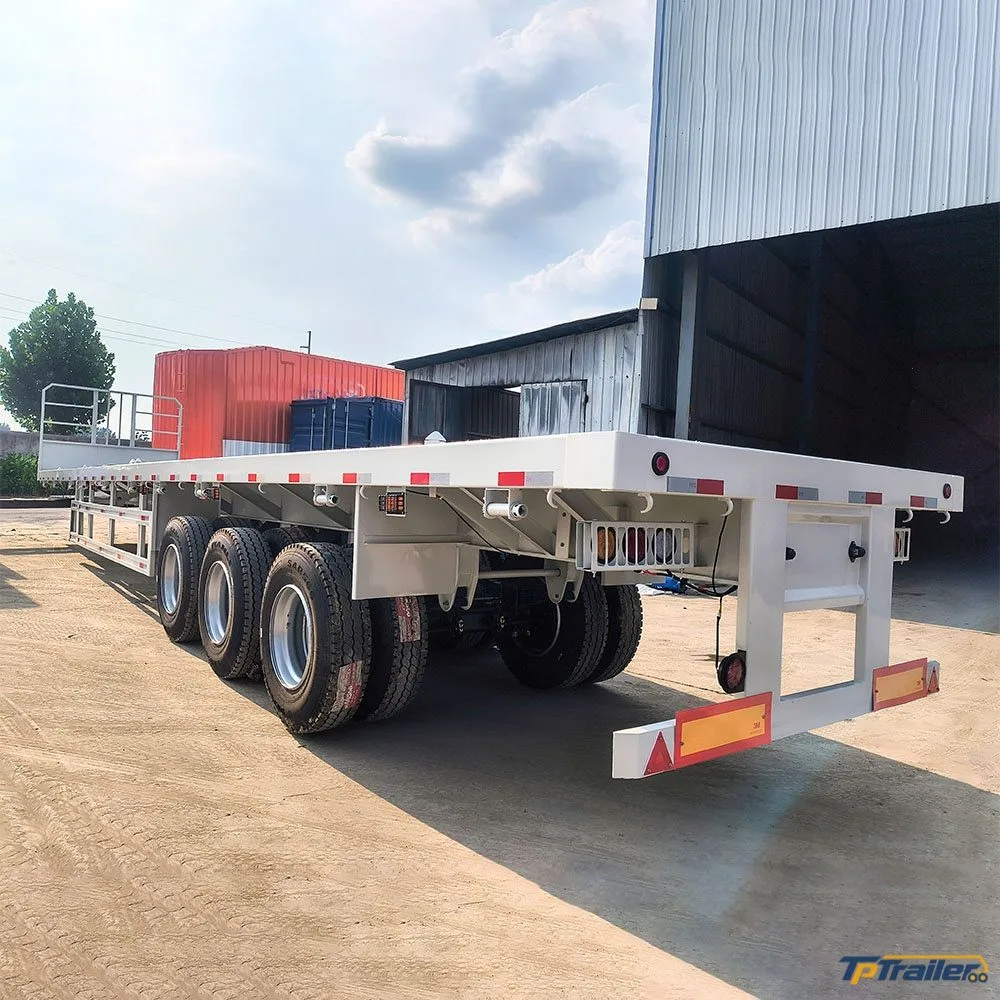
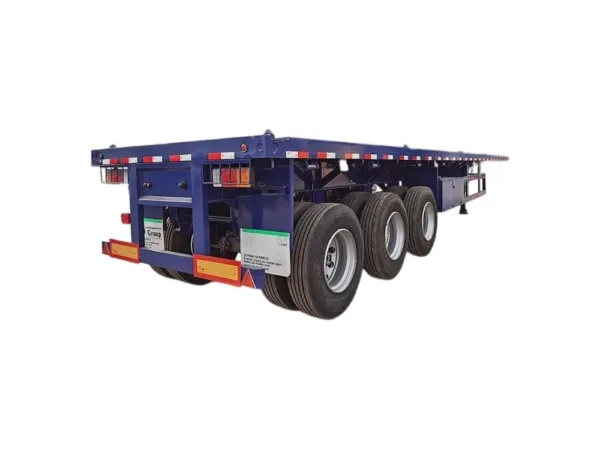
The extendable 3 axle semi trailer for container transport is a steel platform unit built to move 20ft and 40ft boxes and to stretch for cargo longer than a standard deck. It is aimed at fleet operators, port logistics contractors and construction supply hauliers who want one asset covering container shuttles and long or bulky loads. Its case rests on range rather than a single trick: the same unit takes a box in one direction and a stretched load in the other, so the yard does not need a second trailer to cover the odd oversized job.
Table of Contents
The platform is steel, the axle count is set at build, and the electrical system runs on 24v. Buyers weighing a fixed-deck flatbed should compare what the adjustable length does to their backhaul options before they compare price.
Why It Works On Site
Load capacity that matches dense freight. The 60 T rating tells a buyer the deck is engineered for weight, not just footprint. On site that means fewer split loads when moving steel, stone or stacked containers, and less time lost to running two vehicles where one will do. For an extendable 3 axle semi trailer for container transport, that margin is what keeps the unit loaded on mixed backhauls instead of running light.
Deck length that changes with the job. The extension lets the platform match cargo longer than a container footprint. Operators loading pipes, beams or long prefabricated sections can set the deck to the load rather than refusing the job or hiring a specialist low bed for the day. That flexibility is the reason most fleets first look at an extendable 3 axle semi trailer for container transport.
Axle quantity set from 2 to 4. The build allows the axle count to follow the duty cycle. A lighter layout suits regular container shuttles, while more axles spread weight for heavy bulk material. The buyer is not locked into one running gear choice, and the assembly can be specified to the routes it will actually work rather than to an average.
Container handling designed in. The unit is set up for 20ft and 40ft containers, so twist-lock work is part of the design rather than an add-on. Port and depot operators can drop a box, run a bulk load, and return with a container, keeping the asset earning across job types instead of waiting for one cargo class to appear.
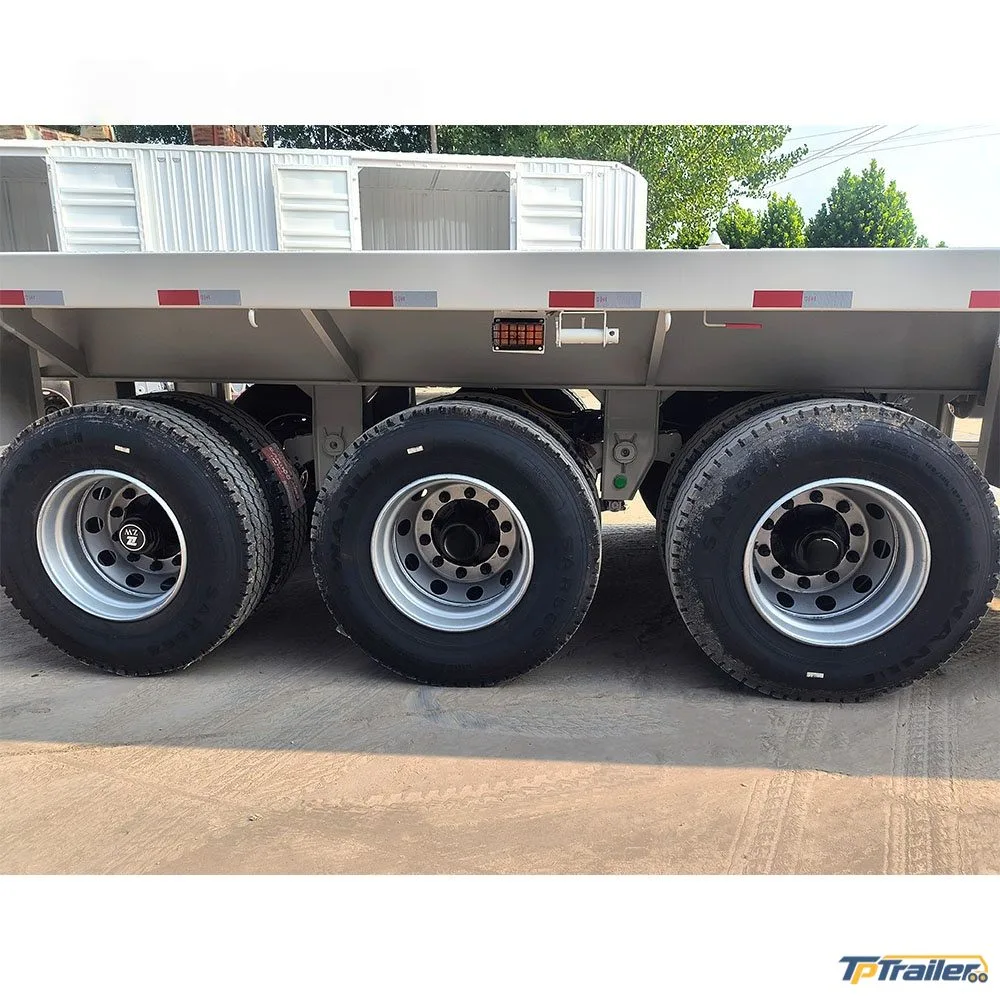
Mechanical suspension and common tyre sizes. Common mechanical suspension keeps the running gear simple to inspect and service, and the 12R22.5 or 11.00R20 options are widely stocked sizes. For a fleet that means fewer odd lines in the tyre store and a faster turnaround when a casing is damaged on a rough site access road.
50# or 90# kingpin choice. The kingpin option lets the leg match the tractor already in the fleet. A haulier adding an extendable 3 axle semi trailer for container transport does not have to change prime movers to suit the coupling, which keeps the purchase focused on the trailer rather than on a wider fleet change.
Where It Is Used
Container work is the first job most operators recognise, and it is where an extendable 3 axle semi trailer for container transport proves itself fastest. The unit carries 20ft and 40ft boxes between ports, container yards, depots and distribution sites, and the extendable deck means a return leg does not have to be empty box capacity. A haulier can move a container in, then take a long or bulky load out, which is the pattern that makes the asset pay across a working week.
Typical routes are terminal-to-warehouse shuttles, depot transfers and regional trunking where one tractor covers several drops. Because the deck is steel and rated for heavy freight, the same unit can be scheduled onto dense loads without swapping equipment, and the 24v electrical system keeps lighting and signalling consistent with standard tractor wiring.
Construction material and bulk cargo are the second major duty, and the adjustable length is what separates this unit from a plain flatbed. Site supply runs move steel sections, timber, bagged material, blocks and prefabricated components, and long items are where the extension earns its place. The leg can be stretched for oversized sections and returned to a shorter setting for standard loads, so a construction supplier is not forced to choose between a container trailer and a long-load trailer.
Port logistics adds a third pattern: yard moves, staging and short-haul transfers where quick coupling matters more than outright speed. With kingpin options and a choice of axle count, the same trailer family fits terminal tractors and road tractors, and the mechanical suspension keeps maintenance predictable on stop-start port duty where the unit is coupled and uncoupled many times a day.
Choosing The Right Spec
Match axle count to the load mix. The trailer is offered with 2 to 4 axles. Fewer axles suit lighter, regular container shuttles where payload is predictable; more axles suit heavy bulk material and long cargo where weight distribution matters. Decide from the heaviest routine job, not the average, and the extendable 3 axle semi trailer for container transport will stay inside its intended duty instead of being worked at the edge of it.
Set capacity against real cargo. The 60 T rating is the ceiling to compare with the densest load the fleet actually hauls. Operators moving steel, stone or stacked containers should check that figure against their heaviest permitted combination. If most work is light container trunking the same trailer still fits, but the capacity decision should be driven by the worst case rather than the typical one.
Pick tyre size by workshop stock. The 12R22.5 and 11.00R20 options are both common sizes. Choose the one already held in the fleet’s tyre store so replacements do not open a new stock line. For an extendable 3 axle semi trailer for container transport on mixed routes, tyre commonality matters more than a marginal preference, because downtime on a site access road is the real cost of an odd size.
Confirm kingpin and coupling first. The 50# and 90# kingpin options must match the tractor units in service. Check the coupling before ordering, then confirm suspension and electrical compatibility. A buyer specifying an extendable 3 axle semi trailer for container transport should settle the coupling question early, because it decides which tractors can pull the unit and how quickly it enters service.
Customisation Before Delivery
The axle count is chosen from the range in the specification table. An extendable 3 axle semi trailer for container transport suits mixed container and bulk work, while a higher axle count spreads load over more tyres. The count is fixed at order confirmation, so the buyer should match it to the routes and cargo planned for the unit rather than to the first job on the list.
Deck length and extension travel are agreed before production. An adjustable length semi trailer for large cargo port logistics needs a working range that covers the longest loads the buyer handles. The buyer states the shortest and longest cargo, and the extension range is settled at order confirmation rather than assumed from a catalogue figure.
Suspension type is selected from the options offered. The common mechanical suspension is a straightforward choice for predictable routes and steady loads. Buyers running variable surfaces should raise the choice at quotation, because the suspension decision affects how the trailer behaves when the deck is extended and the load centre moves rearward.
Tyre size and brand are confirmed with the order. The listed sizes cover common road and site use, and the brand choice is settled at order confirmation. Tyre selection affects ground pressure and replacement planning, so the unit should be ordered with the size the buyer’s workshop already stocks.
Colour and finish are agreed before delivery. Paint colour is a buyer choice, and the finish on a steel extendable 3 axle semi trailer for container transport is part of that conversation. Any marking or lettering is confirmed at order confirmation, so the unit arrives ready for the buyer’s fleet identification instead of waiting in the paint shop.
Fitting And Installation
On arrival, the buyer’s workshop should check the unit against the order documents before any load is applied. The extendable 3 axle semi trailer for container transport is matched to the tractor through the kingpin and the deck mounting points. Confirm the kingpin size against the fifth wheel, check that the locking pins on the extension sections move freely, and inspect the electrical socket against the tractor harness. The electrical system runs on the stated voltage, so plug and lamp behaviour should be tested with the tractor connected. Tyre pressure is set to the tyre maker’s figure for the load, not to a guess. The assembly should stand level during this check, with the extension fully retracted.
A wrong match costs downtime. A fifth wheel that does not seat correctly keeps the trailer off the road until it is corrected. A miswired socket means no lamps, and no lamps means no legal night movement. Extension locking pins that are stiff or misaligned turn a short shunting job into a workshop visit.
Where the input gives no fitment data, a fitment drawing is confirmed at quotation instead of being assumed. The buyer should share the tractor model and coupling details early, so the extendable 3 axle semi trailer for container transport leaves the works with the right interface. The adjustable length semi trailer for large cargo port logistics is a long-lived asset, and the first hour of checking protects the whole service life.
Service Life And Maintenance
Tyres wear first on any road-going trailer. The operator should check tread depth and pressure at each pre-trip inspection and look for uneven wear across the tread, which points to alignment or load balance issues. The extendable 3 axle semi trailer for container transport should be checked with the deck at its normal running length as well as extended, because the load path changes between the two.
The extension section is the next item to watch. Sliding surfaces, locking pins and their guides should be kept clean and checked for free movement, and the operator should inspect the pins before extending under load. A steel structure with a sound protective coating resists corrosion at these moving joints, so the coating choice made at order helps lengthen the inspection interval.
Brake and air lines run along a trailer that changes length. The operator should check hoses for rubbing, kinks and chafing where they cross the sliding section, and any hose touching steel should be re-routed or sleeved. The unit should have its lines checked whenever the deck length is changed, not only at service intervals.
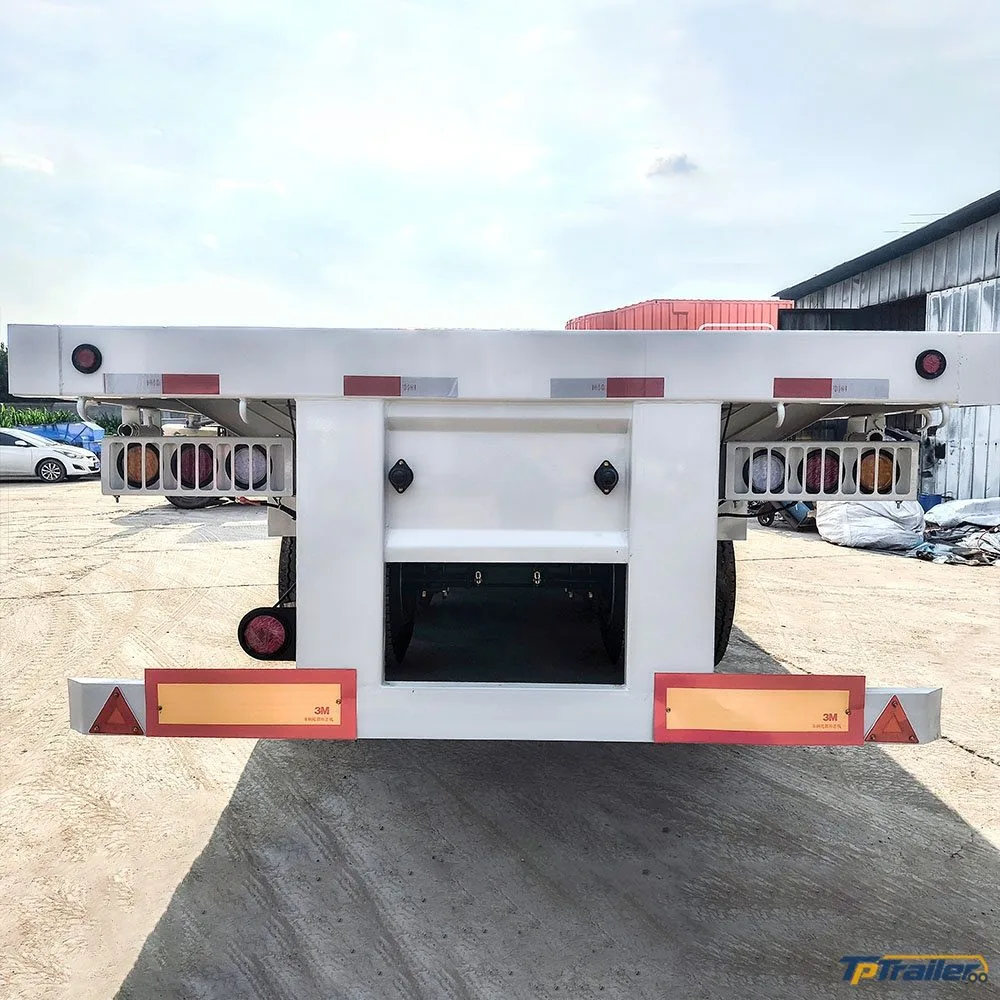
The electrical system deserves a regular look. Lamps, the socket and the wiring loom should be tested before each trip, since water ingress at the connectors is a common cause of failure. The stated voltage system is simple to test with a standard meter, and a quick check keeps the extendable 3 axle semi trailer for container transport visible and legal on the road.
The steel structure and its coating decide how long the trailer stays in service. The operator should wash off salt and site mud and touch up any coating damage before rust starts. The adjustable length semi trailer for large cargo port logistics works in harsh conditions, so a coating choice agreed at order and a simple wash routine protect the structure between inspections.
Packing And Container Loading
An extendable 3 axle semi trailer for container transport ships as a part-assembled unit. The chassis is protected at the frame rails and at the extension section, where sliding surfaces are greased and wrapped against salt air. Axles, suspension and the electrical harness are secured for the voyage, and loose items such as kingpin area fittings and tyre brand options are crated separately. The buyer should confirm the packing list against the order before loading, because the assembly carries components that are easy to miscount once the unit is closed up for sea freight.
Nesting is limited. The leg is a long, heavy platform, so units are not stacked on top of each other. Loading is by flat rack or break bulk rather than inside a standard box, and the trailer is lashed at the frame and at the axle groups. Buyers should verify lashing points and the shipping configuration at quotation. On arrival, check the extension travel, the electrical system voltage marking and the suspension fixings before the unit leaves the port. A procurement team ordering an extendable 3 axle semi trailer for container transport should photograph the frame on receipt, before any site movement.
Common Mistakes Buyers Make
Ordering the wrong axle quantity. The axle count is a configurable property, not a fixed one. A buyer who assumes a standard layout receives a trailer that does not match the load plan. The single check: confirm the axle quantity in writing against the load capacity you need before the order is released.
Ignoring the tyre specification. Tyre size and tyre brand are separate choices, and mixing them up sends the unit back for re-tyring. The single check: state the tyre specification and the tyre brand you want on the same line of the purchase order.
Overlooking the kingpin size. The kingpin is offered in more than one fitment, and a mismatch with the tractor unit stops the trailer working on day one. The single check: match the kingpin to your tractor before signing, and record it on the order.
Assuming the suspension type. Suspension is a named property with a stated type, and a buyer expecting a different arrangement is disappointed at delivery. The single check: read the suspension line on the quotation and confirm it suits your routes and loads.
Skipping the electrical check. The electrical system runs at a stated voltage, and a tractor wired for another voltage will not run the lights correctly. The single check: confirm the voltage against your tractor before dispatch and test the lighting on arrival.
Buyer Questions
Can the trailer carry both containers and bulk construction material?
Yes. The stated function covers container transport, and the platform format suits bulk cargo such as construction material. The load capacity figure is the ceiling to plan against, and the axle quantity can be specified to match your duty. Before ordering, measure the container sizes you handle and confirm the platform length suits them. Ask for the configuration in writing, because an extendable 3 axle semi trailer for container transport set up for containers and one set up for bulk cargo may differ in deck fittings. Confirm deck accessories at quotation.
How do I choose between the tyre options and the axle count?
The tyre specification and tyre brand are listed as separate choices, and the axle quantity is a configurable property. Start from your heaviest planned load and the routes you run, then pick the axle quantity that supports it. Match the tyre specification to those routes, and state the tyre brand you want on the order. Do not leave either line blank. Ask the supplier to confirm both against the load capacity before production, and check the fitted tyres against the order on arrival. For an extendable 3 axle semi trailer for container transport, that written confirmation is the cheapest insurance against a re-tyring bill.
What should I confirm before the unit ships?
Confirm the kingpin fitment against your tractor, the electrical system voltage, the suspension type and the axle quantity. These are the four properties most often mismatched, and each is confirmed at quotation rather than assumed. Ask for the packing list and the shipping configuration, since an extendable 3 axle semi trailer for container transport is loaded as a long platform rather than a boxed unit. Check the extension travel and the frame on arrival, and photograph the unit before it leaves the port.
To receive a quote on an extendable 3 axle semi trailer for container transport, send the platform length you need, the axle count you want and the quantity you plan to order. Add your tyre specification, kingpin fitment and suspension preference so the configuration is priced correctly the first time, and the assembly arrives ready for the routes you actually run.
We use cookies to enhance your browsing experience, serve personalized content, and analyze our traffic. By clicking "Accept All", you consent to our use of cookies. Privacy Policy
Cookie Preferences
Required for the website to function properly. Cannot be disabled.
Help us understand how visitors interact with the website (Google Analytics).
Used to deliver personalized ads and measure ad campaign effectiveness.














Write a Review